正在加载视频...

视频加载失败

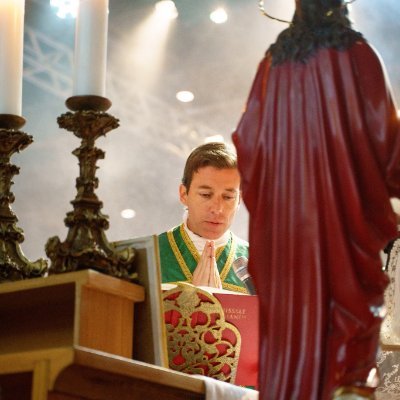
Saint Benedict destroyed an idol’s statue and it’s altar, in a temple dedicated to Apolo. Then, on top of it, built the Abbey of Montecassino. There he lived and applied his rule, saving Europe’s culture and preparing the foundations of Christendom.
23,401 次观看 • 7 个月前 •via X (Twitter)

0 条评论

暂无评论

原始帖子的评论将显示在这里

相关视频

Afghanistan, Pakistan, and Bangladesh are just a few of the regions of India that Islam has conquered and almost entirely purged of Hindus over the past 1,300 years. Over 200 million Muslims live within India's remaining borders. For the sake of humanity and the free world, India must prevent its continued conquest by Islam. Jihad and Sharia law, according to Muhammad and Allah, is a culture that has zero tolerance for other cultures. By: Ofer Binshtok. Narrated `Abdullah: When the Prophet entered Mecca on the day of the conquest, there were 360 idols around the Ka`ba. The Prophet started striking them with a stick he had in his hand and was saying, "Truth has come, and falsehood will neither start nor will it reappear. (Sahih al-Bukhari 4287) It's holy intolerance, as a binding commandment, from the Sunnah of Muhammad. Quran 33.21 obliges the Muslim to see Muhammad as an excellent role model. So all his sayings and deeds are Islam's highest values and actually require imitation. forever. Since this act of Muhammad, Muslims are obligated to destroy any symbol of another culture when they have the opportunity. Before Muhammad conquered Mecca in 630 AD, there was tolerance in the region between all the different religions and beliefs, a harmony that led to a prosperous social and commercial life. Then came Muhammad and his Allah, and everything turned upside down. From a region and culture that lived in tolerance with each other and side by side, everything exploded. The violent racist intolerance of Muhammad, Allah, and Islam toward others has destroyed tolerance and replaced it. Muhammad and his followers in Mecca that day smashed and destroyed all the other people's religious symbols. Only the Islamic symbol remains standing, the Kaaba. From then until today and forever, this is how the Muslims behaved, and this is how they will behave when they have the opportunity. Because it's a religious duty. There are endless examples of that. As an example, Jihadist in Afghanistan destroyed the Bamiyan Buddhas in 2001.

Ofer Binshtok - Kafir - עופר בינשטוק

151,628 次观看 • 2 年前

Monastery of Mor Augin (St. Augin), an ancient Syriac Orthodox Monastery, on the southern slope of Mount Izlo, located in area of Nsibin, southeastern, Türkiye. This historic site introduced monastic living to Mesopotamia and is still a significant pilgrimage destination for Syriac Orthodox Christians. It symbolizes the lasting impact of early Christian monastic practices. The monastery was founded in the first half of 4th Century AD, by Saint Awgin, a monk from El Kulzom, Egypt. Mor Augin came with 70 of his disciples to preach Christianity in Mardin Province which was controlled by Sasanian Empire. It had more than 350 monks in those periods and was one of the main spiritual centres in Mount Izlo and Turabdin. In 20th Century, there were more than 20 monks in the monastery. In 1915, Sayfo the monks witnessed the destruction of Syriac villages in the plains below. The monastery was also affected by violence. The last monk passed away in 1968. Due to persecution of Christians in Turkey, SURYOYE had to flee to Europe and other countries and few others moved to nearby villages in area of Turabdin. Saint Mor Augin is the traditional founder of Syriac monasticism. He originated from Qluzma in Egypt, and started off as a pearl diver who gave pearls to the poor and needy. In mid-life he decided to become a monk at the monastery of St. Pachomius, and from there he and his brotherhood, the holy 70 ancestors, set off to Bethnahrin (Mesopotamia), settling in the region of Mount Izlo. The remains of the monastery dedicated to his name still stands on the slopes of Mount Izlo, overlooking the Mesopotamian plain. His name testifies his success and his glory because it is translated as “the good man” (Bar Hebreus, vol. 1, 1872-1877, p. 85ff). As Mor Augin was a great and respectable monk, his word and achievement was known even in Byzantium (Constantinople) and by the Emperor Constantine. He said: “These three warriors are known in our kingdom: Antonius in Egypt, Illarion at the coast and Mor Augin who moved out of Egypt and come and settled down in your region and enlightened it. We plead and beg of him that he prays for us in front of Our Lord, so that we and our kingdom will be protected and safe.” (Tale of Saint Mor Augin). He’s called “Second Christ” in the Syriac tradition owning to the miraculous deeds he did. This certainly does not mean an equality between the both of them, rather it expresses the particularly tight succession of Mor Augin. Mor Augin and his companions filled and decorated the whole east with monasteries and churches, from Egypt to the border of Persia. In 363 AD, Saint Mor Augin passed away at a great age and advanced to the kingdom of heaven. “His body was buried in the cave underneath his monastery’s southern altar. His holy relics are kept till today in the monastery. May his prayers be with us” (P. Behnam, 1908, p- 18f). Patriarch of Antioch, H.H. Ignatius Zakka I, appointed Fr. Joachim Raban as the abbot of Mor Augin Monastery in April 2010. With the help of the Rabans and other employees of Mor Gabriel Monastery and SURYOYE in Europe, Fr. Joachim has restored some of the Monastery buildings. Restoration of buildings e.g. the main church and vital parts of the monastery are still ongoing till this day. 🎥© l.ianour (IG) #archaeohistories

Archaeo - Histories

38,298 次观看 • 2 年前