Загрузка видео...

Не удалось загрузить видео

На главную

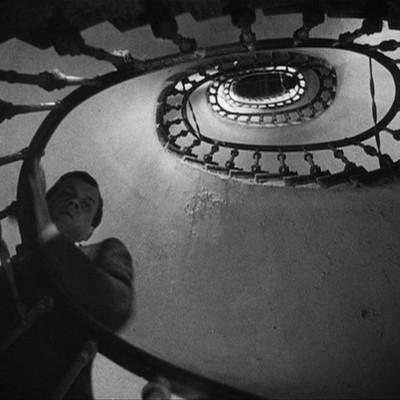
Samson and Delilah (1949) Sunset Blvd. (1950) #sidebyside #BOTD Henry Wilcoxon, as Ahtur SAMSON AND DELILAH (1949) Director: Cecil B. DeMille then, as an Actor on DeMille's Samson & Delilah Set (uncredited) SUNSET BLVD. (1950). Dir. Billy Wilder
57,693 просмотров • 4 дней назад •via X (Twitter)

Комментарии: 0

Нет доступных комментариев

Здесь появятся комментарии из оригинального поста

Похожие видео

TUNNELS THAT CONNECT HOLLYWOOD MANSIONS TO THE GETTY BUNKER. Steven D Kelley in the video below discusses information that he had received from the wife of a Hollywood producer about tunnels that connect Hollywood homes to each other. She lived across from Angelina Jolie. The house is known as the CECIL B DEMILLE home. Cecil B. DeMille was an American filmmaker and actor, mostly known as a director of epic films like "The Ten Commandments" and "Samson and Delilah." The home was sold to Angelina Jolie by a Getty Curator. This home is hooked to the Charlie Chaplin Home. The Charlie Chaplin Home is also connected to Jared Letos home ( Lookout Mountain). Rick Messina who produced movies ( The Santa Claus Movies, Jungle 2), had a home in Encino ,California. His home was connected to the Skirball Center, the largest Jewish Cultural Center in the US. Also pictured below are blue prints for underground tunnels for Hugh Hefner’s home which most likely has access to the bunker under the GETTY CENTER in LA. Steven states that these locations have staging areas for specialized elevators that use “Ion Drive” technology, not pulleys. These elevators are able to descend one mile from the earth’s surface. This is where the frictionless “Tube Trains” can serve as transportation to the GETTY BUNKER. Steven D Kelley is a Laser Electro Optics Engineer, Laser pioneer and inventor who created Laser Aiming Weapon Systems for military use. He was contracted through the NSA, CIA and other government agencies to provide high precision laser technology through his company S.K. Industries. He is the originator of the #occupythegetty movement.

The Children Under the Getty Museum

17,376 просмотров • 2 месяцев назад

In Remembrance of Barbara Stanwyck. Born | July 16, 1907 in Brooklyn, New York City, New York, USA. Died | January 20, 1990 aged 82 in Santa Monica, California, USA. American actress and dancer Barbara Stanwyck (born Ruby Catherine Stevens) was a star of the stage, film, and television and during her 60-year professional career, she was known for her strong, realistic screen presence and versatility. Stanwyck was a favourite of directors, including Cecil B. DeMille, Fritz Lang, and Frank Capra, and made 86 films in 38 years before turning to television. She received numerous accolades, including three Primetime Emmy Awards and a Golden Globe Award, and was nominated for four Academy Awards. Orphaned at the age of four and partially raised in foster homes, she always worked. One of her directors, Jacques Tourneur, said of her, “She only lives for two things, and both of them are work”. She made her debut on stage in the chorus as a Ziegfeld girl in 1923 at age 16, and within a few years was acting in plays. Her first lead role, which was in the hit Burlesque (1927), established her as a Broadway star. In 1929, she transitioned from the stage to the film industry, and began acting in talking pictures, the first of which was George Archainbaud's The Locked Door, where her naturalistic acting style and unaffected vocal delivery were instantly evident. Frank Capra chose her for his romantic drama Ladies of Leisure (1930), and Stanwyck later became a favourite of Capra’s, leading to another three collaborations. This led to additional leading roles which raised her profile, such as Night Nurse (1931), Baby Face (1933), the controversial The Bitter Tea of General Yen (1933), and Gambling Lady (1934). By the late 1930s, Stanwyck had moved to more mature roles in critically and commercially successful comedies and dramas. For her performance as the titular character in Stella Dallas (1937), she earned her first Academy Award nomination for Best Actress. In 1941, she starred in two screwball comedies: Ball of Fire with Gary Cooper, and The Lady Eve with Henry Fonda. She received her second Academy Award nomination for Ball of Fire, and in the decades since its release, The Lady Eve has come to be regarded as a comedic classic, with Stanwyck's performance widely hailed as one of the best in American comedy. Other successful films during this period are Remember the Night (1940), Meet John Doe (1940) and You Belong to Me (1941), reteaming her with Cooper and Fonda, respectively, The Gay Sisters (1942), and Lady of Burlesque (1943). By 1944, Stanwyck had become the highest-paid actress in the United States. That year, she received a third Academy Award nomination for Best Actress in the film noir Double Indemnity, playing a wife who persuades an insurance salesman to kill her husband. In 1945, she played a homemaker columnist in the holiday classic Christmas in Connecticut, and the following year, starred as the titular femme fatale in The Strange Love of Martha Ivers. For the remainder of the decade, Stanwyck starred in additional successes ranging from romantic dramas and comedies, to suspenseful, crime-noirs. Her films during this period include My Reputation (1946), The Two Mrs. Carrolls (1947), Sorry, Wrong Number (1948), for which she received her fourth and final Academy Award nomination, and East Side, West Side (1949). By the early 1950s, Stanwyck’s career began to decline, despite a fair number of leading and major supporting roles, the most successful being Clash by Night (1952), Jeopardy (1953), and Executive Suite (1954). In the 1960s, Stanwyck had made a successful transition to television, where she won three Emmy Awards, for The Barbara Stanwyck Show (1961), the Western series The Big Valley (1966), and the miniseries The Thorn Birds (1983). She received an Honorary Oscar in 1982, the Golden Globe Cecil B. DeMille Award in 1986, and several other honorary lifetime awards. In 1999 she was ranked as the 11th-greatest female star of classic American cinema by the American Film Institute. Video | Barbara Stanwyck Tribute. Video footage courtesy of Saxon Brack Music | The Shawshank Redemption (1994) ― “So Was Red” and “End Title”. Music composed and conducted by Thomas Newman. Performed by The Hollywood Studio Symphony.

MSI | Movie Star Icons

15,995 просмотров • 7 месяцев назад

"North Korea invaded South Korea" is one of the most successful lies in modern history. There was no "North" or "South Korea". There was one nation, divided in 45 minutes by two US colonels using a National Geographic map. Before a single US soldier landed, Koreans had already formed their own government. 135 People's Committees across the entire country. The US's own officer on the ground called them "genuine grassroots democratic" organizations. The US dismantled them in the South, keeping in place the Japanese colonial police and Japanese-trained collaborators. Under the cover of the US military, the Japanese colonizers simply changed flags. Then the US flew in their man. Syngman Rhee arrived on MacArthur's personal plane, with a passport the State Department had refused to issue. Per the CIA's own assessment: he was "a demagogue bent on autocratic rule" who would pursue "ruthless suppression of all opposition." The US military government polled Koreans in 1946. 70% preferred socialism. 14% preferred capitalism. For the US, this popular will was precisely the problem. Rhee's forces massacred 100,000 to 200,000 of their own people before and during the war. US Army Signal Corps photographers were present. The photos sat classified for decades. MacArthur called it "an internal matter." South Korean forces crossed the 38th parallel repeatedly in 1949. Battalion-sized attacks northward, documented by State Department historian John Merrill. An August 1949 incident found ROK troops already positioned north of the line. The May 1950 elections, 26 days before the war, returned 130 independents against 49 Rhee seats. The population rejected him through every available channel. Washington had a problem. Koreans wanted socialism. Korea reunified on Korean terms was Korea lost. That could not be permitted. So they went to war. US Air Force General Curtis LeMay later admitted: "We burned down every town in North Korea... we killed off over a million civilian Koreans and drove several million more from their homes." While burning the North, the US Army ordered its forces to strafe South Korean civilian refugee columns. "All civilians seen in this area are to be considered as enemy." They were defending no one. North Korea lost a higher percentage of its population than any country in World War Two. What happened in June 1950 was not an invasion of one country by another. It was a government with popular roots moving against a US-installed client that was massacring its own people and had just been repudiated at the ballot box. Every word of this is in American archives. CIA ORE 15/48. FRUS 1945-1950. NARA RG 111. The Jeju 4.3 Investigation Report. Marshall's own cables. LeMay's own mouth. Kim Il Sung called it a colonial scheme in 1948. Decades of declassified US documents proved him right.

COMBATE |🇵🇷

612,759 просмотров • 6 месяцев назад

Steven Spielberg saw Stanley Kubrick for the first time in 1980 while he was building sets for "The Shining" (1980). After the movie was released, Spielberg went to Kubrick's house for dinner. Kubrick asked him if he liked the movie. Spielberg, who didn't like the movie in the first viewing, started to tell Kubrick all the things he liked about the movie, rather than telling that he didn't like the movie. Kubrick saw right through him and said, "Steven, you obviously didn't like my picture very much". Spielberg replied, "There is a lot of things that I like about the picture". Kubrick stopped him and said, "But there is a lot of things you didn't love about the picture, probably a lot more that you didn't than did. So tell me what you didn't like about it." Spielberg pinpointed Jack Nicholson's performance. He called him a "great actor" and a "great performance", but a "Great Kabuki Performance", almost like Kabuki theater. Kubrick then asked, "You mean you think Jack went over the top?". Spielberg replied affirmatively. Kubrick then asked Spielberg to name his top 5 favourite actors of all time without thinking much. Spielberg listed Spencer Tracy, Henry Fonda, James Stewart, Cary Grant and Clark Gable. Kubrick said, "Stop" & questioned, "Where was James Cagney on that list?" Spielberg said that he is up there high, Kubrick then said, "But not in the top 5". Finally Kubrick said," You don't consider James Cagney as one of the 5 best actors around, but I do. This is why Jack Nicholson's performance is a great one." Since then, Spielberg has caw "The Shining" more than 25 times & considers it one of his favourite pictures. P.S: Remembering the legendary American actor James Cagney on his 127th birthday! Clip from: One, Two, Three (1961) Director: Billy Wilder

DepressedBergman

396,766 просмотров • 1 месяц назад

This Day (May 13) in 1948, Arabs Massacred Dozens of Surrendering Jews at Kfar Etzion — The Day Before Israel Declared Independence The Jews of Kfar Etzion fought for 3 days against overwhelming odds — Haganah fighters, Palmach soldiers & civilian kibbutz families defending their homes. Then, they raised the white flag. On May 13, 1948, those Jews who remained surrendered to the combined force of the British-trained & British-led Jordanian Arab Legion and hundreds of local Arab villagers and armed Arab irregulars. 50 survivors were ordered to assemble in the courtyard of the kibbutz. They were photographed by an Arab in a kaffiyeh — a staged propaganda image of “surrender.” Then an armored car belonging to the Arab Legion opened fire with its machine gun. Local Arabs immediately joined in, raking the group with submachine guns and grenades. Those who tried to run were hunted down and shot. Dozens more who had fled into a cellar were massacred when attackers threw hand grenades inside. The Arabs then blew up the building so it collapsed on those Jews still trapped below. Of the 127 Jewish defenders and residents killed at Kfar Etzion, dozens were massacred in cold blood after they had surrendered. Arabs then mutilated the bodies of the Jews with reports of limbs, heads, and other “trophies” taken. This barbaric method — throwing grenades into places where Jews were hiding for their lives and taking Jewish body parts as trophies — is hauntingly familiar. Hamas terrorists did the exact same thing on October 7, 2023, at the Nova festival and in kibbutz safe rooms. The goal has never changed: slaughter as many Jews as possible in the most humiliating, medieval fashion. At Kfar Etzion, bodies of murdered Jews were left lying where they fell — unburied and exposed — for a year and a half. Why? Because the Jordanians had ethnically cleansed every last Jew from the area and illegally annexed Judea and Samaria (which they renamed the “West Bank” for the first time in history in 1950). Only four Jews survived the massacre at Kfar Etzion itself. The next day, the remaining three kibbutzim in the Gush Etzion bloc surrendered under Red Cross supervision to avoid the same fate. Roughly 260–320 more Jews (including 85 women) were taken prisoner and paraded in open trucks through the streets of Amman, Jordan, to the cheers and jeers of massive crowds. Arabs who were part of a coalition intent on preventing a Jewish state from rising in any part of the Land slaughtered dozens of Jews who had already surrendered — on the very eve of the end of the British Mandate and Israel’s declaration of independence. They then looted and razed the entire Gush Etzion bloc to the ground. The bodies of the slaughtered Jews were finally collected by Chief Rabbi Shlomo Goren in November 1949 and buried with full military honors on Mount Herzl — the first graves in Israel’s national military cemetery.

Captain Allen

43,626 просмотров • 4 месяцев назад

Remembering film director Lloyd Bacon on his Birthday Born | December 4, 1889 in San Jose, California, USA Died | November 15, 1955 aged 65 in Burbank, California, USA Video | The “By a Waterfall” production number from Footlight Parade (1933) featuring 300 choreographed swimmers. One of the workhorses in Warner Brothers' stable of directors in the 1930s, Lloyd Bacon didn't have a career as loaded with classic films as many of his more famous contemporaries. What few “classics” he had his hand in (42nd Street (1933), Footlight Parade (1933) are so overshadowed by the dazzling surrealistic choreography of Busby Berkeley that casual film buffs today often forget they were actually directed by Bacon. While his resume lacks the drama of failed productions and tales of an unbridled ego, he consistently enriched the studio's coffers, directing a handful of its biggest hits of the late 1920s and 1930s. Bacon's career amounts to that of a competent ― and at times brilliant ― director who did the best with the material handed to him in assembly-line fashion. Lloyd Bacon was born into a theatrical family (his father was Frank Bacon, a playwright and stage actor). His parents enlisted all the Bacon children onto the stage. Despite having a strong interest in law as a student at Santa Clara College, Lloyd opted for an acting career after appearing in a student production of “The Passion Play”. In 1911 he joined David Belasco's Los Angeles Stock Company (with Lewis Stone), touring the country and gaining good notices in a Broadway run of the hit “Cinderella Man”, and gaining further experience during a season of vaudeville. He switched gears in 1915 and took a stab at silent Hollywood, playing the heavy in several of Gilbert M. 'Broncho Billy' Anderson's shorts and pulling double duty as a stunt man. With America's entry into World War I in 1917, Bacon enlisted in the Navy and was assigned to the Photo Department. This began a lifelong admiration for the service and might explain the Navy being a favourite recurring theme in many of his films. After the war's end Bacon moved from Mutual (Charles Chaplin's studio at the time) to Triangle as a comedy actor. It was at this point that he got his first taste of directing ― he had let everyone at the studio know he had an interest in helming a picture, and when the director of a now forgotten Lloyd Hamilton comedy short fell ill, Bacon was given his chance. Constantly moving, he joined tightwad producer Mack Sennett as a gag writer. Sennett, sensing a bargain, happily accommodated Lloyd's desire to become a full-time director by early 1921. The Sennett studio was already in an irreversible decline during Bacon's tenure there but it allowed the novice director to gain a wealth of experience. He apprenticed for Sennett until joining Warner Brothers in 1925, an association that would last a remarkable 18 years and begin when the working-man's studio was building a strong stable of contract directors that included Michael Curtiz, Alan Crosland, John G. Adolfi and Mervyn LeRoy. Although Lloyd never became known for a particular style other than a well-placed close up, his ability to bring in an entertaining film on time and within budget earned him such enormous respect from the five Warner Brothers that he was soon handed control over important projects, including The Singing Fool (1928), Al Jolson's follow-up to The Jazz Singer (1927), which grossed an unheard-of (for Warners, at least) $4,000,000 in domestic receipts alone ― the studio's #1 hit for 1928. Bacon was rewarded by becoming the highest paid director on the studio lot, earning over $200,000 a year throughout the Depression. He was called upon to direct the studio's big-budget production of Moby Dick (1930), which garnered good notices, but it's a version that's barely remembered today. The 1930s saw Bacon assigned to the assembly line; aside from the Busby Berkeley-choreographed films, he directed many of James Cagney's crowd-pleasing two-week wonders, including Picture Snatcher (1933) (Cagney once remarked that the schedule on that picture was so tight that, one time after he and the cast had rehearsed a particular scene, Cagney said, “OK, Lloyd, are you ready to shoot?” Bacon grinned and said, “I just did!”) and The Irish in Us (1935). As a reward, he was occasionally afforded more time and money on productions such as Here Comes the Navy (1934) and Devil Dogs of the Air (1935). He also directed Cagney's return effort after his ill-advised move to cheapjack Grand National Pictures after one of his periodic salary disputes with studio head Jack L. Warner ― the badly miscast if frenetic Boy Meets Girl (1938). This was one of Cagney's least critically acclaimed Warner Brothers films of the 1930s, but a smash hit for the studio. During his years at Warners, Bacon gained a reputation as a clothes horse, the dapper director arriving on the set dressed to the nines, wearing expensive hats that he would hurl around the set when expressing his dissatisfaction (he ruined a lot of hats) at an actor's performance or missed cue. Bacon continued to turn out profitable films for the studio until moving to 20th Century-Fox in 1944 (a logical move, since the recently discharged Darryl F. Zanuck knew Bacon from his early days at Warners). He stayed at Fox until 1949, then bounced among Columbia, Fox, Universal and finally the chaotically-run RKO in 1954. He worked virtually until his death from a cerebral hemorrhage at age 65.

Hollywood Golden Age of Cinema

39,801 просмотров • 9 месяцев назад

Self-taught, child prodigy piano player, Sugar Chile Robinson. —Born on December 28, 1938, Sugar Chile Robinson as he was widely known proved to be a child prodigy emerging as a self-taught piano player at a year and half old. The jazz pianist and singer played for President Truman in 1946 at the White House Correspondents’ Association Dinner, becoming the first African-American to be invited to the presidential home at a mere age of seven. He was one of the first African-American child stars to be a household name. While still a kid, he had a record, billboard chart, sports and a gig with the Count Basie Orchestra as well as movie appearances even when African-Americans were few on the big screen. He began touring major theaters, setting box office records in Detroit and California. In 1949 he was given special permission to join the American Federation of Musicians and record his first releases on Capitol Records, “Numbers Boogie” and “Caldonia”, both reaching the Billboard R&B chart. In 1950, he toured and appeared on television with Count Basie and in a short film ‘Sugar Chile’ Robinson, Billie Holiday, Count Basie and His Sextet. The following year, he toured the UK, appearing at the London Palladium. However, by the 1950s, Robinson returned to school and his fame faded. He stopped recording in 1952. Later he said: “I wanted to go to school… I wanted some school background in me and I asked my Dad if I could stop, and I went to school because I honestly wanted my college diploma.” Having given up his musical career entirely, he focused on his academic studies earning a degree in history from Olivet College and one in psychology from the Detroit Institute of Technology. In the 1960s, he worked for WGPR-TV, and also helped set up small record labels in Detroit and opened a recording studio. The Detroit, Michigan native’s legacy is enduring but his decision to drop music came at a great cost. The blues singer in 2016 got invited to the White House by former president Barack Obama to be part of the White House Correspondents’ Dinner after 70 years. On how tough life got, his small apartment shared with a niece had no beds and a piano. They had been sleeping on blow up beds for the past five years after a household fire destroyed his belongings. In 2017, Music Maker Relief Foundation came to the star’s aid putting him on the monthly sustenance program, sending beds and a piano to his residence while resolving the eviction action he faced. Questions abound bordering on royalties and if he made good money from his music or if he squandered the wealth he made? There’s also talk of how he failed to keep a balance rejecting music for so long yet the college degree he so craved for not securing him a better life. Whatever the outcome, Frank Isaac Robinson in 2016 was inducted into the Rhythm & Blues Music Hall of Fame. Sugar Chile Robinson will be celebrating his 84th Birthday on December 28th 2022—

AFRICAN & BLACK HISTORY

3,474,450 просмотров • 3 лет назад

#Zimbabwe #ZimLestWeForget One of the country’s most eminent sons and hero who died in the war and whose remains are at the National Shrine is the Chairman of the ZANU, Cde Herbert Wiltshire Pfumandini Chitepo. Cde Chitepo died on #18March1975 in #Lusaka, #Zambia, when a bomb planted on his car shattered the morning at 150 Muramba Road in Chilenje South. This was after his fiery language and his role in developing Zanu’s new military strategy inevitably made him a target for assassination by the Rhodesian regime. Cde Chitepo and Silas Shamiso, one of his bodyguards, were killed instantly. Sadat Kufamadzuba, his other bodyguard, was injured. Although his murderer remains unidentified, Rhodesian author Peter Stiff says that a former British SAS soldier, Hugh Hind, was responsible. Cde Chitepo was born in Mutasa District, Manicaland Province on June 15, 1923 - the year that the British South Africa Company, a legacy of Cecil John Rhodes, lost its grip on the country they called Southern Rhodesia. Cde Chitepo was the first black citizen of Rhodesia to become a barrister. This was where he met his wife Victoria a heroine who was also interred at the national shrine. After teaching for a year, he resumed his studies to graduate with a BA degree from Fort Hare University College in 1949. In 1954, Cde Chitepo became the then Rhodesia’s first black lawyer. On returning to Rhodesia in 1954, he practised as a lawyer and defended African nationalists such as Ndabaningi Sithole. In 1961, he served as legal adviser to the late Father Zimbabwe, Dr Joshua Nkomo, founder of the Zimbabwe African People’s Union (ZAPU), at the Southern Rhodesia Constitutional Conference in London. In May 1962, ZAPU was banned because of militarism and Cde Chitepo was persuaded to go into voluntary exile to escape possible detention. He became Tanzania’s first African Director of Public Prosecutions. The Sithole and Nkomo factions of ZAPU split apart in July 1963. Dr Nkomo’s supporters founded the PCC-ZAPU and favoured a more militaristic approach. At Zanu’s first congress in Gweru in 1964, Cde Chitepo was elected in absentia as national chairman. He held this post until December 7, 1974 when the Lusaka Accord was signed. In 1966, Cde Chitepo decided to leave his prestigious job in Tanzania and move to Zambia to devote himself full-time to reorganising the party and beginning the armed struggle in earnest. It was a decision that separated him from some of his contemporaries in academic institutions and in comfortable jobs who had decided not join nationalistic politics. It was also a role that radicalised his views. Under the guidance of Cde Chitepo as Zanu’s most senior leader, the party shaped its military wing, #ZANLA, under the command of national hero Cde Josiah Magama Tongogara. Both Zanu and Zapu chose to leave the country and reorganise and form military armies outside Rhodesia, although they chose different countries to set up their base. ZAPU based itself in Zambia where it organised #ZIPRA. They allied with the Soviet Union and organised a vanguard of highly trained soldiers. In 1972, he co-ordinated war operations with FRELIMO and opened up the north-eastern region of Zimbabwe as a new and effective war frontier. Cde Chitepo was reburied at the National Heroes Acre on August 11, 1981. In the country’s history of the liberation struggle, Cde Chitepo is known for insisting that the only language the Rhodesian prime minister Ian Smith would understand was violence. “Zimbabwe was taken from us through bloodshed. Only bloodshed - a bloody #Chimurenga, involving four and half million of us can restore Zimbabwe to its owners” The Herald Zimbabwe His effort will never be forgotten 🫡🇿🇼 ZANU PF He sacrificed all for our better tomorrow🕊️ #chimurenga✊🏿

Padare-Enkundleni

54,430 просмотров • 2 лет назад

In Remembrance of Marilyn Monroe on her 100th Birthday Born | June 1, 1926 in Los Angeles, California, USA Probably the most celebrated of all actresses, Marilyn Monroe was born Norma Jeane Mortenson on June 1, 1926, in the charity ward of the Los Angeles General Hospital. Her mother, Gladys Pearl (Monroe), was born in Piedras Negras, Coahuila, Mexico, to American parents from Indiana and Missouri, and was a film-cutter at Consolidated Film Industries. Marilyn's biological father has been established through DNA testing as Charles Stanley Gifford, who had been born in Newport, Rhode Island, to a family with deep roots in the state. Marilyn grew up not knowing for sure who her father really was. Gladys gave Norma Jeane the name of Baker. Poverty was a constant companion to Gladys and Norma. Gladys, who was extremely attractive and later worked for R.K.O. Studios, suffered from mental illness and was in and out of mental institutions for the rest of her life, and because of that Norma Jeane spent time in foster homes. When she was nine, she was placed in an orphanage where she was to stay for the next two years. Upon being released from the orphanage, she went to yet another foster home. In 1942, at sixteen years old, Norma Jeane married twenty-one-year-old aircraft plant worker James Dougherty. The marriage lasted only four years, and they divorced in 1946. By this time, Marilyn began to model swimsuits and bleached her hair blonde. Various shots made their way into the public eye, where some were eventually seen by R.K.O. Pictures head Howard Hughes. He offered Marilyn a screen test, but an agent suggested that 20th Century-Fox would be the better choice for her, since it was a much bigger and more prestigious studio. She was signed to a contract at $125 per week for a six-month period and that was increased by $25 per week at the end of that time when her contract was lengthened. Her first film was in 1947 with a bit part in The Shocking Miss Pilgrim (1947). Her next production was not much better, a bit in the forgettable Scudda Hoo! Scudda Hay! (1948). Two of the three brief scenes in which she appeared wound up on the cutting room floor. Later that same year, she was given a somewhat better role as Evie in Dangerous Years (1947). However, Fox declined to renew her contract, so she went back to modeling and acting school. Columbia Pictures then picked her up to play Peggy Martin in Ladies of the Chorus (1948), where she sang three numbers. Notices from the critics were favorable for her, if not the film, but Columbia dropped her. Once again Marilyn returned to modeling. In 1949, she appeared in United Artists' Love Happy (1949). It was also that same year she posed nude for the now famous calendar shot which was later to appear in Playboy magazine in 1953 and further boost her career. She would be the first centerfold in that magazine's long and illustrious history. The next year proved to be a good year for Marilyn. She appeared in five films, but the good news was that she received very good notices for her roles in two of them, The Asphalt Jungle (1950) from MGM and All About Eve (1950) from Fox. Even though both roles were basically not much more than bit parts, movie fans remembered her dizzy but very sexy blonde performance. In 1951, Marilyn got a fairly sizable role in Love Nest (1951). The public was now getting to know her and liked what it saw. She had an intoxicating quality of volcanic sexuality wrapped in an aura of almost childlike innocence. In 1952, Marilyn appeared in Don't Bother to Knock (1952), in which she played a somewhat mentally unbalanced babysitter. Critics didn't particularly care for her work in this picture, but she made a much more favorable impression later in the year in Monkey Business (1952), where she was seen for the first time as a platinum blonde, a look that became her trademark. The next year, she appeared in Gentlemen Prefer Blondes (1953) as Lorelei Lee. It was also the same year she began dating the baseball great Joe DiMaggio. Marilyn was now a genuine box-office drawing card. Later, she appeared with Betty Grable, Lauren Bacall, and Rory Calhoun in How to Marry a Millionaire (1953). Although her co-stars got the rave reviews, it was the sight of Marilyn that really excited the audience, especially the male members. On Thursday, January 14th, 1954, Marilyn wed DiMaggio, then proceeded to film There's No Business Like Show Business (1954). That was quickly followed by The Seven Year Itch (1955), which showcased her considerable comedic talent and contained what is arguably one of the most memorable moments in cinema history: Marilyn standing above a subway grating and the wind from a passing subway blowing her white dress up. By October 1954, Marilyn announced her divorce from DiMaggio (though the divorce was not finalised until October 31, 1955). In 1955, she was suspended by Fox for not reporting for work on How to Be Very, Very Popular (1955). It was her second suspension, the first being for not reporting for the production of The Girl in the Red Velvet Swing (1955). Both roles went to others. Her work was slowing down, due to her habit of being continually late to the set, her illnesses (whether real or imagined) and generally being unwilling to cooperate with her producers, directors, and fellow actors. However in Bus Stop (1956), Marilyn finally showed critics that she could play a straight dramatic role. It was also the same year she married playwright Arthur Miller. (They divorced January 20, 1961.) In 1957, Marilyn flew to Britain to film The Prince and the Showgirl (1957), which proved less than impressive critically and financially. It made money, but many critics panned it for being slow-moving. After a year off in 1958, Marilyn returned to the screen the next year for the delightful comedy, Some Like It Hot (1959) with Tony Curtis and Jack Lemmon. The film was an absolute smash hit, with Curtis and Lemmon pretending to be females in an all-girl band, so they can get work. This was to be Marilyn's only film for the year. In 1960, Marilyn appeared in George Cukor's Let's Make Love (1960) with Tony Randall and Yves Montand. Again, while it made money, it was critically panned as stodgy and slow-moving. The following year, Marilyn made what was to be her final film, The Misfits (1961), which also proved to be the final film for the legendary Clark Gable, who died later that year of a heart attack. The film was popular with critics and the public alike. In 1962, Marilyn was chosen to star in Fox's Something's Got to Give (1962). Again, her absenteeism caused delay after delay in production, resulting in her being fired from the production in June of that year. It looked as though her career was finished. Studios just didn't want to take a chance on her because it would cost them thousands of dollars in delays. She was only 36 years old. Marilyn remains a pop culture icon, with the American Film Institute ranking her as the sixth-greatest female screen legend from the Golden Age of Hollywood. Marilyn acted in only thirty films, but her legendary status and mysticism will remain with film history for ever.

Hollywood Golden Age of cinema

35,552 просмотров • 3 месяцев назад

260126 #LuYuxiao #卢昱晓 Weibo update as #LoveBetweenLines wrapped its run for finale episodes last night. “I saw a quote the other day: "When we create a powerful female character, we add ten thousand more futures in reality." I think Hu Xiu is one, and I hope you are, that's the meaning. I'm often asked which character I've played is most like me, and my first reaction is always Xiu, but I subconsciously feel that Xiu is my more ideal state. So, these days of becoming Xiu have been a recharging experience for me. From Xiu, I've constantly drawn strength to move forward. Unconsciously, conversing with Xiu has also become a way of conversing with myself. To me, this is a story of a girl in dappled shadows, persistently pursuing her dreams and actively striving for them with the unwavering determination of "what I want." She searches for her edge, and with complete authenticity, chooses a partner who is equally complete, through sincerity, frankness, and an inexhaustible flow of love and the ability to love. She values ​​her own feelings, follows her heart, and accepts all possible regrets. Her heart dares to let in the snow, let the storm sweep in, let the waves engulf, let the train derail… that's the kind of "daring" she is. "When dawn breaks, don't think about the past." Everything can start anew, just as she blossomed into an idealist flower in the alleyway of realism. In our early twenties, we stumble and fall, experiencing confusion, restless excitement and fear of breaking free from constraints, brimming with passion to shake the world, and sometimes, like Hu Xiu, compromising in various situations, unable to see the radiant future version of ourselves we once imagined. "Will I choose the wrong path?" This is a question that repeatedly popped into my head during that period. Life has no predetermined trajectory; everyone will step into puddles. Sometimes a wet sock will ruin your mood, sometimes it will take a lot of effort to climb out, but those painful and compromising past experiences will ultimately be rescued by a stronger you. As long as we continuously accumulate and shed our cocoons in silent days, when opportunity comes, we will seize it, and we will grow into the bravest child within us. "I believe in my intuition, I believe in my dreams." I think everyone encounters many difficulties during their most confused years. Hu Xiu didn't succumb to the tide; instead, she strode confidently and passionately out of them. So, I hope you can too. "The fastest shortcut is to win." "Then you must win." Hu Xiu isn't a perfect character designed to exaggerate her appeal; she's just like any other person we encounter in our daily lives. You might not find her particularly striking at first, but after working with her, you'll appreciate her and want to get closer to her. Her life can be disrupted by family, career, and relationships; she can be vulnerable and sensitive because of various things… but she possesses a sunny, self-healing spirit, clear dreams, a sincere drive to strive for them, and a clear and unambiguous capacity for love. She's destined not to be trapped in the mire for long; she truly exists among us, a reflection of each of us who aspire to be like her. LBL is truly excellent; I'm always amazed by those dreamlike moments captured by director Mao Shu's lens. The gentle breeze along the Huangpu River, the sudden sunset while waiting at a traffic light, the vast expanse of cherry blossoms I dreamt of… all these elements subtly and surprisingly connect with reality… I will remember everyone who made the set so joyful and happy, the dedicated creators. It is everyone's collective effort that ultimately created this heartwarming work. Thank you to everyone who accompanied me through this busy filming period. May you all always be brave, always sincere, and see yourselves clearly. Be independent and courageous, stride forward boldly. We'll meet again on the next journey.”

for lu yuxiao

30,538 просмотров • 7 месяцев назад

Bitten...The Secret History Of Lyme Disease & Biological Weapons. 1,300 People Are Diagnosed With Debilitating Lyme Disease Every Single Day. The Government's 'Operation Paperclip' Unleashed A Disease Epidemic By Weaponizing Pathogen Filled Ticks At Plum Island & Fort Detrick. 500,000 new cases of Lyme disease are diagnosed every year...a disease unheard of prior to America's entomological warfare & bioweapons programs that began during WW2 & peaked in the 70s. Decades before the COVID outbreak when Americans first began hearing of dangerous “gain of function” virus studies, US bioweapons researchers were weaponizing bugs to make them more deadly & contagious. The US military ran a secret entomological weapons program where ticks, fleas & mosquitoes were filled with disease causing microbes & releasing them on enemies. The US Army summarized the advantages of bug-borne bioweapons in a 1959 report: “they inject the agent directly into the body, so that a mask is no protection to a soldier, & they will remain alive for some time, keeping an area constantly dangerous.” The long-term health effects of these “living weapons” on the health of humans & the environment are as devastating as nuclear fallout, & the human and societal damages are a violation of the 1972 Convention on the Prohibition of Biological Weapons. Evidence reveals that the US military conducted uncontrolled releases of pathogen-loaded ticks and aerosolized tick-borne diseases both inside & outside of USA borders. Disclosures include: • A CIA-funded operation where infected ticks were dropped from an airplane on Cuban sugarcane workers in 1962. To optimize pathogen-in-tick combinations for different climates & military objectives, bioweapons researchers force-fed ticks through glass capillary tubes with agents like Q fever (Coxiella burnetii), tularemia (Bacterium tularense), Weil’s disease (Leptospira icterohaemorrhagiae), Western equine encephalitis virus, epidemic typhus (Rickettsia prowazekii), Asiatic Relapsing Fever (Borrelia latycheva), Leptospira pomona & the rabies virus. • An army-funded university researcher who worked as a contractor to the US entomological warfare program released hundreds of thousands of radioactive ticks in Montana & on the Atlantic Bird Flyway from 1966 to 1969, spreading non-native ticks & unnatural diseases along from the coast of Canada to South America via migratory birds. • The discoverer of the Lyme disease bacterium, Swiss-American scientist Willy Burgdorfer, admitted that he worked in the US biological weapons program & that the original 1968 disease outbreak of three novel tick-borne diseases (Lyme, babesiosis & spotted fever) around Lyme, Connecticut, was started by a bioweapons-related incident. He was pressured to suppress & bury his evidence. • There are reports that the US entomological warfare program set up an active mosquito testing program in subarctic Canada in 1949 & that they released three million radioactive mosquitoes in 1950. There were also aerosol tests of tick-borne tularemia. This testing coincided with an epidemic that struck several Eskimo villages, killing 20% of those afflicted. • In the 1960s, on an 840-acre island at the entrance to Long Island Sound, scientists at the highly guarded Plum Island Animal Disease Center were at the forefront of U.S. biological-weapons research. Specifically, they sought to create pathogens that could be deployed stealthily, via ticks. The nearby town of Old Lyme, Connecticut, became the epicenter of this released tick-borne illness. Children began to report unusual skin rashes, chronic fatigue, pain & swollen joints. In 1981, the condition was named Lyme disease,(Borrelia burgdorferi) after Willy Burgdorfer. The researchers at Plum Island had engineered a new sickness, one that causes 500,00 new cases in Americans per year. If you or a loved one is suffering from Lyme Disease, a ketogenic carnivore diet has been successfully implemented by 1000s of sufferers to put Lyme into remission. An elimination diet allows the body to have the time it needs to rebuild & heal with animal sourced foods with high bioavailable nutrition thru eggs, beef, tallow, ghee, butter, etc. As part of a total protocol to reduce inflammation using sun exposure, intermittent fasting, detox pathways & nutrient dense nutrition. 👇Scientists Use Pathogen Filled Ticks For War👇 👇Plum Island: US Pentagon Weaponized Ticks👇 👇United Nations Internal Lyme Document👇 Video: @jennifersierzant

Valerie Anne Smith

61,966 просмотров • 1 год назад