Video wird geladen...

Video konnte nicht geladen werden

Zur Startseite

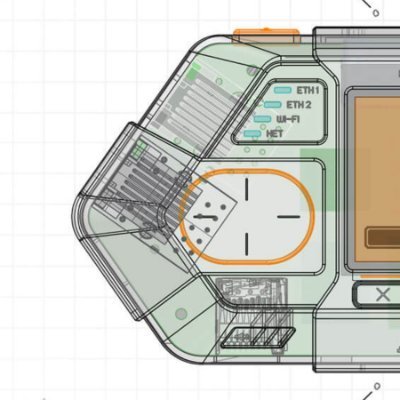
🛰️Satellite modem demo on Flipper One — an emergency pager Experimenting with satellite connectivity on Flipper One. The video shows an emergency SOS pager that sends your geolocation so you can be evacuated from a zombie apocalypse when there is no mobile coverage. NTN (Non-Terrestrial Network) is a 3GPP...

90,821 Aufrufe • vor 7 Tagen •via X (Twitter)

0 Kommentare

Keine Kommentare verfügbar

Kommentare vom Original-Post werden hier angezeigt

Ähnliche Videos

Excited to announce UtilitySat, the world’s first multi-mission geostationary satellite, that we're launching at the end of this year. This is a first of its kind. And a new product line-- providing on-demand connectivity for disaster relief, bridge capacity, and other missions. We started Astranis to build something new: small communications satellites that provide dedicated broadband capacity for our customers. At the end of this year we’re launching four more of them on a dedicated Falcon 9 rocket, with many more to come after that. That launch of four satellites includes one satellite for Peru, two satellites for in-flight connectivity, and a fourth satellite that had been previously kept under wraps. Until now. Introducing UtilitySat, the Swiss Army Knife of satellites This is a new product— the world’s first multi-mission commercial GEO satellite, capable of conducting multiple fully-operational broadband connectivity missions. And it is just the first of many. We’ll plan to launch many UtilitySats in the years to come. UtilitySat can provide connectivity on standard Ku, Ka, and Q/V bands, and has the flexibility to dial in exact frequencies using Astranis’s proprietary ultra-wideband software-defined radio. It can also relocate dozens of times around the GEO belt over its lifetime. It does this using our unique on-board dual-propulsion architecture, which includes both a chemical monopropellant system and an electric ion thruster. A new mission every year, or every month When we first began development of UtilitySat almost 2 years ago, we had many different missions in mind. UtilitySat can serve as bridge capacity for a customer that is waiting for a dedicated satellite, as an on-orbit spare, or as extra, surge capacity that can be brought in to supplement the broadband service we’re providing to one of our customers. There are acute needs as well — a natural disaster can wipe out terrestrial connectivity over a huge geographic area. One of the top priorities for first responders and during disaster relief is reliable comms on the ground. With multiple UtilitySats on orbit, Astranis can bring in extra capacity on incredibly short notice. Capacity that is compatible with existing, low-cost GEO ground terminals. In initial conversations with customers for UtilitySat, we’ve seen huge demand — these customers often want to lease the entire capacity of the satellite once they learn what UtilitySat can offer. Customers need all the capacity they can get, and new capacity that can be deployed on short notice is a huge deal and a huge departure from traditional GEO satellites. We see a future where customers will be able to call up extra capacity on demand to augment their existing capacity needs, and we’re making that future a reality. US Government applications The first UtilitySat mission will be a commercial one, but we are seeing enormous demand from both from commercial companies and from our government customers. The US Government has unique needs — Combatant Commanders need to be able to task dedicated satellites to specific AORs at a moment’s notice — and surge communications would give them a new tool in their toolbox, helping them win even in a contested environment. And more broadly speaking our military leaders have said the one priority in national security space is to add resiliency to our fleets, using larger numbers of smaller, flexible, and maneuverable satellites so we’re not dependent on just a handful of huge satellites in GEO. UtilitySat shows that Astranis can do just that. Not traditional GEO satellites UtilitySat is only possible because of Astranis’s unique technology — including our proprietary software–defined radio. The flexibility of having on-board digital signal processing allows us to build a standardized satellite design, and move a lot of what used to be done in hardware, into software. UtilitySat uses the standard Astranis MicroGEO platform, adding more frequency bands and some new software capabilities to make maximum use of the available spectrum, no matter where the satellite is on orbit. Traditional geostationary satellites are designed to sit in one orbital slot for up to 20 years, with a set of frequency bands that is hardwired in at the factory. Their single mission must be predetermined many years before they are launched. Astranis does not build traditional GEO satellites. From day one we knew there had to be a better way, and we’re doing it.

John Gedmark

122,069 Aufrufe • vor 2 Jahren

Today we’re announcing a new product for warfighters and first responders: Astranis Vanguard. A fully air-gapped, rapidly deployable network using a dedicated satellite. In partnership with Persistent Systems, Kymeta, and Satcube. And we’ve demonstrated this capability using an operational, on-orbit satellite asset. Astranis Vanguard offers both defense and commercial customers the ability to quickly and easily spin up a resilient, self‑forming network capable of voice, video, and broadband data. For defense missions, Vanguard allows operators to sustain command‑and‑control and situational awareness in austere or contested environments. Dismounted or mounted teams can deploy mobile terminals to extend connectivity beyond line-of-sight, all without reliance on a central hub or existing infrastructure. For commercial and public safety users, Vanguard offers a method to rapidly restore or extend coverage. First responders can stand up connectivity within minutes after severe weather or wildfires, enabling push‑to‑talk, live drone feeds, and data sharing for incident command. And industrial operators in the energy, mining, rail, and maritime industries can use the system to link remote crews and equipment where cellular access is sparse or unavailable. The live demonstration proved out this capability with: ‣ an operational Astranis satellite in geostationary orbit (GEO), with connectivity managed using the satellite’s onboard software-defined radio ‣ a Mobile Ad-Hoc Network (MANET) with Persistent Systems MPU5 broadband radios, using that network to share video feeds, comms, and IP traffic ‣ Flat-panel user terminals by Satcube (for communications on the pause) and Kymeta (for communications on-the-move), connecting directly to the Astranis satellite to provide backhaul and extend the network beyond line of sight This is real equipment that is already deployed all over the world with warfighters, first responders, and a wide array of enterprise customers. In industries that care about mobility and security like oil & gas. Astranis Vanguard is a big deal. It’s a capability that customers have long asked us for. It was only made possible due to our collaboration with Kymeta, Persistent Systems, and Satcube, and we’re excited to roll it out to our existing and future customers.

John Gedmark

74,510 Aufrufe • vor 8 Monaten

Astranis is building a new satellite for Taiwan. 🇹🇼 With our customer, Chunghwa Telecom, we will bring Taiwan its first-ever dedicated communications satellite. Chunghwa Telecom is the largest telco in Taiwan, with a market cap of more than $30 billion USD. Independent, secure internet infrastructure has never been more geopolitically important — and because it’s impossible to replicate with LEO constellations or even terrestrial links, it merits some spelling out. Astranis was founded on the belief that access to secure, reliable communications infrastructure is foundational to peace, prosperity, and self-determination. The satellite we’re bringing to Taiwan represents resilience. It will serve as a critical backbone for cellular connectivity, maritime communications, and essential government services across Taiwan. And it will ensure that Chunghwa Telecom’s network remains operational in times of crisis, whether in the face of natural disasters or other disruptions to terrestrial infrastructure. Importantly, Astranis provides more than just a satellite — we give our customers a standalone, dedicated network. A network that can be rapidly deployed and fully spans their geography of choice. With enterprise-grade security, customizability, and deep insights into the configuration and operation of the network. And as an independent piece of infrastructure, it safeguards against geopolitical risks, and is beyond the reach of hostile neighbors. Those are the benefits of having your own, dedicated satellite and network. And that’s why so many customers are choosing Astranis. We at Astranis are honored to be part of this moment, and to have a product that has proven so uniquely needed in today’s world. We look forward to continuing to support Taiwan and its people for many years to come.

John Gedmark

202,771 Aufrufe • vor 1 Jahr

is our AI project to make computing feel more human L A N D E R Here are the 4 best demo videos of the magic of DATA in action. DATA is a personalized assistant who knows and remembers every conversation you have with it accross your iPhone, Mac, iPad, Watch, Texts, Emails, and HomePods. You can talk to DATA right in your AirPods or text it just like a person. DATA can read, write, understand, speak any language, and translate between them. It can help with real work and home life tasks like research, writing, scheduling, reminders, and triage. And it's easily customizable so you can have DATA automatically do whatever you want whenever you want with just a few taps and natural language instructions - no code required. DATA can do just about anything you can do on your phone on your behalf automatically including very advanced things Siri can't, like summarizing, analyzing, and drafting replies or writing documents. It can read web pages, texts or emails you show it, or PDFs of any kind. It can do other real world tasks that require complex analysis and common sense too, like: - figure out where the nearest beach is (even when you're in Colorado) and instantly fetch the current surf report up to the current minute. - summarize and drafting replies to entire email chains - plan out entire work projects or multi-day vacations on your calendar - sketch out ideas for you in picture form or drafting Notion pages with charts and graphs. DATA can also use its own judgement to determine when to run an action or not, even if you've scheduled it, allowing you to make VERY complex automations that require many different inputs to make a decision, like for example: - only opening the blinds on your lunch break if it's sunny out and you're working from home. DATA works natively and easily with Apple HomeKit & other shortcuts. DATA can also take initiative and check in with you throughout the day by voice or text and proactively send messages to you and others on your behalf based on your personal and professional goals, current tasks, and calendar. DATA can integrate with many apps on your phone, and is compatible with multiple large AI language models. I've gotten to make a few demo videos that I think really capture how powerful DATA can be for every day life. Here they are all in one tweet. Make sure your sound is on as you watch them. 1. This is the first demo video I ever made from April 19th, 2023. It walks through all the ways you can interact with and use the DATA shortcuts. Everything from saying "Hey Siri" to tapping on custom apps on your home-screen. 2. The second demo video was made May 5 and is an example use case I made of how commands work - commands allow DATA to actually run actions on your phone like taking pictures and sending messages. This demo shows me taking a picture of an email template, and data drafting an email based on that template. It's gotten much better at realizing when it has just run a command and incorporating that information naturally into the conversation now, especially on GPT-4. 3. This third Commands video, May 12 is a walkthrough of ALL the phone functions that commands allow DATA to do: sending texts and emails, making pictures, seeing pictures, reading things, and scheduling events. Since this video we've added auto-replies to texts and emails, summarizing documents, writing documents, health app data retrieval, web surfing, scheduling alarms, making playlists, and more. 4. This last demo I made today, June 15, shows everything DATA does working in concert to generate a crazy detailed morning briefing with background music - including making a unique playlist and giving a detailed analysis of current events complete with Ski & Surf conditions near me other live information from the internet. So now that you've seen everything DATA can do, what's the coolest feature? What features should we add? What would you use DATA for first?

steve

640,114 Aufrufe • vor 3 Jahren

American Surgeon shows the actual letter from UnitedHealthcare DENYING a patient in emergency condition from receiving care “This is a woman who was in the emergency room with pulmonary embolisms” “I think we all knew this would happen. I had another patient come in and share with me that UnitedHealthcare denied her inpatient's day. So this is a patient who had shortness of breath and some chest pain, and she just knew that something wasn't right in her body. She had a family history of blood clots and she'd had a deep flap surgery a couple of weeks ago. She went to the hospital and they saw her and they found that she had a life threatening condition known as pulmonary embolisms. So she was admitted to the hospital and taken care of really well by the doctors there. And they ordered all the right things. After a couple of days, she was discharged. She got a letter from UnitedHealthcare explaining that they didn't agree with the level of her care and that they would not cover it. So I'm gonna share some of the language of that letter with you, and I want you to know that my patient that we talked about previously who had her surgery denied had almost exactly the same letter shared. So there's some troubling things in this letter. I think this term is really interesting. United is saying they reviewed the request for inpatient admission. So let's all just pause and consider that. This is a woman who was in the emergency room with pulmonary embolisms, and the doctor wasn't really requesting anything. They were saying this patient needs to be in the hospital. But an insurance company sees this as a request, and that's part of this prior auth environment that we're living in. So I think it's important as patients and as physicians to just acknowledge that this is our reality now. Someone can think that there's a good medical decision for you and can write orders and wanna do the right thing for you, but your insurance company is seeing that as a request and deciding whether or not they wanna do it. One of the criteria that this insurance company used to decide whether or not to accept or deny this request was whether it's medically necessary. And it's so interesting that we're letting insurance companies and the doctors who work for insurance companies determine what's medically necessary and not just the doctor in front of the patient in the emergency room. So this is a really bold statement from UnitedHealthcare for my patient. They say you did not have to be admitted as an inpatient to the hospital for this care. I think we all need to just reflect on that. An insurance company is telling a patient and her doctor that they disagree with the plan of care to keep that patient safe. I know that this is boiling down to whether it's an inpatient admission or an observation admission, and that's really about money. But what I wanna point out to you is they're making medical decisions. This insurance company is actually weighing in and disagreeing with a doctor who made a medical decision to admit this patient for her safety. So this specific sentence, when a doctor or facility treats a patient above the recommended level of care, we cannot cover it. What the heck? That's what we do. We go above and beyond as physicians. It's clear that insurance companies don't, and they're actually saying it here.”

Wall Street Apes

115,691 Aufrufe • vor 1 Jahr

Here is how you can install an open-source, enterprise-grade RAG system on your server (with the best document understanding I've seen.) First, something obvious to anyone trying to sell RAG in the market: You are crazy if you think companies will let their data travel to a hosted model. No one wants to send their data anywhere (those who do haven't found an alternative.) Every single company would rather have an air-gapped system with no internet access. GroundX is an open-source RAG system that you can run on your servers (or any cloud provider, as long as you have access to GPUs) and works without a network. (If the military wants to do RAG, this is precisely what they will be looking for.) I installed GroundX on my AWS account and recorded a video to show you how to use it. There are two services you can use: 1. Ingest: This service uses a pretrained vision model to ingest and understand your knowledge base. 2. Search: This service combines text and vector search with a fine-tuned re-ranker model to retrieve information from your knowledge base. A quick note about the Ingest service: 99% of people think they need better "retrieval" mechanisms. I think they need better "ingestion." That's where this service comes in! Ingest "understands" your documents in a way I haven't seen before. After you try it, you'll realize why showing your LLM your raw documents is a bad idea. In the video, I use a free tool called X-Ray to test a document and understand how the Ingest service breaks it down. You can access this tool by signing up for a free GroundX cloud account and uploading your documents. You'll see a bit more about this in the video.

Santiago

89,624 Aufrufe • vor 1 Jahr