Загрузка видео...

Не удалось загрузить видео

На главную

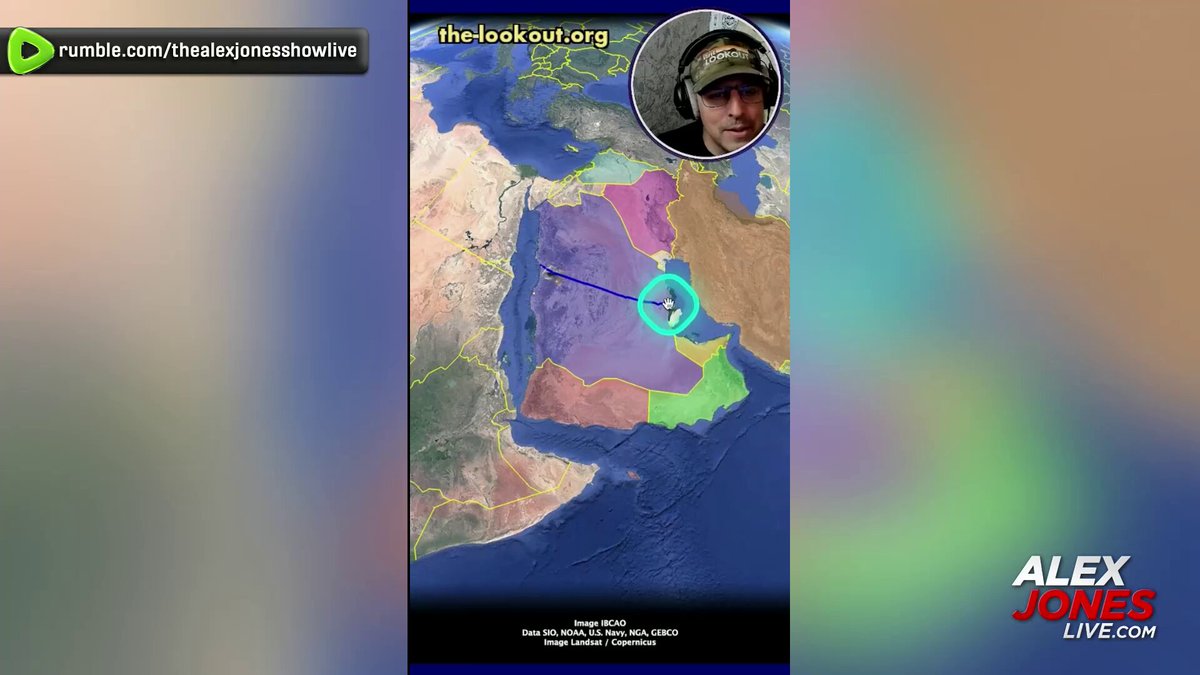
Saudi Arabia and Israel held talks mediated by CENTCOM for Israel intelligence support against the Houthis. Shortly after, media reported Saudi attacks on 5 locations in Yemen. Earlier this week, Saudi Arabia’s East-West pipeline was attacked causing oil prices to surge. With the Strait of Hormuz and the Bab...

21,771 просмотров • 18 часов назад •via X (Twitter)

Комментарии: 3

Фото профиля 🌠1stWaveStarseed🐬
🌠1stWaveStarseed🐬18 часов назад

💫5D Chess News

Фото профиля Kat Fullmer
Kat Fullmer18 часов назад

Always good info. TY @ShadowofEzra

Фото профиля Arda 🇸🇪🇮🇷
Arda 🇸🇪🇮🇷18 часов назад

Israel is helping a Wahhabi tribe, containing radical Islamic people with intelligence to stand against Yemen, a country which fights for the rights of Arabs Crazy

Похожие видео

🇸🇦🇾🇪 Saudi Arabia built its east-west energy system for one nightmare scenario: Hormuz gets shut. Move the oil across the country to Yanbu and ship it through the Red Sea instead. Malcolm Nance argues the Houthis may have now broken that backup plan too. His assessment is that the Houthi advance through Mocha, Dahbub and onto Perim Island has given them physical control over the narrowest part of Bab el-Mandeb, where shipping passes close enough to shore that even relatively simple weapons become dangerous. And the collapse was startlingly fast. Nance says Saudi-backed forces that were supposed to number roughly 40,000 in the sector may in reality have had only a few thousand troops, with many positions abandoned as the Houthis advanced. “They dropped their stuff and they ran for their life.” The Houthis then seized weapons, bases, islands and the coastline leading directly to the strait. That leaves Riyadh with an ugly equation. Hormuz is constrained by Iran. The east-west pipeline has been attacked. And now the Red Sea outlet is threatened by a Houthi force that Nance believes Saudi Arabia cannot dislodge with airstrikes alone. “The Bab el-Mandab door has slammed shut.” Nance calls this an existential moment for Saudi Arabia. Either Riyadh accepts that the Houthis now control the chokepoint and cuts a deal, or it commits to a real ground war in Yemen, something the Saudis tried before with fairly miserable results. For decades, Saudi Arabia’s security model rested on one assumption: If things got bad enough, America would step in. This time, Trump said no. That may be the most important development of all. Malcolm Nance

Mario Nawfal

305,334 просмотров • 2 дней назад

Houthis are warning Saudi ships not to transit the Red Sea / Gulf of Aden. Some initial thoughts: Initial indications are that this blockade applies only to ships that are owned by a Saudi company or are Saudi Arabia-flagged. At the moment, this does not suggest that Saudi ports are likely to be targeted, nor does it suggest that ships calling at Saudi ports are at increased risk. It does however starve Saudi Arabia of direct access to the Asian markets. The BaM is Saudi’s gateway to Asia without having to circumnavigate the whole African continent. We cannot just assume though, that because the Houthis did not explicitly call out Saudi ports, that this threat does not apply to them. The Houthis have the capability to target both Saudi Red Sea and Gulf ports, and are not always forthcoming with information before the implementation of a new target profile (Magic Seas/Eternity C). Saudi is relying on Yanbu to export oil via East-West pipeline due to SoH cargo volumes being significantly reduced. Yanbu is a huge vulnerability in the global oil market should the Houthis choose to attack. We must also see how KSA responds. The RSAF struck Sana’a last week which appears to be a shift away from their normal restraint and could suggest the Saudis are ready for another confrontation with the Houthis. It is likely that the Houthis are retaining escalation such as KSA ports, ships calling KSA etc to respond to any potential Saudi response.

Martin Kelly

156,289 просмотров • 1 месяц назад