Загрузка видео...

Не удалось загрузить видео

На главную

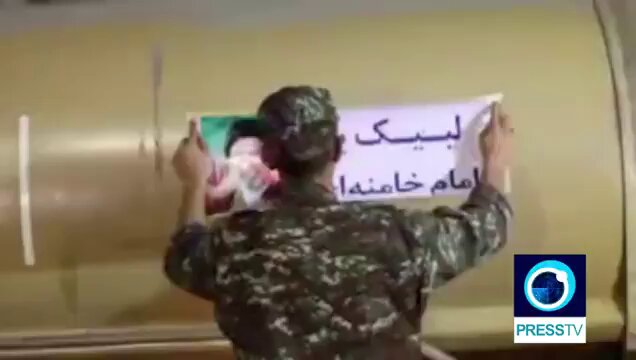
Saudi Arabia has been building an underground missile network since 1987. Six known bases. Chinese ballistic missiles. Solid-fuel engines. Underground tunnels carved into mountains. The newest facility — An-Nabhaniyah — is the first base built from scratch in four decades. Still expanding. This program didn’t appear overnight. It was...

19,516 просмотров • 2 месяцев назад •via X (Twitter)

Комментарии: 0

Нет доступных комментариев

Здесь появятся комментарии из оригинального поста

Похожие видео

🚨 The Iranian regime’s underground missile cities, built while millions of Iranians faced poverty and water shortages, have come at a devastating cost. While ordinary Iranians struggled with inflation, economic decline, and collapsing living standards, the Islamic Republic spent decades pouring hundreds of billions of dollars into underground missile cities, tunnels, drones, and military infrastructure. This was never truly about defending the Iranian people. It was about exporting ideology, threatening Israel, funding regional militias, and pursuing endless confrontation at the expense of Iran’s future. For years, the regime openly centered its foreign policy around the destruction of Israel while simultaneously constructing vast underground missile networks beneath mountains across the country. According to estimates outlined in the analysis, the cost of excavation and missile infrastructure alone may range from tens to hundreds of billions of dollars. Meanwhile, millions of Iranians faced: ⚪ Economic collapse and inflation ⚪ Severe water shortages and environmental destruction ⚪ Underfunded hospitals and schools ⚪ International isolation and sanctions ⚪ A collapsing currency and shrinking opportunities The regime chose missile tunnels over modern infrastructure, regional conflict over national prosperity, and ideological extremism over the well-being of its own people. An entire generation of Iranians grew up under sanctions, economic pressure, corruption, repression, and instability while the regime diverted national wealth into missiles, proxy groups, and underground military projects. Missile cities may symbolize power for the Islamic Republic. But for many Iranians, they symbolize decades of misplaced priorities and a regime that repeatedly placed ideological warfare ahead of its own people.

The Iran Watcher 🇮🇷

42,394 просмотров • 3 месяцев назад

🚨BREAKING 🇺🇸 America is now hunting Iran’s underground missile cities… and A.I. is helping find them. Claude This clip from The Will Cain Show highlights something many people still do not understand about modern warfare. The United States is no longer relying only on satellites and human analysts. Artificial intelligence systems are now processing massive streams of intelligence data… satellite imagery, infrared signatures, terrain mapping, and signal intelligence… to locate hidden missile facilities buried deep underground. Iran spent decades building what they call “missile cities.” These are hardened underground tunnel networks carved into mountains and desert rock where ballistic missiles, launchers, and fuel are stored. They were designed to survive conventional bombing and allow Iran to launch salvos even after being attacked. But technology has changed the battlefield. Advanced A.I. systems can now detect subtle indicators most people would never notice. Changes in soil displacement. Ventilation heat signatures. Vehicle movement patterns. Supply chain traffic. Even tiny structural anomalies in satellite imagery. When those data points are fused together… hidden launch complexes become visible. That is why you are now seeing reports of precision strikes targeting underground missile infrastructure across Iran. This is not random bombing. This is algorithm-assisted target acquisition. And it means the days of hiding strategic weapons inside mountains are becoming a lot harder. The real question now is this… If A.I. can expose underground missile networks once considered untouchable… How many more of these so-called “missile cities” are already mapped? #SilentMajoritySpeaks #AStoneGroove

A Gene Robinson

211,686 просмотров • 5 месяцев назад

Iran named a missile after the man America killed. And it's now flying at American bases. Meet the HAJ QASEM. Named after IRGC General Qasem Soleimani — assassinated by a U.S. drone strike in January 2020. The most powerful Iranian military commander in a generation. His death radicalized an ENTIRE generation of IRGC officers. 5 years later, the missile carrying his name is hitting targets across the Middle East. 💀 500 kg high-explosive warhead 💀 Range: 1,400 km — hits Israel, every U.S. base in the Gulf, all of Saudi Arabia 💀 SOLID FUEL — launches in minutes with zero warning 💀 Liquid-fueled missiles need hours of visible fueling — satellites detect them 💀 Solid-fueled? By the time you see it, it's already in the air 💀 Precision-guided — Iran's MOST accurate ballistic missile ⚠️ This is the missile Iran upgraded to AFTER studying 10 days of U.S. air defenses ⚠️ Solid fuel = no fueling trucks = no satellite warning = no preemptive strike ⚠️ 1,400 km range = launched from deep inside Iranian territory, where U.S. bombs haven't reached ⚠️ Named after a martyr = this missile was built for ONE purpose: revenge They killed Soleimani and thought it was over. Iran spent 5 years building a weapon in his name. A weapon designed specifically to hit the bases of the people who killed him. The symbolism was never meant to be subtle. And tonight Trump just threatened "Death, Fire, and Fury" on the same country launching these missiles. A missile named after revenge. A president threatening annihilation. And no off-ramp in sight. Prepare accordingly. 🚨🚨🚨

JinWoo Kim, IQ 289

11,307 просмотров • 5 месяцев назад

On June 21, 2025, seven B-2 Spirit stealth bombers departed Whiteman Air Force Base in Missouri, flew east across the Atlantic, and dropped twelve 30,000-pound GBU-57 Massive Ordnance Penetrators on Iran’s nuclear enrichment facilities at Fordow, Isfahan, and Natanz. That operation was called Midnight Hammer. It lasted 36 hours. The chairman of the Joint Chiefs quoted a trailing pilot as saying it was “the brightest explosion I’ve ever seen.” Each bomb weighed fifteen tons. It was the first time the GBU-57, the largest conventional weapon in the American arsenal, had been used in combat. Eight months later, the B-2s went back. CENTCOM confirmed on March 1 that B-2 stealth bombers armed with 2,000-pound bombs struck Iran’s “hardened ballistic missile facilities” during overnight operations as part of Operation Epic Fury. Fox News reported, citing a US defense official, that four B-2s dropped “dozens of 2,000 lb bombs on underground ballistic missile sites in Iran.” Open-source flight analysts tracked four aircraft under the callsign PETRO41 passing over the Strait of Gibraltar on the return leg, the same routing used during Midnight Hammer. The bombers refueled over the central Atlantic from KC-46 tankers staged at Lajes Air Base in the Azores. On return, they diverted to Dyess Air Force Base in Texas due to weather at Whiteman. Planet satellite imagery from March 1 confirmed the damage: collapsed tunnel entrances at Tabriz North Missile Base, compared against February 23 baseline images published by Newsweek. The weapon choice is the story nobody is telling. Midnight Hammer used 30,000-pound bunker busters because the target was a mountain. Fordow is an enrichment facility buried deep inside solid rock. You need the heaviest bomb ever built to reach it. Operation Epic Fury used 2,000-pound GBU-31 JDAMs with BLU-109 penetrating warheads because the targets are structurally different. Iran’s ballistic missile facilities are not single deep bunkers. They are what defense analysts call “missile cities,” networks of interconnected tunnels carved into mountainsides, with dozens of entrance points, storage chambers, and in some cases, launch fissures in the rock ceilings through which missiles can be fired from inside the mountain itself. You do not kill a missile city with one enormous bomb. You collapse it entrance by entrance. Dozens of 2,000-pound precision strikes across multiple tunnel openings. That is what “dozens of bombs” means. That is what the satellite imagery at Tabriz confirms: not a single crater but a systematic closure of the tunnel network. The mission duration also tells a story. The War Zone reported that the B-2s flew from CONUS because the UK denied access to RAF Fairford and Diego Garcia, the two forward bases equipped for sustained bomber operations. That forced 36-plus-hour round trips from Missouri. Starmer reversed that decision on March 1, granting base access. Future B-2 sorties can now stage from Fairford, cutting transit time dramatically. The four-week war just became an accelerating air campaign. Two B-2 missions against Iran in eight months. The first destroyed the nuclear program with the largest bombs ever dropped. The second is methodically collapsing every mountain that houses the missiles built to avenge the first. The bomber that ended the nuclear threat is now ending the retaliatory capability. Same aircraft. Same air base. Different target architecture. Same result: the mountains of Iran are being opened from the outside.

Shanaka Anslem Perera ⚡

52,963 просмотров • 5 месяцев назад

‼️‼️ #BREAKING 🛰️ 🇮🇷 Satellite images of Iran’s underground missile bases have been released, showing continuous airstrikes carried out with bunker-penetrating bombs. As a result, while during the first two days of the war the Iranian regime was launching hundreds of ballistic missiles, that number has now dropped to only several dozen per day, sometimes not exceeding 15–18 launches. 🎯 Geography of the strikes: ▪️ Missile base south of Isfahan: Satellite imagery dated March 3 shows strike marks at two tunnel entrances. The damage was likely caused by GBU-31 BLU-109 one-ton bunker-penetrating bombs, which appear to have pierced the ground and collapsed internal tunnel exits. ▪️ Missile base in Kashan: Images show destroyed surface buildings and two destroyed vehicles. ▪️ Missile base north of Kermanshah: All surface structures are destroyed, and the tunnel entrances were likely damaged. A strike mark is visible on a nearby road, though the intended target is unclear. ▪️ Missile base south of Tabriz: The radar station domes and auxiliary structures of a recently built facility have been destroyed, while tunnel entrances are damaged. Numerous explosion craters are also visible along nearby roads. ▪️ Missile base in Dezful: Airstrikes destroyed surface infrastructure and buildings. ▪️ Missile base in Bid Kaneh: Tunnel entrances were struck with bunker-penetrating munitions. The checkpoint and support buildings have been destroyed. Scattered craters indicate strikes against missile launchers. ▪️ Updated imagery from the base north of Isfahan: Strikes continue against launch systems likely emerging from underground facilities. Fuel spill traces are visible from at least two destroyed launchers. ▪️ Updated imagery of the Khorgu missile base after repeated strikes: Tunnel entrances appear to have been the primary target. It remains unclear whether bunker-penetrating weapons were used, but the entrances suffered significant damage. Evidence also shows one destroyed launcher. ▪️ Missile base in Yazd: Strikes targeted tunnel entrances, while support buildings were destroyed. Craters along nearby roads indicate attempts to destroy mobile launchers, though their effectiveness is uncertain. ▪️ Missile base in Lar: Strike marks are visible on tunnel entrances, while most auxiliary buildings are destroyed or heavily damaged. Additional strike marks on nearby roads suggest attacks on missile launch systems.

NSTRIKE

12,562 просмотров • 5 месяцев назад

There is a reason why the super-rich are interested in the Alps and Switzerland, and why the Alps have a vast number of doomsday bunkers built, even though Switzerland was neutral in all major wars and even Hitler never invaded. The newest project for the elites lies deep inside Switzerland's Brünig massif, an extraordinary underground complex that has been expanding for decades. The name of the project is Brünig Mega Safe, a new network of high-security private caverns designed to protect the assets of extremely wealthy clients, mainly gold, luxury items, important data such as AI, etc. The construction of the new caverns officially began on January 28, 2026, after the first customer contracts were signed. The new tunnels have enormous cross-sections of 70–130 m², and the developers describe the mountain itself as the primary layer of security. The wider underground complex already contains shooting ranges, an explosives depot, underground storage, a restaurant, and a full-scale tunnel used for emergency training. One 2020 investigation even described plans for an underground gold refinery. Now the elites will store gold, art, luxury vehicles, wine, sensitive data, and other valuable assets there. Some caverns will be expanded to an enormous size, with some approaching the footprint of a football field. Stable rock. Controlled access. Constant temperatures of approximately 13°C. Water, electricity, and truck access. And above everything sits an enormous natural shield of solid Alpine rock. The place lies above 3,500 feet above sea level. They are preparing for the Geophysical Event.

Open Minded Approach

64,773 просмотров • 7 дней назад

🔥 Iranian arsenal comes back online faster than US can blink Satellite imagery and new US intelligence assessments confirm that Iran is not defeated, but is rebuilding its armed forces. 🇮🇷Tehran has cleared tunnel entrances at underground missile facilities buried by US-Israeli attacks, reactivated radar systems and restarted drone production. While US President Donald Trump boasts to have "decimated" Iranian military power, his own spies admit Iran has regained access to 90% of its underground missile network—and is rebuilding its armed forces much faster than expected. 🔴Missile sites back online: Satellite images published on May 18 shows four of five tunnel entrances cleared at the Abyek underground facility, while the fifth is partially cleared. Iran is either recovering its missiles or making the site active again. 🔴Radar systems intact: Images of the Razavieh site from May 7 confirms a Kavosh radar station, a Marconi S 247 and an Alborz radar still standing despite structural damage. 🔴Access restored: US intelligence now believes Iran has regained access to some 90% of its underground missile network. 🔴Surviving launchers and drones: Roughly two-thirds of Iranian missile launchers survived US attacks. Thousands of Iranian drones still exist—about half the country's stocks. Anti-shipping missile batteries remain largely intact, threatening the Strait of Hormuz. 🔴Drone production restarted: Since the start of the six-week ceasefire in early April, Iran has already restarted some drone production. US intelligence thinks Iran will be back to full drone strength in as little as six months. 💬"The Iranians have exceeded all timelines for reconstitution," an un-named US official told CNN. 👍

🇷🇺 STANISLAV KRAPIVNIK 🇷🇺

11,763 просмотров • 3 месяцев назад

🚨FORMER BUSH HOUSING OFFICIAL CLAIMS GOVERNMENT HAS SPENT 21 TRILLION BUILDING AN UNDERGROUND DOOMSDAY BASE Former housing official who worked under President George H. W. Bush has made an astonishing claim that the U.S. government spent years funneling money into the creation of a secret underground "city" where the rich and powerful can shelter in the event of a "near-extinction event." According to Fitts, who worked as an investment banker before joining Bush's administration, that money was used to fund the development of what she described as an "underground base, city infrastructure and transportation system" that has been kept hidden from the public. Initially, Skidmore said he thought Fitts had made a mistake, stating that he assumed she had meant to say $6.5 billion, not trillion. “So I found the report myself and sure enough it was $6.5 trillion," he said. "One of the things I've looked at in the process of looking at where all this money is going is the underground base, city infrastructure, and transportation system that's been built," she said. "We have built an extraordinary number of underground bases and, supposedly, transportation systems." Catherine Austin Fitts, who served as the assistant secretary of Housing and Urban Development for Housing between 1989 and 1990, made the shocking allegations during an appearance on former Fox News host Tucker Carlson's podcast, although there is no concrete evidence to support her claims. Fitts, 74, who is originally from Philadelphia, cited research by Michigan State University economist Mark Skidmore, who released a report in 2017 stating that he and a team of scholars had uncovered $21 trillion in "unauthorized spending in the departments of Defense and Housing and Urban Development for the years 1998-2015." At the time, Skidmore noted that he first began investigating the unreported spending after he heard Fitts "refer to a report which indicated the Army had $6.5 trillion in unsupported adjustments, or spending, in fiscal 2015." "Given the Army’s $122 billion budget, that meant unsupported adjustments were 54 times spending authorized by Congress. Typically, such adjustments in public budgets are only a small fraction of authorized spending," the report noted. She told Carlson that she spent two years researching where the $21 trillion had gone, alleging that she uncovered evidence that there are 170 secret facilities in the U.S. alone, explaining that she and a team of investigators combed through "all the data and all the allegations on underground bases" in order to make a "guess" as to how many might exist. Additionally, Fitts alleged that several of these bases are located beneath oceans—not just underground. "We systematically went through and tried to guess estimate our guess—this is totally a guess—of how many underground bases [there are], both underground in the United States, but also underground under the ocean around the United States. "And our estimate was 170 with a transportation network connecting them," she said. When Carlson asked what the "purpose" of these underground bases is, Fitts responded that they would be used if a "near-extinction event" was believed to be on the horizon.

SANTINO

671,437 просмотров • 7 месяцев назад

Every major American base in the Gulf has been hit in Iran's July campaign except one. Prince Sultan base, just outside Riyadh. The reported price of that immunity is the strangest fact of this war. Saudi Arabia grounded America's own warplanes. The March 2026 record shows what Riyadh was buying its way out of. Iran struck Prince Sultan three times, killing a 26 year old American sergeant, wounding dozens, setting a KC-135 tanker ablaze, six ballistic missiles and 29 drones in a single night. Saudi defenses intercepted a missile aimed at Riyadh itself. Then the pattern broke. Defense trade reporting says that since early May the base has been operationally locked down, with Riyadh unilaterally grounding dozens of US aircraft under its own national posture. When the IRGC Revolutionary Guard numbered its July phases, Kuwait and Bahrain first, Jordan and Qatar second, and warned that no American base would be spared, Prince Sultan base was spared anyway. The only one. Iran's argument all war has been that hosting the launcher makes you the target. Riyadh ran the experiment in reverse. Ground the launcher. Leave the target list. It is the only Gulf capital paying Iran in America's coin, and for ten weeks the fire stopped coming. The logic is older than this war. In 2019 Abqaiq burned and Washington did not shoot back, so Riyadh stopped renting its safety from one landlord. The 2023 detente with Tehran, brokered in Beijing, was the second policy. The grounding of American wings on Saudi concrete is its wartime form. Tonight, sirens sounded near Riyadh and Yanbu. The warnings were lifted quickly, nothing confirmed hit, and the loudest strike claims trace to a parody account. If a real missile lands on Saudi soil, the experiment is over. Until then, the experiment is the story. Every other host has learned what the bases cost. MBS & Saudi Arabia is testing what grounding them buys. In this war, the safest place for an American aircraft is parked, on the soil of an ally that will not let it fly. That’s what I think ..

Shanaka Anslem Perera ⚡

806,982 просмотров • 1 месяц назад

🪖🇸🇦 Saudi Arabia is hedging against regional disorder from multiple directions while filling some of the strategic space created by Iran’s weakening and withdrawal. 🇸🇦🇹🇷🇵🇰 The Saudi-Turkey-Pakistan defense pact is not an anti-Iran coalition. Turkey and Pakistan have been sleeping in the same bed with the Iranian regime for decades. 🕋 The Mecca Defense Agreement has been in the making for roughly two years, but it was accelerated by regional upheaval and growing Saudi disappointment with Washington as the ultimate guarantor of Gulf security. Riyadh is increasingly seeking greater strategic autonomy rather than relying on a single external protector. 🌎 Saudi Arabia needs deterrent capabilities of its own. Its nuclear ambitions have not produced an independent nuclear deterrent, while massive investment in armament and localization of the military industry has yet to deliver the level of strategic independence Riyadh wants. 🪖 The new pact allows Saudi Arabia to pool strategic assets with two powerful partners: 🇵🇰 Pakistan brings nuclear deterrence and significant military capabilities; 🇹🇷 Turkey brings NATO experience and a sophisticated, rapidly expanding defense industry; Saudi Arabia brings money, geography, and political weight. 🇺🇸🇸🇦 Nor is Saudi Arabia replacing Washington as its primary defense partner. KSA is diversifying its security portfolio and building on an existing web of bilateral defense relationships, including Saudi-Pakistan, Turkey-Pakistan, Turkey-Qatar, and Pakistan-Kuwait, etc. 📺 Watch my interview with Natasha Raquel Kirtchuk on i24NEWS English today on this topic:

Dalia Ziada

43,599 просмотров • 13 дней назад

But first, the past. What has Cow Cow even built? We built the strongest and most wonderful community in web3 We built the most traded project in the ecosystem, totaling 25% of the NFT volume on the entire chain since launch (after removing the fake part, it’s way more than 50%) We built the most recognizable IP of them all, going way beyond NFTs We built culture in a place where it didn’t exist We built (and released) the most spectacular digital experience in the space. Through it, we brought skins into the ecosystem We built the most successful aligned incentive model for holding an NFT with $MOOVE, rewarding holding the NFT We built and released raffles, a factory, dressing, multiple staking platforms, Only Cows, and many other platforms for our community We built Smoofs and sold it out on Polygon, bringing huge visibility to the entire collection and ecosystem. For this, we launched the first MultiversX -> Polygon bridge We built partnerships with NFT projects and communities from all over web3 We built stories that resonate with people from all around the world We built good vibes, memories and the most unique web3 brand and we got it known in web2 We built(organized) the best ever side events for X Day and for NFT Bucharest. We built the project that was the single moving piece in the ecosystem for the bear period. All eyes, on us. We built lifetime connections, real-life friendships and brotherhoods We build something that can’t be stopped and that will thrive forever And guess what? WE ARE STILL BUILDING 👑🐮 COW COW ON TOP

Cow Cow

16,280 просмотров • 2 лет назад