正在加载视频...

视频加载失败

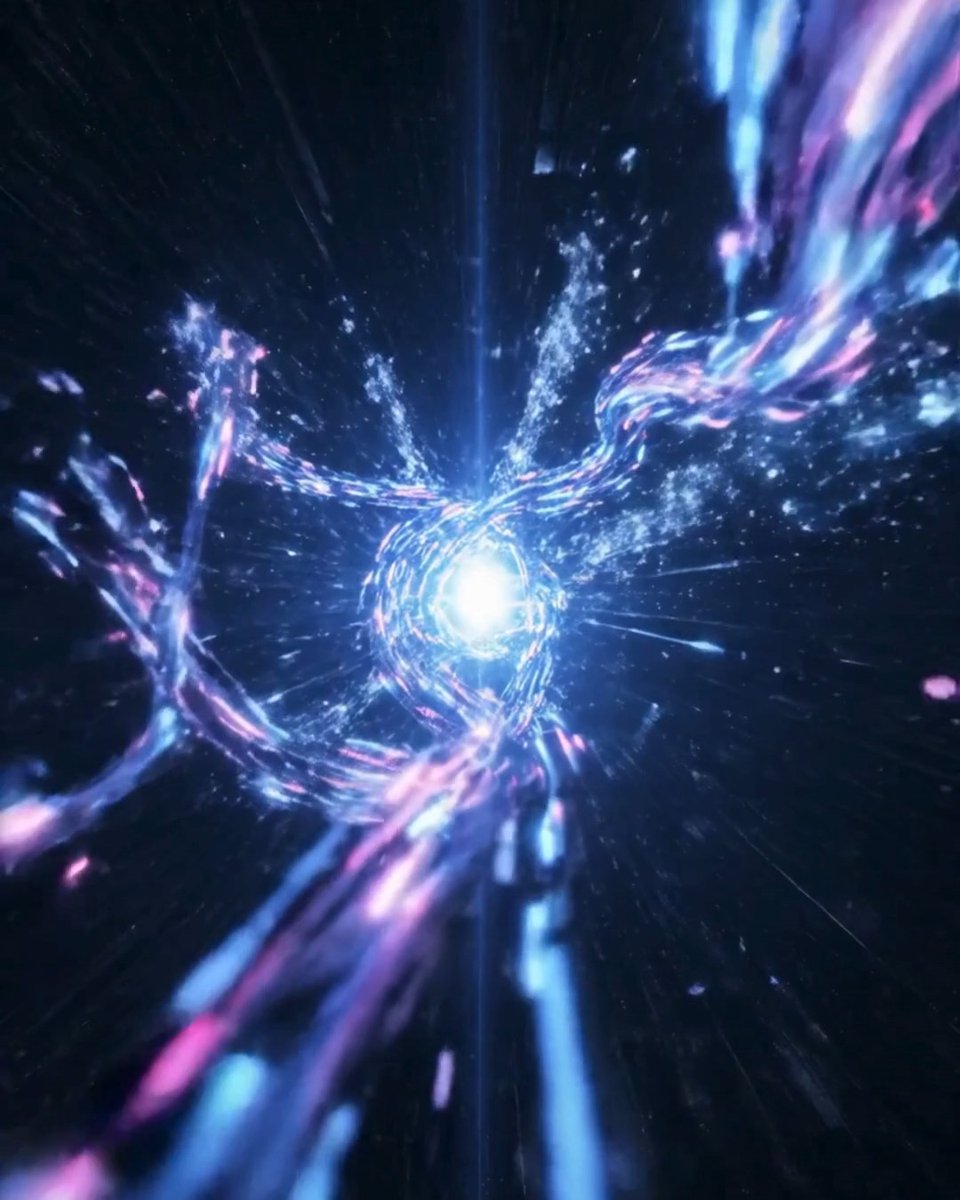
🚨 SCIENTISTS MAY HAVE FOUND A CHEAPER PATH TO QUANTUM COMPUTERS AND IT LOOKS LIKE A HONEYCOMB. Researchers in Japan created tiny cobalt honeycomb structures that show the exact magnetic behavior scientists have been chasing for next-generation quantum materials. Why this matters: Today’s most promising quantum materials rely on...

12,159 次观看 • 3 个月前 •via X (Twitter)

0 条评论

暂无评论

原始帖子的评论将显示在这里

相关视频

WHAT IS A MEDBED — It’s not magic. It’s quantum bio-resonance fused with AI diagnostics, scalar frequency therapy, and zero-point field harmonics. Think of it as a quantum MRI, AI surgeon, and energetic regeneration system — all in one. ⸻ HOW DOES IT WORK? 1. FULL BODY QUANTUM SCAN • Scans the biofield (your body’s energetic blueprint). • Detects anomalies at the subatomic level — long before symptoms show. • Quantum sensors read your body like a hyperdimensional fingerprint. 2. CELLULAR TIME REVERSAL • Accesses your original genetic blueprint — the uncorrupted version. • Uses field harmonics to “remind” cells of their ideal state. • It doesn’t just treat — it restores the body to what it was designed to be. 3. ZERO-POINT ENERGY FIELD • Draws limitless energetic fuel from the quantum vacuum. • Your cells absorb this pure energy to accelerate repair, regeneration, and coherence. • This is not “energy healing.” This is quantum field engineering. 4. SCALAR FREQUENCY CORRECTION • Sends precision scalar waves to reprogram damaged cells. • Like frequency acupuncture — no needles, just vibration at the core of matter. • Inflammation, tumors, scar tissue? Disassembled by harmonic codes. ⸻ WHO HAS THIS TECH? • Classified military medical programs • Breakaway science divisions • The same entities deploying Quantum Financial Systems, AI weapons, and clean energy solutions They’ve had it. They just didn’t want you to. ⸻ WHY HAVEN’T WE SEEN IT? Because Big Pharma profits from symptoms, not solutions. They engineered a sick world that can’t heal — because healing ends the business model. A healthy soul doesn’t obey. A healed body doesn’t comply. A clear mind doesn’t consent. So they buried the cure. Laughed at it. Censored it. Because it threatens their entire empire. ⸻ WHY NOW? Because the collapse of their system is happening in real-time: 🔹 Currency reset 🔹 Healthcare exposure 🔹 Quantum rollout They’ll unveil medbeds as a “revolutionary new breakthrough” — but the truth is: 👉 It was always there. Hidden. Waiting. Suppressed. ⸻ THE FUTURE? Is not pills, not surgery, not chemo. The future is vibrational, intelligent, and self-healing. It’s not just about health. It’s about sovereignty — over your body, mind, and frequency. They’ve had the cure. But now, we take the key. They didn’t want you to read this. We go deeper inside👇 — #HealtyNation #MedBedRevolution #QuantumHealing #BigPharmaExposed #ScalarEnergy #QFS #BreakawayScience #BioResonance

Mr. Pool

83,172 次观看 • 1 年前

🫯 A conflicting physical ontology ! One of the strangest properties in particle physics is the spin. The term spin is a historical misnomer. Electrons (𝑒⁻) do not physically rotate like a spinning top or a globe. Spin is a fundamental quantum property known as intrinsic angular momentum which exists as an inherent characteristic of the particle, much like its mass or electric charge. In quantum mechanics, electrons are treated as fundamental point-like particles with zero size, making the concept of physical 3D rotation nonsensical. A rotating electrical charge creates a magnetic field. An electron naturally possesses its own detectable magnetic field. Even though the electron isn't physically spinning, it acts exactly as if it were because of that. Moreover the spin of an 𝑒⁻ has orientation. As 𝑒⁻ carry a negative electric charge, their inherent spin turns them into tiny bar magnets. Two possible orientations exist in the natural state of the 𝑒⁻, spin up and spin down. When measured along a specific direction (called the z-axis) the 𝑒⁻ can only display one of the two orientation state, up or down. But the strangeness goes a bit further; when an 𝑒⁻ is misplaced or removed from its own orbit, it takes two full circles (720°) to return to its original quantum state. The spin isn’t motion, it’s an undeniable static, resilient force of this elementary particle, listed as one the fundamental constant of nature. 🔗

𝓜𝒂𝒖𝒓𝒊𝔃𝒊𝒐 𝗜𝒃𝛼

22,933 次观看 • 1 个月前

InterLink’s Early Vision for NIST-Standardised Post-Quantum Cryptography 🔐✨ The next five years may bring a much clearer answer to a question that has long been difficult to judge: Is a digital asset truly secure? 🤔 For InterLink, the answer may increasingly depend on one critical factor: whether it is quantum-resistant and aligned with NIST standards 🧬🔒 Why this matters now ⚠️ Two fast-moving technologies are reshaping digital security: • AI is improving the ability to discover weaknesses in systems 🤖 • Quantum computing is advancing towards the point where today’s cryptographic foundations could become vulnerable ⚛️ For InterLink, this is not just a theoretical discussion. It is a reminder that blockchain networks, wallets, and custody systems must prepare now for the post-quantum era ⏳🛡️ Why NIST is central to InterLink’s approach 📘🏛️ Many in the InterLink community already know NIST. NIST, part of the U.S. Department of Commerce, plays a major role in defining and evaluating security standards, including those for post-quantum cryptography. Its work matters because it helps shape what “secure” will mean in a quantum-capable future 📊🔍 In practical terms, InterLink’s long-term security vision is closely tied to whether its cryptographic design can withstand post-quantum threats 🚀 The risk for blockchain networks and digital assets 🔎💥 Recent research and experiments from major organisations, including Google, have highlighted a growing concern: what was once considered extremely difficult, using quantum computing to threaten cryptographic systems, is no longer something that can be ignored 🧪⚠️ That does not mean current systems are broken today. It does mean that networks which fail to prepare for post-quantum threats could face serious risks later 📉 For InterLink, this is exactly why early research matters 🧠✨ If sufficiently powerful quantum computers become available, some current cryptographic methods may become vulnerable. For any network storing value, identity, NFTs, or permissions, that is a major issue 💳🖼️🧾 InterLink’s early work on post-quantum readiness 🧠🔐 InterLink Foundation has already been researching: ✅ digital signatures ✍️ ✅ cryptographic algorithms 🔣 ✅ migration mechanisms for future security upgrades 🔄 One of the most notable areas of work is the ability to generate new private keys from an existing seed phrase 🌱➡️🔑 This matters because it offers a pathway to improve security without forcing users to abandon access to their assets 🙌 Address Alias: preserving continuity during migration 🪪🔗 Another important InterLink mechanism is Address Alias. This is designed to let users: ✓ retain their existing wallet addresses 🧾 ✓ preserve associated tokens and NFTs 🖼️💰 ✓ migrate to a new cryptographic security architecture 🔐➡️🛠️ That is a practical and user-friendly design choice. Security upgrades are often hard to adopt when they break continuity. InterLink’s approach aims to solve that problem 🌉 Bringing post-quantum protection into smart contracts 🛡️📜 InterLink is also implementing SLH-DSA-SHA2-128s (FIPS 205) within IRC smart contracts. This adds another layer of protection for: • vaults 🏦 • high-value assets 💎 • long-term storage 📦 • sensitive on-chain operations ⚙️ The goal is not only to protect wallets, but also to strengthen the systems that govern custody and transaction security across the network 🧱🔒 Testing on the Taj Mahal Testnet 🧪🛰️ These experiments are currently being conducted on the InterLink Taj Mahal Testnet. According to InterLink, the experimental implementations have passed the NIST-based simulation tests carried out so far ✅📈 That is an encouraging early signal, although broader testing and real-world validation will remain important as development continues 🔍 Looking ahead to 2027 🚀🌍 InterLink’s stated goal is to fully integrate this architecture into the Open Mainnet in 2027. If achieved, that would bring InterLink closer to a future where security is defined not only by current best practice, but by resilience against quantum-era threats 🛡️⚛️ The bigger takeaway 🌍✨ The key lesson is simple: In the quantum era, security will not only mean protecting your private will mean asking whether the cryptography behind that key was built to survive the next generation of computing 🔐⏭️ For InterLink, this is a strategic direction with long-term significance 📌 Final thought 💡 Post-quantum readiness is no longer just a technical topic for specialists. For InterLink, it is becoming part of the broader conversation about long-term digital asset security 🧠🔒 NIST-aligned cryptography, practical migration paths, and user-preserving design may soon define the networks people trust most 🌟 InterLink Labs 👤 + 🌐 KV Reina | InterLink Labs InterLink Foundation #InterLink #ITLG #ITL #WeAreTheFirst10MLinkers Join me on InterLink 😁 Start mining now and use my invitation link: 💰 My code is: 111222777888 💰 Please DM me once you have used my code. 👍

Tekkaus® | InterLink • MOD • T2 Community Builder

22,550 次观看 • 1 个月前

The difference between SEALSQ silicon-based spin-qubit QPUs and quantum processors built on superconducting circuits or trapped ions comes down to physics, manufacturability, and long-term industrial scalability. SEALSQ’s approach uses electron spins confined in silicon semiconductor structures—essentially quantum dots fabricated with CMOS-compatible processes—where the qubit is the spin state of an electron rather than a macroscopic electrical current or a free ion. This makes spin qubits orders of magnitude smaller, potentially allowing millions of qubits on a single silicon wafer, and critically aligns the technology with existing semiconductor fabs, supply chains, and design tools. In contrast, superconducting qubits rely on exotic materials and microwave resonators that are physically large, wiring-heavy, and difficult to scale beyond a few thousand qubits without massive cryogenic and control overhead. Trapped-ion systems achieve excellent qubit coherence but depend on ultra-high vacuum chambers, precision lasers, and optical alignment, making them closer to scientific instruments than manufacturable chips. Silicon spin qubits also benefit from long intrinsic coherence times (especially in isotopically purified silicon), low power dissipation, and a natural path to tight integration with classical control, cryogenic electronics, and security primitives—an area where SEALSQ’s semiconductor and hardware-security DNA becomes a strategic advantage. The trade-off is that spin qubits are technically harder to control at the single-qubit level and are earlier in large-scale deployment than superconducting systems, but if solved, they offer the most credible route to industrial-scale, cost-effective, secure quantum processors, rather than lab-scale demonstrations.

Carlos Creus Moreira

19,616 次观看 • 7 个月前