Loading video...

Video Failed to Load

Go Home

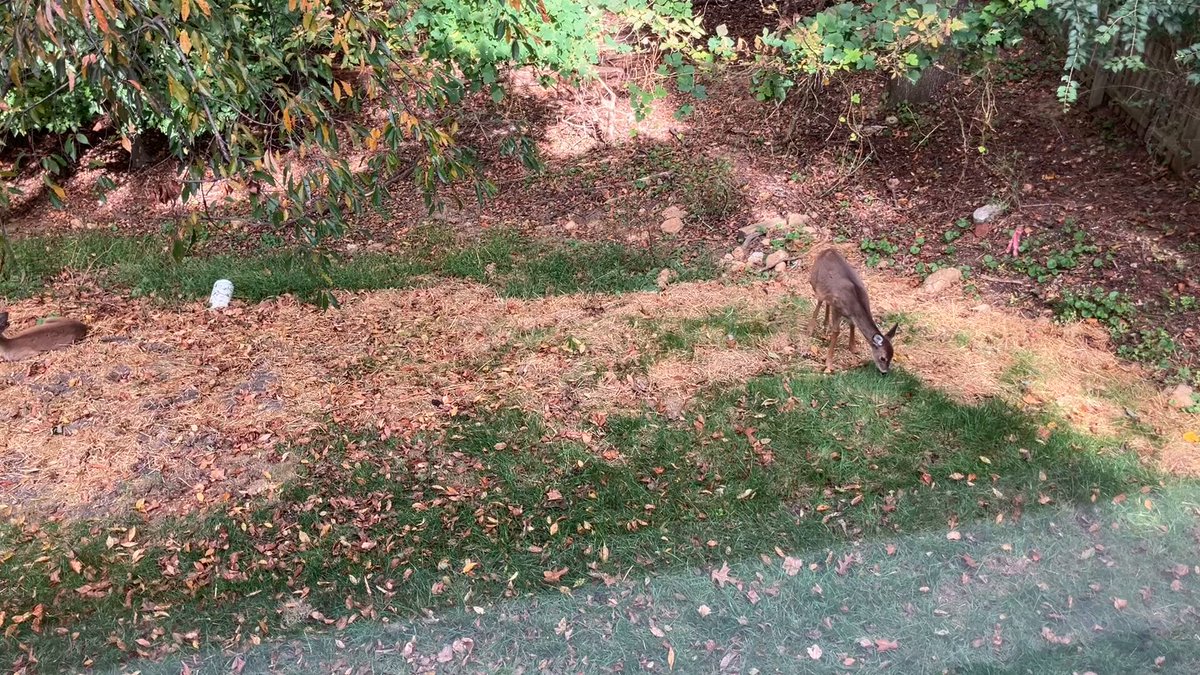
🚨‼️Sharing a few frames from our backyard security camera taken very early this morning. This anomaly persisted for several minutes and showed smooth movement, shape changes, and pulsing brightness. There was no rain, no visible insects, and no obvious light source. We’re not claiming this is anything extraordinary, but...

204,381 views • 7 months ago •via X (Twitter)

0 Comments

No comments available

Comments from the original post will appear here
Related Videos

"But where's the flash?" Watch this CNN demonstration of 6g of PETN being ignited by open flame. What happens? The PETN burns with a visible flame for several seconds. Then it detonates. The detonation happens so fast there is no visible flash — the camera goes straight from fire to debris field. And here's the key: the fire that WAS there is blown OUT by the blast wave. This is not a shaped charge. This is unconfined PETN in open air. No flash. No fireball. The blast wave actually extinguishes the existing flame. Why? Three reasons: PETN's reaction zone is measured in microns and completes in nanoseconds (Anderson et al., Propellants Explosives Pyrotechnics, 2022). At gram scale, the entire detonation event is over in single-digit microseconds. A 30fps camera captures 33,000 μs per frame. The event occupies <0.03% of one frame. The visible "flash" people expect from explosions comes from compression-heating of surrounding air — not the explosive itself. At gram scale there simply isn't enough gas volume being heated to produce visible light that registers on a standard camera. In a shaped charge, it's even less visible because the energy is directed INTO the target as a hydrodynamic metal jet (Munroe effect), not radiated outward as heat and light. The Hezbollah pager attacks (Sept 2024) used 3-6g PETN per device. Watch the CCTV footage — no fireballs. Just a pop and casualties. Sandia National Labs detonates ~32mg PETN and researchers stand next to the chamber in safety glasses. No flash. No fire. "No flash = no explosive" is a Hollywood education, not a physics one. Joe Rogan shaw

Jon Bray

25,456 views • 4 months ago

Chatgpt+ Sedance 2.0 Mini On OpenArt Seedance 2.0, 15 seconds, 16:9. Main subject from Image — lock her identity completely. Keep her face, skin tone, body shape, outfit, hairstyle, and every unique feature perfectly identical throughout the entire video. She is wearing a faded grey sleeveless crop top, loose high-waisted light blue jeans, black canvas sneakers, a black cord necklace, and has black wavy hair tied in a messy side-swept ponytail with bangs. Korean woman with an authentic early-2000s vibe. The entire video takes place in a quiet Korean residential neighborhood with narrow concrete alleys, low-rise houses featuring small terraces, a front yard with a clothesline, potted plants, parked bicycles and motorcycles, large trees, and overhead utility cables everywhere. There are no shops, vendors, or commercial elements—only a natural, everyday residential environment. The camera treatment is the defining element. The footage must feel as if a friend casually picked up a DV camcorder and started recording without any planning or setup. Use heavy handheld shake, constant reframing, the subject naturally drifting toward the edges of the frame, autofocus hunting, visible lens breathing, and exposure pumping. The image should appear faded, low-contrast, slightly washed out, with authentic early-2000s digital noise and compression artifacts. No stabilization, no cinematic movement, and no modern color grading. This camcorder aesthetic is absolutely non-negotiable. She begins sitting on a concrete sidewalk while fixing her ponytail with both arms raised, smiling naturally as the wind gently catches her hair while the camera struggles to maintain focus. The camera then follows her into a narrow alley where she crouches down and feeds a friendly stray cat that walks right up to her. Next, she is in her front yard hanging laundry on a clothesline as the morning breeze softly moves the clothes, while the camera continues swaying and searching for focus. Midway through, she sits quietly on the front terrace holding a coffee cup, calmly looking toward the street as the camera drifts loosely from the side. Then, in a close shot from her right side, she raises her arm, warmly waves to someone off-camera, and says, "Annyeong," with the camera catching the moment a beat late. The final shot follows her in a slow tracking walk down the street with the coffee cup still in hand. She notices the camera, turns slightly, gives a soft, genuine smile, and the recording abruptly cuts to black mid-motion as if the camcorder was simply switched off. Audio must remain entirely natural. Include only morning birds, a gentle breeze, distant motorcycle sounds, faint neighborhood chatter, the stray cat, coffee cup handling, footsteps on concrete, and rustling leaves. No music, no sound design, and no added audio effects.

Mahnoor Fatima

12,439 views • 1 month ago

HTML Artifacts are a big part of how I work with agents now. Artifacts can be more than just static files. When combined with agents, they can take action or help you take action. This unlocks all kinds of interesting ways to work with agents. This is clearly the future. Check out this writing and scheduler artifact I built in a few minutes. It uses a bit of HTML and JS. All the data is in markdown (Obsidian vaults), so the agent can access and modify it at any time. No DB needed. No sophisticated functionalities. The agent decides all that for me based on the skills, context, and memory it has access to. The best part about this simple stack is that all the important information stays with me. This has allowed me to build a recursive self-improving system and automations that can better tap into coding agents like Codex or Claude Code. I could have paid or built an entire app for scheduling posts, and there are so many of them out there. But I don't need to. I've realized a simple artifact does the job. And the simplicity of it is actually an advantage. Very little maintenance for very high returns on personalization, time, and efficiency. The other benefit of this is that I can add features as I please. That level of personalization feels magical, and we should all be pursuing more of it. All of this just keeps compounding. Of course, this example is just about writing. But I have similar artifacts for research, design, experimentation, evaluation, and so much more. And no, I didn't actually publish the post example I shared in the clip. It was just for demonstration purposes. I actually spend more time than this when writing together with agents. Lastly, having built my own agent orchestrator tool has made me realize that simplifying the tool stack is a superpower. If you are curious about how all this works, I will do a live session next week:

elvis

18,374 views • 3 months ago