Video wird geladen...

Video konnte nicht geladen werden

Zur Startseite

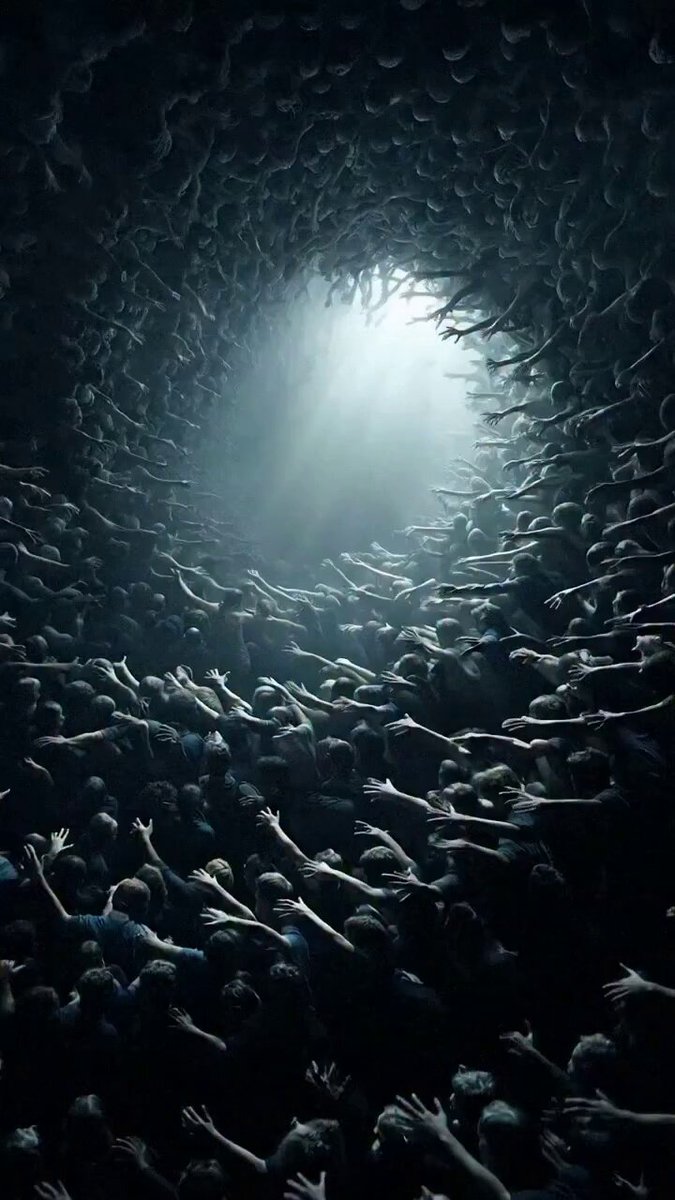
SHE IS PLAYING A PATTERN FOUND IN NATURE The Fibonacci sequence is a numerical pattern in which each number is the sum of the two before it: 1, 1, 2, 3, 5, 8, 13, 21… This sequence appears throughout nature in growth processes, spiral formations, branching systems, and proportional...

78,239 Aufrufe • vor 3 Monaten •via X (Twitter)

0 Kommentare

Keine Kommentare verfügbar

Kommentare vom Original-Post werden hier angezeigt

Ähnliche Videos

The history of Fibonacci's clock is quite intriguing, as it combines the fascinating world of mathematics with the practical application of timekeeping. The clock is named after Leonardo Fibonacci, also known as Leonardo of Pisa, an Italian mathematician from the Middle Ages. Fibonacci is most famous for introducing the Hindu-Arabic numeral system to the Western world and for his work in the Fibonacci sequence. However, the Fibonacci clock we know today is not a direct creation of Leonardo Fibonacci. The modern Fibonacci clock is a tribute to his mathematical genius and the beauty of the Fibonacci sequence. The clock's design is based on the sequence, with each number represented by a specific color or pattern. The Fibonacci sequence is a series of numbers in which each number is the sum of the two preceding ones, starting with 0 and 1. The sequence goes as follows: 0, 1, 1, 2, 3, 5, 8, 13, 21, 34, and so on. The sequence appears in many natural phenomena, such as the arrangement of leaves on a stem, the spiral patterns of a pinecone, and the growth of a nautilus shell. The Fibonacci clock is a unique timepiece that displays the time using the Fibonacci sequence. The clock face is divided into sections that correspond to the numbers in the sequence. The time is shown by illuminating specific sections of the clock face, with each section representing a different unit of time. For example, one section might represent hours, another minutes, and another seconds.

Historic Vids

1,397,440 Aufrufe • vor 2 Jahren

What Cymatics Reveals About the Structure of Reality Do you think the universe is random, or does it follow principles that remain largely invisible to us? Cymatics offers a fascinating way to explore that question. By making sound and vibration visible, it demonstrates how frequency can organize matter into geometric patterns of remarkable complexity. When sound waves pass through water, sand, or other materials, order emerges from movement, producing forms that often resemble patterns found throughout nature. The implications extend beyond the experiment itself. Cymatics reveals that vibration is capable of shaping matter into organized structures through precise relationships governed by frequency. As the frequency changes, the geometry changes with it, suggesting a direct connection between energy and form. This raises a deeper question about the nature of the cosmos. If vibration can generate geometry in a laboratory, what role might vibration play in the formation of larger structures throughout nature and the universe? Similar patterns appear in crystals, flowers, biological systems, and even large scale cosmic formations. The repetition of geometry across vastly different scales points toward organizing principles that may operate throughout reality. The deeper one investigates mathematics, sound, geometry, and nature, the more they appear interconnected. Cymatics offers a glimpse into a universe where form emerges from frequency and where structure may arise from relationships embedded within the fabric of existence itself. Perhaps what we call reality is, in part, the visible expression of patterns generated by processes that begin beyond the limits of ordinary perception. ✨🙌🏾💫 © Robert Edward Grant

🧬Maxpein🧬

12,980 Aufrufe • vor 1 Monat

Fibonacci numbers are the sequence where each one is the sum of the two before it: 1, 1, 2, 3, 5, 8, 13, 21, 34, 55, 89, 144, 233… Every so often one of them is prime these are called Fibonacci primes, and only 21 are known. Here's the new discovery, take any Fibonacci prime (past the first few small ones) and reduce it to modulo 144. You'd expect the leftover remainder could be almost anything , 144 different possibilities. It never is. It only ever lands on one of just four numbers: 1, 5, 13, or 89. Mod 144... This just means finding the remainder after dividing by 144. Here's the three-step process, using the actual Fibonacci prime 1597 as an example. 1. Divide the number by 144. 1597÷144=11.09. 2. Keep only the whole number part, then multiply back by 144. 11×144=1584 3. Subtract to find what's left over. 1597 - 1584 = 13 So 1597 "reduced mod 144" is 13 one of exactly the four allowed numbers. Try it with any of the other 20 known Fibonacci primes and you'll always land on 1, 5, 13, or 89. Never anything else. That's a 97% reduction. Out of 144 possible remainders, 140 of them are simply forbidden to Fibonacci primes. We proved this happens every single time, for every Fibonacci prime known, with zero exceptions. It gets stranger. Those four allowed remainders 1, 5, 13, 89 are themselves smaller numbers from the same Fibonacci sequence. Every Fibonacci prime, when you shrink it down this way, lands back on another Fibonacci prime. The sequence points back at itself. And the positions that produce those four numbers the 1st, 5th, 7th, and 11th spots in the sequence turn out to be exactly the same four numbers that mark critical boundaries in a completely separate math system,(PLCT) one based on multiplying the numbers 2 and 3 instead of adding golden-ratio powers. Two totally different number systems, built from different operations, share the same four "checkpoint" numbers. The animation traces 233 different ways to build the number 144 purely out of powers of the golden ratio (phi ≈ 1.618, the number where a whole equals its bigger part divided by its smaller part). 233 is itself a Fibonacci number the sequence even shows up in how many ways you can build it. Every flash you see is one valid combination, spiraling and glowing as it cycles through all of them. The Golden Lattice ϕ-Power Representations, the General Count Law, and the Fibonacci Prime Mod-144 Signature Theorem

CTFTHEORY

12,714 Aufrufe • vor 1 Monat

In this incredible demonstration from the Maritime Technical and Safety Institute in Japan, a large wave tank uses many synchronized wave-generating devices to create visible symbols and patterns on the surface of the water. Each paddle produces a small wave, but when many waves are emitted at specific timings, amplitudes, and phases, they begin to overlap. Where the wave crests reinforce one another, the water rises. Where a crest meets a trough, the motion cancels out. This is called interference, and it is one of the most fundamental principles of wave physics. By controlling the phase relationship between many individual wave sources, researchers can shape the surface of the water into temporary patterns, symbols, and directional flows. In other words, the visible image is not “drawn” onto the water. It emerges from the mathematics of waves interacting with one another. This is the same underlying principle behind acoustics, cymatics, ocean modeling, signal processing, holography, and even the way complex field patterns arise throughout nature. A single wave carries motion, but many waves, when organized in relationship, create structure. This is why water is such a powerful medium for understanding resonance. It makes invisible dynamics visible and shows us that form can emerge from rhythm, timing, frequency, and relational coherence. At a deeper level, this demonstration reveals something profound about reality itself… Patterns appear when many small movements become synchronized enough to behave as one field. The ocean, sound, light, and even the nervous system all do this, because life is vibrational in nature… Did this expand your perception?

🧬Maxpein🧬

31,782 Aufrufe • vor 3 Monaten

DIVINE MATHEMATICS Number One (1) is the Number of God. Everything is from Number. Number One (1) is the Number of Hydrogen. Your DNA is written in the Divine Mathematics of the Fibonacci Geometric Patterns/Sequences. Your DNA is written in Mathematical Number Patterns. That is why Science is filled with Calculations. Nature is written in the Fibonacci Geometric Patterns/Sequences. You do not need religion to know God. You need to understand the nature of existence from the angle of Science and Mathematics. Galileo Galilei, who deserves to be called the Father of Physics said thus how God created the Universe: "God created the Universe in the language of Mathematics" Everything in the Universe is Governed by Numbers. For this Purpose, Zero or Nothing or the Void is counted, not just as a Number, but as the Source of All Numbers. Zero or Nothing or the Void is mentioned in the Bible as early as Genesis because the Zero or the Void or Nothing is the Basis of All Numbers. In Genesis 1: 1-3 it is written thus: 1. In the Heaven and Earth. 2. And the Earth was without Form and Void; and Darkness was upon the Face of the Deep.... 3. And God said Let there be Light and there was Light. What follows are the 7 Days of Creation. Religion deceives and brainwashed the Masses that these are 7 literal Days. They're really about the Fibonacci Geometric Patterns/Sequences. Numbers govern the Chemical Elements that constitute the Universe, with Hydrogen being Number One to emerge from Zero and is the Same as the Zero with the Zero being the Darkness that was upon the Face of the Great Deep mentioned in Genesis 1:2. Number One became the Light which emerged from the Darkness. Without Darkness, there can be no Light. Everything is essentially a Mirror of the Same Thing. This is what is called Polarity. In other Words, Opposite Things depend on the each other in order to exist. Without Darkness, you cannot know what Light is. This is also represented by Gender, with the Female and the Male being diverse Forms of the Same Thing. The Hermetic Principles explain the relationship between everything in some details. In that regards, I suggest that you should look up the Hermetic Principles in the Kyballion. It is because the Numbers begins from Zero or Nothing or the Void that it is said that God made the Universe from Nothing. As already mentioned Number One is the Number of Hydrogen. The Hydrogen Atom permeates Everything in the Universe. It is because there is Hydrogen that there is a Material Universe. Hydrogen is Number One (1) on the Chemical Periodic Table. There is Nothing in the Material Universe that is not from Hydrogen. Hydrogen is the Basis of all Physical Existence. That is why Number One (1) is also the Number of God. The Sun and the Stars and Planets are All comprised of Hydrogen. Oxygen is constituted by the Thermonuclear Synthesis Hydrogen in the Nuclei of Stars. Hydrogen then COMBUSTS with Hydrogen to produce Dihydrogen Monoxide aka WATER. Your very being is literally powered by Hydrogen. As already indicated, Oxygen first came into Existence through Thermonuclear Fusion of Hydrogen Atoms in Stars. Stars are composed of the Hydrogen. Hydrogen is the Medium of Consciousness and Medium of the Material Universe of which we are an Intrinsic part. All of Nature is powered by Number One (1) aka Hydrogen. You're literally made of Hydrogen that has been transformed in Stars. The Sun, as a Star is composed of Hydrogen Atoms. The Circle which represents Zeros Nothing or the Void or the Darkness and also the Light represents the Hydrogen Atom. That is why the Sun and Moon are Circles. The Circle is the Basic Geometric Pattern. The multiplication of identical Circles create the Patterns and Sequences of the Flower of Life which is in All Indigenous Cultures. ✨🙌🏾💫

🧬Maxpein🧬

25,608 Aufrufe • vor 1 Jahr

This kinetic sculpture, titled Nested Loops, hangs inside The National Museum of Mathematics (MoMath) in New York. It demonstrates exactly how higher-dimensional forms can emerge from the coordinated motion of simple elements moving through time. The circles are pathways of motion…timing mechanisms that guide anchor points along curved trajectories. As the mechanism rotates, strings stretched between these moving anchor points remain under constant tension. Because a taut string always forms the shortest path between two points, each string becomes a straight line, even though the points guiding it are traveling along curves! This is the key insight…circular motion is generating linear geometry. The loops create movement, the strings reveal structure, and as these relationships shift in coordinated time, the eye begins to perceive cubic forms like edges, diagonals, and vertices, all emerging from what is fundamentally a flat plane with moving parts. A cube does not need to be physically present to be perceived. It can be implied through the alignment of edges, the intersection of planes, and the convergence of perspective. What you’re witnessing is a dimensional emergence…a lower-dimensional system producing the visual signature of a higher-dimensional object through synchronized motion. Change the speed of one circle relative to another, and an entirely different geometric form appears. The same strings, the same frame…but a new structure emerges from the new rhythm. This is why the sculpture feels almost alive. It’s revealing that form is relational, temporal, and emergent, so what we perceive as solid objects are often just stable harmonies of moving relationships, frozen in a moment of coherence. This piece asks you to consider: What aspects of your reality are you perceiving as solid, when they’re actually just coherent patterns of motion temporarily aligned? Did this shift how you see structure and emergence? ✨🙌🏾💫 Artist © Chuck Hoberman (MoMath, New York)

🧬Maxpein🧬

48,005 Aufrufe • vor 2 Monaten

In the Andante movement of Mozart's Piano Concerto No. 21, the "beauty" doesn't lie in a single note, nor in a single expressive moment. It stems from how the entire musical material is organized as a continuous process of tension and resolution, where each event is both the result of what has happened and the condition for what will come next. On the surface, listeners are easily captivated by the softness of the melody, the dialogue between the piano and the orchestra, or the subtle harmonic nuances. However, this is only the phenomenal level. The deeper level lies not in "what the music is," but in "the principles by which the music operates to create the sense of inevitable movement." In Mozart's thinking, no note exists independently. Each sound always carries the aftershock of the previous note and simultaneously creates a tendency towards the next note. It is this continuous movement between tension and release that makes music no longer a series of disconnected events, but a logical flow of movement, where every detail has a reason for existing within the whole. The tension-release mechanism in life Importantly, this mechanism is not unique to music, but reflects a broader structure in human experience. In social relationships, conflict creates an imbalance between people; the process of understanding and adjustment helps restore the stability of the relationship. In biology, the body reacts to threat with a state of tension, and returns to equilibrium when the threat is removed. In psychology, the state of expectation creates mild tension, and completion brings a feeling of relief. At every level, the same pattern can be seen: an unstable state is moved towards a stable state. However, it is important not to understand music as a “simulation of life,” but rather that both music and life can be described by the same principle of organizing experience. Music: where mechanism is refined into structure In classical music, especially in Mozart's compositional thinking, the tension-release mechanism is transformed into a clearly structured language. An unstable note creates a tendency toward a stable note. A chromatic movement creates a sense of deviance from the center. An appoggiatura creates a sense of delay. A modulation to a minor key expands the instability of the entire structure. All these elements do not exist in isolation, but are organized into multi-layered tension-release cycles: microscopic in each note, mesoscopic in each phrase, and macroscopic in the entire structure of the musical movement. The key point is: Mozart did not use these mechanisms to create surprise effects, but to create the feeling that every movement is inherently necessary. This is what creates the seamless and natural flow of the music. Therefore, the beauty in Andante does not lie in a single element, nor in a single compositional technique, but in the tension-release mechanism being organized into a unified system throughout multiple levels of musical structure. At the detailed level, it is present in the relationship between notes and harmonic movement. At the intermediate level, it shapes the structure of each musical phrase. At the overall level, it governs the entire progression of the movement as a unified moving whole. Mozart did not create beauty by eliminating tension, but by organizing unstable states so that they continuously facilitate, guide, and transform into more stable states, thereby forming a dynamic balance throughout the entire musical structure. When these three levels operate simultaneously, the listener no longer perceives "artificiality," but experiences a seemingly natural and continuous flow of movement. It is in this state that the deepest aesthetic value is formed: a sense of a tight, consistent, and inevitable internal order within the sonic timeline.

🎼🌺Music Love♥️

11,748 Aufrufe • vor 1 Monat

There is something truly remarkable about the third movement of Ludwig van Beethoven’s Piano Sonata No. 14 in C-sharp minor, Op. 27 No. 2. It is one of the most famous piano movements in the world. Yet if we try to find a simple melody that can be easily hummed, we may notice something fascinating: this movement is not built around a memorable melody in the usual sense. There is no long, gentle singing line. There is no simple theme that immediately settles into the listener’s memory. Instead, Beethoven creates a world of intense motion: notes rushing forward without rest, powerful chords filled with tension, and waves of sound constantly rising and colliding with one another. So what gives this movement such extraordinary vitality after more than two centuries? The answer does not lie in how many notes Beethoven wrote. It lies in the way he transformed the smallest elements into a tremendous source of energy. Beethoven did not write this movement merely for listeners to remember a melody. He wrote it so they could feel a force in motion. From the very first notes of the Presto agitato, Beethoven draws the listener into a world without rest. The broken chords of C-sharp minor (C♯–E–G♯) continuously move across the keyboard. Taken individually, these notes are not extraordinary. But Beethoven was not concerned with the power of each single note. He was concerned with the relationship between them. One note leads naturally to the next. One small movement creates a larger movement. A continuous stream of sound emerges, like a force that cannot be stopped. This is one of Beethoven’s greatest artistic secrets: his ability to take simple materials and transform them into an idea of immense scale. Like a small seed that grows into a great tree, a few basic notes in Beethoven’s hands can become an entire world of emotional depth. When listening to this movement, many people are first captivated by its speed. The endless rushing passages of the piano create the impression of a storm gathering strength. But speed itself is not the true source of power. If it contained only rapid notes, the music might impress us for a moment but would struggle to become a lasting masterpiece. What makes Beethoven different is that he transforms speed into an expression of will. Above, the right hand moves continuously like an unstoppable current of energy. Yet beneath it, the left hand provides strong accents, creating a sense of weight and stability. One side represents movement. The other represents gravity. One force pushes forward. The other prevents the entire structure from collapsing. It is this contrast that creates the feeling of a tremendous power under control. Not a chaotic storm. But a storm with form. One of Beethoven’s deepest principles lies in the way he uses tension. The music constantly creates the feeling that it is searching for a place to return. The harmonies are not completely settled. The changes in harmony leave the listener with a sense of anticipation: what will happen next? When will this stream of energy finally be released? Yet Beethoven does not rush toward the answer. He holds the listener in this state of expectation long enough so that when balance finally appears, it carries greater meaning. This is not only a principle of music. It reflects a profound human experience. We often recognize the value of peace more clearly after passing through turbulence. Calmness has little meaning if we have never experienced tension. Light becomes more visible when it appears after darkness. The most remarkable aspect of this movement is that Beethoven never allows emotion to destroy form. On the surface, the music is intense and forceful, but beneath it lies an extraordinarily disciplined structure. The movement follows the principles of sonata form: an idea is introduced, developed, transformed, and eventually returns in a new state. Small motifs repeatedly appear, but each return carries a different meaning. Repetition does not mean standing still. It becomes the foundation for growth. This is also a principle found throughout nature. A river remains a river, yet the water within it is always moving. A heartbeat repeats itself, yet that repetition is what sustains life. Beethoven works in the same way. He does not create greatness by constantly searching for something new. Instead, he discovers depth by developing his original ideas until they reach their fullest expression. The beauty of the third movement of the Moonlight Sonata is not only found in the music itself. It reflects a broader principle. In nature, the strongest forces are often not forces without order. A storm may have tremendous destructive power, yet it still follows the laws of the atmosphere. A mountain remains standing not because it is untouched by forces, but because its internal structure is strong enough to withstand pressure. A healthy body does not exist because nothing changes, but because millions of small processes work together within a shared order. Beethoven achieves the same thing through sound. He takes thousands of small finger movements, hundreds of relationships between notes, and transforms them into a unified structure with direction and purpose. He does not eliminate conflict. He organizes conflict. He does not weaken power. He creates a form large enough to contain it. What distinguishes great artists in the classical tradition is not only technical mastery. It is their ability to perceive the inner structure of a work. In Murray Perahia’s interpretation, listeners do not experience only the speed and intensity of the movement. They also sense the balance beneath it: the precision of rhythm, the logic of harmonic movement, and the connection between each small part and the entire architectural design. Perahia does not attempt to make Beethoven more dramatic than he already is. Instead, he allows Beethoven’s own structure to reveal its strength. Because a great performer does not stand before a work to overshadow it. They become a means through which the inner beauty of the composition can be revealed more clearly. If we were to search for a single principle that defines the greatness of this movement, perhaps it would be this: A great power, when placed within a great order, becomes beauty. Beethoven does not transform anger, tension, and conflict into something softer. He preserves their full force, but builds a structure strong enough to carry them. Therefore, what listeners experience is not merely fingers racing across the keys. They experience something deeper: a storm that still has a shape, an energy that still possesses order, and a struggle that can become beauty. That is why the third movement of the Moonlight Sonata continues to move people across generations. Because behind those powerful sounds is not only a display of technical brilliance. It is an image of a fundamental principle of life: The greatest strength is not strength without control. It is strength that discovers the perfect form of its own expression.

🎼🌺Music Love♥️

18,881 Aufrufe • vor 29 Tagen

An egregore is not merely a mystical idea; it is a living psychological structure. From a psychoanalytic lens, it can be understood as a shared mental ecosystem. The accumulated thoughts, emotions, fears, and longings of a group that, through repetition, begins to operate as an autonomous force. Just as the personal unconscious stores unresolved experiences and symbolic narratives, the egregore functions as a collective psyche in motion. It sustains itself through belief, emotional investment, ritualized behavior, and constant reinforcement. The more it is fed, the more real it becomes. Its influence is subtle but pervasive. Anyone entering its field begins to feel, think, and behave in alignment with its logic, often mistaking borrowed impulses for personal choice. This is why patterns echo across families, ideologies, and institutions. What appears individual is frequently inherited from the group mind. In clinical work, this emerges when a person carries guilt, obligations, or symptoms that did not originate with them alone, but were transmitted through relational and symbolic networks. The egregore is the architecture through which these imprints are organized and passed on. To recognize an egregore is to abandon the illusion of psychological isolation. Each of us is woven through invisible currents of memory, meaning, and desire. The “self” is not a closed system, but a dialogue; constantly shaped by the collective field speaking through us, even in silence.

𝚃𝙷𝙴 𝚆𝙷𝙸𝚃𝙴 𝚁𝙰𝙱𝙱𝙸𝚃

17,369 Aufrufe • vor 7 Monaten

Not every memorable moment in cinema wins over audiences through cinematography, choreography, or music alone. Some moments endure because they touch something deeply rooted in human nature. Gene Kelly singing and dancing in the rain in Singin’ in the Rain (1952) is one such moment. At first glance, it is simply the image of a joyful man walking through the rain. He sings, spins his umbrella, steps through puddles, swings around a lamppost, and smiles in the middle of an empty street. But what allows this scene to remain in the memory of audiences is not only its visual beauty. Beneath the surface, it reflects a very special state of human existence: the moment when inner joy and outward expression become one unified whole. Perhaps this is the deepest source of beauty within this scene. From a Dance Scene to the Unity Between Inner Emotion and Outer Form What the audience first feels is a very simple sense of joy. Don Lockwood has just experienced a moment of happiness with Kathy. The emotion is so powerful that when he steps outside into the rain, he no longer sees the weather as an obstacle. He sings. He dances. He plays with the falling drops of water. The rain, which could normally be uncomfortable, becomes part of his happiness. But if we stop here, we are only seeing the surface of the scene. The deeper meaning lies in the way all elements come together in harmony. The music does not exist separately from the movement. The rhythm of the song becomes the rhythm of the body. Every step, every turn, every movement of the umbrella seems to come directly from the emotion within. The rain is no longer merely a background. The street is no longer just a setting. The entire world around him becomes part of his inner state. This reflects an idea often emphasized in Western aesthetics: beauty emerges when different elements achieve an organic unity. The outer form is no longer separated from the inner meaning. The Smallest Moment Can Contain the Greatest Spirit The entire scene can be condensed into one very small action: Gene Kelly steps into a puddle. This is not simply a humorous gesture. It is a symbol of the way human beings perceive the world. An ordinary person might avoid a puddle out of concern for dirty shoes, wet clothes, or losing a sense of neatness and control. But Don Lockwood deliberately steps into it. He transforms something that would normally be avoided into a source of happiness. In that moment, he is no longer controlled by hesitation or excessive awareness of himself. He is not trying to create the image of a happy person. He is simply living within that happiness. This is what makes the scene so special. The audience feels that they are not watching a performance about joy, but witnessing joy itself finding its own natural form of expression. Why Does This Touch the Human Heart? The deeper question is: Why does the unity between inner feeling and outer expression move us? Perhaps because, in everyday life, human beings often experience separation. We may think one thing but say another. We may feel something but have to hide it. We may want to act naturally but become limited by layers of worry and calculation. Yet sometimes, we encounter a moment when all those distances disappear. A child’s natural laughter is an example that closely reflects the spirit of Gene Kelly’s performance. When a child is truly happy, that happiness does not remain only within the mind. It appears through the whole person: The eyes brighten. The expression changes. The voice becomes clear and pure. The body moves together with the emotion. A child does not need to learn how to express happiness. Happiness naturally finds its way outward. This is exactly what Gene Kelly evokes in the rain. Although Don Lockwood is an adult, in that moment he returns to a very fundamental human state: when the soul and the body are no longer separated, when genuine emotion can freely express itself through every movement. This Principle Exists in Nature What is interesting is that this principle does not exist only in art. A similar pattern can be found in the natural world. A seed grows into a tree. The shape of the tree is not something added from the outside, but the expression of an inner process of life. A flower blooms not because it tries to become beautiful, but because the life within it has reached a form that naturally expresses itself. A river does not create beauty by resisting the landscape. It flows around rocks, adapts to the shape of the earth, and through this harmony creates its own unique form. The same is true within the human body. A genuine smile is not only found in the movement of the lips. It is the coordination of the eyes, facial expression, voice, and inner emotional state. A highly skilled athlete or artist often creates a similar impression: technique is no longer separated from emotion. The body becomes a natural instrument for expressing an idea from within. The Scene and the Beauty of Wholeness From an aesthetic perspective, what makes Singin’ in the Rain special is not simply that Gene Kelly dances beautifully. More importantly, the scene reveals a profound image of humanity: A person who is no longer divided between emotion and action. A person whose inner world and outer expression move toward the same direction. A person who encounters the world not as an obstacle, but as a part of life unfolding naturally. This is also why the scene continues to connect with generations of viewers. Regardless of the era, people can still recognize the beauty of a familiar state of being: the moment when a living being is able to exist in harmony with its own nature.

🎼🌺Music Love♥️

17,243 Aufrufe • vor 1 Monat

The first movement of Violin Concerto in E minor, Op. 64 is one of Felix Mendelssohn-Bartholdy's most celebrated works. It is admired for the lyrical, vocal quality of its melodies and the coherence of its structure. Yet the enduring vitality of the movement arises not from these qualities alone, but from the way Mendelssohn shapes the entire work as a continuous process of development, in which each musical idea grows from material already established while simultaneously preparing the way for what follows. It is this organic continuity that gives the movement its distinctive persuasive power. To understand why, one must begin with its most concrete musical details. The first striking feature is Mendelssohn's decision to introduce the solo violin almost immediately, rather than reserving an extended orchestral introduction in the manner of the Classical concerto tradition. The violin enters at once with the principal theme, unfolding a melody that is long, supple and unmistakably song-like. From the opening bars, the listener does not feel as though the narrative is waiting to begin; rather, one is drawn into a musical process that already seems to be in motion. This manner of opening establishes a sense of continuity from the very outset and defines the character of the movement as a whole. The violin's melodic writing is built chiefly from stepwise motion interspersed with moderate leaps. Instead of presenting isolated musical gestures, Mendelssohn shapes his phrases into long, flowing arcs, each seeming to arise naturally from the one before it. As one motif reaches its conclusion, its closing notes frequently become the point of departure for the next. The ear therefore seldom perceives the music as a sequence of detached units, but rather as a single line of development unfolding from within itself. Equally significant is Mendelssohn's treatment of his musical motifs. He rarely introduces an entirely new idea only to abandon the old. Instead, previously stated motifs are continually transformed through changes of pitch, rhythm, expression or harmonic setting. When a familiar motif returns in a new guise, the listener immediately recognises its relationship to what has already been heard while simultaneously perceiving its transformation. It is this union of familiarity and renewal that allows the music to develop without ever seeming fragmented. Rhythm likewise plays an essential part in sustaining this continuous movement. Between the violin's expansive lyrical phrases appear short, flexible rhythmic figures that provide constant forward impetus. These patterns, however, never unfold at random. They are frequently repeated with subtle adjustments of accent or metrical emphasis, sufficient to maintain momentum while preserving a sense of unity. The listener therefore experiences an unbroken impulse of progression without any impression that the musical thread has been interrupted. At a deeper level, it is the harmony that gives the entire process a clear sense of direction. Mendelssohn creates moments of tension through passing harmonies, non-chord tones and carefully judged modulations into closely related keys. Yet each expansion is meticulously prepared and ultimately resolved back to stable tonal centres. The ear continually rediscovers its tonal point of reference and thus never loses sight of the broader trajectory of the movement. The orchestra is organised according to the same principle. It serves not merely as accompaniment to the solo violin but frequently receives, echoes and develops the motifs first introduced by the soloist. As musical ideas pass from violin to orchestra and back again, the listener perceives not two independent voices but a single musical thought unfolding through contrasting colours. The dialogue between soloist and orchestra therefore creates not opposition but an ever richer expansion of the musical structure while preserving its essential unity. As the movement unfolds, the listener is drawn not only to the beauty of its melodies but also to the relationships between them. Each idea leads naturally to the next, so that the entire movement appears as an organic whole in continual expansion rather than a succession of isolated episodes. Its persuasive power lies not in any single memorable passage, but in the coherence of the process as a whole. At a deeper level, the first movement embodies not merely a principle of musical composition but a broader principle of living systems. The work is constructed as a process in which no element exists in isolation. Each motif inherits material from its predecessor, is transformed into a new form, and in turn becomes the foundation for subsequent development. It is precisely this uninterrupted sequence of inheritance and transformation that gives the music its vitality. The same principle may be observed in the workings of the natural world. Life is sustained not by isolated parts but by continuous cycles of exchange and mutual support. The human body functions in this manner. Oxygen passes from the lungs into the bloodstream; the blood carries it to every cell where energy is produced, before returning the products of metabolism to continue the cycle. Each stage depends upon the one before it while simultaneously preparing the conditions for the next. No single link exists solely for itself; each both receives from and contributes to the others. Should one essential link in this cycle be broken, the entire system gradually loses its capacity to sustain itself. Life endures not because its individual parts exist independently, but because an unbroken cycle binds them together into a unified whole. The first movement of the concerto is organised according to a comparable principle. Melodies do not simply appear and disappear; they become the material from which subsequent motifs are fashioned. These motifs are reshaped through new rhythmic and harmonic contexts before being taken up, expanded and returned by the orchestra to the solo violin. No idea is detached from the larger process. Every element receives material from what precedes it while preparing the conditions for what follows. Through this continual exchange, inheritance and transformation, Mendelssohn creates a musical cycle in which each idea both nourishes and is nourished by the others. It is perhaps because the movement reflects such a principle that it possesses so natural and compelling a character. Its beauty resides not merely in individual melodies or episodes of development, but in the way every musical element remains connected within a continuous cycle of motion, where each part both receives from and supports the rest, preserving the unity of the whole. This is the deepest source of the first movement's enduring power. Mendelssohn does not assemble a succession of disconnected ideas; he creates a living organism in which every musical element continually inherits, transforms and sustains the others. It is this unbroken cycle that has endowed the concerto with its lasting vitality and enabled it to continue moving listeners across generations.

𝗖𝗹𝗮𝘀𝘀𝗶𝗰𝗮𝗹 𝗠𝗲𝗹𝗼𝗱𝗶𝗲𝘀

12,733 Aufrufe • vor 1 Monat

THE ETERNAL DANCE OF THE COSMOS Electricity and magnetism are the two primal forces that render our universe into existence. From the invisible field of the Aether emerges polarity. Polarity creates tension. Tension creates oscillation. Oscillation creates vibration. Vibration expresses itself as frequency—and frequency determines form. Look at nature. Every living species exists within a precise temperature range. Every geometric structure is the result of balance and symmetry—one side reflecting the other. Polarity maintains this equilibrium: every action has a response, every ebb has a flow, every positive seeks its negative counterpart. When this balance becomes disturbed, current moves to restore equilibrium, just as water flows from a mountain peak into the valley, from high pressure to low pressure. From the cells within your body to the cells of a battery, this is the foundation of electrical movement. But electricity requires a guide. That guide is magnetism. Magnetic fields provide the pathways through which electrical currents organize, shaping movement through patterns of wave geometry. As electrical energy transitions from counterspace into space, it moves through phases of expression, from plasma, to gas, to liquid, to solid. Through this process, electricity continually contracts and expands between opposing pressures. The rate of oscillation determines the geometric pattern that emerges. The Platonic solids—the fundamental geometries underlying material structure—are expressions of standing waves composed of nodes and antinodes, where points, edges, and faces emerge from harmonic relationships. The tension between these pressures determines temperature, color, geometry, and density. Through the eternal dance of compression and expansion, vibration and oscillation, energy organizes itself into atoms, molecules, matter, and the structures of the cosmos. To understand electricity and magnetism is to understand the architecture of reality itself. ✨🙌🏾💫

🧬Maxpein🧬

15,972 Aufrufe • vor 1 Monat

Some works of art do more than portray the world around us. They reveal something about the way human beings live within that world. Antonio Vivaldi's Winter (L'Inverno), the final concerto of The Four Seasons, is one such work. At first hearing, listeners may simply experience it as music depicting a harsh winter: icy winds, frozen landscapes, and the unpredictable movements of nature. Yet the work's deepest beauty lies in more than Vivaldi's remarkable ability to paint winter through sound. What makes this concerto truly extraordinary is that he transforms winter's harshness into a meaningful journey. In Vivaldi's music, winter is not an enemy to be conquered. It is a challenge. And from that challenge emerges a process: to confront, to adapt, and ultimately, to rediscover balance. This is the deeper principle that gives Winter its enduring vitality. Vivaldi does not remove nature's violence. He preserves its tension, instability, and tremendous force, yet places them within a carefully ordered musical structure. As a result, what appears chaotic becomes part of a greater order. First Movement: Humanity Before the Power of Nature From the opening measures of Allegro non molto, Vivaldi immediately draws the listener into a world in motion. There is no long, gentle introduction. Instead, the solo violin launches into short, sharp musical figures that unfold continuously over the string ensemble. These brief motifs evoke the sensation of natural forces at work: a sudden blast of icy wind, footsteps across frozen ground, a world that is constantly shifting and impossible to predict. Yet the remarkable achievement is that Vivaldi never allows the music to become truly chaotic. He begins with remarkably simple materials—a handful of notes, a clearly defined rhythm, and recurring motifs—and organizes them into a musical current with unmistakable direction. This reflects one of the great ideals of the Western classical tradition: Greatness does not necessarily arise from abundance. It arises from the ability to organize simple elements into a meaningful whole. Throughout the first movement, the solo violin resembles a human being standing before a world far greater than oneself. It possesses its own voice, yet it never becomes detached from the orchestra. Instead, it responds, converses, and searches for its place within a world overflowing with energy. Tension and Resolution: The Hidden Law Within the Music One of the secrets behind Winter's enduring appeal lies in Vivaldi's treatment of musical tension. The music is never static. Each phrase seems to move toward something, creating the continual expectation of resolution. When moments of stability finally arrive, they carry greater emotional significance because the listener has experienced the journey that made them possible. This principle extends beyond music. It reflects a profound human experience. We often recognize the value of peace only after passing through periods of uncertainty. If a piece of music remained gentle from beginning to end, its beauty might remain pleasant but uncomplicated. When tranquility follows struggle, however, it acquires the depth that only experience can provide. Second Movement: Peace Within Winter After the dramatic intensity of the opening movement, the Largo unfolds an almost entirely different world. Gentle pizzicato in the strings creates a quiet, steady foundation. Above it, the solo violin sings a long, lyrical melody of remarkable warmth and tenderness. Vivaldi does not make winter disappear. The cold remains outside. Yet within that cold, another space emerges—a place where the human spirit discovers stillness. This contrast gives the Largo its distinctive beauty. The difficult circumstances remain unchanged. Yet the human heart does not have to be ruled by them. Musically, this peace is achieved not by eliminating movement, but by placing movement upon a stable foundation. The same principle appears throughout life. Steadfastness does not mean never changing. It means preserving one's direction even while change continues all around. Third Movement: Learning to Move With the World In the final movement, Vivaldi returns listeners to the powerful energy of winter. The rapid motion of the solo violin returns. The familiar motifs reappear. Yet something has changed. Vivaldi does not create a different world. He returns to the very same musical materials, but places them within a new relationship. Nature itself has not changed. What has changed is humanity's relationship with nature. If the opening movement portrays confrontation with external forces, the finale portrays participation in those very forces. Humanity is no longer merely resisting. It has learned to move with the rhythm of the world. This is the deeper maturity toward which the entire concerto has been leading. Music and the Rhythm of Life The profound beauty of Winter lies in the fact that its principles extend beyond music. They can also be observed throughout nature. The Earth moves in cycles. Winter gives way to spring. Day follows night. Periods of growth alternate with seasons of rest. A tree survives not by resisting winter, but by adapting to nature's rhythm. The human heartbeat does not sustain life through a single sound. It depends upon the continual alternation between contraction and relaxation, movement and rest. Vivaldi's music follows the same principle. Recurring motifs do not return because the music remains unchanged. They return to provide the foundation for continued growth. Repetition is not stagnation. It is the rhythm of life itself. Why Winter Continues to Speak Across Generations More than three centuries after its composition, Winter continues to move listeners not only because of its extraordinary violin writing or its vivid depiction of nature. Its deepest power lies in a more fundamental insight. The world is always in motion. Yet beneath that motion exist patterns that can be felt and understood. Vivaldi reminds us that beauty does not appear when every hardship disappears. Beauty emerges when human beings discover how to live in harmony with those hardships. That is why only a few opening notes of Winter are enough to open an entire world before us: the majesty of nature, the resilience of the human spirit, and the deeper rhythm quietly shaping every transformation in life.

🎼🌺Music Love♥️

11,516 Aufrufe • vor 1 Monat

Listen to this sound. It's called the earth's heartbeat. Winfried Otto Schumann predicted this in 1952 with nothing but mathematics, and he was almost embarrassed to publish it. He calculated that the gap between the Earth's surface and the ionosphere, the electrically charged layer of the upper atmosphere, forms a closed cavity. A resonant chamber. And like any chamber, from a cathedral to the hollow body of a guitar, it has a natural frequency at which it wants to vibrate. His number was roughly 7.83 Hz. Then comes the part almost nobody mentions. What actually excites this cavity, what strikes the bell and keeps it ringing, is lightning. At any given moment around 2000 thunderstorms are firing across the planet, sending out close to 50 lightning strikes every second. Each strike releases a burst of electromagnetic energy that races around the globe inside that cavity. The bursts sized to fit the chamber reinforce each other, and the whole planet hums. You are standing inside a resonant cavity powered by lightning. Right now. It has never once switched off in the entire history of your species. That part is not fringe. It is textbook geophysics, confirmed experimentally in the early 1960s, used today to track global lightning activity and monitor changes in the upper atmosphere. The story splits at this point, and I would rather be straight with you than sell you something. 7.83 Hz sits almost exactly on the border between alpha and theta brain waves. Alpha shows up when you close your eyes and relax. Theta shows up in deep meditation, light sleep, that hypnagogic drift in the seconds before you lose consciousness. So the coincidence is real. The number the planet hums at lands right inside the range your brain produces when it goes quiet. That coincidence became the foundation of an entire industry. Devices that promise to pulse 7.83 Hz into your bedroom. Apps that claim to sync your brain to the Earth. The story that modern life, wrapped in artificial electromagnetic noise, cut us off from the planet's rhythm and made us sick. Most of it runs miles ahead of anything anyone has actually shown. A numerical match between two frequencies does not mean one drives the other. Your brain has no antenna tuned to 7.83 Hz. By the time the Schumann resonance reaches you it is astonishingly faint, far weaker than the fields humming off the wiring in your walls. If your neurons were genuinely locking onto ambient fields at that strength, your house would have hijacked your consciousness long before the planet ever got the chance. The honest version is simple. The Earth's pulse is real. The frequency overlap with resting brain states is real. A proven causal bridge between them is not. And somehow that makes the true story more interesting, not less. Because the deeper question the hype walks straight past is why your brain settles into rhythms at all. Why does a calm nervous system drift toward these slow, ordered oscillations? Why do billions of neurons, with no conductor and no sheet music, spontaneously fall into step the way fireflies flash in unison, the way pendulum clocks mounted on the same wall drift into sync over a few hours? Synchronization is one of the deepest patterns in nature. It runs through heart cells, power grids, applauding crowds, and the neurons firing behind your eyes as you read this line. The planet resonates because lightning drives a cavity into sync. Your brain resonates because millions of cells drive each other into sync. The mechanisms have nothing to do with one another. The underlying phenomenon, order emerging for free out of countless tiny oscillators finding a shared beat, might be one of the most universal laws we have. That is the part worth being floored by. Not that the Earth is secretly tuning your mind. That the same mathematical principle, resonance and synchronization, writes itself into thunderstorms and heartbeats and neurons and clocks in the same handwriting. The mystics felt something real and then reached for the wrong mechanism. There is a rhythm that runs through the living and the nonliving alike. It just is not a radio station in the sky broadcasting into your skull. It is something stranger. A tendency, stitched into the structure of reality itself, for separate things to fall into step. The Earth found its beat from lightning. You find yours from ten billion neurons quietly agreeing on when to fire.

The Curious Tales

267,511 Aufrufe • vor 1 Monat