Video wird geladen...

Video konnte nicht geladen werden

Zur Startseite

She’s got 99 problems, but a Tank ain’t one 😼 🐾 Weapon: Biotic Paw-jectiles 🚀 Abilities: Frenetic Flight, Lifeline, & Purr 🚁 Ultimate: Catnapper Try out Jetpack Cat and her kit today in S1: Conquest 🐈

216,581 Aufrufe • vor 7 Monaten •via X (Twitter)

33 Kommentare

Profilbild von ◟♯ . / Pachitay . !
◟♯ . / Pachitay . !vor 7 Monaten

I have 99 problems..but a Sanrio bundle code on my DMs would fix all of them

Profilbild von Oskar 🏥 Baptiste CEO 💉
Oskar 🏥 Baptiste CEO 💉vor 7 Monaten

baptiste mythic when

Profilbild von HeyTrio
HeyTriovor 7 Monaten

Actual terrorist

Profilbild von Jordicas🎩
Jordicas🎩vor 7 Monaten

Check out this lego one I made too

Profilbild von Meko🧋
Meko🧋vor 7 Monaten

How about if that cat is literally 99 of my problems?

Profilbild von Ariel Pulido
Ariel Pulidovor 7 Monaten

We need jetpack cat mythic/legendary skin!

Profilbild von FikasLunch
FikasLunchvor 7 Monaten

WHERE IS HER LEGENDARY SKIN SHE IS THE ONLY ONE WITHOUT ONE

Profilbild von ฅ₍^•⩊ •マⳊ
ฅ₍^•⩊ •マⳊvor 7 Monaten

can you give her 300 hp thanks

Profilbild von CPTCeltics
CPTCelticsvor 7 Monaten

I love the cat. I've never said any disparaging remarks about her... I promise.

Profilbild von Bee
Beevor 7 Monaten

aye man, yall gotta revert the -30% healing passive. literally support can’t sustain anything right now.

Profilbild von kass 💜¦VSmarties 🍭
kass 💜¦VSmarties 🍭vor 7 Monaten

I put my cat in Fikas jetpack! Mochi loves it c:

Profilbild von zeriah
zeriahvor 7 Monaten

Please bring back hydrangea Kiriko 🥹🤍

Profilbild von 🐹
🐹vor 7 Monaten

cat

Profilbild von Finn
Finnvor 7 Monaten

Cute, bring back mha skins

Profilbild von Moon
Moonvor 7 Monaten

I BEG YOU, BRING MHA COLLAB BACK, I NEED THE TOGA BUNDLE

Profilbild von LeeroyMFNJenkins 🎧🤘
LeeroyMFNJenkins 🎧🤘vor 7 Monaten

Dedicated to the cause

Profilbild von ftwftrc
ftwftrcvor 7 Monaten

I started to put my DPS on high ground as cat. I see actually improvement, at the end they went alone up there 🙂‍↕️

Profilbild von WafuTafu
WafuTafuvor 7 Monaten

nice nice... Now release Bike Dog

Profilbild von lunar 🌙Asmr
lunar 🌙Asmrvor 7 Monaten

I wish she was not getting nerfed leave let’s leave the cat alone I came back to playing bc of the cat 🐈

Profilbild von Diazex🐀
Diazex🐀vor 7 Monaten

99 problems and all of them are horrible players who struggle against the cat because they can't aim 😔

Profilbild von Catemis 😺
Catemis 😺vor 7 Monaten

FIKA IS PERFECT! I love her 🐱!

Profilbild von emolga 🪐🍓
emolga 🪐🍓vor 7 Monaten

plz bring back le sserafim and persona !!

Profilbild von Naz 🪻🪷 BIIIGBANG'S YEAR
Naz 🪻🪷 BIIIGBANG'S YEARvor 7 Monaten

Can yall give a fuck about lifeweaver or. Putting him on survivor would take two seconds

Profilbild von lauren
laurenvor 7 Monaten

shooting my shot when i say pretty please bring the nerf collab back🙏🏼 im super desperate for cassidys skin i love it

Profilbild von Xorph 👽 🌑
Xorph 👽 🌑vor 7 Monaten

I love Jetpack Cat so much. By far the most fun support to play! She’s definitely one of my new mains 🥰😻

Profilbild von depressed brick 🏳️‍⚧️
depressed brick 🏳️‍⚧️vor 7 Monaten

Skill issue if u can’t shoot her down

Profilbild von Beige
Beigevor 7 Monaten

please nerf this flying rat

Profilbild von bap_main4life123
bap_main4life123vor 7 Monaten

Lil. Meow #OverwatchFanart

Profilbild von Mommy Hana 💋
Mommy Hana 💋vor 6 Monaten

What? 😂 There's a cat now... and they fly?

Profilbild von Bdog
Bdogvor 7 Monaten

BUFF MERCYYY

Profilbild von bap_main4life123
bap_main4life123vor 7 Monaten

Check out my drawing! @PlayOverwatch #OverwatchFanart

Profilbild von Felix Wood #FreePalestine 🇵🇸 🇱🇧
Felix Wood #FreePalestine 🇵🇸 🇱🇧vor 7 Monaten

@funko jetpack cat funko when????

Profilbild von Sargith
Sargithvor 7 Monaten

I ban this thing every match. Mostly because the people who play it on my team are bad so I’d rather not have the option.

Ähnliche Videos

#Flex1045xGirlRulesSeries #NamtanFilm #น้ำตาลฟิล์ม 🗣:Film, could you tell us a bit about Namtan's extroversion? How extroverted are we talking? Film: I've never seen her stop talking. Film: No, I mean... It's not a bad thing, it's actually positive. Film: I mean, she's got so much energy all the time. Film: Like, a ton of energy. 🗣: So, she's always happy and alert, doing this and that? Film: She can always find… like, topics to talk about, things to chat about… she’s always finding something to talk about. 🗣: Got it. And Namtan, how introverted would you say Film is? Namtan: In everything! Namtan: Like, she doesn't like leaving the house, she doesn't like... what's the word? 🗣: So she probably wouldn’t have come today if it weren’t necessary, right? Namtan: That would have been too far! Namtan: She's just a very private person. Namtan: She loves staying at home and spending time with her family. Namtan: She likes being around her friends, her plants, and her music. Namtan: I have that side too, but I’m someone who likes to talk. Namtan: Film likes reading, doing quiet things… our interests are just really different. Namtan: But the rule I’ve had since day one with Film is that no matter what the problem is, we have to talk about it.. Namtan: The challenge is that Film doesn’t really talk much. Namtan: So, when I ask, whether she's okay or not, she has to speak up and tell me. Namtan: I need to know her side and what's on her mind. Namtan: But we've adjusted—Film talks more and I step back a bit. Namtan: That's how we've met in the middle. Namtan: These days, I feel like Film can really be herself with me, and I can be 100% myself with her. Namtan: We talk about everything... I’ve never had friends with whom I could talk about everything. Sure, I have friends, but not female friends in the entertainment industry I can share everything with Namtan: Film knows everything about me. I just tell her everything, and she's such a good listener. Namtan: And sometimes, I wouldn’t expect her to share certain things with me, but she does. Namtan: So, I feel like she's my sister, my friend, and my partner all in one. Namtan: Right now, I'm just so glad it's Namtan and Film. Namtan: No matter what problems come our way, we're ready to face them. Namtan: But as of today, we really just get each other. Namtan: For example, if something happened to her before, I would get impatient, thinking, Why is she like this? Namtan: But now I'm just like, Oh, I get it now. Maybe she's got a stomachache or something? Is she okay? Namtan: It's made me a calmer person and helped me understand her better. Namtan: Or on days when I’m exhausted, she’s willing, in her introverted way, to bring out some of her energy for me. Namtan: Like today, she’s been trying to help me. Namtan: Even though she's tired, she's really hanging in there. I'm doing okay now. Trans (disc)

Belle

41,710 Aufrufe • vor 6 Monaten

Ehi Ogebor is trending because on Chude’s podcast she said author, MC Oluomo is the only married man she has ever dated. A relationship Gistlover alleged ended after MC got another woman pregnant in 2021. Ehi’s stance on MC isn’t really news per se. But based on the “husband snatcher” label., it is. February 7, 2021, Destiny Etiko was accused of receiving a Prado SUV from married businessman Tein Jack-Rich. She denied it. Fans said she’s lying like Ehi Ogbebor, who denied dating MC Oluomo. — She didn’t. Ehi only denied that a male sponsored her business and her house. In fact, on January 16, 2021, she publicly announced her relationship with MC Oluomo, which she proudly reiterated to Chude today. But, according to Gistlover, Ehi dumped MC Oluomo that year, after he allegedly got another woman, Mariam Omo VC Odunola, pregnant, while secretly dating both women. The pregnancy allegation later turned out true, MC and Mariam publicly had problems. November 19, 2017 Ehi entered her second marriage which earned her the husband snatcher label. The lavish wedding featured Toyota Camrys, iPhone XS phones and other gifts for guests. She married Warri oil baron, Ken Bramor, a father of 4, whose family was in the UK. The marriage collapsed eight months later. Eventually, Ken returned to first wife. Ehi has also faced accusations from Sophie Momodu and Caroline Danjuma, with Caroline alleging Ehi sleeps with married clients and pimps out her friends. The husband snatcher title came from blogs and public opinions, she was also linked to Prophet Jeremiah Fufeyin. According to the podcast, Ehi maintains that MC Oluomo remains one of her closest friends, insisted she never got involved with a married man and has never asked MC Oluomo for money. Follow Trending Explained for daily explanations, with the tea!

Trending Explained

24,024 Aufrufe • vor 1 Monat

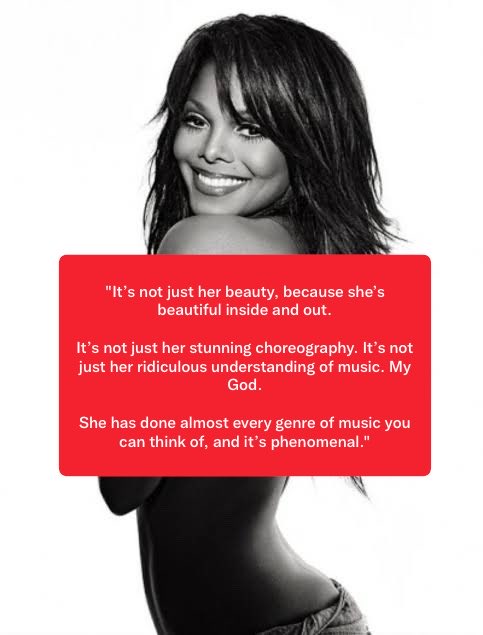
One of best things about being a Janet Jackson fan is watching people discover how amazing she is. “It’s not just her beauty, because she’s beautiful inside and out. It’s not just her stunning choreography. It’s not just her ridiculous understanding of music. My God. She has done almost every genre of music you can think of, and it’s phenomenal. And it’s not just her love of herself, her presence, her power, or her unapologetic sexuality. But for me, when I see this woman, especially as a Black woman, I’m like, “Oh my God, you have literally done it all.” You have so unapologetically stepped into your power. Control was clearly one of the first expressions of that, but to see that power continue to elevate and evolve is so inspiring. I’m like, “Oh my God.” I genuinely think watching her has been healing some part of the younger me lately. I really do. It reminds me that I really can do all the things. I really can have all the things. I can have all the love. And the fact that love is such a central focus for her, I’m like, “Yo, I don’t know another artist like her.” There never will be another artist like her. Especially today, when so much is about being showy, the fact that she remains rooted in love means something to me. I don’t know anybody else like that. And you can’t name anybody to me. You can try, but I don’t care. So, Auntie Janet, this is a love letter to you. She’ll probably never see this video. It’s fine. But that’s it. Yo, get on the Janet Jackson train if you ain’t there yet.” 📹 IG: xavier.theartist

MindingMyBusiness

11,964 Aufrufe • vor 5 Tagen

I have whipped cream on my face and a stranger now believes dogs can operate buildings. 🐾🤍 This morning I tolerated an extra 75 pound youngster in my house. Then my human said “Starbucks” and “pup cup.” I remained extremely professional. I waited. I did not scream. I did not levitate. I just sat there looking noble, which is hard when you can smell whipped cream from three people away. My human's hands were full. Power wheelchair steering. Strange frozen human drink. My pup cup. My leash. So I took power door duty. Hopped up. Cute little paw smack. Door opened. 🚪 A man at a table looked at me like I had just invented electricity. “The dog opened the door!” Yes, sir. I also opened the second one. You’re welcome. We do not do this often. Budget is budget. But the human has been dealing with some ruff pain flares , and she works so hard not to let the hard days move in and unpack. Negative thoughts try to steal her motivation, and she cannot afford that. Watching the monster pups play this morning helped. This little stop helped too. We go past this place almost every day. Today we went in on purpose. Today I got the fluffy cup. Today she got a little girl time and some extra caffeine before we go to teach leash manners class tonight. She made me eat it outside so the whipped cream stayed on my face and not on the entire Starbucks. Worth it. 10/10. Would open doors again. What’s your tiny thing that helps you get through a rough day? #PupCup #DogsOfX #TinyWins #GoodGirl

Team Servicerottie🇨🇦🐕‍🦺🦽

10,931 Aufrufe • vor 14 Tagen

Jimmy doing a Jub Meow as birthday gift for Sea 🎁💋😽🐾 (Jimmy cut translation) #UltimateStarrySEA27th #jimmyyjp #sea_tawinan #JimmySea 👱🏼‍♀️: Okay, P’Jimmy, today you also have a gift to present to Sea. 🩵: Eh? 😯 💜: And that is...? 🩵: 😂😂😂 👱🏼‍♀️: See? You know what that shows? No one heard what we were talking about on stage earlier. That "gift" is because some fans have been following the Jub Meow clips. 💜: Uh-huh. 👱🏼‍♀️: Yeah, they said Sea has a clip of P’Jim doing the Jub Meow. 🩵: 🙂‍↕️ (Nods) 💜: Ah-ha. 👱🏼‍♀️: Is it real? 💜: Huh? 🩵: He doesn't know. He doesn't know. 👱🏼‍♀️: Oh, did you secretly film him? 🩵: No. 👱🏼‍♀️: You secretly filmed him doing the Jub Meow? 🩵: No, I didn't film it! 👋🏻👋🏻 🗣️: (Fan shouts) You did!! 🩵: Why do you guys know better than the person involved? 😂 👱🏼‍♀️: Anyway, today we’d like to have you show us the Jub Meow right here. Would that be possible? 💜: Is this "Jub Meow Meta" still not over yet? (talking like a real gamer 😂) 👱🏼‍♀️: Not over, not over! Because after the Jub Meow, we have the "Jub Avocean" too. Just now, P'So taught Sea how to do the Ocean pose. 💜: Who? P’So? 👱🏼‍♀️: P’So taught Sea how to do it. One ear up, one ear down. 💜: Oh? Let me see. Is that a new meta? 👱🏼‍♀️: Come on, let’s see Sea do it. 🩵: “🐶” (Doing Avocean’s ears, one hand up, one hand down) 👱🏼‍♀️: There, there! This is the Avocean pose. It’s the trend. 💜: It feels like your left arm is weak. 🩵: 😄😆 💜: Like you’re trying to make cat ears, but your left arm is just a bit tired. 👱🏼‍♀️: That’s the Doctor’s curriculum for you. Does he always use such formal medical terms when he speaks? 💜: Okay! 😁 👱🏼‍♀️: Can we see the Jub Meow today? 💜: Which version? There are so many versions now. 👱🏼‍♀️: Oh! Everyone, how many versions do you want to see? 🗣️: Every version! 🩵: Just one. Let him have just one version. 💜: I want a sample first. 👱🏼‍♀️: Then our sample will be... 🗣️: Nong Sea! 🩵: Wait, what? Me? 👱🏼‍♀️: Let’s do the "Cute Jub Meow" first. 🩵: Wait... how many types are there? 😅 💜: Wait, I really like that person over there. I want them to be the model. The one in the sparkly outfit! 👱🏼‍♀️: Ms. Glitter! Okay, we’ll let Ms. Glitter be the reference right here. 💜: Great. 👱🏼‍♀️: Is that good? 🩵: Okay. 👱🏼‍♀️: Ms. Glitter, prepare your Jub Meow pose! 💜: Your outfit really caught my eye. 👱🏼‍♀️: Even with sunglasses on, he can still see Ms. Glitter over here. She's fabulous! 👱🏼‍♀️: Okay Sea, "Cute Jub Meow" 🩵: You didn't ask her (Ms. Glitter) first? 👱🏼‍♀️: One version from you, and then one version from the lady here. 🩵: Are you ready? No second takes! 👱🏼‍♀️: One, two, three! 🩵: 😘😽🐾 👱🏼‍♀️: P’Jim, that was just a normal cat. We’ve seen that before. 💜: It was okay. 🩵: It was okay, see? 👱🏼‍♀️: I just want to tease him a bit... I'm not teasing him much at all, right? 😂 Okay, P’Jim, you try it. 💜: 😎😘😽🐾 👱🏼‍♀️: Can you be more "clingy/cute" than that? 🩵: He was! That was already clingy~ 👱🏼‍♀️: Look, you’ve got to feel it like this. Let me teach you. You’re really going to follow my lead, right? First, you kiss, then your hand goes out, and then your face follows. Like this. 🐾😽 💜: Wait, what did I do wrong just now? 👱🏼‍♀️: You did it all at the same time. When you go all at once, it looks like this. 💜: Was it shaky? 👱🏼‍♀️: Yes, yes. So, put your hand out first, then bring your face in. 🩵: Ah. 💜: Oh, so it lasts longer? 🩵: 😆😆😆 👱🏼‍♀️: It’s called "adding extra cuteness." 💜: Aww 😂 👱🏼‍♀️: Yes! Give it a try. 💜: HAHA 😆 💜: 😽🐾🐾 👱🏼‍♀️: Eh! Hand out first, correct. Then slowly... slowly bring the face in. Correct! Don't move your hand! Keep your hand still! 🩵: Oh man, I’m so nervous watching this. 💜: Holding the cake earlier required a lot of stillness, but I have to be even more still for this? 😄 👱🏼‍♀️: It’ll be a really cute picture. There... now slowly bring the face in. 💜: 🐾🐾🐾😽😽😽😘 🩵: 😃😃🌚✨ 👱🏼‍♀️: Correct! That’s the one! 💜: Oh, I'm getting a cramp.

Mhokstache ✨

13,679 Aufrufe • vor 5 Monaten

🚨🇷🇺 U.S. NAVY’S WORST NIGHTMARE: RUSSIA’S UNMATCHABLE TITANIUM SUB FLEET The U.S. Navy just got reminded why Russia’s Sierra-class titanium-hulled attack subs remain a deep-sea nightmare they never solved. A senior American engineer who worked every U.S. nuclear sub program from the 1950s-90s admitted it outright: Russia beat them on titanium construction. Not because America couldn’t try — but because the cost and complexity were too brutal. 🔸 Titanium pressure hulls let Sierras dive beyond 550m, sprint near 34 knots, and carry near-zero magnetic signature — shredding U.S. MAD and passive sonar advantages 🔸 One Sierra I (Kostroma) literally took out a Los Angeles-class sub in 1992: collided underneath USS Baton Rouge in the Barents Sea, wrecked her ballast tank, sent her home for good. Russians painted a “kill mark” on the sail. 🔸 Double-hull titanium design shrugged off damage the steel U.S. boats couldn’t — while Akula steel production scaled for numbers, Sierras were boutique killers built for hunting Ohio-class boomers. 🔸 Even today, the two active Sierra II boats (Pskov & Nizhny Novgorod) remain some of the hardest-to-find nuclear attack subs afloat — 35+ years old but still forcing NATO to rewrite Anti-Submarine Warfare (ASW) playbooks. The West bet on quieter steel boats and fancy torpedoes. Russia bet on raw structural superiority and depth. Do you think the US will ever be able to match the power of the Russian submarine fleet?

NewRulesGeopolitics

69,152 Aufrufe • vor 4 Monaten

Body Cam Justified Killing ... Peoria County State's Attorney Jodi Hoos cleared a Peoria police officer of wrongdoing on August 26, 2026, ruling the officer's use of deadly force was legally justified in the May 8 fatal downtown shooting of Cortez White (42), who had just shot and killed Ashley Stenson (42). May 8 Downtown Shooting Clearance (Ruled August 26, 2026) State's Attorney Jodi Hoos released findings from an Illinois State Police investigation showing a Peoria officer acted lawfully when fatally shooting 42-year-old Cortez White. White had shot his ex-girlfriend, Ashley Stenson, execution-style on a downtown sidewalk before pointing his weapon at the responding officer. According to Hoos, Stenson, living in Atlanta, flew into the Peoria Airport on May 8 for an upcoming wedding that weekend and was picked up by a cousin. Stenson’s ex-boyfriend, Cortez White, show up unexpectedly at the passenger door and opened it. Stenson looked confused because White had no reason to be in Peoria as he lived in St. Louis at the time, but Stenson posted on Facebook about her flight, and her cousin believed that was how White knew where she would be. Stenson left with White, but she told her cousin to follow them. She began texting family members that White was going to kill her and he refused to let her out of the pickup. Stenson’s family members then called 911 at around 6:45 p.m. to report that White was going to kill her, providing a description of both to police along with the pickup that he was driving. Stenson continued to text her location to her family as he drove throughout Peoria, eventually texting that they were at the Four Points by Sheraton downtown. An officer responded to that location, seeing them outside on the sidewalk. Hoos said that the officer asked them, “Are you Ashley? Are you Cortez? Keep your hands up,” as he got out of his squad car. Hoos said White immediately pulled out a gun and shot Stenson in the head right in front of the officer, continuing to shoot her while she was on the ground. Hoos then said he pointed the gun at the officer. The officer fired several shots at White. White tried to flee but the officer pursued, continuing to shoot at White before he eventually fell to the ground after being shot and was taken into custody. According to Hoos, an autopsy on Stenson showed White had shot her five times - twice to the head and once to the chest. White was shot multiple times. Hoos said it was abundantly clear that the officer was legally justified in using deadly force against White - the officer witnessing an execution-style murder right in front of him and White then pointing the gun directly at him. Either one of those two events would justify the use of deadly force. Hoos also said since it happened in broad daylight with other people in the area, the officer had a clear duty to try and apprehend White and that he was a threat to everyone in the vicinity. Video Peoria, IL 05-08-26

SubX.News®

16,363 Aufrufe • vor 27 Tagen

10 Shocking Stories the Media Buried Today #10 - Megyn Kelly exposes where the “Tulsi Gabbard is a Russian asset” hoax came from. “This was started by Hillary Clinton. She started the Tulsi [“Russian asset” hoax] because Tulsi was a rising star within Democratic politics. She had all the boxes checked. She was a woman. She was a minority. She was the first this and the first that. And she was a combat vet, beautiful, well-spoken, like amazing [person],” Kelly explained. As you can imagine, this made Hillary Clinton very jealous. And once Tulsi started aligning more with Bernie Sanders’ politics than Hillary Clinton’s, the narrative shifted, and the hoax began. “And then she [Tulsi] started to be kind of open-minded to what Bernie Sanders was saying and maybe had some problems with the Hillary Clinton messaging and having Hillary shoved down our throat as the Democratic nominee back in 2016,” Kelly detailed. “She [Tulsi] spoke up about it and started to make enemies in the party because of that. And then [she] was outraged when she found out the DNC cheated on behalf of Hillary to try to make sure she got the nomination and screwed Bernie. And she was angry, and a rift was formed.” “Then Hillary Clinton called her a Russian asset,” Kelly continued. “just like Hillary Clinton’s campaign was the one that made up that Donald Trump was a Russian asset... Those were lies made up by the Clinton campaign. Hillary Clinton absolutely loved making up lies. And her campaign spread them about the Russians interfering against anybody who she didn’t like or wanted to undermine. Tulsi was just one of them.” Kelly shared how Gabbard’s opposition to the Ukraine war and her meeting with Syrian president Bashar al-Assad added to the “Russian asset” hoax. But to put that in perspective, Trump famously met a much more hostile leader, North Korea’s Kim Jong Un, in an effort to make peace. Longtime Democrat turned Trump voter Jillian Michaels responded to Kelly’s explanation of the Tulsi hoax, saying, “This makes perfect sense to me.” She added, “Diplomacy means you talk to your enemies,” arguing that it is even “more important than talking to your allies.” H/T: End Tribalism in Politics (See 9 More Revealing Stories Below)

The Vigilant Fox 🦊

1,210,136 Aufrufe • vor 1 Jahr

🐶📱 Have you ever gotten a FaceTime from a Rottweiler… and realized it might be an actual emergency? Because I make that a real possibility, and no, it’s not so I can show Bernoulli my latest stick collection. I’m Chesnyy, Professional Good Girl™ and emergency communication expert. My human is a non-ambulatory wheelchair user. She cannot stand up. At all. If she falls from her wheelchair and can’t get back up (or if her power chair suddenly dies like the time she got stuck in front of the fridge for what felt like three business days), her phone might be out of reach. That’s where I come in. We have this fancy button called an iPupPee. When she says “FaceTime,” I go step on it. Instantly her emergency contacts get an actual incoming *video call* from me, complete with the most ridiculous ringtone you’ve ever heard. Who’s going to ignore “Incoming video call from Chesnyy”? Exactly. No one with a soul (or a functioning sense of self-preservation). This is NOT the same as me borrowing her phone to FaceTime Bernoulli for pillow talk or my girl Cloe just to gossip about squirrels. This button is strictly for “Human needs backup” situations. I have been informed that using it for snack requests is grounds for immediate demotion. Yes, there are smartwatches and all that fancy human tech. But watches have to charge. Sometimes she’s just gotten out of the shower and it’s not on her wrist yet. Or she forgets to put it on because she has an attention span shorter than the puppy's. Texts are easy to ignore. A Rottweiler staring into the camera with that “I mean business” face? Not so much. Today we started training the Mooseweiler, also known as Kenji, the overgrown pork roast currently living on giant paws. He picked it up ridiculously fast, even from ten feet away. We took turns. Next session we plug the camera in so he gets used to the sound, and then we keep practicing until both of us can sprint to that button from any room in the house. Because independence is wonderful… until the fridge becomes a prison. You’re welcome. Now if you’ll excuse me, I have to go make sure the pork roast doesn’t try to use it to order pizza. 🎥 Actual video evidence that Kenji has something other than noodles in his giant noggin. #ServiceDog #iPupPee #Rottweiler #DisabilityTech #Accessibility

Team Servicerottie🇨🇦🐕‍🦺🦽

10,200 Aufrufe • vor 1 Monat

Tim Walz’s Hunting Gaffe Explained:🧵 I’ve done a lot of pheasant hunting. As a high schooler, I made extra $ assisting guides on pheasant hunts: getting the hunters in the field, flushing game for them to easily shoot, and making sure they are safe. And much more since those days. You learn to spot the guys who are a potential danger to themselves and others. Everything about them is new: the shotgun, the gear, the clothing. They look like they’ve just stepped out of an LL Bean catalog. This isn’t meant as a criticism. But if you’re leading the hunt it’s a visual clue that he’s probably new to this and, in his excitement, he went to his local hunting store bought all the gear in an effort to look like one of the guys. It tells you to keep an eye on him and to be ready to offer quiet instruction so as not to embarrass him. I don’t fault Walz for clearly being inexperienced with firearms and hunting. Anyone who is proficient in either had to learn sometime. For most of us, I think, the scorn heaped upon him is due to the fraudulent nature of it all. What VP candidate takes a day off to go hunting? Well, they don’t unless they see it as a photo op. Dems realize Americans think Walz is a beta male weirdo, so some campaign genius said, “I got it! He’ll go hunting! He’ll look manly!” With the exception of “The Natural,” I generally hate sports movies because the lead actor usually looks like he’s never played sports in his life. Watching Walz handle a shotgun is like watching Keanu Reeves throw a football in “The Replacements.” It’s painful. (Robert Redford was believable as an aging baseball player because he clearly played the game as a boy. Same with Kevin Costner in “For the Love of the Game.”) In this video, Walz appears to be having difficulty loading his shotgun while on a pheasant hunt. He tells the reporter, whose questioning tone suggests she’s not buying any of this, that it’s a Beretta A400. The A400 is a semi-auto shotgun. Many guides don’t allow semi-autos on a hunt because they can’t see at a distance that you’re “safe.” A break-action double-barrel is therefore preferred since they can tell when your gun cannot be fired (be it loaded or not). This is because the barrel is on a hinge that “breaks” open to permit manual loading. And this is very important for safety. I would wager that most accidental shotgun deaths involve semi-autos. This is all the more important in pheasant hunting. Unlike, say, deer hunting where you might sit in a tree all day long by yourself, pheasant hunting is typically done in large groups where the hunters are arranged in a crescent and marched through a field toward “blockers,” that is, hunters who stand still in a line. The idea is to drive the birds into the blockers and force them to flight. Hunting in such close proximity with other hunters can be dangerous for a variety of reasons: the birds fly parallel to the ground at head level, excitable hunters start blasting away at everything that moves or don’t wait for the birds to reach a safe height, accidental discharges, etc. A guide wants to see that your weapon is open and therefore inoperable in all but the hunt. The loading port on the A400 is beneath the weapon near the trigger guard. This type of loading is an acquired skill, and Walz doesn’t have it. (I’ll add that Walz says he bought it for trap shooting. In this he is correct. I wouldn’t want to use an A400 pheasant hunting. It’s not a field gun. It’s heavy. But it’s excellent for clays.) He fumbles around and, sensing he’s making a fool of himself, he appears to stop before he’s managed to get it loaded. As you can see, this carefully choreographed hunt wasn’t so carefully choreographed. It’s become Tim Walz’s Michael Dukakis-in-the-tank moment. It’s also noteworthy that in this gaffe Democrats, for all their faux rage about “toxic masculinity,” unwittingly pay homage to masculinity and its appeal. They do know what it is. They just don’t know how to practice it.

Larry Alex Taunton

1,727,351 Aufrufe • vor 1 Jahr

Extremely long thread: A couple weeks ago I entered the spirit realm weekly online tournament, during that time I teabagged another player which you guys all know by the name of shinblade. This made him upset in which he responded by calling me trash etc. so I responded by saying tell them why you got bagged. He then switched up his attitude & it’s time to tell the truth behind this “beef.” He’s tried to say the reason I’m doing this is over a tournament even though we both know the truth, & we both know my emotions within tekken would never evoke something like this so I’m going to tell it all. I just want to start this by saying that I deeply apologize to my long time best friend and the women of the fgc that have been affected by this individual. As a man I find it my responsibility to protect and honor the women of our community. This has been weighing heavy on me & I always try to find the most non confrontational ways to handling problems but with some situations and with some people you HAVE to do the right thing. So with that being said this is what happened. During the tournament combo breaker shinblade sexually assaulted my best friend in his car & once outside of the car. When she told me what happened I immediately was pissed because this is someone that I care deeply about and I also cared about him & never would’ve thought he would disrespect me or her in that way. She never cared about the situation initially considering her history with men engaging her sexually out the gates due to her sex work history. But for me it made me sick because no matter what or how a woman presents herself it doesn’t give any man the right to take consent away from that woman. My best friend doesn’t know him, & has no reason to lie especially to me. She trusted him because I did. He was under the impression that she was my girlfriend (which makes this worse tbh) so when I confronted him the first time he immediately said “What are you talking about” He then changed his story to “She came onto me” now months later he’s claiming “I have a witness that seen us in the car” even tho you had tinted windows. Everything up to this point has been lies, he can’t answer simple yes or no questions whereas her story has never changed. He’s also sexually assaulted another woman I personally know at the tournament KIT. I’ve tried MULTIPLE times to talk to him and try to come to some type of understanding considering this was once a good friend of mine. I had to record our conversation because from the very beginning this is exactly how he’s reacted to my questioning. Even tho I know my best friend isn’t lying and never would I just wanted to hear his side but he can’t even give me that. I even reached out to his girlfriend who even informed me that he’s had previous allegations outside of the 2 women I know of for sexual assault which was then deemed a “lie” but I don’t know any honest man who gets random sexual allegations pinned on them back to back. She begged me not to say anything even though I never was & my intentions from the beginning was to get an apology for me and nicki & for Marcus to be a real man and take accountability. It was clear as day that she believed everything that was brought to her but protecting her boyfriend was more important. If I’m being completely honest she’s the straw that broke the camels back. She made me realize that he’s been doing this for YEARS & she’s been enabling this behavior. I’m so sorry for holding this information but going forward I will always put the victim first, and this is not to say that women don’t lie & that men aren’t falsely accused but I’d be lying if I didn’t say that women don’t feel comfortable speaking about these situations because this is a male dominated space and it’s on us to hold each other accountable and to create a safe space for EVERYBODY. I have a platform & I have a voice and I will always make the right choice in these matters.

Kanme | Shadow 20z

286,250 Aufrufe • vor 2 Jahren

Talk segments 🖇️ Jessica: Do you all know what song this is? Audience: YES! Jessica: What song is it? Audience: cheers Jessica: Alright, then… Oh, what’s this?! Park Myung-soo: Hey, wait! You scared me! I already said hi earlier. Jessica: Yeah. Park Myung-soo: Everyone already knows I’m coming out by myself. Jessica: Well, I was trying to introduce you! Park Myung-soo: No, no, I’ve already been introduced. We don’t have time for that. I’ve got a lot to do too. It’s been a long time since I’ve seen Jessica. I saw her on Infinite Challenge and Halmyungsoo, but seeing her today… she’s so prepared and professional. Look at me, I’m already sweating. Jessica: Should I just wing it then? Park Myung-soo: Huh? Jessica: Should I just phone it in? Park Myung-soo: What? Why would you do that after working so hard? I saw how thoroughly you prepared and practiced, and I was really moved. She worked so hard because she wanted to give everyone who loves her a great performance. This stage isn’t easy, especially since it’s been such a long time. So let’s give Jessica a big hand! I mean it. I’m not usually someone who gives compliments, but Sica really worked hard. And since time is running out… Jessica, after today, please be more active with your promotions, okay? Jessica: Ah, okay. Park Myung-soo: Don’t just stay quiet like that. Jessica: What did I do? Park Myung-soo: I’m saying you should show up more! Jessica: Okay, sounds good. Summer is almost over, but this song is basically the ultimate summer song, right? Audience: YES! Jessica: But I feel like we need to practice a little. Park Myung-soo: Practice? Jessica: Yeah. Park Myung-soo: Sorry, but can you just hurry up and tell me when my part comes in? Jessica: Hey, you know you have to do the heart move, right? Park Myung-soo: “Still, I love you~” Of course I know! Make sure you film this and post it online, okay? Audience: YES! Park Myung-soo: We just need to get that part right, right? Jessica: You’re probably going to wing the rest anyway. Park Myung-soo: Yeah, that was the plan. Just go with it. Don’t expect too much from me, but I’ll do my best. Performing on stage together again after 17 years… Wow, Jessica looks exactly the same. I’m the one who looks like a mess. Jessica: No way! We both look the same! Park Myung-soo: No, Jessica spends a lot of money maintaining herself. I don’t spend anything—I save my money. Jessica: You should spend some on yourself! Park Myung-soo: That’s why I look like this. Jessica: But it looks like you spent money too! Park Myung-soo: I didn’t! I just got some fat-dissolving shots once, that’s all. Anyway, she really hasn’t changed at all. Honestly, she came out today just for me. I’m so thankful that she showed up like this, and I really want to say thank you. Jessica: Wow… seeing you this genuine feels so weird. I don’t know how to react! Park Myung-soo: What do you mean? What were you going to do? Jessica: Aww, thank you! Park Myung-soo: Performing with Jessica again after 17 years is really touching. If we meet again in another 17 years… how old will I be? Jessica: Don’t even contact me then! Park Myung-soo: Would I even be in my right mind to call you by then? Everyone, it’s been 17 years since we performed on this stage. Back then, Jessica was doing so well…

309_ss • 418.syj 🦋✨

43,031 Aufrufe • vor 4 Tagen

IS IT ADVISABLE TO MARRY A WOMAN WHO IS MORE CAREER-DRIVEN THAN YOU? Hello, friends. Welcome to another episode of Mr & Mrs Better Half. It is designed to strengthen marriages and relationships that will lead to marriage, with wisdom from God's Word. Sometimes ago, I asked some friends, ‘what do you think causes major friction in a marriage?’ One of the answers was money. On further probing, we got into one of the big money issues: “Finances are often problematic when the wife earns more.” A follow-up question: Since few earn millions on their 1st job, how did these women build their finances to surpass their husbands’? Again, we hit another interesting note- ‘some women are too ambitious! If they would just ‘chill’ things would be okay.’ This statement threw up so many questions. Should a wife deliberately go for a low-paying job to avoid earning more than her husband? Should she also perform poorly to ensure she doesn’t get promoted? If she’s offered a raise, should she refuse? Of course, these things sound silly but these are actual options some couples have considered in their homes to preserve the peace. Sometimes, the man actually starts out earning more but calamity strikes and his business/career goes downhill. So the once ‘balanced’ household turns upside down because the woman now pulls most of the financial weight. The big question you should ask is this. ‘Why should money (something so many seem to be chasing) which should make life easier become the very thing that can cause unhappiness? There are 4 things I would like you to consider today- Changing times, Culture, Acceptance and Attitude. A) Changing Times: Men, the days when women in the workplace were oddities have since gone. With advancements in technology, many of the more physical jobs have been taken over by machines. This means that there’s no reason women should be sidelined on the grounds of being physically weaker than men. This coupled with the realization of a woman’s right to express her intelligence means the world has made much progress where women in the workplace are concerned. Today there is hardly any industry where you will not find women doing remarkable things. As a result, it is not uncommon for husbands & wives to earn similar salaries or have the wives even bringing more. The truth is that most men like the added household income- who wouldn’t? The only thing is that they just want to earn more than their wives. This clearly becomes an issue of self-esteem and ego. Please understand that you can’t derive your sense of self from money. Many men think being a man is all about bringing in money. It takes a lot more than that to be a real man. Different things make a man. They include the ability to provide, lead, protect, nurture and love. Men you have to bring more to the table than just money to be an exemplary head of your household. So stop being hung up on money alone. (B) Let’s go to Culture. In the past women were touted as the homemakers while men barely lifted a finger in their homes. What men didn’t understand is that being a homemaker is a very marketable skill! A good homemaker is likely to be very skilled in people and money management, multi-tasking, negotiation skills, etc. You’d think that keeping a woman in the house would incapacitate her in the business terrain but you’d be wrong! Women develop the soft skills required for top-tier management quite early in life! Coupled with formal education, a woman who truly wants to succeed in business is a force to reckon with. Perhaps we should take a look at how we raise our sons these days. We might just be doing them a disservice! (C) Let’s discuss Acceptance. As a man, I understand one’s ego can take a pounding if your wife earns more. Single men dating ladies that earn more often vow to themselves that they'll turn the financial tables around before they get married or shortly after. Like it or not, this doesn’t always happen. Sometimes a woman’s gift will shoot her to the peak of her profession. What will you do? Will you kill yourself trying to earn more? Will you resent her success or do the mature and supportive thing and accept it? I have come to know a certain truth. As much as it might be your preference, who earns more in your relationship is not your call. I will repeat this. It is not your call to determine who earns more in this life. Everyone has a race to run. God has blessed everyone with a unique gift. You cannot determine the extent of another person’s potential. If you can't cope with a successful lady you actually have a problem with self-esteem which is not her problem; it’s yours. Single guys, when you court a lady, look beyond her hips, lips and fingertips and determine her inner ‘horsepower’. Can you envision whom she is likely to be if all things work out for her good? Will you be intimidated by her success? There are ladies who are incredibly brilliant, driven and ambitious. You can tell they are loaded from the onset. Such people tend to have a light shine on them and often end up in the public eye doing great things. You shouldn’t marry someone like that and try to cap her … you will kill her spirit, kill the marriage or kill yourself. Remember that your wife also wants to die empty. Your responsibility as a husband is to give her wings to fly. Be a real man, a secure man. Manage your ego and support her. Now if this is difficult for you to stomach, please don’t marry her. In your house, everyone should be a cheerleader urging each one to victory. If you know you've the tendency to be jealous of people’s progress or be competitive, marry wisely. More importantly, deal with this weakness. It’s a bad one & reeks of emotional immaturity. (D) Finally- Attitude. Sometimes the husbands try to be supportive but the attitudes of the wives make it very hard. I have already addressed the men on attitude and the need to build their self-confidence and be supportive of their wives, but now I’ll speak to the wives. To the women: Do you lord the fact that you earn more over your husband? Do you seize the reins and make the big decisions? If you keep cutting down your husband because you earn more money, you pull down your home with your hands. Please don’t get it twisted. The man remains the head of the home. Don’t let money or your position at work get to your head. Pride is unattractive in anyone and that includes you. Cultivate a gentle, quiet and humble spirit. It’s important to note that money or wealth will always amplify who you really are. If you are compassionate and respectful you will continue to be so regardless of the money you make. If you are crass, rude and disloyal, money will make that more apparent and cause problems in the home. Remember that marriage is a partnership. Your success is really “our success”. His support helped you become successful. Even if he has not been supportive still carry your blessing with decorum and don’t disrespect him. Remember the blessing comes from God. A woman that sees God’s perspective when it comes to the marriage institution will not misbehave when blessed. God has chosen to bless your family through you. Be humbled by the blessing and obedient to God’s order. To both man and wife: keep praying for each other’s success. Both of you should do your best, no one taking advantage of the other. Keep aspiring to get better and more productive. Keep pushing the limits and be the best you can be. God will cause joy to fill your home. I hope this has been helpful to you. I will be back next week with another topic. Until then, thanks for following and retweeting. May your marriages and relationships be sweet! #MrMrsBetterHalf

Godman Akinlabi

141,613 Aufrufe • vor 3 Jahren

Just in $AMD Anush "Speed is the moat"|ROCm🎙️ In the race to define the future of AI, what's the one advantage that truly lasts? It's not proprietary tech, argues Anush Elangovan Elangovan, VP of AI Software at AMD , but the sustainable speed of innovation. He explains why AMD is rejecting the "walled garden" model for its open source ROCm stack, betting that an open community flywheel is the key to victory. Listen to understand how this open strategy is designed to out-innovate closed systems by empowering developers to solve everything from frontier-model challenges to the mundane, everyday problems that define the "last mile" of AI. AMD ROCm Software: Part 1 Transcript [00:00:00] Andrew Zigler: Joining me is Anush Elangovan, VP of AI software at AMD. And when people talk about AI compute, the conversation often stops at hardware specs, but it's more than just physical chips that win the game. It's also the software ecosystems supporting them. [00:00:18] Andrew Zigler: The prevailing strategy in the industry has been to build something like a walled garden. You know, something closed, proprietary locks, developers in. But AMD is betting on an entirely different play, open source acceleration, and with rock, their open source AI software stack. AMD is building not just hardware parity, but an innovation flywheel that's powered by the community with interoperability and the freedom to scale without all of that pesky lockin. [00:00:48] Andrew Zigler: And in this world, speed is your moat and how fast you can innovate while your platform remains open, flexible, and standardize across all of its applications. That's what we're gonna explore [00:01:00] today. So Anush, I'm really excited to have you here. Welcome to Dev Interrupted. [00:01:04] Anush Elangovan: Thanks for having me. Uh, super excited to chat about it. [00:01:07] Andrew Zigler: Amazing. Well, let's go ahead and dive right in with kind of what I laid it out with in the beginning, the idea of the moat and it being about speed. I wanna unpack that a bit because that came from you when you and I first spoke. And I, and I want to know, you know, how do you define speed inside of AMD beyond just things like hardware, benchmarks. [00:01:27] Anush Elangovan: Yeah, that's a very good question. So when we typically talk about speed, everyone's like, Hey, hardware benchmark specs, right? Like, uh, memory bandwidth or, or flops. And that is one important part of it, uh, AMD does very well. With that, we do have, a, a very good history of executing on that axis. [00:01:47] Anush Elangovan: But when I say speed is the moat, it is about, uh, how we prepare, how we build the muscle to run the race for a long time and run it fast. And it is [00:02:00] not about a single point in time that you've, you've beat some you know, benchmark and, and you declare victory. It's about building the ability to consistently develop and deliver. [00:02:13] Anush Elangovan: Both hardware and software innovation at scale and do it fast, right? Like, you know, we we're increasingly getting to a point where models come out and they're, uh, you know, a year or two ago it was like, Hey, they work on AMD on day zero, which is great, but now they are performing on AMD the day it releases, right? [00:02:32] Anush Elangovan: So, what does it take to Prefetch where the industry is going? Be prepared to intercept. At that point is what you know, I, I refer to as you know, the, the speed factor in, in creating this mode, right? And the mode is just shed all things that hold you back and run as fast as you can. [00:02:53] Anush Elangovan: Uh, because the pace of innovation that is, uh, being seen in, in AI [00:03:00] industries is just. Amazing. Right? And it's like, it's transformational at at how you generate electricity. It's transformational as at how you build data centers. It's transformational at how you deploy compute, networking. It's transformational at what kind of use cases you, you know, uh, use AI for. [00:03:17] Anush Elangovan: Uh, and for that, you need to be prepared to, see what comes tomorrow and be prepared to run the race tomorrow. [00:03:23] Andrew Zigler: Yeah, it's a really great perspective because it highlights that it's not just like a checkpoint that you run through. I like how you called out, like it's not just hitting that benchmark or being the best in class at that moment, in that snapshot, it's about having a. The throughput and about having that dedication to the idea and continuing to deliver on it. [00:03:43] Andrew Zigler: It's not just crossing the threshold, but it's also being the engine. And that's what, that's what protects a business. That is the moat, because the moat is that innovation layer, the faster and more, uh, future forward. That you can work and think, [00:04:00] you know, the better. Uh, we, we talk a lot about like future forward work styles. [00:04:04] Andrew Zigler: Like what are the things I could be doing right now today that are gonna be like, way more useful tomorrow? Let, let's abandon those, workflows that are older and that kind of like, that translates into. An advantage when you work that way. You know, what kind of things have you learned working with, uh, like across all spectrums of people who would use ROCm, right? [00:04:23] Andrew Zigler: You have like the developers, but then you also have the enterprises and you have this large span of adoptees, right? So what is the, what does that look like that you learn? [00:04:32] Anush Elangovan: Yeah, so, so the way I look at it is there are gonna be pockets of different, uh, you know, cadences, right? Like, so people who are deploying in enterprises, for example, right? The validation and how long it takes for them to deploy an LLM that's secure. It's, with guardrails, et cetera, maybe longer. [00:04:52] Anush Elangovan: but you still have to go through the process and you have to be prepared to like, walk that walk to deploy an enterprises. That doesn't mean it's [00:05:00] not fast, that's as fast as you can do for that industry, right? And if you are deploying AI in healthcare, right, it's, it's got its own, uh, cycle. [00:05:07] Anush Elangovan: but in each one of these, you want to see how, like, go down to the essence of what is it that you actually have to do. And, you know, I, I, I like how you framed it. It's like it's, you shed your prior assumptions of how things are done, right. And, and you kind of build up from a, uh, first principles, uh, approach to say, this is how I could use AI to unlock, whatever I'm doing. [00:05:33] Anush Elangovan: And, and, some of it, you know, it's good to really step back and look at. Just question every part of it, right? Like right now you're getting chat GPT and, Gemini competing for like, math, olympiads and, and, uh, college, uh, reasoning, uh, tests. Right? And, and those are like that, that is amazing and increasingly like complex tasks that they're trying to do. [00:05:58] Anush Elangovan: But there may also be like. [00:06:00] More mundane things that AI could, could get applied to. Right? And, and so when we think about shedding old ways, you wanna shed it not just in like the tip of the spear. It's like, you know, I'm gonna see what's the frontier model. It's also, it could be something as simple as. [00:06:18] Anush Elangovan: How do you choose a, a movie, uh, you know, like a recommendation system, right? Or, or, uh, an automated, uh, flight, uh, rebooking system. So the moment, you know, your flight is late, uh, right now it's a notification, right? It's like, oh, you got a text message saying your flight's late. And I got that like three times this week. [00:06:38] Anush Elangovan: But anyway, uh, and, and, and, and, I was just like, okay, so if I were to rethink this. All this MCPs that we have that should be hooked up into an MCP that says, your flight's delayed. Here are your options. If you want, you know, these are the paid options. Yeah. Here are the free options. This will get you back into your you know, Toronto airport [00:07:00] tonight. [00:07:00] Anush Elangovan: Or if you stay, here's a hotel plus this, plus this, plus. It's just like, go ahead is all I should say. Versus now I'm like, okay, can someone, you know, can I call a travel agent? Can I do this? Can I go online and log into And you know, so we gotta fundamentally rethink even those like small, nuances of, things that we do that can be automated out and AI is really, really good at doing something like this, right? Maybe I just explained an AI startup idea right now. Somebody should just start that. [00:07:29] Andrew Zigler: I think you did. Yeah, you definitely did. Someone, one of our listeners is definitely going to lift that off of you. I, I, I, you know, I hate being on the receiving end of those. You feel a little helpless and then you have to like, follow the whole flow. So I know what you mean. Like I, I like how you called out that the build and this like. [00:07:45] Andrew Zigler: Where speed is your moat and the innovation layer is protecting you, is what makes you better than your competitors. How you scale that and you bring that to market. So by understanding the problems that you're solving, uh, throwing away those older assumptions, but also [00:08:00] recognizing that like. We're building every single day, new things and new ways of using stuff that we're still figuring out the implications of. [00:08:08] Andrew Zigler: And so when you have a lot of velocity and you're introducing a lot of new ideas, and maybe you have that workflow now that automatically rebook your flight off of your late flight text message, and uh, I know I would certainly use it, but you know, what kind of philosophies guide the way that y'all think about building this ecosystem to manage that stability while letting folks. [00:08:29] Andrew Zigler: Play with the speed and the assumptions and the airplane re bookings. [00:08:34] Anush Elangovan: so, so I think, you know, we need to peel one layer down, right? and the philosophy is, Hey, we, we just discovered electricity, right? And you know what we're gonna do? We are gonna make motors, uh, or dynamos, right? Like engines. Uh, sure. We don't know if it's gonna be a Ferrari that you're gonna make, or it's a a a a dump truck. [00:08:57] Anush Elangovan: That's good for doing this. But let's [00:09:00] let, which is also required, right? You need a dump truck. You need a garbage truck. And, [00:09:04] Andrew Zigler: Yeah. You need the [00:09:04] Anush Elangovan: course you need, uh, a Ferrari for a midlife crisis, right? So, [00:09:09] Andrew Zigler: precisely. [00:09:10] Anush Elangovan: But, but my, uh, point is what do we build next? And, uh, and this is what I meant by like, okay, let's, let's take those baby steps to build the. [00:09:20] Anush Elangovan: Infrastructure that's required that we know we'll have to use, right? So, so if I just discovered electricity, okay, great. Now one, how do I save this electricity and how do I use it? So there's battery technology, so you need to do something like that, right? Like so. But then you also want to make it into an actionable thing. [00:09:37] Anush Elangovan: You want to make it for like automobiles, or you wanna use it for, you know, powering, uh, entire cities. So it is that transformational. So, uh, AI is that transformational. So, if you distill down, it'll, it'll come down to how do we think about, what we can do with this this fundamental technology that, We may not be aware of what it [00:10:00] is gonna unlock next, but at least you know the next step is clear, right? It's like a dense fog, you know, it's gonna be like, it, it's the right path. You see the light, but it's kind of like out there and, and the steps you're taking are concrete and you're like, okay, this is good. [00:10:16] Anush Elangovan: I, this is better than where I was or where we were. So we are moving forward. So you can build with the. Intuition from what you see in the short term and a tactical view, but towards what you think the future is gonna be. [00:10:28] Andrew Zigler: Right. You almost like we're all in this like fog of war, right? And like you said, you're reaching out and you're trying to step through it. You could think of it too, as like you're in the dark and your hands are up in front of you and you know that. You're, you're not gonna run your face into a wall because your hands are out in front of you, but you're not gonna maybe do much better than that. [00:10:45] Andrew Zigler: So that's kind of like, I think the eco, the, the industry, the world that we find ourselves in, uh, and we all have to, then this becomes the power of an ecosystem, of a group of people working together to create that layer of, [00:11:00] uh, of establishing the [00:11:01] Anush Elangovan: exactly. And I, I, I just, instead of, you know, saying fog of war I describe it as like, you're in this. Beautiful valley with like a morning, uh, fog that's in. You can smell the flowers. You, you hear the birds. You are like, okay, it's, we are in like, uh, utopian paradise and yes, I just need to like, continue the walk, right? [00:11:24] Anush Elangovan: and then move forward with that, conviction that you're in the right spot. [00:11:27] Andrew Zigler: Yeah. So let's talk about that ecosystem world. This nice, I love how you describe it, this grassy side of a hill in the morning that's covered in some mist and maybe we can't see 30 feet in one direction, but it sure is a beautiful hill and it smells nice. And so we're all here. And why is, in that world, why is. [00:11:44] Andrew Zigler: You know, open source, their strategic advantage that y'all are going for in the AI hardware market. And, and then how does like ROCm turn that into wins for people within that ecosystem? [00:11:56] Anush Elangovan: you know, the, the way we look at it is this, is kind of like how I view [00:12:00] AI and the ecosystem, right? But, but it is for everyone to enjoy. Uh, and so we do want to make sure that. You know, it is, uh, beneficial for everyone. [00:12:09] Anush Elangovan: The ecosystem can come in and, and innovate. It's an open innovation engine. and uh, it is very different from, you know, having a walled garden with, Hey, only I know how to do this and I'm gonna do it and throw it over the fence and you can use it or keep walking, right? So we'd like to be good citizens that way, but also. [00:12:30] Anush Elangovan: Uh, it is self-fulfilling in a way, right? Like it, the, the pace at which we innovate with open source is unmatched. Like, you know, our serving engines are like VLLM and, and sg l. Those things, uh, those frameworks are like super, super aggressive in terms of how fast they come out with features and how fast they can you know, get performant models out. [00:12:52] Anush Elangovan: And that compared with what, uh, you'd get from, you know, the likes of like T-R-T-L-L-M or something is always lagging, right? Because you [00:13:00] just can't keep up with you know, 200 commits a week just on one particular model to get that model really performant [00:13:06] Andrew Zigler: And, and, and in that world where, you know, everyone can enjoy the winds of this, what kind of customer stories or innovation stories have really stood out to you and excite you about building and creating this place for developers? [00:13:19] Anush Elangovan: Yeah. So I think the parts that are super exciting for me are when when we get to see a customer that is first skeptical. Then they start a little like, okay, fine, we'll give you a chance. Uh, we do a simple, uh, POC and then they're like, huh, this seems to work. Yeah, we told you it works. [00:13:42] Anush Elangovan: You don't have to change one line of code. Really? Yes, no need to change one line of code. Okay, let's try a production workload. So then they try it. Oh, you're more performant than the competition. Yes. We're more performant than, than the competition. So how much does it cost? And we're like, oh, it's your TCO is better with, uh, [00:14:00] AMD. [00:14:00] Anush Elangovan: So again, they're like, wow, okay, good. So now how do we deploy at scale? And then we go deploy it at scale. And when they give a thumbs up on that and they say, this is good, right? That's when you know, you, you see it go full circle from like, oh, we, we've never heard about AMD to like actually deploy to tens of thousands of GPUs In the order of a few months, right? It, it, it really is fascinating to see and very exciting and invigorating to [00:14:28] Andrew Zigler: Yeah. At like a great exposure to a lot of interesting problems. And, and then people using the infrastructure, the, the technology available to solve those problems. Really specific problems by the way, that's often why they're bringing their data and AI to it, uh, is because it is really specific and important for them. [00:14:45] Andrew Zigler: And there's a, a lot I think that other engineering orgs can learn and even emulate from AMD's success and, and having this open source ecosystem and it causing this acceleration within. You [00:15:00] know, uh, customers and enterprises that use and adopt the tools and, and, and that creates an advantage. And that goes back to why we're talking and like the real thesis of our conversation today. [00:15:10] Andrew Zigler: So how do you think engineering leaders that are listening to this and obviously tapping into this great success AMD has from an open source flywheel, how do you think other, other folks building in the same space can foster that open, first, that open source oriented culture in order to, you know, accelerate their innovation goals? [00:15:29] Anush Elangovan: Yeah, that's a very good question. So the startup that um, was acquired by AMD we, we built, I mean, we started off doing iot stuff and you know, smart ring and all that, right? But in the, the end of like, uh, and not the end, the last six years of the company was building ML compilers. [00:15:47] Anush Elangovan: And ml, ML compilers are like super, uh, complicated, sophisticated, advanced algorithms, dah, dah, dah. but it was all open source, right? So our VCs were like, wait, what do you mean your core [00:16:00] IP is open source? And um, the speed is the moat applied even then, right? It was just like, yes, if you have an idea that. [00:16:08] Anush Elangovan: Because someone saw this idea that you are, they're gonna be able to catch up, then you probably have the wrong idea anyway. But if they are, you know, you execute and they're gonna catch up, that you should assume they're gonna catch up. Right? So you gotta move forward. So keeping it open source is super important. [00:16:25] Anush Elangovan: But also to your question on like, you know, the learnings from an AMD standpoint, right? If there are, hard problems, I'd say dig in and work through it, right? Like there's no way but through it, right? That should be the simple mentality. And more, uh, frequently than not. you'll see that you'll just make it through in a, in, in good form. [00:16:52] Anush Elangovan: But if you doubt it and you're like, oh, I don't know if I should commit, if I'm, I, you know, what should just commit to do the right thing [00:17:00] every step, right? Every step, and just keep taking one step in front of the other. And in no time you'll see that you'll be running. Right. And, and yes, the first few steps will be like, yeah, everyone's complaining about your software quality. [00:17:15] Anush Elangovan: Everyone's complaining about this and that, and it doesn't work. And, and a few steps in, you know, you get, you get the hang of all the complaints that are coming in. You get the feedback loop. You're like, okay, what, what are you prioritizing again? One step in front of the other, right? You just keep knocking that out and then you get to a point where you're, it just becomes second nature, right? To do the, to do the right thing. And, and then yes, if someone gives you two options, you'll be like, fine. This is, uh, you know, there's always the resource trade off. There's always a human capital trade off, but what's the right thing to do? of course, I, I'm pragmatic about what we choose, but, but if the right thing for your long-term success is dig in, go first, principles, make it [00:18:00] happen. [00:18:00] Anush Elangovan: Well. Then just go for that. There's, there is no shortcut to [00:18:04] Andrew Zigler: acknowledging, you know, how it aligns with your mission, your core company goals, and what you're looking to achieve. And, and I, I love how you rightfully called out that in the open source world and you know, you have your technology that you've built, what you think is your moat upon, right? [00:18:22] Andrew Zigler: It's your code and, and to open source that, or to just make it where anyone could peer in is, you know. Scary in one regard, but two, it just kind of feels like you're handing away your throne room in some kind of sense, a very direct feeling sense. But the ultimately, you were really right to call out, and this is something I think about all the time, that the real power there is still the speed This the speed. [00:18:42] Andrew Zigler: That was the moat at the beginning of our conversation. It's the speed in combination with your. Very specific domain understanding of what you're building and what you're creating, and your new role as the steward of that world and how people plug into it, which [00:19:00] has frankly, a lot more influence and power than lording over a closed. [00:19:04] Andrew Zigler: You know, repository or an ecosystem, and like you said, like throwing things over the wall. Sure. There, there might be people always on the other side of that wall, but you're not gonna have a great connection with them. You're not gonna be able to really clearly understand them. I, I like your metaphor of the side of the field of the mountain a lot more. [00:19:23] Andrew Zigler: But, but in the, in this world, you know, where. That speed is, is the power and, and open source is just one way that you can harness that speed to get really far ahead and to innovate. , There's other parts of this equation that you can be experimenting with too, and I'd love to pick your brain about them as a software leader and, and, and one of them is about looking forward and kind of understanding that future that we're all building towards and beyond today's models and hardware. [00:19:48] Andrew Zigler: You know, what do you see as the next major bottleneck or opportunity in the AI compute space? As, as you know, enterprises and folks start to get a little more mature about what's available to [00:20:00] them. [00:20:00] Anush Elangovan: Yeah, I think, the bottleneck and opportunity is, uh, what I'd call, call walking the last mile of ai. Right. Uh, and like I I, I gave you an example, uh, previously, but, but it's similar to that. It's like there are cases where Humans have so many, uh, things to do in your day. You know, like the, if we sit down and actually had a customer focus like, okay, these customers lives, I'm gonna save four hours of this customer's life. And if you actually sit down and look at all of that, it'll be. Easily automatable, easily you know, uh, applicable, uh, for ai, right? [00:20:39] Anush Elangovan: Like, but then making it happen is gonna take a little bit, right? It's like maybe it's, uh, paying your utility bill, right? Or something like that, right? Or, or, your healthcare explanation of benefits. Uh, like, I'm sure you get an explanation of benefits, and I'm like, I, I don't even know what that thing is. [00:20:55] Anush Elangovan: It's just like EOB and like. [00:20:57] Andrew Zigler: it's a big, a big old PDF. Yeah, [00:21:00] exactly. [00:21:01] Anush Elangovan: Like, like, I'm like great straight to the, uh, shredder, right? And but that could be, you know, automated with the ai, right? It, it, it'd be like, Hey, the summary of this thing is you went and visited this day. Everything is okay. Everything is paid for, so don't worry, it's not a bill. [00:21:17] Anush Elangovan: That again, the same, uh, thing, but the sense of what that information overload is could be. Digested by ai, uh, accumulated over time and retrieved when you need it. Like, I don't, I actually don't even need to know this EOB right now, unless of course, whenever I need to know it, that maybe, you know, like for some benefits I need to figure out what do, what did I do over the past year and how do I apply it? Source:

Mike

15,248 Aufrufe • vor 9 Monaten

A dog just made the bravest decision I have seen anyone make this year. Not a founder. Not an athlete. Not a person with a plan and a five-year vision board. A dog, on an empty road, with nothing to lose and no idea what would come next. I have watched what comes next more times than I will admit in public. This post is 25,000 characters long. It is a list of reasons why you should watch it too. Read as much as you want, but understand one thing before you start: the video is the only part that matters, and this is everything the video doesn't have room to say. Sound on. Phone in both hands. Do not skip. I'll be here when you get back. THE NUMBER THAT SHOULD BOTHER YOU Let me start with two numbers. The first: commonly cited estimates put the world's stray dog population at around 200 million. Two hundred million animals with no address, no bowl with their name on it, and no one who would notice if they didn't come back tonight. The second number is one. That is how many people had to be on that road, at that exact minute, looking in that exact direction, in a good enough mood to stop. Not two. Not a crowd. One. Here is what nobody says out loud: for every dog you see rescued on camera, there are millions the camera never reached. We don't see them because no one was there. The videos that reach you are not a sample of reality. They are the winners of a lottery so brutal that Powerball looks like a coin flip next to it. So when one of these lands in your feed, don't scroll past it like content. Treat it like what it is: a statistical miracle that happened to end well. And miracles have a structure. Let's take this one apart. FIVE LINKS. BREAK ONE AND THE STORY DOESN'T EXIST. Link one: the dog has to survive long enough to be seen. Roads are not built for small animals. Vehicles do not slow down for shapes on the asphalt. Every hour out there is a coin flip the animal has to win again, and again, and again. Link two: someone has to be present. Not nearby. Present. Eyes up, phone down, brain not busy replaying the argument from breakfast. Link three: that someone has to notice. It sounds simple. It isn't. The human brain is a filtering machine, and a small animal on a road becomes a plastic bag, a shadow, a piece of tire. The most common reason a dog is not rescued is not cruelty. It is that nobody registered it as a dog. Link four: the person has to stop. This is the link that snaps most often. Seeing is free. Stopping costs you time, comfort, a schedule, and possibly the mood of your entire day. Link five: the dog has to let them. An animal that has learned that hands mean pain has every biological reason to run. Trust is not a given. It is a negotiation, and the dog holds the veto. Five links. All five held. Remember that when you press play. You are not watching a nice story. You are watching a chain that should have snapped at least four times. THE PEOPLE WHO KEEP DRIVING In 1968, psychologists John Darley and Bibb Latane published a set of experiments that changed how we think about helping. The finding was uncomfortable: the more people who witness an emergency, the less likely any one of them is to act. They called it diffusion of responsibility. Everyone assumes someone else will handle it. So nobody does. Later research added nuance. When an emergency is clear and dangerous, people step in more often than the original theory predicted. But the core insight has survived half a century of testing, because it describes something every one of us has felt: the small, quiet voice that says, somebody else will stop. Now picture a road with no crowd at all. No audience. No one to hide behind. No one to blame. Just you and a decision that is entirely, inescapably yours. That is the situation the person in this video walked into. And the reason it is worth your attention is not that they did something impossible. It is that they did something small, and it turns out small is exactly what almost nobody does. You don't need to be a hero. You need to be inconvenienced. THE FACE IS THE RESUME In 2013, researcher Bridget Waller and her team studied dogs in a UK shelter and asked a simple question: what makes one dog get adopted faster than another? It wasn't size. It wasn't age. It wasn't coat color. It was one tiny facial movement: the raising of the inner eyebrows. The move that makes a dog's eyes look bigger, softer, almost sad. Dogs that did it more often were chosen faster. Six years later, a study led by Juliane Kaminski found out why that movement is so easy for dogs and so hard for wolves. Dogs have a small muscle around the eye that wolves largely lack. Over thousands of years of living beside us, dogs evolved a way to make their faces speak our language. Read that again. A species rewired its own anatomy to be understood by another species. No other animal has done this to us. Nobody taught them. Nobody forced them. They looked at us, worked out what we respond to, and grew the tool. Now look at the face in this video. You will know the second you see it. That is not a coincidence, and it is not luck. It is fifteen thousand years of engineering aimed directly at your chest. THE ONLY LOOP LIKE IT ON EARTH In 2015, a Japanese team led by Miho Nagasawa published a result in the journal Science that made researchers stop and reread the abstract. When a dog and its owner look into each other's eyes, both of their oxytocin levels rise. Oxytocin is the bonding chemical, the same one that flows between a mother and her newborn. Dog looks at human. Human's oxytocin rises. Human looks back, touches, talks softly. Dog's oxytocin rises. Which makes the dog look longer. Which makes the human's oxytocin rise again. A feedback loop of affection, running across two species, powered by nothing but eye contact. Here is the part that gets me: the effect did not show up the same way in wolves raised by humans. The loop is not just training. It is something that evolved between us. So the next time someone says a dog is just responding to food, tell them there is a peer-reviewed study that disagrees. And keep this fact in your pocket for the video. Because at some point, a moment of eye contact happens in it, and I want you to know what is really going on in that room. THEY CAN SMELL WHAT YOU'RE HIDING Humans have roughly 6 million scent receptors. Dogs are commonly cited as having around 300 million. A large share of a dog's brain is devoted to processing smell. What you experience as a room, a dog experiences as a layered document: who was here, how long ago, and how they felt. In 2022, researchers at Queen's University Belfast tested something remarkable. They collected breath and sweat samples from people before and after a stressful task. Then they asked dogs to tell the samples apart. The dogs got it right nearly 94 percent of the time. Your body broadcasts your emotional state as chemistry. You cannot turn it off. You cannot fake calm. A dog reads your fear, your tension, your irritation, before you have opened your mouth. Which means every rescue is, at its core, a test of one thing: are you actually calm, or are you performing calm? The dog knows. It always knows. And that is why what happens in the first few seconds of this video matters more than anything that comes after it. Watch the body language. Watch how slowly things move. Watch what is not done. THE MOST IMPORTANT MOMENT IN ANY RESCUE IS THE ONE WHERE NOTHING HAPPENS Animal behaviorists describe fear responses in four flavors: fight, flight, freeze, and fawn. Fight is what people expect. Flight is what most strays do. Freeze is what looks like calm but isn't. And fawn, the desperate, wiggling, please-don't-hurt-me appeasement, is the one that breaks your heart the fastest, because it looks like friendliness and it is actually terror. Rescuers who have done this hundreds of times will tell you the same handful of rules. Don't loom. Don't stare straight into the eyes. Get low. Turn sideways. Slow everything down until it feels absurd. Let the animal close the last few feet on its own terms. The hardest instruction, and the one most people can't follow, is the last one: do nothing. Every instinct you have says reach out. Grab. Fix. Take control of the situation. And every good rescue begins with someone who did the opposite. Who made themselves small, patient, and boring, and waited for a frightened animal to decide that the safest thing in its whole world might be a stranger. You are about to watch someone do exactly that. Notice how little they need to say. THE TEARS THEY WON'T PUT IN THE HEADLINE Scientists are careful people. They do not like to say "dogs cry." But in 2022, a team from Azabu University in Japan, led by Takefumi Kikusui, measured tear volume in dogs during reunions with their owners. The result: tear volume rose significantly compared with reunions involving other familiar people. And when researchers applied oxytocin to the dogs' eyes, tear volume rose again. Not sadness crying. Not the crying we do. Something else, something closer to overflow. The body producing water at the exact moment the heart has more in it than it can hold. Nobody has proven that this is the same thing we feel. Scientists will tell you that, and they are right to. But here is a question worth sitting with. If an animal's eyes fill with water when it sees the one being it has decided to trust, what exactly are we arguing about? Watch the eyes in this video. Then tell me what you think you saw. ONCE IT HAS A NAME, IT STOPS BEING A STATISTIC In 2007, psychologist Paul Slovic and colleagues ran an experiment on generosity. They showed people a fundraising appeal for a hungry child, and then a second version that added statistics about millions of other children in the same crisis. More data. More context. More reasons to care. Donations dropped. Slovic called it psychic numbing. The human mind can hold one face. It cannot hold two hundred million. When a tragedy becomes a number, empathy quietly switches off, and we don't even notice it happening. This is why one named animal in one small video can do what a hundred reports full of charts cannot. It gives your brain something it can actually care about: a single life, with a face, a fear, and a future that could go either way. The stray population is a statistic. A dog is a story. And stories, unlike statistics, come with a name at the end. When you reach that moment in the video, pay attention to what it does to you. Notice the small shift in your chest. That is the sound of a number turning into a person, or close enough. THE WORD FOR WHAT YOU'RE ABOUT TO FEEL Researchers have a name for the feeling you get when something touches you so suddenly that your throat tightens and your eyes sting. They call it kama muta, Sanskrit for "moved by love." Anthropologist Alan Fiske proposed that it is a distinct emotion, triggered by a sudden intensification of closeness. Two beings who were strangers become bonded. Someone who was alone becomes part of something. People across many cultures describe the same set of signs: warmth in the chest, goosebumps, a lump in the throat, tears they didn't plan on, and a strong urge to hug someone or hold something. Here is what makes it useful and not just sweet: kama muta is one of the most reliable emotional responses we have. It shows up when reunions happen. When a stranger helps unexpectedly. When an animal, after a long time alone, is finally held. You've felt it. You just never had a word for it. Take note of the exact second it hits you in this video. I promise there is one. And if you're the kind of person who says "I never cry at videos," I would like to schedule a follow-up. WHY YOU'LL WANT TO BE A BETTER PERSON AFTER ONE MINUTE Psychologist Jonathan Haidt studied a related feeling and gave it a name: elevation. Elevation is what you feel when you watch someone do something morally beautiful, quietly, with nothing to gain. It is not envy and it is not admiration. It is an urge, physical and immediate, to do something good yourself. In studies, people who experienced elevation were more likely to help others afterward, more likely to volunteer, and more likely to describe wanting to become better versions of themselves. Read that as a design spec. A short piece of true, unstaged kindness can change what a person does in the hour after they see it. Which is a strange, lovely thing for a phone to be capable of. We spend so much time discussing what social media does wrong. Nobody wonders what would happen if the best five percent of it, the small, real, human moments, were the part that traveled farthest. Let this one travel. It has earned it. THE RARE THING: SOMETHING TRUE THAT WINS In 2018, researchers at MIT published a study in Science that analyzed millions of tweets. The result was grim: false news spread significantly faster and further than true news. False stories were about 70 percent more likely to be retweeted, driven largely by surprise and disgust. The lesson most people took away was that this platform rewards outrage. I want to take a different lesson. If false stories win because they trigger strong emotion, then true stories can win too, as long as they trigger stronger ones. A video with no villain, no scandal, and no argument. Nothing to be angry about. Nothing to dunk on. A rescue that is exactly what it looks like. That kind of content should lose on this platform. It has no fuel. And yet every so often, one of them breaks through and reminds everyone what this place was supposed to be. I am not asking you to like it. I am asking you to notice that you had a choice about what to feed today, and this was one of the options. SOME FRIENDSHIPS SHOULDN'T WORK Somewhere near the end of this video, a second character enters the story. I won't tell you who. I won't tell you what happens. I will tell you that if you have ever read anything about instincts, hunting drives, or the way certain animals are supposed to see each other, this moment will quietly rearrange your assumptions. Behaviorists talk about prey drive as if it were destiny. It is not. It is a tendency, and tendencies can be softened by experience, by safety, by being raised, or re-raised, in a place where no one is afraid. The same dog that once had to look after itself alone can, in a different life, learn that the world contains creatures that are not threats or meals. Only neighbors. That is the most hopeful idea in behavioral science, and it usually gets buried in footnotes: what an animal was is not the same as what an animal can become. The same is true for most of us, incidentally. But that is a different post. Stay for the ending. It is the reason I am writing this at all. THE PART THE INTERNET NEVER FILMS Every rescue video has the same shape: the meeting, the rescue, the transformation, the happy ending. It is edited that way because it is the only shape that gets watched. But ask anyone who has actually done this, and they will tell you the truth is in the gap between the second and third act. The first night. The first week. The first time a dog that has never lived indoors realizes there is a floor that doesn't move, a door that closes without danger, and a bowl that will be full again tomorrow. Rescuers have a rule of thumb for this, the 3-3-3 rule. Three days for a dog to decompress. Three weeks to start learning the routine. Three months to feel truly at home. It's not science, exactly, just a shorthand built from thousands of adoptions. But it captures something real: safety is not a switch. It is a process, and the animal has to believe it slowly, one uneventful day at a time. That means the happiest scenes in this video are not the ones that look like celebrations. They are the quiet ones. A dog that stops scanning the room. A body that finally lets go. Look for the moment the shoulders drop. Once you see it, you'll never unsee it. THE COST OF STOPPING: NINETY SECONDS Let's do the math on the thing that most people are afraid of. How long does it actually take to stop for an animal in trouble? Not the whole rescue. Just the decision, the pulling over, the first attempt. Ninety seconds. Sometimes less. Ninety seconds is the length of a bad song on the radio. It is the time you spend waiting for a light to change. It is a scroll through a feed you won't remember. And on the other side of those ninety seconds is the difference between a living animal and a statistic. I'm not saying this to make anyone feel guilty. Guilt is a terrible motivator. It makes people avoid the feeling instead of acting on it. I'm saying it because the barrier is almost always imagined. We inflate the cost of helping in our heads, and the imagined price is what stops us, not the real one. The person in this video paid the real price. It was small. What they got in return is something no one could have planned for. That is the part you should watch closely. IF YOU'RE EVER THE ONE ON THAT ROAD Save this section. Someday, someone reading it will need it. Put your safety first. Pull over where it's safe and turn on your hazard lights before anything else. A second accident helps no one. Do not chase. A frightened dog runs faster than you and directly into the worst possible place. Chasing turns a rescue into a pursuit. Get low and go slow. Sit down if you can. Turn your body sideways. Avoid direct staring. Speak softly, or don't speak at all. Use food, if you have any. Something plain, tossed a little closer each time, works better than any technique. Check for a tag and, if you can get near enough, ask a vet or shelter to scan for a microchip. Someone may be looking for this animal right now. Call for help early. Local rescues, animal control, and vets can handle what you cannot. Sometimes the bravest thing you can do is make the right phone call. Take photos and note the location. If you can't keep the animal, those details are what let someone else finish the job. None of this is complicated. The reason it is rare is that most people have never been told that it is allowed. You are allowed. THE REAL STAKES OF A SMALL DOG Here is a bigger picture, and it's a heavy one. Millions of companion animals enter shelters every year in the United States alone. That is just one country. Many are lost pets that never get reclaimed. Many are strays. Many are animals whose owners ran out of money, time, or hope. Shelters are often crowded, underfunded, and staffed by people running on love and very little else. Every animal that finds a home, or a foster, or a stranger with ninety seconds to spare, frees up a space for the next one in line. That means every single rescue is bigger than the animal in it. It is a small change to a very large system, and the system is nothing but small changes stacked on top of one another. This is not an argument for guilt. It's an argument for scale. One dog saved is one dog saved, but it is also proof of concept, a demonstration that the chain can hold, that the odds can be beaten, that a person and a road and a decision can end well. And proof of concept is contagious. That is why you are seeing it. WHO REALLY GOT RESCUED? If you talk to people who have taken in strays, you'll hear the same sentence over and over, in different words. "I thought I was saving him. It turned out he was saving me." Skeptics roll their eyes at that. It sounds like a greeting card. And research on pets and wellbeing is more mixed than social media would like. It doesn't say every dog fixes every life. But there is something real underneath it, and it's not mystical. A dog is a machine for creating routine, attention, and reasons to leave the house. It needs you at a certain hour. It notices when you come home. It doesn't care about your job title, your follower count, or what you failed at last week. For some people, that is the first unconditional witness they have had in years. The rescue, in this light, is not one-way. Two lonely creatures, one who knew it and one who didn't, found out that they could take care of each other. Nobody can prove that from a video. But there is a version of the story that runs in the background of every rescue, and you can feel it if you let yourself. Tell me whether you feel it here. THE ATTENTION PARADOX Here is a strange fact about the platform you're reading this on. The average post gets a glance. A few words, a flick of the thumb, gone. Brands spend billions every year trying to buy three seconds of your attention, and most of what they buy evaporates before it lands. And yet a video of one dog, with no budget, no celebrity, and no script, can hold a stranger for a full minute. Without a single trick. Why? Because attention is not really about tricks. It is about stakes. Your brain is built to track living things whose outcome is uncertain. The moment there is a creature on screen and you don't yet know if it will be okay, some ancient part of you leans in and refuses to look away. That is the secret behind every great story ever told. Someone we care about. Something that could go wrong. A question we need answered. Marketers call it a hook. Your nervous system calls it worry. This video has both, and it pays off the worry honestly, which is why you leave feeling better instead of used. That is rare enough to deserve a full minute of your life. HOW TO WATCH THIS Most people will watch it wrong. They'll half-look at it between two other things, mid-scroll, thumb already moving. Here is how to get the actual effect. Turn the sound on. There is more happening in the audio than you expect. Make it full screen. This is a story about faces, and faces need room. Watch the first ten seconds without expecting anything. The film is quiet at the start. That is deliberate, or at least it works as if it were. Do not skip ahead. The whole thing depends on the distance between where it starts and where it ends. Skip the middle and the ending is just a nice clip. Then, once it's over, watch it again. The second time, you won't be watching for the story. You'll be watching for the small things you missed: a hesitation, a glance, a change in how a body carries itself. That second watch is where it gets you. I said I have watched it more times than I'll admit. That is the honest reason. It doesn't wear out. It gets deeper. THE CHALLENGE I want to try something with this post. If the video moved you, leave one comment: the second it happened. Not a review, not an analysis. Just the moment. I'm curious whether it's the same one for everyone. My guess is that it isn't, and that the spread of answers will say more about what people carry around with them than about the video. If it didn't move you, that is fine too. I'd like to hear that as well. Honest is better than polite. And if you have ever been the one who stopped, and I know some of you have, write that instead. Tell the story in two lines. No one has ever regretted the ninety seconds. Someone reading this thread might need to know that. Reposting this is the simplest way to put it in front of someone who's scrolling right now, in a bad week, thinking that nothing good happens by accident anymore. Something did. THE LAST THING Let me end where I started. A dog made a decision on an empty road. It could not have known how it would turn out. It had no reason to believe that the next hand would be different from the last. It went ahead anyway. That is the whole difference between a life that changes and one that doesn't. Not certainty. Not a plan. A willingness to move toward the unknown when the alternative is more of the same. The animal in this video did that. Then someone did the same in return. That's it. That's the entire story. Two beings, each of whom took a small, terrifying step toward the other, and a road that was, for a few seconds, the most important place in the world. Scroll up. Press play. Watch the ending. Then come back and tell me I was exaggerating. P.S. If you read all of this, you are exactly the kind of person this video was made for. Most people never make it past the first screen of a long post. You did. That tells me you are someone who stays: through the slow part, through the uncertain part, all the way to the end. Which is, when you think about it, the only quality that mattered in the story you're about to watch. Follow for more like this. I only post the ones that earn it. Bookmark it for days you forget the feeling. #Rescue #DogsOfX #SecondChances #AdoptDontShop #Dogs #AnimalRescue #RescueDog

Earth Unveiled

15,706 Aufrufe • vor 4 Tagen

Like seemingly everyone on this app I have plenty of opinions about Twitter > X and figure now is a good time to open up a bit about my experience at the company. I tweeted for years into the void for the love of it like many of you, but after selling my startup to Twitter in 2020 I finally got to see it from the inside. Up close it was both amazing and terrible, like so many other companies and things in life. As someone with a maniacal sense of urgency built into me, Twitter often felt siloed and bureaucratic. Dumb power plays, reorgs and team name changes for the sake of someone’s ego were distractions that occurred too regularly. You couldn’t just be a builder — you also needed to be a politician. I was shocked by how old and bespoke the infrastructure was, but there was little will to think beyond quarterly earnings calls because we were all beholden to the masters of mDAU and revenue growth as a public company. It often felt like things were held together with duct tape and glue, and that many people had just accepted that a small product change could take months or quarters to build. Management had become bloated to accommodate career growth and the company culture felt too soft and entitled for my own taste. Healthy debate and criticism was replaced by a default refrain of “no, that can’t be done” or “another team owns that so don’t touch it”. Teams could spend months building a feature and then some last-minute kerfuffle meant it’d get killed for being too risky. Just talking directly to customers could turn into a turf war and create deadlocks between functions. I recall one such episode where a teammate spent a month trying to get clearance to reach out to some creators. He went through 3 layers of management and 6 different functional teams. In the end 4 executives were involved in the approval. It was insanity, and unfortunately I saw several top performers get burnt out and demoralized after exhausting experiences like that. Most people were good at their jobs but it was nearly impossible to fire poor performers — instead they got shuffled around to other teams because few managers had the will or resources to figure out how to get them out. A high performance culture pulls everyone up, but the opposite weighs everyone down. Twitter often felt like a place that kept squandering its own potential, which was sad and frustrating to see. The person who was best at cutting through the BS and inspiring a vision during my tenure was Kayvon Beykpour, but he wasn’t fully empowered to run the company since he wasn’t the CEO. Despite those real issues, I was lucky enough to work with some of the most talented people in the business at Twitter in product, design, engineering, research, legal, BD, trust & safety, marketing, PR and more. Often it was a small cross-functional team of intrinsically motivated people who made the biggest impact by challenging some core assumption. Those teams were very fun to be on but they felt like the exception rather than the rule. The months of waiting for the deal to close in 2022 were particularly slow and painful; it felt like leadership hid behind lawyers and legal language as all answers about the company’s future notoriously included the phrase “fiduciary duty”. Colleagues openly talked about how Twitter was being sold because leadership didn’t have conviction in their own plan or ability to fix longstanding problems. Although I didn’t know much about Elon I was cautiously optimistic – I saw him as the guy who built incredible and enduring companies like Tesla and SpaceX, so perhaps his private ownership could shake things up and breathe new life into the company. My take on what’s happened since then is full of lived nuance. When people ask why I stayed it’s easy to answer: optimism, curiosity, personal growth and money. From the beginning I saw that some changes Elon was going to make were smart and others were stupid, but when I’m on a team I uphold the philosophy of “praise in public and criticize in private”. I was far from a silent wallflower. I shared my opinions openly and pushed back often, both before and after the acquisition. I made peace with the fact that I didn’t have psychological safety at Twitter 2.0 and that meant I could be fired at any moment, and for no reason at all. I watched it happen repeatedly and saw how negatively it impacted team morale. Although I couldn’t change the situation I did my best to shine a light on folks who were doing important work while being an emotionally supportive leader for those who were struggling to adapt to the more brutalist and hardcore culture. In person Elon is oddly charming and he’s genuinely funny. He also has personality quirks like telling the same stories and jokes over and over. The challenge is his personality and demeanor can turn on a dime going from excited to angry. Since it was hard to read what mood he might be in and what his reaction would be to any given thing, people quickly became afraid of being called into meetings or having to share negative news with him. At times it felt like the inner circle was too zealous and fanatical in their unwavering support of everything he said. When individuals encouraged me to be careful about what I said I politely thanked them and said I would not be taking their advice. I had no interest in adding to a culture of fear or walking on eggshells around Elon. Either he would respect me for being real or he could fire me. Either outcome was okay. I quickly learned that product and business decisions were nearly always the result of him following his gut instinct, and he didn’t seem compelled to seek out or rely on a lot of data or expertise to inform it. That was particularly frustrating for me since I believed I had useful institutional knowledge that could help him make better decisions. Instead he'd poll Twitter, ask a friend, or even ask his biographer for product advice. At times it seemed he trusted random feedback more than the people in the room who spent their lives dedicated to tackling the problem at hand. I never figured out why and remain puzzled by it. I don’t think things had to be as difficult or dramatic as they turned out to be but I can’t say I’d bet against Elon or count him out. He’s smart and has enough money to make a lot of mistakes and then course correct when things go awry. As the largest shareholder he can tank the value in the short-term, but eventually he’ll need things to turn around. His focus on speed is incredible and he’s obviously not afraid of blowing things up, but now the real measure will be how it get reconstructed and if enough people want the new everything app he is building. I learned a ton from watching Elon up close – the good, the bad and the ugly. His boldness, passion and storytelling is inspiring, but his lack of process and empathy is painful. Elon has an exceptional talent for tackling hard physics-based problems but products that facilitate human connection and communication require a different type of social-emotional intelligence. Social networks are hard to kill but they’re not immune from death spirals. Only time will tell what the outcome will be but I hope X finds its footing because competition is good for consumers. In the meantime, I have a lot of empathy for the employees who are working tirelessly behind the scenes, the advertisers who want a stable platform to sell their stuff on, and the customers who are experiencing chaotic updates. It’s been a madhouse. Twitter moved at the speed of molasses and suffered from bureaucracy but now X is run by a mercurial leader whose instinct is driven by the unique and undoubtedly weird experience of being the biggest voice on the platform. Many of you know me from the sleeping bag incident where I slept on a conference room floor, so I figure, let’s talk about that too. Going viral was an odd and interesting experience. I was attacked by people on the left and called a billionaire bootlicker, while simultaneously being attacked by people on the right for being a working mom who was demonized as an example of a woman choosing her career over her family. Thankfully I can laugh at myself and I don’t take armchair keyboard ideologues too seriously. Being the main character on the timeline, even for a few minutes, requires a thick skin and a strong sense of self. The real story is pretty simple. I was given a nearly impossible deadline for his first project and as the product lead I would never ask anyone to do anything I wasn’t willing to do myself. So I worked round the clock alongside an amazing team spanning many timezones, and we delivered it on schedule – truly against the odds. It was intense but also fun. Those first few months were wildly crazy but I wanted to be there and I have no regrets. Showing up and giving it your all should, in most cases, be celebrated. Obviously you can’t work at that pace forever but there are moments where bursts are mission critical. I’ve pulled many all-nighters in my career and also when I was a student for something that mattered to me. I don’t regret putting in long hours or being ambitious, and feel proud of how far I’ve come from where I started thanks in part to that type of work ethic. I think of life as a game, and being at Twitter after the acquisition was like playing life at Level 10 on Hard Mode. Since I like taking on difficult challenges I found it interesting and rewarding because I was growing and learning so rapidly. I realize our society today trends toward polarization but when it comes to this app, its owner, and its future, I am neither a fangirl nor a hater — I’m an optimistic pragmatist. This may really irritate the internet but you cannot pigeonhole me into some radical position of either loving or hating every change that’s occurred. I escaped my fundamentalist upbringing and am a free thinker these days. Everyone can be seen as both a hero or a villain, depending on who is telling what angle of the story. Elon doesn’t deserve to be venerated or vilified. He’s a complicated person with an unfathomable amount of financial and geopolitical power which is why humanity needs him to err on the side of goodness, rather than political divisiveness and pettiness. I disagree with many of his decisions and am surprised by his willingness to burn so much down, but with enough money and time, something new & innovative may emerge. I hope it does. Sometimes I get asked about how I felt when I got laid off, and the truth is it was the best gift I’ve ever received. Sure the headlines and punchlines wrote themselves but I was battle hardened by then. I knew that I’d worked in a way where I could walk out with my head held high. I have no bitterness about the Product Management team being dismantled, and it made sense for me to exit as nearly all of the remaining PMs were let go. Going on a sabbatical afterward has been exactly what I needed to decompress and I’m finally feeling rested and relaxed. I’m a creative and a builder, so sooner than later I’ll jump back into a high intensity company but I’m grateful for this season of thinking, reading, traveling and being with people I love. After having time to reflect I believe more than ever that the very best outcomes flow from great leadership that combines the head and the heart. I’d be remiss if I didn’t note that in all of this there is also a cautionary tale for anyone who succeeds at something — which is that the higher you climb, the smaller your world becomes. It’s a strange paradox but the richest and most powerful people are also some of the most isolated. I found myself frequently looking at Elon and seeing a person who seemed quite alone because his time and energy was so purely devoted to work, which is not the model of a life I want to live. Money and fame can create psychological prisons which may worsen mental health conditions. We’ve all seen high profile cases of celebrities who end up with some combination of depression, paranoia, delusions of grandeur, mania and/or erratic behavior. Living in an echo chamber is dangerous and being at the top makes a person even more susceptible to being surrounded by yes people when nearly everyone around you is on the payroll and somehow stands to benefit from being in your orbit. Figuring out how to keep “better angels” around in the form of family, friends, and teammates is critical to staying on the rails and enduring intense ups and downs. Everyone needs to hear hard truths sometimes and if you fire all the people who speak up then the reality distortion field may just turn into a vortex. I was drawn to Twitter because I’m obsessed with the problem of loneliness and connection between people. I find it fascinating & troubling that humans are getting lonelier as we simultaneously create a world that’s both safer and wealthier. I don’t believe that trade-off has to exist, which is why I keep returning to that theme in my personal and professional life. I realize this is too long of a tweet but Twitter was a weird and special place on the internet, and I’m grateful to have played a teeny tiny role in its story and evolution. I’m here for whatever comes next — on this app and in new places. Consumer social is very much alive and at a fascinating juncture, so I’ll be watching and participating and sharing hot takes because I don’t want to, and probably can’t, turn that part of me off. Perhaps X becomes a resounding success. Or it fails epically. Either way, I expect it will continue to be a very entertaining ride. 🫡

Esther Crawford ✨

5,506,001 Aufrufe • vor 3 Jahren