Sensitive content

This media may contain sensitive content.

Loading video...

Video Failed to Load

Go Home

sit still while dad rapes ur throat... #daddaughter #taboo #deepthroat #facefuck #comboy #daughterincest #agegap #kiddo #cunnie (full 9:00 audio on patreon)

0 Comments

No comments available

Comments from the original post will appear here
Related Videos

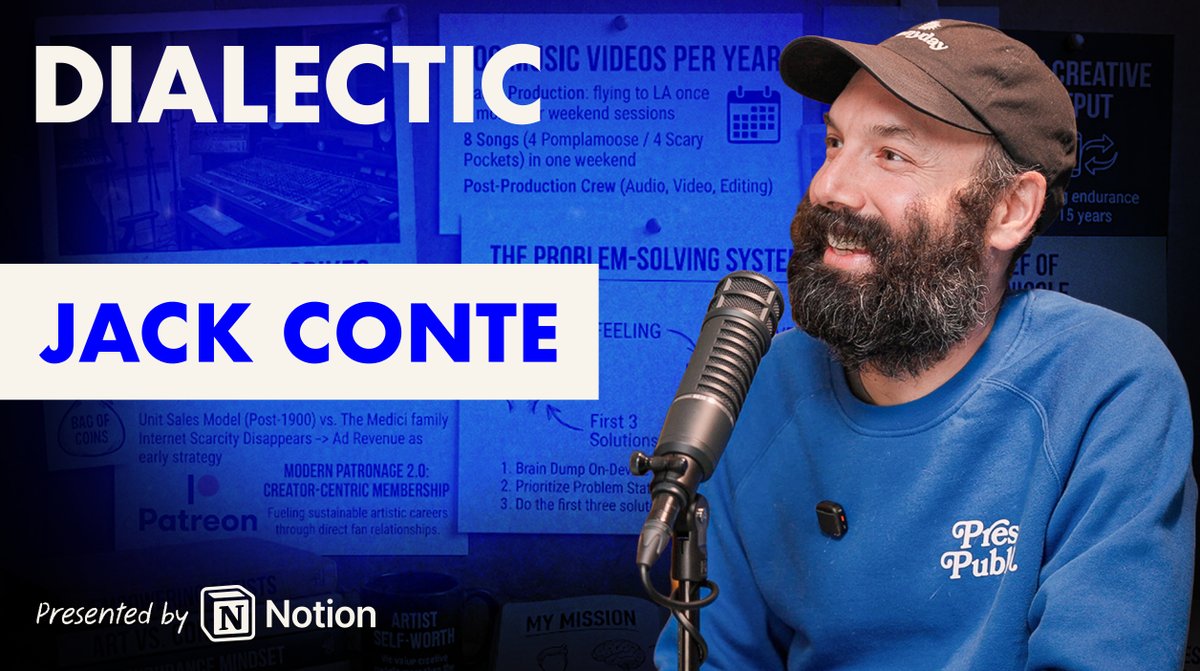
Dialectic 52: Jack Conte! Jack is not an entrepreneur who makes art on the side. He is a lifelong artist and musician who became the unlikely founder and CEO of Patreon, the only company he has ever worked for. At his (musical) peak, Jack was releasing 100 music videos a year between his bands Pomplamoose and scarypockets while building one of the few enduring creator platforms on the web. He started Patreon to solve his own problem as a full-time YouTuber: he wanted fans to pay him directly for his work rather than accepting a dashboard that told him 3 million views were worth $18. Patreon is rare amongst its peers: it's a platform built first and foremost for creators, not consumers. It makes money when creators get paid. Jack believes that incentive alignment has helped Patreon earn creators’ long-term trust, and will help it endure as mediums, technology, and platforms evolve. I talked to Jack about all of this and more: - creative endurance and becoming “post-chaos” - why Silicon Valley undervalues art, brand, and storytelling - why art isn't content and getting paid isn’t selling out - creator-first incentives, trust, and 100 years of Patreon - why Jack is still the right CEO after 13 years - leadership: ambition, obsession, self-reflection, and learning from people better than you - Charlie Kaufman, authenticity, and making fans - lucid dreaming and taking more risks Timestamps: (0:00) - Opening Highlights (1:38) - Intro to Jack & Thanks to Notion (3:44) - Start: Prolific Output, Energy, Juggling, Endurance, and Becoming Post-Chaos (22:04) - Combining Creativity and Business and Art vs. Content (33:21) - Advertising vs. Membership & Patronage vs. Patreon (44:06) - Jack’s First and Only Job, and Silicon Valley’s Undervaluing of Creativity, Brand, and Storytelling (and Patreon) (55:17) - Building for Creators First, Incentive Alignment, Trust, 100 Years of Patreon, and Why Jack Is the Right CEO for Now (1:04:49) - Leadership: Types of Ambition, Obsession, Self-Reflection, Bias to Action, and Learning from Others (1:12:59) - Talent vs. Enthusiasm, Being Proud of What You Make, Making Fans and Being True, Managing Parasociality, and Community (1:28:30) - Filmmaking, Labels and Collectives vs. Individuals, Breaking Patterns, Creative Intimacy, Music, Patreon’s Origin, Persistence, Lucid Dreaming, and Taking Risks (1:49:26) - Thanks Again to Notion Dialectic with Jackson Dahl Ep. 52: Jack Conte - Draw the Next Page - is out now, below and on all platforms.

Jackson Dahl

16,804 views • 1 month ago

Judge Monroe: Miss Taylor, you are seeking half of a lottery winning in the amount of $20 million, is that correct? Diana Taylor: Yes, correct. Judge Monroe: Okay. Explain to me why you are entitled to half of the winnings. Diana Taylor: So, I'm seeking this money because I strongly believe it still goes under marital property. Since, um, he got this ticket using our shared account, and then, uh, that he got it before our divorce papers were finalized. I supported this man for 7 years, following him everywhere he goes so he can, um, chase his dreams. And I give up on my career and and my life to support him. So, I think, um, yeah, again, I'm here to seek a fair distribution. I'm not here for greediness. Judge Monroe: And ur saying he purchase the ticket prior to when was your divorce finalized? Diana Taylor: Uh, it was on October 7, on, um, 9:00 AM. At 9:00 AM, I believe. Judge Monroe: Okay. All right. Thank you, Miss Taylor. Mr. Taylor? Mark Taylor: Thank you, Your Honor. Well, one thing is true, we were divorced on October 7th. That is the one true thing that she has communicated to you. Um, the full truth is that we got divorced that morning, and then, as you can see from the receipt, later that day after I had lunch with my attorney, I left his office from the finalized divorce, and I stopped on my way home to pick up some beer. I bought a six-pack, I was going to go home, watch the game, just kind of relax a little bit. And on a whim, as I was paying, I decided to buy a lottery ticket. And so, I bought a lottery ticket, something I almost never do. And that's when I won the money So, it was clearly after the divorce, she has no claim on that money, and this is really a waste of all of our time.

👑 𝐓𝐇𝐄 𝐊𝐈𝐍𝐆

1,762,068 views • 1 month ago

This is probably the most complex workflow I’ve ever built, only with open-source tools. It took my 4 days. It takes four inputs: author, title, and style; and generates a full visual animated story in one click in ComfyUI . I worked on it for four days. There are still some bugs, but here’s the first preview. Here’s a quick breakdown: - The four inputs are sent to LLMs with precise instructions to generate: first, prompts for images and image modifications; second, prompts for animations; third, prompts for generating music. - All voices are generated from the text and timed precisely, as they determine the length of each animation segment. - The first image and video are generated to serve as the title, but also as the guide for all other images created for the video. - Titles and subtitles are also added automatically in Comfy. - I also developed a lot of custom nodes for minor frame calculations, mostly to match audio and video. - The full system is a large loop that, for each line of text, generates an image and then a video from that image. The loop was the hardest part to build in this workflow, so it can process either a 20-second video or a 2-minute video with the same input. - There are multiple combinations of LLMs that try to understand the text in the best way to provide the best prompts for images and video. - The final video is assembled entirely within ComfyUI. - The music is generated based on the LLM output and matches the exact timing of the full animation. - Done! For reference, this workflow uses a lot of models and only works on an RTX 6000 Pro with plenty of RAM. My goal is not to replace humans, as I’ll try to explain later, this workflow is highly controlled and can be adapted or reworked at any point by real artists! My aim was to create a tool that can animate text in one go, allowing the AI some freedom while keeping a strict flow. I don’t know yet how I’ll share this workflow with people, I still need to polish it properly, but maybe through Patreon. Anyway, I hope you enjoy my research, and let’s always keep pushing further! :)

Lovis Odin

58,841 views • 11 months ago

Weekly Briefing: The 39th Iran "Deal", The SpaceX IPO, and Hollow Midterms This week, Tony Nash and Albert Marko tear through Trump's latest cyclical "peace deal" headlines, unpack the structural fallout of SpaceX officially hitting public markets, and deliver a brutal reality check on the hollowed-out national identities of both political parties heading into the midterms. We pull no punches on the macro forces squeezing the everyday price taker, from post-pandemic consumer compression to the financial world's worst-kept secret: the absolute disdain for the consumer coming out of the Treasury. Thematic Takeaways - The Friday Peace Script: Why Trump's 39th claimed agreement with Iran is pure algorithmic bait, weaponized to spike the markets on headlines before institutional players dump the top on retail investors. - Weekend Missile Odds: We peg the likelihood of weekend kinetic action at a 1-in-3 chance, driven by Israel's ongoing containment in Lebanon rather than direct US involvement. - Starving the IRGC: The underlying mechanics of the US energy blockade, targeting the illicit arms, narcotics, and oil revenues that funded the axis out of Venezuela. - The Iraq Level Disaster: A look at the post-conflict roadmap, exploring whether regional powers will simply pay off the IRGC elite with backdoor amnesties to retire quietly to Dubai or Switzerland. - Skunk Works vs. The Ukraine Myth: Why mainstream commentary claiming the US needs drone lessons from Ukraine is fundamentally ridiculous, and how public displays of unmanned naval tech prove the US is 10 years ahead in its black-budget divisions. - The SpaceX Market Siphon: SpaceX's public debut surged 25%, causing a massive liquidity drain as small institutions and retail investors actively liquidated bloated positions in Nvidia and Broadcom to chase Elon Musk's portfolio. - The Orbiting Data Center Trap: Why space-cooled data centers are a plausible 5-to-6 year business line, but face the catastrophic structural threat of high-velocity space junk and microscopic space dust ripping hardware apart. - The Hollow Midterm Platforms: The complete degradation of national political identities, where the Democrats' entire platform has devolved into "we are not Trump," while the GOP has entirely surrendered its leadership structure to a single man. - The 5.2% Inflation Trap: Why local redistricting won't save the House for Republicans if centrist voters in swing states like Michigan stay home due to unrelenting post-pandemic margin compression. - The $40 Hamburger Economy: The reality of a working-class family of four being completely priced out of basic fast-casual dining, exacerbated by a highly sensitive outbreak within the Texas beef herd. Timestamps 00:00 – Friday afternoon briefing: Overcoming audio-only slip-ups and mapping out the 3-topic agenda. 01:00 – The 39th Agreement: Reuters headlines, algo microseconds, and the repetition of the Trump peace pump. 03:00 – Weekend Missile Checklist: Israel, Lebanon, and the structural impossibility of an instant nuclear solution. 04:00 – Cutting off the Revenue Base: Illicit arms, narcotics trafficking, and the real reason the US went into Venezuela. 05:45 – The Oil Game of Chicken: Trump's midterm market calculations vs. a pathway to a multi-stage agreement. 07:00 – Sub-$75 Crude: Why breaking $75 triggers an immediate buy signal while the European and Asian economies sit at a standstill. 08:45 – The Dubai Amnesty Plan: Paying off the IRGC elite to take a 20-year vacation from geopolitics. 10:10 – The Iraq Model: Disrupting political elites to transform regional powers into subordinate oil-selling states. 10:50 – Advanced Defense Tech: Unmanned naval boats, corporate technology testing, and the 10-year Skunk Works lead. 12:00 – Debunking the Commentators: Why the US military doesn't need "hodgepodge DJI" drone advice from Ukraine. 13:00 – SpaceX Siphons the Market: Gaining 25% on day one and forcing fund managers to liquidate Nvidia and Broadcom. 14:45 – Orbiting Data Centers: High-speed space junk, harvesting the sun, and Starlink’s direct threat to global mobile providers. 17:00 – Midterm Primaries: James Carville's Clinton-era legacy and how fringe litmus tests infected the modern Democratic identity. 18:40 – Radical Micro-Issues: Why ceding the center prevents the nomination of winning candidates like Andy Beshear. 19:15 – The GOP Identity Vacuum: The Thomas Massie miscalculation and the danger of Republican voters staying home. 20:30 – The 5.2% Inflation Trap: AI data centers suing for Michigan farmlands and the loss of the House. 22:00 – The Slow Downside Pump: Department of Energy failures and the absolute myth of gasoline refinery delays. 23:00 – The $40 Hamburger: The Texas beef herd outbreak and the rapid destruction of consumer disposable income. 24:45 – "They don't care": Exposing Treasury Secretary Bessent's well-known disdain for the American consumer. 25:40 – Fake National Security: The rise of online demonization and who actually controls Trump's policy. 27:00 – The Gold Panic: Why breaking $4,000 triggers a massive liquidation wave straight down to $3,300. Join the Patreon for unvarnished macro analysis: Follow Albert Marko Live Monitor

Tony Nash

17,175 views • 2 months ago

Just in $AMD Anush "Speed is the moat"|ROCm🎙️ In the race to define the future of AI, what's the one advantage that truly lasts? It's not proprietary tech, argues Anush Elangovan Elangovan, VP of AI Software at AMD , but the sustainable speed of innovation. He explains why AMD is rejecting the "walled garden" model for its open source ROCm stack, betting that an open community flywheel is the key to victory. Listen to understand how this open strategy is designed to out-innovate closed systems by empowering developers to solve everything from frontier-model challenges to the mundane, everyday problems that define the "last mile" of AI. AMD ROCm Software: Part 1 Transcript [00:00:00] Andrew Zigler: Joining me is Anush Elangovan, VP of AI software at AMD. And when people talk about AI compute, the conversation often stops at hardware specs, but it's more than just physical chips that win the game. It's also the software ecosystems supporting them. [00:00:18] Andrew Zigler: The prevailing strategy in the industry has been to build something like a walled garden. You know, something closed, proprietary locks, developers in. But AMD is betting on an entirely different play, open source acceleration, and with rock, their open source AI software stack. AMD is building not just hardware parity, but an innovation flywheel that's powered by the community with interoperability and the freedom to scale without all of that pesky lockin. [00:00:48] Andrew Zigler: And in this world, speed is your moat and how fast you can innovate while your platform remains open, flexible, and standardize across all of its applications. That's what we're gonna explore [00:01:00] today. So Anush, I'm really excited to have you here. Welcome to Dev Interrupted. [00:01:04] Anush Elangovan: Thanks for having me. Uh, super excited to chat about it. [00:01:07] Andrew Zigler: Amazing. Well, let's go ahead and dive right in with kind of what I laid it out with in the beginning, the idea of the moat and it being about speed. I wanna unpack that a bit because that came from you when you and I first spoke. And I, and I want to know, you know, how do you define speed inside of AMD beyond just things like hardware, benchmarks. [00:01:27] Anush Elangovan: Yeah, that's a very good question. So when we typically talk about speed, everyone's like, Hey, hardware benchmark specs, right? Like, uh, memory bandwidth or, or flops. And that is one important part of it, uh, AMD does very well. With that, we do have, a, a very good history of executing on that axis. [00:01:47] Anush Elangovan: But when I say speed is the moat, it is about, uh, how we prepare, how we build the muscle to run the race for a long time and run it fast. And it is [00:02:00] not about a single point in time that you've, you've beat some you know, benchmark and, and you declare victory. It's about building the ability to consistently develop and deliver. [00:02:13] Anush Elangovan: Both hardware and software innovation at scale and do it fast, right? Like, you know, we we're increasingly getting to a point where models come out and they're, uh, you know, a year or two ago it was like, Hey, they work on AMD on day zero, which is great, but now they are performing on AMD the day it releases, right? [00:02:32] Anush Elangovan: So, what does it take to Prefetch where the industry is going? Be prepared to intercept. At that point is what you know, I, I refer to as you know, the, the speed factor in, in creating this mode, right? And the mode is just shed all things that hold you back and run as fast as you can. [00:02:53] Anush Elangovan: Uh, because the pace of innovation that is, uh, being seen in, in AI [00:03:00] industries is just. Amazing. Right? And it's like, it's transformational at at how you generate electricity. It's transformational as at how you build data centers. It's transformational at how you deploy compute, networking. It's transformational at what kind of use cases you, you know, uh, use AI for. [00:03:17] Anush Elangovan: Uh, and for that, you need to be prepared to, see what comes tomorrow and be prepared to run the race tomorrow. [00:03:23] Andrew Zigler: Yeah, it's a really great perspective because it highlights that it's not just like a checkpoint that you run through. I like how you called out, like it's not just hitting that benchmark or being the best in class at that moment, in that snapshot, it's about having a. The throughput and about having that dedication to the idea and continuing to deliver on it. [00:03:43] Andrew Zigler: It's not just crossing the threshold, but it's also being the engine. And that's what, that's what protects a business. That is the moat, because the moat is that innovation layer, the faster and more, uh, future forward. That you can work and think, [00:04:00] you know, the better. Uh, we, we talk a lot about like future forward work styles. [00:04:04] Andrew Zigler: Like what are the things I could be doing right now today that are gonna be like, way more useful tomorrow? Let, let's abandon those, workflows that are older and that kind of like, that translates into. An advantage when you work that way. You know, what kind of things have you learned working with, uh, like across all spectrums of people who would use ROCm, right? [00:04:23] Andrew Zigler: You have like the developers, but then you also have the enterprises and you have this large span of adoptees, right? So what is the, what does that look like that you learn? [00:04:32] Anush Elangovan: Yeah, so, so the way I look at it is there are gonna be pockets of different, uh, you know, cadences, right? Like, so people who are deploying in enterprises, for example, right? The validation and how long it takes for them to deploy an LLM that's secure. It's, with guardrails, et cetera, maybe longer. [00:04:52] Anush Elangovan: but you still have to go through the process and you have to be prepared to like, walk that walk to deploy an enterprises. That doesn't mean it's [00:05:00] not fast, that's as fast as you can do for that industry, right? And if you are deploying AI in healthcare, right, it's, it's got its own, uh, cycle. [00:05:07] Anush Elangovan: but in each one of these, you want to see how, like, go down to the essence of what is it that you actually have to do. And, you know, I, I, I like how you framed it. It's like it's, you shed your prior assumptions of how things are done, right. And, and you kind of build up from a, uh, first principles, uh, approach to say, this is how I could use AI to unlock, whatever I'm doing. [00:05:33] Anush Elangovan: And, and, some of it, you know, it's good to really step back and look at. Just question every part of it, right? Like right now you're getting chat GPT and, Gemini competing for like, math, olympiads and, and, uh, college, uh, reasoning, uh, tests. Right? And, and those are like that, that is amazing and increasingly like complex tasks that they're trying to do. [00:05:58] Anush Elangovan: But there may also be like. [00:06:00] More mundane things that AI could, could get applied to. Right? And, and so when we think about shedding old ways, you wanna shed it not just in like the tip of the spear. It's like, you know, I'm gonna see what's the frontier model. It's also, it could be something as simple as. [00:06:18] Anush Elangovan: How do you choose a, a movie, uh, you know, like a recommendation system, right? Or, or, uh, an automated, uh, flight, uh, rebooking system. So the moment, you know, your flight is late, uh, right now it's a notification, right? It's like, oh, you got a text message saying your flight's late. And I got that like three times this week. [00:06:38] Anush Elangovan: But anyway, uh, and, and, and, and, I was just like, okay, so if I were to rethink this. All this MCPs that we have that should be hooked up into an MCP that says, your flight's delayed. Here are your options. If you want, you know, these are the paid options. Yeah. Here are the free options. This will get you back into your you know, Toronto airport [00:07:00] tonight. [00:07:00] Anush Elangovan: Or if you stay, here's a hotel plus this, plus this, plus. It's just like, go ahead is all I should say. Versus now I'm like, okay, can someone, you know, can I call a travel agent? Can I do this? Can I go online and log into And you know, so we gotta fundamentally rethink even those like small, nuances of, things that we do that can be automated out and AI is really, really good at doing something like this, right? Maybe I just explained an AI startup idea right now. Somebody should just start that. [00:07:29] Andrew Zigler: I think you did. Yeah, you definitely did. Someone, one of our listeners is definitely going to lift that off of you. I, I, I, you know, I hate being on the receiving end of those. You feel a little helpless and then you have to like, follow the whole flow. So I know what you mean. Like I, I like how you called out that the build and this like. [00:07:45] Andrew Zigler: Where speed is your moat and the innovation layer is protecting you, is what makes you better than your competitors. How you scale that and you bring that to market. So by understanding the problems that you're solving, uh, throwing away those older assumptions, but also [00:08:00] recognizing that like. We're building every single day, new things and new ways of using stuff that we're still figuring out the implications of. [00:08:08] Andrew Zigler: And so when you have a lot of velocity and you're introducing a lot of new ideas, and maybe you have that workflow now that automatically rebook your flight off of your late flight text message, and uh, I know I would certainly use it, but you know, what kind of philosophies guide the way that y'all think about building this ecosystem to manage that stability while letting folks. [00:08:29] Andrew Zigler: Play with the speed and the assumptions and the airplane re bookings. [00:08:34] Anush Elangovan: so, so I think, you know, we need to peel one layer down, right? and the philosophy is, Hey, we, we just discovered electricity, right? And you know what we're gonna do? We are gonna make motors, uh, or dynamos, right? Like engines. Uh, sure. We don't know if it's gonna be a Ferrari that you're gonna make, or it's a a a a dump truck. [00:08:57] Anush Elangovan: That's good for doing this. But let's [00:09:00] let, which is also required, right? You need a dump truck. You need a garbage truck. And, [00:09:04] Andrew Zigler: Yeah. You need the [00:09:04] Anush Elangovan: course you need, uh, a Ferrari for a midlife crisis, right? So, [00:09:09] Andrew Zigler: precisely. [00:09:10] Anush Elangovan: But, but my, uh, point is what do we build next? And, uh, and this is what I meant by like, okay, let's, let's take those baby steps to build the. [00:09:20] Anush Elangovan: Infrastructure that's required that we know we'll have to use, right? So, so if I just discovered electricity, okay, great. Now one, how do I save this electricity and how do I use it? So there's battery technology, so you need to do something like that, right? Like so. But then you also want to make it into an actionable thing. [00:09:37] Anush Elangovan: You want to make it for like automobiles, or you wanna use it for, you know, powering, uh, entire cities. So it is that transformational. So, uh, AI is that transformational. So, if you distill down, it'll, it'll come down to how do we think about, what we can do with this this fundamental technology that, We may not be aware of what it [00:10:00] is gonna unlock next, but at least you know the next step is clear, right? It's like a dense fog, you know, it's gonna be like, it, it's the right path. You see the light, but it's kind of like out there and, and the steps you're taking are concrete and you're like, okay, this is good. [00:10:16] Anush Elangovan: I, this is better than where I was or where we were. So we are moving forward. So you can build with the. Intuition from what you see in the short term and a tactical view, but towards what you think the future is gonna be. [00:10:28] Andrew Zigler: Right. You almost like we're all in this like fog of war, right? And like you said, you're reaching out and you're trying to step through it. You could think of it too, as like you're in the dark and your hands are up in front of you and you know that. You're, you're not gonna run your face into a wall because your hands are out in front of you, but you're not gonna maybe do much better than that. [00:10:45] Andrew Zigler: So that's kind of like, I think the eco, the, the industry, the world that we find ourselves in, uh, and we all have to, then this becomes the power of an ecosystem, of a group of people working together to create that layer of, [00:11:00] uh, of establishing the [00:11:01] Anush Elangovan: exactly. And I, I, I just, instead of, you know, saying fog of war I describe it as like, you're in this. Beautiful valley with like a morning, uh, fog that's in. You can smell the flowers. You, you hear the birds. You are like, okay, it's, we are in like, uh, utopian paradise and yes, I just need to like, continue the walk, right? [00:11:24] Anush Elangovan: and then move forward with that, conviction that you're in the right spot. [00:11:27] Andrew Zigler: Yeah. So let's talk about that ecosystem world. This nice, I love how you describe it, this grassy side of a hill in the morning that's covered in some mist and maybe we can't see 30 feet in one direction, but it sure is a beautiful hill and it smells nice. And so we're all here. And why is, in that world, why is. [00:11:44] Andrew Zigler: You know, open source, their strategic advantage that y'all are going for in the AI hardware market. And, and then how does like ROCm turn that into wins for people within that ecosystem? [00:11:56] Anush Elangovan: you know, the, the way we look at it is this, is kind of like how I view [00:12:00] AI and the ecosystem, right? But, but it is for everyone to enjoy. Uh, and so we do want to make sure that. You know, it is, uh, beneficial for everyone. [00:12:09] Anush Elangovan: The ecosystem can come in and, and innovate. It's an open innovation engine. and uh, it is very different from, you know, having a walled garden with, Hey, only I know how to do this and I'm gonna do it and throw it over the fence and you can use it or keep walking, right? So we'd like to be good citizens that way, but also. [00:12:30] Anush Elangovan: Uh, it is self-fulfilling in a way, right? Like it, the, the pace at which we innovate with open source is unmatched. Like, you know, our serving engines are like VLLM and, and sg l. Those things, uh, those frameworks are like super, super aggressive in terms of how fast they come out with features and how fast they can you know, get performant models out. [00:12:52] Anush Elangovan: And that compared with what, uh, you'd get from, you know, the likes of like T-R-T-L-L-M or something is always lagging, right? Because you [00:13:00] just can't keep up with you know, 200 commits a week just on one particular model to get that model really performant [00:13:06] Andrew Zigler: And, and, and in that world where, you know, everyone can enjoy the winds of this, what kind of customer stories or innovation stories have really stood out to you and excite you about building and creating this place for developers? [00:13:19] Anush Elangovan: Yeah. So I think the parts that are super exciting for me are when when we get to see a customer that is first skeptical. Then they start a little like, okay, fine, we'll give you a chance. Uh, we do a simple, uh, POC and then they're like, huh, this seems to work. Yeah, we told you it works. [00:13:42] Anush Elangovan: You don't have to change one line of code. Really? Yes, no need to change one line of code. Okay, let's try a production workload. So then they try it. Oh, you're more performant than the competition. Yes. We're more performant than, than the competition. So how much does it cost? And we're like, oh, it's your TCO is better with, uh, [00:14:00] AMD. [00:14:00] Anush Elangovan: So again, they're like, wow, okay, good. So now how do we deploy at scale? And then we go deploy it at scale. And when they give a thumbs up on that and they say, this is good, right? That's when you know, you, you see it go full circle from like, oh, we, we've never heard about AMD to like actually deploy to tens of thousands of GPUs In the order of a few months, right? It, it, it really is fascinating to see and very exciting and invigorating to [00:14:28] Andrew Zigler: Yeah. At like a great exposure to a lot of interesting problems. And, and then people using the infrastructure, the, the technology available to solve those problems. Really specific problems by the way, that's often why they're bringing their data and AI to it, uh, is because it is really specific and important for them. [00:14:45] Andrew Zigler: And there's a, a lot I think that other engineering orgs can learn and even emulate from AMD's success and, and having this open source ecosystem and it causing this acceleration within. You [00:15:00] know, uh, customers and enterprises that use and adopt the tools and, and, and that creates an advantage. And that goes back to why we're talking and like the real thesis of our conversation today. [00:15:10] Andrew Zigler: So how do you think engineering leaders that are listening to this and obviously tapping into this great success AMD has from an open source flywheel, how do you think other, other folks building in the same space can foster that open, first, that open source oriented culture in order to, you know, accelerate their innovation goals? [00:15:29] Anush Elangovan: Yeah, that's a very good question. So the startup that um, was acquired by AMD we, we built, I mean, we started off doing iot stuff and you know, smart ring and all that, right? But in the, the end of like, uh, and not the end, the last six years of the company was building ML compilers. [00:15:47] Anush Elangovan: And ml, ML compilers are like super, uh, complicated, sophisticated, advanced algorithms, dah, dah, dah. but it was all open source, right? So our VCs were like, wait, what do you mean your core [00:16:00] IP is open source? And um, the speed is the moat applied even then, right? It was just like, yes, if you have an idea that. [00:16:08] Anush Elangovan: Because someone saw this idea that you are, they're gonna be able to catch up, then you probably have the wrong idea anyway. But if they are, you know, you execute and they're gonna catch up, that you should assume they're gonna catch up. Right? So you gotta move forward. So keeping it open source is super important. [00:16:25] Anush Elangovan: But also to your question on like, you know, the learnings from an AMD standpoint, right? If there are, hard problems, I'd say dig in and work through it, right? Like there's no way but through it, right? That should be the simple mentality. And more, uh, frequently than not. you'll see that you'll just make it through in a, in, in good form. [00:16:52] Anush Elangovan: But if you doubt it and you're like, oh, I don't know if I should commit, if I'm, I, you know, what should just commit to do the right thing [00:17:00] every step, right? Every step, and just keep taking one step in front of the other. And in no time you'll see that you'll be running. Right. And, and yes, the first few steps will be like, yeah, everyone's complaining about your software quality. [00:17:15] Anush Elangovan: Everyone's complaining about this and that, and it doesn't work. And, and a few steps in, you know, you get, you get the hang of all the complaints that are coming in. You get the feedback loop. You're like, okay, what, what are you prioritizing again? One step in front of the other, right? You just keep knocking that out and then you get to a point where you're, it just becomes second nature, right? To do the, to do the right thing. And, and then yes, if someone gives you two options, you'll be like, fine. This is, uh, you know, there's always the resource trade off. There's always a human capital trade off, but what's the right thing to do? of course, I, I'm pragmatic about what we choose, but, but if the right thing for your long-term success is dig in, go first, principles, make it [00:18:00] happen. [00:18:00] Anush Elangovan: Well. Then just go for that. There's, there is no shortcut to [00:18:04] Andrew Zigler: acknowledging, you know, how it aligns with your mission, your core company goals, and what you're looking to achieve. And, and I, I love how you rightfully called out that in the open source world and you know, you have your technology that you've built, what you think is your moat upon, right? [00:18:22] Andrew Zigler: It's your code and, and to open source that, or to just make it where anyone could peer in is, you know. Scary in one regard, but two, it just kind of feels like you're handing away your throne room in some kind of sense, a very direct feeling sense. But the ultimately, you were really right to call out, and this is something I think about all the time, that the real power there is still the speed This the speed. [00:18:42] Andrew Zigler: That was the moat at the beginning of our conversation. It's the speed in combination with your. Very specific domain understanding of what you're building and what you're creating, and your new role as the steward of that world and how people plug into it, which [00:19:00] has frankly, a lot more influence and power than lording over a closed. [00:19:04] Andrew Zigler: You know, repository or an ecosystem, and like you said, like throwing things over the wall. Sure. There, there might be people always on the other side of that wall, but you're not gonna have a great connection with them. You're not gonna be able to really clearly understand them. I, I like your metaphor of the side of the field of the mountain a lot more. [00:19:23] Andrew Zigler: But, but in the, in this world, you know, where. That speed is, is the power and, and open source is just one way that you can harness that speed to get really far ahead and to innovate. , There's other parts of this equation that you can be experimenting with too, and I'd love to pick your brain about them as a software leader and, and, and one of them is about looking forward and kind of understanding that future that we're all building towards and beyond today's models and hardware. [00:19:48] Andrew Zigler: You know, what do you see as the next major bottleneck or opportunity in the AI compute space? As, as you know, enterprises and folks start to get a little more mature about what's available to [00:20:00] them. [00:20:00] Anush Elangovan: Yeah, I think, the bottleneck and opportunity is, uh, what I'd call, call walking the last mile of ai. Right. Uh, and like I I, I gave you an example, uh, previously, but, but it's similar to that. It's like there are cases where Humans have so many, uh, things to do in your day. You know, like the, if we sit down and actually had a customer focus like, okay, these customers lives, I'm gonna save four hours of this customer's life. And if you actually sit down and look at all of that, it'll be. Easily automatable, easily you know, uh, applicable, uh, for ai, right? [00:20:39] Anush Elangovan: Like, but then making it happen is gonna take a little bit, right? It's like maybe it's, uh, paying your utility bill, right? Or something like that, right? Or, or, your healthcare explanation of benefits. Uh, like, I'm sure you get an explanation of benefits, and I'm like, I, I don't even know what that thing is. [00:20:55] Anush Elangovan: It's just like EOB and like. [00:20:57] Andrew Zigler: it's a big, a big old PDF. Yeah, [00:21:00] exactly. [00:21:01] Anush Elangovan: Like, like, I'm like great straight to the, uh, shredder, right? And but that could be, you know, automated with the ai, right? It, it, it'd be like, Hey, the summary of this thing is you went and visited this day. Everything is okay. Everything is paid for, so don't worry, it's not a bill. [00:21:17] Anush Elangovan: That again, the same, uh, thing, but the sense of what that information overload is could be. Digested by ai, uh, accumulated over time and retrieved when you need it. Like, I don't, I actually don't even need to know this EOB right now, unless of course, whenever I need to know it, that maybe, you know, like for some benefits I need to figure out what do, what did I do over the past year and how do I apply it? Source:

Mike

14,195 views • 8 months ago

In this episode, I sit down with Pete Hegseth and Jenny Hegseth to discuss family values, career transitions, military readiness, and more. 0:00 – Introduction 1:27 – Transition from Anchor to Secretary of War 2:49 – Becoming President Trump’s Pick to Lead the Department of War 4:39 – A Normal Day in the Hegseth Household 6:13 – Choosing a Homeschool Curriculum 7:15 – Preparing Children for the National Spotlight 10:43 – The Reality of the Confirmation Process 13:38 – Keeping Family Together While Serving 16:15 – Children’s Experience at the Pentagon 17:30 – The Number One Hegseth Family Rule 18:31 – Who’s the Strict Parent and Who’s the Fun Parent 20:52 – Most Surprising Thing About Being Secretary of War 21:38 – Harder to Negotiate With: World Powers or Children? 22:29 – #1 Hope to Accomplish as Secretary 23:36 – Stance on Only Men in Combat Roles 25:08 – Making the Military Fit Again 25:40 – Cabinet Confidential Questions 28:22 – Most Impactful Action Taken as Secretary 30:20 – Is America Safer Today? 32:11 – Status of the Golden Dome 33:07 – Would You Rather Questions 34:46 – Most Likely to Call With an Emergency 35:15 – What the Secretary Eats in a Day 35:51 – Favorite D.C. Restaurant 36:06 – Best Meal Made by Jennifer 36:22 – Current Shows Binge-Watching 36:58 – Go-To Comfort Food 37:09 – Best Dad Joke 37:28 – Guilty Pleasure TV Show 37:40 – Glass Half Full or Glass Half Empty 37:57 – Favorite Type of Wings 38:25 – Dream Dinner Party Guests

The Katie Miller Podcast

165,902 views • 8 months ago

Tata Curvv EV: Pros & Cons, Quality Insights & Competition Analysis! Timestamps 0:00 - Real-time sound output 0:22 - Brake test 0:41 - Build, safety, and feel 1:04 - Curvv EV Empowered: Basic info 2:00 - Dual-tone color looks 2:23 - Fog lamps still present 2:30 - Ugly welding spots 2:48 - Paint quality 3:00 - Panel gaps 3:28 - No rear wiper 3:37 - Rearview glass and rear camera on the go 4:20 - ADAS while driving 5:10 - Glossy wheel cladding 5:28 - Insulation material and rubber beading 5:38 - Raised stance 6:07 - Aero twin wipers 6:18 - Flush door handles 6:54 - Frunk 7:06 - Fast AC wall charger with the car 7:17 - V2V and V2L 7:40 - Electric tailgate and boot space 8:17 - Alloys with aero inserts and full inner wheel arch cladding 8:54 - Front seat space and comfort 9:50 - Rear seat comfort and space 12:08 - Powered front driver seat 12:30 - AVAS 12:46 - Bottle holder style 12:57 - Similarities with Nexon 13:31 - No door pockets at the rear 13:41 - Auto hold 14:01 - Clean mechanism of the panoramic sunroof 14:16 - Digital cockpit and infotainment screen brightness 14:46 - Slippery floor mats 15:12 - Thick plastic panel gap in the glovebox 15:22 - Dashboard plastic design 15:49 - Had to stretch for ORVM buttons 16:00 - All power windows should have one-touch up/down 16:09 - Center console with piano finish 16:56 - No telescopic steering adjustment 17:07 - Screw covers not neat and no flaps/mirror for the sun visor 17:33 - Two 45W chargers available in the cabin 17:52 - Storage box and old-fashioned charging pad 18:16 - AC touch panel and knobs 19:17 - Range I got during the drive 20:13 - Can the Curvv EV sell in big numbers? 21:36 - COUPE styling: A gamble by TATA 23:06 - Why is there more buzz for Curvv EV compared to Nexon EV? 24:17 - IRA EV app 25:27 - Competition against ZS EV and Creta/Seltos in ICE

Sunderdeep - Volklub

28,298 views • 2 years ago

Epstein’s Zorro Ranch The Cover-Up They Thought We’d Never Notice Jeffrey Epstein’s 10,000-acre Zorro Ranch in New Mexico wasn’t just another property. It was his private desert fortress: private airstrip, 30,000 sq ft mansion, total isolation. Survivors say girls were trafficked and abused there. He openly bragged to scientists about turning it into his eugenics “baby ranch” impregnating dozens of women with his DNA to “seed the human race.” And an anonymous ranch insider emailed in 2019: two foreign girls strangled during rough s*x and buried on the property on Epstein & Ghislaine’s orders. They had videos as proof. The tip went to the FBI. …And then? Nothing. Here’s what makes this absolutely disgusting and VERY odd: In 2019, New Mexico authorities actually started investigating the ranch. Then the feds (SDNY in New York) stepped in, told them to shut it down and hand everything over. The same feds who raided Little St. James island and tore apart his NYC mansion… never searched Zorro Ranch. Not once. Not in 7+ years. Not even after the burial tip. Not even after multiple survivors named the property in court filings. They just… ignored it. Why this specific property got the full “look the other way” treatment is the real scandal. - Bought from New Mexico’s political royalty (the King family multiple governors). Epstein kept those connections warm for decades. - Dropped in one of the most remote, “don’t-ask-questions” corners of America near Los Alamos, where secrecy is basically the state hobby. Perfect for flying victims in and out with zero records. - Named “Zorro” (the fox that never gets caught). He wasn’t subtle. This wasn’t an oversight. This was protection. Fast-forward to 2026. Only after the latest forced document dumps did New Mexico’s AG finally reopen the case. Only after public outrage. Only now March 9, 2026 are state police and investigators finally on the ground doing the first real search in the ranch’s entire history. The new owners (who have zero Epstein ties) are cooperating. Too bad the last 7 years of rain, wind, and possible evidence destruction happened while the feds sat on their hands. Let that sink in. Two dead girls allegedly buried because of Epstein’s sick fetish games. An entire trafficking outpost ignored. A eugenics fantasy playground left untouched. While the island got wall-to-wall coverage. This is why “trust the authorities” sounds like a punchline. This is why the Epstein client list and full files still feel like they’re being drip-fed to protect the powerful. The ranch was too convenient to ignore… unless someone powerful wanted it ignored. The search is happening right now. If they “find nothing,” ask why it took this long. If they find graves, videos, or DNA — ask who let it sit for seven damn years. Either way, this stinks. Demand answers. Demand the full truth. No more elite playgrounds getting a pass.

Lacey

65,982 views • 5 months ago

Made with seedance 2.5 FORMAT: 30-second horizontal 16:9 realistic smartphone video. Create an authentic, imperfect everyday gym phone recording, as if a friend casually left a phone recording on a nearby bench. Use a standard smartphone camera with mild autofocus hunting, subtle exposure shifts, natural motion blur, compression artifacts, and slightly uneven handheld framing. No polished commercial look. 00–05s — ARRIVAL The character walks into a nearly empty gym after finishing a difficult set. They place a water bottle and towel beside a bench, sit down heavily, and lean forward with both elbows on their knees. Their breathing is noticeably heavy. Camera remains several feet away at a slightly low angle, as if casually recording from a phone placed on a gym bench. 05–10s — RECOVERY They slowly unscrew the water bottle, take two small drinks, then pause with the bottle still in their hand. Their chest continues rising and falling from exertion. They look down at their hands for a moment, flex their fingers, then wipe sweat from their forehead with the towel. 10–15s — THE NEXT SET A gym timer or workout screen is visible in the background but remains completely out of focus and unreadable. The character notices the timer, looks at it, gives a small tired smile, and shakes their head as if realizing they have less rest time than expected. They stand up slowly and roll their shoulders. 15–20s — PUSHING THROUGH They walk toward a cable machine and adjust the weight themselves. Close natural phone framing as they step into position. They briefly close their eyes, take one deep breath, then begin a controlled exercise set. Show realistic physical effort: tightening muscles, sweat collecting around the forehead and neck, slight trembling near the end of each repetition, natural breathing rather than exaggerated acting. 20–25s — FINAL REP The final repetitions become visibly difficult. They pause halfway through one repetition, breathe hard, regain control, and complete the movement with genuine effort. After finishing, they slowly release the handle, bend forward slightly, and place their hands on their thighs while catching their breath. 25–30s — QUIET ENDING They grab the towel, wipe their face and neck, then look directly toward the phone for a brief moment. With a tired but satisfied expression, they quietly say in a natural low voice: “Okay… that was worth it.” They pick up the water bottle and walk out of frame. End naturally while the camera continues recording for a moment before the clip stops. AUDIO Natural gym ambience only: distant weights being placed down, cable machine sounds, rubber flooring footsteps, ventilation hum, subtle clothing movement, water bottle clicks, realistic breathing, and occasional muffled gym sounds. Dialogue should sound spontaneous and slightly breathless, not scripted or theatrical. VISUAL REALISM Authentic smartphone footage, ordinary gym lighting, realistic skin texture, visible pores, natural sweat, slightly flushed face, damp hair around the forehead, realistic muscle movement, imperfect exposure, mild phone-camera sharpening, compression noise, subtle autofocus changes, believable shadows and reflections. STRICTLY AVOID: cinematic color grading, beauty filters, artificial skin smoothing, dramatic slow motion, music, subtitles, captions, logos, readable text, fake gym equipment, exaggerated muscles, perfect lighting, fisheye distortion, excessive camera shake, unrealistic sweat, duplicated limbs, warped hands, unnatural facial expressions, scene cuts, time jumps, or skipping the described actions.

Anissa

24,276 views • 15 days ago

This is the state of Pride in New Zealand right now. Half-naked, attention-whoring homosexuals gyrating and twerking like cheap strippers directly in front of kids. Little children in the crowds, eyes wide open to this degenerate freak show. Why the hell does anyone's bedroom preferences demand a full month of in-your-face parades and taxpayer-funded propaganda? I've got gay mates who are normal men and women. They don't feel the need to shove their sexuality down everyone's throat or turn public streets into a soft porn set. It's a sick, twisted world we've let happen. Grown men prancing around, chest-thumping "pride" in the fact they're sexually aroused by entering other men's arses. Imagine my great-great-grandfather, a hard-working Kiwi who fought for this country, looking down and seeing entire city blocks shut down so these people can flaunt their sodomy in broad daylight, waving rainbow flags like it's some noble cause. I'm not homophobic but this filth makes me want to vomit. It genuinely revolts me to my core. Homosexuality was criminalised here until the 1986 law change, and it's still banned in plenty of other places. But look how fast the slippery slope greased up. Decades of "just love" propaganda turned it from taboo to mandatory celebration almost overnight. So what's the next stop on this express train to hell? Pedophiles rebranding as "MAPs" (Minor Attracted Persons) and demanding their spot in the rainbow circus? It's already bubbling up on cesspits like Bluesky, where these monsters test the waters for "acceptance" and "non-offending" sympathy. The left's already laying the groundwork. Slippery language, academic papers, quiet pushes to decouple attraction from action. Give it time, and we'll have kiddie-pride floats with drag queens reading to toddlers while these creeps cheer from the sidelines. In 50 years? If this degeneracy keeps accelerating unchecked, we'll be living in a society where child-fuckers march proudly beside the rest, waving their own flags, screaming about "rights" and "inclusion." And anyone who objects will be branded the real monsters.

Matua Kahurangi

31,930 views • 5 months ago

just copy the prompt below and paste on Utopai the PAI agent turns it into script, create storyline, generate clips and edit all by itself prompt: High-energy 3D CGI animated comedy short, Pixar quality, ultra-detailed character animation, exaggerated physics, vibrant colors, warm orange kitchen lighting with glowing flames, bright daylight city streets, dynamic camera work with fast pans, tilts and dramatic angles, subtle motion blur on fast movements, comedic timing and expressions, upbeat energetic music with whooshes and impacts. **Main Character Casting Descriptions:** - **Pizza Chef - Jack (main actor in kitchen)**: Early 50s energetic male, messy silver hair, large prominent nose, thick expressive eyebrows, sharp intense eyes, fair skin with slight blush from heat. Wears white double-breasted chef jacket, wear white chef hat with text “el.cine” in front, gree neckerchief. Highly animated face — furrowed brows, focused squint, dramatic determination turning to exhaustion. - **Pizza Delivery Guy - Tom (main actor on street/scooter)**: Late teens/early 20s lanky male, long blue hair, huge expressive brown eyes, long nose, very animated facial expressions (surprise, determination, panic, relief). Wears white helmet with spinning yellow propeller on to, light blue leather with text el.cine at back, white pants, sneakers. Fast, exaggerated movements. - **Customer (final shot)**: Large, middle-aged stern woman, brown hair, heavy eyebrows, downturned mouth, wearing beige suit jacket, white shirt, dark trousers. Standing in doorway with impatient/annoyed expression. SHOT 1 (0:00–0:02) – Cinematic fast motion, dramatic low angle with subtle Dutch tilt and intense push-in: fast push from kitchen wide shot to close up on the Pizza Chef’s face in the bustling kitchen. He grips the large pepperoni pizza on a metal tray with raw, over-the-top determination — brows dramatically furrowed into deep angry V-shapes, eyes sharply narrowed with a fierce glint and slight crazy wideness at the edges, teeth gritted in heroic effort, dramatic sweat beads flying off his forehead. Bright orange flames explode upward from the pizza in the foreground with massive sparks and heat waves licking toward his face. Dynamic camera orbits left while pushing in for maximum tension, subtle motion blur on the flames. Background shows chaotic kitchen with stacked pizza boxes, glowing ovens, and flying embers. SHOT 2 (0:02–0:04) – Medium close-up, eye-level: Chef lifts the flaming pizza higher with both hands, leans forward, eyes wide with concentration as flames lick upward toward his face. SHOT 3 (0:04–0:06) – Medium shot, eye-level, dynamic pan: Chef dramatically spins the flaming pizza on the peel in a huge fiery arc above his head, left hand on forehead in dramatic pose, right arm extended. Flames trail in a perfect circle. SHOT 4 (0:06–0:08) – Low-angle dramatic shot looking up: Chef tosses the flaming pizza high into the air with both hands. The camera follows the spinning fiery pizza as it arcs toward the ceiling tiles. SHOT 5 (0:08–0:10) – Extreme low-angle on ceiling: The flaming pizza spins in a perfect circle of fire against the tiled ceiling, sparks flying. SHOT 6 (0:10–0:12) – Wide dynamic shot, low angle: Chef does a full acrobatic flip in mid-air, upside-down, catching the flaming pizza behind his back while still in the air. SHOT 7 (0:12–0:14) – Wide action shot, eye-level: Chef lands in a wide stance, spins the flaming pizza on one hand like a basketball, then dramatically throws it forward toward the open doorway with full body power, flames trailing, quick push in and follow the close up of the flying pizza in slow motion SHOT 8 (0:14–0:16) – Medium shot on street, eye-level: Pizza Delivery Guy stands outside the shop holding an empty pizza box, looking down at his watch with bored expression, propeller on helmet slowly spinning. SHOT 9 (0:16–0:18) – Medium close-up, eye-level: Chef (partially visible inside doorway) throws the flaming pepperoni pizza directly toward the Delivery Guy. Delivery Guy looks up with wide-eyed shock. SHOT 10 (0:18–0:20) – Medium shot, eye-level: slow motion, close up of the flaming pizza flies straight into the open pizza box held by the Delivery Guy. Flames whoosh past his face as he catches it perfectly. SHOT 11 (0:20–0:22) – Close-up on Delivery Guy’s face: His eyes go extremely wide in surprise, mouth open, propeller spinning faster, and talk excitedly SHOT 12 (0:22–0:24) – Extreme close-up on smartphone screen held in hand: Red digital timer clearly shows “00:30” counting down. SHOT 13 (0:24–0:26) – Close-up on Delivery Guy’s face: Expression changes from shock to intense determination — eyebrows lowered, mouth set in a smirk, eyes focused. SHOT 14 (0:26–0:50 end) – Wide tracking shot from behind, fast-paced: Delivery Guy jumps on his purple scooter and speeds away down the sunny city street, pizza box secured on the back. Camera follows as he weaves between cars, jumps over red-and-white construction barriers, rides up stairs, does rooftop jumps, and finally stops smoothly in front of a house. He turns with a confident smile as the stern Customer opens the door and stares at him and says with an angry tone “you are late” cut to Tom smiling awkwardly and scratch the back of his head, he takes the pizza from his back and suddenly he slide and fall down on the ground Cinematic 3D CGI animation style, highly exaggerated comedic action, perfect continuity of the flaming pizza and characters, dynamic camera movements exactly matching the original video’s pacing, framing, and energetic tone. Photorealistic 3D render quality, 1080p, 24fps.

el.cine

12,990 views • 2 months ago

My Thoughts on R2 after my time with it! Short review! First, Rivian completely nailed this thing. I love the positioning of the driver seats. That long front nose gives a nice commanding feel. They will sell each and every one of these! Driving impression/suspension: 9/10 I felt the vehicle has good build quality. It felt *tight* and secure. Power delivery was smooth and crisp in all-purpose. Sport mode fella unlocked and ready for all the fun things. Power is rapid and consistent with a full power moment around 35-40mph, all the power is there. There is a good amount of nose rise during a hard acceleration. But I do feel the suspension was working well to control this. Remember this isn’t an air suspension. It’s a coil suspension. There is a difference between the suspension setting soft was SOFT. Firm was stiff but not overly stiff. It didn’t have that bouncing effect that some vehicles can have when going into firm suspension. Moderate was a good balance. I wish it could be more adaptive in moderate but it’s very very good. Turn in was good, and the turning radius was excellent. Switching from D to R for a 3-point turn was smooth and quick, no jerkiness. Very good control over entrance to parking lots. Stable. Lastly, it feels like the small delay some R1 have in throttle is gone with R2. Software: 8/10 This is where you guys know I am hard on them on. Because I want the best they can give. Rivian OS2.0 is a HUGE upgrade over R1. In all cases. Responsiveness, touch input, speed, app switching, keyboard responsiveness, etc., it is a huge difference. I love the new “fish stick” bar. And settings being available with one tap and being app-dependent first is fantastic. Well done Wassym Bensaid, the halo are great. The only thing about them is while driving, it’s hard to get a direct click, especially when trying to use it to switch drive modes where you have to push towards you. The halo likes the spin/move, but I think I just need to get used to it. Living with it would for sure help with that. I’m really hoping they fully unlock customization for them. You can end up with 8 different characters you could adjust. I really like having the driver display. But driving with it, you can notice how much smaller it is compared to R1. It’s no deal breaker, but it’s noticeable. Cameras felt snapper and of higher quality over Gen 2 R1. The turn signal sounds is new I like it as well as the forward and Evers noise it makes. Think Tesla sound when shifting. Audio: Now I’ve experienced R2 3x now. With 2 times with audio. The audio was significantly better than when I got to sit it in, in Miami for a block party. It’s about as good as R1 is now. There did feel like a sub was there. That’s great. I used my Apple Music account so I could listen to the song I love. And it was great. Not perfect but good enough. Long as it’s comparable to R1, it’s okay. Cabin: It was very well appointed. I actually found it sufficiently quiet. 🤫 I think for sure it’s quieter than my R1T without question. The HVAC system design (air vent) I like better than R1. I feel like the HVAC system now can blow the air on better than trying to. I need more time to test preconditioning because that’s where I’ve seen most of the issues with my R1 vehicles. Tons of space, easy to drop the seats, it’s flat, and nice under-floor space. The 1-touch drop for all windows was excellent. Overall: I think this is the Rivian everyone has been waiting for. This will be a fantastic one-car solution for so many families. There is storage for days, off-road abilities a Model Y can’t even think of doing, but the UHF needs to improve quicker than it currently is because that is really becoming a buying decision for people. Tim and I can’t wait to take delivery of our R2 Rivian; we are ready! Feel free to ask me anything about the R2! I’ll do my best to answer it or get you the answer. It’s a 10/10 for so many people.

Tyrone Holland🚀🧑🏽‍💻

32,078 views • 2 months ago

2024 was absolutely the best year of my life. I expect 2025 to be full of continued exponential growth. 2024 Recap: I will start with the bad: I didn’t have very many bad things happen to me in 2024 but I did have the worst single week of my life in October. In one 7 day period I lost my grandmother that has lived 5 minutes away from me for my entire life, my lifelong best friends Dad, who was like a second father to me growing up, killed himself, and I roundtripped my biggest trade (at the time) to date($350k) which was 2/3 of my port at the time. My grandmother passed from pancreatic cancer. She was 82 and lived a beautiful life. I knew it was coming for about a month and I got to hangout with her for her last good weekend. We took her down to our land and we got to sit and talk with her for hours on the front porch. It was beautiful and incredibly sad. It was simply her time to go and although it was/is sad, I know that she is celebrating upstairs and watching over me with a smile. She told my little brothers lifelong best friend who plays college baseball she would help him hit his a home run and he hit his first of college the afternoon she passed. She went out knowing I had run up 6 figures and that she didn’t need to worry about me. She’s the only person that knew/knows besides my little brother. The morning I found out she passed I turned my phone off and just lifted all day. Over the next few days my +$350k upnl trade diminished to an L because I checked out and went on tilt. My brother and I went home the following weekend to grieve with family. I had been in town for a few hours when my Mom got a text about my best friends Dad. Nobody knew he was in as dark of a place as he was and it caught us completely by surprise. I’m thankful I was in town bc I was able to be there for a guy I truly consider family during his darkest time. He spent the night w me the night it happened and we stayed up til 6am just talking. My Grandmother passing was sad but reasonable, this was not and it simply did not make sense. It was selfish and uncalled for and he had a ton of ppl that truly loved him that would have helped him out in a heartbeat. My grandma passing was more sad to me personally bc she was blood and a huge part of my life still, but I had many more questions for God about my best friends Dad. Through all of this I kept my faith and realized that sometimes I don’t get to know why things happen. The Good: There were a million great things about this year but I will only touch on the big ones. I started trading Memes 15 months ago with $180 after being a mediocre options trader. I round tripped ~$200-$300k last cycle and had nothing left. I turned this $180 into ab $100k via holding Wif for 4+ months being fully convicted that it would be the doge of Solana. I not only hit my first 6 figs at one time ever, but I’ve since hit my first 7 figs. I’ve been trying for that $1m number since I was 17 and I always said I’d have it by my 23rd birthday. I didn’t make it happen, was ab 4 months late, but I hit $2m within 24h of touching 1 and did it while I’m still 23. I’ve since been bouncing btw the two but I have a feeling that is going to change soon. I am 1 semester away from graduating from a top ~50 school w a major in Econ and a double minor in Entrepreneurship and business admin and a decent GPA. I’m taking the LSAT soon and if I want to will probably become a lawyer. My second semester freshman year I made a .7 and nuked my gpa simply bc I stopped going to class altogether and didn’t withdraw. I have been clawing my way back ever since. I broke up w my gf of 4+ years over 2 years ago and had been praying for a girl for me for 2+ years. I had gone on some dates but hadn’t met anyone I adored/ considered a potential wife until about 4 months ago. She is now my girlfriend and she is absolutely incredible. Easily the most wonderful girl I have ever met. Over the past year I’ve also gotten much closer with my little brother.

DLN

21,177 views • 1 year ago

The Bank Surveillance Secrecy Act: How America Lost Financial Privacy | Free The Money Ep. 31 As we approach the United States' 250th anniversary, it's worth asking whether we've stayed true to the principles the country was founded on. In this episode of Free The Money, I sit down with Nick Anthony, Research Fellow at the Cato Institute and Fellow at the Human Rights Foundation (HRF), to examine the Bank Secrecy Act and how it transformed banks into de facto law enforcement and has led to decades of expanded surveillance every American. Our Founding Fathers saw how general warrants were used to ransack people's homes, searching for anything authorities could use against them. They recognized this as a fundamental threat to liberty, which is why the Fourth Amendment was created to protect Americans from unreasonable searches and government overreach. Yet today, because of the Bank Secrecy Act, millions of financial records are collected yearly, monitored, and reported to the government without a warrant. What began as a tool to combat tax evasion has evolved into a vast financial surveillance system where banks have effectively become an extension of law enforcement. Nick reported that in a single year, U.S. financial institutions spent an estimated $59 billion complying with the Bank Secrecy Act. During that same period, they filed roughly 28 million reports on their customers, yet those reports generated just 275 investigative leads for the IRS. Of those 275 leads, we don't know how many resulted in arrests or convictions. Nick argues these numbers are evidence of a broken system that subjects millions of law-abiding Americans to financial surveillance with very very little to show for it. Building on that, we also discuss the Third-Party Doctrine, the legal theory that allows the government to obtain information shared with banks and other intermediaries without a warrant. What began as financial surveillance has expanded into something much broader. In an increasingly digital world, where nearly every transaction, communication, and interaction passes through a third party, this doctrine gives the government access to vast amounts of personal information that previous generations would have considered private. As Nick explains, the government is no longer ransacking physical homes, it is increasingly able to sift through our digital lives, collecting information that reveals who we are, where we go, who we associate with, and what we believe. The result is a level of surveillance that would have been unimaginable to the Founders, raising serious questions about privacy, government overreach, and the future of protections in the digital age. Subscribe to Nick’s Substack: Want financial privacy? Check out my favorite privacy coin, Zano and follow Zano for updates. You can buy Zano seamlessly on MEXC using a VPN, or browse the full list of exchanges where Zano is available here: You can also find educational content, tutorials, and interviews on the official Zano YouTube Channel: Sign up for iTrustCapital using my link for a $100 funding bonus and see why more people are opening tax-advantaged Crypto, Gold & Silver IRAs to diversify and protect their future wealth: 0:00 Intro 1:17 The Real Origins of the Bank Secrecy Act: How Financial Surveillance Began 4:16 $60 Billion Spent, 30 Million Reports Filed, Only 275 IRS Leads Generated 6:34 CTRs vs SARs: The Reports Banks File on Ordinary Americans 9:26 Why the $10,000 Reporting Threshold Makes Less Sense Every Year 14:20 How America Exported Financial Surveillance Worldwide & Enabled Transnational Repression 19:27 Zano- Private By Default 21:27 9/11, The Patriot Act & the Explosion of Financial Surveillance 25:03FinCEN: The Agency Collecting Millions of Americans' Financial Records 26:46 ITrustCapital 28:22 The Third-Party Doctrine: How the Fourth Amendment Was Bypassed 32:54 The Lawmakers Fighting to Reform or Repeal the Bank Secrecy Act: Rep Warren Davidson 🇺🇸, Congressman John Rose, & Senator Mike Lee and a handful of others 35:50 Active Lawsuit Against FinCEN Flagging $200 Remittances at Southern Border 39:08 FinCEN's 2013 Crypto Guidance & How It Changed the Industry 43:32 Privacy Isn't Suspicious: Why Privacy Technology Matters 49:19 CBDCs, Stablecoins & Nick Anthony's Hot Take on the CLARITY Act 53:21 Financial Freedom in Nigeria: Why People Are Turning to Privacy Coins 55:15 BIS Revealed that the Federal Reserve Bank of New York is Still an Active Participant in Project Agorá 59:52 Book Recommendations: Conflict of Visions by Thomas Sowell, The Theory of Monetary Institutions by Lawrence White, The Triumph of Fear by Patrick Eddington & Rodigan by David Rodigan

Bri Teresi

103,296 views • 2 months ago

🟢GIVEAWAY🟢 Best comments or memes about this whole circus + RT this post. 10 winners will each get $50💎 (For evidence, supporting materials, and context, read both articles and watch the video included in the article I posted yesterday) Housebets.com & Porchy pay your debts A few people told me they did not fully understand the first article because there were too many moving parts: leaderboard accounts, rewards, weekly dates, monthly bonus, Tequity, game categories, withdrawals, Provably Fair, seed changes, migration, support tickets, ledgers and founder messages. Fair enough. The evidence is already there, and I still recommend reading the full articles and, above all, watching the video, because the video shows the reward system failing live. But this text is the cleaner version: the full story explained in plain English, without assuming the reader knows anything about crypto casinos, leaderboards or lossback systems. From all the evidence I’ve gathered, the Housebets story is not a normal “player lost money” complaint. It looks like a full transparency failure across the whole product: leaderboard, rewards, withdrawals, game categories, Provably Fair / Tequity mapping, support, migration and founder response. Housebets sold itself as a rewards-first casino: public leaderboards, weekly/monthly bonuses, fast withdrawals, VIP treatment and Provably Fair games. But every time I asked for the records behind those systems, snapshots, ledger entries, weekly cycles, GGR/NGR, slider logs, PF seed mapping, Tequity round IDs, withdrawal approval logs, the answer became some version of “forwarded to the relevant department.” This started long before the public dispute. I was not some random angry player who appeared after one bad session. In January I was helping Housebets and giving product feedback. I literally told support on 27 January that I was “testing the website for George,” while already dealing with a non-instant withdrawal and a 100% welcome bonus that had not applied. Support even asked me for “proof about your testing job.” The same chat shows the advertised 100% Welcome Bonus, the bonus not applying, and support saying the withdrawal needed internal confirmation instead of being instant. The welcome bonus issue never looked clean. Housebets advertised a 100% Welcome Bonus up to $1,000 on first deposit; I deposited, contacted support, and the bonus did not apply. Then support effectively turned a first-deposit bonus into a second-deposit workaround because the first one had not been applied properly. On 31 January I came back after another deposit and told them the bonus still had not been applied, even though I had already followed support’s instructions. Edward replied that he had “forwarded” the concern to the team. The same 100% welcome bonus was still being advertised in March. By April, the rewards system was already showing serious problems. I had the weekly slider at 100% lossback and told support I had lost money but the weekly did not appear. Jacky said the weekly was generated every Thursday at 00:01 UTC and gave actual internal figures: GGR $6,250, Total Bonus $6,083.99, NGR $168.31. So Housebets clearly had internal calculations when it wanted to explain why something might not pay. But when I later asked for full calculations, those same numbers suddenly became impossible to produce. Then on 18–19 April, the rewards page was bugged and would not let me claim. Support could see a pending weekly bonus of $717.37, but I could not claim it from the UI. Tee said it had been forwarded to the relevant department. That $717.37 later appears in the bonus ledger as Rakeback (20 Apr) 717.37089061, so I am not saying that specific one stayed unpaid forever. The point is worse: already in April, support could see a pending weekly reward while the player-facing reward page did not work. For a casino built around rewards, that is not a small bug. That is the product. In May, the UI and account data kept failing basic trust checks. On 8 May, I deposited 400 USDT; support said it had been credited, but I could not see it, and the proposed fix was to log out, clear cookies and cache. On 16 May, I asked why total deposits and withdrawals had disappeared from the menu; support said the platform was “in continuous evolution.” On 17 May, I asked for my total deposits and withdrawals, and support said they did not have direct access to that consolidated summary and would email it. That full official ledger did not arrive. So when Housebets later defends itself with UI screenshots, remember: this was the same UI where deposits could be credited but invisible, totals disappeared, rewards pages bugged, and support could not access consolidated account totals. Withdrawals were also not what was advertised. On 16 May, I asked why a crypto withdrawal was pending if withdrawals were supposed to be instant. Tee answered: “A few withdrawals require manual approval,” then added, “Our withdrawals are typically instant but…” That matters because a few days later the withdrawal delay became real damage. On 25 May, I told support before a match that I needed the funds to place a time-sensitive bet on another site in less than 20 minutes. I explained I wanted to bet around 60k at odds of 2.55. The withdrawal did not arrive in time. Later I told them the bet won and that I missed around 90k in profit because Housebets took more than two hours despite being warned before the match started. Jacky said he would raise the compensation case to the VIP team. Nobody resolved it. This was not one delayed withdrawal either. In my formal complaint I reconstructed several withdrawal delays: 23 May 02:55 → 08:03, around 5h08m; 25 May 03:05 → 08:09, around 5h04m; 17 May 03:54 → 08:02, around 4h08m; 18 May 04:46 → 08:11, around 3h25m; 16 May 05:23 → 08:12, around 2h49m. That is not “instant withdrawal.” And if later marketing says withdrawals are much faster now, the obvious question is: if this was the faster version, what did slow look like? The Provably Fair / Tequity side was another major issue. On 17 May I asked support how to verify an old Blackjack round. I did not ask for a generic explanation of Provably Fair; I asked where I could see the server seed, client seed, nonce and result for previous games. Support sent me to bet history, mentioned RTP, gave a generic PF explanation and showed the current Dice seed screen. When I said that did not let me verify previous games, they told me to clear cookies/cache. After doing that, I saw a new client seed and nonce 1 even though I had not played with that seed pair. I asked if Housebets changes seeds on every login. Support could not answer and told me to contact VIP. That seed/session behaviour is important. I later recorded video evidence around the seed changing after clearing cookies/cache and asked for the exact mapping: Housebets account ID → Tequity/provider player ID → session/currency context → seed pair → server seed hash → revealed server seed → client seed → nonce/cursor → raw outcome → final result. Housebets cannot sell Provably Fair if the player cannot verify historical bets, and “contact VIP” is not a verification algorithm. On 24 May, I asked for raw verification data for a specific Tequity Blackjack round: Round ID e1648d60-0da1-4433-a5ab-9ae39f5302e3, Blackjack, Tequity, bet amount 11,346 USDT, client seed O3YBZF7LBu, server seed hash starting 712875.... I asked for revealed server seed, nonce, full result JSON, card draw order and verification algorithm. I also asked about an apparent duplicate-card/deck question. Tee replied: “I don’t have the answers to your questions right now, but I’m forwarding your request to the relevant department.” That same day, I asked for a full audit of six Dice bets of 11,400 USDT each, total 68,400 USDT. I requested bet IDs, provider round IDs, roll results, seed data, balance ledger, request/session logs, security logs, retry flags, provider records and a full technical reconciliation. Tee replied: “I will forward this to the relevant department.” So when I asked for raw data, the answer was not data. It was forwarding. Again. There were also many large loss clusters that required reconciliation because of those unresolved PF, Tequity, category, RTP and session questions. In my complaint I listed clusters such as 25 May 02:17–02:54 Blackjack around 169,932 USDT; 16 May 12:31–13:26 Dice around 90,571.92 USDT; 26 May 02:48–03:58 Mines around 89,199 USDT; 24 May 06:20–06:21 Dice at 68,400 USDT; 26 May 00:11–01:41 Blackjack around 59,910 USDT; 25 May 22:51–22:59 Dice around 59,576 USDT; and several more between 40k and 56k. I am not saying every losing cluster proves manipulation by itself. I am saying that when PF mapping, provider logs, RTP/HE, category mapping and seed/session behaviour are unresolved, these sequences need a real reconciliation. The leaderboard is where the story becomes very hard for Housebets to explain. Around 19–20 May, two new accounts, elmourabut and lucasmartirini, appeared and started climbing every day at a vertiginous pace. Not normal slow leaderboard growth. Not a casual player building volume over time. They were created around that period and then started rising with huge wagering in a way that looked extremely unnatural for brand new accounts. By 29 May, I was first on both weekly and monthly leaderboards, and those two accounts were directly behind me with huge volume. In the monthly leaderboard screenshots, I was around $3.33M wagered, while elmourabut was around $1.29M and lucasmartirini around $1.08M. In the weekly leaderboard, I was around $1.096M, while those two accounts were around $635k and $578k. They were not normal accounts sitting at the bottom; they were directly behind me, applying pressure. In my formal complaint I recorded that elmourabut joined on 19 May and lucasmartirini on 20 May, that they showed zero visible withdrawals, large deposits/wagering and significant card-game volume, and I asked Housebets to confirm they were not staff, test, QA, admin, house-controlled, affiliate-controlled, internally funded, promotional, bonus-only or multi-account related accounts. This matters because a leaderboard is not passive. It is gamification. It makes players defend rank. When two new accounts appear behind you with hundreds of thousands or more than a million in volume, you are pressured to keep wagering. In my case, the disputed deposit sequence from 25 May 22:23 to 26 May 02:09 totals 91,168.375326 USDT. That sequence begins with 1,000.00 at 22:23 and continues with repeated deposits until 2,879.148969 at 02:09. The video later shows why those dates matter: there were deposits coming in, no gameplay withdrawal offsetting the sequence, a balance basically at zero, and later a leaderboard prize shown as P/L. I formally asked Housebets to confirm those two leaderboard accounts were real and eligible, and also to preserve wager logs, transaction records, balance adjustment logs, account flags, leaderboard calculation snapshots, support ticket logs, Telegram/email records and internal notes. Edward said he forwarded the request. In the same thread, he added that they were “working on fixing an issue regarding the weekly bonuses,” and then said the weekly countdown was “not currently on Thursday evenings.” So the leaderboard issue and the weekly bonus issue are linked in time and support context. After that, Housebets confirmed by email that elmourabut and lucasmartirini were “legitimate and eligible accounts.” That email is the trap door. If they were legitimate and eligible, they should have remained in the leaderboard with their volume. If they were not, Housebets should never have confirmed them as legitimate and eligible. After that confirmation, the accounts disappeared from the leaderboard or stopped appearing in the positions their previous wagering required. I went back to support on 30 May and wrote: “There has been a material post-confirmation leaderboard change involving two accounts that Housebets had already confirmed as legitimate and eligible. I need the exact reason, timestamp, logs, and recalculation basis.” Edward said the matter was flagged and that I could expect a prompt response. I am still waiting for the actual explanation. Why did they disappear? My read is simple: because every hour that passed, there was more evidence around those accounts. They had been created around the same period, they were climbing at a speed that looked anything but human, they showed no visible withdrawals in the data I could see and reported, they appeared to be generating huge volume in unclear game categories, and the games/categories tied to that volume did not even make sense from the player-facing UI. When I started asking what they were actually playing, what Card meant, whether the volume was Tequity / UnOriginals / House Games, what RTP and house edge applied, and where the logs were, the questions became uncomfortable. Keeping those accounts visible became harder than removing them. So they disappeared. The game category issue made the leaderboard even more suspicious. On 30 May, I asked support why my own stats showed almost all my volume under Slots / Tragamonedas when I did not play real slots. I told them: “i dont play 3$ in unoriginals,” “i played all 3M in unoriginals,” and “ive never play slots.” I asked what “Card” was, where that game was, what RTP and house edge it had. Monica said Card was mainly Blackjack, Baccarat and Poker variants. Marcus later said the team was investigating why it showed that I mostly played slots when I had not. He could not give the exact game, RTP, HE, provider, category mapping or contribution logic. That matters because those same unclear categories were connected to leaderboard volume. If the site cannot clearly explain whether volume is Slots, Card, UnOriginals, House Games, Blackjack, Baccarat, Always 9 Baccarat or Tequity, then the leaderboard is not auditable for the player. I even asked which UnOriginals those two accounts were playing, and support told me to look at Live Bets. That is not an answer. I was not asking for gossip; I was asking what exact games generated leaderboard volume, what RTP/HE applied and whether that volume was eligible. There is also an earlier leaderboard-related precedent: Porchy had already told me in February that I would lose leaderboard places if I did not rename, because too many people were messaging support saying the site was not being fair due to my name and it “doesn’t make us look good.” That matters because it suggests leaderboard positioning was not treated as a sacred, untouchable system when public perception was involved. If leaderboard positions can be threatened for image reasons, then later claims that everything is purely automatic deserve scrutiny. Then Porchy made the leaderboard situation worse. Instead of producing logs or snapshots, he later said the leaderboard had “abusers” on it, that they were removed to help other players, and that it never affected me. Later he said they paid every single person, “even these abusers,” then called me “begging for money.” That creates a direct contradiction: Housebets confirmed the accounts as legitimate and eligible, then Porchy referred to leaderboard “abusers.” If they were abusers, why were they confirmed as legitimate and eligible? If they were eligible, why did they disappear? If they never affected me, where are the historical snapshots proving that? Once those accounts disappeared, Housebets paid the leaderboard prizes. On 1 June, the bonus ledger shows two Leaderboard entries: 5,007.46111706 and 1,001.49222341, totaling 6,008.95334047. That part was paid. But then Act Two started: the weekly and monthly rewards did not appear as separate ledger entries. The same bonus ledger shows those two 1 June entries as Leaderboard only, not Monthly Bonus, not Weekly Reload, not Lossback. The weekly timeline is a mess. On 28 May, the dashboard / UI said the weekly bonus was claimable every Thursday at 00:01 UTC, and the monthly was available on the 1st at 00:01 UTC. That same night I told support the weekly had shown as available, then reset to 6 days without paying. Later I sent screenshots and wrote: “1M wagered and 0.2$.” Jacky said he had raised the issue to the technical team. So the weekly failure was reported live, not reconstructed after the fact. The next day, 29 May, Edward said they were fixing an issue regarding weekly bonuses and that the weekly countdown was “not currently on Thursday evenings.” Then on 1 June, Spencer said the May weekly bonuses were 7th, 14th, 21st, and then due to migration the weekly moved to Monday, so there was one on the 25th on the new platform. He also said the 25 May weekly covered gameplay from 21–24 May, and that tech was looking at that plus the monthly bonus. The ledger does show a 25 May 02:10 Rakeback entry of 1,996.08334791, which likely corresponds to that 21–24 May weekly. But my major loss sequence starts about 20 hours later, on 25 May at 22:23, and continues until 26 May at 02:09. So the 25 May weekly cannot cover those losses. If weekly was still Thursday, the 25/26 losses should have been in the 28 May weekly. But the bonus ledger on 28 May shows only two tiny Rakeback entries, 0.28373945 and 0.00280958. If weekly moved to Monday because of migration, those losses should have appeared in the next weekly after 25 May. But on 1 June the ledger only shows Leaderboard entries. Then the final video shows the next Weekly Reload reaching zero, paying nothing and resetting to 6d 23h. So the same loss sequence appears to fall into no paid weekly cycle. The 4 June support conversation makes this even more ridiculous. After I recorded the weekly reset video, I asked support a very simple question: what were the last weekly dates/cycles? The dashboard / support flow again said weekly bonuses are claimable every Thursday at 00:01 UTC. Jacky confirmed: “Weekly bonuses can be claimed every Thursday at 00:01 UTC in the Rewards tab,” and added that if not claimed by the following Wednesday at 23:59 UTC, it expires. But when I asked for the exact last four dates, Jacky said he had to check with the relevant department. When I pressed again, he said, “Sorry, As I am only a CS, Let me raise your concerns to relevant department.” I asked whether support did not have the information or simply could not answer. He replied: “Do you have any other concerns?” They use weekly cycles to decide whether to pay, but support cannot explain the weekly cycle. The monthly is missing too. The dashboard / UI said the monthly bonus is based on activity and VIP level from the previous month and is available on the 1st at 00:01 UTC. In May I had more than 3,258,023.0829 wagered according to the formal complaint data. I also have proof/video that the monthly slider was set to 50/50. On 1 June, Spencer first told me I had claimed the Monthly Bonus at 1:12am BST around the same time as the monthly leaderboard reward. I immediately said I only received leaderboard prizes. Then Spencer changed the answer: “Our tech team are still actively working on issues regarding the monthly bonuses.” So first the monthly was claimed, then tech was still fixing it. The ledger still shows no Monthly Bonus entry. Housebets then seems to rely on “up overall” as a defence. But the video and ledger show why that does not work. My weekly/monthly profile later showed around +6,008 P/L with 0 deposits, 0 wagered and around 6,008 in bonuses. That number matches exactly the two 1 June Leaderboard payments. So the UI is showing leaderboard rewards as P/L. Then support used “up overall” to say I was not eligible for weekly lossback. That is not a clean lossback calculation. That is using a leaderboard reward as apparent profit to deny a lossback that should be based on actual eligible losses. There were also smaller reward-confusion issues along the way. On 22 May I asked for all pending bonuses,weekly, monthly, rakeback, level-up, anything, and support said the internal team would manually verify whether everything had been credited correctly and email me. On 24 May, I asked about level-up rewards because the reward looked like $3,500 for Pearl; support clarified it was $3,500 total across all Pearl levels, $500 per level. These are not the core issues, but they are part of the same pattern: rewards marketing, unclear UI, manual verification, emails that do not arrive, and players having to chase basic explanations. Then there is the migration. On 25 May, after the delayed withdrawal, missing VIP contact and unresolved issues, support told me my account would be moved to the new platform and that this upgrade would offer a better withdrawal process and fix many issues. Before that migration, I explicitly requested that no account data, internal data, logs, balance history, bonus history, bet history, provider records or pending issues be deleted. The response: “Your request has been relayed to the relevant department.” Again, forwarding. But if the old data is safe, Housebets should provide the old leaderboard snapshots, old weekly states, old bonus logs, old Tequity mapping and old withdrawal approval logs. The founder response did not fix anything. When Porchy finally engaged, he did not provide the records. He framed the settlement request as “so you want $100,000?” and asked whether I needed it or else I was going to post on X. I had already made clear this was not money for silence; I asked for logs, snapshots, withdrawal records, calculations and a counter-calculation if Housebets disagreed. He later referred to “abusers,” told me I was “up overall,” said “You are begging for money,” and suggested I “just do this to casinos.” Still no ledger. Still no weekly calculation. Still no monthly entry. Still no PF/Tequity mapping. Still no leaderboard snapshots. Another player also contacted me with screenshots pointing to similar categories of issues: private deals, leaderboard payout disputes, migration/account merge problems, missing history and a tiny monthly bonus despite claimed losses. I am not using that player’s case as the foundation of my claim without his full ledger, but it matters because it suggests the same type of opacity may not be isolated: private VIP/reward deals, leaderboard eligibility, monthly bonus calculations, migration and unclear history. If Housebets has private deals that affect leaderboard eligibility or rewards, it must explain how those deals interact with public leaderboards. So the overall picture is this: Housebets sold a public leaderboard and rewards system that pressured real wagering. Two new accounts appeared directly behind me with huge volume, were confirmed as legitimate and eligible, then disappeared after I asked for logs and questioned game categories. Housebets could not explain the exact games, RTP, house edge or category mapping behind the volume. The accounts were later framed by Porchy as “abusers,” contradicting the earlier eligibility confirmation. Once Housebets paid me the leaderboard prizes, those prizes were shown as P/L, and that contaminated P/L was then used to claim I was “up overall” and not eligible for lossback. At the same time, my real 25 May 22:23 → 26 May 02:09 loss sequence of 91,168.375326 USDT appears in no clean weekly cycle. The 25 May weekly covered 21–24 May according to Spencer, so it cannot cover that loss sequence. The 28 May weekly showed only tiny Rakeback entries and was already reported as broken. The 1 June ledger shows only Leaderboard entries. The later video shows Weekly Reload reaching zero, paying nothing and resetting. And when I ask support for the exact weekly calendar, they cannot answer and send it to the relevant department. The monthly is the same story. The dashboard / UI says it is based on activity and VIP. I had more than 3.25M wagered in May. Spencer first says I claimed it, then says tech is still working on monthly bonuses. The ledger shows no Monthly Bonus. If Housebets says I was not eligible, they need to show the formula, slider history, cycle, GGR/NGR, eligible loss/activity, deductions and ledger result. If they cannot, “not eligible” is just another label. And this opens another can of worms: Tequity / provider configuration. Housebets cannot hide behind “the provider” whenever something goes wrong. The player does not deposit with Tequity. The player does not withdraw from Tequity. The player does not speak to Tequity support. The player does not compete in a Tequity leaderboard. The player plays on Housebets, with a Housebets wallet, Housebets UI, Housebets rewards, Housebets leaderboard and Housebets support. 1/2

Dr. W

20,491 views • 2 months ago

What would you do if this mirror pulled you underwater? Nano Banana 2 + Seedance 2.5 on TapNow prompt SCENE CONTEXT A girl Image flees something unseen through a glowing forest, trips, falls — and finds an antique mirror that yanks her through into an underwater city. There, mid-float before the great shell palace, she turns her head — a flash of POV shows a colossal mouth opening onto her — and back in the wide frame the whale is already closing its jaw and gliding calmly away. 24 seconds, full realism. ACTIVE REFERENCES — STRICT ROLE HIERARCHY Image HER EXACT FACE — sole source of her identity and features, 100% match, zero drift: a 20-year-old , 163 cm, slim and lightly built. Soft rounded oval face; warm light-beige skin with a golden undertone and real photographic texture — visible pores, small freckles and tiny beauty marks across the cheeks and nose bridge; dark blue almond eyes with a shallow partially hidden upper-lid crease and soft under-eye fullness; thick dark straight brows with individual hairs brushed upward; a small neat nose with narrow straight bridge and softly rounded tip; full lips with a defined cupid's bow, the lower lip fuller, natural rosy tone; softly rounded jaw tapering to a small chin; small silver hoop earrings. Ignore this reference's hair, clothing, car interior and lighting. Face identity comes from this reference in every single frame. Image : CHARACTER SHEET — controls everything: long voluminous wavy blonde hair past the shoulders; neat elven ears with slender pointed tips; a white billowy medieval linen shirt deep plunging scoop neckline that reveals significant cleavage., with puffed sleeves; a brown leather underbust corset; fitted sage-green trousers; tall brown leather boots; brown leather gloves; a forest-green wool hooded cloak clasped at the collar. Does NOT control the face. Image FOREST LOCATION — a misty magical forest: narrow dirt path, giant glowing red mushrooms casting warm orange light, pink flowers, mossy trunks, drifting fog. 100% matches the reference. Image : UNDERWATER CITY LOCATION — the plaza: a colossal ribbed nautilus-shell palace with glowing golden seams, pearl shell houses with warm windows, god rays from above, jellyfish and drifting sea life. 100% matches the reference. FORMAT MODE One continuous shot from 0:00 to 0:19, then TWO HARD CUTS in the finale: a fast POV insert and a return to the previous framing. No fades, no dissolves. Full realism. HER BACKWARD GLANCE — HOW IT MUST LOOK, STRICT Whenever she checks behind her, she does NOT turn toward the camera and does NOT look into the lens. She rotates her head roughly 45° to ONE SIDE and her EYES GO THE SAME WAY her head goes — looking off toward that side of frame, into the fog, then snapping forward again. BANS: no over-the-shoulder look at the lens, no eye contact with the camera, no 180° head turn. SHOT 1 — 0:00–0:01.5 — HER FEET, LOW AND CANTED LOW, near ground level, canted hard — Dutch tilt ~20–25° — framing her BOOTS and lower legs sprinting along the path: soil bursting, cloak hem cracking, mushroom stalks brushing aside, path streaking in motion blur. Handheld, jolting with her rhythm; the pursuer heard far behind in the fog. SHOT 2 — 0:01.5–0:03 — HER FACE, FRIGHTENED Unbroken move: the frame rises and pushes in to her FACE — a tight running close-up travelling with her, still canted, hair whipping. Raw fear: wide eyes, brows drawn, mouth gasping, dirt on her cheek. Twice she performs the 45° glance as specified, eyes going the same way as her head, searching the fog off to that side; then forward again. SHOT 3 — 0:03–0:05 — THE TRIP, WIDE Unbroken: the frame swings out to a WIDE shot of the path — full figure, mushrooms towering, fog closing the depth. Mid-glance her leading boot CATCHES a root — the foot stops dead, momentum throws her forward, and she goes down hard in full view: knees, then hands and shoulder into the dirt, dust and leaf litter bursting up, cloak flying over her. She lands sprawled, chest heaving. SHOT 4 — 0:05–0:09 — THE MIRROR SHE ALMOST IGNORES Unbroken: the camera drifts in from the front, then around to her side, settling into profile with her and the mirror in frame. Fear first, curiosity second: sprawled, she checks behind with the 45° head-and-eyes turn; the crashing is closer. She scrambles up, barely looking ahead — then registers an ornate antique MIRROR against a mossy trunk, filled with cold blue glow unlike the warm mushroom light. Brushing dirt off her sleeve with ONE hand, her eyes stay on the glass. THE MIRROR DOES NOT REFLECT: her reflection NEVER appears, no mirror image of her, no reflection of the forest — the glass is a window filled with its own inner light: fog thinning into deep watery blue, faint caustics, vague luminous silhouettes far in the depth, no sharp image. The blue washes her face. ACTING TASK — HER CHOICE (the work happens in her eyes): glass → a 45° glance into the fog behind → glass again; she registers that nothing of HER answers her movement in it; no time to solve it. She extends ONE FINGER toward the surface. (Safety: gaze always engaged; natural blink cadence.) SHOT 5 — 0:09–0:11 — THE YANK: UNDER A SECOND Her fingertip nears the glass. The light FLARES — the surface SNAPS outward like a whip and SEIZES her hand. INSTANT: she is RIPPED off her feet, jerked forward along her outstretched arm, body whipping horizontal in a single frame, head-first through the glass, boots torn off the ground last, cloak cracking behind her. No build-up, no float — limp as a ragdoll, the mirror doing ALL of it, vector purely FORWARD through the glass plane. Camera: caught off guard WITH her — it WHIPS sideways-and-forward, slings around behind her flying body and punches through the rippling surface on her heels; water and bubbles SLAM across the lens, forest colors ripped into deep blue. NOT her POV. SHOT 6 — 0:11–0:16 — ARRIVAL IN THE PLAZA Same shot, no cut — camera behind her. THE FIRST UNDERWATER FRAME IS THE ARRIVAL FRAME: the portal exits DIRECTLY INTO the plaza of >>; the colossal nautilus palace is ALREADY in frame, its ribbed pearl wall with glowing golden seams filling the background, sharp and close; shell houses with warm windows border both sides. NO TRAVEL, no approach — the water BRAKES her within a meter or two. HER BODY: horizontal, HEAD-FIRST, back toward the surface, fully passive — arms loose, LEGS STILL AND MOTIONLESS, no kicking, no strokes; thrown cargo, not a swimmer. UNDERWATER PHYSICS, HIGHEST PRIORITY: hair streaming backward in rippling seaweed-like strands, cloak dragging in a heavy water-loaded wave; on stopping, hair and cloak drift forward past her shoulders by inertia. She pivots from horizontal to upright — feet swinging down, legs hanging relaxed — settling into weightless float facing the palace wall. HER HAIR AT REST, STRICT: no parting, no combed order — a loose free-floating mass fanning outward and upward from her whole head, strands crossing over her crown in constant slow chaotic motion, never symmetrical, never still. The cloak billows wide, breathing with the water. SHE CANNOT BREATHE UNDERWATER: cheeks slightly puffed, lips pressed, holding her breath. Bubbles rise from her mouth in small silver clusters climbing upward past her face. ACTING TASK: to ORIENT beneath something impossibly huge — her attention pulls UPWARD: head climbing the glowing houses, up the palace wall, chin lifting, trying to find where the spiral ends. Jellyfish pulse between the houses. SHOT 7 — 0:16–0:19 — SETTLE INTO THE MEDIUM PROFILE FRAME Same shot, no cut. The camera drifts smoothly from behind her around to her side and settles into the framing that holds for the rest of the film: FRAMING LOCK — MEDIUM PROFILE: she is seen from her LEFT SIDE in a medium shot, CHEST-UP ONLY — never full-body, never small in frame; her head and shoulders occupy the lower-left third, elven ear tip clear, hair a floating dark halo, white puffed sleeve and green cloak reading in the frame's bottom, one gloved hand extended forward. Behind and above her, filling the whole background, the giant glowing spiral nautilus palace; pearl shell houses along the lower edge; god rays raking down from the surface; a jellyfish drifting at frame-left; her bubbles rising past her face. She hangs weightless with the faintest sway. SHOT 8 — 0:19–0:21 — SHE TURNS HER HEAD (SAME FRAME) No cut, camera locked in the FRAMING LOCK. She turns her head sharply to look off toward frame-LEFT — a fast, alarmed head turn, eyes going the same direction, brows snapping up, a startled burst of bubbles ripping from her mouth. Her shoulder tenses; nothing else of her moves. She is still only chest-up in frame; the whale is NOT visible yet. HARD CUT. SHOT 9 — 0:21–0:22.5 — POV: THE MOUTH OPENS ON US FIRST-PERSON POV FROM HER EYES — fast and brutal: filling the entire frame, the colossal whale's head rushes in from the left, and the vast baleen MOUTH OPENS WIDE — grooved pale throat pleats stretching, a dark glowing cavern spreading until it swallows the frame edge to edge; water and bubbles ripping past the lens; the scale absolute, the opening several times larger than a human body. Quick — a second and a half, no lingering. The frame goes to the mouth's darkness. HARD CUT. SHOT 10 — 0:22.5–0:24 — BACK TO THE SAME FRAME: THE WHALE MOVES ON Return to the EXACT FRAMING LOCK of Shot 7–8 — same camera position, same background: the glowing spiral palace, the shell houses, the god rays. The girl is no longer there; only her last scattered bubbles rising where she floated. The colossal whale is already in frame with its JAW CLOSED, gliding calmly from LEFT to RIGHT across the plaza — placid, unhurried, indifferent, as if it simply fed on the way past. Its enormous flank sweeps close past the lens: dark iridescent mother-of-pearl skin shifting purple-green-blue like oil on water, scattered glowing teal rings and dotted bioluminescent lines, a tall webbed translucent dorsal fin with visible veining, pectoral and tail fins extending into long flowing translucent ribbon-streamers rippling like silk. TRUE WHALE LOCOMOTION: all thrust from the TAIL — deep lateral sweeps bending the rear third of the body, an S-wave of muscle rolling down the flanks head-to-tail on every beat, mass shifting under the skin, head steady on course, ribbon-fins streaming back like wings. Living muscle, never a rigid sculpture on rails. Its wake rocks the jellyfish and scatters her bubbles. It exits frame-RIGHT. Final beat: the empty plaza, the palace glowing, bubbles dispersing, water settling. END. Exactly ONE creature in the finale, the same individual in the POV and in the return frame — no second creature, no duplicate. No grabbing, no chewing, no thrashing, no blood, no gore — the horror is entirely scale. PHYSICS Forest: real running biomechanics, the head-turns costing her balance, the trip stopping the foot dead while momentum carries her over, a genuine three-point fall, real bodyweight in the scramble up. The yank: whip-crack acceleration, body limp, purely forward. Underwater: everything obeys water — drag on limbs and fabric, slow rebound, no dry-hair or dry-cloth behavior in any frame; the whale moves with true mass and inertia, its bow wave visibly displacing water, bubbles and jellyfish; the jaw opens and closes with weight, not like a trap. LIGHTING Forest: warm orange mushroom glow against cool misty air; the mirror's cold blue the only competing source. Underwater: cool blue depth light with god rays, warm golden light from the shell houses and the palace's glowing seams; caustic ripples crawling over her skin, the white sleeve and the whale's flank; the open mouth in the POV reading as a deep shadowed cavern with faint light only on the throat pleats. Natural exposure, no stylization. MATERIALS Real skin with pores and freckles; individual hair strands, dry and flying in the forest, water-loaded and undulating below; real linen weave, leather grain, heavy wool cloak with true water weight; real soil, moss and mushroom flesh; pearl shell with subsurface glow; the whale's iridescent hide with subsurface shift, skin folds and grooved throat pleats, translucent fin membranes. No plastic skin, no CG sheen. AUDIO — SFX ONLY, NO MUSIC 0:00–0:05: pounding footsteps, ragged breathing, cloak snapping, DISTANT crashing branches and a low guttural monster call rolling through the fog; the trip — scuff, body impact, gasp. 0:05–0:09: panicked breathing, scrambling in dirt, forest ambience, a rising crystalline hum near the glass. 0:09–0:11: a sharp liquid CRACK, one violent water-rush WHOOSH, bubbles slamming the lens; forest sound cutting off dead. 0:11–0:19: muffled underwater ambience, soft bubble streams, distant whale-like calls, faint clicks, a deep resonant hum from the palace. 0:19–0:22.5: a startled bubble burst; a deep swelling RUMBLE from the left; in the POV a roaring water-rush and the wet groan of the opening jaw. 0:22.5–0:24: one soft heavy WHOMP settling, then calm rhythmic tail SWISH, the flank's water-rush passing the lens, fading right into churning wake and settling ambience. No score, no melody anywhere. POSITIVE CONSTRAINTS Continuous shot 0:00–0:19; then exactly TWO HARD CUTS: into the POV insert and back out to the identical framing. No other cuts anywhere. FRAMING LOCK: from 0:16 to the end (except the POV insert) the camera holds the same medium profile framing — she is CHEST-UP, seen from her left side, lower-left of frame, with the glowing spiral palace filling the background. She is never shown full-body in this section, never small in frame, and the camera never moves. The finale order is exact: she turns her head left (chest-up, whale not visible) → HARD CUT to her POV of the mouth opening wide, fast → HARD CUT back to the same framing where the jaw is already closed and the whale glides calmly left to right and exits. Her glances in the forest: ~45° head turns with eyes going the same direction; never toward the lens. The forest pursuer is NEVER shown — distant sound only. The mirror NEVER reflects her or the forest — a lit window, not a reflective surface. Underwater she never swims — legs still and motionless throughout; the palace fills the background from the first underwater frame, no travel. Her hair underwater is a chaotic free-floating mass — never parted, never neat, never still. Face 100% >> every frame, zero drift; hair, elven ears, wardrobe 100% >>; forest 100% >>; plaza and palace 100% >>. No grabbing, chewing, blood or gore; exactly ONE creature; she is not visible after the POV cut, only her bubbles. Full realism — no animated look, no illustration, no CG gloss, no plastic surfaces. Clean image: no grain, no vignette. She is the only person. No text, no logos, no watermarks. OPTICS STRONG anamorphic lens character: horizontal squeeze and compression, oval elliptical bokeh, horizontally stretched highlights, curved barrel edge distortion, chromatic aberration toward the edges. NO lens flares, NO light streaks, NO floating bokeh circles. Shot 1: canted 20–25°, low on boots. Shot 2: focus locked on her face. Shot 3: wide, deep focus. Shots 4–5: her face and the mirror's glow. Shots 6–8: her in medium profile against the palace, caustics softening the depth. Shot 9 (POV): ultra-wide immersive perspective, the mouth filling the frame. Shot 10: the flank sharp as it sweeps past the lens.

Sharon Riley

28,464 views • 9 days ago

Wall Street is WRONG about Oracle. $ORCL is being pitched as the "fourth hyperscaler." The AI infrastructure play of a lifetime. 35 out of 46 analysts have a buy rating. Consensus price target is $246. The stock is at $172. Down 47% from its September high. Now let me explain what the bulls aren't telling you and why this will end HORRIBLY: Oracle's non-current debt has ballooned to $124.7 billion. Up from $85.3 billion a year ago. A 46% increase in 12 months. Total liabilities sit at $206 billion against shareholders' equity of $39 billion. That's a 5-to-1 leverage ratio on a company being pitched as a "safe" infrastructure play. But that $124.7 billion isn't even the full picture... Oracle has been using project financing structures (loans repaid from projected future cashflow) to keep tens of billions more in borrowing off its balance sheet entirely. So when analysts quote Oracle's debt load, they're UNDERSTATING the actual exposure by a meaningful margin. Interest expense jumped 32% YOY. Free cash flow is negative $24.7 billion on a trailing basis. The company is spending $48 billion a year in capex while generating roughly $17 billion in operating cash flow. They issued $43 billion in senior notes in 9 months. They are borrowing at a pace that would make a leveraged buyout firm nervous. And what did they get for all that spending? They fired 30,000 people. On March 31st, Oracle sent an email at 6 AM to tens of thousands of employees telling them their roles were eliminated. 18% of the global workforce gone in a single morning. TD Cowen estimates the layoffs save $8 to $10 billion in annual cash flow. Which tells you everything about the math: Oracle can't fund $50 billion in AI capex AND keep 162,000 people on payroll. So the people went. Net income was up 95% last quarter. The stock is still down 47% from its high. Mr. Market is telling you something. The earnings look great on paper partly because Oracle extended the useful life of its servers to 6 years, reducing depreciation expense by billions. I've been flagging this accounting game across the hyperscalers for months. It flatters the income statement while the balance sheet quietly deteriorates. Now let's talk about the $553 billion in Remaining Performance Obligations that every bull cites as the "reason" to own this stock: Roughly $300 billion of that is a SINGLE contract with OpenAI through the Stargate project. Revenue doesn't start flowing until 2027. And OpenAI itself expects to lose over $167 billion through 2028 even if it hits $100 billion in annual revenue. So Oracle is borrowing $125+ billion to build data centers for a customer that cannot even fund its own operations. And the data centers themselves are significantly behind schedule: The flagship Stargate campus in Abilene has been under construction since mid-2024. 2 years later, only 2 of 8 planned buildings are operational, covering about 200 megawatts of the planned 1.2 gigawatts. The remaining Stargate sites across Wisconsin, New Mexico, Michigan, and other locations are in the earliest stages of development. The total estimated cost to build out Oracle's 7 gigawatts of planned Stargate capacity runs around $340 billion. And lenders are already getting nervous. The Wall Street Journal reported that additional capacity at Abilene originally earmarked for OpenAI ended up going to Microsoft instead - because the banks financing the build were uncomfortable with their credit exposure to OpenAI as the ultimate customer. When your LENDERS don't trust your tenant's ability to pay, then there's SERIOUS issue. And by the time those data centers are fully built, the GPUs inside them will already be approaching obsolescence anyway. Nvidia releases new architectures annually. Each generation delivers dramatically more compute per watt. The hardware goes obsolete in 3 years but the debt used to buy it gets repaid over a much longer horizon. The AI infrastructure buildout is a treadmill, not a revolution. Oracle is the purest expression of that thesis. - $206 billion in reported liabilities. - Billions more hidden off-balance-sheet. - Negative $25 billion in free cash flow. - 30,000 people fired to fund the capex. - A single unprofitable customer behind over half the backlog. - Data centers years behind schedule. And 35 analysts saying buy. This doesn't sound right, does it?

George Noble

58,284 views • 4 months ago