Загрузка видео...

Не удалось загрузить видео

На главную

SITUATION EXPLAINED: Why is the compute shortage narrative at least partly wrong? We asked mai, founder and CEO of Internet Backyard "You'll be surprised to see if you go inside data centers, the utilization rate of the GPU are extremely low. Capacity rate you can see at 92%, 99%,...

42,951 просмотров • 2 месяцев назад •via X (Twitter)

Комментарии: 3

Фото профиля Hot Aisle
Hot Aisle2 месяцев назад

@omaikasei @netbackyard No monitoring? Lol. This is a fake narrative that people have been pitching for years now over and over. There is certainly a lot of unused and underutilized compute, but it isn’t for these reasons.

Фото профиля Meryem Arik
Meryem Arik2 месяцев назад

@omaikasei @netbackyard This is part of the reason why batch and async inference is essential for inference providers to maintain high margins.

Фото профиля Andy Guo
Andy Guo2 месяцев назад

@omaikasei @netbackyard @grok 哪家公司可以在做这个调度闲置算力的服务
Похожие видео

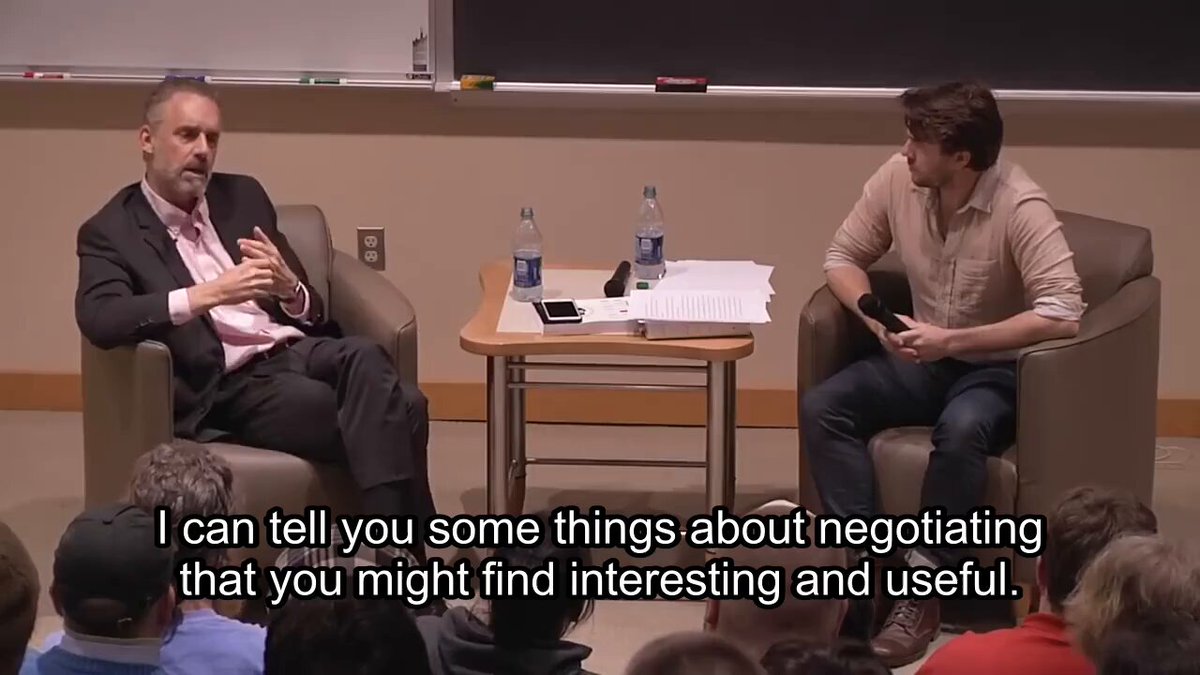
Jordan Peterson: "If you're competent and silent you will be ignored." "You might think well people should reward you because you're competent. And yes of course they should. But if you're competent and silent then you're just part of the background that's keeping everything functioning" On why you cannot negotiate from a position of weakness: "If you want to push your career forward you have to push it forward. You have to be competent and you have to be strategic" "To be strategic when you negotiate for a new position or a new salary you have to be able to say if you don't give me what I want then something you don't like will happen to you" "It's not a physical threat. It's that you have an option" "You have your CV in order. You're educated and competent and desirable to people outside of your immediate job. You're willing to instantly put yourself on the job market" "So that when you go talk to the person you're negotiating with you're credible" On the one thing most people completely miss about negotiation: "It's very seldom that you're talking to the person who's at the top of the pecking order. What you need to do is tell them a story that they can tell to their boss to make you not a problem" "A good story is look we really need this person because they're hyper competent and they have a better offer" "If you go in there with no power you're going to lose. Obviously" He concludes with the one thing every competent person needs to hear: "The first thing you need to know if you're going to negotiate is that you have to be able to say no. And what no means is that you're not going to do it"

Brad

35,334 просмотров • 1 месяц назад

Naval Ravikant: "You're going to die. It's all going to zero. What's there to stress about?" "Stress is when your mind has two conflicting desires at once. You want to be liked, but you want to do something selfish. You don't want to go to work, but you want to make money. You have two conflicting desires, and that's stress." Naval explains the difference between stress and anxiety: "Anxiety is this pervasive, unidentifiable stress where you're stressed out all the time and you're not even sure why. The reason is you have so many unresolved problems that have piled up in your life, you can no longer identify what the problems are. There's this mountain of garbage in your mind. A little bit is poking out the top like an iceberg; that's anxiety. But underneath, there's a lot of unresolved things." He shares his personal anxiety resolver: "One big anxiety resolver for me is just ruminating on death. You're going to die. It's all going to zero. You cannot take anything with you. If you can keep that idea in front of you at all times, what's there to stress about?" Naval reframes what "wasted time" really means: "What is wasted time? Everything is wasted time in a sense because nothing matters in the ultimate. But in each moment, it's the only thing that matters. So if you're doing something you want to do and you're fully there for it it's not wasted time. If your mind is running away, wishing you were somewhere else, anticipating the future, regretting the past, that's wasted time. That's time you're not present for." He concludes: "People get worried about dying and no longer being here. But they don't realize that so much of their life is spent not being here in any case."

Jaynit

672,326 просмотров • 6 месяцев назад

Matthew Walker says the problem with waking at 4 a.m. is knowing it's 4 a.m. "How do you know it's four o'clock in the morning?" "That's your problem. You're looking at the clock." "And knowing that it's 3:15 or 4 a.m. in the morning does you no favors at all. It's not going to change the outcome." "So the first recommendation is remove all clock faces from the bedroom." "It's okay to, if you really must do, keep your phone next to your bed, but keep it out of sight, even though I would strongly recommend that you keep your phone in the kitchen." "Or even better still, a friend of mine recommended recently, just put it in the garage, put it in your car, in the garage." "And that way, the amount of motivation effort to go and get your phone within the first 10 minutes of the morning is very, very high, meaning you're probably not going to do it." "So let's baby steps. Let's just say crawl, walk, run. First thing to do, just make sure you can't see any clock faces." "And if you wake up, resist the urge, because as soon as you start doing that night after night, you're actually training your brain, reinforcing it to wake up at 3:15 in the morning." I used to treat checking the time as neutral information. Walker's point is that it is the trigger: you wake up fine, one glance, and now you are doing math about the alarm and how tired tomorrow will be. If he is also right about the training, the reliability of your 3:15 is the evidence, and a rehearsed loop is one you can interrupt. - Matthew Walker (Dr. Matthew Walker) on On Purpose with Jay Shetty (Jay Shetty)

Jay McHale

17,231 просмотров • 2 месяцев назад