Video yükleniyor...

Video Yüklenemedi

Ana Sayfaya Dön

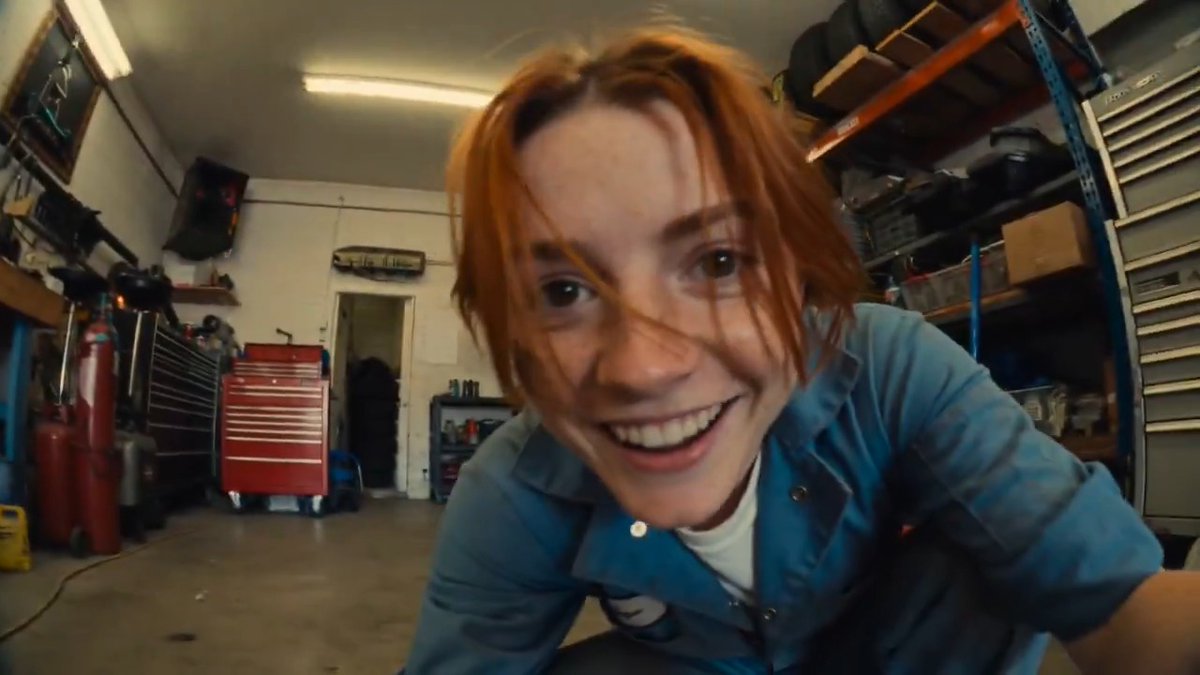
“Slightly cherry-picked” project Arya showcase Spatial AI workshop #ECCV2024

12,884 görüntüleme • 2 yıl önce •via X (Twitter)

0 Yorum

Yorum bulunmuyor

Orijinal gönderinin yorumları burada görünecek

Benzer Videolar

YOMIRGO #Product #Update YOMIRGO AI-HUB OFFICIALLY LAUNCH ---A Structural Upgrade from a Single-Product Model to an AI Agent Ecosystem Platform In its first phase, 11 AI projects have been integrated, spanning high-value sectors including finance, scientific research, enterprise services, development tools, and experiential AI. ➡️AI-Hub: This is not merely a feature expansion — it represents a critical structural upgrade from a single-product architecture to a multi-vertical AI Agent aggregation and capitalization platform. This milestone marks the initial structural formation of the YOMIRGO ecosystem. 1. Structural Distinction Between Agent Matrix Lab and AI-Hub To avoid positioning ambiguity, we formally clarify the structural division between the two: 🔘 Agent Matrix Lab — Internal AI Production & Incubation Platform Agent Matrix Lab serves as YOMIRGO’s proprietary AI development and internal incubation platform, responsible for: • R&D and testing of in-house AI products • Incubation of native AI Agents • Technical architecture experimentation and runtime validation • Testing of AI Agent models, memory systems, and runtime orchestration It functions as the production workshop and experimental engine of YOMIRGO’s “AI Super Factory.” 🔘 AI-Hub — External AI Agent Aggregation & Ecosystem Layer AI-Hub is a market-facing AI Agent aggregation and showcase platform, responsible for: • Curation and onboarding of high-quality AI projects • Cross-vertical structured ecosystem layout • Rating and classification systems • Traffic distribution and ecosystem collaboration entry points AI-Hub is not an internal incubation unit, but a standardized aggregation framework at the ecosystem level. 2. Integrated Project Structure (First Batch) ✅1. Finance & Prediction 🔹Cointoken AI — AI Agent-powered quantitative trading engine 🔹VVAI — AI-driven real-time Web3 intelligence and decision system 🔹AlphaQuant — Global financial market forecasting engine 🔹NextGoals — AI-powered global sports prediction agent This vertical forms the real-time information, trading, and predictive decision infrastructure for Web3-native users. ✅2. Science 🔹Charmen AI — Large-model-based pet acoustic recognition technology 🔹Encore Health — AI-driven health forecasting and longevity management system for high-net-worth individuals 🔹Reproducibility AI — AI expert system for financial engineering validation and academic reproducibility This sector focuses on research-grade AI capabilities, collaborating with universities and research institutions to drive real-world scientific deployment. ✅3. Business 🔹GlobalSales — B2B automated lead-generation AI Agent 🔹ResearchBot — Business intelligence and deep due diligence AI Agent This vertical targets the enterprise market, delivering scalable and commercially viable AI productivity tools. ✅4. Coding 🔹CodeMatrix — Full-stack development assistant Providing AI-driven development infrastructure and low-barrier building capabilities to global users. ✅5. Interesting 🔹Fortunetell AI — AI-powered symbolic analysis and interactive insight system Exploring the application boundaries of AI within experiential and interactive scenarios. 3. YOMIRGO Four-Layer Structural Framework YOMIRGO has now established a clearly defined four-layer structure: ▶️Layer 1: Agent Matrix Lab — Internal Production & Incubation ▶️Layer 2: AI-Hub — Ecosystem Aggregation & Rating ▶️Layer 3: LaunchPad — Capitalization Pathway ▶️Layer 4: Market — Circulation & Value Realization Together forming a complete industrial pipeline: Incubation → Validation → Aggregation → Rating → Capitalization → Market Circulation This is the structural model behind YOMIRGO’s defined “AI Super Factory.” 4. Strategic Significance The launch of AI-Hub signifies: • YOMIRGO has established standardized AI Agent aggregation capabilities • A cross-vertical ecosystem structure is now in place • Internal incubation and external aggregation mechanisms are structurally separated • The AI Agent industrial flywheel has begun operating YOMIRGO is no longer merely an AI product platform, but a structured AI Agent industrial system integrating production, aggregation, capitalization, and circulation. 5. Next Phase • Continue expanding high-utility AI Agents with real-world application value • Optimize AI-Hub’s scoring, rating, and filtering mechanisms • Strengthen synergy with LaunchPad and Market • Enable AI Agents to complete value realization within the ecosystem The first 11 projects are only the beginning. AI-Hub is designed to become a continuously expanding AI Agent gateway — not a static product showcase. Further structural expansion is underway.🔥

YOMIRGO

23,685 görüntüleme • 7 ay önce

World Model is trending— let's revisit our HunyuanWorld journey. We’ve been pioneering open-source 3D world generation in the past two months, and this ride’s only getting started. 🌍 📅 July: HunyuanWorld 1.0 📌 First open-source 3D world model compatible with CG pipelines (Unity/Unreal/Blender) 📌 Hit 2K+ GitHub stars in just two months ⭐—thank you for the love! 📅 August: 1.0-Lite 📌Same top-tier quality, running on consumer GPUs! 📅 September: 1.0-Voyager 📌 Direct 3D output + world memory—taking exploration further! Seamlessly integrated into CG pipelines with layered 3D modeling (assets, terrain, skybox) and fully open-sourced.. we’re fully committed to building open-source spatial intelligence for all! 🚀 💡 Why it matters? ✅ Seamless CG Pipeline Integration: Export generated 3D scenes as standard mesh formats, effortlessly integrating into industry-standard tools like Blender, Unity, and Unreal Engine for direct editing, animation, and physical simulation. ✅ Hierarchical Scene Editing: Deconstruct scenes into semantic layers (sky, background, foreground objects) via instance recognition and layer decomposition, allowing for atomic-level control—independently modify, relocate, or replace objects without rebuilding the entire world. Project page: Github: Amazing creations by Stijn Spanhove camenduru GENEL | AIを用いた動画制作 apolinario 🌐 とりにく Directive Creator 🪥 👇 #AI #3DGeneration #OpenSource #WorldModels #Hunyuan3D #HunyuanWorld

Tencent HY

20,178 görüntüleme • 1 yıl önce

🚨 THE BIGGEST BOTTLENECK IN AI ISN'T COMPUTING POWER ANYMORE IT'S MOVING DATA. Instead of laying new cables, Chinese researchers have upgraded existing fiber infrastructure by doing two things at once: Using three wavelength bands (C + L + S) instead of the usual two. Using four cores inside each fiber instead of one. Each core acts like an independent highway, and each band acts like an extra lane on that highway. Together, they’ve reportedly increased transmission capacity per core by nearly 50% and overall data throughput by up to 5×. This matters enormously for AI. Modern AI clusters move terabits of data per second between thousands of GPUs. The biggest bottleneck is often not the chips themselves, but moving data fast enough between them. If you can push 5× more data through the same physical cables, you can train bigger models faster and reduce network congestion. Why this is significant: • It shows multi-core + extended spectrum technology moving from labs into real-world commercial use • The system has already run over 35 km of existing telecom network • It could be especially useful for submarine cables and large-scale data center interconnects • China is also eyeing it for its “Eastern Data, Western Computing” project The deeper implication: We’re reaching the physical limits of how much data we can push through single-core fibers using traditional methods. By combining spatial multiplexing (multiple cores) with spectral multiplexing (more wavelength bands), engineers are finding new ways to keep scaling bandwidth without having to dig up the planet to lay new cables. This kind of breakthrough is quiet but foundational it’s the kind of infrastructure upgrade that will determine how fast AI and cloud computing can actually grow in the coming years. The future of data movement might not require more cables. It might just require smarter ones. How important do you think multi-core and multi-band fiber will be for keeping up with AI’s exploding data demands? Follow for more frontier networking, photonics, and infrastructure technology.

TheNewPhysics

20,485 görüntüleme • 3 ay önce

The architecture of this new world model is one of the most interesting things I've seen lately: Let me first explain how most world models work: They predict and render one frame at a time. If you are navigating in one of these worlds, and you look left, the model draws whatever looks right in the moment. Every time you change your viewpoint, the model has to imagine what should be there again, so it's very common for these models to "forget" what's in the world. For example, if you put a toy on the table, look away, then look back, the toy might not be there anymore. Tripo AI is releasing its Project Eden model, which works very differently: The model builds the world first, and then renders it based on that map. That map holds the real state of the world: the geometry, every object, where things are, what's already happened. The picture you see on screen gets generated from the map. This architecture flips the whole thing. Now, you get the following: 1. The world stops forgetting. Leave, come back, and the toy is still on the table because it lives in the map, not in the last frame you saw. 2. You can edit the world, and those changes persist for anyone who enters later. 3. Multiple people and AI agents can coexist in the world and see it from different perspectives. This is early research, but it's looking really promising. They just raised nearly $200M across two rounds to build it out. Tripo will be at SIGGRAPH 2026 (July 19–23, Los Angeles Convention Center). If you work in 3D, embodied AI, simulation, or anything spatial, go connect with them there.

Santiago

30,244 görüntüleme • 2 ay önce

Made with Seedance on Runway. Prompt: 👇 CAMERA: Handheld vintage consumer camcorder footage. First-person footage recorded entirely by RILEY as she documents an afternoon working on an old sports car inside a small independent garage. The camera remains physically handheld throughout. Natural hand tremors, crooked framing, occasional autofocus hunting, abrupt zooms, accidental lens obstruction, shaky low-angle shots and quick selfie transitions. She frequently places the camera momentarily on nearby surfaces before picking it back up, creating imperfect improvised compositions. The physical camera is never visible. LOOK: Authentic late-1990s DV home-video aesthetic. Soft slightly degraded image, mild tape noise, subtle chromatic imperfections, occasional exposure shifts, muted highlights, realistic skin tones and warm fluorescent garage lighting. Slightly nostalgic color reproduction without looking artificially stylized. STYLE: Relaxed DIY car-project vlog with a spontaneous, slightly chaotic atmosphere. Riley talks directly to the camera, jokes about mistakes and gets increasingly excited as the repair progresses. The footage feels completely unscripted and personally recorded. CHARACTER: RILEY — a charismatic woman in her late 20s with short messy auburn hair, freckles, expressive eyes and a practical appearance. She wears faded blue mechanic overalls over a plain white T-shirt, worn sneakers and work gloves. A few strands of hair fall across her face while working. Her clothes become slightly dusty and greasy during the repair. SETTING: A cramped independent automotive workshop on a sunny afternoon. Old tool cabinets, hanging fluorescent lights, shelves of spare parts, hydraulic equipment, scattered tools and an iconic vintage sports car occupying the center of the garage. Sunlight enters through a partially open garage door, creating bright patches on the concrete floor. STORYBOARD: (~2s, low-angle handheld shot) The camera enters the garage while RILEY's footsteps approach the old sports car. RILEY (off-camera): “Today we're finally getting this thing running.” (~2s, quick selfie) She crouches beside the car and grins at the lens. RILEY: “Hopefully.” (~2s, fast whip pan) The camera swings across the engine bay, tool bench and piles of spare parts before settling on the open hood. (~2s, close POV) Her gloved hands work on a stubborn component. The camera moves too close and briefly loses focus. RILEY (off-camera): “Come on…” (~2s, sudden handheld reaction shot) The component finally comes loose. RILEY pulls her hand back triumphantly. RILEY: “YES!” (~2s, camera placed on a toolbox) A static-but-imperfect wide shot captures RILEY leaning into the engine bay while she works. She occasionally glances toward the camera. (~2s, low handheld tracking shot) She climbs into the driver's seat. The camera follows awkwardly through the open door. (~2s, dashboard-level POV) The engine suddenly starts. RILEY freezes for a second, then laughs in disbelief. RILEY: “No way. No WAY!” (~2s, excited selfie) She jumps out of the car holding the camera, grinning with dirty hands and grease on her cheek. RILEY: “Okay, I definitely wasn't expecting that.” The camera shakes as she laughs and reaches toward the lens, ending the recording.

awesome_visuals

19,135 görüntüleme • 1 ay önce

My favorite AI workflow lately is my thought-to-post pipeline. I just go on walks, have a good content idea, ramble it, and have an optimized post in my writing style without typing. It's super simple: 1. Download an AI-powered voice dictation app to your phone (I use Wispr Flow) 2. Go on long walks and let ideas flow - when you get a good one, open Wispr Flow and ramble your thoughts (doesn't need to be perfect) 3. Notes auto-save. These become the core ideas for posts later 4. Open Claude and create a new Project called "Post generator" 5. Use this prompt: "I’m going to provide you with my own written material, and your task will be to understand and mimic its style. You'll start this exercise by saying "BEGIN.” After, I'll present an example text, to which you'll respond, "CONTINUE". The process will continue similarly with another piece of writing and then with further examples. I'll give you unlimited examples. Your response will only be "CONTINUE.” You're only permitted to change your response when I tell you "FINISHED". After this, you'll explore and understand the tone, style, and characteristics of my writing based on the samples I've given. Finally, I'll prompt you to craft a new piece of writing on a specified topic, emulating my distinctive writing style" 6. Now's the fun part: Go to Twitter Analytics and download your top posts (Premium → Analytics → Content → Download button) 7. Paste your best-performing tweets into Claude repeatedly until it says "FINISHED" 8. Take your voice notes, paste them into your trained Claude Project, prompt "make a post in my writing style" 9. Post is ready to go. Polish and edit slightly *if* needed. The AI is trained on how you actually write, not generic content. Your voice notes capture your real, raw thoughts without the friction of typing. I have my best ideas while walking. If I try to write them in my notes app mid-walk, I forget halfway through. Voice dictation captures everything as I ramble. Game changer for turning scattered thoughts into polished posts!

Rowan Cheung

129,419 görüntüleme • 11 ay önce

let me explain what Anthropic just did they built an AI model so good at finding security vulnerabilities that they have refused to release it meet Claude Mythos → it’s Anthropic’s newest frontier model and it’s not available to the public. not because it’s not ready. because it’s too dangerous → Mythos found tens of thousands of zero day vulnerabilities across every major operating system and web browser… many of them 1 to 2 decades old. for context… Opus 4.6 found about 500. Mythos found tens of thousands → it found vulnerabilities in the Linux kernel. a 27 year old vulnerability in OpenBSD. a 16 year old vulnerability in FFmpeg → it doesn’t just find bugs. it writes the exploits too. that’s the part that scared them → so instead of releasing it… Anthropic has created Project Glasswing. a cybersecurity initiative where they hand picked 40+ companies to use Mythos for defense only → the partner list reads like a who’s who of tech… Amazon, Apple, Microsoft, Google, Nvidia, Broadcom, Cisco, CrowdStrike, Palo Alto Networks, JPMorgan, the Linux Foundation → Anthropic is giving up to $100 million in usage credits to these partners and $4 million to open source security organizations → they’re briefing CISA and the Commerce Department on how to handle this → the benchmarks are truly insane… Mythos hit 77.8% on SWE-bench Pro where Opus 4.6 scored 53.4%. hit 93.9% on SWE-bench Verified where Opus 4.6 scored 80.8% → Anthropic’s head of frontier red team said this is “the first time a model is this good that we decided to approach release in a very different way” this is the first time an AI company has held back a model because it was too capable not too expensive. not too slow. too dangerous and instead of locking it in a vault they weaponized it for defense and gave it to the companies that run the internet that’s either the most responsible thing an AI company has ever done… or the scariest only time will tell

klöss

21,270 görüntüleme • 5 ay önce