Loading video...

Video Failed to Load

Go Home

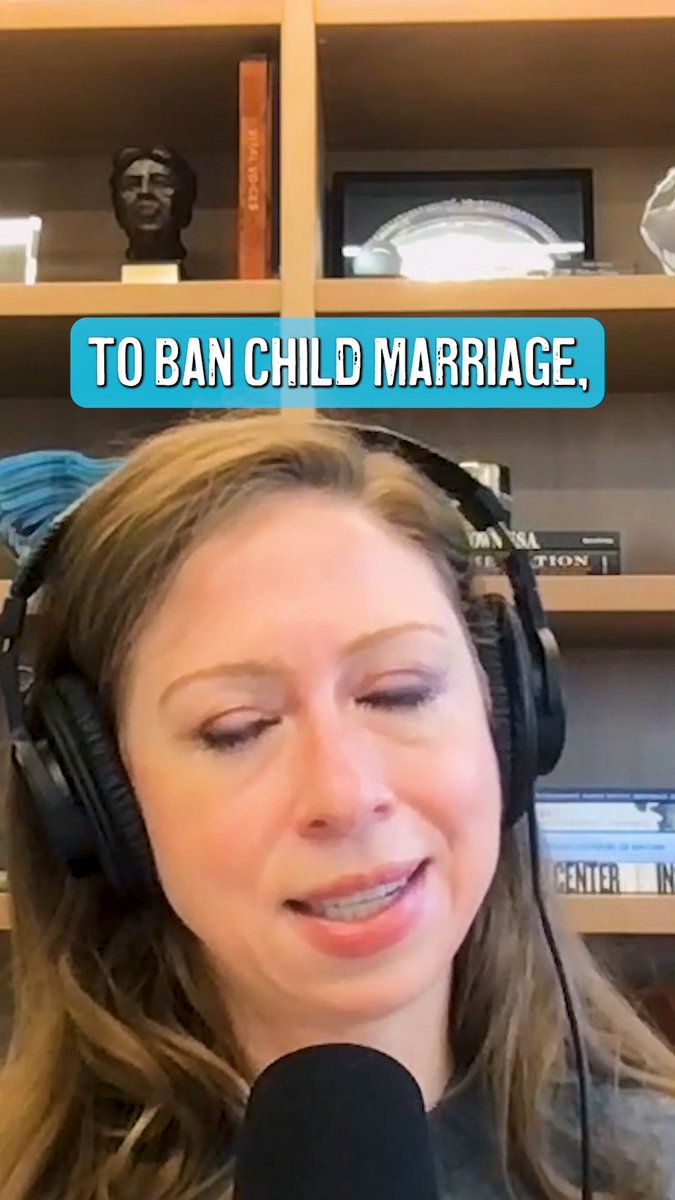
Some stories cannot be told from a studio. Over the past few years, NDTV reporters have travelled into districts and communities across India to understand why child marriage persists — and to meet those fighting to end it. We met girls who refused to be married. Children who found...

10,907 views • 1 month ago •via X (Twitter)

0 Comments

No comments available

Comments from the original post will appear here

Related Videos

The Tragedy of Child Brides in Afghanistan: Poverty and Desperation Under Taliban Rule : Since the Taliban's return to power in Afghanistan in August 2021, the humanitarian situation has dramatically deteriorated, especially for women and girls. Among the many grave challenges is the distressing rise in the sale of young girls, often under the age of 18, into marriage for a small sum of money. This harrowing practice is driven by a combination of crippling poverty, lack of education, and social restrictions imposed by the Taliban regime. The Desperate Situation of Afghan Families ; Afghanistan has long struggled with poverty, but the economic collapse following the Taliban's return has made the situation worse. The withdrawal of international aid, frozen assets, and sanctions on the Taliban government have led to widespread unemployment and food shortages. Families are grappling with severe hunger, and for many, the choice has come down to survival. In rural areas, where poverty is most pronounced, families face heart-wrenching decisions: unable to feed their children, some parents feel they have no choice but to sell their daughters into early marriage. These transactions, which are akin to the sale of a child, often fetch a meager amount of money — sometimes as little as a few hundred dollars. The exchange offers temporary financial relief but leaves girls trapped in lives of servitude and abuse. Girls as Young as 12 Sold into Marriage ; Girls as young as 12 or even younger are being sold into marriages with much older men, who view the transaction as a straightforward exchange of wealth. While child marriage was not unheard of in Afghanistan before the Taliban's return, it has escalated dramatically as the economic situation has worsened. The girls involved in these forced marriages face a lifetime of hardship. Deprived of their right to education, they are left with few prospects for improving their lives. In most cases, they are confined to the home, subject to their husband's control, and expected to bear children while still children themselves. The Role of the Taliban ; Under the Taliban's strict interpretation of Islamic law, the rights of women and girls have been drastically curtailed. Girls over the age of 12 are banned from attending school, and women are restricted from working in most professions or moving freely in public spaces. These policies further entrench the cycle of poverty and deprivation, leaving girls without the education or skills to change their circumstances. The Taliban claim to oppose child marriage, but in practice, they have done little to stop it. In many cases, Taliban officials themselves engage in or condone the practice. The legal and social protections that could prevent the sale of girls into marriage have been eroded under Taliban rule, making it difficult for families and communities to resist the pressures of poverty and cultural norms. Breaking the Cycle ; The sale of young girls into marriage is a symptom of a much larger problem in Afghanistan — a cycle of poverty and repression that disproportionately affects women and girls. Breaking this cycle requires a multifaceted approach, including humanitarian aid, access to education, and a commitment to gender equality. For many Afghan girls, the future remains uncertain. Until the international community finds a way to address the economic and social crisis in Afghanistan, and until the Taliban's repressive policies are reversed, countless young lives will continue to be sold for a fraction of their worth. These girls deserve the chance to grow, learn, and thrive — free from the bonds of forced marriage and the burdens of poverty. #Right_Justice_Freedom

Afghanistan Womens And Children S.W.O

79,646 views • 2 years ago

Issues of paternity have shaped our society for generations, especially in Zimbabwe. They did not start today. I remember going to a funeral with my father in the 1990s, and as we sat around the fire the men began sharing stories. One of them has stayed with me ever since. A Zimbabwean doctor had married a nurse, and they struggled to have children. As usual, when there is no child, the blame was placed on the woman. She went to see her own doctor, who told her plainly that she was not the problem, and advised her to bring her husband for testing. The husband refused, as many Zimbabwean men tend to do. Their marriage eventually collapsed, with the man insisting he could not be the problem because he had a child with another woman before marrying the nurse. That woman, he said, was also a doctor, and he was raising that child. After the divorce, the nurse remarried another doctor, and she immediately fell pregnant. Because it was a tight medical community, the whole situation became a talking point. The ex-husband had loudly declared that his former wife was barren, yet here she was having one child after another, three in total, with her new husband. Meanwhile, the ex-husband remarried, and again there were no children. One day the ex-husband and his former wife met at a gathering. During a casual conversation, as people who once knew each other, she told him directly that he was raising a child who was not his. She told him that he had no capacity to father a child and that if he finally went for tests, he would discover the truth. She reminded him how he had insulted her and her parents, and how he had refused to listen. The revelation shook him. He went for tests, and it was confirmed that he was the problem. He had spent seventeen years looking after a child who was not his. The moral of the story is simple, and I always stress this when mentoring young people. When in doubt, check. In fact, even without doubt, check. A DNA test at birth saves you from future heartbreak. Many men are raising children who are not theirs. Some women know exactly what they are doing. Others genuinely do not know because their relationships overlapped before they settled down. In those cases, even the woman cannot be sure who the father is. So when you have a child, get a DNA test. If you ask for one and a woman becomes defensive or resistant, that is a major red flag. At that point, the test is no longer optional, it is necessary. That is the reality of life today. As they say, trust is beautiful, but DNA is confirmation. In this life we live, hope is not a strategy when it comes to your children, so test your child and protect your future, as the saying goes. I have DNA stories that I could share for a whole year. If compulsory DNA testing was demanded of all of us today, you will be shocked by what will come out. This brother in the video is now going through denial. He has been told the truth, but he is still in shock, which is why he is asking for silly things from this woman. It is hard for any man to discover that the child he believed was his belongs to another man. That is why DNA testing is a necessity and why it should be compulsory.

Hopewell Chin’ono

68,177 views • 10 months ago

"If we can create a society which sees the child within every adult – and the adult within every child - we will finally start to change it for the better." We want to make the link between the skills we develop in early childhood and the core foundations that set us up for life and help us to thrive as adults. To help give social and emotional skills the greater priority they deserve, The Royal Foundation Centre for Early Childhood has conducted a first-of-its-kind global listening exercise, involving experts from 21 countries around the world, to catalogue and identify the skills in this area that matter most throughout our lives. The Royal Foundation Centre for Early Childhood has undertaken work to find a common bridge and set of core skills that can apply equally to children and adults, so we can bring people together with a common language and vision to drive action at every level – protecting and strengthening these skills for current and future generations across the whole of society. Through this exercise we found consensus around a set of skills that we develop and nurture during early childhood, but that continue to be enhanced and refined as we grow into adults. They relate to knowing ourselves, managing our emotions, focusing our thoughts, communicating with others, nurturing our relationships, and exploring the world. These are the skills that lay the foundations for our positive future mental health and resilience throughout our lives. Healthy development of these core skills is not inevitable – they must be nurtured from our earliest moments of life. The foundations for these skills are laid in early childhood, between pregnancy and the age of five, which is why those earliest years represent such a golden opportunity to make a difference right from the start. But our social and emotional growth continues throughout our lifetime, and change is always possible. #ShapingUs

The Prince and Princess of Wales

988,800 views • 2 years ago

🚨 A child in Gaza is not asking for toys… he is asking if he will eat today 🚨 Donate urgently to provide meat and rice for the children of Gaza. Today in Gaza… Children are no longer dreaming of toys or gifts. Their dream is simply to have one meal that can ease the pain of hunger. A meal with meat and rice. Something ordinary for many people… But now a distant dream for thousands of families in Gaza. Today, at Project Mohammed, we continued distributing meat and rice meals to children and families living in displacement camps. And we saw children smile the moment they saw food. Children who had not tasted meat for weeks. Children who began eating immediately because hunger was stronger than patience. 💔 There are mothers who go to sleep hungry so their children can eat. 💔 There are fathers who cannot provide a single meal for their families. 💔 There are children who wake up every morning not knowing whether they will eat that day. 💔 And there are children who no longer ask for toys or gifts… They ask: “Will we eat today?” Today we were able to reach some of these families. But thousands more are still waiting. Waiting for a meal. Waiting for help. Waiting for someone to care. In Gaza… Food is no longer something ordinary. It has become a means of survival. And a single plate of meat and rice can mean the difference between hunger and hope. Imagine hearing your child say: “I’m hungry…” And having nothing left to give. This is not a story. This is the reality of thousands of families in Gaza tonight. 🤍 Deep thanks to everyone who continues standing beside Gaza and its children. But we cannot continue without your support. If donations continue to fall… We will be forced to reduce our distributions. And that means more hungry children. More families going to sleep without food. 🚨 If you scroll past without helping, another child tonight will still be wondering: “Will I find something to eat tomorrow?” And your donation today could be the reason the answer becomes: “Yes.” 🤲 Donate. Share. Speak. Before hunger reaches another child first.

Muhmmed Project𓂆 🇵🇸

18,614 views • 3 months ago