Загрузка видео...

Не удалось загрузить видео

На главную

Sony unveiled the LYTIA L910, its first smartphone image sensor with LOFIC (Lateral Overflow Integration Capacitor) technology, and it could be one of the biggest camera upgrades we've seen in years. Key specifications: - 50MP effective resolution - 1/1.28-inch stacked CMOS sensor - 1.22μm pixel size - Quad Bayer...

12,181 просмотров • 3 месяцев назад •via X (Twitter)

Комментарии: 0

Нет доступных комментариев

Здесь появятся комментарии из оригинального поста
Похожие видео

The World Cup is rolling, crypto never stops swinging, and geopolitics keeps rewriting the script in real time. While the pundits argue on TV, the sharp money is already pricing in what happens next. POTS MARKET just launched as the clean, high performance front end built directly on Polymarket architecture. Same deep liquidity and trusted resolutions, but with an interface that actually moves as fast as the news. No clutter. No friction. Just pure edge on the events that matter. Watch the video for the full guide on how it works, then head to or scan the QR code in the video, sign up, deposit, and start trading. World Cup knockout stages, next BTC leg, or the latest flashpoint in global tension, you set the position. The future belongs to those who trade it, not those who watch it. My opinion after in-depth analysis:Pots Market looks like a well-timed frontend evolution on top of Polymarket's solid backbone. By inheriting proven liquidity and resolution mechanisms while focusing on usability and speed, it addresses one of the biggest pain points in prediction markets: clunky interfaces that scare away casual but informed participants. The connection to Polymarket gives it instant credibility and volume that most new platforms struggle years to achieve. With major events like the 2026 World Cup, persistent crypto volatility, and nonstop geopolitical developments providing natural market fuel, the timing feels right. If they execute on the "next generation" claims (cleaner tools, better mobile flow, perhaps tighter integration), this could carve out a meaningful niche for both degen traders and serious forecasters. Early stage still, but the setup is stronger than most launches in this space. Definitely worth a look if you're already in prediction markets or curious about putting skin in the game on real-world outcomes.

⚓Michael$on⚓📈🇺🇲🇮🇱

15,919 просмотров • 3 месяцев назад

NEWS: Figure has unveiling its 3rd generation humanoid robot. • Features a completely redesigned sensory suite and hand system. Wireless charging in feet. • Next-generation vision system engineered for high-frequency visuomotor control. Its new camera architecture delivers twice the frame rate, one-quarter the latency, and a 60% wider field of view per camera within a more compact form factor • Soft goods, wireless charging, improved audio system for voice reasoning, and battery safety advancements • "Engineered from the ground-up for high-volume manufacturing. In order to scale, we established a new supply chain and entirely new process for manufacturing humanoid robots at BotQ." • Lower manufacturing cost • Softer, more adaptive fingertips increase surface contact area, enabling more stable grasps across objects of varied shapes and sizes. Each fingertip sensor can detect forces as small as three grams of pressure - sensitive enough to register the weight of a paperclip resting on your finger. • Multi-density foam to protect against pinch points, and is covered in soft textiles rather than hard machined parts. 9% less mass and less volume than Figure 02 • 10 Gbps mmWave data offload capability, allowing the entire fleet to upload terabytes of data • Upgraded audio hardware system for better real time speech-to-speech. Its speaker is twice the size and nearly four times more powerful, while the microphone has been repositioned for improved performance and clarity. • Charging coils in the robot’s feet allow it to simply step onto a wireless stand and charge at 2 kW Figure: "BotQ is Figure’s dedicated manufacturing facility designed to scale robot production. BotQ’s first-generation manufacturing line will initially be capable of producing up to 12,000 humanoid robots per year, with the goal of producing a total of 100,000 robots over the next four years. Instead of relying on contract manufacturers, Figure brought production of its most critical systems in-house to maintain tight control over quality, iteration, and speed."

Sawyer Merritt

140,241 просмотров • 11 месяцев назад

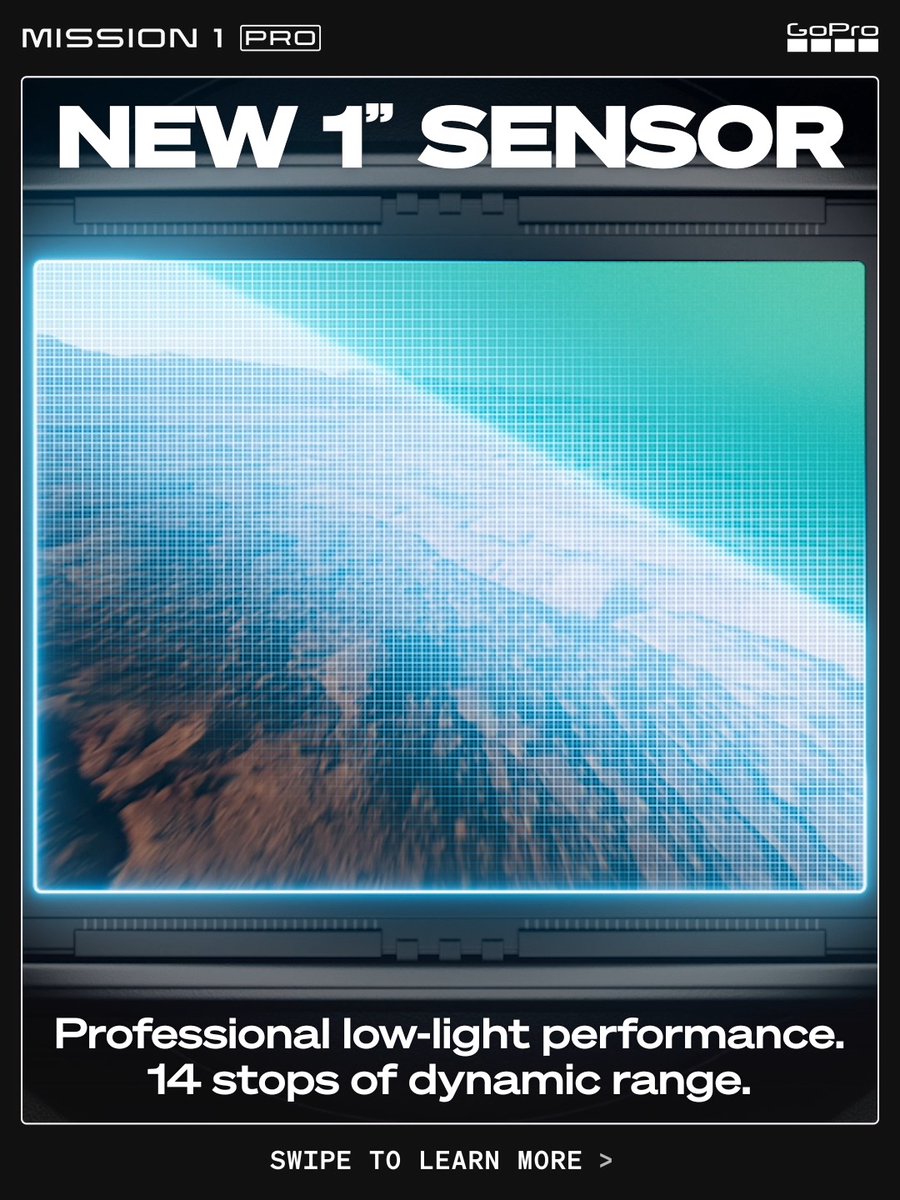
This is #GoProMISSION1 PRO 🎥 The only 8K60 camera with a 1-inch sensor. Our compact, cinema-grade camera features a proprietary GP3 processor and 50MP sensor that enable intelligent low-light capture, industry-leading frame rates and resolutions, and groundbreaking thermal performance. ✔️ 1-inch Quad-Bayer sensor with up to 14-stops of dynamic range at the sensor for low-light capture ✔️ Longest continuous runtimes + most dependable thermal performance of any GoPro ever—over 5 hours in 1080p + over 3 hours in 4K at 100°F ✔️ Industry-leading 8K60—300% more pixels than 4K ✔️ 4K240 + 1080p960 ultra slo-mo with real frames—not AI-interpolated ✔️ 8K30 + 4K120 Open Gate capture ✔️ Gallery-ready 50MP photos + 44MP frame grabs ✔️ Up to 240 Mbps bit rate out of the box + 300 Mbps with GoPro Labs ✔️ 10-Bit color + GP-Log2 with LUTs for Rec.709 + Rec.2020 outputs ✔️ HLG HDR with Simultaneous Dual-Gain Readout—the industry standard for pros ✔️ New intelligent capture modes: Dive, Vlog, Low-Light, Sport POV, + Subject Tracking ✔️ 13% higher capacity Enduro 2 battery in the same form factor with new fast charging ✔️ Rugged + waterproof, now to 66ft (20m) without a housing ✔️ Emmy® Award Winning #HyperSmooth in-camera video stabilization ✔️ New 4-microphone array, 32-bit float audio, multi-track recording, + manual audio controls ✔️ Timecode Sync to streamline multi-camera editing + GPS with telemetry data ✔️ New Point-and-Shoot Grip compatibility for elite handheld control ✔️ Removable Lens Hood included to reduce glare + flares ✔️ Bluetooth® 5.3 Super Wideband connectivity + USB-C port for external audio capture ✔️ A cinema-grade camera that anybody can use Enhanced by a GoPro Subscription: ✔️ Unlimited cloud backup at 100% quality ✔️ Camera replacement guarantee ✔️ Up to 50% off select accessories Order your MISSION 1 Series camera now to get a free Point-and-Shoot Grip ($100 value) + free shipping at Pro-tip: Existing GoPro Subscribers save $100 with the annual camera discount.

GoPro

31,932 просмотров • 3 месяцев назад

The Chinese are advancing on 6th-generation fighters, but I have serious doubts about whether this is truly the right path. Recently, the Turkish company Baykar flew two combat drones that operate in perfect synchronization, guided from a ground base. They executed coordinated maneuvers autonomously and are already capable of conducting BVR (Beyond Visual Range) engagements. The Kızılelma became the first drone to achieve an autonomous kill with an air-to-air missile guided by its own AESA radar. This level of Turkish progress, combined with the kill web integration that Chinese drones are demonstrating, isn’t it a strong indication that manned 6th-generation fighters might be an extraordinarily expensive fantasy? I’ll go further: some drones are already reaching speeds above Mach 3.5 - more than double those of the leading current manned fighters. I’m talking about drones capable of high-speed coordinated operations, fully autonomous, with integrated and shared weapon systems, flying at altitudes far higher than conventional fighters, and employing systems similar to Aegis. How much longer until these drones take off in large swarms, equipped with ultra-modern sensors controlled by AI and armed with long-range air-to-air missiles? How could a human pilot, even at the height of adrenaline, make faster and more accurate decisions, involving multiple scenarios and factors, than an AI commanding a pack of smaller, more agile drones operating at different altitudes? We are entering the real competition between man and machine. Even if a pilot in a 6th-generation fighter has control over slave drones and an entire Aegis-like kill web, what is the point of having him there if everything can be done autonomously, more safely, more cheaply, and in far greater numbers? Some argue that the human pilot offers advantages in unpredictable scenarios where today’s AI still fails, and I agree. But I’m not talking about current AI: I’m talking about the AI of 2030–2040, far more advanced than anything we know today. Geran drones equipped with air-to-air missiles prove that air combat drones can be extremely low-cost, while the Turkish tests show, in a far more sophisticated way, that drones designed for air-to-air missions are evolving much faster than 6th-generation aircraft, whose development and production costs are exorbitant. When we put together the Geran, the Kızılelma, and the drone kill web integration the Chinese are achieving, the question arises: is the future really manned 6th-generation fighters, or much cheaper drones produced in greater numbers, better protected, and more capable? Wouldn’t it be smarter to invest in well-equipped autonomous 6th-generation drones rather than treating them merely as wingmen? It seems that keeping a human pilot on board has more to do with ethical principles and preserving our role than with genuine operational necessity. And how would humanity react to the constant killing of human beings by AI-guided drones? Drones will be cheaper to develop, easier to produce, and possibly more agile than conventional fighters, even 6th-generation ones. In cost-benefit terms, the price of a single 6th-generation fighter could buy dozens of equivalent or even superior drones. This would save hundreds of billions of dollars and could put whoever adopts the strategy a step ahead. The Chinese, by the way, are very well positioned in this race, with HALE drones already armed with air-to-air missiles and integrated into an extensive kill web, which I will describe in detail soon.

Patricia Marins

60,728 просмотров • 8 месяцев назад

The Nordic Trio: A Tough Match for Russian Corvettes Russian corvettes are among the most heavily armed on the planet, but they would run into trouble against their Nordic counterparts. The Russian corvettes of the Karakurt class are the most heavily armed ones I know of. They carry Kalibr missiles with a range of 2,500 km and hypersonic Zircon missiles. They would be capable of inflicting significant damage on the entire European fleet, which lacks defenses against the Zircon. The Karakurt also features a version of the Pantsir system with a range of 40 km, tested for intercepting ballistic missiles. Yes, the Karakurt demonstrates how the concept of sea dominance can shift with even small vessels capable of projecting power over long distances. However, there is a trio that would serve as a formidable barrier to the Russian corvettes: the Skjold, Hamina, and Visby. The stealth corvettes from Finland, Sweden, and Norway would be a massive headache for the Karakurt, precisely because of their small size and stealth architecture. The Karakurt may possess Kalibr missiles with a 2,500 km range or Zircons capable of reaching nearly 1,000 km, but to locate their targets, the Karakurt relies on drones like the Altius-U, equipped with a multimode sensor suite and multiple capabilities. Facing this trio would not be an easy match for the Altius, precisely because these vessels are designed for operations in contested environments, with an emphasis on low observability. Imagine trying to locate the Skjold, with its advanced stealth design featuring radar-absorbent materials, angular shapes, and a drastically reduced RCS, weighing only 270 tons? On the Altius's radar, it might appear as a small fishing boat under good conditions. And what about the Hamina? Built with aluminum and a composite superstructure (Kevlar and absorbent materials), it reduces radar, thermal, magnetic, and acoustic signatures. With a very low RCS, it would blend into maritime clutter (waves and small objects), operating in silent mode with electronic jamming. And the Visby? This is the stealthiest of all. Made from carbon fiber composites, with angular shapes, retractable/embedded weapons, and reductions in all signatures (RCS up to 99% lower, IR, acoustic, magnetic, hydrodynamic wake), plus advanced jamming and optimized operations to deny aerial sensors. All of them leverage integration with archipelagos for natural camouflage. What could the Altius-U do? Its active radar would need to operate in high-resolution modes, with drastically reduced range (possibly just a few dozen km); EO/IR for optical/thermal identification at extreme close range; SIGINT/ELINT to capture any residual emissions. This would require multiple drones operating in a coordinated manner with much greater exposure, putting the drones at risk from anti-air defenses, plus a bit of luck. By this point, larger vessels might have already been turned into fish habitats by the Zircons and Kalibrs, but this trio would still be standing. The resilience of this trio would force the Karakurt to risk approaching and entering the range of the Nordic corvettes, which are well armed with modern missiles. To make it even harder, all three have ASW capabilities, which would require attention from submarines. The truth is that the Karakurt's target acquisition would only face difficulties in Nordic waters or regions within range of coastal batteries, putting the corvettes themselves at risk. But with greater range and lower visibility, the Russian corvettes would terrorize larger vessels. The Karakurt are capable of providing area denial over thousands of kilometers, demonstrating a new concept in naval area denial. Specifically at this case, The Altius-U would prioritize radar for wide-area scanning, followed by EO/IR and SIGINT for refinement, but the stealth of these corvettes reduces effective ranges and increases failure risks.

Patricia Marins

30,064 просмотров • 8 месяцев назад

Nebius is going to be a Trillion-dollar company! Twelve months ago, Nebius was trading near $18 per share with roughly $55 million in quarterly revenue. Today the stock trades above $225, quarterly revenue just came in at $399 million, up 684% year over year and the company has a contracted revenue backlog that would make most Fortune 500 companies envious. But the current market cap, sitting around $56 billion, prices in almost none of what is actually coming. The first reason Nebius reaches a trillion is the Meta deal alone. In March, Nebius signed a five year agreement with Meta worth up to $27 billion, one of the largest infrastructure contracts Meta has ever signed with any company under which Nebius will provide $12 billion in dedicated AI capacity across multiple locations, with Meta also having committed to purchase up to an additional $15 billion in third-party capacity over the same period. That contract barely starts until 2027, which means the revenue impact is not yet reflected in any trailing metric. The second reason is Microsoft, which is currently receiving its first deployment phases from Nebius and is expected to contribute at full annual run rate starting in 2027. Between Meta and Microsoft alone, Nebius has signed agreements worth more than $46 billion in total contracted value before a single additional customer is counted. The third reason is the ARR trajectory, which is the fastest revenue ramp of any infrastructure company in the public markets. Nebius ended 2025 at $1.25 billion in ARR and is guiding to $7–9 billion ARR by year-end 2026. Wall Street analysts project revenue growing 523% in 2026 and another 206% in 2027. One of the company's own institutional shareholders has already suggested the year-end ARR could come in more than twice the guided range if the Meta and Microsoft ramps hit their timelines. The fourth reason is Nvidia's direct involvement. Nvidia made a $2 billion strategic equity investment in Nebius and has given Nebius early access to the Vera Rubin platform, its next generation GPU architecture as part of the delivery commitments to Meta. The fifth reason is the capacity buildout, which is being funded by the revenue itself. Nebius invested $2.5 billion in capex in Q1 alone, CEO Arkady Volozh has guided for $16–20 billion in total investment for 2026, and contracted capacity is now on track to exceed 4 GW by year end with new owned sites in Pennsylvania at 1.2 GW and Finland at 310 MW now under development. The more capacity they build, the more they can sell and demand continues to outpace supply at every stage of the buildout. When you run the math on a business with $7–9 billion in ARR exiting 2026, a $27 billion Meta contract that begins in earnest in 2027, a Microsoft relationship at full run rate, 206% analyst projected growth in 2027, and a structural relationship with Nvidia that gives it hardware access no competitor can match, a trillion-dollar valuation within three to four years is not a moonshot. It is the base case if the compounding holds, and every data point so far suggests it is. Milk Road Pro called this one early. Our analysts added Nebius to the portfolio when it was still flying under the radar, and we are sitting on a massive gain on that position right now. If you want to see what else we are building conviction on before the rest of the market catches up, come join us at Milk Road Pro at the link in bio/below!

Milk Road AI

48,673 просмотров • 4 месяцев назад

Galaxy plays landlord to the largest single data center in America and the rent just started flowing (save this). "It's the largest single campus data center in America, 1.6 gigawatts. We've already leased out half of that." - CEO, Mike Novogratz. The opportunity = the vast majority of the investing world still sees Galaxy as a crypto trading firm (and that misunderstanding makes the trade). Phase I of the Helios campus in West Texas is complete: 200MW of gross power delivered, 133MW of critical IT load handed to CoreWeave, on budget and on schedule. Rent commenced in Q2 2026, which means Helios revenue hits the P&L as early as next earnings report. That will be the first time Wall Street sees this cash flow in actual reported numbers instead of projections. And the full CoreWeave commitment runs well beyond Phase I. CoreWeave has committed to 526MW of critical IT load across Phases I through III, on 15-year leases with two five-year extension options, expected to generate over $1 billion in average annual revenue. Phase II, another 260MW, is already in greenfield development with data hall deliveries targeted for the first half of 2027. This business model is the part the market is yet to process. Galaxy builds the shell and delivers the power, then hands the building to the tenant, who installs their own chips. Galaxy never buys a single GPU, never takes hardware depreciation risk, and collects contracted rent for 15 years. (That's insane.) Novogratz says this business is probably worth more than half of Galaxy's value today, and it barely existed on the income statement until this quarter. The location is a moat of its own. Helios sits in the middle of nowhere in West Texas, with spare electricity, no community friction, and no noise complaints (all while data center politics turn hostile in nearly every other state). The runway behind it is enormous: over 2,200 acres, approved capacity expanded to 1.63 gigawatts, with the potential to scale to 3.6 gigawatts. So let's stack the catalysts... Half the campus is already leased, and Novogratz expects the full 1.6 gigawatts leased out by the end of summer. The next tenant announcement comes from a position of proven execution, because CoreWeave signed when Galaxy still had to prove it could build, and the on-time delivery changes that negotiating leverage entirely. Galaxy is now a contracted power landlord for AI compute with a crypto business attached, and the stock moved just 3.3% on the news, on a day the Nasdaq was already up 1.4%. Long story longer: the market has not done the work yet. Our PRO team called $HYPE (+55.8%), $HOOD (+63.7%), and $MU (+217%), all before they ran. They've been doing the same with $GLXY (and are continuing to buy). Don't miss their next entry. Milk Road PRO is 33% off for the next 7 days. (That’s 33% off monthly and annual plans for the next year.) Join Milk Road PRO - link in bio: Milk Road

Milk Road

39,268 просмотров • 2 месяцев назад

PHOTON COUNTING CT is NOT a better CT It is a NEW imaging modality Photon Counting CT (PCCT) represents a transformative leap in medical imaging, not only as a molecular imaging modality but also as a technology offering ultra-high resolution and functional imaging capabilities. It is fundamentally more than just an enhanced version of traditional CT—PCCT introduces new ways of seeing and understanding the human body, providing critical insights at the molecular, structural, and functional levels. This positions PCCT as a unique imaging modality that requires a fresh approach to technical implementation, operational workflows, and financial planning. Despite the larger upfront investment, PCCT’s ability to drastically reduce downstream healthcare costs makes it a highly valuable investment in the long run. 1. Technical Innovations • Molecular Imaging and Energy Discrimination: Unlike traditional CT, which simply measures the total absorbed energy, PCCT counts individual X-ray photons and differentiates their energy levels. This allows for precise molecular imaging, revealing the composition of tissues and materials at a biochemical level. By distinguishing between different tissue types and contrast agents, PCCT opens up new diagnostic possibilities, such as identifying molecular biomarkers in tumors or distinguishing between stable and unstable plaque in coronary arteries. This capability shifts the focus of imaging from purely anatomical to both anatomical and molecular, offering more comprehensive diagnostic information. • Ultra-High Spatial Resolution: PCCT features significantly smaller detector elements compared to conventional CT scanners, allowing for ultra-high resolution imaging. This means clinicians can visualize fine structures such as microcalcifications in arteries, small lesions in soft tissues, or the intricate architecture of bones. This level of detail was previously unattainable with traditional CT. When combined with molecular imaging, this ultra-high resolution allows for the precise localization and characterization of disease at very early stages, which is essential for early diagnosis and intervention. • Functional Imaging Capabilities: PCCT also excels as a functional imaging modality. By capturing energy-resolved information, PCCT can provide insights into tissue functionality and dynamic physiological processes. For instance, it can detect changes in blood flow, tissue perfusion, and oxygenation without the need for additional contrast agents or scans. This functionality allows for real-time assessment of physiological processes, making it particularly valuable in cardiology, oncology, and neurology for evaluating organ function and monitoring disease progression. • Reduced Noise and Artifact Reduction: Photon-counting technology dramatically reduces electronic noise and imaging artifacts, such as beam hardening, resulting in clearer and more accurate images. The ability to deliver ultra-high resolution images with minimal artifacts improves diagnostic accuracy, reducing the need for repeat scans and ensuring that even subtle abnormalities are detected. 2. Operational Considerations • New Workflow for Molecular, High-Resolution, and Functional Imaging: The integration of molecular, ultra-high resolution, and functional imaging into routine clinical workflows introduces complexity that requires adaptation. Radiologists and technicians need specialized training to interpret and analyze multi-energy datasets that include molecular and functional information. PCCT produces a vast amount of detailed data, requiring clinicians to adopt new imaging protocols and refine their diagnostic approaches to fully leverage its capabilities. • Post-Processing and Data Management: PCCT generates richer, more complex datasets, which necessitates advanced post-processing tools and data management systems. Existing PACS and imaging software may not be equipped to handle such large volumes of data or to process functional and molecular information effectively. This means healthcare institutions must invest in robust IT infrastructure, including upgraded software and storage solutions, as well as provide additional training for staff on new imaging analysis techniques. • Revised Clinical Protocols: The molecular, functional, and ultra-high resolution imaging capabilities of PCCT will likely prompt changes in clinical protocols. For instance, the need for contrast agents may be reduced, simplifying patient preparation and decreasing the risk of adverse reactions. Additionally, the ability to monitor physiological functions in real-time through functional imaging could lead to more dynamic diagnostic procedures, such as assessing the effectiveness of interventions or treatments in real-time. 3. Financial Impact • Higher Initial Investment: PCCT systems are more expensive than traditional CT scanners due to their advanced technology, which includes photon-counting detectors and the computational power required for high-resolution, molecular, and functional imaging. While this upfront cost is significant, it is crucial to view it in the broader context of the downstream benefits and cost reductions that PCCT offers. • Downstream Cost Reductions: Although the initial capital investment is higher, PCCT’s ability to combine molecular, functional, and ultra-high resolution imaging leads to substantial reductions in downstream healthcare costs. Its superior diagnostic accuracy minimizes the need for follow-up tests, repeat scans, or invasive diagnostic procedures, such as diagnostic coronary angiographies. For example, in cardiology, PCCT can precisely differentiate between types of coronary plaque, reducing the need for invasive procedures to assess risk. • Lower Overall Healthcare Expenditures: By enabling earlier, more accurate diagnoses, PCCT can reduce the overall cost of patient care. Early detection of disease, particularly through its molecular and functional imaging capabilities, allows for more targeted treatments, potentially preventing the need for more aggressive and expensive interventions down the line. For instance, early-stage tumor detection via molecular imaging could lead to less invasive treatments, reducing hospital stays and improving patient outcomes, ultimately driving down healthcare costs. • Increased ROI Through Enhanced Patient Outcomes: Over time, the combination of molecular, functional, and ultra-high resolution imaging enhances diagnostic precision, which translates into better patient outcomes. Improved diagnostic accuracy reduces the incidence of unnecessary procedures, minimizes treatment delays, and results in more personalized and effective care. This leads to increased patient satisfaction, better healthcare outcomes, and greater patient throughput—all factors that improve the institution’s return on investment (ROI). • Competitive Advantage and New Revenue Streams: By adopting PCCT, healthcare institutions position themselves at the forefront of advanced imaging technologies. The ability to offer molecular, functional, and ultra-high resolution imaging creates a competitive advantage, attracting more complex and high-value cases. This can boost the institution’s reputation for excellence in diagnostics, leading to increased referrals, new patient populations, and expanded revenue opportunities. Summary Photon Counting CT (PCCT) is not just an evolution of existing CT technology—it is a molecular, ultra-high resolution, and functional imaging modality that fundamentally transforms the diagnostic landscape. Its ability to capture detailed molecular data, visualize minute anatomical structures with ultra-high resolution, and provide real-time functional imaging opens new possibilities for earlier and more precise diagnoses. While the financial investment in PCCT is larger, the reduction in downstream healthcare costs through improved diagnostic accuracy, fewer unnecessary interventions, and earlier disease detection far outweighs the initial expense. For institutions committed to advancing patient care and improving long-term financial outcomes, PCCT is an essential investment in the future of medical imaging. The video attached shows a patient accessing the Hospital for ACS. PCCT can provide ALL the imaging information of the concurrent imaging modalities (CXR, CAG, Echo, CMR) that you see around it... that's a lot! #PhotonCountingCT #MolecularImaging #UltraHighResolution #FunctionalImaging #FutureOfImaging #AdvancedMedicalImaging #EarlyDiseaseDetection #InnovativeCT #CuttingEdgeHealthcare #PrecisionDiagnostics #HealthcareInnovation #MedicalTechnology #CostEffectiveImaging #NextGenCT #PatientCareRevolution

Dr. Filippo Cademartiri

11,849 просмотров • 1 год назад

Micron is going to $4,000 and here is why (Save this). For 25 years, DRAM prices did one thing, they went down. Memory makers overbuilt, supply overwhelmed demand, buyers had all the negotiating leverage and that commodity trap crushed memory stocks every single cycle. What you are watching right now is a complete structural break from that 25 year trend. DRAM contract prices are up 700% year over year and the reason is AI and it is not going away. HBM3 was 12 layers, HBM4 in production and shipping now to Nvidia's latest GPUs is 16 layers. Each generation consumes significantly more wafer to produce than the last, meaning supply structurally tightens as the technology advances. Memory was 8% of hyperscaler capex in 2023 but is 35% in 2026 and is projected to hit 48% in 2027. Nearly half of everything Microsoft, Amazon, Google, and Meta spend on infrastructure will go to memory by next year. Going from the GB300 to the Vera Rubin 200 generation, GPU cost went up 57% while memory cost went up 435%. There are three companies on earth that can make DRAM at scale, Samsung, SK Hynix, and Micron. Both Samsung and SK Hynix are converting capacity to HBM which means conventional DRAM supply tightens further for everything else, and Micron captures pricing on both sides. Micron guided to $33.5 billion for Q3 and they reported $41.46 billion, a $7.96 billion beat, the largest earnings beat in the company's history. Gross margins came in at 85% above the 81% they guided. For Q4, they are now guiding to $50 billion in revenue with ~86% gross margins and $31 EPS. At $112 EPS in FY2027, the pre-earnings consensus and a 35x multiple, that is a $3,920 stock but with Q4 guiding to $31 EPS alone in a single quarter, FY2027 estimates will be revised meaningfully higher. Deutsche Bank says the supply-demand gap worsens through all of 2027 and into 2028. The market still thinks this is a cyclical bounce but this is far from it. This is the first chapters of a multi year repricing of the most critical component in the AI economy and Micron is at the center of it. Follow me Melvin for more AI, semis, and the next big market themes.

Melvin

94,150 просмотров • 2 месяцев назад

🚨 THIS IS HOW THE AI BUBBLE WILL CRASH THE S&P 500 Read this carefully before buying stocks! The biggest IPO wave in decades is colliding with one of the most concentrated markets in history. 1. The IPO wave is already here. > SpaceX completed the largest IPO in history in June, raising $75 BILLION at a ~$1.77 TRILLION valuation. > Anthropic is now preparing for a potential Nasdaq IPO, with its valuation reportedly reaching as high as ~$2 TRILLION. > OpenAI was also considered one of the next trillion-dollar IPO candidates, but Sam Altman has now ruled out an IPO in 2026. And that actually makes the setup even more interesting! 2. The S&P 500 is already extremely concentrated. The Magnificent Seven currently represent roughly 34% of the entire S&P 500, with Nvidia, Microsoft, Google, Amazon, Meta, Apple, and Tesla carrying an enormous share of the index. Now imagine another massive Anthropic offering pulling tens of billions of dollars into a brand-new AI stock. That money has to come from somewhere. Funds could rotate capital out of today's biggest winners to make room for the next generation of AI giants. Nvidia. Microsoft. Google. Amazon. THE SAME STOCKS CURRENTLY HOLDING UP THE INDEX! SpaceX also showed exactly how extreme this IPO cycle has become: $75 BILLION raised in a single offering. Anthropic could potentially be even bigger. 3. History has seen this setup before. Near the peak of every major bubble, capital became concentrated in a small group of companies investors believed could not lose: > The Roaring Twenties > The Nifty Fifty > Japan's 1980s asset bubble > The Dot-Com Bubble Today, U.S. market concentration is once again near historic extremes. 4. Great companies can still become terrible investments at the wrong valuation. During the Dot-Com collapse, some of the strongest companies on Earth suffered brutal drawdowns: Amazon: ~-95% Microsoft: ~-65% Intel: ~-80%+ Oracle: ~-80%+ Yahoo: ~-97% A great business does not protect investors from extreme valuations. And now private AI companies are approaching trillion-dollar valuations while the industry is still burning enormous amounts of capital. THAT IS EXACTLY THE KIND OF EUPHORIA THAT SHOULD MAKE INVESTORS PAY ATTENTION! I've said this before, and the cycle is still moving in the same direction. Turn on notifications and drop your thoughts below. THE NEXT PHASE COULD BE THE MOST IMPORTANT ONE YET!

Qmo

59,017 просмотров • 7 дней назад

Launch Racks and the fleets A few days ago, I discussed how CIWS would be of limited help against a drone swarm due to their slow movement and limited ammunition. What about modernized electronic warfare systems like the SLQ-32? They run into the same old problem: they are effective against traditional homing seekers, but modern drones use multifunctional seekers that are highly resistant to jamming, as we have seen in Ukraine. These drones are quite stealthy, have good speed, and nighttime attacks would pose an enormous risk. Drones carrying 50–80 kg tandem warheads, launched in the hundreds, would devastate a ship’s radar arrays and could repeatedly strike the VLS cells, triggering massive explosions and fires. Although VLS cells are designed to contain a single missile explosion, they cannot withstand successive hits with multiple warheads detonating and hiting the missiles. Everything would turn into a twisted heap of metal engulfed in intense fire. The result would be an immediate mission kill, with uncontrolled fires putting the entire ship at risk and leaving it completely vulnerable to follow-on attacks. Imagine the disaster that around 100 launch racks like these could inflict. We are talking about 500-700 drones against a fleet Every navy in the world is facing this moment. Two countermeasures show promise for the coming years as additional layers of defense: high energy lasers and high-power microwave (HPM) systems. In the U.S. Navy in particular, significant progress has been made with layered defenses such as the HELIOS laser system. However, it faces major limitations in adverse weather conditions. Atmospheric factors like rain, fog, snow, dust, or high humidity cause beam scattering, absorption, and turbulence, sharply reducing effective range and power delivery. Moreover, the laser requires several seconds of dwell time on a target to neutralize it by burning through components. Against a swarm, this helps with individual threats but is insufficient to engage multiple targets simultaneously or rapidly enough to stop a large-scale attack. In the case of high-power microwave systems, the situation is different. Unlike lasers, which use a narrow, precise beam, HPM systems produce a wider, more diffuse beam that loses energy density with distance. This limits effective range and makes it harder to engage distant, dispersed, or high-speed terminal-phase targets. Additionally, their high power consumption, size, weight, and advanced cooling requirements complicate integration on naval platforms. Another concern is the risk of collateral effects on friendly electronics or the ship’s own communications and sensors. These are promising countermeasures, but they only add layers; they are not definitive solutions. Large Drone swarms will remain a serious problem for many years to come. This doesn’t even touch on UUVs and USVs, which are another issue and I’ll cover in the next post.

Patricia Marins

60,286 просмотров • 8 месяцев назад

Anthropic is asking the public for $2 trillion using a revenue number from…2028. That valuation would make it the largest stock market debut in history, ahead of SpaceX, which went public in June at $1.77 trillion. The company last raised privately in May at $965 billion. Investors now expect roughly DOUBLE that in October. And the unusual part is not the size here: Public companies are normally priced off the last 12 months of results, or at a stretch off next year's estimate. Reuters reported on Friday that bankers and investors are applying revenue multiples to Anthropic's forecast for 2028, which is more than two years past the deal. That forecast is $190 billion to $200 billion of annual revenue. It is more than four times the run rate the company disclosed in May. Before dismissing it, look at what the company has actually done, because the growth is not imaginary: Anthropic's annualized revenue run rate was around $9 billion at the end of 2025. By May it was $47 billion and it passed $65 billion at the end of July, a 7x increase inside a year. Second quarter revenue came in above $11.5 billion against roughly $787 million in the same quarter of 2025. The company projected its first quarterly operating profit of $559 million. Investors expect the run rate to reach $100 billion to $120 billion before the year closes. By comparison, OpenAI's run rate sat near $40 billion at the end of July, around 60% of Anthropic's. So the growth is real. But the question is whether anyone can price three more years of it. Because the things that could bend that curve are already visible today: Anthropic's top model costs more than two and a half times OpenAI's flagship. Chinese open-weight models deliver usable performance at a fraction of either price. And revenue growth slowed in June when the Commerce Department temporarily restricted exports of the company's best models, which is a reminder that a single government decision can reach directly into the forecast. Now look at what the multiple HAS to be… Palantir trades at 53 times expected 2026 revenue, which already makes it one of the most expensive stocks on the market. Cloudflare and SpaceX both sit near 41.6 times. Those are the reference points bankers are using. One investor told the Financial Times that a company growing at 800% a year should command at least 30 times revenue, which on their own math points to $3 trillion rather than two. And there is one more thing worth holding onto: Anthropic filed confidentially with the SEC in June and has been in a quiet period since. Every figure in this post reached the public through people speaking anonymously, and the company has declined to comment on all of it. So the largest listing ever attempted is being marketed to public investors through numbers none of them can independently check, against a forecast for a year that has not started yet. This is becoming the house style of the 2026 IPO market rather than a one-off. Cerebras priced its listing on ramping infrastructure demand. SpaceX built its debut around an addressable market model that reached years past its actual financials. Both asked buyers to fund a shape rather than a result. Anthropic is the biggest version of that trade anyone has attempted. The bull case is straightforward and it MIGHT be correct: A business compounding this fast, already turning an operating profit, selling into enterprises that are rebuilding their workflows around it, may look cheap at $2 trillion in three years. The bear case is equally simple: Every dollar of that valuation above the current run rate is a forecast, and whoever buys the stock in October is the one holding that forecast if the curve bends. Do you believe in Anthropic?

Ricardo

18,076 просмотров • 1 месяц назад

A mysterious embodied AI demo has recently sparked a lot of discussion. In the video, two robots from different manufacturers with significantly different hardware architectures, the Unitree G1 and AgiBot Yuanzheng A3, are reportedly running on the same “brain.” In a complex indoor environment, they work continuously for around 10 minutes in a single uncut take, performing a series of long-horizon tasks including cleaning windows, organizing objects, resuming interrupted tasks, and cooperating with each other. What makes it even more interesting is that when one robot cannot reach a high shelf, it attempts to use a box to solve the problem. The two robots also appear capable of cooperating based on each other’s physical capabilities. If the claimed level of autonomy and the use of the same model across different embodiments are eventually verified, I think there are three things that really deserve attention: 1. Cross-embodiment generalization. If the same foundation model can operate two substantially different robotic platforms, it could mean that robotic “intelligence” is gradually becoming decoupled from a specific physical body. 2. Long-horizon closed-loop execution. Continuously performing complex tasks for 10 minutes, while being able to pause, switch tasks, and later resume previous ones, is much more meaningful than completing a single 10-second demo. 3. Collaboration and dynamic planning. The two robots appear able to adjust their behavior according to environmental changes and each other’s physical capabilities. These are some of the characteristics that truly general-purpose embodied intelligence will eventually need. That said, I would remain cautious for now. The video demonstrates extremely impressive behavior, but stronger claims such as “self-evolution,” “true understanding of the physical world,” or overturning the Scaling Law with only dozens of hours of training data still require much stronger evidence. Failure recovery and replanning during a task also do not automatically demonstrate that the model is learning by itself. So I wouldn’t call this the “ChatGPT moment” of embodied AI yet. But if the team later discloses the model architecture, training data scale, level of human intervention, and can repeatedly reproduce these capabilities in completely unfamiliar environments, this seemingly rough 10-minute video could become one of the most memorable embodied AI demos of 2026. For now, my biggest question is simple: Who is the mysterious team behind it?

Ice Universe

28,209 просмотров • 25 дней назад

🚨 WARNING: THE SPACEX IPO IS THE BIGGEST TRAP OF 2026 Read this post carefully before buying SpaceX shares In 4 days, $SPCX will debut on Nasdaq The biggest IPO in history, with a valuation of around $1.8 trillion You may have noticed that demand has already exceeded $150 billion, while the public float is only 4-5% And I wouldn't rule out the possibility that the stock could easily jump 20-50% in the first days or weeks purely because of FOMO and the limited share supply But after that, the picture could change dramatically! 1. SpaceX didn't use the standard 180-day lock-up Instead, the S-1 includes a phased unlock schedule Insiders, employees, and early investors will be able to sell shares in stages starting in August: - August 21 (70 days) - +7% - September 10 (90 days) - +7% - September 25 (105 days) - +7% - October 10 (120 days) - +7% - October 25 (135 days) - +7% 2. On top of that, they removed the profitability requirement and are adding SpaceX to major indexes just 5 days after the IPO, while the usual waiting period is 90 days That forces 401(k) pension funds and passive index funds to buy SpaceX shares at inflated IPO prices and keep holding them throughout any decline 3. On top of that, there are major share releases after the Q2 earnings report (August) and Q3 earnings report (November) If the stock is trading 30% above the IPO price after Q2, a performance bonus will kick in and another +10% will be unlocked This staggered selling structure reduces the chance of one massive crash, but it creates several waves of selling pressure between August and November For comparison: when Meta went public in 2012 (one of the top 3 largest IPO in U.S. history, with a $104 billion valuation) The stock fell more than 60% within a few months after the IPO due to lock-up expirations and market concerns about its ability to monetize its business And there's one very important thing you need to remember! 4. The company is still unprofitable, posting roughly a $4.9 billion net loss in 2025 Passive funds (Nasdaq-100) will become forced buyers, but at the first sign of bad news they'll become forced sellers That's why I'm warning you not to become exit liquidity for insiders and VCs who have already made huge money from private funding rounds In the short term, the IPO looks very attractive for traders who know how to speculate But if you're planning to hold, you need to clearly understand this: August through November could bring serious volatility and a major correction I've said this before, and the cycle is still playing out exactly according to plan Turn on notifications and drop your thoughts below The next phase is gonna be very important

Leni

202,426 просмотров • 3 месяцев назад

Nebius will be a TRILLION dollar company and here is exactly why (Save this). Brad Gerstner's Altimeter just said on camera that they are invested in ClickHouse, and explained exactly why in one sentence: "If you're in the data infrastructure layer, then token consumption is driving a lot more consumption of your basic services." The flip side of that point is equally important. Gerstner added that the closer you are to a point solution, a single use app built on top of AI, "that feels like you're on the front of the conveyor belt heading toward the guillotine." Models get better, apps get commoditized and the companies that own the foundational infrastructure that every AI application must run through keep compounding. ClickHouse is exactly that foundational layer. It is a real time analytical database engine originally built inside Yandex, optimized for the exact query patterns that AI agents, LLM observability pipelines, and machine learning infrastructure generate, massive write volumes, complex aggregations, and sub-second response at scale. It processes hundreds of billions of rows per second, serves over 2,000 enterprise customers including Cloudflare, Uber and ByteDance, and grew 300% in a single year. In January 2026, a $400 million Series D valued ClickHouse at $15 billion more than double its $6 billion valuation just eight months prior. Here is where Nebius comes in. Nebius holds a 28% stake in ClickHouse, an asset that traces back to its Yandex origins. At ClickHouse's current $15 billion valuation, that stake is worth approximately $4.2 billion, sitting largely unrecognized on Nebius's balance sheet while most market coverage focuses entirely on the AI cloud business. A ClickHouse IPO, which the company is actively positioning toward, would force the market to mark that position to full public market value for the first time and could alone reprice Nebius meaningfully. But that hidden asset is just one layer of the bull case. The core AI cloud business just printed 684% year over year revenue growth, $399 million in Q1 2026 against $50 million a year prior. AI specific revenue grew 841% and now represents 98% of total revenue. The moat underneath those numbers is 3.5 gigawatts of secured power capacity, a $27 billion five year contract with Meta, a $2 billion strategic investment from Nvidia, and a Microsoft partnership ramping to full run rate in 2027, all stacked on top of a ClickHouse stake that the market is still not fully pricing in. Milk Road Pro remains massively bullish on Nebius, we called it early, we are up huge on the position, and we continue to track every development across AI infrastructure before it becomes obvious to the rest of the market. Come join us to see our full Nebius thesis and every other position in the portfolio, link below!

Milk Road AI

216,498 просмотров • 4 месяцев назад