正在加载视频...

视频加载失败

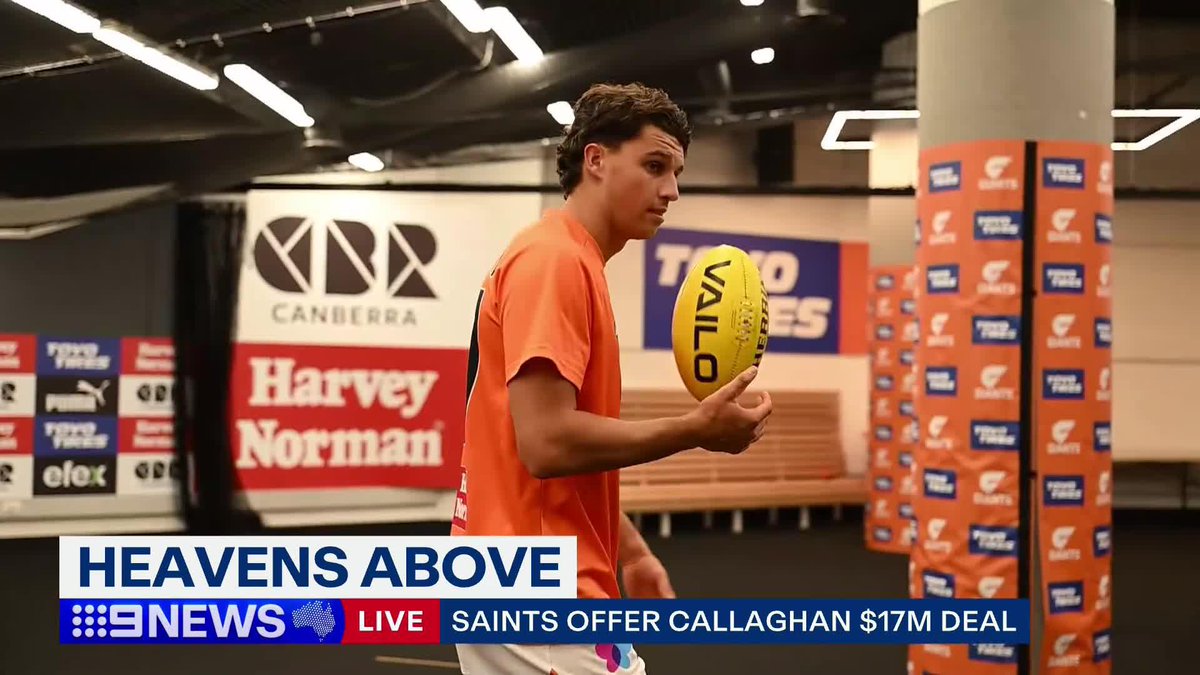
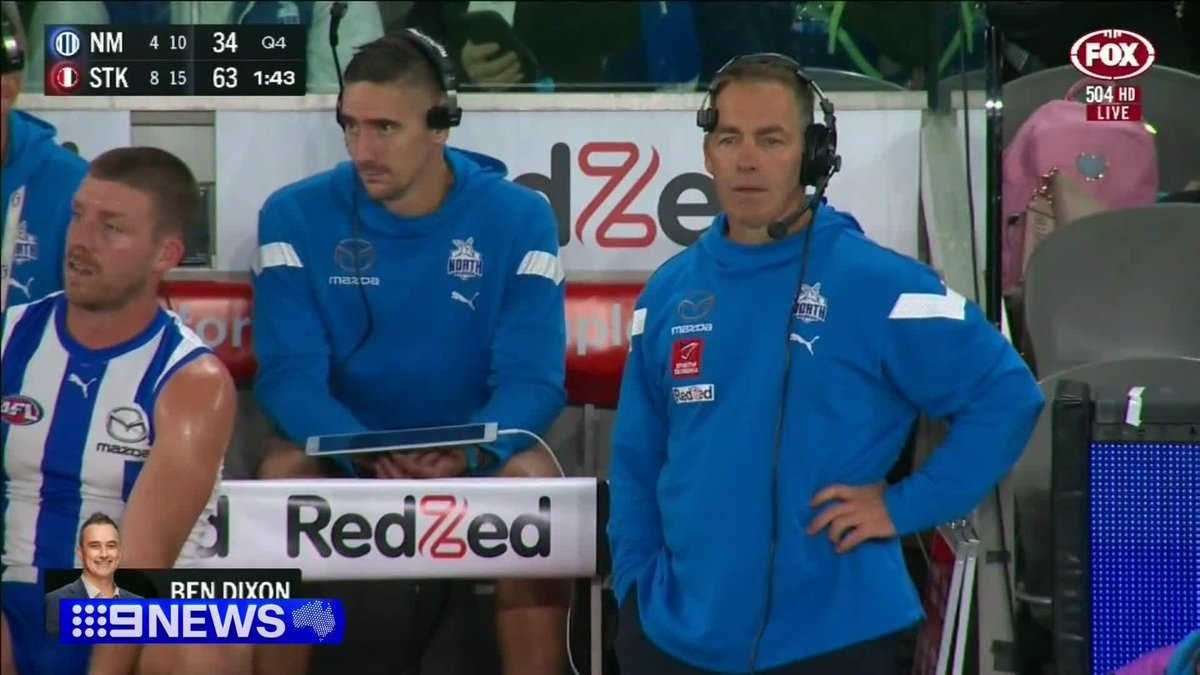
St Kilda has extended coach Ross Lyon's contract, while AFL boss Andrew Dillon today vehemently denied breaching player confidentiality. #9News Tom Morris

16,158 次观看 • 1 年前 •via X (Twitter)

3 条评论

RJP 的头像
RJP1 年前

@tommorris32 I am gobsmacked as to why Ross Lyon would get an extended contract. Can someone enlighten me?

x 的头像
x1 年前

@tommorris32 Saints will not win under Ross why extend

SirTiger 的头像
SirTiger1 年前

@tommorris32 Why haven’t you sacked this dickhead yet? Weak as piss C9.
相关视频

🚨BREAKING NEWS: Victoria Officially Abolishes Laws for Minorities, Doubles Penalties for Straight White Dads Who Pay Taxes MELBOURNE, People’s Republic of Victoria — Premier Jacinta Allan has been nominated for Saint of Systemic Injustice after overseeing what experts are calling the most inclusive collapse of law and order in Australian history. In a bold display of modern Marxist innovation, Victoria has proudly rolled out its two-tier justice system where minority status grants legal immunity and Christian males are one parking fine away from solitary confinement. Legal analysts confirmed that under Allan’s rule, “armed while diverse” is now a valid legal defence. Recent test cases include: •Two men with 15 charges between them, caught at the MCG with loaded guns stuffed down their pants, released on bail (again) because oppression doesn’t shoot itself. •A 15-year-old with a fake gun and a knife at Marvel Stadium given a caution and a lollipop, because “it’s just self-expression”. •Meanwhile, Mark from Mornington received a six-month sentence for failing to use a gender-neutral pronoun at Bunnings. Victoria Police praised the government’s leadership, stating they are now trained in nonviolent empathy arrest techniques, which include nodding gently, journaling about their privilege, and releasing offenders with a referral to a local DEI circle. The WokeFL, formerly known as the AFL, released a powerful statement during halftime of the Swans-Bombers clash, announcing their new initiative: Disarm Hate, Embrace Diversity… Unless It’s a Gun in Your Jocks. CEO Andrew Dillon said, “Our security failed, but our commitment to rainbow armbands never will.” The Allan Government is also trialling a new judicial policy: “Sentencing by Identity Matrix”. Under this initiative, all sentencing decisions are first filtered through a comprehensive Oppression Score™… with bonus points for being neurodivergent, non-binary, or recently featured in a TikTok sob story. Critics have raised concerns that Victoria has no functioning justice system left. Premier Allan dismissed these claims, stating: “We don’t need laws. Laws are a colonial construct. We need lived experiences.” Because in Victoria, safety is a social construct…and the only thing banned is accountability. Jacinta Allan Victorian Labor AFL 9News Australia

mdtlion

56,970 次观看 • 1 年前

Why Are Al-Nassr Fans Demanding #AlNassrBoardOut? Why are the fans calling for saving the club through: #النصر_بحاجه_لتدخل_الصندوق The Full Story ⤵️ Before diving into the details, attached to this post are statements from Al-Nassr goalkeeper Nawaf Al-Aqidi (who has been on loan to Al-Fateh), player Sadio Mané, and head coach Stefano Pioli. All three address the same underlying issues and point to a shared concern. (Translated to English) We must not forget the statements of Castro (the former team coach) then and today. The Executive Committee, led by Raed Ismail and his all fellow board members and all executives, has performed poorly in managing the club for two consecutive years. They even lack an understanding of how decisions are made regarding a football club, despite the resources available to them from the PIF and the National Transformation Programs for the development project of the Saudi Football League, which is provided by the Saudi Ministry of Sports. This situation of #AlNassr is a waste of money, effort, and time, as well as the genuine talents dedicated to working with sincerity and passion. 1️⃣ Marketing and Business Performance Al-Nassr, despite being backed by the Public Investment Fund (PIF), has lagged significantly behind its rivals in terms of growth. According to the Saudi economic platform Maaal (link in comments), the growth rates of PIF-supported clubs over the past two years are as follows: Al-Hilal: 105% growth Al-Ittihad: 243% growth Al-Ahli: 222% growth Al-Nassr: Only 71% growth The disparity is stark, especially considering Al-Nassr’s global appeal with superstar Cristiano Ronaldo on the roster. After two years under the current board, the club’s commercial progress has been underwhelming. 2️⃣ Administrative Instability The club has experienced significant administrative turmoil, marked by frequent changes in leadership and inconsistent decision-making. Over the past two years, Al-Nassr has seen: - 3 club presidents - 2 executive directors (with a potential third appointment looming) - 2 sporting directors, the most recent of whom lacks a clear vision for the club’s project - 2 coaches with conflicting tactical identities This lack of stability has hindered the club’s ability to establish a cohesive long-term strategy. 3️⃣ Sporting and Operational Missteps The 2024 summer transfer window and pre-season preparations exposed critical flaws in the club’s sporting operations: Mismanagement of Player Contracts: The club terminated the contract of left-back Alex Telles, paying his full salary despite his eligibility to play in the AFC Champions League. This was a missed opportunity to utilize an experienced player. Poor Recruitment Choices: The signing of foreign left winger "Wesley Teixeira" to replace Sadio Mané was redundant, as the team already had a player in that position. The squad’s actual needs, such as a left-back or an additional midfielder, were ignored. Teixeira has seen minimal playing time this season. Similarly, the acquisition of right winger Gabriel Angelo to replace Anderson Talisca was unnecessary and failed to address the team’s tactical gaps. Failed Player Sales: The club attempted to offload Saudi right-back Nawaf Boushal but failed, resulting in his reintegration into the squad halfway through the summer camp. Substandard Pre-Season Camp: The summer camp was poorly organized, resembling a recreational outing rather than a professional training program. This led to widespread fitness issues and injuries during the season. Notably, during friendly matches, including a 4-0 loss to FC Porto in Portugal (available on YouTube), the team played in unfamiliar shirts and colors, further disconnecting from the club’s identity. 4️⃣ Coaching and Tactical Misalignment In the 2024-25 season, Al-Nassr sacked head coach Luis Castro after just five rounds of the league and appointed Stefano Pioli. This decision disregarded the stark differences in their coaching philosophies and tactical approaches. The current squad was built to suit Castro’s style, and Pioli’s appointment has created a mismatch, as the players’ characteristics do not align with his system. (Too much hasn't been mentioned) These are just some of the details that can be mentioned here, while others can be observed up close. The situation is dire, and the stories are numerous, too many to be fully covered here. #AlNassr is not a place to learn the basics of club management, nor is it a place where corrective actions can be delayed under the pretext of governance or the involvement of multiple decision-makers. Everyone is complaining about the absence of effective management, the lack of transparency in decision-making processes, and the random decisions that reflect neither a clear understanding nor a well-defined plan. Unfortunately, some might believe that new signings for #AlNassr will solve the problem, but this is entirely incorrect. The administrative void and poor choices made by those working in the club’s football sector have proven beyond any doubt that the chances of future success are nonexistent! This is further evidenced by the fact that player deals will not change the narrative surrounding the story, as shown by Mané's statement, Nawaf's story and statements, Talisca's story, Al-Ghannam, and others! This is a true story to tell, for true journalism reports, which you can dig deep and find, for you with all respect: Fabrizio Romano Santi Aouna Ben Jacobs Nizaar Kinsella عمر الجريسي David Ornstein Nicolò Schira Gianluca Di Marzio The Sun Football ⚽ A BOLA MARCA #انقاذ_النصر_يالصندوق #النصر_بحاجه_لتدخل_الصندوق #AlNassrBoardOut

غايب —A

68,179 次观看 • 1 年前

HYBE and Min Hee-jin NewJeans Controversy from the Perspective of a 20-Year Entertainment Industry Expert | Kim Yoon-ji, Senior Researcher at the Overseas Economic Research Institute of the Export-Import Bank of Korea #1 [Investment Insight] 증시각도기TV HYBE has shown a somewhat immature side throughout this process. The essence of the issue has become less important. Hello, viewers and investors of Stock TV. Recently, there has been a lot of societal concern about the entertainment industry. Last year, it did well, but the question remains about how it will fare this year. We’re joined by Kim Yoon-ji, Senior Researcher at the Korea Eximbank Overseas Economic Research Institute, to discuss this. Welcome. Today, I brought a drink because this topic is not easy to discuss soberly. The situation between HYBE, Min Hee-jin, and NewJeans has escalated, and unfortunately, it’s no longer just management fighting but the artists have joined the fray. I’ve heard from someone in the industry that the close relationship between a producer and an artist is inevitable. In the past, there have been similar cases where producers and artists were tightly knit. Now, something similar has happened with Min Hee-jin and HYBE. Most people outside the industry don’t know the exact terms of the contract between Min Hee-jin and HYBE. As my own son works in the entertainment field, I’m well aware of how important it is to work with a good producer. For a company like HYBE, which has invested tens or even hundreds of billions of won, it’s unthinkable that they would allow NewJeans to separate and go independent after establishing their position. Many in the industry agree that this doesn’t make sense. To the general public, NewJeans might seem like the underdogs, and people might feel they should be allowed to leave. But from the perspective of the entertainment industry, which requires substantial capital to grow, the relationship between investors and artists is key. You can’t discuss this industry without acknowledging the role of investors. This case is different from situations where individual members leave, as seen in the past with groups that had Chinese members. This isn’t about a single member leaving; it’s more about the fact that, in this industry, the producers are as important as the artists themselves. From the beginning, NewJeans has been marketed as Min Hee-jin’s girl group, so the idea of them continuing without her feels different. We need to approach this from a different angle. That said, it doesn’t mean HYBE should completely cut ties. Many people have different initial thoughts about the situation, but the core issue here is the importance of the relationship between producers and the company, especially when substantial investment is involved. From my perspective, the fundamental question is: what exactly was attempted? I still find this unclear. In any company, it's common to hear people say, "I want to quit, I can't work with this boss, I'm leaving tomorrow." We all talk about this with friends or colleagues. Sometimes, we even ask others to let us know if there’s a good opportunity elsewhere. But actually submitting a resignation is a whole different issue. But in the new premise, I still wonder what exactly they were trying to do. What exactly was attempted? We always talk about it at work, right? "I'm going to quit. I can't work with that boss anymore. I'm leaving tomorrow." We always have those conversations. We talk about it with our friends, with team members, and even ask friends outside of work to let us know if they hear of any good positions. But actually submitting a resignation is a whole different issue, isn't it? Looking at how the situation first unfolded, it seems like HYBE was the one to bring things to light. They shared a lot with the press, and Min Hee-jin, the CEO, responded with a strong counterstatement. HYBE was saying, "Min Hee-jin is trying to do this and that," but CEO Min was like, "What else have I done apart from that message on KakaoTalk?" The court also judged that they weren't sure what actions had actually been attempted. To me, this seems like the fact of the matter. Clearly, HYBE's relationship with CEO Min Hee-jin might not be good. There could have been friction about how a subsidiary operates so independently from the parent company. There were likely various issues internally, but they should have been resolved within the company without making the problems visible externally. The fact that they let it spill outside before resolving it was a huge mistake on HYBE's part, revealing weaknesses in their management abilities. In my view, this has greatly devalued HYBE, becoming a powerful force that has dragged down their valuation. Throughout this process, HYBE displayed a level of immaturity, and the core of the issue became less important. The real concern for investors now is whether the company can effectively handle issues like these. Once this problem is resolved, can the remaining HYBE groups continue to grow securely? This business is all about reputation. HYBE is now seen as a company that ousts female CEOs simply because she didn't follow their orders. That perception leaves a lasting impression on people's minds, damaging the company's future operations. From an investor's perspective, two major incidents have happened in quick succession. The first was the boost in value during 2020 when HYBE sold a huge number of albums during COVID-19, creating the sense that the entertainment industry was Korea's next big sector. But then, this recent issue with Min Hee-jin, alongside BLACKPINK's contract situation, has put a serious damper on things. BLACKPINK didn't renew their contract as a group, and though they claim to continue working together in some capacity, it's not the same as before. YG Entertainment's profitability has plummeted, revealing how dependent they were on BLACKPINK. This has left investors wondering whether the entertainment business is just a limited-time, seven-year affair. If BLACKPINK had carried on smoothly into the next generation, it would have seemed like a sustainable business, and investors would have continued to trust in the long-term future of Korean entertainment. But now, we're seeing the cracks in that perception. It’s become a question of how to invest in a business with a lifespan of only seven years, when even the manufacturing industry lasts longer than that. The BLACKPINK incident and the NewJeans situation have both severely harmed investor confidence. HYBE's struggles with its artists are analogous to a manufacturing company facing a revolt from its workers. When investors look at this instability, they start questioning whether the business is even viable. The concept of sustainability has been seriously undermined, and the fact that the seven-year contract issue has been a long-standing concern doesn’t make it any easier to deal with. What used to reassure investors was the belief that when a seven-year contract ended, the company would already have the next seven years planned out, ready to sustain their business. That faith in the big entertainment companies has been shaken. Achieving the kind of success that BTS or BLACKPINK did is incredibly difficult, and passing the baton to the next generation is no simple task. Even though investors had faith that YG would produce another BLACKPINK-level group, now that trust is faltering. However, I do think people are now looking at contracts a bit differently. In the past, when a group disbanded, the members would scatter. But now, groups like BLACKPINK continue to work together even while pursuing solo projects. This shows that they understand the importance of sticking together, and I thought that this might help extend the longevity of these groups. But in reality, very few cases of disbanded groups have seen much success with individual members pursuing separate careers. There aren’t many examples where groups have stayed active for long, especially when individual members run into personal issues. Take Big Bang, for instance—they’ve been around for a while, but their personal scandals have made it hard for the group to recover fully. In the entertainment business, it’s rare for groups to last more than seven years, and age is also a factor. Once a group surpasses the seven-year mark, the members tend to be quite a bit older. With BTS, they need to show a fresh side if they’re to keep running strong. One of the most disheartening things mentioned by the members was that they didn’t feel respected. This ties into a larger issue in our society, as we're seeing with the national discussion around workplace bullying. If we think about how BTS achieved success, it's clear why this is such a serious issue. Back when BTS rose to fame, they shared how they weren’t from one of the top three agencies and positioned themselves as underdogs who worked hard to gain recognition. This resonated with many young people who felt that if you work hard enough, you can succeed, even without the backing of a major company. This message gave hope to many, not only in Korea but also globally. BTS’s fan base, especially in the U.S., includes many people who identify as outsiders, those who don’t feel they belong to the mainstream—whether in terms of race, culture, or social standing. For them, BTS was a source of inspiration, showing that you can still succeed even if you start from the margins. With NewJeans, though there’s talk about Min Hee-jin, the allegations of bullying within the company are hitting a sensitive nerve for fans. It’s unfortunate that the company allowed things to reach a point where such accusations were made. Even if the situation was mostly an internal conflict among the adults in charge, they should have handled it better to avoid involving the artists. In the past, we've seen similar issues, like with Big Bang’s various scandals, which were almost at the level of criminal activity. The current situation with NewJeans might not be as severe, but bullying and exclusion are still serious concerns. Ultimately, experiences like these can serve as valuable lessons for the entertainment industry. This situation has highlighted that the entertainment business is fundamentally about human relationships. From the artists to the products they create, everything revolves around people. The moment someone’s feelings are hurt or relationships are damaged, the entire business can collapse. The entertainment business is all about personal connections, something I've always believed. Recently, I heard about Naver Webtoon’s global success, and it's fascinating to think about how it has outgrown Kakao Webtoon, despite being a later player. Many factors contributed to this success, but someone mentioned that webtoons are also a "personal connection" business. Webtoon creators are tough to manage—they're artists, after all, and keeping them on schedule, especially with weekly deadlines, is a challenging task. CEO Kim Joong has managed to nurture relationships with these creators, making personal connections the backbone of the business. In the entertainment industry, particularly with idols, you can't overlook the importance of personal relationships. The key skill for managing this industry is the ability to connect deeply with both the creators and the artists. HYBE, for instance, doesn’t just need skilled managers who are good with finance or operations. What they truly need are people who can foster those personal relationships, especially when they’re dealing with artists as young as 13 or 15. It’s about ensuring that these young talents feel understood and cared for, so they can be inspired to do their best work. Managing young artists is tricky because their idea of success might be completely different from what adults think. A 13-year-old might not care about owning multiple houses—they might just want to spend time with their family or have the freedom to eat out whenever they want. The manager’s job is to tap into what motivates them and help them thrive in a way that’s meaningful to them. This kind of nurturing is not easy to scale. When a company grows too big, it’s challenging to maintain those close relationships. That's why multi-label approaches, like those seen in large entertainment agencies, are supposed to help. But if personal connections within those labels break down, the whole system can fall apart. This business model seems uniquely suited to Korea. It’s hard to imagine it working the same way in Japan, where there's a more hierarchical, command-driven structure. Japan's entertainment industry often depends on strong, central producers who direct everything. In contrast, Korean idols often rise through collective effort and personal connection, like BTS did. Despite the challenges, I believe Korea’s entertainment sector has room for long-term growth. Many of today’s youth are drawn to this field because it allows them to express their talents and passions. If scandals like the one with NewJeans continue to arise, however, it might dissuade some young people from pursuing these dreams. When you look at what NewJeans members have said, there’s not much to disagree with. They simply want to keep doing what they’ve always done and follow their own creative paths. Ensuring they have the freedom to do so can lead to even greater success. These days, if you ask middle or elementary school students what they want to be when they grow up, many of them will say they want to become idols or YouTubers. They believe that with enough effort, they can make it. The entertainment industry needs to be able to channel that passion and potential into something positive. If Min Hee-jin were to leave HYBE, it’s clear that many companies would be eager to work with her. She mentioned once that “everyone is crazy about money,” and I think that’s why there would be a long line of people wanting to meet with her if she decided to move on. Right now, for example, there are people in the entertainment industry, like CJ, who may not have fully established themselves, or even private investors, just waiting for an opportunity. Many of them are keeping an eye on Min Hee-jin leaving HYBE. This was evident during the recent Tokyo performance, where her creativity was on full display. It was incomparable. That’s why this situation is even more unfortunate. Some people say, "If it wasn’t for the money, how could that group have been created?" But I believe there are people who could have made it happen with or without money. That’s the crucial difference in this case. While I'm not an expert, I was touched by the process of recreating a hit song from a legendary Japanese female singer from the '80s. It felt like a major event. It was amazing because I had never seen anything like it before. Even though I wasn’t familiar with the original song, just seeing it was enough to draw in so much attention and make it feel like a historic moment. That’s what talent is—turning something simple, like a cover song, into a major event. I remember thinking, "How do the Japanese people feel about this?" because the crowd's reaction was incredible. The enthusiasm was surprising, and I wondered what they were thinking while watching it. This is the true power of Korean culture—it’s not just about promoting our own culture but also deeply resonating with others. The entertainment industry’s core business is making audiences happy and even obsessed. Min Hee-jin is undeniably a top-tier artist in this field. If she were to leave HYBE, there would be countless opportunities for her. But if HYBE mishandles this situation, it won’t just be about losing one person—it could destabilize everything. They really need to handle this carefully. As for stocks and investments, that's up to everyone’s individual decisions. We're just having a casual chat here about the entertainment industry. As someone with a child in the business and another who's analyzed the industry, we’re just relaxing with a casual discussion. So, let’s pour a drink and enjoy this conversation. Watch the full video:

1tokki

104,638 次观看 • 1 年前

The outgoing American ambassador to Zambia, Michael C. Gonzales, has accused President Hakainde Hichilema’s government of corruption and dishonesty, stating that Hichilema’s fight against corruption is bogus and is selectively used to arrest and persecute political opponents. He made these remarks while delivering his farewell speech. He said Zambia loses over US$4 billion annually through illicit or dirty financial flows, money leaving the country and not benefiting the Zambian people. Full speech below Remarks by Amb. Michael Gonzales Farewell Reception – April 30, 2026 Good evening. For decades, the U.S. relationship with Zambia was one centered around aid. The United States has provided billions of dollars of assistance to Zambia, helping the country reach HIV epidemic control, contributing to a 20-year increase in life expectancy, slashing malaria deaths, and truly impacting the lives of every Zambian alive today. When we paused funding to review our assistance programs last year, so much of Zambia’s health system began to crumble almost overnight. Despite over $7 billion in U.S. health assistance since 2000 and the hard work of many Zambians alongside us, that crumbling system revealed that while we thought we were building capacity, successive Zambian governments had not built systems. Too often, Zambian officials and leaders abdicated their responsibilities, letting the United States pay for healthcare while officials diverted government funds to their own pockets. Last year I shed tears before the world when I announced a $50 million cut in US health assistance. After years of pleading, I could no longer stand by while the Zambian government refused to stop or take action to hold people accountable for the systematic and nationwide theft of U.S. provided medicines while the Zambian citizens for whom those were intended went without. One year later, not a single notable person has been arrested since last February. Not a single notable prosecution has even begun. After last year’s pause, we resumed almost all of our health assistance, over $400 million including over $75 million in medication. We continue to pay the salaries for over 23,000 healthcare workers, as we have for decades. Such is the legacy of America’s support to the Zambian people. Now, I know there have been alarmist allegations recently. But let me be clear, any suggestion that the United States would withhold critical life-saving healthcare support from those Zambians whose lives and health depend on it unless we get critical minerals is disgusting and patently false! In reality, since October, my government has offered over $2 billion in additional health and economic assistance to Zambia. But we can no longer accept empty promises. The future must look different. The Zambian government must also increase Zambian funding, staffing, and genuine ownership of its systems. This is not to impose our will, it is the only way we know for Zambia to truly own a sustainable healthcare system and to enable robust growth. It is the only way we know to ensure that system serves the people while finally breaking the cycle of foreign aid dependency. Since January, however, like with so many of our other overtures to the Zambian government, we have had effectively zero substantive engagement from Zambian officials to move these efforts forward. Our calls go ignored, questions unanswered, meetings cancelled, leaving us without even opportunities to speak, much less engage in substantive deliberations. Instead of continuing to languish without engagement, the actual funding under our Health MOU should have started this month. Instead, we have reached April 30 still cobbling together funds for mismatched projects without an implementation plan to guide us forward under Zambian leadership, much less a finalized MOU that guides our strategic approach. We know that the Zambian budget cannot even afford to pay for public services today, not to mention the increased healthcare funding or the myriad other huge budget commitments that seem to get pledged daily. So, something has to change if Zambia will ever meet its full potential or be able to sustainably provide services to its own people. At the same time, the Zambian government’s own reports reveal that every year Zambia loses over $4 billion in dirty money flows to East Asia. That is Zambian money that does not benefit the Zambian people or contribute to the budget. If taxed, that would bring an additional $1 billion for the government to fund healthcare, education, social services, and development. Every year, hundreds of millions of dollars of government funds are lost to the Zambian people through corruption. Certainly, it is not just U.S. taxpayers’ support that is stolen. Every year, the country loses out on hundreds of millions of dollars in new investment and growth because they are hijacked by unmitigated petty corruption, blocked because law-abiding investors refuse to pay kickbacks to Zambian bureaucrats or leaders who are never held accountable. The narrative of the U.S.-Zambia relationship is adorned with flowery words of “partnership,” “collaboration,” “strategic,” or “mutual.” Regrettably, the reality of our unrequited relationship for decades has been starkly different. For years, the United States funded programs and sent technical advisors to help achieve Zambia’s development objectives. As we have for these past four months, we have often struggled to get successive governments to even bother answering the phone. It takes months to get a meeting that yields nothing. Officials draft policies they have no intention of implementing, invoking them only in speeches to sound like they are taking action. MOUs decay on the shelf among the others before the signing ceremony even ends, never to be implemented because the ministry will not even meet to discuss implementation. Why? Because generations of Zambian officials and leaders gain from the dysfunction. The non-responsiveness on our availed funding and efforts to truly build a Zambian-owned health system that serves the Zambian people is sadly the norm. The theatre of commissioning a report to get a scandal out of the news cycle but taking no substantive action on accountability is all too common. Of course, the systematic theft of public resources is not unique to American-provided medicines. Attacking the messenger who dares to name these dynamics out loud is not limited to targeting the U.S. ambassador and asking Washington for his removal. Today, 10% of my diplomats have family members who still have not received basic residency permits from the Zambian government. Several have received court summonses as a result. Like Zambians themselves experience, ZRA staff shake down my departing diplomats for fees that do not apply to them too. When elevated, their supervisors double down on the demand. Zambia’s institutionalised and refined corruption does not only dissuade transparent and law-abiding investors from the United States. The inaction, corruption, and intimidation of opponents also harms American citizens, it undermines American organisations, NGOs, companies, and philanthropies. Zambians and so many other global friends of Zambia are also hampered by these very same dynamics, often bearing far more of the brunt of their effects. America’s support to Zambia is long-standing. Our goodwill runs through the veins, the hearts, and the dreams of millions of Zambians. Our hands remain open, outstretched in a genuine, transparent offer of true, tangible, and meaningful collaboration for mutual benefit. But there must be change. Going forward, the benefits of our relationship must be mutual. Empty promises must be replaced with tangible action. Commitments must be honoured, laws must be implemented and enforced consistently and equally. The decades of paying for healthcare while national resources are pocketed must give way to ownership and systematic improvements that enable growth, development, and accountability. Since President Hichilema and I committed to reset the U.S.-Zambia relationship last July, America has redoubled our efforts to support robust Zambian agency. We have availed billions of dollars to support tangible investments and reforms to catalyse Zambia’s success. We have offered expert support to inform reforms that would systematically benefit both the Zambian people and their many friends from around the world, without bias or favour. Sadly, so many of our overtures and goodwill have been met with, to use the most persistent and notorious of the Zambian government’s responses, “Noted. With thanks.” But appointing a Director General of the Anti-Corruption Commission who was actively under investigation by the ACC, and her admonishment to her intentionally under-resourced agency not to investigate senior government officials, only cripples hopes that clean business can be done. Last May, multiple senior government officials shared with me and have confirmed that the government has a 500-page expert report detailing the irreversible harm and risk of generations of birth defects, cancers, heart and liver disease caused by carcinogenic heavy metals unleashed into the Kafue River ecosystem by last year’s Sino Metals tailings dam disaster. But my heart broke when on July 29 last year, one of the country’s senior-most leaders vehemently denied that the government even had the report, much less would act on it until the polluter themselves provided it. I pleaded with her to take action to protect the Zambian people and I again offered U.S. assistance, which the Foreign Ministry had already formally declined. While so many American prospective investors leave, put off by bureaucratic drudgery, inaction, and corruption, the Zambian government recently approved Sino Metals to expand its operations. Did this happen in the face of Zambia’s myriad impediments, or because of them? Today, Sino Metals is scarring game management areas abutting the Kafue National Park. When that tailings dam breaks, I will not be alone shedding tears. Punctuating this, apart from the truly exceptional cases, too many American companies cannot get licences, approvals, or action on basic administrative matters without being shaken down to give brown envelopes of cash. The Zambian people suffer the consequences of these dual offences, exploitation and foregone opportunity. When Parliament ignores the Constitutional Court’s ruling that the process used to ram through a constitutional amendment was itself unconstitutional, investors rightly ask, “If they can do that to the constitution, what does that mean for the sanctity of my contract?” They rightly wonder if the next constitutional amendment which the Attorney General has already announced is really just a guise for resetting term limits. Even the Chinese government convicted AVIC’s Chairman to death for corruption. AVIC’s Chingola-Chililabombwe Road was washed out last month, its negligence disrupting Zambia’s trade with the region. AVIC’s fraud in a $320 million police housing tender in 2014 is well documented. Despite that, this government ignored the competitive bid by renowned Zambian investors only to award AVIC the $650 million Lusaka-Ndola Dual Carriageway project, subsidising this notoriously fraudulent and corrupt company with $300 million from the public pension scheme. How does this happen? Can law-abiding investors do clean business here? Will donors be asked to backfill the loss when the pension money too is wiped out? The rhetoric of “no sacred cows” is rubbish when there are not any cows except those who are deemed to be disloyal. When only opponents are arrested, but not those in office engaged in the very same practices, the hollow rhetoric of “rule of law” only further keeps investors away, preventing the creation of growth, jobs, and tax revenues to pay for public service commitments. Zambia does not need money. It needs leaders who govern for the people with integrity. It needs the political will to put Zambia first. But, of course, you do not need me to say this. Dambisa Moyo, herself a daughter of the soil, made these same arguments 17 years ago. What America is trying to do here is both bolster Zambia’s sovereignty and catalyse Zambia’s growth. We are offering a transparent and open hand to join the Zambian people for mutual progress. We know that while you pursue a Zambia First agenda and we pursue America First, we are still able together to achieve something notably better for both of our countries, and we can do so without it coming at anyone’s expense, anyone’s exclusion, fully transparently, and legally. Now, of course, the United States will absolutely continue to honour our long-standing commitment to the Zambian people to provide critical life-saving healthcare support. We will not leave Zambians without access to ARVs. We are redoubling our support to ensure that babies are not born HIV-positive. But, against the unmitigated systematic theft of U.S. assistance, against the refusal by the Zambian government to engage and to own or enable a sustainable healthcare system that serves the people, in an environment where only the most exceptional of American investors can do clean business, and where Zambian government officials often can scarcely be bothered to take meetings with American officials or companies, not to mention capture the billion dollars of its own money secreted out of the country to East Asia or hold accountable the company that unleashes generations of cancer and birth defects onto the people, without fundamental change, as the American Ambassador to the Republic of Zambia, how can I ask American taxpayers, Congress, or President Trump to continue the massive aid budgets that have been the hallmark of our relationship for decades? The United States remains intent to work with Zambia toward our mutual objectives, but how Washington responds to silence, inaction, aversion to accountability, and lack of ownership remains to be seen. That said, I am confident that it will depend on fundamental changes by the Zambian government to take action to do right by the Zambian people. It will depend on actions to foster and enable the Zambian people, and their partners who abide by the rule of law, to be able to tangibly contribute to a mutually beneficial future. Washington’s hand remains open and outreached for transparent, accountable collaboration enabling tangible action to benefit both of our countries. But we can no longer own the projects more than the Zambian government. We cannot justify continuing to prioritise funding where the Zambian government also does not deploy its own resources. No longer will we lead while Zambian officials sit back unresponsively. Quite simply, America can best support Zambia’s sovereignty, agency, and success if we finally abide by the maxim and refrain from wanting development more than the Zambian government does. That said, what happens between governments and embassies is important, but it is only a small fraction of the broader relationship between countries. The ties between Zambia and America are profound, strong, and everlasting. The connections between churches and civil society, the linkages between students, artists, and researchers, the bonds between communities, the union of our peoples, these are the essence of the U.S.-Zambia relationship, and these will never fade. Too often people hope for change. They note what others should do. But hope is not a strategy, and we cannot control the actions of others, only our own. So, as I prepare to leave this country that I love, I ask those of you whose country it is, is this the Zambia you want? Are you on course to achieve it? If not, what action will you take to contribute to making that become a reality? I first stepped foot in Zambia in 1995. My daughter took her first steps in Livingstone. As I prepare to depart, I take with me beautiful memories of Zambia and the Zambian people, but I depart with a heavy heart wondering if realisation of the Zambian dream will be deferred for yet another 64 years while even more Zambians fall into poverty instead of being able to rise into the brilliant future that is possible. But my role here is not about this little guy with a big heart for Africa. It is about America and Zambia. America will continue reaching out to the people of Zambia, offering our support, seeking as much to learn as to share, doing so openly and transparently, and eager to help enable the realisation of that Zambian dream and the creative future that benefits, and can only be discovered through, our sincere partnership. I thank you.

Hopewell Chin’ono

97,884 次观看 • 2 个月前