Loading video...

Video Failed to Load

Go Home

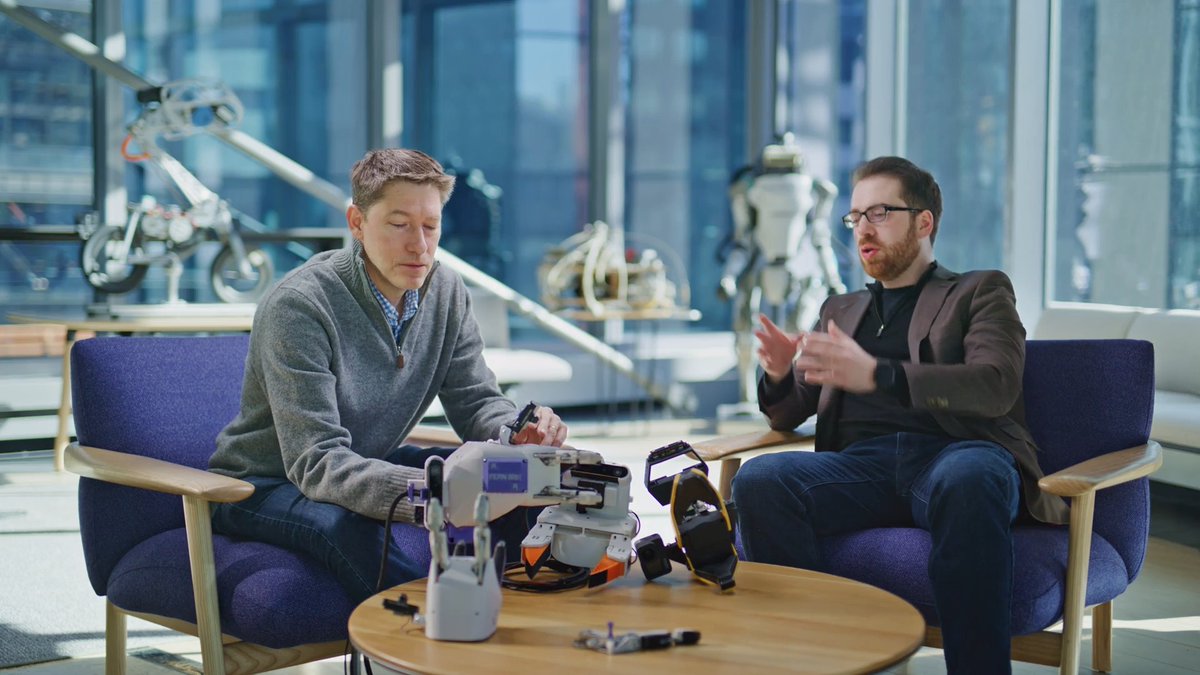
Startups are building the modern infrastructure that lets engineers move from data janitors to robot builders. Some players to watch: @Foxglove, @rerun_io, @Roboto_AI, and more. (Please tag them) The first breakthrough… Making data observable:

35,232 views • 10 months ago •via X (Twitter)

0 Comments

No comments available

Comments from the original post will appear here

Related Videos

We just launched a major new Data Engineering Professional Certificate on Coursera! Data underlies all modern AI systems, and engineers who know how to build systems to store and serve it are in high demand. If you're interested in learning this skill, please check out this 4-course sequence, which is designed to make you job-ready to be a Data Engineer. This is a new specialization taught by Joe Reis, the co-author of the best-selling book “Fundamentals of Data Engineering," in collaboration with AWS. (Disclosure, I serve on Amazon's board.) For many AI systems, data engineering is 80% of the work, and modeling is 20%. But people’s attention on these two topics is often flipped. This makes the job of the data engineer particularly important. In this professional certificate, you'll learn foundational data engineering skills while implementing modern data architectures using open-source tools: - Learn the key steps of the data lifecycle, to generate, ingest, store, transform, and serve data. - Learn to align with organizational goals to design the data pipeline right for your business' needs. - Understand how to make necessary trade-offs between speed, scalability, security, and cost. Joe has distilled into this specialization decades of experience helping startups and large companies with data infrastructure. He is also joined by 17 other industry leaders in the data field, who will help you learn in-demand skills for the growing field of data engineering. Please sign up here:

Andrew Ng

118,937 views • 1 year ago

David Friedberg: Michael Burry’s Datacenter Math is Wrong “I actually think Michael Burberry's got this wrong.” “What Michael Burry is saying is that all of these hyperscalers have extended their depreciation schedule or the useful life of their data centers by roughly 2x, which cuts the operating costs in half when they report it in earnings. And so it's making their earnings inflate.” “So he's claiming they're cooking the books. Google first made this change in Q1 of 2021, where they said the servers are now going from 3 to 4 years. Separately in 2021, Google took networking equipment from 3 to 5 years. And then in 2023, they took it from 5 to 6 years.” “And so this is a result of this effort where they went in and did an analysis. So what happened?” “What happened in the data centers is that the data centers transitioned from being primarily data storage and data transfer systems, where you would use hard drives and RAM and memory to store data and then transmit it back out, to being data processing centers because of the AI boom.” “So as AI became more important in the data center, more of the dollars that are going into data centers were allocated towards chips from data storage, which initially was hard drives.” “And then suddenly, when you put these processors in to process the data to do AI, the majority of the spend and the majority of the energy is going towards the processors.” “I made some calls and I checked around with some other friends, and everyone says the same thing: that these 7-8 year old TPUs and GPUs that are sitting in the data centers are still being used and they're being used at 100% utilization.” “So that actually justifies and validates the depreciation schedule being much longer versus shorter.”

The All-In Podcast

304,297 views • 7 months ago