Sensitive content

This media may contain sensitive content.

Video wird geladen...

Video konnte nicht geladen werden

Zur Startseite

Stellar Blade - EVE × Rescue Plan - EP2 - Lite Version To see the full version, subscribe to Patreon Rico Game Lady Doll Official #GameLady #StellarBlade #EVE #剑星 #劍星 #伊芙 #ステラーブレイド #イヴ

0 Kommentare

Keine Kommentare verfügbar

Kommentare vom Original-Post werden hier angezeigt

Ähnliche Videos

Guess it's that time of year again... The post to Start the rest of the "Star Citizen has raised 900 million and is still in alpha" posts 🤦🏽‍♂️.. monkey see monkey do... Followed by people looking for the highest priced ships to post... Conveniently leaving out the fact you can spend 30$ one time and spend anothet time after that because you can buy almost all ships in game currently with in game money. The game finished Kickstarter the end of 2012 with sky high promises, the game of a man who is a perfectionist and who has a massive vision. Has Star Citizen been managed well over the years? No, we got a hangar module in August of 2013 to let us walk around and view our ships. 2 years later The first iteration of the Persistent universe went live in August 2015 for the first time, here are the major milestones, The initial version of the Star Citizen Persistent Universe (PU) was first made available to backers as part of the Alpha 2.0 release in December 2015. This version was a huge deal, it's the release that combined several gameplay elements and introduced a persistent, multiplayer environment. The PU has been in an alpha, or early access, state ever since and continues to receive Monthly updates and new features with major milestone patches.. Below is a chronological list if all major patches . There have been a ton of "smaller ones" but each has brought new tech, features and improvements as well as bugs Alpha 2.0 (December 2015): The initial release, which allowed players to spawn at Port Olisar and introduced an early version of the persistent, multiplayer universe around the planet Crusader and its moons. Alpha 3.0 (December 2017): This update was considered a major core technology milestone, introducing features like planetary procedural technology, truly SEAMLESS atmospheric entry, cargo trading, and the addition of the Hurston system. Alpha 3.18 (March 2023) Implemented the Persistent Entity Streaming (PES) technology, a significant technical step that allows the game to track every item and ship across all servers, greatly enhancing the level of world persistence. Alpha 4.0 (Q4 2024) Introduced the second full star system, Pyro, which required the implementation of static server meshing technology to seamlessly link different servers. Alpha 4.0 and subsequent. Patches have brought tons of features, missions, activities, sandbox missions during it's. Course.. Today 2026 - Patch 4.4 is in development, currently being tested by us (the backers) which brings with it our 3rd Star Citizen, Nyx and Vanduul. NPCs (hostile aliens) once the NYX planets (specifically NYX 1)are patched in, that will bring with it the Genesis technology, the name is very bit a reference to the same technology from Star trek . We call it Planet Tech V5 which brings planetary visuals, interaction, biomes, textures, lighting, atmospherics an order of magnitude higher then what it already is. while Star Citizen is far from perfect and has had its massive share of growing pains and missteps.. Chris Roberts vision still lives and is in a better state then it's ever been for most of us. It's only getting better, this isn't meant to persuade anyone to play it's just mean to give you some info for those that care or are curious. Before you slander a game, atleast have enough respect to the developers who really bust thier ass day in and at out to bring this game to life.. To fix things, design weapons, ships, space etc. Video below was cut and put together from the Official to clip everything together and it shows NYX 1 Running the Genesis technology KungLi . Like the matrix no one can be told what Star Citizen is.. They need to see it for themselves to understand, The Visuals.. Flying from Space, through the atmosphere then landing anywhere you want, whenever you want, seeing the Star rise over the horizon.. #StarCitizen is beautiful IAE 2955 Event Comming up Nov 10th to Dec 5th, play and fly for free and try it

Citizen_of_the_Verse

51,214 Aufrufe • vor 10 Monaten

Recently did an interview with the lead developer of Knight's Path on the title's future release and the state of the industry. The Western AAA gaming industry has shifted its focus away from its core audience, favoring products for smaller, less engaged demographics. This shift has led to a noticeable disconnect between large publishers and their traditional fan base. This has, however, created an environment for indies to thrive. They can prioritize authenticity and community, crafting games that resonate with their players and that is exactly the case with Knight's Path. In December of 2023, Knights Path: The Tournament was released to Very Positive reviews on Steam. It is a short medieval RPG featuring challenging combat, an immersive progression system, and a nice little story. It served as an announcement, a combat concept demo, and a teaser for the forthcoming open-world RPG Knight's Path, which is currently in active development. I asked what their plans were regarding the scope of the full release. While you might get the impression that Knight's Path is an arena fighting game, that’s not the case with the full release. "Knight's Path will be a proper open-world, story-driven RPG. Of course, as a small indie team, we’re keeping the scope modest. The open world will be compact but dense, featuring one town, one village, castle ruins, forests, valleys, and other areas to explore." Many gamers would agree it is better to have a limited number of fully fleshed-out areas than to present a gigantic, empty world. This has been a major criticism levied towards recent releases like Pokémon Scarlet and Violet and even modern Assassins Creed, which tends to rely on repetitive gameplay loops scattered across an overly large map, which can feel more like busywork than meaningful exploration. I have always believed that quality over quantity is the best way to go. The team has also made this a priority with things such as the story and weapon types. "We plan to include three main weapon types: longsword, sword and shield, and bows. These will feature the full progression system seen in the demo, with skill levels such as Novice, Adept, Expert, and Master. Players will need to learn individual skills from different trainers to progress. In addition, we’re introducing secondary weapons like spears, halberds, and other polearms. These won’t have RPG-style progression but will still offer variety in combat." Regarding the story, they plan to be bold and strive to create a 16-28 hour-long main campaign. "The story will be divided into four chapters, with each chapter offering around 4–7 hours of gameplay. As in the demo, the player character begins as a nobody, slowly learning how to wield a sword and eventually becoming a knight. However, the progression will be much more realistic than in the demo, where the peasant hilariously transformed into a champion in just four days." This is a far cry from many games that are released nowadays. In just 2024 alone at a glance, the AA release Flintlock: The Siege of Dawn provided an average of 8 hours of content, Princess Peach: Showtime at 10 hours, Silent Hill 2 Remake at 15, and even the GOTY winner Astrobot holds an average playtime of 10 hours. A major issue within the industry is the way we are treated by the people who only have jobs because of our favorite hobby. In 2024 the gaming industry is forecasted to generate $208.7 BILLION dollars, up from 5.4% in 2023. Compare that to Hollywood, which is a measly $12.3 billion. The gaming industry employs 727,000 individuals in the United States alone. So, you'd think these people would have a little bit of respect for gamers, though so many who are vocal on social media show nothing but contempt for us. Perhaps this is because of fear if they do not show loyalty to a cause or "fit in" that they may not secure funding or genuinely believe in what they preach, but the team behind Knight's Path isn't worried about that. "We are independent developers, and we plan to stay independent so we can stay true to our vision. Knight's Path is a game made by gamers for gamers. We’re prioritizing fun gameplay above all, and we firmly believe this is exactly what gamers want." I also raised some questions about their big plans moving forward. In the demo, one of the major criticisms I had was with the voice acting. I had guessed it was done via AI, which was confirmed. "You guessed correctly– the voice acting in the demo was done by AI, and it was probably the loudest critique we received, and we totally understand why! Back then, we didn’t have much of a choice, but for the full game, we don’t plan to use any AI voices. Luckily, after the demo release, many voice actors reached out to us, volunteering to lend their voices to the full game. We absolutely plan to answer their call and give them that opportunity." AI can be a useful tool, especially for developers starting out who can't commit a lot of money to voice acting or just want to see a version of the product that's closer to what they envision the full release to be, but going from that to real voice actors will bump the experience to the next level. I myself played the demo in its entirety and really enjoyed my time with it! I thought the game was reminiscent of Gothic 2 and even The Witcher. I was happily surprised when I didn't encounter any bugs or glitches and while some areas have not been fleshed out like the voice acting, I would recommend putting the game on your wishlist to see what this team does in the future when they finally deliver their updated demo and the eventual full release of the game.

Vara Dark

42,375 Aufrufe • vor 1 Jahr

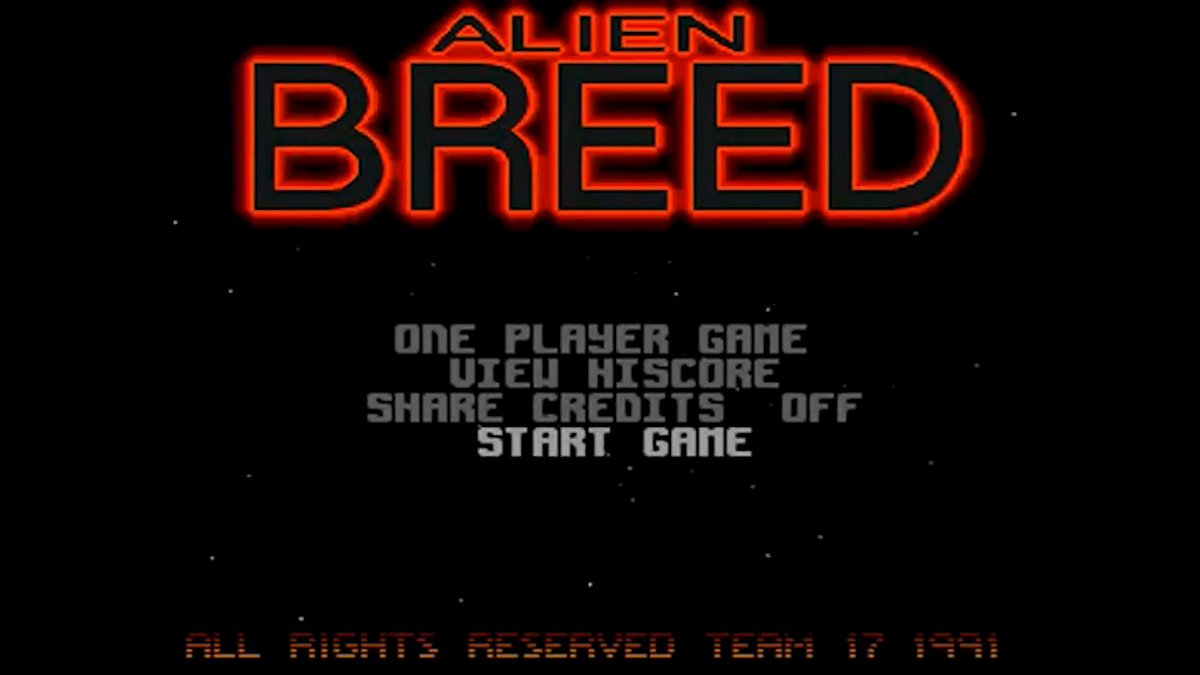
5 Facts you didn't want to know about Alien Breed for the Commodore Amiga Alien Breed (1991) is a landmark Amiga title that defined Team17’s early style: tense, atmospheric, and brutally addictive. It was perfect for co-op gaming with mates. Programmed by Andreas Tadic and Peter Tuleby, with graphics by Rico Holmes and iconic music by Allister Brimble. 1. Top-down run-and-gun sci-fi shooter heavily inspired by Aliens: You (and a friend in co-op) explore an infested space station, blasting xenomorph-like aliens (I originally thought they were aliens) while managing limited ammo and health. It mixes fast arcade action with tense resource management. 2. Team17’s breakthrough hit: This was only their second game, after Full Contact, and their first full-price release. It put the UK developer and publisher on the map, before they became famous for the Worms series. 3. Extremely well-received on Amiga: Launched to critical acclaim, with many magazines scoring it 85–91% (CVG 91%, Zero 91%, CU Amiga 90%, Amiga Action 87%). It was usually praised for its smooth multi-directional scrolling, atmosphere, co-op play, and technical excellence on the Amiga. 4. Infamously difficult: The original game was notoriously tough and short, with only six levels. Because of this, Team17 later released Alien Breed Special Edition 92, with rebalanced difficulty, extra levels, and various fixes. In my opinion, it’s a much more enjoyable game. 5. No official Commodore 64 version: it was developed primarily for the Amiga, and the Commodore 64 never got a conversion :( Would you have played it? I would have big time! Still one of the best top-down shooters ever made on the Amiga. Who else remembers the panic when the ammo ran low and the aliens kept coming?

Commodore Computer Museum 🕹

13,291 Aufrufe • vor 4 Monaten

I’m thrilled to announce the launch of Spatial Film—an immersive 180° and 360° film app we’ve built: After months of self-teaching Swift and app development, I finally turned my dream of having a platform dedicated to showcasing the highest-quality immersive films into reality. I’m not a developer by trade—I’m an immersive filmmaker—but I wanted a space where our original 3D 180 and 360 films could shine, free from the heavy compression of typical platforms. So, four months ago, I dove into coding, and here we are with version 1! This journey has been both challenging and incredibly rewarding, and I couldn’t have done it alone. My gratitude goes out to the immersive and VR community, our loyal Patreon members, and developers around the world who generously offered advice and encouragement along the way. What makes Spatial Film unique? It’s 100% original content, from immersive films to 360° environments, all crafted to provide an unparalleled experience. Some of you might recognize us as immersive filmmakers and educators on YouTube, where we’ve shared tutorials and inspired countless creators on Meta, Apple, Pico, HTC, and even back in the early YouTube VR days. Now, we’re taking advantage of Vision Pro’s stunning display to bring our work to you in the best quality possible. Our journey with immersive content goes way back—we’ve worked with 12K camera rigs like Jaunt, Google Jump, and Yi Halo, creating wild experiences for brands. But despite our efforts, our films were often stuck on platforms with heavy compression, which limits the quality. Vision Pro changed that for us, but it’s taken a lot of work to adapt. We’re still learning, refining, and working hard to optimize this new pipeline. Our hope with Spatial Film is to champion immersive storytelling on our own terms, without big corporations that might restrict artistic freedom. We’re here to bring you genuine, immersive stories—not influenced by financial projections. This platform is small, just me and a Shiba Inu sidekick named Kimchi, and we plan to keep it that way. No outside investment, no mission drift—just pure, immersive storytelling. And the best part? We’re releasing free films every other week, so you can explore and download our latest releases without a paywall. Every film also comes with its own immersive environment, free of charge. If you’d like to support us, you can subscribe to access the full library for a super affordable price, helping us keep this going as a true “mom-and-pop” shop on VisionOS. Feedback is more than welcome as we continue learning, optimizing, and improving the experience for all of you. Thank you for being part of this journey with us!

Hugh Hou

17,557 Aufrufe • vor 1 Jahr

GM Mayor Andy Burnham’s so-called ‘limited’ Assurance Review into the gang rape of young White girls in Oldham, better described as an attempted cover-up of the cover-up, was published on 20th June 2022. Refusing to accept their whitewash, I took to YouTube the day after (June 21, 2022), to deliver the first of my debriefs, exposing the glaring inconsistencies in their narrative. I'd spent 24 hours examining the 200+ page document. The Fight for a Public Inquiry During the live transmission, I systematically dismantled the review’s contradictions, making it clear that the fight for a full Public Inquiry had to continue. At that point, nearly everyone else had either resigned themselves to never uncovering the truth or accused me of lying. Yet, I persisted. It took until January 2025 - over two and a half years later - for Andy Burnham to finally admit his so-called Assurance Review had failed to reveal the truth. The Smear Campaign Realising what I was doing, and all previous attempts to silence me had failed, The Labour Party campaigners orchestrated a new smear operation. They recruited a survivor to work against me, aiming to assemble a group of young women to falsely accuse me of grooming and rape. The survivor’s role was to lend credibility to these fabricated allegations. A so-called ‘journalist,’ Neil Wilby, aligned with Jim McMahon OBE MP, was enlisted to amplify the false narrative, ensuring it gained traction. Both Wilby and McMahon (now a government minister) openly discussed their plans to silence me. By now you know I'm not in the business of lying. This is how desperate they got. This actually happened. They recruited a grooming gang survivor to coach a group of girls to make malicious allegations against me of child rape. Censorship and the Mayor’s Office Despite knowing the consequences of challenging the official story - while also awaiting trial due to a series of malicious prosecutions orchestrated by Greater Manchester Police to silence me - I refused to back down. I shared my analysis and a summary report. Almost immediately, it was taken down by YouTube following a ‘defamation’ complaint. A national inquiry would confirm whether the Mayor’s office played a role in this censorship, or indeed, in any of the attempts to maliciously prosecute me. It is already confirmed that both senior Labour politicians including Oldham Council leader Arooj Shah and her Council repeatedly fabricated evidence to try and have me prosecuted and imprisoned. The Evidence They Tried to Erase Here is the link to the original broadcast. You’ll see for yourself - it has been removed in the UK. Their attempts to silence me failed to stop me. I’ve re-uploaded the video here on X for those who want to hear what they tried to bury. You'll see a younger, less grey and wrinkled version of me, setting out the evidence. In the end, as with all such cases where our government has attempted to cover-up serious injustices, it is only ever the actions of ordinary people that force a reckoning. Sadly, my mother died before I was able to clear my name. I also know that I will never work again in the field I am an expert in because I spoke out against the gang rape of little White girls by groups of Pakistani men. Please Help Me Finish This. If you are coming to me new, my name is Raja Miah MBE. I am responsible for leading a six year campaign that blew the lid off how Labour Party politicians were involved in protecting Pakistani Rape Gangs. You won’t find me on any news channel in the UK nor featured in the legacy press. My work is free for all. No paywalls. No restrictions. No exclusions of any kind. Unfortunately, our numbers aren’t where they need to be. We are up against a powerful machine: legacy media, politicians, police and public officials working together to bury the scale of this cover-up. To fight back, we need to grow. My goal is simple - just 10 new newsletter subscribers a day. Through my newsletter, I document everything in detail - the evidence, the investigations, and the fight for justice. 100% free, though if you can afford to subscribe and financially support me, it costs as little as 75p a week or £30 for the year. 👉 If a monthly subscription isn’t possible, a one-off contribution makes a difference. Every penny goes towards keeping this work alive. 👉 👉 We will not secure a National Inquiry without numbers, without strength, without your support. Please stand with me. 👉 Raja 🙏

Raja Miah

158,721 Aufrufe • vor 1 Jahr

I did not plan for this to change me. Nobody plans for that. You wake up, you go about your ordinary Tuesday, you have a list of things to do that has nothing to do with saving anything — and then something crosses your path that you cannot unsee. That's the part people never talk about. Not the rescue itself. The moment right before it, when you still have the option to keep walking. Most people keep walking. I want to be honest with you about that, because everyone who posts a "happy ending" video skips the part where they almost didn't stop. I almost didn't stop. There is a version of this story where I drive past, where I tell myself someone else will handle it, where I convince myself that getting involved is messy and expensive and inconvenient and above my pay grade as a human being. That version of the story exists in a thousand other places, right now, happening to a thousand other creatures nobody will ever post about. This is not that story. But it could have been. Watch until the end and you'll understand why I'm saying this instead of just captioning it "rescued a cat, so cute!!" and moving on with my day. Because it wasn't cute. Not at first. Not for a long time, actually. The first version of this story is ugly and quiet and full of doubt, and if you only want the pretty part, you can scroll to the end of the video and skip everything I'm about to tell you. But you'd be missing the whole point. Here's something nobody tells you about fear: it doesn't look like what you think it looks like. You imagine an animal in danger will look grateful the second help arrives. You imagine relief on its face, some kind of instant recognition that you're the good guy in this story. That is Hollywood. That is not real life. Real fear looks like resistance. Real fear looks like an animal that has been let down by the world so many times that it has stopped believing rescue is even a category that exists. Real trust has to be built one motionless, patient, boring minute at a time, and most people don't have the stomach for boring. Most people want the montage. Nobody wants the part where you sit there, doing nothing dramatic at all, just existing calmly nearby, over and over, until something in a terrified brain finally recalibrates and decides you're not a threat. That part isn't going in anyone's highlight reel. Except this time, it is. Because I think you need to see it. I think you need to see it because we have become a species addicted to instant everything. Instant food, instant answers, instant relationships that dissolve the second they require patience. And somewhere in that acceleration, we lost the muscle for slow devotion — the kind that doesn't post an update every day, the kind that doesn't get a like for showing up on day fourteen when nothing visible has changed yet. This video is proof that the boring days matter just as much as the breakthrough moment. Maybe more. The breakthrough moment gets the views. The boring days are what make the breakthrough possible at all. Let me ask you something, and I want you to actually sit with it instead of scrolling past: when was the last time you did something with zero guarantee it would work? Because that's what this was. There is no contract in rescue. Nobody hands you a guarantee that says "continue showing up and eventually this will resolve beautifully." You show up anyway. You show up on the days it feels pointless. You show up on the days you privately wonder if you're the one being unreasonable, if you should just accept that some situations don't have happy endings, if you're pouring time and money and worry into something that the universe has already decided the outcome of. And you show up again the next day anyway, because the alternative — walking away — was never actually a real option once you'd already looked into those eyes the first time. That's the secret nobody says out loud: once you really see a creature suffering, you can't fully unsee it. It moves into your head and sets up residence. It becomes a low hum underneath every other thing you do that day. You'll be at dinner, at work, half-listening to a conversation, and there it is again — that animal, that need, that unresolved thread pulling at you. People who haven't experienced this think rescuers are unusually noble or unusually sentimental. We're not. We're just people who got unlucky enough to actually look, and looking is the whole trick. Looking is the doorway you can't close once you've walked through it. I'm not telling you this to make myself sound like a hero. I want to be extremely clear about that, because I think the "hero rescuer" narrative is actually kind of dishonest and it lets everyone else off the hook. The truth is less flattering and more useful: I was scared too. I didn't know if this would work. I didn't have a plan that guaranteed success. I just had a decision to make in a specific moment, and I made the harder one instead of the easier one, and then I had to keep making that same harder decision, quietly, every single day after that, long after anyone was watching or cared. Most transformation looks like nothing while it's happening. That's the part that will wreck you if you actually pay attention to this video instead of just watching it for the dopamine hit at the end. The transformation in the middle of this story does not look like transformation. It looks like stagnation. It looks like two steps forward and four steps back. It looks like moments where you genuinely cannot tell if what you're doing is helping or just prolonging something. Nobody warns you that "getting better" often looks identical to "not getting better" until you're far enough past it to look back and finally see the shape of the arc. I think about this a lot in relation to more than just animals, honestly. I think about how we judge our own growth, our own healing, our own slow projects — we want the montage, we want the visible curve upward, and when we don't get it in a timeframe that feels reasonable, we assume we've failed. We assume the effort was wasted. We give up right before the part where it would have started to show. This video is, weirdly, a pretty good metaphor for that. Everything that mattered happened in the part that didn't look like anything was happening. There's a specific moment in this footage — I'm not going to tell you which one, because you need to feel it land yourself, not be told about it in advance — where something shifts. It's small. It's almost nothing. If you're not paying attention you could miss it entirely, and I almost did, in real time, because I wasn't expecting it and I certainly wasn't expecting it to matter as much as it turned out to matter. That's usually how the important moments work, by the way. The universe rarely announces them with a soundtrack swell. It just quietly hands you the hinge point and moves on, and you only recognize it in hindsight, days or weeks later, when you're piecing together how you got from point A to point B and you realize: oh. That was it. That was the moment everything actually started to turn. I've watched this footage back more times than I want to admit, and every single time, that moment gets me. Not because it's dramatic. Because it's the opposite of dramatic. It's small and quiet and almost embarrassingly simple, and that's exactly why it works on me every time. We've been trained by movies to expect big gestures as the marker of real change. Real change is smaller and stranger and much more moving than anything a screenwriter would ever put in a script, because real change doesn't care about being cinematic. It only cares about being true. I want to talk for a second about the difference between rescuing something and actually helping it, because they are not the same thing, and conflating them is one of the more common mistakes people make with good intentions. Rescuing is the dramatic part — the removal from danger, the single decisive act. Helping is everything after that, and it is unglamorous and repetitive and occasionally thankless, and it is also the part that actually determines the outcome. Anyone can have one good instinct in one good moment. Sustaining care past the point where it stops being interesting is a completely different skill, and it's the one that actually matters, and it's the one this video is really about if you look closely enough. There's a particular kind of exhaustion that comes with caregiving that doesn't have a finish line you can see. You're not told "three more weeks and this resolves." You're just told, implicitly, by the situation itself: keep going, we'll figure out when it's done when it's done. That's a strange kind of commitment to make. It requires a specific type of stubbornness that isn't really about hope, exactly — hope implies you're waiting for something external to happen to you. This is closer to resolve. Resolve doesn't wait for external permission to keep going. Resolve just keeps going, on principle, because the alternative was never actually a real option. I think a lot of people watch content like this and assume the animal is the only one who was changed by it. I want to push back on that gently, because it flattens the actual experience. Something in me was also different by the end of this than it was at the beginning. You cannot pour weeks of consistent, patient, uncertain effort into another living thing and come out the exact same person you went in as. It recalibrates something in you. It teaches you things about patience that no productivity book ever managed to teach me, because productivity books are about optimizing outcomes you can control, and this was the opposite of that — an outcome I could not control, that I could only show up for, day after day, and hope that the showing up eventually mattered. There's a reason stories like this spread the way they do, and it's not just "cute animal content," even though that's the label the algorithm slaps on it. I think it's because on some level, we are all quietly starving for proof that consistent, unglamorous effort still pays off in a world that keeps telling us the only things that count are the loud, fast, viral wins. We need reminders that the slow version still works. That showing up on the boring days is not wasted time. That the moment things change is usually preceded by a long, unremarkable stretch where absolutely nothing seemed to be happening at all, and that stretch was not actually wasted — it was the necessary, invisible groundwork the visible change was quietly built on top of. So here is what I actually want you to take from this, more than the video itself: the next time you're in the middle of something that isn't working yet, something you've been showing up for without any evidence it's paying off, something that everyone around you might reasonably tell you to give up on — I want you to remember that transformation does not announce itself in advance. It does not send you a schedule. It just asks you to keep showing up through the part that looks like nothing, because the part that looks like nothing is usually exactly where the whole thing turns. I didn't post this to get views, even though I know that's what everyone says and nobody ever actually means it. I posted it because I think there's something in this specific sequence of events that people need to actually watch, start to finish, without skipping ahead, without reading a summary, without letting someone else's caption replace the experience of seeing it unfold in real time the way it unfolded for me. Summaries kill things like this. A synopsis of a transformation is not the same as witnessing one. You already know this, somewhere — it's why book adaptations rarely land the same way the book did, why hearing about a sunset is not the same as standing under one. Some things have to be experienced directly or they don't actually transmit. That's the whole reason I'm asking you to actually watch this instead of scrolling past on the strength of this caption alone. Everything I've written here is context, not substance. The substance is in the footage. The substance is in watching fear slowly, unglamorously, incrementally give way to something else — and I promise you, if you sit through the parts that feel slow, the ending will hit differently than if you just jump to it. I've tested this on people. The ones who watch the whole thing react differently than the ones who skip to the last ten seconds. The context changes the payoff. That's not an accident. That's how transformation actually works, on video and in life: the payoff only means what it means because of everything unglamorous that came before it. Someone asked me why I even filmed any of this in the first place, given how uncertain the outcome was for most of it, and it's a fair question, because filming something you don't know the ending to is a strange act of faith in itself. The honest answer is that I didn't film it because I expected it to end well. I filmed it because I wanted a record, for myself, regardless of how it turned out — proof that the effort happened, proof that the days were real, proof that I showed up even on the days it felt pointless, whether or not there was ever going to be a satisfying conclusion to show anyone. That distinction matters more than it sounds like it should. Content made for an ending is different from content made as a record. You can feel the difference when you watch it, even if you can't always articulate why. The camera in this story was never a narrative device. It was a witness, and witnesses don't get to pick which parts are worth recording just because they're not sure yet how the story ends. The algorithm, for what it's worth, does not understand any of this. It cannot tell the difference between eleven seconds of manufactured chaos and eleven seconds pulled from something that took weeks of real, unglamorous, uncertain effort to earn. It rewards the same signals either way — the immediate hook, the retention curve, the completion rate — completely blind to what was actually required to produce the footage behind those numbers. I've made my peace with that, mostly, because I don't think content should be made for the algorithm's benefit in the first place. But I bring it up because I want you to understand that the length of this caption, the refusal to just give you a cute two-line summary and move on, is a deliberate act of friction against a system that wants everything reduced to its most easily digestible form. I'm asking you to actually read, actually sit with something, actually watch something in full, in a media environment engineered to discourage exactly that. If that annoys you, I understand. If it doesn't, I think you're exactly the kind of person this was made for. There's an old idea, older than social media, older than video itself, that witnessing changes the witness. You cannot fully observe suffering and stay exactly the same as you were before you observed it, not if you're paying real attention. I think that's actually the quiet mechanism behind why content like this spreads the way it does when it's real — it's not that people want to watch suffering, and it's not even really that people want to watch relief. It's that people want to be changed a little, safely, from the comfort of wherever they're sitting, by something true. We're all looking for small, low-stakes opportunities to feel something real in a scroll built almost entirely out of things engineered to feel real without costing anything. This costs something. Not much, not compared to what it cost to live through the actual weeks involved — but a few minutes of your real attention, spent on something true instead of something manufactured to extract that attention from you. That's a fair trade, I think. I wouldn't ask for it otherwise. Let's talk about the internet's obsession with orange cats for a second, because I think it's actually relevant here and not just a throwaway joke. There's a running bit online that orange cats are "the golden retrievers of the cat world" — a little chaotic, a little dumb in the most endearing way, incapable of subtlety, allergic to dignity. People love that stereotype because it's low stakes. It's comedy. It's the kind of content you consume for eleven seconds and forget by the time you've swiped to the next video. I want to be upfront that this is not that. This isn't the goofy-orange-cat-does-something-silly genre you're used to. This is something that starts in a completely different register and asks something different of you as a viewer — attention instead of amusement, patience instead of a quick laugh. If you came here expecting the usual orange-cat chaos content, recalibrate now, because what you're about to watch operates on a different emotional frequency entirely, and I think that contrast is part of why it hits as hard as it does. You're primed for comedy. You get something closer to a gut-punch, followed by something closer to grace. That whiplash is not an accident of editing. That whiplash is just what actually happened, in that order, in real life, and I didn't have to manufacture any of it. I also want to address the skeptics directly, because I know they exist and honestly, they should exist — the internet is genuinely full of staged rescue content, cats "saved" from situations they were placed into five minutes earlier by the same person filming, entire monetization pipelines built on manufactured suffering for engagement. That skepticism is earned. I'm not going to pretend it isn't a reasonable default position in 2026. What I will say is this: the only thing I can offer you against that skepticism is time. Time is the one thing you cannot fake convincingly across an extended sequence. Staged content wants your eleven seconds and your dopamine hit and then it wants you gone before you notice the seams. Real, extended, unglamorous care doesn't hold up as well under fabrication, because faking boredom, faking small unremarkable days, faking the parts where nothing dramatic happens — that's actually harder to fake than faking a single dramatic rescue moment. The boring middle is the tell. Manufactured content skips straight to the emotional peaks because manufacturing boring authenticity is expensive and pointless from a content-farming perspective. So if anything, the slowness of what you're about to watch should read as evidence, not despite itself but because of itself. I think about the phrase "it's just a cat" a lot, because I've heard it, and you've probably heard some version of it too, usually from someone who has never had to sit with a frightened creature and slowly, patiently earn its trust with nothing but consistency and time. I used to almost agree with that sentiment before I actually lived through something like this. Now I think the phrase says more about the person saying it than about the situation they're dismissing. Suffering doesn't require language to be real. Fear doesn't require a vocabulary to be legitimate. And the specific kind of trust that gets rebuilt between two creatures who don't share a language, who can't negotiate terms or explain intentions to each other, who have to communicate entirely through consistency, presence, and time — I'd argue that's actually a purer test of whether care is real than almost anything that happens between two humans who can just say "I promise I won't hurt you" out loud and have that count for something on its own. An animal doesn't take your word for it. An animal only believes what you repeatedly, boringly, unglamorously demonstrate. That's a much higher bar than most human relationships ever have to clear, and clearing it means something. There's also something worth saying about scars, visible and invisible, and how we relate to them once the crisis has passed. It would be easy — and honestly, more common — to frame a story like this purely around the after: the relief, the resolution, the moment everything looks fixed and clean and photogenic. But recovery doesn't erase what happened. It just changes the relationship you have to it. The fear doesn't fully disappear; it gets integrated, managed, outpaced by new experiences that slowly outweigh the old ones. I think that's actually a more honest and more useful thing to understand about healing in general, animal or human: you're not looking for the moment the bad thing never happened. You're looking for the moment the good outweighs it enough that the bad stops being the loudest voice in the room. That's a different, more achievable, more real goal than "erase the past," and I think this video quietly demonstrates the difference better than any explanation of it could. I also want to acknowledge, honestly, how much luck was involved in this, because I think pretending otherwise would be a disservice to the people currently in a similar situation without the same resources. Not everyone has the time to show up every single day. Not everyone has access to the kind of help that made parts of this possible. Not everyone has a schedule flexible enough to prioritize a creature that owes them nothing and offers no guarantees in return. I got lucky in ways that mattered, and I don't want to erase that luck from the story just because "hard work and heart" makes for a cleaner narrative. Both things are true at once: the effort mattered enormously, and the circumstances that allowed the effort to happen at all were not something everyone has equal access to. If you're in a position where you want to help something or someone but don't have the resources this required, that doesn't make your instinct to help any less real or any less valuable — it just means the shape your help takes might look different, smaller, more limited, and that's fine. Small, limited help consistently offered is still worth more than grand help that never actually materializes because the bar felt too high to start. I keep circling back to this idea of "the boring middle" because I genuinely think it's the single most important and most overlooked part of any real transformation story, and I think our current media environment has actively trained us to skip it, both as viewers and as people living our own lives. We've been fed thousands of hours of before-and-after content, transformation montages set to music, "watch this glow-up" edits that compress months into fifteen seconds — and somewhere in consuming all of that, we internalized a completely false model of how change actually happens. We started believing change is supposed to be visible, fast, and continuous. It isn't. Change is mostly invisible, mostly slow, and mostly non-continuous — it happens in fits and starts, with long flat stretches where it looks like nothing at all is occurring, followed by short bursts where everything that was quietly accumulating suddenly becomes visible all at once. If you only ever watch the burst, you'll never understand where it actually came from, and you'll assume your own flat stretches mean you're doing something wrong, when actually you might just be in the most important and least glamorous part of the whole process. I want to leave you with one more thought before you go press play, because I think it reframes everything else I've said here. We tend to think of rescue as something one party does to another — an active party and a passive recipient, a saver and a saved. But if you watch closely, really closely, you'll notice that's not quite what's happening in this footage. There's a second, quieter rescue happening in parallel, running underneath the obvious one, and it's not the kind that gets a caption of its own on most videos like this. I'm not going to spell it out for you. I think you'll recognize it when you see it, and I think it will mean more to you if you find it yourself instead of having it pointed out in advance. That's the last thing I'll say about the content itself. Everything else is yours to discover. One more thing, and then I'll let you go watch it. People keep asking me, in different words, some version of "was it worth it." I understand why they ask. It's a fair question when you're talking about weeks of uncertain effort with no guaranteed return. But I think the question itself reveals something about how we've been trained to think about care — as a transaction, an investment with an expected yield, something you calculate the ROI on before committing. I didn't do this because I ran the numbers and decided the expected outcome justified the input. I did it because in the specific moment I was faced with the choice, walking away was never actually available to me as an option, no matter how exhausted or uncertain I got later. And I think that's true of most things that end up mattering.

Earth Unveiled

229,166 Aufrufe • vor 14 Tagen

He didn't run. That's the detail nobody expects. Every instinct in a wild, broken animal screams "run" the second a human gets close. Flight is the oldest survival code there is. And yet — he didn't run. Watch the video and you'll understand why that single fact should terrify you more than comfort you. Because an animal that doesn't run from you anymore has already given up on the idea that running matters. He has already decided, somewhere in that starving, exhausted brain, that whatever comes next can't possibly be worse than what came before. Sit with that for a second. What does it take to break that instinct? What does it take to make a living creature so depleted, so past the point of hope, that self-preservation itself shuts off? We're not talking about a dog that was "a little scared." We're talking about a dog who had already made peace with dying alone in the grass, hidden from a world that had already decided he didn't matter. And then someone showed up anyway. This is the part of the internet nobody warns you about. Not the cute part. Not the "aww" part. The part where you realize how close "almost too late" actually is — and how many of these moments are happening right now, in ditches and fields and abandoned lots, with nobody filming, nobody coming, nobody ever finding out. This one was found. I'm not going to walk you through what happens in the footage. I'm not going to spoil the moment his body language shifts, or the second you can physically see the exact heartbeat where "prey" turns into "please." Words can't carry that anyway. You have to watch it happen in real time, frame by frame, to feel what it actually is: the most fragile, most honest negotiation on earth — a terrified animal deciding, right in front of a camera, whether trust is worth the risk one more time. Here's what almost nobody talks about when it comes to strays like this. Dogs abandoned long enough don't behave like pets. They behave like wild animals, because that's exactly what they've had to become. The friendliness gets stripped away first — that's a luxury, and luxuries are the first thing survival deletes. What's left underneath is raw calculation: threat or not a threat, food or not food, safe or not safe. Every second spent deciding wrong could be the last second they get. So when you see an animal in that state hold still — when you see it let a stranger's hand get closer than four legs and thirty years of abandonment should ever allow — you're not looking at "cute." You're looking at the single bravest decision an animal without language, without hope, without any promise of a good outcome, is capable of making. That's what's buried in this video. That's the part that will actually get you. And here's the twist that makes this whole thing so much heavier once you know it: this isn't rare. This is happening at a scale most people never let themselves think about. Estimates on free-roaming and abandoned dogs worldwide run into the hundreds of millions. Hundreds of millions of versions of this exact moment — animals lying in grass, behind dumpsters, under bridges, past the point of hoping anyone comes — and only a fraction of them ever get a camera pointed at them, let alone a hand extended. Every viral rescue video you've ever scrolled past is a survivor's story. For every one of these, there are dozens that never get told, because nobody showed up in time to tell them. That's not meant to guilt you. It's meant to explain why this specific video hits different the second you actually watch it instead of skimming past it. You're not watching content. You're watching one of the rare good outcomes in a numbers game that is brutally stacked against good outcomes. Now — about the moment itself. There's a very specific window in every rescue like this. Rescuers call it different things, but it comes down to the same handful of seconds: the animal has to choose, right then, whether the human in front of it is a predator or a possibility. There's no in-between. No negotiation period. No "let me think about it." It happens in the space of a breath, and everything after depends on which way it breaks. You can see it happen in this footage. You can actually watch the exact moment where the decision gets made — where you'd swear the animal's whole nervous system recalibrates in real time. If you've never seen that moment up close, you don't actually know what "trust" looks like at its most primal. Most of us only ever encounter trust after it's already established, already comfortable, already taken for granted. This is trust being built from absolute zero, live, on camera, with everything on the line. I've watched hundreds of these rescue videos over the years — the genuinely real ones, not the staged reels that flood every feed now with fake "before" shots and suspiciously perfect lighting. The real ones all share this same fingerprint: a pause. A held breath. A moment where absolutely nothing happens except two creatures deciding, silently, whether the next few seconds are going to be safe. This video has that pause. And it's the reason you need to actually watch it instead of just reading about it. Because here's the thing text can never replicate: body language. The tension in a spine before it releases. The exact angle of an ear that tells you, before anything else does, whether fear is winning or losing. None of that survives translation into words. You either watch it happen, or you miss it completely. Let's talk about what "broken" actually costs an animal, physically, because most people underestimate it wildly. Extended abandonment doesn't just mean hunger. It means the body starts making impossible trade-offs. Muscle gets sacrificed for basic organ function. Coat and skin — usually the first thing to show damage — become secondary priorities compared to keeping a heart beating and lungs working. By the time visible damage shows up on the outside, the inside has usually already been compromising for weeks, sometimes months. Vets who specialize in stray and feral rescue will tell you the same thing over and over: what you see on the surface is never the full story. The surface is the last thing the body protects. If the outside already looks that rough, you almost don't want to know what's happening underneath. That's the stakes this video is actually operating at, even if the softness of the moment makes it easy to forget. This isn't a feel-good clip about a slightly dirty dog getting a bath. This is triage. This is the line between "made it" and "didn't," captured completely by accident, because someone happened to have a phone out at exactly the right moment. And that's maybe the most unsettling part of all of this, if you actually think about it for more than five seconds: how much of survival — for an animal with zero ability to ask for help — comes down to pure, dumb chance. Right place. Right time. Right person, willing to stop instead of walk past. How many times has "walking past" been the actual ending to a story like this one? We'll never know, because those endings don't get filmed. They don't get posted. They don't get millions of views and thousands of comments. They just... end, quietly, in a field somewhere, with nobody ever finding out there was a story there at all. This time, someone stopped. I want to be straight with you about something else, because it's the part that actually separates a real rescue from a manufactured one, and it matters more than people think. You can tell — almost instantly — when a rescue video is authentic versus when it's been engineered for engagement. Authentic ones are messy. Uncomfortable. Slow in places where a scripted video would cut. The animal doesn't hit its emotional beats on cue. There's confusion, hesitation, sometimes a step backward before the step forward. Real fear doesn't resolve on a content creator's timeline. It resolves on the animal's timeline, whenever that ends up being — thirty seconds, three minutes, sometimes far longer than anyone filming has patience for. This one has that texture. That's what makes it worth your two minutes instead of just another manufactured "rescue" clip built for a fake reaction. There's a reason rescue footage — the real kind — keeps outperforming almost everything else on this platform, and it's not because people are shallow or looking for cheap emotion. It's because this content taps into something most of us don't get nearly enough exposure to anymore: raw, unscripted stakes. Something is genuinely at risk. Something genuinely uncertain is happening. In a feed built almost entirely out of performance, irony, and content calculated down to the frame, a moment like this lands like a gut punch precisely because nobody could have staged the way it actually plays out. You can't fake that pause. You can't script that flinch, or the moment right after it, when the flinch stops. That's why you need to watch this instead of scrolling past the description of it. Because I can tell you it happened. I can't make you feel it happening. That gap — between knowing about something and actually witnessing it — is the entire reason video exists as a medium in the first place. Let's talk for a second about what happens after a moment like this, because most people watch these videos and never think past the ending card. Rescue is not resolution. It's the very first data point in a much longer, much harder process that almost nobody films because it isn't visually dramatic enough to go viral. Quarantine periods. Vet visits. Bloodwork. The slow, exhausting process of convincing a nervous system that's been running on high alert for months that it's actually allowed to relax now. Some animals take days to decompress. Some take literal years. Trust, once it's been broken at the level this video hints at, doesn't rebuild on anyone's convenient schedule. That's the part that never gets the same reach. The three-months-later update, the "he finally slept through the night" post, the "he let a stranger pet him for the first time" milestone that would look like nothing to anyone who didn't know the whole story. Those posts get a fraction of the views the rescue moment gets, even though they're arguably the more important part of the story. The internet loves a beginning. It's much worse at sticking around for the middle. So if this video moves you — and it will, if you actually watch it instead of skimming past — do something with that feeling beyond just scrolling to the next post. Rescues like this don't happen because of luck alone. They happen because someone, somewhere, decided that stopping mattered more than being on time to wherever they were headed. They happen because someone funded a vet bill, fostered an animal mid-recovery, drove two hours to pick up a dog that wasn't even theirs yet. None of that is glamorous. None of it goes viral on its own. But all of it is the actual machinery behind every single one of these videos you've ever watched and felt something about. If there's one thing I'd want you to take from this before you hit play, it's this: pay attention to the exact moment things shift. Don't just watch for the "aww." Watch for the decision. Watch for the specific second an animal that has every biological reason to run instead chooses to stay. That's the whole story, compressed into a handful of frames. Everything else — the outcome, the relief, the ending — is just what happens after that decision gets made. Most people will watch this video for the ending. Watch it for the middle instead. That's where the real thing is happening. And once you've seen it — once you've actually watched that shift happen in real time instead of reading about it secondhand — you'll understand why videos like this stop people mid-scroll every single time, no matter how many of them they've already seen. Because no matter how many of these you watch, that exact moment never gets less powerful. It just reminds you, over and over, of how much is riding on someone simply choosing to stop. Let's go back to the beginning for a second, because there's a question almost nobody asks about videos like this, and it's the one that actually matters most. How long was he out there before anyone found him? Nobody in the video knows the answer. Nobody watching it will ever know the answer. That's the part that sits with you long after the clip ends — not the moment of rescue itself, but the enormous, silent, unfilmed stretch of time that came before it. Days? Weeks? However long it was, it was long enough to erase every part of him except the will to keep breathing. Long enough that hiding in overgrown grass, invisible to a world that had stopped looking for him, had become the only strategy left. That's the actual horror hiding underneath a video that, on the surface, looks gentle. Everything soft about the footage is only possible because of everything brutal that happened just outside the frame, in the hours and days the camera never captured. This is why I keep telling you not to treat this as passive scrolling material. There is an entire invisible story sitting behind every second of visible footage, and your brain fills in almost none of it unless you slow down and actually let the video play out in full, without skipping ahead, without half-watching while doing five other things. Now, let's talk about why content like this spreads the way it does — because understanding the mechanics actually makes the moment hit harder, not softer. Platforms reward exactly one thing above everything else: retention. Not likes. Not shares. Not comments. Time spent actually watching, second by second, without looking away. And there is almost nothing on this entire platform that earns retention like genuine, unscripted animal footage where the outcome isn't obvious from frame one. Think about why that is. A cooking video, you already know the dish is going to come out fine. A prank video, you already know it's a joke. A dance video, a fashion video, a "get ready with me" video — the outcome was never in question to begin with. But a video like this one? The outcome is not guaranteed. For the first several seconds, you genuinely do not know which way it's going to go. That uncertainty is exactly what makes your eyes stay locked on the screen instead of your thumb flicking to the next post. That's not manipulation. That's not a trick. That's just what happens when something real, with real stakes, ends up on a feed built almost entirely out of things that were never actually uncertain in the first place. Here's something worth sitting with: most people, if you stopped them and asked directly, would say they care about animal welfare. Genuinely, sincerely, most people mean it when they say that. And yet the actual scale of the stray and abandoned animal crisis worldwide remains something most of the same people have almost no real information about. Not because they don't care — because nobody ever hands them the numbers in a way that actually lands. So here they are, stated plainly, without softening them: hundreds of millions of dogs live as strays globally, a significant share of them in conditions of chronic hunger, untreated injury, and disease. Shelters in country after country report the same pattern every single year — intake numbers that outpace adoption numbers, resources that fall short of need, and volunteers stretched thin trying to hold together a system that was never built to handle the actual scale of the problem. None of that is abstract when you're watching one specific dog in one specific patch of grass. It becomes very real, very fast, once you understand that what you're looking at isn't an isolated incident. It's one visible thread pulled out of an enormous, mostly invisible pattern. That's part of why this particular video deserves more than a passive scroll-past. It's not just "a nice moment." It's a small, rare, filmed exception to something that is happening constantly, relentlessly, without cameras, without rescuers, without any kind of happy resolution at all. Let's talk about the rescuer for a second, because they never get enough credit in videos like this, and it's worth correcting that. Whoever is behind that camera — whoever made the decision to stop, to approach slowly, to read an animal's body language carefully enough to know when to move closer and when to hold back — did something that looks simple on video and is genuinely difficult in real life. Approaching a frightened, possibly injured, possibly defensive stray animal correctly is a skill. Get it wrong, and you can panic the animal into fleeing somewhere far worse, or hurting itself trying to escape, or in rare cases, defending itself the only way it knows how. The people who do this well, over and over, in situation after situation, are operating on a mix of instinct and hard-earned experience that most of us will never develop, because most of us will never need to. That instinct is exactly why this rescue plays out the way it does instead of ending in a chase, a panic, or worse. Give that person their due before you close this tab. What you're watching is competence dressed up as tenderness. It looks soft. It is not easy. Now — a quick myth-versus-reality breakdown, because misconceptions about rescue moments like this one are everywhere, and they change how people watch this kind of footage. Myth: a starving, frightened stray will always be aggressive toward humans. Reality: fear responses vary enormously animal to animal. Some go defensive. Many, especially those who were once someone's pet before being abandoned, retain a flicker of learned trust toward people, buried under the fear, waiting for a reason to resurface. Myth: rescue is basically instant — approach, comfort, done. Reality: what you see in a two-minute clip is often the result of a much slower, more careful approach happening just before the camera starts rolling, sometimes minutes, sometimes far longer. Myth: once rescued, an animal is "fine." Reality: rescue is step one of dozens. Medical evaluation, parasite treatment, nutritional rehabilitation, and behavioral decompression all come after, often over a period of weeks or months, invisible to anyone who only ever saw the viral clip. Keep those in mind while you watch. They completely change what you're actually looking at. One more thing before you go press play, because it's the detail that changes how the whole video reads. Location matters more than people think. An animal hidden deep in overgrown grass, off any visible path, away from foot traffic, isn't there by accident. Animals in that condition instinctively seek concealment — it's one of the last functioning defense mechanisms left once running is no longer a realistic option. Being found at all, in a spot chosen specifically to not be found, is already a low-probability event before a single second of footage even starts. That's the invisible math sitting underneath this entire video. The odds of this exact outcome happening were never good. And yet here we are. If you've read this far without watching the video yet, that's honestly a little bit funny, because everything above was building toward one single, simple, unavoidable conclusion: None of this — the psychology, the statistics, the survival instinct, the odds stacked against him — means anything close to what it means once you actually see it unfold in real time, on his face, in his body, in the exact second everything changes. Reading about a moment like this is the trailer. Watching it is the movie. Let me leave you with one last thing, because it's the part people usually forget by the time they close the app and move on with their day. Every single one of us has scrolled past a moment like this before. Not this exact video — but this exact shape of moment. The thumbnail that looked heavy. The caption that hinted at something hard. The three seconds of hesitation before deciding whether today was a day you had the emotional bandwidth to watch an animal suffer before things got better. Most days, most people, scroll past. That's not a character flaw. That's just what an endless feed trains you to do — protect your attention, protect your mood, keep moving. But here's the thing about this specific kind of video that makes stopping worth it, every single time: the discomfort at the start is never the point. It's the toll you pay to get to the part that actually matters — the shift, the decision, the moment fear loses. Skip the discomfort, and you skip the entire reason the video exists in the first place. You end up with secondhand information about a moment that was never designed to be understood secondhand. Think about the last time a video actually changed your mood for the rest of the day. Not entertained you — changed something. Made you call someone. Made you donate somewhere you'd never donated before. Made you look at your own dog curled up on the couch and feel something different for a second. Those moments are rare precisely because most content isn't built to carry that kind of weight. Most content is built to be forgotten by the next scroll. This isn't most content. There's a reason rescue footage keeps circulating years after it's first posted, resurfacing on different accounts, different platforms, different captions, over and over, long after the original context is gone. It's because moments like this don't expire. A joke gets old. A trend dies in a week. But the exact second an abandoned, broken animal decides to trust a stranger anyway — that doesn't age. It hits the same way in five years that it hits today, because the thing it's tapping into isn't a trend. It's something much older than any platform, any algorithm, any feed. It's the oldest story there is, really, just told without words: something was broken, someone showed up anyway, and against every reasonable expectation, that was enough. We don't get many unscripted, unforced examples of that anymore. Almost everything in front of us now is curated, edited, angled for a reaction. This isn't. This is just what actually happened, captured because a phone happened to be there, no different than it would have looked if no camera existed at all. That's rare. That's worth two minutes of your undivided attention instead of a half-watched scroll-by. So here's the actual ask, plain and simple: don't just watch this one and move on like it's any other post in your feed today. Watch it properly. Let it play all the way through without skipping ahead to see how it ends. Notice the exact second his body changes. Notice what happens right after that. And then, if it moves you even a fraction as much as it should, do one small thing with that feeling before it fades — share it with someone, support a rescue near you, or just remember, the next time you see a stray on the side of a road, that stopping is always an option. It's always been an option. Somebody just has to choose to take it. That choice is the entire video. Everything else is just what happens after it gets made. One last thought, and then I'll let you go watch it instead of reading about it any longer. Somewhere out there, right now, there's another version of this exact scene playing out with no camera anywhere near it. No rescuer. No hand reaching out slowly through tall grass. No moment where fear loses. Just an animal, alone, running out of time in silence. We can't fix that with a video. Nobody's pretending we can. But we can make sure the ones that do get found, the ones that do get a camera and a rescuer and a happy ending, actually get seen — properly seen, not scrolled past in half a second on the way to something louder and easier. This is one of the good ones. One of the rare stories where showing up actually happened in time. Don't waste that by treating it like background noise. He didn't run. Now go find out why.

Earth Unveiled

199,087 Aufrufe • vor 19 Tagen

A dog just made the bravest decision I have seen anyone make this year. Not a founder. Not an athlete. Not a person with a plan and a five-year vision board. A dog, on an empty road, with nothing to lose and no idea what would come next. I have watched what comes next more times than I will admit in public. This post is 25,000 characters long. It is a list of reasons why you should watch it too. Read as much as you want, but understand one thing before you start: the video is the only part that matters, and this is everything the video doesn't have room to say. Sound on. Phone in both hands. Do not skip. I'll be here when you get back. THE NUMBER THAT SHOULD BOTHER YOU Let me start with two numbers. The first: commonly cited estimates put the world's stray dog population at around 200 million. Two hundred million animals with no address, no bowl with their name on it, and no one who would notice if they didn't come back tonight. The second number is one. That is how many people had to be on that road, at that exact minute, looking in that exact direction, in a good enough mood to stop. Not two. Not a crowd. One. Here is what nobody says out loud: for every dog you see rescued on camera, there are millions the camera never reached. We don't see them because no one was there. The videos that reach you are not a sample of reality. They are the winners of a lottery so brutal that Powerball looks like a coin flip next to it. So when one of these lands in your feed, don't scroll past it like content. Treat it like what it is: a statistical miracle that happened to end well. And miracles have a structure. Let's take this one apart. FIVE LINKS. BREAK ONE AND THE STORY DOESN'T EXIST. Link one: the dog has to survive long enough to be seen. Roads are not built for small animals. Vehicles do not slow down for shapes on the asphalt. Every hour out there is a coin flip the animal has to win again, and again, and again. Link two: someone has to be present. Not nearby. Present. Eyes up, phone down, brain not busy replaying the argument from breakfast. Link three: that someone has to notice. It sounds simple. It isn't. The human brain is a filtering machine, and a small animal on a road becomes a plastic bag, a shadow, a piece of tire. The most common reason a dog is not rescued is not cruelty. It is that nobody registered it as a dog. Link four: the person has to stop. This is the link that snaps most often. Seeing is free. Stopping costs you time, comfort, a schedule, and possibly the mood of your entire day. Link five: the dog has to let them. An animal that has learned that hands mean pain has every biological reason to run. Trust is not a given. It is a negotiation, and the dog holds the veto. Five links. All five held. Remember that when you press play. You are not watching a nice story. You are watching a chain that should have snapped at least four times. THE PEOPLE WHO KEEP DRIVING In 1968, psychologists John Darley and Bibb Latane published a set of experiments that changed how we think about helping. The finding was uncomfortable: the more people who witness an emergency, the less likely any one of them is to act. They called it diffusion of responsibility. Everyone assumes someone else will handle it. So nobody does. Later research added nuance. When an emergency is clear and dangerous, people step in more often than the original theory predicted. But the core insight has survived half a century of testing, because it describes something every one of us has felt: the small, quiet voice that says, somebody else will stop. Now picture a road with no crowd at all. No audience. No one to hide behind. No one to blame. Just you and a decision that is entirely, inescapably yours. That is the situation the person in this video walked into. And the reason it is worth your attention is not that they did something impossible. It is that they did something small, and it turns out small is exactly what almost nobody does. You don't need to be a hero. You need to be inconvenienced. THE FACE IS THE RESUME In 2013, researcher Bridget Waller and her team studied dogs in a UK shelter and asked a simple question: what makes one dog get adopted faster than another? It wasn't size. It wasn't age. It wasn't coat color. It was one tiny facial movement: the raising of the inner eyebrows. The move that makes a dog's eyes look bigger, softer, almost sad. Dogs that did it more often were chosen faster. Six years later, a study led by Juliane Kaminski found out why that movement is so easy for dogs and so hard for wolves. Dogs have a small muscle around the eye that wolves largely lack. Over thousands of years of living beside us, dogs evolved a way to make their faces speak our language. Read that again. A species rewired its own anatomy to be understood by another species. No other animal has done this to us. Nobody taught them. Nobody forced them. They looked at us, worked out what we respond to, and grew the tool. Now look at the face in this video. You will know the second you see it. That is not a coincidence, and it is not luck. It is fifteen thousand years of engineering aimed directly at your chest. THE ONLY LOOP LIKE IT ON EARTH In 2015, a Japanese team led by Miho Nagasawa published a result in the journal Science that made researchers stop and reread the abstract. When a dog and its owner look into each other's eyes, both of their oxytocin levels rise. Oxytocin is the bonding chemical, the same one that flows between a mother and her newborn. Dog looks at human. Human's oxytocin rises. Human looks back, touches, talks softly. Dog's oxytocin rises. Which makes the dog look longer. Which makes the human's oxytocin rise again. A feedback loop of affection, running across two species, powered by nothing but eye contact. Here is the part that gets me: the effect did not show up the same way in wolves raised by humans. The loop is not just training. It is something that evolved between us. So the next time someone says a dog is just responding to food, tell them there is a peer-reviewed study that disagrees. And keep this fact in your pocket for the video. Because at some point, a moment of eye contact happens in it, and I want you to know what is really going on in that room. THEY CAN SMELL WHAT YOU'RE HIDING Humans have roughly 6 million scent receptors. Dogs are commonly cited as having around 300 million. A large share of a dog's brain is devoted to processing smell. What you experience as a room, a dog experiences as a layered document: who was here, how long ago, and how they felt. In 2022, researchers at Queen's University Belfast tested something remarkable. They collected breath and sweat samples from people before and after a stressful task. Then they asked dogs to tell the samples apart. The dogs got it right nearly 94 percent of the time. Your body broadcasts your emotional state as chemistry. You cannot turn it off. You cannot fake calm. A dog reads your fear, your tension, your irritation, before you have opened your mouth. Which means every rescue is, at its core, a test of one thing: are you actually calm, or are you performing calm? The dog knows. It always knows. And that is why what happens in the first few seconds of this video matters more than anything that comes after it. Watch the body language. Watch how slowly things move. Watch what is not done. THE MOST IMPORTANT MOMENT IN ANY RESCUE IS THE ONE WHERE NOTHING HAPPENS Animal behaviorists describe fear responses in four flavors: fight, flight, freeze, and fawn. Fight is what people expect. Flight is what most strays do. Freeze is what looks like calm but isn't. And fawn, the desperate, wiggling, please-don't-hurt-me appeasement, is the one that breaks your heart the fastest, because it looks like friendliness and it is actually terror. Rescuers who have done this hundreds of times will tell you the same handful of rules. Don't loom. Don't stare straight into the eyes. Get low. Turn sideways. Slow everything down until it feels absurd. Let the animal close the last few feet on its own terms. The hardest instruction, and the one most people can't follow, is the last one: do nothing. Every instinct you have says reach out. Grab. Fix. Take control of the situation. And every good rescue begins with someone who did the opposite. Who made themselves small, patient, and boring, and waited for a frightened animal to decide that the safest thing in its whole world might be a stranger. You are about to watch someone do exactly that. Notice how little they need to say. THE TEARS THEY WON'T PUT IN THE HEADLINE Scientists are careful people. They do not like to say "dogs cry." But in 2022, a team from Azabu University in Japan, led by Takefumi Kikusui, measured tear volume in dogs during reunions with their owners. The result: tear volume rose significantly compared with reunions involving other familiar people. And when researchers applied oxytocin to the dogs' eyes, tear volume rose again. Not sadness crying. Not the crying we do. Something else, something closer to overflow. The body producing water at the exact moment the heart has more in it than it can hold. Nobody has proven that this is the same thing we feel. Scientists will tell you that, and they are right to. But here is a question worth sitting with. If an animal's eyes fill with water when it sees the one being it has decided to trust, what exactly are we arguing about? Watch the eyes in this video. Then tell me what you think you saw. ONCE IT HAS A NAME, IT STOPS BEING A STATISTIC In 2007, psychologist Paul Slovic and colleagues ran an experiment on generosity. They showed people a fundraising appeal for a hungry child, and then a second version that added statistics about millions of other children in the same crisis. More data. More context. More reasons to care. Donations dropped. Slovic called it psychic numbing. The human mind can hold one face. It cannot hold two hundred million. When a tragedy becomes a number, empathy quietly switches off, and we don't even notice it happening. This is why one named animal in one small video can do what a hundred reports full of charts cannot. It gives your brain something it can actually care about: a single life, with a face, a fear, and a future that could go either way. The stray population is a statistic. A dog is a story. And stories, unlike statistics, come with a name at the end. When you reach that moment in the video, pay attention to what it does to you. Notice the small shift in your chest. That is the sound of a number turning into a person, or close enough. THE WORD FOR WHAT YOU'RE ABOUT TO FEEL Researchers have a name for the feeling you get when something touches you so suddenly that your throat tightens and your eyes sting. They call it kama muta, Sanskrit for "moved by love." Anthropologist Alan Fiske proposed that it is a distinct emotion, triggered by a sudden intensification of closeness. Two beings who were strangers become bonded. Someone who was alone becomes part of something. People across many cultures describe the same set of signs: warmth in the chest, goosebumps, a lump in the throat, tears they didn't plan on, and a strong urge to hug someone or hold something. Here is what makes it useful and not just sweet: kama muta is one of the most reliable emotional responses we have. It shows up when reunions happen. When a stranger helps unexpectedly. When an animal, after a long time alone, is finally held. You've felt it. You just never had a word for it. Take note of the exact second it hits you in this video. I promise there is one. And if you're the kind of person who says "I never cry at videos," I would like to schedule a follow-up. WHY YOU'LL WANT TO BE A BETTER PERSON AFTER ONE MINUTE Psychologist Jonathan Haidt studied a related feeling and gave it a name: elevation. Elevation is what you feel when you watch someone do something morally beautiful, quietly, with nothing to gain. It is not envy and it is not admiration. It is an urge, physical and immediate, to do something good yourself. In studies, people who experienced elevation were more likely to help others afterward, more likely to volunteer, and more likely to describe wanting to become better versions of themselves. Read that as a design spec. A short piece of true, unstaged kindness can change what a person does in the hour after they see it. Which is a strange, lovely thing for a phone to be capable of. We spend so much time discussing what social media does wrong. Nobody wonders what would happen if the best five percent of it, the small, real, human moments, were the part that traveled farthest. Let this one travel. It has earned it. THE RARE THING: SOMETHING TRUE THAT WINS In 2018, researchers at MIT published a study in Science that analyzed millions of tweets. The result was grim: false news spread significantly faster and further than true news. False stories were about 70 percent more likely to be retweeted, driven largely by surprise and disgust. The lesson most people took away was that this platform rewards outrage. I want to take a different lesson. If false stories win because they trigger strong emotion, then true stories can win too, as long as they trigger stronger ones. A video with no villain, no scandal, and no argument. Nothing to be angry about. Nothing to dunk on. A rescue that is exactly what it looks like. That kind of content should lose on this platform. It has no fuel. And yet every so often, one of them breaks through and reminds everyone what this place was supposed to be. I am not asking you to like it. I am asking you to notice that you had a choice about what to feed today, and this was one of the options. SOME FRIENDSHIPS SHOULDN'T WORK Somewhere near the end of this video, a second character enters the story. I won't tell you who. I won't tell you what happens. I will tell you that if you have ever read anything about instincts, hunting drives, or the way certain animals are supposed to see each other, this moment will quietly rearrange your assumptions. Behaviorists talk about prey drive as if it were destiny. It is not. It is a tendency, and tendencies can be softened by experience, by safety, by being raised, or re-raised, in a place where no one is afraid. The same dog that once had to look after itself alone can, in a different life, learn that the world contains creatures that are not threats or meals. Only neighbors. That is the most hopeful idea in behavioral science, and it usually gets buried in footnotes: what an animal was is not the same as what an animal can become. The same is true for most of us, incidentally. But that is a different post. Stay for the ending. It is the reason I am writing this at all. THE PART THE INTERNET NEVER FILMS Every rescue video has the same shape: the meeting, the rescue, the transformation, the happy ending. It is edited that way because it is the only shape that gets watched. But ask anyone who has actually done this, and they will tell you the truth is in the gap between the second and third act. The first night. The first week. The first time a dog that has never lived indoors realizes there is a floor that doesn't move, a door that closes without danger, and a bowl that will be full again tomorrow. Rescuers have a rule of thumb for this, the 3-3-3 rule. Three days for a dog to decompress. Three weeks to start learning the routine. Three months to feel truly at home. It's not science, exactly, just a shorthand built from thousands of adoptions. But it captures something real: safety is not a switch. It is a process, and the animal has to believe it slowly, one uneventful day at a time. That means the happiest scenes in this video are not the ones that look like celebrations. They are the quiet ones. A dog that stops scanning the room. A body that finally lets go. Look for the moment the shoulders drop. Once you see it, you'll never unsee it. THE COST OF STOPPING: NINETY SECONDS Let's do the math on the thing that most people are afraid of. How long does it actually take to stop for an animal in trouble? Not the whole rescue. Just the decision, the pulling over, the first attempt. Ninety seconds. Sometimes less. Ninety seconds is the length of a bad song on the radio. It is the time you spend waiting for a light to change. It is a scroll through a feed you won't remember. And on the other side of those ninety seconds is the difference between a living animal and a statistic. I'm not saying this to make anyone feel guilty. Guilt is a terrible motivator. It makes people avoid the feeling instead of acting on it. I'm saying it because the barrier is almost always imagined. We inflate the cost of helping in our heads, and the imagined price is what stops us, not the real one. The person in this video paid the real price. It was small. What they got in return is something no one could have planned for. That is the part you should watch closely. IF YOU'RE EVER THE ONE ON THAT ROAD Save this section. Someday, someone reading it will need it. Put your safety first. Pull over where it's safe and turn on your hazard lights before anything else. A second accident helps no one. Do not chase. A frightened dog runs faster than you and directly into the worst possible place. Chasing turns a rescue into a pursuit. Get low and go slow. Sit down if you can. Turn your body sideways. Avoid direct staring. Speak softly, or don't speak at all. Use food, if you have any. Something plain, tossed a little closer each time, works better than any technique. Check for a tag and, if you can get near enough, ask a vet or shelter to scan for a microchip. Someone may be looking for this animal right now. Call for help early. Local rescues, animal control, and vets can handle what you cannot. Sometimes the bravest thing you can do is make the right phone call. Take photos and note the location. If you can't keep the animal, those details are what let someone else finish the job. None of this is complicated. The reason it is rare is that most people have never been told that it is allowed. You are allowed. THE REAL STAKES OF A SMALL DOG Here is a bigger picture, and it's a heavy one. Millions of companion animals enter shelters every year in the United States alone. That is just one country. Many are lost pets that never get reclaimed. Many are strays. Many are animals whose owners ran out of money, time, or hope. Shelters are often crowded, underfunded, and staffed by people running on love and very little else. Every animal that finds a home, or a foster, or a stranger with ninety seconds to spare, frees up a space for the next one in line. That means every single rescue is bigger than the animal in it. It is a small change to a very large system, and the system is nothing but small changes stacked on top of one another. This is not an argument for guilt. It's an argument for scale. One dog saved is one dog saved, but it is also proof of concept, a demonstration that the chain can hold, that the odds can be beaten, that a person and a road and a decision can end well. And proof of concept is contagious. That is why you are seeing it. WHO REALLY GOT RESCUED? If you talk to people who have taken in strays, you'll hear the same sentence over and over, in different words. "I thought I was saving him. It turned out he was saving me." Skeptics roll their eyes at that. It sounds like a greeting card. And research on pets and wellbeing is more mixed than social media would like. It doesn't say every dog fixes every life. But there is something real underneath it, and it's not mystical. A dog is a machine for creating routine, attention, and reasons to leave the house. It needs you at a certain hour. It notices when you come home. It doesn't care about your job title, your follower count, or what you failed at last week. For some people, that is the first unconditional witness they have had in years. The rescue, in this light, is not one-way. Two lonely creatures, one who knew it and one who didn't, found out that they could take care of each other. Nobody can prove that from a video. But there is a version of the story that runs in the background of every rescue, and you can feel it if you let yourself. Tell me whether you feel it here. THE ATTENTION PARADOX Here is a strange fact about the platform you're reading this on. The average post gets a glance. A few words, a flick of the thumb, gone. Brands spend billions every year trying to buy three seconds of your attention, and most of what they buy evaporates before it lands. And yet a video of one dog, with no budget, no celebrity, and no script, can hold a stranger for a full minute. Without a single trick. Why? Because attention is not really about tricks. It is about stakes. Your brain is built to track living things whose outcome is uncertain. The moment there is a creature on screen and you don't yet know if it will be okay, some ancient part of you leans in and refuses to look away. That is the secret behind every great story ever told. Someone we care about. Something that could go wrong. A question we need answered. Marketers call it a hook. Your nervous system calls it worry. This video has both, and it pays off the worry honestly, which is why you leave feeling better instead of used. That is rare enough to deserve a full minute of your life. HOW TO WATCH THIS Most people will watch it wrong. They'll half-look at it between two other things, mid-scroll, thumb already moving. Here is how to get the actual effect. Turn the sound on. There is more happening in the audio than you expect. Make it full screen. This is a story about faces, and faces need room. Watch the first ten seconds without expecting anything. The film is quiet at the start. That is deliberate, or at least it works as if it were. Do not skip ahead. The whole thing depends on the distance between where it starts and where it ends. Skip the middle and the ending is just a nice clip. Then, once it's over, watch it again. The second time, you won't be watching for the story. You'll be watching for the small things you missed: a hesitation, a glance, a change in how a body carries itself. That second watch is where it gets you. I said I have watched it more times than I'll admit. That is the honest reason. It doesn't wear out. It gets deeper. THE CHALLENGE I want to try something with this post. If the video moved you, leave one comment: the second it happened. Not a review, not an analysis. Just the moment. I'm curious whether it's the same one for everyone. My guess is that it isn't, and that the spread of answers will say more about what people carry around with them than about the video. If it didn't move you, that is fine too. I'd like to hear that as well. Honest is better than polite. And if you have ever been the one who stopped, and I know some of you have, write that instead. Tell the story in two lines. No one has ever regretted the ninety seconds. Someone reading this thread might need to know that. Reposting this is the simplest way to put it in front of someone who's scrolling right now, in a bad week, thinking that nothing good happens by accident anymore. Something did. THE LAST THING Let me end where I started. A dog made a decision on an empty road. It could not have known how it would turn out. It had no reason to believe that the next hand would be different from the last. It went ahead anyway. That is the whole difference between a life that changes and one that doesn't. Not certainty. Not a plan. A willingness to move toward the unknown when the alternative is more of the same. The animal in this video did that. Then someone did the same in return. That's it. That's the entire story. Two beings, each of whom took a small, terrifying step toward the other, and a road that was, for a few seconds, the most important place in the world. Scroll up. Press play. Watch the ending. Then come back and tell me I was exaggerating. P.S. If you read all of this, you are exactly the kind of person this video was made for. Most people never make it past the first screen of a long post. You did. That tells me you are someone who stays: through the slow part, through the uncertain part, all the way to the end. Which is, when you think about it, the only quality that mattered in the story you're about to watch. Follow for more like this. I only post the ones that earn it. Bookmark it for days you forget the feeling. #Rescue #DogsOfX #SecondChances #AdoptDontShop #Dogs #AnimalRescue #RescueDog

Earth Unveiled

15,706 Aufrufe • vor 13 Tagen

United States government officials have for decades reassured the public that they are releasing all they have, save for the most sensitive information, on the origin of Covid, the CIA mind control program known as MKUltra, the JFK assassination, and the Church Committee investigation into the intelligence community (IC) abuses in 1975. In 2023, then-Director of National Intelligence (DNI) Avril Haines delivered a five-page summary of Covid origins in response to a unanimously passed law requiring the declassification of files. MKUltra involved drugging individuals without their knowledge in an effort to control their thoughts and behaviors. The CIA stated in 2022 that it had released 95% of its JFK collection, and the Trump administration released roughly 80,000 pages of JFK records on March 18, 2025. But an active-duty CIA official testified to the Senate Homeland Security and Governmental Affairs Committee today that the CIA and the Intelligence Community (IC) are still hiding information. James Erdman III, a senior CIA operations officer who led the Director’s Initiatives Group investigation into Covid origins under DNI Tulsi Gabbard, appeared under subpoena from committee Chairman Rand Paul. Erdman told senators that the CIA “did not comply with lawful oversight” during his investigation, and said, “CIA managers retaliated against [analysts] for their refusal to agree with management’s middle-of-the-night anonymous review.” Erdman testifie,d “The CIA illegally monitored the computer and phone usage of DIG [Director’s Initiative Group] personnel, their investigations, and contact with whistleblowers…One CIA contractor assisting with the DIG’s investigation into the events that transpired between 2022 and 2023 was fired by the CIA one day after meeting with the DIG.” Erdman said the CIA had not cleared his testimony or written statement before the hearing. The CIA denounced the hearing as “dishonest political theater,” and not a single Democratic Senator showed up for it. A CIA spokesperson, Liz Lyons, said in a statement that “the Committee acted in bad faith by subpoenaing an Agency officer for testimony today without notifying CIA.” She added that “the witness testifying today is not appearing as a whistleblower in pursuit of the truth, but instead in response to the subpoena issued by Chairman Paul.” And she implied the hearing was not needed since “the CIA has already assessed Covid-19 most likely originated from a lab leak, and efforts to undermine that conclusion are disingenuous.” But the public CIA statement quoted at the hearing did not address Erdman’s specific claims about DIG monitoring, the contractor firing, or the 40 boxes of JFK and MKUltra files. Sen. Paul, who noted that “closed-door testimony doesn’t provide oversight” and “public testimony provides oversight.” The CIA made public in January 2025 a low-confidence assessment that COVID-19 likely had a research-related origin, while saying both lab and natural-origin scenarios remained plausible, which Paul called “a cleanup operation.” Nor did she address Erdman’s claim that, “When the DIG ceased operations, the CIA also took back 40 boxes of JFK files and MKUltra files being processed for declassification by DNI.” Public reached out to the CIA for comment on Erdman’s specific allegations and will update this article if it replies. Support for Erdman’s claims came from former CBS News investigative reporter Catherine Herridge. “As early as February,” she wrote on X, “I began receiving credible reporting that DNI Tulsi Gabbard’s investigative team was being tracked and communications collected because their work was revealing ‘uncomfortable facts.’” Paul opened the hearing by describing the Biological Sciences Experts Group (BESG), an ODNI advisory body that he said included Dr. Ralph Baric and Dr. Peter Daszak, both of whom collaborated with Wuhan Institute of Virology researchers on coronavirus gain-of-function studies. Daszak, Paul noted, received “hundreds of millions of dollars from the US government and worked with Dr. Zhengli Shi in Wuhan to create gain-of-function coronaviruses,” and that Baric “was also part of BSEG and an active consultant to intelligence agencies on the origins of the COVID-19 pandemic.” Paul noted that “Dozens of times, [former NIAID Director Anthony Fauci] referred to the idea that the pandemic originating in the lab was a conspiracy theory.” Erdman said that as of August 12, 2021, the CIA was considering calling Covid a lab leak, but that the conclusion “changed on August 17th of 2021.” Erdman told the panel that “the CIA would not provide us documentation that we asked for” and “we have no idea why that changed.” Erdman also testified that “Director Gabbard is working through, I believe, 2,000 pages” of Covid origins records the CIA had been resisting releasing. That figure contrasts with the five-page summary the ODNI delivered to Congress in 2023. Senator Josh Hawley asked Erdman whether the five-page report was “all the information the United States government had,” and Erdman replied, “that is not all the information.” Erdman described a 2022 CIA “re-look” in which eight of 10 analysts and six of seven technical experts leaned toward a lab leak. He said management overruled the team and changed the analytic line to read that “we may never precisely know the origin of SARS-CoV-2.” Paul noted that there have been over 1,500 major lab leaks. Sen. Paul revealed that the CIA is still denying him information that Senators are entitled to see under the Constitution, which requires Congressional oversight of the executive branch. Paul said the CIA had resisted releasing to him the underlying Covid origins analyses by its own scientists, even in classified form. Paul also said, “I’ve been trying to get the classified version of the [1975] Church Committee [files] for over two years,” he said, “but I’m being blocked by the [Intelligence] Committee, including someone from our own party who is blocking me. They’ve shown me a room with 400 boxes. I can go look in all the boxes to see if I can find it. My staff’s not allowed to go in the room.” The CIA told Senate investigators in 1977 that, after the Church inquiry, it had discovered seven additional boxes of MKUltra files in its retired records center that prior searches had missed. The 1977 hearing identified 149 MKUltra subprojects involving human testing and 33 additional subprojects whose subject matter remained undisclosed. Reuters reported that in early April 2025, an ODNI team led by Defense Intelligence Agency official Paul Allen McDonald II arrived unannounced at a CIA archival facility in the Washington area to seize Kennedy assassination files. The team included Amaryllis Fox Kennedy, a former CIA officer and daughter-in-law of HHS Secretary Robert F. Kennedy Jr. The standoff stretched into the early morning hours and ended only after the CIA agreed to transfer a “massive trove” of documents to the National Archives for digitization. Why did these cover-ups occur and why are some of them still ongoing? And why didn’t any Democratic senators participate in the hearing?... Please subscribe now to support Public's award-winning investigative journalism, read the rest of the article, and watch the full video!

Michael Shellenberger

31,434 Aufrufe • vor 4 Monaten

Most people scroll past suffering every single day and don't even notice. She didn't. And that one decision — made in less than three seconds, with zero hesitation, zero plan, zero audience — is why this video is currently wrecking people's timelines and making grown adults cry at their desks. I've been studying viral content for over a decade. I've watched thousands of videos get dissected, algorithm-tested, A/B'd to death by teams trying to "engineer" emotion. And every single time, the ones that actually break the internet have one thing in common: they weren't engineered at all. They just happened. This is one of those. You need to watch this one. Not read about it. Watch it. Because there's a specific moment in this video — you'll know it when you see it — where the entire emotional weight of the situation flips in half a second, and no description, no summary, no paragraph I write is going to do that moment justice. I'm not even going to try. What I am going to do is tell you why this matters, why it's spreading the way it is, and why — once you see it — you won't be able to stop thinking about it. Let's talk about what nobody talks about. There is an entire invisible war happening in every park, every lake, every pond, every quiet patch of "nature" tucked into our cities. It's silent. It doesn't trend. It doesn't get news coverage. Animals get hurt, get tangled, get trapped, get sick, get slowly, quietly destroyed by things we left behind — and 99.9% of the time, nobody is there to notice. Nobody is there to act. The animal just... disappears. No headline. No hashtag. No one ever knows. That's the baseline. That's what "normal" looks like for wildlife living next to humans. Quiet suffering, unwitnessed, unresolved. And then — every once in a while — someone walks into that invisible war by accident, on a normal day, wearing normal clothes, holding nothing but a phone and maybe a bag of bread, expecting absolutely nothing out of the ordinary. And something in them refuses to just keep walking. That's what you're watching here. Not a stunt. Not a "content piece." Not something built for the algorithm. A real, unscripted, completely human reflex — the kind that separates the people who notice from the people who don't, and then separates the people who notice from the tiny, tiny percentage who actually do something about it. Here's the thing that gets me every time I rewatch this. It's not the rescue itself that hits hardest. It's the speed. There is no internal debate happening on screen. There's no "should I get involved," no calling someone else to handle it, no filming from a distance for views. There's a problem, and then there's motion. That gap — the one between noticing and acting — is usually where 95% of us live our entire lives. We notice. We feel something. We keep walking. This video is what happens when that gap doesn't exist. I want you to sit with that for a second, because it's actually rare. Genuinely rare. Most "hero" content you see online has been staged, has been reshot, has a director just out of frame. This isn't that. You can feel it in the way things unfold — messy, urgent, real, imperfect in all the ways real moments are and staged moments never are. That authenticity is exactly why it's spreading the way it's spreading. People are starving for something real in a feed built entirely out of things that are fake. Now let's talk about the animal at the center of this, because most people underestimate exactly how much is at stake for a creature like this in a situation like this. Waterfowl — geese specifically — are tougher and more resilient than almost anyone gives them credit for. They migrate thousands of miles. They survive brutal winters. They defend their families with a ferocity that has made more than one grown adult sprint across a parking lot in fear. But that same toughness has a blind spot: when something goes wrong — when they get tangled, injured, caught in something man-made — they often have no way to fix it themselves. No hands. No way to cut, unwind, or remove whatever's constricting them. Just time, working against them, second by second, while the injury gets worse and the body starts shutting down blood flow to protect the rest of itself. Left alone, that kind of situation doesn't resolve. It doesn't "work itself out." It ends exactly one way, and it's not a good one. Which is why the window that matters here is so brutally small. Not days. Not hours in some cases. The margin between "this animal makes it" and "this animal doesn't" can come down to a single person, on a single day, choosing not to keep walking. That's the stakes you're watching play out. That's why your chest tightens the second you hit play. Your body understands the stakes before your brain even finishes processing what's happening on screen. And this is the part that I think explains why videos like this hit different than almost anything else on this platform. We are, all of us, walking around holding an enormous amount of helplessness we can't do anything with. The news. The scale of everything wrong in the world. Problems so big, so systemic, so far outside any single person's control that we've collectively learned to just... go numb. Scroll past. Compartmentalize. It's a survival mechanism. You cannot feel the full weight of everything, all the time, or you'd never get out of bed. But every so often, something shows up in your feed that's the exact opposite of that. A problem small enough — specific enough — local enough — that one single, ordinary, non-famous, non-wealthy, non-powerful person can just... solve it. With their hands. In real time. No committee. No funding request. No permission slip. Just a person deciding that this particular piece of suffering, right here, right now, is not going to continue on their watch. That is enormously, viscerally satisfying to witness. It's satisfying in a way that almost nothing else in your feed is, because it's proof — actual, undeniable, on-camera proof — that individual action still means something. That you, one person, with no special resources, could be the difference between an animal living and an animal not living. That agency still exists. That the world isn't only made of problems too big for any of us. That's not a small thing to be reminded of. That's actually one of the most quietly desperate things people are craving right now, whether they'd admit it or not. Now here's where it gets even more interesting, because this isn't just an emotional story — this is a legitimately fascinating one if you understand what's actually happening biologically and behaviorally in the footage. Watch how the surrounding flock reacts. Watch what the rest of the group does, and doesn't do, while all of this unfolds. Geese are famously social, famously alert, famously reactive to any perceived threat near one of their own — and yet what you'll see here defies the instinct you'd expect. There's a reason for that, rooted in how these animals actually assess threat versus help, and once you notice it, you won't be able to unsee it in the rest of the clip. I'm not going to spell it out for you. Watch for it. It's there, right in front of you, and it's one of the most quietly remarkable details in the entire video — the kind of detail that separates people who watch it once from people who watch it five times in a row trying to catch everything they missed. Then there's the ending. I will tell you this much and nothing more: the ending is the reason this is getting saved, not just liked. Saved. Sent to group chats. Sent to people's moms. Sent with the caption "I'm not crying, you're crying." There is a specific final few seconds that recontextualizes literally everything that came before it — turns what could have been a simple "good deed" clip into something that feels closer to a small, perfect short film. A beginning, a crisis, an intervention, and a resolution that actually lands, emotionally, in a way most content never manages to pull off in fifteen seconds or two minutes or however long you end up watching it for. I've watched a lot of "feel-good animal content." Most of it is forgettable. Cute, sure. A dopamine hit, sure. Gone from your memory in ten minutes. This is not that. This is the rare kind that actually sits with you — that you think about later that night, or the next morning, for reasons you can't fully articulate. That's the difference between content and a moment. This is a moment. Let's talk for a second about who does this. Because I think that matters too. There's a version of this story where the "hero" is a trained wildlife rescuer, someone with credentials, equipment, years of experience, a whole organizational apparatus behind them. That story is good. It's reassuring in its own way — proof that the system works, that there are professionals out there handling things. This is not that story. This is an ordinary person. Someone who woke up that day with no plan to become anyone's hero. No training montage. No wildlife rescue license. Just a person who happened to be in the right place, who happened to actually look — really look — instead of glancing and moving on, and who happened to have whatever internal wiring makes some people act instead of hesitate. That distinction matters enormously, because it collapses the distance between "the kind of person who does something like this" and you. It's not a superhero story. It's a "this could have been literally anyone, including me" story. And the honest, slightly uncomfortable truth buried inside that realization is: most of us, most days, would have kept walking. We'd have felt a flicker of concern, maybe taken a photo, maybe felt vaguely bad about it for the rest of the afternoon, and then moved on with our lives, because that's simply what most people do, most of the time, when they're not forced to reckon with an alternative right in front of them. This video is that alternative, playing out in real time, and it's impossible to watch without quietly asking yourself which version of a person you actually are. I don't think that's a comfortable question. I think that's exactly why people can't stop sharing it. Now — a word on why this specific footage works so well from a pure craft standpoint, because even setting aside the emotional weight, there's something happening here structurally that most creators spend years trying to figure out and never quite land. Great short-form video has a shape. Setup. Escalation. Turn. Payoff. Most people who try to make "emotional" content front-load everything — they tell you how to feel before you've felt anything, they oversell, they manipulate obviously, and audiences today can smell that from a mile away and bounce immediately. What makes a clip like this different is that it doesn't ask you to feel anything. It just shows you a sequence of real events, unfolding in real time, and trusts you — correctly — to arrive at the emotion yourself. That trust is rare. That restraint is rare. And it's exactly why, when the turn comes, it hits as hard as it does. Nobody told you it was going to. You got there on your own, which means you actually feel it, instead of being told you should. That's not something you can fake with editing tricks or a trending sound. That's something that only happens when the moment itself is genuinely, unmistakably real. I also want to talk about scale for a second, because I think it's easy to miss how much bigger this issue is than one video, one goose, one lake, one afternoon. Every single day, in cities all over the world, urban wildlife is quietly colliding with human infrastructure in ways most of us never think about. Fishing line nobody bothered to clean up. Litter that looks harmless to us and is a death trap to something smaller, more fragile, more entangled in its environment than we are. Storm drains. Discarded packaging. The debris of a species — us — that moves through the world without much thought for what we leave behind. Most of the time, none of us see the consequences. The animals affected by it don't post about it. They don't trend. They just quietly don't make it, somewhere out of frame, and life goes on for the rest of us completely unaware that anything happened at all. This video is a rare, accidental window into that entire hidden layer of reality — the one that exists parallel to ours, constantly, that we almost never get to actually witness. And for a few minutes, thanks to one person's phone and one person's reflexes, we get to see it, and we get to see it resolved the right way instead of the way it usually resolves when nobody's there. That's not nothing. That's actually kind of extraordinary when you sit with it. Here's a question worth asking yourself honestly, and I want you to actually answer it, not just skim past it: when was the last time you personally stopped — actually stopped, changed your plans, got your hands dirty, inconvenienced yourself in some real way — for a creature that couldn't thank you, couldn't pay you back, couldn't do anything for you in return except exist a little longer because you showed up? If your honest answer is "I can't remember," you're not alone. Most people can't. That's not a moral failing, exactly — it's just how modern life is structured. We're busy. We're distracted. We're moving fast between obligations that already feel like too much. Stopping for something that asks nothing of us and offers nothing back except the fact of having helped is, increasingly, a rare kind of choice. Which is exactly why watching someone else make that choice, cleanly, instinctively, without hesitation, feels almost like watching a small miracle. Not because it's supernatural. Because it's so uncommon in practice, even though in theory it's the simplest, most obviously "right" thing a person could do. I'll say this plainly: I've built accounts to millions of followers. I've seen what actually spreads versus what merely performs well for a day and disappears. The stuff that performs well for a day is clever. It's well-edited. It rides a trend. The stuff that actually spreads — that gets forwarded person to person, week after week, long after the algorithm has moved on to the next thing — is always, always this. Real stakes. Real people. A real moment where something could have gone one of two ways, and it went the better way, because someone decided it would. You're looking at one of those right now. So here's my actual advice, and I don't give this kind of direct instruction often: don't read a recap of this. Don't let someone else's summary substitute for the thing itself. There is a version of this moment happening on your screen, right now, in full, unedited by anyone's words including mine — and it is genuinely, unambiguously worth the two minutes of your life it will cost you. You will see the moment where everything is uncertain. You will see the moment where a decision gets made in real time, with real risk of it not working. You will see the moment where you don't know, and neither did anyone there in that moment, how this was going to end. And then you will see how it actually ended. I'm not going to tell you what that ending looks like. I'm telling you that when you get there, you'll understand exactly why this is the video everyone's been sending to everyone else this week, why it's sitting in a hundred thousand people's "saved" folders, why comment sections under it are full of people saying some version of the same three words over and over. Hit play. You'll get it in the first ten seconds, and you won't regret the two minutes after that. One more thing before you go watch it, because I think it's actually the most important part of all of this, and it's the part that gets lost in every "feel-good video" cycle the internet runs on: the feeling this video gives you — that lump in your throat, that little surge of hope, that reminder that individual action still matters — that feeling is not supposed to be a one-time hit you get from watching someone else do something good and then close the app and move on with your day unchanged. That feeling is supposed to be a signal. A nudge. Evidence, presented to you directly, that the gap between noticing and acting is smaller than you think, and that crossing it is available to you too, the next time you're the one standing there, noticing something that most people would just walk past. You don't need a license. You don't need training. You don't need permission, or an audience, or a camera rolling, or anyone to ever find out you did it at all. You just need to be the kind of person who doesn't keep walking. This video is proof that person exists. Go watch it, and then decide if you're going to be one too. Sound on. Full screen. Watch it to the very end — the last few seconds are the whole reason this is everywhere right now, and no summary, no recap, no paragraph anyone writes about it is a substitute for actually seeing it happen with your own eyes. This is what it looks like when someone chooses not to look away. Now you choose. Let me go a little deeper, because I don't think most people actually understand why their own reaction to this footage is so strong, and I think understanding it makes the video hit even harder the second time around. Psychologists have a name for what you're feeling right now if you've already watched this once. It's sometimes called "moral elevation" — a very specific, very physical response that happens when you witness an act of unexpected goodness. Not just any positive emotion. A distinct one. Your chest can feel warm. Your throat can tighten. Some people report actual chills. It's not the same thing as happiness, and it's not the same thing as being impressed. It's your nervous system responding to proof that people are better than you'd started to assume they were. And here's the part that matters: that response isn't random, and it isn't rare because it's hard to trigger. It's rare because most of what we consume all day is engineered to trigger the opposite — outrage, comparison, anxiety, fear of missing out. Feeds are optimized for reaction, not elevation, because outrage is cheap to produce and elevation isn't. You can't fake this feeling with a clever caption. You can't manufacture it with a trending sound or a plot twist. It only happens when something real, something with actual stakes, resolves in a way that reminds you decency still exists in the wild, unscripted, unpaid, unrewarded. That's why this spreads the way outrage spreads, except it leaves you feeling the opposite of drained afterward. Outrage burns you out. Elevation refuels you. People aren't just sharing this because it's touching — they're sharing it because, for the length of one short video, it makes them feel like being a decent person is still worth it. That's an incredibly rare thing for any piece of content to do, and it's exactly why you're seeing it everywhere this week. Let's talk about the setting for a second too, because I think it's easy to overlook how much it matters that this didn't happen somewhere remote, somewhere wild, somewhere far from ordinary life. This happened in the kind of place you've walked past a thousand times without thinking twice. A park. A pond. The kind of unremarkable, background scenery that exists in almost every neighborhood, that most of us jog past, walk our dogs past, eat lunch near, without ever really looking at it as a place where anything could actually happen. That's exactly the point. The ordinary backdrop is what makes the extraordinary moment inside it land so hard. This isn't some far-off nature documentary shot by a professional crew with a permit and a budget. This is five minutes from somebody's house. This is the kind of place that exists five minutes from your house too. Which means the opportunity this video captures — the chance to notice, to stop, to help — isn't some rare alignment of stars that only happens once in a lifetime, in some exotic location, to some uniquely positioned person. It's sitting there, quietly, in ordinary places, all the time, waiting for someone to actually look. Most days, nobody does. This is what it looks like on the rare day when somebody finally does. I keep coming back to that idea because I think it's the actual core of why this resonates so widely, across ages, across backgrounds, across every single kind of person who ends up watching it. It's not really a story about a goose. It's a story about attention — about what happens in the tiny, easily ignored moment when you notice something is wrong, and what you do with that noticing. Everything else — the outcome, the emotion, the ending that's got everyone talking — flows directly out of that one, incredibly small, incredibly human decision. And if I'm honest, that's what makes content like this so much more valuable than almost anything else competing for your attention today. It doesn't sell you anything. It doesn't want you to buy a product, follow a brand, join a movement, or believe a particular opinion about a particular issue. It just quietly asks you to notice something you might otherwise have scrolled past, the same way the person in this video almost could have too, and didn't. A few things people keep asking in the comments under this video, worth addressing directly: Was this real, or staged? Watch closely and you'll answer that question yourself within the first several seconds — nothing about the pacing, the urgency, or the imperfection of how it unfolds reads like something blocked out in advance. Staged content has a rhythm to it. This doesn't have that rhythm. It has the rhythm of something happening for the first and only time, exactly once, exactly as it happened. Was the animal okay afterward? That's exactly the question this video answers — and it's the reason the final stretch of footage matters so much. I won't spoil it. I'll just say: pay close attention to the very end, because that's the payoff the entire rest of the video has been building toward, whether you consciously noticed the build or not. Why does a video like this get more engagement than videos with way bigger production value, bigger creators, bigger budgets behind them? Because production value has never been what actually moves people. Truth does. A shaky, imperfect, unscripted two minutes of someone doing the right thing at the right moment will outperform a polished, professionally shot piece of content nine times out of ten, because audiences aren't actually asking to be impressed. They're asking to be moved. Those are two very different things, and only one of them is genuinely rare. Here's something else worth sitting with. Somewhere, right now, there's a version of this exact situation playing out with no witness at all. No phone rolling. No person who happens to notice. No intervention. It's happening constantly, everywhere, completely unrecorded, completely unremarked upon, because most of the time, nobody's there, or the person who's there keeps walking. This video isn't rare because the situation itself is rare. The situation is common — heartbreakingly, quietly common. What's rare is the outcome. What's rare is someone actually being there, actually noticing, actually choosing to act, and someone else actually catching it on camera so the rest of us get to witness what usually happens completely out of view. That's the real reason this deserves your two minutes more than almost anything else you'll see in your feed today. Not because it's rare that an animal needed help. Because it's rare that help actually showed up in time, and rarer still that any of us get to see it. So go watch it. Not the summary. Not somebody's recap in the replies. The actual footage, start to finish, full screen, sound on. Let the moment build the way it's supposed to build. Let yourself not know how it ends until it ends. That uncertainty — that genuine not-knowing — is exactly what makes the resolution land the way it's supposed to land. And when you get to the end, and you feel whatever you're about to feel, do one more thing: send it to somebody. Not because it needs the views. Because somebody in your life probably needs the reminder, just as much as you did, that this is still what people are capable of when nobody's asking them to be. That's the whole point. That's why it's everywhere. That's why you should watch it right now, before you scroll past one more thing today without actually seeing it. #AnimalRescue #WildlifeRescue #GooseRescue #AnimalsOfTwitter #RescueStory #ActOfKindness #HumanityRestored #WildlifeConservation #UrbanWildlife #ViralVideo #EmotionalStory #DoGood #AnimalLovers #NatureRescue #HeroesAmongUs #WeLoveAnimals #RescueMission #CompassionInAction #FaithInHumanity #WatchTillTheEnd

Earth Unveiled

37,357 Aufrufe • vor 16 Tagen

A baby coyote crawled under a stranger's truck to die. Not to hide. Not to rest. To die. That's the part nobody talks about when they talk about wild animals and pain. When something wild is hurting badly enough, it doesn't run to the nearest human for help. It runs away from everything. It finds the darkest, quietest, most enclosed space it can and it waits for the end, alone, the way its instincts have told it to do for thousands of generations. So when a couple found this pup curled up under their vehicle, what they were actually looking at wasn't "an animal in a weird spot." It was an animal that had already given up. And that's exactly the moment where this story stops being ordinary. I need you to sit with that for a second before you scroll down and watch it, because if you go in expecting "cute baby coyote video," you're going to miss what actually makes this thing hit as hard as it does. Here's what almost nobody knows about coyote pups and the desert they're born into: the first year of a coyote's life is a horror movie with fur. Survival rates for pups in their first twelve months sit shockingly low — a huge percentage never make it to their first birthday. Starvation, disease, larger predators, vehicles, and yes, the desert itself, which is basically a landscape built entirely out of things that want to hurt you if you're small and unprotected. And in that landscape, there's one plant that doesn't even need to hunt you. It just waits. Cactus spines aren't like splinters. People hear "cactus" and picture something you can pluck out with tweezers in five seconds while wincing dramatically for a photo. That is not what this is. Certain desert cactus species, especially the ones covered in fine, barbed micro-spines, don't just poke — they hook. Every spine is engineered by evolution with backward-facing barbs so that once it's in flesh, pulling it out the way it went in is nearly impossible. It has to be worked out, and every attempt to remove it wrong drives it deeper or snaps it, leaving the barbed tip buried under skin where it can migrate, fester, and cause infection weeks later. Now imagine hundreds of those. Not in a hand. Not in a boot sole. In fur. In the pads of paws. Around a mouth that is still learning to eat solid food. In eyelids. In the thin, sensitive skin along the belly, the exact places where fur is short and nerve endings are dense. An adult human being who gets tangled in a bad cholla cactus patch — the kind locals nickname "jumping cholla" because segments seem to launch themselves at anything that brushes past — will tell you it is one of the most acutely painful, panic-inducing experiences of their life. Grown adults have described the pain as blinding. Now put a coyote pup, weeks old, alone, starving, and terrified, into that same situation with nobody to help pull a single spine out. That is the state this animal was found in. And this is where most people's involvement would end. Most people don't even see it happen. The ones who do usually walk past, because helping a wild animal covered in cactus spines is not like helping a stray dog. There is real risk involved — to the animal and to the person. Coyotes bite. Coyotes carry disease. Coyotes, even tiny ones, have teeth built for tearing meat, and a creature in agony does not know the difference between a threat and a rescuer. Pain doesn't reason. Pain just reacts. So the fact that this particular couple didn't walk past — that they stopped, understood almost immediately that they were looking at an animal in genuine crisis, and made a decision in the space of a few seconds that most people never have to make in their entire lives — that's the actual story here. Not "aww, baby animal." A split-second ethical decision made by two ordinary people with zero training, no gloves probably within reach, no wildlife rescue background, just instinct and nerve. I've watched thousands of rescue videos over the years for a living. I can tell you exactly why this genre owns the algorithm every single time it appears, and it's not because "animals are cute." It's because rescue footage is one of the only remaining formats on the internet that delivers a full, uncut, real-time emotional arc: fear, tension, uncertainty, risk, a turning point, and then — if you're lucky — relief. Real relief. Not manufactured, not scripted, not performed for a camera. The kind of relief you feel in your chest before your brain even catches up and tells you why. That arc is basically extinct everywhere else online. Everything else is edited, cut, planned, thumbnail-tested, retouched. This is not that. This is two people making a real-time judgment call on an animal that is, from the coyote's own instinctive perspective, a wild predator that has decided humans are the enemy standing over it in its final moments. Think about what that moment must have looked like from the coyote's side of things for a second, because this is the detail that actually explains why the video works the way it does. To that pup, there is no such thing as "help is here." There is no concept of rescue. There is only: something huge is approaching me while I am at my most vulnerable, and every instinct screaming that this is the end. And yet. Something happens in that exchange that breaks the pattern completely. Something in the way this specific couple approached, in the tone, in the patience, in the restraint of two people who clearly understood on some level that panic from them would translate directly into panic from the animal — something in that interaction shifted the entire trajectory of what should have been, statistically, one more small tragedy in a desert full of them. I'm not going to tell you what that something was. I'm not going to describe the moment where the fear either does or doesn't break. That's not my story to spoil, and honestly, it's not something words do justice to anyway. Some things you have to watch happen in real time, because the moment where trust gets built between a terrified wild animal and two strangers is not a moment that survives translation into a paragraph. You either see the shift happen on the screen, frame by frame, or you don't get it at all. What I will tell you is this: cactus spine removal on a wild animal is not a five-minute job, and it is not painless even when it's done gently and correctly. Every single spine that comes out has to be approached individually. Pull too fast, you snap it and leave the barb buried. Pull at the wrong angle, you tear the surrounding tissue. Do it while the animal is thrashing, and you risk driving spines in deeper, or getting seriously bitten, or both. This is slow, deliberate, uncomfortable work — for the rescuer's nerves as much as for the animal's body — and it only works at all if the animal, at some point, stops fighting it. That "stops fighting it" moment is the single hardest thing to achieve with any wild creature, professional wildlife rehabbers included. It requires the animal to make a calculation that goes directly against millions of years of instinct: that the thing hovering over it, touching it, pulling at its skin, is somehow not the threat its whole nervous system is telling it to expect. Coyotes are, by the way, one of the most intelligent, adaptable mammals in North America — arguably more cognitively flexible than wolves in urban and suburban contexts, which is exactly why coyote populations have expanded into nearly every U.S. state over the last century while so many other predators have contracted. They problem-solve. They remember. They read body language with startling accuracy. Which means whatever built trust in that moment wasn't luck. It was information the pup was actively processing and acting on, in real time, mid-crisis. That's the part that should actually blow your mind more than anything else in this video. Not that a coyote got saved. That a coyote, at the worst moment of its short life, ran the numbers and decided, correctly, to let it happen. There's a reason wildlife biologists and rehabbers often say the most dangerous moment in any rescue isn't the injury itself — it's the handoff moment, the instant where an animal has to choose between fighting for its life against something bigger than it, or trusting something bigger than it for the first time ever. Get that moment wrong and you can lose the animal to shock, to a bite that turns fatal for either party, or to a struggle that drives the injury from bad to unsurvivable. Get it right, and you get exactly the kind of outcome this footage captures — the kind that makes trained professionals with decades of field experience stop scrolling. I want to talk for a second about why this particular kind of content — real desert wildlife encounters, not zoo animals, not pets, not staged sanctuary content — hits differently than almost anything else in the "animal video" category on this platform right now. Most viral animal content today is heavily engineered. Dogs reacting to owners coming home. Cats doing something "weirdly human." Content built, edited, and posted specifically to be watched. It's good, but your brain knows, somewhere underneath, that it's a performance loop. This is not that. This is unscripted contact with an actual wild predator species, in its actual habitat, dealing with an actual life-threatening injury, filmed by actual bystanders who had no idea what they were about to be part of when they woke up that morning. There was no plan. There was no expectation of virality. There was just a moment where two people had to decide, immediately, whether they were the kind of people who get involved or the kind of people who keep walking. That decision — made in real time, with real risk, with a real wild animal that could have reacted in any number of ways — is the entire engine behind why this kind of footage travels the way it does. Audiences aren't just watching an animal get help. They're watching two ordinary strangers pass a character test that most of us will thankfully never be forced to take, and pass it in a way that most of us secretly hope we would too, if we were ever standing in that exact spot on that exact morning. There's also something quietly important buried in here about how coyotes are talked about in general, and it's worth pointing out because most people's entire mental model of this animal is wrong. Coyotes get treated online and in local news as pests, as threats, as the animal your neighborhood Facebook group panics about every time someone's cat goes missing. And sure — coyotes are opportunistic, coyotes will absolutely take an unattended small pet if given the chance, coyotes are not harmless. None of that is fiction. But that same animal, as a pup, weeks old, alone, in agony, embedded with cactus spines from nose to tail — that animal is not a threat. It's a baby. A baby from a species that, statistically, is far more often the victim of human expansion, habitat loss, vehicle strikes, and casual cruelty than it is ever the aggressor toward people. Coyote attacks on humans are exceptionally rare — rare enough that you're overwhelmingly more likely to be hurt by a domestic dog than by a coyote in virtually any populated area in North America. The fear around this species is wildly disproportionate to the actual risk it poses, and stories like this one quietly do more to correct that imbalance than any wildlife documentary or PSA ever could, because they show you the animal exactly as it is in its most defenseless state, not as the exaggerated threat it gets flattened into online. So here's what you're actually opting into when you hit play on this. You're watching the exact moment where a statistic — one more coyote pup that the odds said probably wouldn't survive its first year — gets rewritten in real time by two people who decided the odds weren't going to be the final word. You're watching a wild animal make a trust decision under maximum duress that most domesticated pets, raised around humans their whole lives, would struggle to make. You're watching a slow, careful, genuinely uncomfortable process of removing something that should never have been embedded in that much fur and skin to begin with, handled by people with no formal training and every reason to just call it in and walk away instead. And you're watching the part that always gets me every time, no matter how many of these I've seen: the shift. The exact moment a wild animal's body language changes from bracing for pain to accepting help. If you know what to look for, you can actually see it happen — the ears, the tail, the breathing, all of it shifting in a span of seconds. It is one of the most quietly profound things you can witness on video, and almost nobody frames it that way because they're too busy calling it "cute." It's not cute. It's one of the rawest displays of interspecies trust you will ever see captured on a phone camera by two people who never expected to be filming anything at all that day. There's a reason rescue footage like this consistently outperforms almost every other category of content when it actually happens organically and isn't manufactured for the algorithm. It taps into something that has nothing to do with entertainment and everything to do with a much older, much more basic human wiring: the deep, almost primal satisfaction of watching help arrive exactly when it's needed, for a creature that has absolutely no way of asking for it in a language we understand. We don't get to see that very often in real life. Most suffering, animal or human, happens quietly, off-camera, unresolved, and we never find out how it ended. This is one of the rare instances where you get to see the entire arc — the crisis, the decision, the discomfort, the turning point, and whatever comes after — captured start to finish, with nothing missing and nothing staged. I'm not going to tell you how it ends. I already said that, and I meant it. But I'll tell you this much: pay close attention to the small moments in between the obvious ones. Watch the pup's eyes. Watch what the couple does with their hands, their voices, their pacing. Watch for the point where fear visibly starts losing the argument to trust. That's the actual story here, buried underneath the surface-level premise of "animal gets rescued." Everyone can tell you an animal got rescued. Almost nobody can tell you what it actually looks like for a wild predator to decide, mid-crisis, that a stranger is safe. If you've ever wondered what that specific transformation actually looks like in real time, on an animal that has every biological reason not to let it happen — this is it. Go watch it before you read another word about it, because at this point I've told you everything except the one thing that actually matters, and that one thing was never mine to give away in text. Watch it. Then come back and tell me the exact second you felt your chest loosen, because there is one, and everyone who's seen this finds it at almost the exact same frame. Let me back up for a second, because there's a piece of context that changes how you should watch this, and it has nothing to do with the couple and everything to do with the desert itself. Deserts have a reputation problem. People picture them as empty. Sand, silence, maybe a tumbleweed for effect. In reality, a healthy desert ecosystem is one of the densest webs of predator-prey pressure on the planet, just compressed into a landscape that hides almost all of it from casual view. Every square mile of scrubland is a running tally of who ate, who didn't, who found water, and who didn't make it to shade in time. Coyotes sit right in the middle of that web — not at the top, not at the bottom, but in the brutal in-between zone where they're constantly hunting smaller animals while also being hunted, displaced, or killed by larger predators, vehicles, disease, and territorial disputes with other coyotes. A coyote litter is typically born in spring, usually somewhere between four and seven pups per den, hidden in a burrow the parents dig or take over from another animal. For the first several weeks, pups don't leave that den at all. They're blind, deaf, and completely dependent. By the time they're mobile enough to wander, they're still nowhere near equipped to deal with the actual dangers of the terrain around them — dangers that adult coyotes navigate almost entirely through learned experience, not instinct alone. A pup that strays too far from the den, gets separated during a territorial disturbance, or simply gets curious about the wrong patch of ground can end up exactly where this one did: alone, injured, and completely outside the protection of a pack that doesn't even know where it went. This is the invisible backstory behind almost every "lone baby wild animal in trouble" video you've ever seen, and it's worth understanding because it reframes the entire situation. This wasn't an animal being irresponsible or reckless. This was an animal doing exactly what evolution built it to do — explore, test boundaries, learn the terrain — in an environment that punishes even minor mistakes with brutal efficiency. The cactus didn't care that it was a baby. The desert doesn't grade on a curve. Now, about the plant itself, because I promised you detail and I meant it. The genus most associated with this specific kind of mass-spine injury is Cylindropuntia — the chollas. Depending on the species, chollas are sometimes called "jumping cholla" or "teddy bear cholla," and the second nickname is one of the crueler jokes in botany, because from a distance, certain cholla varieties genuinely look soft, almost fuzzy, backlit by the sun in a way that makes them look approachable. They are not approachable. The "fuzz" is a dense coat of nearly invisible, glochid-like spines layered over the larger, more obvious barbed spines, and the entire segment of the cactus is engineered to detach at the slightest touch and hitch a ride on whatever brushed against it — fur, skin, clothing, a passing truck tire, anything. It's not an accident that they seem to "jump." The plant's entire reproductive strategy depends on exactly that mechanism: get carried away by something mobile, drop off somewhere new, root, repeat. Which means every animal that gets tangled in a bad patch isn't unlucky in the way you'd think. It's not one spine, one bad step. It's often an entire detached segment, or several, hooking into fur simultaneously, each one carrying dozens of individual barbed points that then have to be dealt with one at a time. There is no quick fix. There is no single motion that solves it. It is slow, granular, and physically demanding for whoever takes it on, and it has to be done with a level of patience that most people, frankly, don't have. That patience is the second thing this video is actually about, underneath the surface story. Not just courage in the initial decision to help — sustained, unglamorous patience through a process that almost certainly took far longer than anyone watching would expect, on an animal that had every reason to bolt or bite at any point along the way and, crucially, didn't. I keep coming back to that detail because it's the one people skip past the fastest and it's the one that actually matters most. Anyone can have a brave five-second impulse. Fewer people can sustain that impulse through the tedious, uncomfortable, occasionally painful middle part of actually following through on it. This is where most good intentions online quietly die — the gap between "I would definitely help" and the actual, unglamorous, unrewarded minutes of doing the work once the cameras stop feeling like a spotlight and start feeling like a burden. There's also a quieter thread running through this that's worth naming directly: risk. Not dramatized, movie-style risk. Real, boring, unremarkable risk — the kind that doesn't make for a dramatic subplot but is genuinely present the entire time. A frightened wild coyote, even a young one, is capable of delivering a bite that requires medical attention. Wild canids can carry pathogens that matter — rabies exposure protocols exist for a reason, and anyone in a rescue situation like this is implicitly accepting some level of exposure risk the second they get close enough to help. This is not a small, sanitized decision. It's a real one, made by real people, with real consequences on the table if it had gone differently. And it could have gone differently. That's not a dramatic flourish — that's just true. Wild animal encounters carry uncertainty by definition, and there's no version of this story where the couple involved had a guarantee going in. They made a call based on read, on instinct, on whatever signals the animal was giving off in that moment, and they were right. Being right doesn't retroactively make it a sure thing. It just means the gamble paid off, and it paid off specifically because they handled the interaction correctly at every stage, not because coyotes are secretly harmless. This is the tension that makes rescue content like this so much more compelling than the algorithm-bait alternative. There is no safety net here. No trainer standing off-camera. No enclosure. No professional handler with a decade of specific species experience and the right equipment on hand. Just two people, a wild animal in crisis, and a series of decisions made in real time with genuinely uncertain outcomes at every step. I want to touch on one more thing before I let this go, because it's the part that tends to stick with people the longest after they've watched something like this, longer than the initial emotional hit even. It's the question of what happens to an animal like this after the visible part of the story ends. A cactus-spine injury this severe isn't something that resolves in the time it takes to film a clip. Depending on how deep certain spines were embedded, how many were missed on a first pass, whether any wounds were already showing early signs of infection, the actual recovery period for an animal in this condition can stretch on for days or weeks, often requiring exactly the kind of follow-up care, monitoring, and sometimes professional wildlife rehabilitation involvement that never makes it into a two-minute clip. That's worth sitting with, because it reframes what you're watching from a single dramatic moment into the opening chapter of a much longer story — one where the visible rescue is just the first, most photogenic step in a process that continues long after the phone stops recording. The unglamorous parts. The monitoring. The follow-up. The quiet, unfilmed hours where an animal either does or doesn't fully recover, far away from any audience. Most viral animal content conveniently ends exactly where the emotional payoff is highest, and understandably so — that's the part people want. But it's worth remembering, every time you watch one of these, that the real story almost always keeps going well past the point where the camera turns off, and the actual outcome depends on things that happen in the days that follow, quietly, with no views attached to them at all. None of that diminishes what you're about to watch. If anything, it should make it hit harder, because it means the moment captured on camera isn't the whole arc — it's the hinge point. The single moment where everything that comes after either becomes possible or doesn't. Get that moment wrong, and there is no "after" to speak of. Get it right, and you've bought an animal every single day of life that follows. That's what a rescue actually is, underneath all the warm framing people put around it online. It's not a nice moment. It's a hinge. A fork in a timeline that, ninety-nine times out of a hundred, nobody is around to notice, let alone film, let alone act on. This time, somebody was. Two somebodies, actually, on an ordinary day, doing something that took them maybe fifteen minutes out of their entire lives and rewrote the entire remaining timeline of a creature that, statistically, wasn't supposed to make it to see its first birthday. Go watch it. Not because it's cute. Because it's one of maybe a handful of times you'll ever get a front-row seat to a fork in the road actually being decided, in real time, by ordinary people who chose correctly when it mattered and had absolutely no way of knowing in advance that it would. The rest of the story — the part where trust wins, if it wins, and how, and what it looks like on an animal's face when it finally happens — that part's on the video. I've told you everything around it. I'm not touching the middle. Go see it for yourself. #coyote #wildliferescue #animalrescue #desertwildlife #cactus #wildlife #viral #nature #rescue #fypシ゚

Earth Unveiled

117,058 Aufrufe • vor 20 Tagen