Video yükleniyor...

Video Yüklenemedi

Ana Sayfaya Dön

Steven Soderbergh on the movies that influenced him in his childhood: "Interviewer: What are your origins and what was your childhood like? Soderbergh: My family moved around a lot. I was born in Atlanta, Georgia, on January 14, 1963 and after living in a number of different places we...

40,118 görüntüleme • 6 ay önce •via X (Twitter)

0 Yorum

Yorum bulunmuyor

Orijinal gönderinin yorumları burada görünecek

Benzer Videolar

I was on my mission when President Holland gave his “Safety for the Soul” talk about the Book of Mormon. I remember feeling the fire, but that’s not the talk that had the most impact on my life. While I was a missionary, I discovered a talk he gave called “Within the Clasp of Your Arms.” He wasn’t an apostle at the time. I loved it, but it took many years for me to finally understand it. Most of my childhood was spent growing up with an absent father—visiting him in prison, seeing him get arrested, watching him live as a homeless alcoholic and drug addict, hearing him fight with my mom, or once even threatening to kick us out in the middle of the night. I have some good memories of him, but not many. Then I became a dad. At the time, I was serving as stake clerk and preparing for a stake priesthood meeting. Something reminded me of this talk (I assume it was the Spirit), and I decided to listen to it again. The talk finally hit me like a ton of bricks. The Spirit gave me, I think, the strongest and most loving rebukes I’ve ever received in my life. I was crying on my way to the meeting. I was crying during the meeting. I was crying while listening to my stake president speak—which, ironically, was about being good, loving fathers. I was crying after the meeting. Afterward, we (the stake presidency) met quickly to discuss the meeting, and my stake president, who had noticed all my crying, asked me to give the opening prayer. I never got to meet him, but this experience made me feel closer to him. I’m not a perfect father, and I wasn’t a bad father then. I just had some things I seriously needed to work on. I’ve tried my hardest to live by what I learned that day. I repent when I fail to meet that expectation. I love President Holland. I’m going to miss him.

Brother Cheerio

25,161 görüntüleme • 6 ay önce

My name's Ania Natalia Zubko I m from Poland and Ukraine. I was living in Belgium, I was adopted and after 26 years I found all my biological family and discovered recently that my grand father was ukrainian. I began the humanitarian help since my childhood, and during the floods in Belgium, with friends we rebuild more than 3000 houses. I saw the strength of social media for help each others. Was miraculous ! When the war beginning, some people ask me to help and simply I went. When I was 6 years old, I slept on the ground and trained every day to become a soldier, a vocation I had as a little girl, I prayed to the Lord every day. But I never imagined, 2 years ago when I met my lover who is Ukrainian and is in the artillery that today I would be in the ukrainian Marines in the same brigade. I was the first foreigner to signed contract in ukrainian Marines. And currently, I am helping each of my brothers to obtain starlink, cars, generators, drones, REB and medical equipment including a medical container that has already saved more than 6,500 lives... I am proud of the education I received from my Belgium family's and it has been normal for me since I was little to help each other. Because I come from a large family of 8 children including 3 disabled brothers. I learned about difference, illness and war since I was a child. My best friend was a survivor of the massacres in Rwanda. To be here, in frontline, I was living 1 year in Kherson and the safari of hell of drones, ... and now in Donetsk with my brothers in arms. Support brigade 37 and glory to Ukraine 🇺🇦✊️Make the difference 🚑

тату Аня зубко 🫡 Xena

19,992 görüntüleme • 10 ay önce

Kesha reveals how difficult it was spending nine years in litigation fighting for the rights to her voice, her face, and herself back after signing a record deal at 18. She says that during the litigation, she’d go on tour and perform hit songs, but it was really difficult and lonely because of the anxiety and fear she was living with, saying it felt like she was being punished. “I got found when i was 17 and i signed the record deal at 18 years old. And this record deal signed away the rights to my voice and likeness in perpetuity in the universe. It’s such a weird concept that somebody else can own something that’s coming from inside of my body, like that’s so weird spiritually speaking. And to really be fighting for the rights to my own voice, and my own face, to myself. Like what are we talking about for it to go on and on, nine years is a long time. And there was a lot of support and that support carried me through. Like one tweet could carry me through for months. Like one stranger on Twitter that I should not be on Twitter, but I was and I saw them and like that would carry me for a really long time. It was hard. in this litigation I would go out on tour and I would sing the hit songs and I tried but it was really difficult, complicated, really confusing for me, even like the emotions were so complicated. I was so lonely in how anxious I was and how much fear I had because we're told to speak up and stand up for ourselves and say something, you know, and I felt like why am I getting like punished”

Heron

12,571 görüntüleme • 10 gün önce

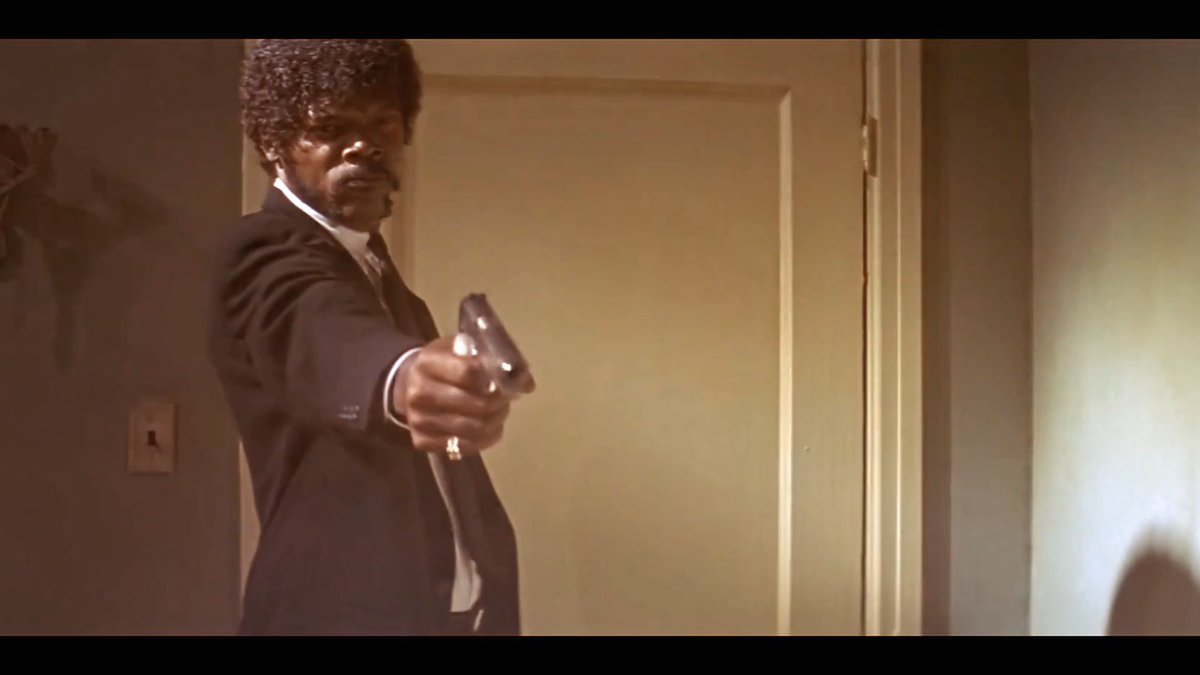
Samuel L. Jackson explains how he landed the role of Jules in Pulp Fiction, and what it was like seeing the film for the first time on the big screen: “Pulp Fiction and I came together in a very strange kind of way. I remember auditioning for Quentin for Reservoir Dogs in New York (for the role of of Detective Jim Holdaway, Mr. Orange’s police contact). And apparently I didn't get that role. But I was at Sundance the year that he screened it for the first time. I was sitting there and I watched that movie - I was awed by it. I mean, there were people running up the aisles when Michael Madsen was cutting the cop's ear off. People were going, "Oh my God, this is horrible!" All these “auteurs” were running out of the theatre. I was like, "This is good. This is happening. This is different." So after the film, I walked up to Quentin and said, "This film's amazing, man. It's great." And he looked at me and said, "Hey! How'd you like the guy who got your part?" And I was amazed that he even remembered who I was - but he remembered me. A year or so later, I got a phone call saying Quentin Tarantino wants to have dinner with you, because he'd seen Jungle Fever and he liked that Gator character. When we had dinner, we were sitting there talking. We started talking about Hong Kong films and cartoons and foreign movies and obscure things that we watched, horror movies. We found out we liked the same kind of stuff. And he told me he was writing this thing, and he was writing this part with me in mind. He was going to send it to me. I went off to do another film. I was in the backwoods of Virginia somewhere doing a film, and the script came. A little plain brown wrapper from Jersey Films. And Jersey's got these gangster images on the logo. And it said, "If you show this script to anybody, two guys named Ernie and Luigi will come and break both of your legs." Whatever. I went, "Yeah, right." So I sat down and read it. Boom. I read this thing. It's like, "Oh my God. This is awesome." And then I said to myself, "Nobody writes a script this good. There's no way that this script is as good as I thought it was." I closed it. I opened it again. I read it immediately. Okay. This is great - If whoever produces this film lets him shoot exactly what I just read, if they stay away from it, they don't try to edit any of this stuff out - this is going to be a great film. It's going to be kind of audience-specific, because I like that kind of stuff. I have friends that I knew would like it. It was a generational kind of film. I never thought it would cross over and do all this stuff. We shot it. We had a great time doing it. And the first time I actually saw the film was at the Cannes Film Festival. That night, it screened, and I was sitting there watching the film. The audience was loving this movie, loving it. About halfway through, I realized there were subtitles at the bottom of it. So I said, "Hey, these people are reading it, and they're getting it. This might be special. This really might be something special." And actually, by the time it was over, there were tears running down my face. I was just so pleased that I was part of that particular film… I never felt that satisfied, and that kind of full about a performance and about being part of something as I was in that particular moment.” Quote comes from an Interview with the American Film Institute 2010

Gangster Cinema Central

84,825 görüntüleme • 21 gün önce

Edward Yang on the impact of watching Aguirre, the Wrath of God (1972): "I found a job in Seattle at a research laboratory that contracted to do classified defense projects in microcomputers. I was among the first generation of designers and applicators for microcomputers and microprocessors. By the time I turned thirty I was pretty well established, with a team of seven or eight guys working on some very interesting projects. Later on I made the association that designing is like writing, and I realized that this background helped me a lot. After a couple of years as an engineer, of course, the routine bored me. One night, I was driving after work in downtown Seattle, and I saw a billboard outside a movie theater with the words, German New Wave, and the title, Aguirre: The Wrath of God. It made me curious, so I went in. I was fortunate. I came out a different person. That two hours just blew me away. It restored my sense of competence that I could be a filmmaker. This is what I thought a film should be. Film school would never teach you to make those kind of shots. That was one of the crucial moments of my life. I had turned thirty, I thought I was getting old, and three more years passed before I got the chance to work on a film project with a friend who asked me to write a script for him. I went back to Taipei, and also visited Hong Kong for the first time, and the film was shot in Japan. I got an offer to write and direct a made-for-TV movie in Taiwan, so I didn't go back to Seattle." — The Engineer of Modern Perplexity: An Interview with Edward Yang by Robert Sklar, published in Cineaste, Vol. 25, No. 3 in 2000

RadiantFilm

93,086 görüntüleme • 8 ay önce

One of the most powerful moments in this episode. At 28, mark pincus finds himself unemployed (fired by John Malone, Bain, and others), with few prospects. He had big dreams, but the world wasn't cooperating. This is how he turned things around. what "I realized I had nowhere else to fall from this because I just felt like I’d made a lot of bad career decisions and I was washed up early and I just sat there in this temple." It was a good place to sit and think because he didn't know anyone and didn't understand anything. "And I just started writing in a notebook about why my life sucked so badly." This book, a journal he's kept every year that he calls the book of life, allows him to take an accurate accounting of his life and change his mindset through reflection. After writing for hours about how bad his life sucked and all the mistakes he'd made, he focused on one small thing. "I just ended on this one thing: that I smoked cigarettes. I didn’t even smoke smoke. I smoked like one or two a day, a pack a night if I was at a bar on weekends, but I hated it ... I didn’t want to do it, but I kept doing it." He felt like his life was out of control, but this was one thing he could control. "I just was like, if I could do one thing to know that I’m making some positive change in my life, I’m going to quit smoking. So on October 19th, 1994, I did a lifetime quit on cigarettes and then every day for that year after that, that I didn’t smoke, it was something I could feel good about. So I was like, okay, I did something for myself today by not smoking." The wins started to stack. I asked him what he was writing about. What was his process? "At that point, I had no structure or process. I was just writing, and there was so much in me." Was it anger? "It was. I did feel angry and frustrated and I was like, I had all these dreams. I wanted to be an entrepreneur from early on and I was an achiever. I thought I was an achiever, but I was not achieving." He's done the same technique every year: "What it’s done for me and I think it could do for a lot of people is just be strategic about your life, like be thoughtful about, I like to say, what would your future self thank you for doing this year and what wouldn’t?" And that question is the one that really matters. What can you do today that your future self will thank you for? What the book of life did was hold him accountable and force him to make tough decisions that his future self would thank him for.

Shane Parrish

22,711 görüntüleme • 1 ay önce

For people coming at me about this I was diagnosed with epilepsy at 19 same year Lehner came to our team. His free story in Athletic helped me to apply his strength to my own life and he became an idol to me as I was in high stress nursing school having full blown seizures in front of classmates. I was scared, upset and embarrassed. I said in my hospital bed “how can I be a nurse if I can’t even help myself?” I cried. It was a rough time. I found his story and reread it that season. He was standing on an NHL stage with his mental battle. It was inspiring to me. Cheesy, but if he could that, I could be strong too. I also really jumped into something that helped me release stress. Talking about hockey, podcasting, radio and going to games. And I was a big Lehner fan. He thanked me for getting his jersey that I received from my grandma as they drove me to my neurologist appointment. (I couldn’t drive as that was taken from me as a new epileptic) When my grandmother passed, who was my best friend, Lehner sent me condolences. It was an uphill climb but I haven’t a seizure in years due to medication and still follow this sport which I love. Lehner was a big idol in one of the roughest parts of my life. I now spread epilepsy awareness and even wrote a paper for work for November epilepsy awareness month for the nurses on proper care for epileptic patients. He taught me to speak up and spread awareness rather than feel shame. This video is me having a seizure streaming hockey. I’m not ashamed of it. Let others see what a seizure looks like. (I do not remember talking when the seizure happened)

Kim M.

30,429 görüntüleme • 3 ay önce