Загрузка видео...

Не удалось загрузить видео

На главную

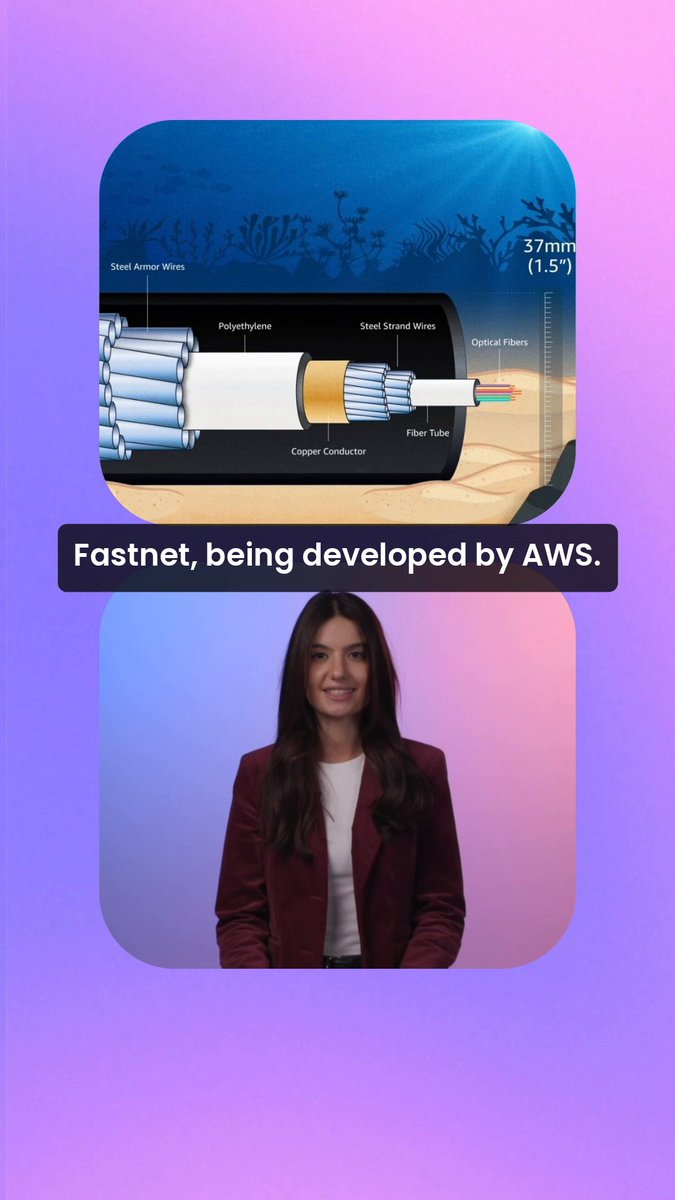
"Subsea cable security is not a future risk. It is a present and accelerating danger. Subsea fiberoptic cable carries roughly 97 percent of global intercontinental data traffic." - Jason Hsu, Senior Fellow, Hudson Institute 📺Hearing on U.S.-China Competition Under the Sea
13,966 просмотров • 1 месяц назад •via X (Twitter)

Комментарии: 0

Нет доступных комментариев

Здесь появятся комментарии из оригинального поста
Похожие видео

Washington is Furious as China Moves Into Latin America ▶️ Watch the full video: 🔹China signals a strategic shift, not a routine update: Beijing’s new policy paper on Latin America and the Caribbean—its first major revision since 2016—frames the region as central to a changing global order, reflecting a more fragmented world and an open U.S.–China rivalry that challenges long-standing U.S. dominance under the Monroe Doctrine. 🔹Latin America positioned as part of the “Global South”: China explicitly casts the region as a political and strategic force in building a multipolar world, emphasizing a “community with a shared future,” opposition to hegemony, and the idea that the old, U.S.-led system is fading. 🔹Political alignment over ideology: Beijing stresses support for the One China principle, especially on Taiwan, while offering mutual backing on sovereignty. It seeks broad engagement not just with governments, but with legislatures, institutions, and political parties across the ideological spectrum, prioritizing long-term influence over ideological conformity. 🔹Economic sovereignty and de-dollarization: Beyond infrastructure and the Belt and Road Initiative, China is pushing reduced reliance on the U.S. dollar through local-currency trade, currency swaps, deeper central bank cooperation, and expanded Chinese financial institutions—laying groundwork for a parallel financial ecosystem. 🔹Expanding security and strategic ties: The roadmap includes deeper defense and security cooperation—military exchanges, training, disaster relief, counter-terrorism, and peacekeeping—framed under China’s Global Security Initiative as an alternative to U.S.-led security frameworks, signaling China’s ambition to be both an economic and security partner in the region.

Lena Petrova

26,281 просмотров • 6 месяцев назад

China has issued a warning over Washington’s abuse of “national security” to persecute Chinese businesses: China firmly opposes the U.S. overstretching the concept of national security and creating discriminatory lists to target Chinese companies. China will do what is necessary to firmly protect their legitimate and lawful rights and interests. The U.S. calling Chinese companies “military-linked” is almost funny. America’s own economy is built on military-civil fusion. Boeing sells civilian aircraft and builds weapons. Microsoft sells cloud services and takes Pentagon contracts. Intel and AMD power consumer devices and defense systems. SpaceX launches satellites and builds military networks. Palantir literally exists to serve intelligence and warfare. But when Alibaba, Baidu, BYD, or Tencent develop advanced technology, suddenly Washington discovers “national security.” Please. Every time the U.S. abuses “national security,” it is not because America is under threat. It is because America is losing market competition. An empire that once sold itself as open, innovative, confident, and fearless has declined into a paranoid gatekeeper, slamming the door on every competitor it can no longer defeat. But if Washington can weaponize “national security” to blacklist Chinese firms, then China can study the homework too. After all, “national security” is not a U.S. patent.

𝘊𝘰𝘳𝘳𝘪𝘯𝘦

21,835 просмотров • 1 месяц назад