Sensitive content

This media may contain sensitive content.

Video wird geladen...

Video konnte nicht geladen werden

Zur Startseite

Surge and Sonic Do Something A Bit Different~ // Sonic Comic Dub Sonic🎙️and Editor: Me! Surge🎙️: HARULUNA | Voice Actress | COMM OPEN SFX: OpenNSFW 🎨: dakkii ☁️ #lewd #SpicySessionsCollab #R34 #rule34 #nsfwtwtًً #sonicthehedgehogfanart #surgethetenrec #Voiceover
0 Kommentare

Keine Kommentare verfügbar

Kommentare vom Original-Post werden hier angezeigt

Ähnliche Videos

#TAEMIN Global Spin Live at the Grammy Museum - Fan Questions segment [FULL] 🎙️Host: What was the first song you heard from Taemin? 💎Audience: [shouts a bunch of songs] 🐣Taemin: What is your guys’ favorite song? 💎Fan: NEMO! My cat is named Nemo! Taemin: Oh my cat is named Ggung! 1:55 🎙️Question 1: Do you get embarrassed listening to your own voice? [from Denise] 🐣Taemin: When I record my sexy songs like Sexuality, Criminal, something something, I have to acting more emotional—sexy vibe right? Sometimes very embarssed [demonstrates with the sexy part of Want] 2:55 🎙️Question 2: Taemin, your choreo is always so unique. What’s your favorite choreo that you’ve ever danced? [from Stasia] 🐣Taemin: Honestly my choreographer is in here, Kasper! His choreo is very cool but very hard and fast and aggressive, energetic, but I love that style. So for example—Advice. Recently my favorite song is Flame of Love. It’s Korean style, the moves are more contemporary style, that’s more interesting to me recently Lastly my favorite song is Criminal. That song is very conceptive and also choreographed by Kasper. 5:00 🎙️Question 3: What would you consider to be your greatest achievement in live? [from Emily] 🐣Taemin: When I was young I go to audition for…to be artist. So that is my very important moment. I did it! I debuted! 5:50 🎙️Question 4: What is your favorite pre-show ritual [from Gloria] 🐣Taemin: I always clean my teeth, it’s refreshing….and then recently I started consuming things that are a little sour like lemon juice. It helps with the bloating a little bit. And they said it helps with anxiety. 🎙️Host: It helps with bloating?? 🐣Taemin: ah yes!… ah…maybe? That is not… please search it please! [lololololol he was scared he was giving unproven medical advice] 7:20 🎙️Question 5: If you could collaborate with any artist globally who would it be and what kind of sound do you want to create together? [from Jihae] 🐣Taemin: Ah that’s what you’re curious about! There’s so many artist that I love so it’s really hard to pick one but maybe Billie Eilish? I love her attitude. She could draw in concentration even when she makes small sounds and in contrast I can do something much more energetic and maybe the contrast could create something very special. 9:00 🎙️Question 6: Do you ever sing or perform for your cats? 🐣Taemin: I put them on my lap and I maneuver them a little bit and they dance a little bit [Taemin demonstrates the song he sings them] 🎙️Host: Do you do it to your music or other people’s music? 🐣Taemin: It’s an improvised song! 🎙️Host: Are you gonna show these videos? 🐣Taemin: I don’t have hands to film it! Lol 10:15 🎙️Question 7: What’s the style of your new album? 🐣Taemin: You know just yesterday I was sorting through all the music that I wrote and it kind of gets categorized into 3 categories! We have songs that are really powerful and energetic, and songs that are really emotional and beautiful, and then the third category is a little different…maybe RnB? and now it’s something I have to think about how to present these all together. #TAEMIN_Grammy_Museum

cindy 🌥️

17,455 Aufrufe • vor 7 Monaten

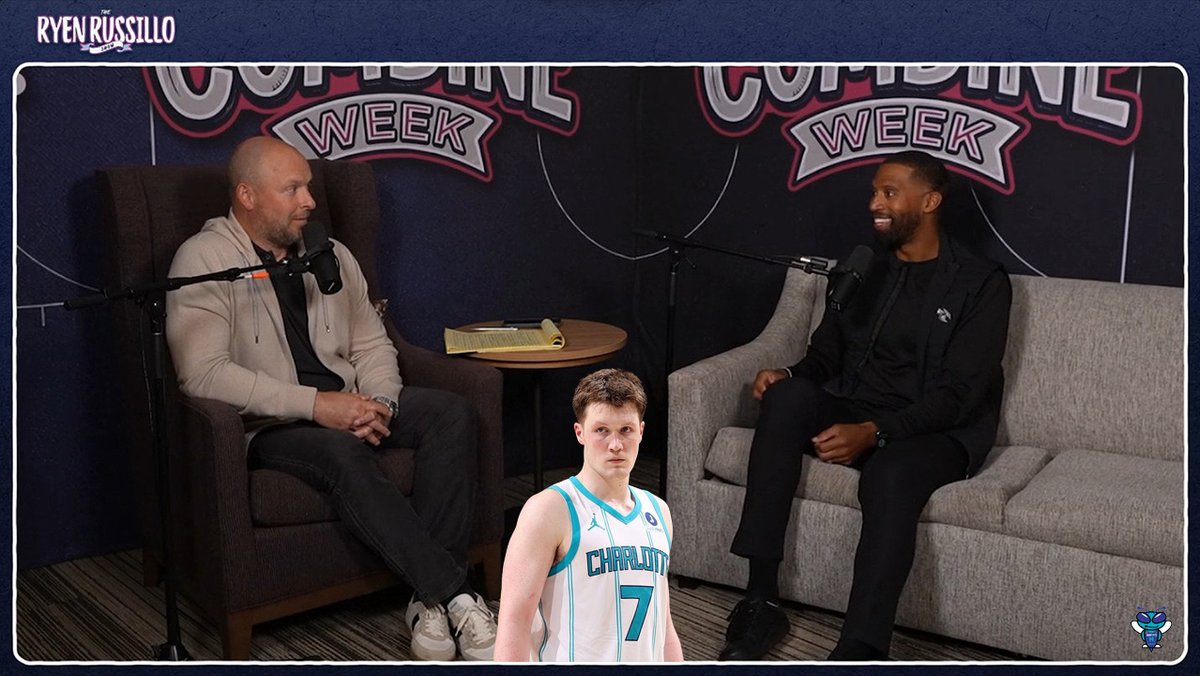
🎙️ Charles Lee: "When (Kon Knueppel) had his draft workout, there was this level of seriousness with him. I walked over at one point to say something to him during a drill and I made a joke, and he looked at me like, 'This isn't funny. I'm here to work. I'm here to get drafted.'" "And I was like, 'I like this guy.' You can coach him hard. You can say what you need to say, and he can get the message without getting too emotional... he's just even-keeled. And I felt that during the season, he just doesn't back down from anybody. He's not afraid of a moment. We saw it a little bit at Duke, where he can be the guy that can play off of (Cooper) Flagg, and then all of a sudden Flagg goes down and he can be the guy, dominate the ball, and play with the ball." "LaMelo (Ball)'s on the court, Brandon (Miller)'s on the court, he can play with them, but then if they get hurt, he can step up and be the guy. He's so effective in a lot of different ways and he picks things up so quickly. How people are guarding him or watching Donovan Mitchell do his little high pickup and get fouled, now Kon's trying to do the high pickup and he gets fouled... it's fun to watch him play the game and how he approaches every day." 🎙️ Russillo: "I couldn't believe the way he saw the game at that age... my favorite part of him is, 'Alright, pick whatever other four you want, he'll figure out a way to fit in with the other four.' Doesn't matter, like any combination of the other four guys, he'll find a way to impact it."

r/CharlotteHornets

132,668 Aufrufe • vor 3 Monaten

A story I’d like to share and hope you “play” the end: Back in the 1960s my dad was the lead singer of a band named “Johnny and the Fires” (he was Johnny). They mostly played in Buffalo and surrounding-area nightclubs and also got some play on local radio. They made a record (78 RPM) of their “hit” song “Stop, Look, and Listen!” It was actually recorded at 24 Northampton Street in Buffalo. I know because it’s printed on the record (you’ll see later). That’s across the street from the Delta Sonic and old post office on Main Street, near the NFTA station. Apparently there was a music studio there?! I have no idea. At my high school graduation party, we had a live band. My brother was the drummer (you may already know I also play the drums). They learned Stop, Look, and Listen and my father went up and sang it with them. My dad died two years later of a heart attack, at 48 years old. In 2011, I moved back to Buffalo to work at WGR. A couple years later, I got a Facebook message from a guy who said he recognized my name (and voice!) and wondered if I was John Capaccio‘s son, because he played saxophone with him in the band Johnny and the Fires. We connected. His name is Sam Guarino and he is in the Buffalo Music Hall of Fame (inducted in 2011)! Amazing. 🤯 Sam and I became friends. He told me about the other band members. One was the drummer, Vito Camilleri, who (at the time) owned Vito’s Cut and Style on Hertel Ave. I went into visit Vito one time to say hello. I’ve also connected recently with one of their guitarists, Salvatore Sciolino, who told me “your dad and me got into a lot of trouble together.” (Not a surprise to me! 😂) Sam had Stop, Look, and Listen converted into a CD. I then recorded it into an MP4. I wanted to share it for all of them and you to hear. Sam has been trying to help me figure out some of the lyrics since they are a little tough to make out. But that’s part of the fun, too! Here it is. I hope you enjoy it as much as I do! 🎙️⏯️

Sal Capaccio 🏈

344,779 Aufrufe • vor 2 Jahren

🚨 Starbucks Socialism, Extra Foam: $30 an Hour and Benefits for Making Coffee This Starbucks Workers United video is clearly supposed to make us more sympathetic to these baristas. It mostly does the opposite. Part of the problem is aesthetic. These baristas will say they do not have to conform to respectability politics, and fair enough. Even as a bit of a metalhead myself, though, if you are making demands at me in a Horrendous metal band tee, I am probably telling you to pound sand. I am sure Starbucks has brutal morning rushes. Every food service job does. Have you ever seen a Taco Bell line after 10 PM? But Starbucks is not Taco Bell or Sonic. Part of the whole appeal of working there has always been that the benefits are weirdly good for part-time food service work. Eligible workers can get health, dental, and vision plans, stock benefits, a 401(k), paid leave, mental-health resources, and even tuition coverage. That is a real package, and it can kick in at roughly 20 hours a week over a few months. I have known plenty of people who treated Starbucks as the perfect benefits job while doing something creative on the side. Keep the package, avoid management, never really treat it like a career ladder. And when your store has a whole stable of those people, scheduling can become miserable. I have heard that complaint from managers so many times. So when the union’s demand is “$30 an hour and benefits,” there is a lot of context people should keep in mind. The whole thing feels less like a serious labor dispute and more like a college activist campaign dressed up as shop-floor militancy.

Stu Smith

40,353 Aufrufe • vor 2 Monaten

Got to post that 2024 yearly recap Some Numbers - 1207 Active Products (+706 EOY '23) - 591 Vaults - 773 CLMs - 3.7 Avg. Daily Product Releases - 11 New Chains Some Highlights - #1 YO (TVL, Users, Chains, etc) - Boosts, there were a lot - Bribes, every week - Points, omg so many - CLM baby - 10 Conferences, 12 Side Events - ARB LTIPP - Curve Zap, finally - Wormhole incentives - Open Cover coverage added - New beQI - Point Accumulating Vaults - New On/Off Ramp integration - Dune Revenue Dashboard - Graffiti Gear - Conic Zap, finally - Yatch Party in Dubai - Layer3 Zap Quest - Merkl Rewards - Pool Together Prize Vaults - ZapV3 Superchain Boosts - PWN Collateral - Linea Galxe Quest - Hummingbot Campaign - Sherlock CLM Contest - Shell vault to vault zap - Linea Surge - Mode Points - CLM Dashboard - Coinbase Smart Wallet Integration - CLM LTIPP - HaloFi Integration - LXP-L Points - OP Incentives - Manta Incentives - rtoken Pools - Kyber Stip Campaign - EtherFi Airdrop Incentives - Beefy Analytics Page - Beefy User Incentives - Hexgate Security Monitoring - ODOS Zap Integration - DAO Boosts - mooBIFI on Base - Bitcoin Incentives - Balancer Zap, finally - $100K Compound Incentives - Insurance Fund Created - Profit Distribution - Silo mooBIFI Market - Sonic Validator - and so much more Some Thank Yous To all our kickass partners: thanks for being such good frens and developers. We've built a crazy amount together this year. Let's do it all over again, except the points stuff, leave that in '24. To all our community, fantastic users, and closet degens. Thanks for defying the system with us and making Beefy the #1 YO. You drive us to be better. We love you. Happy Bull Year, -Beefy

Beefy

23,062 Aufrufe • vor 1 Jahr

250717 #ATEEZ #Hongjoong explains his intro set process and a concert mishap in NY, TOKTOQ pop (voice) live (rough translation): Hi~ I moved today, so I’ve arrived in Nashville now. It’s 2 PM here. I see there are still some Korean fans who haven’t gone to sleep yet. Isn’t it early morning over there? Ah, you’ve woken up. I came on live right after arriving because I figured today would be hectic, and I wanted to talk a little. Hi~ 💬 How is your day today? 🐿️ I’m in Nashville, Music City - one of my dream cities too. Since Nashville is totally a country music city, let’s turn that on. I’m not that tired. Dubstep. (laughs) I talked about it during the show too. Actually, at first, I didn’t plan to make a different intro set for each concert. (Someone knocks at his door.) Yes~~ At first, that wasn’t the plan. Oh? Wait, it didn’t work. Hold on a second. (He goes to open the door.) I had something to take care of. Okay, done. Anyway, yes. So, I didn’t intend to do a different intro set each time, but during the Seoul concert I made two. Originally, I planned to use just those for the Seoul show, so I made three in total. I thought of rotating them a bit, but after trying two of them, I wasn’t satisfied with one, so I kept making more. That’s how I ended up with three. Then I adjusted them for Atlanta, and when I went to New York, I felt like the one I’d prepared might not spread as well in a stadium, so I created a new one just for stadiums. Since it was completely different, the vibe felt different between stadiums and arenas. Then before going to Baltimore, I looked into it a bit and found out Baltimore has its own famous genre called Baltimore Club or Clubhouse. I also learned that Jersey Club kind of evolved from Baltimore Clubhouse. I really love that kind of historical music background, so while studying it, I thought, “Should I try Baltimore Clubhouse?” I think I had that thought in Atlanta. Then after the New York show ended - after send-off - a fan told me they wanted to hear dubstep in Baltimore. Honestly, it’s not that I can’t do it. Since I’m constantly making new sets anyway, I figured I could definitely pull it off. So I thought I might as well try, and I created a set that starts with Baltimore Clubhouse and transitions into dubstep. It was fun. Now that we’re in Nashville, I thought that maybe today or tomorrow, if I get bored, I might come up with some intro that fits Nashville too. But I’m not sure yet. Sometimes I bring back things that got a good reaction before, but for now, I’m making intros that reflect the unique vibe of each city, and that process itself has been a really great experience for me. It’s fun, too. So that’s where I’m at now. It’s not necessarily difficult, but as the number of sets increases, it becomes a bit limiting. Some of you may have noticed, but each member has their own solo song, and I perform a solo song too. During my solo stage, all the sound bypasses the usual PA system and comes directly from my own DJ setup. So if there’s any mistake or issue with my DJ gear, the sound just cuts out completely. It’s a pretty bold risk to take. Since I have full control over the stage in Part 3 of the concert, I was really worried at first. When I talked to the Pro Tools engineer, Eden hyung, and the audio team, there was talk about whether to do hand-sync or not. I said, “If I have to hand-sync, I’d rather not do it.” I didn’t want to do that. Even if there was risk, I wanted to do it properly, because this concert isn’t just about me. They found a way to make it work, and now the concert setup is safe - as long as I don’t mess up. There are no technical issues; it’s just on me to execute correctly. Because there’s no hand-sync at all, sometimes the timing may be a little off. Still, one of my mottos as a singer is: “If I’m going to do it, I’m going to do it right.” So I want to do it properly.

Irene | AhgaTiny

36,697 Aufrufe • vor 1 Jahr

🧵 THREAD: Podcastistan, Dave Smith, and the Crisis of Truth After watching the conversation between Dave on the Dave Rubin , Winston Marshall, and James Lindsay (video below), I had to speak up—not just about one man’s words, but about an entire movement’s collapse into something dangerous. 🎙️ The discussion is sparked by a sharp line from Konstantin Kisin (Triggernometry Podcast), who wrote: “Podcastistan is a place where people scold the mainstream media for failing to live up to their standards—while having none of their own.” That’s not just a quip. That’s a warning. This all centers around the recent debate between Douglas Murray and Dave Smith on The Joe Rogan Experience—a debate that revealed more than either of them may have intended. Let me be clear: 🔹 I’d never heard of Dave Smith until Joe Rogan Podcast News featured him. 🔹 I listened with an open mind. 🔹 I gave his views a fair hearing. But as I listened, something felt off. So I applied the Boolean-style truth-testing framework promoted by Dr. Gad Saad —a method rooted in: ✅ Falsifiability ✅ Logical consistency ✅ Empirical evidence ✅ Contextual coherence And the result? 👉 90% of Dave Smith’s arguments fell apart. They were emotionally persuasive—but factually hollow. No citations. No rigor. No truth anchors. Just a rebellious tone masquerading as wisdom. That’s when it hit me: Dave Smith isn’t challenging the establishment. He’s imitating it, wearing the costume of an outsider while pushing unverifiable narratives—no different from corporate media reading off AP wire scripts. In contrast, Douglas Murray came armed with facts, documentation, and a history of due diligence—a point passionately emphasized by James Lindsay in the Rubin interview. “It’s not about expertise—it’s about whether due diligence was done.” – James Lindsay That single phrase reveals the gap. We are now entering an era where truth is tribal and narrative is king. And those who once accused the media of corruption are repeating the same sins—without the excuse of institutional pressure. This is the Postmodern Condition 2.0—and Podcastistan is its capital. It pretends to seek truth. In reality, it replaces evidence with energy, facts with flair. And the result? A generation that distrusts everything except what flatters their worldview. But truth doesn’t belong to the Left or the Right. It belongs to those willing to do the work—to vet, to cite, to challenge, and to think critically, no matter where it leads. I stand with Douglas Murray, James Lindsay, Dr. Gad Saad, and Winston Marshall—those who still believe truth is not subjective, but sacred. And I thank Dave Rubin for giving them the platform to speak this truth. 📽️ Full clip below. Let’s raise the standard again.

Francois Leclerc

70,092 Aufrufe • vor 1 Jahr

Just in $AMD Anush "Speed is the moat"|ROCm🎙️ In the race to define the future of AI, what's the one advantage that truly lasts? It's not proprietary tech, argues Anush Elangovan Elangovan, VP of AI Software at AMD , but the sustainable speed of innovation. He explains why AMD is rejecting the "walled garden" model for its open source ROCm stack, betting that an open community flywheel is the key to victory. Listen to understand how this open strategy is designed to out-innovate closed systems by empowering developers to solve everything from frontier-model challenges to the mundane, everyday problems that define the "last mile" of AI. AMD ROCm Software: Part 1 Transcript [00:00:00] Andrew Zigler: Joining me is Anush Elangovan, VP of AI software at AMD. And when people talk about AI compute, the conversation often stops at hardware specs, but it's more than just physical chips that win the game. It's also the software ecosystems supporting them. [00:00:18] Andrew Zigler: The prevailing strategy in the industry has been to build something like a walled garden. You know, something closed, proprietary locks, developers in. But AMD is betting on an entirely different play, open source acceleration, and with rock, their open source AI software stack. AMD is building not just hardware parity, but an innovation flywheel that's powered by the community with interoperability and the freedom to scale without all of that pesky lockin. [00:00:48] Andrew Zigler: And in this world, speed is your moat and how fast you can innovate while your platform remains open, flexible, and standardize across all of its applications. That's what we're gonna explore [00:01:00] today. So Anush, I'm really excited to have you here. Welcome to Dev Interrupted. [00:01:04] Anush Elangovan: Thanks for having me. Uh, super excited to chat about it. [00:01:07] Andrew Zigler: Amazing. Well, let's go ahead and dive right in with kind of what I laid it out with in the beginning, the idea of the moat and it being about speed. I wanna unpack that a bit because that came from you when you and I first spoke. And I, and I want to know, you know, how do you define speed inside of AMD beyond just things like hardware, benchmarks. [00:01:27] Anush Elangovan: Yeah, that's a very good question. So when we typically talk about speed, everyone's like, Hey, hardware benchmark specs, right? Like, uh, memory bandwidth or, or flops. And that is one important part of it, uh, AMD does very well. With that, we do have, a, a very good history of executing on that axis. [00:01:47] Anush Elangovan: But when I say speed is the moat, it is about, uh, how we prepare, how we build the muscle to run the race for a long time and run it fast. And it is [00:02:00] not about a single point in time that you've, you've beat some you know, benchmark and, and you declare victory. It's about building the ability to consistently develop and deliver. [00:02:13] Anush Elangovan: Both hardware and software innovation at scale and do it fast, right? Like, you know, we we're increasingly getting to a point where models come out and they're, uh, you know, a year or two ago it was like, Hey, they work on AMD on day zero, which is great, but now they are performing on AMD the day it releases, right? [00:02:32] Anush Elangovan: So, what does it take to Prefetch where the industry is going? Be prepared to intercept. At that point is what you know, I, I refer to as you know, the, the speed factor in, in creating this mode, right? And the mode is just shed all things that hold you back and run as fast as you can. [00:02:53] Anush Elangovan: Uh, because the pace of innovation that is, uh, being seen in, in AI [00:03:00] industries is just. Amazing. Right? And it's like, it's transformational at at how you generate electricity. It's transformational as at how you build data centers. It's transformational at how you deploy compute, networking. It's transformational at what kind of use cases you, you know, uh, use AI for. [00:03:17] Anush Elangovan: Uh, and for that, you need to be prepared to, see what comes tomorrow and be prepared to run the race tomorrow. [00:03:23] Andrew Zigler: Yeah, it's a really great perspective because it highlights that it's not just like a checkpoint that you run through. I like how you called out, like it's not just hitting that benchmark or being the best in class at that moment, in that snapshot, it's about having a. The throughput and about having that dedication to the idea and continuing to deliver on it. [00:03:43] Andrew Zigler: It's not just crossing the threshold, but it's also being the engine. And that's what, that's what protects a business. That is the moat, because the moat is that innovation layer, the faster and more, uh, future forward. That you can work and think, [00:04:00] you know, the better. Uh, we, we talk a lot about like future forward work styles. [00:04:04] Andrew Zigler: Like what are the things I could be doing right now today that are gonna be like, way more useful tomorrow? Let, let's abandon those, workflows that are older and that kind of like, that translates into. An advantage when you work that way. You know, what kind of things have you learned working with, uh, like across all spectrums of people who would use ROCm, right? [00:04:23] Andrew Zigler: You have like the developers, but then you also have the enterprises and you have this large span of adoptees, right? So what is the, what does that look like that you learn? [00:04:32] Anush Elangovan: Yeah, so, so the way I look at it is there are gonna be pockets of different, uh, you know, cadences, right? Like, so people who are deploying in enterprises, for example, right? The validation and how long it takes for them to deploy an LLM that's secure. It's, with guardrails, et cetera, maybe longer. [00:04:52] Anush Elangovan: but you still have to go through the process and you have to be prepared to like, walk that walk to deploy an enterprises. That doesn't mean it's [00:05:00] not fast, that's as fast as you can do for that industry, right? And if you are deploying AI in healthcare, right, it's, it's got its own, uh, cycle. [00:05:07] Anush Elangovan: but in each one of these, you want to see how, like, go down to the essence of what is it that you actually have to do. And, you know, I, I, I like how you framed it. It's like it's, you shed your prior assumptions of how things are done, right. And, and you kind of build up from a, uh, first principles, uh, approach to say, this is how I could use AI to unlock, whatever I'm doing. [00:05:33] Anush Elangovan: And, and, some of it, you know, it's good to really step back and look at. Just question every part of it, right? Like right now you're getting chat GPT and, Gemini competing for like, math, olympiads and, and, uh, college, uh, reasoning, uh, tests. Right? And, and those are like that, that is amazing and increasingly like complex tasks that they're trying to do. [00:05:58] Anush Elangovan: But there may also be like. [00:06:00] More mundane things that AI could, could get applied to. Right? And, and so when we think about shedding old ways, you wanna shed it not just in like the tip of the spear. It's like, you know, I'm gonna see what's the frontier model. It's also, it could be something as simple as. [00:06:18] Anush Elangovan: How do you choose a, a movie, uh, you know, like a recommendation system, right? Or, or, uh, an automated, uh, flight, uh, rebooking system. So the moment, you know, your flight is late, uh, right now it's a notification, right? It's like, oh, you got a text message saying your flight's late. And I got that like three times this week. [00:06:38] Anush Elangovan: But anyway, uh, and, and, and, and, I was just like, okay, so if I were to rethink this. All this MCPs that we have that should be hooked up into an MCP that says, your flight's delayed. Here are your options. If you want, you know, these are the paid options. Yeah. Here are the free options. This will get you back into your you know, Toronto airport [00:07:00] tonight. [00:07:00] Anush Elangovan: Or if you stay, here's a hotel plus this, plus this, plus. It's just like, go ahead is all I should say. Versus now I'm like, okay, can someone, you know, can I call a travel agent? Can I do this? Can I go online and log into And you know, so we gotta fundamentally rethink even those like small, nuances of, things that we do that can be automated out and AI is really, really good at doing something like this, right? Maybe I just explained an AI startup idea right now. Somebody should just start that. [00:07:29] Andrew Zigler: I think you did. Yeah, you definitely did. Someone, one of our listeners is definitely going to lift that off of you. I, I, I, you know, I hate being on the receiving end of those. You feel a little helpless and then you have to like, follow the whole flow. So I know what you mean. Like I, I like how you called out that the build and this like. [00:07:45] Andrew Zigler: Where speed is your moat and the innovation layer is protecting you, is what makes you better than your competitors. How you scale that and you bring that to market. So by understanding the problems that you're solving, uh, throwing away those older assumptions, but also [00:08:00] recognizing that like. We're building every single day, new things and new ways of using stuff that we're still figuring out the implications of. [00:08:08] Andrew Zigler: And so when you have a lot of velocity and you're introducing a lot of new ideas, and maybe you have that workflow now that automatically rebook your flight off of your late flight text message, and uh, I know I would certainly use it, but you know, what kind of philosophies guide the way that y'all think about building this ecosystem to manage that stability while letting folks. [00:08:29] Andrew Zigler: Play with the speed and the assumptions and the airplane re bookings. [00:08:34] Anush Elangovan: so, so I think, you know, we need to peel one layer down, right? and the philosophy is, Hey, we, we just discovered electricity, right? And you know what we're gonna do? We are gonna make motors, uh, or dynamos, right? Like engines. Uh, sure. We don't know if it's gonna be a Ferrari that you're gonna make, or it's a a a a dump truck. [00:08:57] Anush Elangovan: That's good for doing this. But let's [00:09:00] let, which is also required, right? You need a dump truck. You need a garbage truck. And, [00:09:04] Andrew Zigler: Yeah. You need the [00:09:04] Anush Elangovan: course you need, uh, a Ferrari for a midlife crisis, right? So, [00:09:09] Andrew Zigler: precisely. [00:09:10] Anush Elangovan: But, but my, uh, point is what do we build next? And, uh, and this is what I meant by like, okay, let's, let's take those baby steps to build the. [00:09:20] Anush Elangovan: Infrastructure that's required that we know we'll have to use, right? So, so if I just discovered electricity, okay, great. Now one, how do I save this electricity and how do I use it? So there's battery technology, so you need to do something like that, right? Like so. But then you also want to make it into an actionable thing. [00:09:37] Anush Elangovan: You want to make it for like automobiles, or you wanna use it for, you know, powering, uh, entire cities. So it is that transformational. So, uh, AI is that transformational. So, if you distill down, it'll, it'll come down to how do we think about, what we can do with this this fundamental technology that, We may not be aware of what it [00:10:00] is gonna unlock next, but at least you know the next step is clear, right? It's like a dense fog, you know, it's gonna be like, it, it's the right path. You see the light, but it's kind of like out there and, and the steps you're taking are concrete and you're like, okay, this is good. [00:10:16] Anush Elangovan: I, this is better than where I was or where we were. So we are moving forward. So you can build with the. Intuition from what you see in the short term and a tactical view, but towards what you think the future is gonna be. [00:10:28] Andrew Zigler: Right. You almost like we're all in this like fog of war, right? And like you said, you're reaching out and you're trying to step through it. You could think of it too, as like you're in the dark and your hands are up in front of you and you know that. You're, you're not gonna run your face into a wall because your hands are out in front of you, but you're not gonna maybe do much better than that. [00:10:45] Andrew Zigler: So that's kind of like, I think the eco, the, the industry, the world that we find ourselves in, uh, and we all have to, then this becomes the power of an ecosystem, of a group of people working together to create that layer of, [00:11:00] uh, of establishing the [00:11:01] Anush Elangovan: exactly. And I, I, I just, instead of, you know, saying fog of war I describe it as like, you're in this. Beautiful valley with like a morning, uh, fog that's in. You can smell the flowers. You, you hear the birds. You are like, okay, it's, we are in like, uh, utopian paradise and yes, I just need to like, continue the walk, right? [00:11:24] Anush Elangovan: and then move forward with that, conviction that you're in the right spot. [00:11:27] Andrew Zigler: Yeah. So let's talk about that ecosystem world. This nice, I love how you describe it, this grassy side of a hill in the morning that's covered in some mist and maybe we can't see 30 feet in one direction, but it sure is a beautiful hill and it smells nice. And so we're all here. And why is, in that world, why is. [00:11:44] Andrew Zigler: You know, open source, their strategic advantage that y'all are going for in the AI hardware market. And, and then how does like ROCm turn that into wins for people within that ecosystem? [00:11:56] Anush Elangovan: you know, the, the way we look at it is this, is kind of like how I view [00:12:00] AI and the ecosystem, right? But, but it is for everyone to enjoy. Uh, and so we do want to make sure that. You know, it is, uh, beneficial for everyone. [00:12:09] Anush Elangovan: The ecosystem can come in and, and innovate. It's an open innovation engine. and uh, it is very different from, you know, having a walled garden with, Hey, only I know how to do this and I'm gonna do it and throw it over the fence and you can use it or keep walking, right? So we'd like to be good citizens that way, but also. [00:12:30] Anush Elangovan: Uh, it is self-fulfilling in a way, right? Like it, the, the pace at which we innovate with open source is unmatched. Like, you know, our serving engines are like VLLM and, and sg l. Those things, uh, those frameworks are like super, super aggressive in terms of how fast they come out with features and how fast they can you know, get performant models out. [00:12:52] Anush Elangovan: And that compared with what, uh, you'd get from, you know, the likes of like T-R-T-L-L-M or something is always lagging, right? Because you [00:13:00] just can't keep up with you know, 200 commits a week just on one particular model to get that model really performant [00:13:06] Andrew Zigler: And, and, and in that world where, you know, everyone can enjoy the winds of this, what kind of customer stories or innovation stories have really stood out to you and excite you about building and creating this place for developers? [00:13:19] Anush Elangovan: Yeah. So I think the parts that are super exciting for me are when when we get to see a customer that is first skeptical. Then they start a little like, okay, fine, we'll give you a chance. Uh, we do a simple, uh, POC and then they're like, huh, this seems to work. Yeah, we told you it works. [00:13:42] Anush Elangovan: You don't have to change one line of code. Really? Yes, no need to change one line of code. Okay, let's try a production workload. So then they try it. Oh, you're more performant than the competition. Yes. We're more performant than, than the competition. So how much does it cost? And we're like, oh, it's your TCO is better with, uh, [00:14:00] AMD. [00:14:00] Anush Elangovan: So again, they're like, wow, okay, good. So now how do we deploy at scale? And then we go deploy it at scale. And when they give a thumbs up on that and they say, this is good, right? That's when you know, you, you see it go full circle from like, oh, we, we've never heard about AMD to like actually deploy to tens of thousands of GPUs In the order of a few months, right? It, it, it really is fascinating to see and very exciting and invigorating to [00:14:28] Andrew Zigler: Yeah. At like a great exposure to a lot of interesting problems. And, and then people using the infrastructure, the, the technology available to solve those problems. Really specific problems by the way, that's often why they're bringing their data and AI to it, uh, is because it is really specific and important for them. [00:14:45] Andrew Zigler: And there's a, a lot I think that other engineering orgs can learn and even emulate from AMD's success and, and having this open source ecosystem and it causing this acceleration within. You [00:15:00] know, uh, customers and enterprises that use and adopt the tools and, and, and that creates an advantage. And that goes back to why we're talking and like the real thesis of our conversation today. [00:15:10] Andrew Zigler: So how do you think engineering leaders that are listening to this and obviously tapping into this great success AMD has from an open source flywheel, how do you think other, other folks building in the same space can foster that open, first, that open source oriented culture in order to, you know, accelerate their innovation goals? [00:15:29] Anush Elangovan: Yeah, that's a very good question. So the startup that um, was acquired by AMD we, we built, I mean, we started off doing iot stuff and you know, smart ring and all that, right? But in the, the end of like, uh, and not the end, the last six years of the company was building ML compilers. [00:15:47] Anush Elangovan: And ml, ML compilers are like super, uh, complicated, sophisticated, advanced algorithms, dah, dah, dah. but it was all open source, right? So our VCs were like, wait, what do you mean your core [00:16:00] IP is open source? And um, the speed is the moat applied even then, right? It was just like, yes, if you have an idea that. [00:16:08] Anush Elangovan: Because someone saw this idea that you are, they're gonna be able to catch up, then you probably have the wrong idea anyway. But if they are, you know, you execute and they're gonna catch up, that you should assume they're gonna catch up. Right? So you gotta move forward. So keeping it open source is super important. [00:16:25] Anush Elangovan: But also to your question on like, you know, the learnings from an AMD standpoint, right? If there are, hard problems, I'd say dig in and work through it, right? Like there's no way but through it, right? That should be the simple mentality. And more, uh, frequently than not. you'll see that you'll just make it through in a, in, in good form. [00:16:52] Anush Elangovan: But if you doubt it and you're like, oh, I don't know if I should commit, if I'm, I, you know, what should just commit to do the right thing [00:17:00] every step, right? Every step, and just keep taking one step in front of the other. And in no time you'll see that you'll be running. Right. And, and yes, the first few steps will be like, yeah, everyone's complaining about your software quality. [00:17:15] Anush Elangovan: Everyone's complaining about this and that, and it doesn't work. And, and a few steps in, you know, you get, you get the hang of all the complaints that are coming in. You get the feedback loop. You're like, okay, what, what are you prioritizing again? One step in front of the other, right? You just keep knocking that out and then you get to a point where you're, it just becomes second nature, right? To do the, to do the right thing. And, and then yes, if someone gives you two options, you'll be like, fine. This is, uh, you know, there's always the resource trade off. There's always a human capital trade off, but what's the right thing to do? of course, I, I'm pragmatic about what we choose, but, but if the right thing for your long-term success is dig in, go first, principles, make it [00:18:00] happen. [00:18:00] Anush Elangovan: Well. Then just go for that. There's, there is no shortcut to [00:18:04] Andrew Zigler: acknowledging, you know, how it aligns with your mission, your core company goals, and what you're looking to achieve. And, and I, I love how you rightfully called out that in the open source world and you know, you have your technology that you've built, what you think is your moat upon, right? [00:18:22] Andrew Zigler: It's your code and, and to open source that, or to just make it where anyone could peer in is, you know. Scary in one regard, but two, it just kind of feels like you're handing away your throne room in some kind of sense, a very direct feeling sense. But the ultimately, you were really right to call out, and this is something I think about all the time, that the real power there is still the speed This the speed. [00:18:42] Andrew Zigler: That was the moat at the beginning of our conversation. It's the speed in combination with your. Very specific domain understanding of what you're building and what you're creating, and your new role as the steward of that world and how people plug into it, which [00:19:00] has frankly, a lot more influence and power than lording over a closed. [00:19:04] Andrew Zigler: You know, repository or an ecosystem, and like you said, like throwing things over the wall. Sure. There, there might be people always on the other side of that wall, but you're not gonna have a great connection with them. You're not gonna be able to really clearly understand them. I, I like your metaphor of the side of the field of the mountain a lot more. [00:19:23] Andrew Zigler: But, but in the, in this world, you know, where. That speed is, is the power and, and open source is just one way that you can harness that speed to get really far ahead and to innovate. , There's other parts of this equation that you can be experimenting with too, and I'd love to pick your brain about them as a software leader and, and, and one of them is about looking forward and kind of understanding that future that we're all building towards and beyond today's models and hardware. [00:19:48] Andrew Zigler: You know, what do you see as the next major bottleneck or opportunity in the AI compute space? As, as you know, enterprises and folks start to get a little more mature about what's available to [00:20:00] them. [00:20:00] Anush Elangovan: Yeah, I think, the bottleneck and opportunity is, uh, what I'd call, call walking the last mile of ai. Right. Uh, and like I I, I gave you an example, uh, previously, but, but it's similar to that. It's like there are cases where Humans have so many, uh, things to do in your day. You know, like the, if we sit down and actually had a customer focus like, okay, these customers lives, I'm gonna save four hours of this customer's life. And if you actually sit down and look at all of that, it'll be. Easily automatable, easily you know, uh, applicable, uh, for ai, right? [00:20:39] Anush Elangovan: Like, but then making it happen is gonna take a little bit, right? It's like maybe it's, uh, paying your utility bill, right? Or something like that, right? Or, or, your healthcare explanation of benefits. Uh, like, I'm sure you get an explanation of benefits, and I'm like, I, I don't even know what that thing is. [00:20:55] Anush Elangovan: It's just like EOB and like. [00:20:57] Andrew Zigler: it's a big, a big old PDF. Yeah, [00:21:00] exactly. [00:21:01] Anush Elangovan: Like, like, I'm like great straight to the, uh, shredder, right? And but that could be, you know, automated with the ai, right? It, it, it'd be like, Hey, the summary of this thing is you went and visited this day. Everything is okay. Everything is paid for, so don't worry, it's not a bill. [00:21:17] Anush Elangovan: That again, the same, uh, thing, but the sense of what that information overload is could be. Digested by ai, uh, accumulated over time and retrieved when you need it. Like, I don't, I actually don't even need to know this EOB right now, unless of course, whenever I need to know it, that maybe, you know, like for some benefits I need to figure out what do, what did I do over the past year and how do I apply it? Source:

Mike

14,195 Aufrufe • vor 8 Monaten

Like seemingly everyone on this app I have plenty of opinions about Twitter > X and figure now is a good time to open up a bit about my experience at the company. I tweeted for years into the void for the love of it like many of you, but after selling my startup to Twitter in 2020 I finally got to see it from the inside. Up close it was both amazing and terrible, like so many other companies and things in life. As someone with a maniacal sense of urgency built into me, Twitter often felt siloed and bureaucratic. Dumb power plays, reorgs and team name changes for the sake of someone’s ego were distractions that occurred too regularly. You couldn’t just be a builder — you also needed to be a politician. I was shocked by how old and bespoke the infrastructure was, but there was little will to think beyond quarterly earnings calls because we were all beholden to the masters of mDAU and revenue growth as a public company. It often felt like things were held together with duct tape and glue, and that many people had just accepted that a small product change could take months or quarters to build. Management had become bloated to accommodate career growth and the company culture felt too soft and entitled for my own taste. Healthy debate and criticism was replaced by a default refrain of “no, that can’t be done” or “another team owns that so don’t touch it”. Teams could spend months building a feature and then some last-minute kerfuffle meant it’d get killed for being too risky. Just talking directly to customers could turn into a turf war and create deadlocks between functions. I recall one such episode where a teammate spent a month trying to get clearance to reach out to some creators. He went through 3 layers of management and 6 different functional teams. In the end 4 executives were involved in the approval. It was insanity, and unfortunately I saw several top performers get burnt out and demoralized after exhausting experiences like that. Most people were good at their jobs but it was nearly impossible to fire poor performers — instead they got shuffled around to other teams because few managers had the will or resources to figure out how to get them out. A high performance culture pulls everyone up, but the opposite weighs everyone down. Twitter often felt like a place that kept squandering its own potential, which was sad and frustrating to see. The person who was best at cutting through the BS and inspiring a vision during my tenure was Kayvon Beykpour, but he wasn’t fully empowered to run the company since he wasn’t the CEO. Despite those real issues, I was lucky enough to work with some of the most talented people in the business at Twitter in product, design, engineering, research, legal, BD, trust & safety, marketing, PR and more. Often it was a small cross-functional team of intrinsically motivated people who made the biggest impact by challenging some core assumption. Those teams were very fun to be on but they felt like the exception rather than the rule. The months of waiting for the deal to close in 2022 were particularly slow and painful; it felt like leadership hid behind lawyers and legal language as all answers about the company’s future notoriously included the phrase “fiduciary duty”. Colleagues openly talked about how Twitter was being sold because leadership didn’t have conviction in their own plan or ability to fix longstanding problems. Although I didn’t know much about Elon I was cautiously optimistic – I saw him as the guy who built incredible and enduring companies like Tesla and SpaceX, so perhaps his private ownership could shake things up and breathe new life into the company. My take on what’s happened since then is full of lived nuance. When people ask why I stayed it’s easy to answer: optimism, curiosity, personal growth and money. From the beginning I saw that some changes Elon was going to make were smart and others were stupid, but when I’m on a team I uphold the philosophy of “praise in public and criticize in private”. I was far from a silent wallflower. I shared my opinions openly and pushed back often, both before and after the acquisition. I made peace with the fact that I didn’t have psychological safety at Twitter 2.0 and that meant I could be fired at any moment, and for no reason at all. I watched it happen repeatedly and saw how negatively it impacted team morale. Although I couldn’t change the situation I did my best to shine a light on folks who were doing important work while being an emotionally supportive leader for those who were struggling to adapt to the more brutalist and hardcore culture. In person Elon is oddly charming and he’s genuinely funny. He also has personality quirks like telling the same stories and jokes over and over. The challenge is his personality and demeanor can turn on a dime going from excited to angry. Since it was hard to read what mood he might be in and what his reaction would be to any given thing, people quickly became afraid of being called into meetings or having to share negative news with him. At times it felt like the inner circle was too zealous and fanatical in their unwavering support of everything he said. When individuals encouraged me to be careful about what I said I politely thanked them and said I would not be taking their advice. I had no interest in adding to a culture of fear or walking on eggshells around Elon. Either he would respect me for being real or he could fire me. Either outcome was okay. I quickly learned that product and business decisions were nearly always the result of him following his gut instinct, and he didn’t seem compelled to seek out or rely on a lot of data or expertise to inform it. That was particularly frustrating for me since I believed I had useful institutional knowledge that could help him make better decisions. Instead he'd poll Twitter, ask a friend, or even ask his biographer for product advice. At times it seemed he trusted random feedback more than the people in the room who spent their lives dedicated to tackling the problem at hand. I never figured out why and remain puzzled by it. I don’t think things had to be as difficult or dramatic as they turned out to be but I can’t say I’d bet against Elon or count him out. He’s smart and has enough money to make a lot of mistakes and then course correct when things go awry. As the largest shareholder he can tank the value in the short-term, but eventually he’ll need things to turn around. His focus on speed is incredible and he’s obviously not afraid of blowing things up, but now the real measure will be how it get reconstructed and if enough people want the new everything app he is building. I learned a ton from watching Elon up close – the good, the bad and the ugly. His boldness, passion and storytelling is inspiring, but his lack of process and empathy is painful. Elon has an exceptional talent for tackling hard physics-based problems but products that facilitate human connection and communication require a different type of social-emotional intelligence. Social networks are hard to kill but they’re not immune from death spirals. Only time will tell what the outcome will be but I hope X finds its footing because competition is good for consumers. In the meantime, I have a lot of empathy for the employees who are working tirelessly behind the scenes, the advertisers who want a stable platform to sell their stuff on, and the customers who are experiencing chaotic updates. It’s been a madhouse. Twitter moved at the speed of molasses and suffered from bureaucracy but now X is run by a mercurial leader whose instinct is driven by the unique and undoubtedly weird experience of being the biggest voice on the platform. Many of you know me from the sleeping bag incident where I slept on a conference room floor, so I figure, let’s talk about that too. Going viral was an odd and interesting experience. I was attacked by people on the left and called a billionaire bootlicker, while simultaneously being attacked by people on the right for being a working mom who was demonized as an example of a woman choosing her career over her family. Thankfully I can laugh at myself and I don’t take armchair keyboard ideologues too seriously. Being the main character on the timeline, even for a few minutes, requires a thick skin and a strong sense of self. The real story is pretty simple. I was given a nearly impossible deadline for his first project and as the product lead I would never ask anyone to do anything I wasn’t willing to do myself. So I worked round the clock alongside an amazing team spanning many timezones, and we delivered it on schedule – truly against the odds. It was intense but also fun. Those first few months were wildly crazy but I wanted to be there and I have no regrets. Showing up and giving it your all should, in most cases, be celebrated. Obviously you can’t work at that pace forever but there are moments where bursts are mission critical. I’ve pulled many all-nighters in my career and also when I was a student for something that mattered to me. I don’t regret putting in long hours or being ambitious, and feel proud of how far I’ve come from where I started thanks in part to that type of work ethic. I think of life as a game, and being at Twitter after the acquisition was like playing life at Level 10 on Hard Mode. Since I like taking on difficult challenges I found it interesting and rewarding because I was growing and learning so rapidly. I realize our society today trends toward polarization but when it comes to this app, its owner, and its future, I am neither a fangirl nor a hater — I’m an optimistic pragmatist. This may really irritate the internet but you cannot pigeonhole me into some radical position of either loving or hating every change that’s occurred. I escaped my fundamentalist upbringing and am a free thinker these days. Everyone can be seen as both a hero or a villain, depending on who is telling what angle of the story. Elon doesn’t deserve to be venerated or vilified. He’s a complicated person with an unfathomable amount of financial and geopolitical power which is why humanity needs him to err on the side of goodness, rather than political divisiveness and pettiness. I disagree with many of his decisions and am surprised by his willingness to burn so much down, but with enough money and time, something new & innovative may emerge. I hope it does. Sometimes I get asked about how I felt when I got laid off, and the truth is it was the best gift I’ve ever received. Sure the headlines and punchlines wrote themselves but I was battle hardened by then. I knew that I’d worked in a way where I could walk out with my head held high. I have no bitterness about the Product Management team being dismantled, and it made sense for me to exit as nearly all of the remaining PMs were let go. Going on a sabbatical afterward has been exactly what I needed to decompress and I’m finally feeling rested and relaxed. I’m a creative and a builder, so sooner than later I’ll jump back into a high intensity company but I’m grateful for this season of thinking, reading, traveling and being with people I love. After having time to reflect I believe more than ever that the very best outcomes flow from great leadership that combines the head and the heart. I’d be remiss if I didn’t note that in all of this there is also a cautionary tale for anyone who succeeds at something — which is that the higher you climb, the smaller your world becomes. It’s a strange paradox but the richest and most powerful people are also some of the most isolated. I found myself frequently looking at Elon and seeing a person who seemed quite alone because his time and energy was so purely devoted to work, which is not the model of a life I want to live. Money and fame can create psychological prisons which may worsen mental health conditions. We’ve all seen high profile cases of celebrities who end up with some combination of depression, paranoia, delusions of grandeur, mania and/or erratic behavior. Living in an echo chamber is dangerous and being at the top makes a person even more susceptible to being surrounded by yes people when nearly everyone around you is on the payroll and somehow stands to benefit from being in your orbit. Figuring out how to keep “better angels” around in the form of family, friends, and teammates is critical to staying on the rails and enduring intense ups and downs. Everyone needs to hear hard truths sometimes and if you fire all the people who speak up then the reality distortion field may just turn into a vortex. I was drawn to Twitter because I’m obsessed with the problem of loneliness and connection between people. I find it fascinating & troubling that humans are getting lonelier as we simultaneously create a world that’s both safer and wealthier. I don’t believe that trade-off has to exist, which is why I keep returning to that theme in my personal and professional life. I realize this is too long of a tweet but Twitter was a weird and special place on the internet, and I’m grateful to have played a teeny tiny role in its story and evolution. I’m here for whatever comes next — on this app and in new places. Consumer social is very much alive and at a fascinating juncture, so I’ll be watching and participating and sharing hot takes because I don’t want to, and probably can’t, turn that part of me off. Perhaps X becomes a resounding success. Or it fails epically. Either way, I expect it will continue to be a very entertaining ride. 🫡

Esther Crawford ✨

5,499,296 Aufrufe • vor 3 Jahren

'AVENGERS: DOOMSDAY' new trailer This is 100% A.I but there are some scenes look different. Its different from SDCC though. The SDCC trailer opened with Sue Storm providing some backstory on Victor Von Doom. Before we even get into what she said, this already provides new information for us because, up until this point, we did not know whether or not the Fantastic Four had any history with Doom or even if this Doctor Doom was from their same universe. Of course, we could have inferred based on the long comic book history between the characters, but this confirms it. We do also get to see who Sue is speaking to while delivering this backstory, at least as the trailer presents it. She appears to be speaking to a room full of heroes that includes Magneto, Gambit, Steve Rogers and many other. Sue seems to be explaining to the heroes exactly what they are dealing with, or maybe even already dealt with to some degree. Now, as for what Sue has to say about Doom, her words are both haunting and very informative. Victor was always the smartest guy in every room. He used to be different. He used to be kind, he used to be caring. Everything he loved was taken from him. I knew he was lost, but I did not realize that he was broken." Sue speaks as though she had worked with Victor in the past. We did see an empty seat marked for Latveria, Doom's fictional home country, during a Future Foundation meeting in 'FANTASTIC FOUR: FIRST STEPS' So perhaps Sue had interacted with him frequently on a professional level. The rest of her quote is perhaps the most interesting bit. "Everything he loved was taken from him." It seems as though Doom has already lost something or someone. And based on the first poster for the film, it appears to be a wife and daughter that he has lost. In fact, this trailer even shows Doom staring at the tapestry featured in the poster as Sue says these words. So if Doom seemingly lost his wife and daughter in the past, so much so that Sue knows about it and he has had time to have a tapestry made, could this loss have been cause by an incursion? Perhaps it was some other tragedy. Either way, the trailer goes on to let us know that Doom is not pleased with the fact that he has suffered while these heroes of various universes had gotten to live their lives. After Sue's speech, we see some kind of wreckage where Reed Richards poses a question to Doom. Victor, did you do this? After that question, we get the same shot of Scott Lang embracing his daughter Cassie as well as a new shot of Johnny Storm holding his nephew, Franklin Richards. We also see some more shots of various heroes with their respective children, including Steve Rogers and Thor. Now that we know Doom has lost his own child and he wants to make the heroes pay, these shots seem far more sinister than ever before. Meanwhile, Doom provides the next bit of voiceover as we see the heroes. All of you have lived stolen lives, and now you must give them back. This really does make it seem as though the incursions caused by various counts of time travel shenanigans from the heroes were what caused Doom to lose his family. However, Doom's true objective still remains unclear. He certainly seems to want to simply eliminate all of the heroes, but there is definitely still an angle involving their children. The next shot sees Doom fly in faster than any character we've seen in the MCU to date before hitting a perfect superhero landing. Reed, now enraged, repeats his question. DID YOU DO THIS?! So not only does this trailer confirm that Sue has history with Doom, but it appears Reed does as well. This also gives some credence to the popular theory floating around that Doom will first appear as an ally to the heroes before revealing his true colors later on. Reed seems to have trusted Doom as he lets out this angry question. We then see a similar shot from the first trailer of Thor dropping in to confront Doom. Only this time, we can hear Thor speak to Doom. I swear, you will beg for Hel long before I grant it. Thor if of course referring to the realm of the dead, overseen by his own sister, Hela. You could simply replace the word with the word "death," but this is a bit more powerful. Of course, we know how things go for Thor based on the first trailer though. He attacks with Stormbreaker and Doom easily stops the all powerful axe. This time though, we see him repel Thor, sending him flying before delivering a haunting message. Hel answers to me. Then, Doom raises his hands, and with them arise several damaged Sentinels, the mutant-killing robots from the X-Men universe. This essentially confirms another popular theory that the Sentinels we have seen in previous clips, including the last trailer, are being controlled by Doom. As this threat arises, Doom utters one last message. I am Doom. So to recap, we now know that the Fantastic Four and Doctor Doom have known each other in the past. We know that Doom lost his family, presumably his wife and daughter. It seems clear that at least the Fantastic Four, and perhaps all of the heroes, consider Doom an ally at some point. Doom is, in fact, going to control the Sentinels and use them as his own weapons. And, perhaps the biggest takeaway, Doom is by far the biggest threat the heroes of the MCU have faced.

Blue Minutes

65,941 Aufrufe • vor 25 Tagen

Sipping Coffee with America’s Internet Dad: Scott Adams | Paul Leslie, Write Revolution News You never can tell. Unless you’re Scott Adams. He knew what he would be early on. He put it this way in an interview we did in November 2024: “And so at the age of six, I decided to be a famous cartoonist. Now, so what surprised me was when it didn’t work out right away,” Scott Adams said. Dilbert is a hero But it was his previous jobs at Crocker National Bank and the Pacific Bell phone company that shaped him. The grind and absurdities of corporate life inspired Dilbert, a comic strip where the mundane became brilliantly relatable — and humorous. As Edward M. Eveld wrote in the Kansas City Star, “Dilbert is a hero to thousands.” The mind behind Dilbert Cultural commentator and fitness advocate Wyatt Torosian captures the essence of Scott Adams’ influence: “The mind behind Dilbert has lampooned office life for over three decades with the foresight — like Trump — that the culture of the business world would become synonymous with American life, in all of its absurdities and opportunities. It’s difficult to imagine having coffee in the morning with anyone else.” Countless people got a morning dopamine hit by pairing their morning mug with the funny papers. People saw themselves in Dilbert and coped with their own Pointy-Haired Boss. They still do. New ways of looking at things Scott Adams valued the art of sharing ideas and started connecting with audiences through Periscope. This evolved into Real Coffee with Scott Adams, a daily livestream and podcast going out consistently every day of the year. The topics addressed are numerous and limitless. Along with interesting takes on current events, Adams shows those in the audience that there may be new ways of looking at things. It’s not just about his take, but also how you may ponder things in new ways. Scott challenges us to think differently Rapper, author, and podcaster Zuby told me: “Scott Adams challenges people to question their own beliefs and to see life from different angles. That’s a great thing because we can never have too many critical thinkers in an increasingly complicated and polarized world.” I concur. Scott Adams is a man who looks at the human mind as an incredible tool that is frequently not used to full potential. He understands how human beings can flourish, but also inherent weaknesses and traps. He presents information and ideas unlike other speakers. A classroom in independent thinking As a broadcaster, there’s almost nobody I can compare him to. Well, except for one radio legend. I’ll let Muumuu House author and walking proponent Robert McCready give his take: “Scott Adams fills the gap left by Rush Limbaugh because he tells the audience how the media is manipulating viewers/readers. Adams talks off-mic to his audience of live streamers who send him chats, the way Limbaugh talked off-mic to Snerdly. The show feels like Limbaugh’s. Both shows began in northern California. They predict what a politician will do based on cues, subtle signals, scoops that regular people don’t get. It feels like a miracle that we’ve had either of them in the world.” I happen to feel the same way as Robert. The shows feel related, and both are a classroom in independent thought and legacy media abandonment. ‘This is a man who is willing to share what he thinks and take the heat‘ Most people don’t think of cartoonists as having a big impact on politics and the culture at large. When I think of Scott Adams’ influence, it seems unbelievable. Mark Twain’s “truth is stranger than fiction” quote comes to mind. I was able to ask ghostwriter and Scott Adams collaborator Joshua Lisec about Adams. Listen to what he had to say: “In addition to his one-of-a-kind cultural contributions in the form of entertainment, satire, humor for 40 years, he also is the most influential personal development author of all time, and it’s not even close. Every single self-help book samples, sources, or otherwise steals Scott Adams’ original content from his various books going back into the 1990s, both business, career, and personal life, self-help. There has been no other voice as impactful as his across the generations. And that’s not even to mention the fact that he was the first celebrity to say anything positive about Donald Trump back in 2015. And it cost him, likely, multiple fortunes upon fortunes. This is a man who is willing to share what he thinks and take the heat regardless as he’s done multiple times being ‘canceled’ for it.He’s a legend in his time. We all know him as ‘the internet dad’ and so that makes all of us as his fans sort of internet siblings. He created a global family — not just a set of followers or community — but a global family.He made it okay for good, smart people to say positive things about Donald Trump in public. Donald Trump is not president without Scott Adams. Not the 45th president — not the 47th president. The first person, in my opinion, that the MAGA movement has to thank for MAGA having power is Scott Adams.” Scott ‘changed how America views politics‘ As you may be realizing, Scott Adams didn’t just create Dilbert or master live-streaming—he reshaped how people think about politics, culture, and everything else. He’s resonated with thinkers like Owen Gregorian, a dedicated follower and cohort who posts articles and opinion pieces aligning with Adams’ ideas on persuasion and politics. As Owen Gregorian observes: “Scott changed how America views politics, and even the nature of reality. Time and again, he has framed people and events with messaging that ends up spreading everywhere. His article ‘Clown Genius’ very well may have springboarded Trump into winning his first term as President. His books and livestreams have helped countless people change their lives for the better. America will never fully realize how much Scott Adams influenced and improved our country.” Scott Adams helps make our country great Like so many of his daily listeners, news of Scott’s cancer diagnosis came as a shock. Although it made me sad, my primary feelings quickly shifted to admiration. Scott keeps the show going and as normally as possible. He has that fighting spirit embodied by so many Americans. Getting a personal phone call from President Trump undoubtedly did his heart good — it certainly did mine and so many others. Adams didn’t share all of the conversation. He has too much class for that. I join President Trump, so many Americans and people around the world in my appreciation of Scott Adams. As the smart people in this article expressed, Scott Adams is an American original. How you can fix your own mood — the Scott Adams way People like Megyn Kelly have called Scott Adams a “Trump whisperer,” and applauded him for for being “a frank communicator.” He’s been praised by the very best of them, from Ann Coulter to Monica Crowley. It’s no surprise to his fans when someone like President Trump expresses his clear respect and veneration, because so many people have been personally affected by something that Scott Adams said. For that person who loses weight, or decides to talk to an attractive stranger, or persuades their boss to give them a raise, or even just to stand a bit taller, Scott is somehow more than a star. He’s a friend. He never lectures his viewers and listeners. As he once told Carmine Gallo for “Don’t take my advice, I’m offering information.” Scott Adams has created an incredible body of useful work and entertainment that he continues to add to. Americans, and people around the world, have been changed for the better. Scott Adams finds purpose in making a difference in other’s lives. One moment from our interview sticks with me: “If you’re having a bad day that’s just unfixable, there’s nothing you can do about your own situation, at least today, tomorrow maybe is a new day, but right now you’re just in a funk. I’ll just sit there and say, ‘all right, who can I delight?’ It works every time. If you make somebody’s day and you’re useful and they simply appreciate you, you’re good all day. It’ll turn any day around and that’s just being selfish. That’s just fixing your own mood being useful.” The Presidential Medal of Freedom — an honor befitting Scott Adams With such a legacy that includes humor, self-help, and political influence, it’s no stretch to envision Scott Adams as a candidate for the Presidential Medal of Freedom, an honor befitting a man who continues to redefine how we think, communicate and accomplish. I think it’s possible. But either way, so many of us will get up in the morning and have our mug of coffee. We’ll sip to Scott.

Owen Gregorian

77,061 Aufrufe • vor 1 Jahr

If you want to understand the Joe FlipperHead, Olivia Lamb, Karen Read and Aidan TurtleBoy Kearney chaos; FlipperHead (a guy named Nick from Philly) got confirmation Aidan recorded Karen Read. Then the recordings leaked. Basically, Olivia works for Aidan as a paralegal, now, but Olivia used to be close to Karen in the past (and Olivia and FlipperHead used to be close, as well, on a personal level). FlipperHead, for his part, is loyal to Olivia and Karen but FlipperHead doesn't like Aidan (much like other people close to Karen). Aidan, in turn, seems to be using Olivia to discredit Flipperhead (potentially without Olivia's permission). VIDEO TRANSCRIPT: [Opening remarks on social media and focus] Grant: [Lindsey Gaetani's] been talking about on social media, but let's get to that second. What I wanna start with—let me find the tab—I wanna start with the developments related to Aidan Kearney and Karen Read, okay? So we're gonna jump right into that, and what I have here is the actual discussion. Now, if you go on my X, you will be able to see the entire transcript. I'm gonna try to scroll with you as the video plays. It's a lot, okay? And then we're gonna do part two as well. So eventually, we're gonna hit part two of the transcript. I'm gonna pause, and we're gonna go to the second video. Now, this discussion—the reason why I wanna go over this—is I was listening to it, and I was like, "Wait a minute, I speak this language that they're all talking. I understand sort of the subtext of all of this, but they weren't really talking on the surface." It's a conversation between somebody named Chris, who Aidan Kearney calls a "koala," somebody named Joe Flipperhead—who's actually named Nick from Philadelphia, who was apparently close to a woman named Olivia Lamb, who is gonna come up in this as well. Now, Olivia Lamb did a lot of social media posts about the Karen Read and John O'Keefe trial on her profile on Twitter under Olivia. Now, then Olivia started—in a public announcement—saying that she started working for Aidan Kearney. And what you're gonna hear in this conversation is there's also a woman named—who else? There's a woman who's Australian that Aidan also knows named Lily. She introduces herself in the beginning, and then she's kind of the moderator-mediator. And then there's another woman that pops up in the middle named Erika Walsh. She only speaks two or three times. She's one of Turtle Boy's moderators. She interjects at two random times: one, when someone starts talking about Meredith; and two, when Aidan starts saying how bad the content of the conversation in question—that was allegedly recorded and sent to Karen Read, between Aidan and Karen—is for Karen. And then there's a third unknown voice that pops up at the end, who sounds like—it's a female, she's American. I don't know her voice, but it sounds like she's very close to Joe Flipperhead, this guy Nick. And she uses this phrase about Nick "leaving Olivia's ass" in a way that makes me think maybe this girl is close to Nick, and like, she got close to him after Olivia and Nick separated. Now you might say to yourself, "Oh dear God, why—first of all, Grant, why do you know all this?" These people post a lot; I don't know. Tracking this thing is something I've been doing for a while. So it's not like I went into it because I wanted to know who the hell Joe Flipperhead was, or Olivia Lamb was. They entered into a world that I knew a lot about because they were trying to cover this case. And so inevitably, I just had them on my radar, and when things pop up like this, I just connect the dots. [Background on Olivia Lamb] In terms of Olivia though—so she, I don't know. There was this weird situation, I think, at the end of trial one for Karen Read. So somewhere in—I don't know—late 2024, summer 2024 or so. Weird situation where Olivia kind of then, for a few months, wasn't around as much, or she was, but not as much. And then she came back around for Aidan and said she was working on his team or something. Now, Olivia—I don't think Olivia Lamb's necessarily a bad person. I think whoever she is, and whatever she's doing, is very intelligent. But if you kind of look into that family, her mom is named Christina Lamb, and her mom does boutique consulting for law firms. I think her mom might be a lawyer, but she doesn't really—I think the way that she does consulting is more like tactically how lawyers should think about how a case is presented in the public, et cetera, stuff like that. And you have to tie this into this Elizabeth Dombrowski person out of New York that runs this Good Counsel Legal Services that proclaimed that Jen Altman and whoever else were paralegals for Aidan. You see what I'm saying? And what I think Olivia's role is—I think she just does PR. She does some paralegal work clearly, but I think she's mostly like a PR specialist. But I think why there's so much obfuscation—and I'm giving you all this background, because the conversation you're about to hear makes no sense if you don't know all this background. The context there, I think, is that—I think Olivia is a person. Like, I think she is real. But I think the reason why there's so many smoke and mirrors is that she's a conduit for implausible deniability. In the world of public relations—especially this kind of public relations—is incredibly important. So I think she's like a conduit for more entrenched public relations interests, which—okay, fine. I don't see that as per se evil. I'm a critical theorist. So I study propaganda. So like, if you are doing anything that emerged from Edward Bernays's systemic weaponization of his uncle Sigmund Freud's study of the mass psychology of the mind—if you do any of that—you're inevitably gonna catch my attention. Not because I necessarily per se think it's evil, but because that's my wheelhouse. Like, I reconstruct public relations and then I figure out what's driving that. Okay. So she—Olivia—got on my radar because of that, not necessarily because she's evil. Same, because I never really saw it. Now maybe some of the witnesses in the trial would think differently, but that's not my role here. I am like—I'm an objective observer. And um, Olivia was never really cruel. Like she just does PR. So I wouldn't necessarily say like everything she did was like right. But if you look at her style, it's not polemical. It's not—it's mostly analytical. Okay. So that's not an aphoristic or manipulative or evil person really. That's a PR specialist. And this guy, Nick—very similar, Joe Flipperhead. Okay. If you look at his posts—like, I wouldn't exactly say he's a cruel human being, you know, like he memes and stuff. Okay. He's kind of like Dave Cullinane a little bit, but he's just like a human. And you can hear it in this conversation. Like Joe is the one who's really holding Aidan accountable. Joe Flipperhead—whose name is Nick—he's from Philly. And um, I noticed 'cause I watched the stream of them one time—I don't know—he seems all right. I don't have anything against him or Olivia. In fact, I think they did a damn good job, at least Joe. Because what you'll also see here is there's another subtext. What this conversation is about is an allegation that Aidan Kearney sent a recorded conversation to Karen Read—a conversation with her—and then someone—nobody knows who—sent the recording to Karen's lawyers, David Yannetti and Alan Jackson. Now, what's weird about this is that there's also—and I don't like, whatever, I guess it is what it is—but the host, one of the hosts, Chris, this Australian guy—he might be a New Zealander, I don't know. But anyway, he starts saying directly to Aidan, "Listen Aidan, you went to lunch with Meredith—this Turtle Boy's former girlfriend—but her name is Meredith O'Neill (Meredith O). She's a person; she has an existence outside of Aidan Kearney and whether—a lot of people, I think, rightfully so, will take issue with some of the things Meredith has posted. But that's for her soul to deal with. She has to reckon with it, reflect on it, whatever the fuck, okay? That's separate from; she exists outside of the fact that she used to date Aidan Kearney." And I just wanna make that as a blanket point that like Aidan Kearney does not own someone's soul because they had some connection to him at any point in time. These people are independent people who have their own lives. So Meredith O'Neill is her name. And Meredith—like, clearly something happened between Aidan and Meredith because over the past few weeks—like, first of all, there's some more subtext to this, which is Aidan's paralegal team before Olivia Lamb came on was Courtney Healy and this woman named Tina Murray. Tina Murray —I didn't even know THE NAME until two weeks ago—but I had seen her before because she had silver hair when she was in court one time. I had no idea who it was, but she was sitting next to Courtney Healy. Now, way back when Aidan Kearney was incarcerated in late 2023, early 2024—apparently these two women, Courtney Healy and Tina Murray, were very close to Aidan Kearney. Someone had his logins, allegedly. They were helping like post for him while he was in jail, et cetera. Now, there's time back to that as well. Jen Altman is a key figure in all of this. And the reason why is that Jen Altman was the reason that Aidan Kearney and Karen Read got hooked up initially through Natalie Wiweke-Bershneider or whatever her name is. Jen Altman was also among this weird group of people. It was Tina Murray, Courtney Healy, Jen Altman, I think, and maybe just them three, who had access to Aidan in jail on a paralegal list. And at one point, Tim Bradl, Aidan's lawyer, wrote down that Jen Altman was a lawyer. She got so mad that she messaged Bradl, and then those messages got leaked. So there's all this discontent brewing within Aidan Kearney's kind of like organization, if you wanna call it. I'd call it more like a—yeah, it's like a hierarchy. And like he's at the—it's like a politician almost, but he's not a politician. You have like a top person at the top, and then you have all these staffers, and you have to manage the staffers. That's what he's dealing with. And he's gotta keep everybody like in line because like at one person breaks—especially a key—all right, two things. One, there's a reason you compartmentalize information, and you're not gonna be able to get in these type of operations because nobody needs to know everything. If you did that, then everyone would be a weak link. The problem is though, in order to compartmentalize in a bureaucracy or a schema like this, you have to have some people who actually know what's going on. Those people are liabilities. They're weak links. If you have someone who is too close and they know how you compartmentalized information, they'll see the full picture. They're the weak link. That's Courtney Healy, Tina Murray, Jen Altman, Meredith, Lindsey a little bit. These people are the weak links for Aidan because they see the full picture, whether they are aligned with him, don't like him, etc. etc. It's just they're the biggest weaknesses for him because they see the full picture. That's why he tries to either control them—in my opinion—or destroy them. But Aidan's in a real tough spot here because you can't run that playbook on Karen Read. Clearly, these people are incredibly loyal to her. Flipperhead, Olivia, etc. They may have been helping Aidan, but they're incredibly loyal to Karen. Now, what I've always suspected is that the whole point of charging Aidan Kearney was—one, he did bad things to the witnesses in the retrial, Lindsey Gaetani. He did bad things allegedly. Okay, the grand jury indicted him. But I think Brian Tully and the MSP unit that investigated Aidan—they were more interested in two different goals. Okay, they had parallel objectives beyond just the criminal proceeding. One: get information about who the target of the federal probe was after August of 2023. And it was Tully's unit and Matthew Farwell related to the Sandra Birchmore murder coverup. Number two: I think Tully wanted—and Kate Peter and Marty Keach wanted—Aidan Kearney and Michael Morrissey wanted Aidan Kearney to flip on Karen Read. It was a pressure tactic. It was always just a pressure tactic. That's what I fully believe. Now, I'm not saying he didn't do bad things. I just believe in the mind of the DA—these people were using pressure tactics to get Aidan Kearney in a tactical position where he would flip. Why do I think this? Well, a few things. One: in the fall of 2023, between like August and November, Aidan Kearney didn't need an intermediary with Karen Read. Natalie was out of the picture, although I'm suspect, because there's this new text from Natalie from August saying that like she was still loyal to Karen Read—although ostensibly they had a falling out in June of 2023 because Natalie called Karen late at night and she was upset about it. I always thought that was BS. Now I know why it was BS because there's also a March 24 message about like Joe Warren and Natalie wanting to go to court. I just have this suspicion that Natalie was never really like against Karen. What Natalie was doing was using Turtle Boy as leverage with Karen's permission—using it's called a limited hangout. Limited information about Turtle Boy's culpability for witness intimidation to the MSP so that the MSP would trust Natalie—so that Natalie could relay information back to Karen about the ongoing investigation of Karen and Aidan for conspiracy under 2747 and witness intimidation under 26813B. Now they did try to eventually indict Karen on that in March of 2024 at No True Bill, but they can do it again. They got more evidence—the state in May of 2024 about Aidan saying in Facebook messages that one Karen told him not to go to Lindsey Gaetani's apartment on December 23rd, 2023, and then some other stuff—basically where Aidan was implying that someone told him to run Jen McCabe's license plates. Who would that be? Karen Read. He didn't say it but he implied it to Jenna Rocco and Amy D'Angelis and whoever else was in that internal chat that got leaked. So I really believe that the reason why Aidan Kearney was such a liability to Karen Read—and why she was saying it out loud—is that Karen Read always saw Aidan Kearney as vulnerable to flip. Why? Because Brian Tully did his homework—whatever his motives were—and he found a few things. And I think that him and Kate Peter profiled Aidan Kearney. That's why Kate Peter had some role in this—because they thought Kate Peter should really like Aidan in a lot of ways because he used to be colleagues. Two: I think the state police thought she saw his psyche—Aidan's psyche—and could help them profile him. Three: I think Kate Peter is very hard into the world, and Tully and those other people in the unit could say like, "Yeah, we're worried about Birchmore; we got to do damage control here. Nothing's really wrong with the O'Keefe death investigation," and just—they're going to find out about Birchmore—and Kate would go along with it. That's my opinion. But Tully gets this video of Aidan that he had sent to Lindsey—and it's out there on the internet. I don't want to play the content; it's sad. But this is why I think this is what was in the prosecutor's mind when they were going—and the MSP's mind—when they were going after Kearney. Yes, he did bad things—especially to people that knew the DA and Tully like McCabe, Jen McCabe, etc. But also Aidan was an Achilles heel for Karen. Think about MSP, right? And the way we're analyzing Aidan's weaknesses via weak links in the compartmentalization chain. Okay, flip it around and think about MSP thinking about Karen. What's a weak link in her compartmentalization chain? Aidan Kearney. Now, in that regard, Aidan Kearney—if he flips on Karen Read—guarantees a conviction for Karen Read for the state, even if they can't get her on John's death. It was a backup plan. Second to that, I think though—it's a dynamic situation—and that something must have fucking happened recently. Okay, and I've long thought—and we'll read Lindsey's post on this later because she was talking about it on Twitter overnight, and I was reading it this morning, and it made me think about this—I've long suspected that Kate Peter made a deal with Aidan Kearney in the past like 6-8 months. And the deal was involving the Norfolk DA and the people prosecuting Kearney, and the goal was to get Kearney to flip. And I also think Kate wants Kearney in the Netflix documentary that she's working on with Gretchen and Sandpaper—which, they don't really understand. Like, bro, you think you're getting my footage and me if you're going to enable Kate Peter and try to portray her as the Charlotte of the internet? What planet are you on? No. No, the answer is no. But anyway, I really believe that this deal was made because why else—and I think Karen found out about it—because why else would Karen—[we're going to—the conversation is going to clarify all this]—why else would Karen on Friday authorize Joe Flipperhead to release information that confirms that Aidan recorded Karen. Now, why Karen is not going to do this if she didn't hear the fucking recording? She's not a moron. She's a tactical genius. I'm telling you—I don't necessarily agree with all the things she's done. I personally think she's responsible for John's death, but like—she's a fucking tactical genius. And you have to understand in some sense—like she wouldn't do this unless it's real. Like someone sent her that recording, and I don't believe Aidan Kearney sent it to intermediaries because if Meredith is the closest person to him—or was—in the world, and he's going to lunch with her and will only play it for her allegedly—okay, there's no way in hell that he would just send it to people. I believe—whether through a fake account or otherwise—Aidan Kearney sent that to Karen's lawyers. That's just my opinion. I think there's strong reason for him to do it. It's a message. Okay. As a result, I think Karen Read doing this had to sense that this was the moment—like this was the moment where the decision was going to be made about whether or not he cooperated. And now is Aidan's kind of like signal flare that I'm thinking—from Karen Read's perspective—Aidan sending that recording to Jackson and Yannetti is a signal flare that if she doesn't act now, he's making the choice to flip on her. Okay, well, what did she just do? She in essence just put him in the worst position possible because he had to be able to—him and Kate Peter—had to sell the narrative in public that—and this is why I was on Lindsey's profile earlier. Let me see if I can bring that up—him and Kate Peter had to sell the narrative in public that Karen was worse than Aidan Kearney. All right, so let's take a look at Lindsey Gaetani's post here. Let's read this first and then let's look at the post from Kate Peter. So Kate Peter post last night: "Karen Read has killed a man before and to my knowledge, Aidan Kearney has yet to do anything like that. Take that as you will. Regardless, they're both giant DBAGs, but you can decide who is worse. My vote is Karen Read." That's Kate Peter—one of the closest people in the world right now to Brian Tully, Michael Morrissey, and the decision makers who were initially prosecuting Kearney—telling you in plain sight what's going on. So let's read Lindsey's post: "Yes, we already know a deal was made a long time ago. How cute of Kate trying to win over the turtle riders after she pretended she was still trying to put him in jail the past several months. Does anyone of the turtle riders know who Christine Gagne is? I have no idea who that is. Does anyone know who that is? That's the woman Kate Peter blamed for wiretapping charges with TB and the person she blamed when I asked her where her deleted Google Drive went with the state's evidence. Why would Kate blame this woman for deleting evidence when this woman's name was never mentioned during the grand jury or in a single email or police report? Interesting." Well, wait a minute. Wait a minute. Wait a minute. So we know Kate Peter was providing evidence to the grand jury. We know that from the recently released court documents and discovery in the Kearney criminal case. Why was—why is Kate Peter blaming someone? Who is Christine Gagne, who—why is Kate blaming her when Kate was the one who was—there's evidence that Kate was directly providing this material to Tully, who was taking it to the grand jury. And by the way, I want people to understand: my anger here is not because Aidan Kearney was prosecuted. I think he should be held accountable. My anger here is because the people prosecuting him had ulterior motives. Lindsey Gaetani didn't have an ulterior motive. She was victimized. She was an unwitting pawn in this proxy war between Karen and the DOJ—Karen and the DOJ and Aidan on one side, and the Norfolk DA and the MSP unit on the other. But instead of trying to prosecute Aidan, it was all tactical. And nobody was told—that's the worst part. And that's why I'm so upset about all of this, because it was a disgrace. It was a disgrace to the process. If you're going to hold someone accountable, do it. You don't use it as leverage to get someone else. And if you're going to do that, be open with the people who are victimized. Otherwise, you are going to build resentment. Why would you ever want to be in a situation where you have to handle a victim? Because if they were made aware of what was actually going on, they would be upset. That is a very prime example—on its face example—that something is very wrong. Not because Aidan Kearney is absolved of liability or because I think he did nothing wrong. Absolutely not. No. Other way around. But because that kind of behavior—given impunity basically, because there's a larger fish—it's an abuse of prosecutorial discretion, not because the prosecution exists. In my opinion, a grand jury indicted him; he should be prosecuted. That's what happens when indictments get handed up. But because the aim of the prosecution was not to seek justice—it was to get—it was to pressure Kearney to flip on Karen Read. [Transition to the conversation] Now, to bring this all back—because we got to go—I want to look at this conversation here. I want to actually listen to this chat a minute. I'm going to explicate; I'm going to try to tell you what happens. "Hi, Bunny Towel. Hi, Christina. No haircut. But guess if you want to send donations—today's a good day for that. We got to get Towel to the end of the month. Towel's not going to be able to move very much for the next few days. So I could use some food if you want to send me some gift cards. I just need some help. All right. I'm a little towel. I got a lot going on. And anyway, so I'll—I'm sitting in my chair. That's as much as I can do right now. I can talk; my brain works. I can sit in my chair. I'm not doing anything else, but I should eat at some point. Anyway, so we're going to listen to this conversation because you have to think of all that background when you're analyzing. Why right now? Okay, why would Karen Read tactically right now burn Aidan Kearney? Aidan Kearney supporters are very loyal, but a lot of Aidan Kearney's base are becoming alienated because either they care more about Karen Read than Aidan Kearney or because Aidan Kearney's been on this weird tear recently where he like been attacking middle-aged women who are most of his fans. All right. Most of his fans are middle-aged women. And he goes after people's looks like whatever. So there's already this alienation happening. I believe the only reason Karen Read does this right now is because what it did—and what it's doing to Aidan Kearney—is it's decimating his support. Okay. Well, why are you decimating his support? Why are you forcing people to pick sides? Why would you do that right now? Either [he] cooperated or he's about to. All right. Now Karen Read—if she was—here's my read of this—if Karen Read was just going to cooperate, she wouldn't have done this this way. Okay. I'm sorry. It would have been completely different. I don't believe that she would have done it this way. I believe she would have done it a completely different way. And the reason why I believe that—we're going to read the text from Karen before we start listening to this. By the way, you can see I have the video here for you. What happened? By the way, just to give you a little more context. So this X Spaces that we're going to listen to—I have the full 37-minute X Space. This X Space, okay—it was before the text messages from Karen to Joe Flipperhead got released. So what you have to realize is these texts you're seeing on the screen got released because of this conversation. You're going to hear Joe Flipperhead say it.

Grant Smith Ellis

36,588 Aufrufe • vor 10 Monaten

BOOM!!! 💥💥💥 Dr. Aseem Malhotra's testimony was delivered in the Helsinski District Court on April 12, 2024, with the understanding that any deviation from the truth would constitute perjury. This clip was immediately banned by YouTube so please share widely. I've trimmed the clip, removing the interpreter's segment for a smoother listening experience. Here's the first hour of the testimony. ---------------------------------- My name is Doctor Aseem Malhotra. I am a consultant cardiologist. I've been a qualified doctor since 2001. I have held various roles both in academic health policy. In England, in the United Kingdom, and of the various roles, I won't bore you with all the details. I think three of the most relevant and prominent are the fact that I was an ambassador for the Academy of Medical Royal Colleges for six years, which represented every doctor in the UK. I served a full term of six years as a trustee of the King's fund. I was the youngest member to be appointed to this body which advises government on health policy. I was a founding member of Action on Sugar and a first science director. And through that role I'm considered the lead campaigner on bringing about a sugary drinks tax in the UK. And also, finally I served for five years as visiting professor of evidence based medicine at the Bahiana School of Medicine in Salvador, Brazil. In early 2020, at the beginning of the pandemic I was most vocal doctor on the mainstream, making the link very early on between COVID and those who are vulnerable to suffering serious complications from COVID In fact, in March 2020, I was asked to go on Sky News to explain my initial research findings of the link between especially obesity and COVID, but also to give people an opportunity and to suggest to the government this was a great time for them to implement public health policy to help people enhance or optimise their immune system, which could happen within just a few weeks of dietary changes and optimising vitamin D. This was later also backed up by medical journal publications a few months later. And I was first to mention on the back of an article I published in the Daily Telegraph newspaper, which became a front page commentary and was picked up by BBC News and Good Morning Britain, where I had said that it's likely our prime minister, Boris Johnson, was hospitalised because of his weight. As a result of that, the then secretary for health, Matt Hancock, and this was publicised in the news, had asked me to advise him on the link between COVID and obesity. ...before I explain my journey and in many ways U-turn on my understanding in terms of the benefits and harms of the COVID vaccine, my experience in this area over the last couple of years has made me realise more than ever that even for that the greatest barrier to the truth are not factual or intellectual barriers, but psychological. I think all of us as human beings are vulnerable to these psychological barriers and we should have compassion for ourselves. And I will just very briefly summarise those three psychological barriers before I get into my detailed account of what I was involved in in regards to the COVID vaccine. The first psychological barrier is one of fear. And many of us understandably, and I still remember from early on in the pandemic, we were all scared. We did not know what we were dealing with. The issue with fear is that when people and populations are in a state of fear, we are less likely to engage in critical thinking and we are more likely to be compliant. Although COVID was particularly devastating for vulnerable groups in the elderly and I even have managed and still manage people with long COVID, the fear was grossly exaggerated. And one of the examples of that is that when we had good information on the mortality rate of COVID in the United States, one survey in 2020 revealed that 50% of Americans believed that if they caught COVID, the risk of 19 hospitalisation was 50% one and two, when the actual figure, certainly an average for people in middle age, was less than 1%. The second barrier to the truth, which I think is very relevant to the situation we find ourselves in now, is one called willful blindness. This is when human beings, all of us, are vulnerable to this, turn a blind eye to the truth in order to feel safe, avoid conflict, reduce anxiety and to protect prestige and fragile egos. Some examples of this include, on a personal level, willful blindness can occur when a spouse turns a blind eye to the affair of their partner. On an institutional level, some great examples of willful blindness include Hollywood and Harvey Weinstein, the Catholic Church and child molestation. I believe the current situation we find ourselves in, with much of the mainstream narrative and the medical establishment and policy makers not acknowledging quite horrific, serious and common harms from this vaccine, is another example of willful blindness. And I also say this with full empathy, because I was one of those people that was for a very long time, willfully blind to the harms of the COVID vaccine. In January 2021, I was one of the first people to take two doses of the COVID mRNA vaccine because I volunteered in a vaccine centre. I still believe that traditional vaccines are some of the safest amongst all pharmacological interventions in medicine and I could not conceive of any possibility whatsoever of this vaccine causing harm. As a public figure and respected doctor in the UK, I have built relationships across the board with many other public figures, including celebrities and politicians, who often come to me for medical advice. One of those people was film director Gurinder Chadha, who you may be familiar with some of her work, including the movie "Bend It like Beckham", who had asked me whether or not she should take the vaccine and had sent me blogs which I dismissed and regarded as anti vax nonsense. I was then asked to go on good morning, Britain because Gurinder Chadha, the director herself tweeted that I had convinced her to take the vaccine. The main reason for this TV appearance was to help tackle vaccine hesitancy, which was very prominent amongst people from ethnic minority groups in the UK. I made the point on that programme that I understand where vaccine hesitancy was coming from because of the history that I have been involved with over many years in highlighting the shortcomings of pharmaceutical industry influence over medicine. And I even made the point, if I remember correctly, that they have been found guilty of fraud on many occasions, that the third most common cause of death, prepandemic after heart disease and cancer, is prescribed medications. I, however, reassured the public and said that despite these figures, of everything we do in medicine, traditional vaccinations are amongst the safest. I still believe this to be the case. A few months later, in April 2021, I met with a colleague and friend of mine who I regard as one of the brightest cardiologists in the United Kingdom. I was surprised when he told me that he had not taken the COVID vaccine. He explained to me that he had concerns because he had seen in the supplementary appendix of Pfizer's original trial that there were four cardiac arrests in the vaccine group and only one in the placebo. These numbers were small and did not reach statistical significance. So this could be random chance, or his concern was it could represent a signal of problems in the future. And if this was the case, we are going to have a huge problem. He said he'd rather wait and see what happens before taking the vaccine. On July 26, 2021, my father, aged 73, who was a very prominent, well known doctor in the UK, including being the honorary vice president of the British Medical Association and had received honours from the Queen of England with an OBE, suffered an unexpected sudden cardiac arrest. I was particularly devastated by this happening and I was also I find it difficult to understand why my father, who was a fit and well man, I knew his cardiac history and his cardiac status, would suffer a cardiac arrest. But also my initial investigation was to try and understand why there had been a 30 minutes ambulance delay arriving to his apartment. Two weeks later, the deputy chief nurse of NHS England, a government health body, called me up. She was very upset, she knew my father very well and she was crying and she told me, Aseem, there's something I need to tell you. She in effect told me that throughout the country, for the last two months prior to my father's cardiac arrest in most regions of the UK, ambulances were not getting to patients in time for heart attacks and cardiac arrests. And there had been a deliberate, and I will use these words because I mentioned it, I've mentioned it before, a cover up involving the government and the Department of Health to withhold this information from doctors and the public. I worked with an investigative journalist with the I newspaper in the UK to write an article and a news story that became BBC News headlines a few months later, exposing this. Just before I exposed this, I messaged a professor of cardiology who I trust in the UK. He has a leadership role to explain to him what had happened and what I was about to do. I have text message evidence of this. He told me not to do this because it would make me enemies. I explained to him that I had a duty to patients and the public. I'm highlighting this as one example and I'll give you more examples of a cultural problem within medicine. The next part of this story is the post mortem findings of my father. They did not make any sense to me. I am considered a leading expert, maybe in the world, on the development and progression of coronary artery disease. My father had two severe blockages in his coronary arteries. There was no actual evidence of heart attack and likely there was a rhythm disturbance because of reduced blood supply that led to his cardiac arrest. Then in, within the space of a few weeks, around October and November, 3, different sources of information was brought to my attention that made me realise that there was probably a significant problem with the COVID mRNA vaccine. The first in October 2021. I remember I was giving lectures in Stockholm. I was contacted by a journalist with a Times newspaper who reported to me and said, Dr Malhotra, we have reports of an unexplained 25% increase in heart attacks in hospitals in Scotland and asked me what I thought was going on. I explained to her that at that time, with the evidence I knew in my own experience, I said that two likely contributory factors were lockdown stress. We know that when populations undergo severe stress after war, for example, there is an increase in heart attacks and strokes that can last for many years. She asked me whether I thought that there was a contribution. I was surprised when she asked me whether I thought there may be a contribution of the COVID vaccine to these heart attacks. I said to her, a good scientist should never exclude any possibility. But I felt at the time it was unlikely to be related to the COVID vaccine. But we should watch this space and keep our eyes open. A few weeks later, a publication appeared in the Journal Circulation, which is considered the highest impact cardiology journal in the United States that revealed a potentially very strong link between the COVID mRNA vaccines and acceleration in heart attack risk. Very specifically, in several hundred people of middle age, there was a plausible mechanism, by use of inflammatory markers in the blood, that increased the baseline risk of those people having a heart attack in five years, from 11% to 25%, just within two months of having the COVID mRNA vaccines. Of course, this is one bit of data, but even if partially true, that is a huge increase in risk in a very short space of time. And for me now made me think and link back to why my father may have suffered a cardiac arrest six months after having two doses of the vaccine. I remember thinking and speaking to a colleague, that if this was true, then we were going to see an increase in cardiac arrests, heart attacks and excess deaths in heavily vaccinated countries for the next few years. Then within a few weeks, I was called up by a whistleblower at a very prestigious british institution. I will name that institution, which I have not done publicly before as a University of Oxford. This cardiologist explained to me that a group of researchers in his department had accidentally found, through the use of very specialised imaging of the heart, that there was a signal of increased inflammation of the heart arteries, which was there in the vaccinated, but not there in the unvaccinated. The lead researcher of that group had sat down, the juniors, and had said that we are not going to explore these findings any further because it may affect our funding from the pharmaceutical industry. At that point, with these three bits of information, I then felt it was my ethical duty to speak out. And I went on GBNews to talk about what I'd found what I'd heard and I'd asked for the Vaccine Committee of the UK on TV to investigate this, to see whether there was a real problem with the vaccine in relation to heart issues. Around the same time which I found very strange is that the Secretary of State for Health at that stage, who was not Matt Hancock, was Sajid Javid, had announced in parliament that we are going to introduce legislation to ensure that all healthcare workers are mandated to have the COVID vaccine. For me, this, by that stage had no ethical or scientific justification, because certainly after the summer of 2021, it had become very apparent that the COVID mRNA vaccine was not stopping infection and it certainly was not stopping transmission. It was understood that approximately 80,000 NHS workers had refused at this stage to have the COVID vaccine. And now they were threatened with losing their job if by April the following year they had not been fully vaccinated. Many of these people were very concerned and contacted me around that time, I was also conducting many interviews, both through the BBC and Sky News and GBNews in regards to what happened with my father's ambulance delay. And I used it as an opportunity on the mainstream media to call for Sajid Javid, the secretary for health, to U-turn on the introduction of a mandate for healthcare workers based upon the fact that I felt it was not scientific and it was unethical. I also received my own personal backlash from these comments where I was contacted by the Royal College of Physicians who I had an affiliation with, and they asked me to respond to anonymous complaints from doctors that I was spreading, in quotes, antivax disinformation. I felt with my own knowledge and experience of the healthcare system that this was a direct response probably fueled by a combination of willful blindness and institutional corruption. To elaborate a bit further, when I say institutional corruption, I mean that my view was that the complaints were likely being fueled by academics with financial ties to the pharmaceutical industry. I felt very concerned about the potential introduction of the vaccine, well, the vaccine mandate. And therefore I decided there were two things that I decided to do. The first was I made a phone call to the chairman of the British Medical Association in December 2021. I had a good relationship with him and he respected my opinion. And I spent 2 hours on the phone explaining to him everything that I knew up to that stage about my concerns of the COVID mRNA vaccine. He said to me, "Aseem, nobody appears to critically appraise the evidence on the COVID mRNA vaccine as well as you have from our conversation, he said, most of my colleagues are getting their information on the benefits and harms of the vaccine from the BBC". This was replicated by the former chair of the CDC in the United States, Rochelle Walensky, who in an interview later on had said that her initial optimism of the vaccine benefits came from CNN News report. I say this just to emphasise that we should all accept our vulnerabilities to where we receive health information. Even doctors, policymakers, judges and lawyers are all influenced on the public massively by mainstream media. The chairman of the BMA also agreed with me. There was no ethical or scientific justification for mandating the COVID vaccine. He said the BMA also did not support it. And he said because of my conversation with him, he would speak directly to the secretary for health, Sajid Javid. One month later, at the end of January 2022, the COVID vaccine mandate for healthcare workers was overturned. I at that stage, given the fact that there was some backlash happening towards me, I realised that because this is a very big issue and area, and not my initial area of expertise, I needed to carry out my own critical analysis of the COVID mRNA vaccines. I spent six to nine months critically appraising the data, including speaking to two Pfizer whistleblowers, three investigative medical journalists and eminent scientists from the University of Oxford, Stanford and Harvard. The most critical bit, the most critical research that was published on this issue, which I think the whole court should acknowledge in August 2022, was published in the journal Vaccine. That research was conducted by some of the world's top independent of drug industry influence academics. That research, we was able to reanalyze the original randomised control trials conducted by Pfizer and Moderna. They were able to do this because new information was made available on the FDA's website and Health Canada's website. The conclusions of that paper were really very disturbing. The original trials that led to the drug regulatory approval of these vaccines revealed that you were more likely to suffer serious harm from taking the vaccine, specifically hospitalisation, life changing event or disability, than you were to be hospitalised with COVID That rate of harm at two months was very high at 1 in 800. Just to give you some perspective, historically we have suspended other vaccines for much less. In 1976, the swine flu vaccine was pulled because it was found to cause a neurological syndrome called Guillain-Barre syndrome In one in 100,000 people. In 1999, the rotavirus vaccine was suspended because it was found to cause a form of bowel obstruction in children affecting 1 in 10,000. This was 1 in 800. In my view, it was very clear that given this information, published in the highest impact Vaccine journal in the world, peer reviewed, and has not had any significant rebuttals, that this vaccine now, in my view, should never have been approved for use in a single human being in the first place. In my view, this very important court case in some ways, actually is a distraction from the much bigger issue, which is there should be court cases around the world with a full inquiry into the pharmaceutical industry and an inquiry as to how we got this so very wrong. Of course, one could argue this is just one bit of research, but actually, unfortunately, there are different, many different strands of research that are showing a signal of considerable and common serious harm from these vaccines. From pharmacovigilance data that is reporting what we call yellow card reports from the public. We have plausible biological mechanism of harm. We have other research called observational data. We have autopsy data also confirming that certainly with the majority of people who died within a short space of time of having the vaccine in relation to the heart, was definitively caused by the vaccine. This is really a very, very, very horrific situation we find ourselves in. One would hope and expect that the regulators should be independently evaluating all medications. But of course, the evidence reveals this is far from true. There was an investigation by the BMJ, also published in the summer of 2022, which revealed that most of the major regulators across the world were taking most of their money from the drug industry. For example, the MHRA in the UK receives 86% of its funding from the drug industry, and the FDA in America receives 65% of its funding from the drug industry, A fact that most doctors do not know. And therefore, I would not expect members of the court to know this either, is that very, very rarely do drug industry sponsored research get independently evaluated. Clinical trial data can often involve thousands of pages of information on individual patients. The drug companies hold onto that raw data. They then give summary results to the regulator, who are then paying, who have an incentive to approve the drugs, and the drugs are then approved. I made these points in my peer reviewed article published in the Journal of Insulin Resistance in September 2022, where I concluded that we should pause and investigate the issue around the COVID mRNA vaccines. I have since then been campaigning and advocating for a return to ethical evidence based medical practise around the world. Some of the clear solutions moving forward would be changes in the law that are required so that patients, doctors, members of the public can have greater confidence in the information they receive to make decisions about their health. Two very clear, low hanging fruit solutions, which are both ethical, scientific and democratic, would be that the drug industry should be allowed to develop drugs, but they shouldn't be allowed to test them themselves. And they certainly shouldn't be allowed to design their own research to and hold onto the raw data. Their information needs to be independently evaluated. One other clear solution would also be that the medical regulators, again, should not be taking any money from the industry, as this is a gross conflict of interest. I also want to highlight for people to understand the bigger picture. Prior to the pandemic, I had realised that there was a big problem with the reliability of clinical research, where invariably the results of clinical trials on all drugs sponsored by the drug industry, grossly exaggerate their safety and benefits. I have taken this information to the European Parliament, where I spoke in 2019, and I spoke to very senior politicians in the UK government. But although they were sympathetic, they felt that the issue was much bigger than them as individuals, and therefore it also needed media attention to get public awareness on the importance of such an inquiry. Before we continue with further questions, as I've been speaking for quite a long time now I'll just finish with two references just for the court and the judges to understand just how bad this problem is. Prepandemic the man who I call the Stephen Hawking of medicine is Professor John Ioannidis from the University of Stanford. The reason I call him the Stephen Hawking of Medicine is he's the most cited medical researcher in the world and is a mathematical genius. In 2006, he published a paper which was entitled why most published research findings are false. In that paper, he makes a point that the greater the financial interests in a given field, the less likely the research findings are to be true. I say this in context of the Pfizer mRNA vaccine which has made the company $100 billion. The other point that he makes in a further paper in 2017 is, again, the reason the system continues as it is is most doctors are unaware of the information they receive when they make clinical decisions has been corrupted by commercial influence. The other credible name I will mention is the editor of the Lancet, Richard Horton, who I personally know. In 2015, he wrote an article in the Lancet in relation to a secret meeting that had taken place with himself and some of the world's top medical academics. In that, he wrote that possibly half of the medical published literature may simply be untrue. And he said that science has taken a turn towards darkness. But who's going to take the first step to clean up the system? I believe in this case and in this court today, this is going to be a very pivotal potential moment in history for that first step. ---------------------- Dr Aseem Malhotra H/T: Tiina Keskimäki 🇫🇮

aussie17

797,301 Aufrufe • vor 2 Jahren