正在加载视频...

视频加载失败

Tactile interaction in the wild can unlock fine-grained manipulation! 🌿🤖✋ We built a portable handheld tactile gripper that enables large-scale visuo-tactile data collection in real-world settings. By pretraining on this data, we bridge vision and touch—allowing robots to: ✅ Perform robust in-hand reorientation ✅ Control contact and force with...

79,123 次观看 • 1 年前 •via X (Twitter)

0 条评论

暂无评论

原始帖子的评论将显示在这里

相关视频

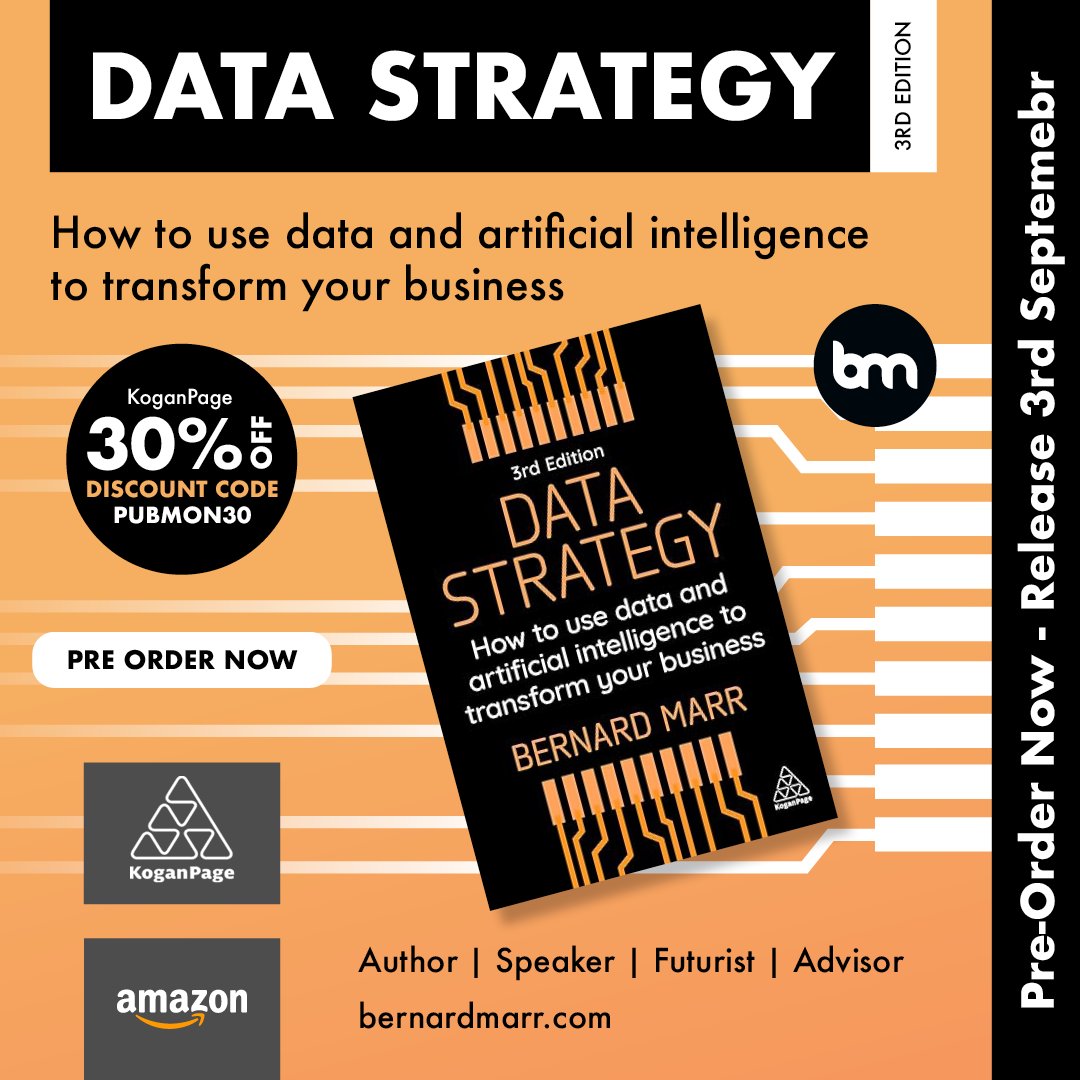
🚀 My New Book is Here: Data Strategy (3rd Edition) 🚀 I’m thrilled to share the release of my latest bestselling book, Data Strategy: How to Use Data and Artificial Intelligence to Transform Your Business. Every business today needs data to survive - but simply having data is not enough. What matters is how you use it. A well-designed data strategy is the key to unlocking value, driving insights, and giving your organisation the competitive edge it needs to thrive in the digital economy. From small organisations to global enterprises, I’ve seen first-hand how a data-driven approach can transform operations, improve decision-making, and unlock entirely new opportunities. That’s why I’ve poured my experience into this book — to help leaders and teams build strategies that don’t just talk about data, but actually deliver measurable impact. 🔍 In this third edition, I’ve expanded the book to reflect the latest developments in data and AI, including: ✅ Generative AI and its role in shaping business innovation. ✅ Synthetic data and how it can accelerate AI adoption. ✅ The potential of quantum computing and what it means for the future of data. ✅ Expanded guidance on cybersecurity, regulations, and ethics in a data-driven world. This isn’t just a theoretical framework - it’s a practical guide to collecting, managing, and using data effectively in order to drive growth, innovation, and long-term success. Whether you’re leading a start-up or a multinational, Data Strategy will equip you with the tools you need to stay ahead in a rapidly evolving landscape. 📖 Pre-order your copy today: 👉 Amazon - 👉 Kogan Page - I can’t wait to hear how this book helps you craft your own data-driven strategy and transform your business for the future.

Bernard Marr

10,980 次观看 • 1 年前

Something big is happening in robotics - and it’s hiding in plain sight. This post is not about dancing robots but in the data that powers them. Open robotics datasets have exploded this year, turning the field into a more scalable and collaborative ecosystem. In just two years, Hugging Face datasets grew from 11k to over 600k - and robotics is by far the fastest-growing segment. We went from 1k robotics datasets in 2024 to 27k in 2025! For comparison, text generation, the second-largest category, has only around 5k datasets in 2025. That gap is massive. Open datasets are important because robotics lives and dies by real-world robot data - video, actions, sensors, failures. By making this data easy to upload, reuse, and benchmark, researchers, startups, and large players are now releasing real-robot datasets that would have stayed locked inside labs just a few years ago. Major contributors include NVIDIA, LeRobot initiative, and a rapidly growing maker community. This surge is also enabled by cheaper video storage, better tooling, and an open-source AI culture now spilling into the physical world. And it really matters: open robotics data dramatically lowers entry barriers, accelerates learning-by-doing, and speeds up progress toward generalist and humanoid robots. Robotics won’t scale through hardware alone - but to a large extent through shared data. Viz below from AI World - link to the story and more viz/filters in comment.

Pierre-Alexandre Balland

186,094 次观看 • 8 个月前

𝗘𝘃𝗲𝗿𝘆𝗼𝗻𝗲’𝘀 𝘁𝗮𝗹𝗸𝗶𝗻𝗴 𝗮𝗯𝗼𝘂𝘁 “𝗣𝗵𝘆𝘀𝗶𝗰𝗮𝗹 𝗔𝗜" - the idea that we can simulate real-world environments so well that robots trained in simulation will work perfectly in reality. 𝗧𝗵𝗲 𝗽𝗿𝗼𝗺𝗶𝘀𝗲: Train in virtual worlds → deploy anywhere. 𝗧𝗵𝗲 𝗿𝗲𝗮𝗹𝗶𝘁𝘆: I’ve seen too many teams fall into this trap. After working with manipulation teams at Berkeley, Imperial, and Dyson, here’s the pattern: • 𝗪𝗲𝗲𝗸 𝟭: “Our policy works perfectly in simulation!” • 𝗪𝗲𝗲𝗸 𝟰: “Why doesn’t this work on real objects?” • 𝗠𝗼𝗻𝘁𝗵 𝟮: “We basically need to retrain from scratch with real data.” 𝗧𝗵𝗲 𝗴𝗮𝗽 𝘀𝗶𝗺𝘂𝗹𝗮𝘁𝗶𝗼𝗻𝘀 𝗰𝗮𝗻’𝘁 𝗯𝗿𝗶𝗱𝗴𝗲: Unlike blind locomotion policies that can get away with sim-to-real transfer because they rely mainly on proprioception and contact forces, 𝘃𝗶𝘀𝗶𝗼𝗻-𝗴𝘂𝗶𝗱𝗲𝗱 𝗺𝗮𝗻𝗶𝗽𝘂𝗹𝗮𝘁𝗶𝗼𝗻 𝗶𝘀 𝗲𝘅𝘁𝗿𝗲𝗺𝗲𝗹𝘆 𝘀𝗲𝗻𝘀𝗶𝘁𝗶𝘃𝗲 𝘁𝗼 𝘃𝗶𝘀𝘂𝗮𝗹 𝗱𝗼𝗺𝗮𝗶𝗻 𝗴𝗮𝗽𝘀. • Real friction vs simulated surface textures • Manufacturing tolerances vs perfect CAD models • Dynamic lighting vs controlled virtual environments • Sensor noise vs instantaneous virtual readings 𝗛𝗲𝗿𝗲'𝘀 𝘄𝗵𝗮𝘁 𝗽𝗲𝗼𝗽𝗹𝗲 𝗱𝗼𝗻'𝘁 𝘁𝗮𝗹𝗸 𝗮𝗯𝗼𝘂𝘁: Building these detailed simulated environments takes forever. If it takes 7 days to build a simulated kitchen in simulation, wouldn't it be better to just collect real-world data in a real kitchen instead? 𝗗𝗼𝗻'𝘁 𝗴𝗲𝘁 𝗺𝗲 𝘄𝗿𝗼𝗻𝗴 - simulation is incredible for debugging, safety testing, and exploring edge cases. But it's not a magic solution to real-world deployment. 𝗪𝗵𝗮𝘁 𝗮𝗰𝘁𝘂𝗮𝗹𝗹𝘆 𝘄𝗼𝗿𝗸𝘀: Use simulation strategically while making real-world data collection as efficient and flexible as possible. This is why Neuracore focuses on streamlined real-world data infrastructure. Because no amount of virtual training can replace understanding how your robot actually behaves in actual environments. 𝗧𝗵𝗲 𝗽𝗵𝘆𝘀𝗶𝗰𝘀 𝗼𝗳 𝘆𝗼𝘂𝗿 𝗱𝗲𝗽𝗹𝗼𝘆𝗺𝗲𝗻𝘁 𝗲𝗻𝘃𝗶𝗿𝗼𝗻𝗺𝗲𝗻𝘁 𝗰𝗮𝗻'𝘁 𝗯𝗲 𝘀𝗶𝗺𝘂𝗹𝗮𝘁𝗲𝗱 𝗮𝘄𝗮𝘆. What’s been your experience with sim-to-real transfer?

Stephen James

25,347 次观看 • 11 个月前

A Letter to Our Community: The Road Ahead for Robotics To our Community and Partners, As we step into 2026, our mission at Axis is clearer than ever: Constructing the definitive End-to-End Scaling Layer for Robotics. Our goal is to accelerate the transfer of diverse human intelligence into Robotics General Intelligence (RGI). By owning the critical path of intelligence creation, we are turning the physical limitations of robotics into a scalable, software-driven future. Here is our strategic outlook and roadmap for the year ahead. The Core Thesis: Simulation is the Only Way Out The path to RGI is currently blocked by Data Scarcity, Generalization Fragility, and Hardware Fragmentation. At Axis, we believe Simulation is the only way out. Our Simulation Data Platform and Data Augmentation Engine transform raw data into "Synthetic Gold". Backed by academic milestones like Roboverse, Skill Blending, and GraspVLA, we have proven that pure simulation can achieve the generalization required for the real world. We don’t just collect data; we architect it. The Engine: Why Crypto? We believe RGI should come from all, not a few. Crypto is not just a feature; it is the primitive that powers our entire ecosystem flywheel: - Incentive Mechanism: Democratizing contribution and rewarding the trainers and developers. - Assetization: Turning proprietary data and refined models into liquid, ownable assets. - Verifiable Workflow: We are opening the "Black Box" of AI. By bringing total transparency to the Task Generation → Data Collection → Model Training pipeline, we ensure every byte of intelligence is verifiable, traceable, and secure. 2026 Strategic Deliverables This year, we are committed to delivering three foundational pillars: - The World's Largest Training Dataset for Robots: A robot training set—diverse, high-quality interaction data at an unprecedented scale. - A Robotics Foundation Model: A universal robotic brain trained on our pure simulation and synthetic data, capable of robust cross-embodiment transfer and open-world adaptability. - Evolvable Robot Hardware: Robots deployed with Axis models that autonomously evolve through continuous interaction, turning every deployment into a self-improving node within our RGI network. The Ultimate Vision We are building more than models; we are architecting the Distributed Machine Economy. A future where every dataset, model, and robotic embodiment is a verifiable asset in a global, autonomous network. Thank you for building the future of intelligence with us✌️📷

Axis Robotics

28,096 次观看 • 8 个月前

Introducing Kaleido💮 from AI at Meta — a universal generative neural rendering engine for photorealistic, unified object and scene view synthesis. Kaleido is built on a simple but powerful design philosophy: 3D perception is a form of visual common sense. Following this idea, we formulate rendering purely as a sequence-to-sequence generation problem, successfully unifying neural rendering with the architecture principles behind modern language and video models. Unlike traditional neural rendering methods, Kaleido learns 3D purely in a data-driven way, without explicit 3D representations or structures. It acquires spatial understanding directly through large-scale video pretraining, then multi-view 3D data finetuning, inspired by how LLMs acquire textual common sense from large corpora before specialising in domains like coding. Through extensive ablations, we progressively modernised the architecture design and training strategies and tackled key scaling challenges in sequence-to-sequence generative rendering, arriving at a design that’s simple, versatile, and scalable. Kaleido significantly outperforms prior generative models in few-view settings, and remarkably is the first zero-shot generative method matches InstantNGP-level rendering quality in multi-view settings. We view Kaleido also as an alternative step towards world modeling that flexibly spans a spectrum of “realities": with many views, it faithfully reconstructs grounded reality; with fewer views, it imagines plausible unseen details. 🔗 Explore more results and paper:

Shikun Liu

22,464 次观看 • 11 个月前