Loading video...

Video Failed to Load

Go Home

Taming the Edge: How lithium could help us control #fusion plasmas. This video captures the first flashes of lithium being injected into the #plasma of our ST40 tokamak, marking the start of our exploration into its effects. Why lithium? In fusion research, we aim for H-mode, a high-performance state...

66,652 views • 11 months ago •via X (Twitter)

0 Comments

No comments available

Comments from the original post will appear here

Related Videos

Researchers at Tokamak Energy have captured for the first time a real-time, high-speed video of plasma behaviour inside their ST40 spherical tokamak, tracking visible green and red light emissions as the fusion process occurs. This visual insight comes via a camera operating at thousands of frames per second, offering unprecedented detail of how the plasma evolves, interacts with the surrounding lithium blanket and outer regions, and ultimately radiates energy. The imaging enables scientists to observe how the ultra-hot core transitions outward into cooler zones, how magnetic confinement shapes the plasma behaviour, and how impurities or outer-region interactions influence the process. By giving a ‘star-in-a-donut’ view of fusion in action, this breakthrough adds a new diagnostic tool to the development of fusion energy, helping engineers refine the magnetic confinement, optimise plasma stability and better understand the heat and light flows at play. It was slowed down by 100x. All this was for 0.3s A tokamak is one of the most advanced devices ever created to achieve controlled nuclear fusion, the same process that powers the Sun. Its goal is simple in principle but incredibly challenging in practice: heat a gas until it becomes plasma, raise that plasma to over 100 million degrees, and confine it long enough for hydrogen nuclei to fuse and release energy. Because no material container can survive such temperatures, a tokamak uses powerful magnetic fields to hold and shape the plasma like an invisible cage. The device has a distinctive doughnut-shaped (toroidal) chamber surrounded by magnetic coils. When the machine is switched on, electric currents and external magnets work together to create helical magnetic fields that trap the plasma and keep it away from the walls. As the plasma spirals around these magnetic lines, it heats up dramatically. Additional heating comes from methods like radio-frequency waves and neutral-beam injection, pushing the plasma toward the extreme temperatures needed for fusion. Inside this tightly controlled environment, hydrogen isotopes such as deuterium and tritium can collide and fuse, releasing fast neutrons and a burst of energy. The goal of tokamak research is to reach a point where the fusion reactions produce more energy than the system consumes, a milestone known as “net energy gain.” Modern machines like ITER, JET, and Tokamak Energy’s ST40 are bringing this vision closer, using advanced diagnostics, superconducting magnets, and increasingly stable plasma control. 👉

Erika 

162,313 views • 7 months ago

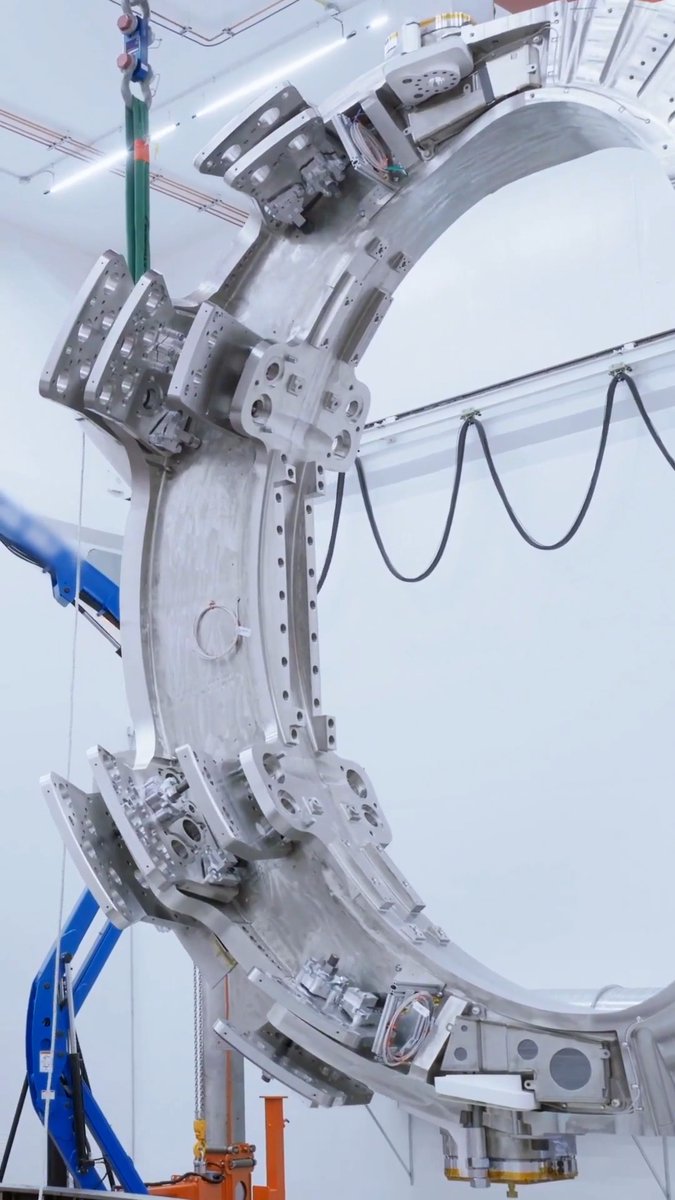
Here we go… This is the moment our ST40 centre column is lifted out. A bit like open-heart surgery on a tokamak. It’s a delicate operation, and a huge milestone for ST40. The centre column has had a tough life, acting as the core of the toroidal magnetic field coil in the world’s highest-field spherical tokamak. After more than 5,000 plasma pulses, it has helped generate magnetic fields above 2 Tesla at the plasma core, confining plasma at temperatures of more than 100 million °C, the threshold for #fusion. Next up, we install the new and improved centre column built by our partners at The Rockwood Group. This is all part of ST40’s major upgrade programme with U.S. Department of Energy and Department for Energy Security and Net Zero, helping transform it into one of the most reactor-relevant fusion devices in the world. What began as an experimental tokamak is becoming something much bigger: a customer testbed for the technologies and expertise needed to put #fusionenergy onto the grid⚡ And for anyone wondering what the centre column actually does… 👇 It forms the inner limb of each turn of the toroidal field coil. Its 24 wedges each carry up to 200 kA of current, generating the powerful magnetic fields needed to confine the plasma. Wrapped around the wedges, a 192-turn central solenoid helps drive and sustain the plasma current, after merging-compression start-up. An impressive piece of equipment with an equally impressive track record! #Fusion #FusionEnergy #Innovation

Tokamak Energy

28,300 views • 21 days ago

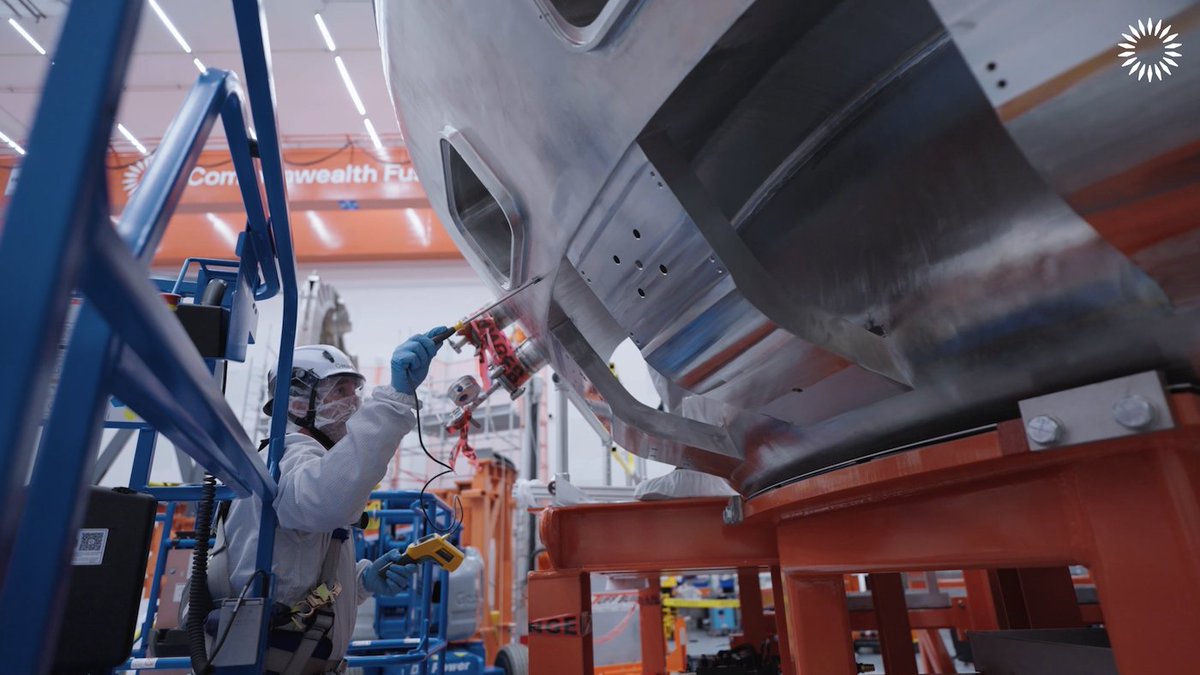
Today, we laid the physics foundation for our ARC fusion power plant. ⚛️ With 5 deeply researched papers — validated by independent peer review and published in the Journal of Plasma Physics — we’ve shown we've nailed the scientific basics of producing copious amounts of fusion power. The collective assessment from our 58 co-authors? This machine will work. No scientific breakthroughs are required to bring this clean, secure, abundant source of energy to the grid. Here is how we're handling fusion's biggest challenges: ⚡ Powering the Grid: Using extremely strong magnets, ARC will confine the plasma long enough to generate 1.1 GW of fusion power. We'll convert that into 400 MW of continuous net electricity — enough to power ~280,000 average American homes. 🛡️ Handling Heat Exhaust: To control a superhot, unruly cloud of charged particles, we're utilizing proven methods to safely handle the heat exhaust that acts as a key practical constraint for tokamaks. ✅ Managing Disruptions: We aren't trying to build an operationally perfect machine. We are pragmatically designing ARC to safely handle disruptions and keep the plasma stable for top performance. 🏗️ Proving the Approach: We're building on decades of tokamak research and supercomputer simulations. And we're proving our approach right now with SPARC, the tokamak we are actively building in Massachusetts. With our transparency, you don’t have to take our assertions on faith. We are really pushing fusion forward.

Commonwealth Fusion Systems

10,662 views • 26 days ago

Does the world have enough lithium to power all the electric vehicles and stationary batteries needed to transition the world to 100% clean, renewable energy and storage for everything? The answer is yes. In 2025, the USGS increased its estimate of world lithium resources over land by 30%, to 150 million tons, with the U.S. having the largest resource, 30 million tons, followed by Argentina, Bolivia, Chile, Australia, and China. How much lithium is this? The world has 1.1 billion passenger cars and 375 million trucks and buses. Replacing these requires about 47 million tons of lithium -- 9 million tons for the cars and 38 million tons for the trucks and buses. That’s only 31 percent of the 2025 known lithium resources, and keep in mind, the known resources grow each year as people look for more lithium. What is more, lithium stays in a vehicle during a battery’s 15 to 25-year life. At the end of the battery’s life, the battery is recycled or re-used for stationary electricity storage, so the mining is one-time. For stationary electricity storage itself, less than one-tenth the lithium, 2 to 4 million tons, is needed worldwide than is needed for vehicles. As such, current lithium resources are over three times those needed for vehicles plus storage. Also, many other battery types now exist that don’t use lithium. In sum, there is no shortage of lithium to transition the world to 100% clean, renewable energy and storage for everything. More info Video:

Mark Z. Jacobson

13,096 views • 2 months ago