Sensitive content

This media may contain sensitive content.

Loading video...

Video Failed to Load

Go Home

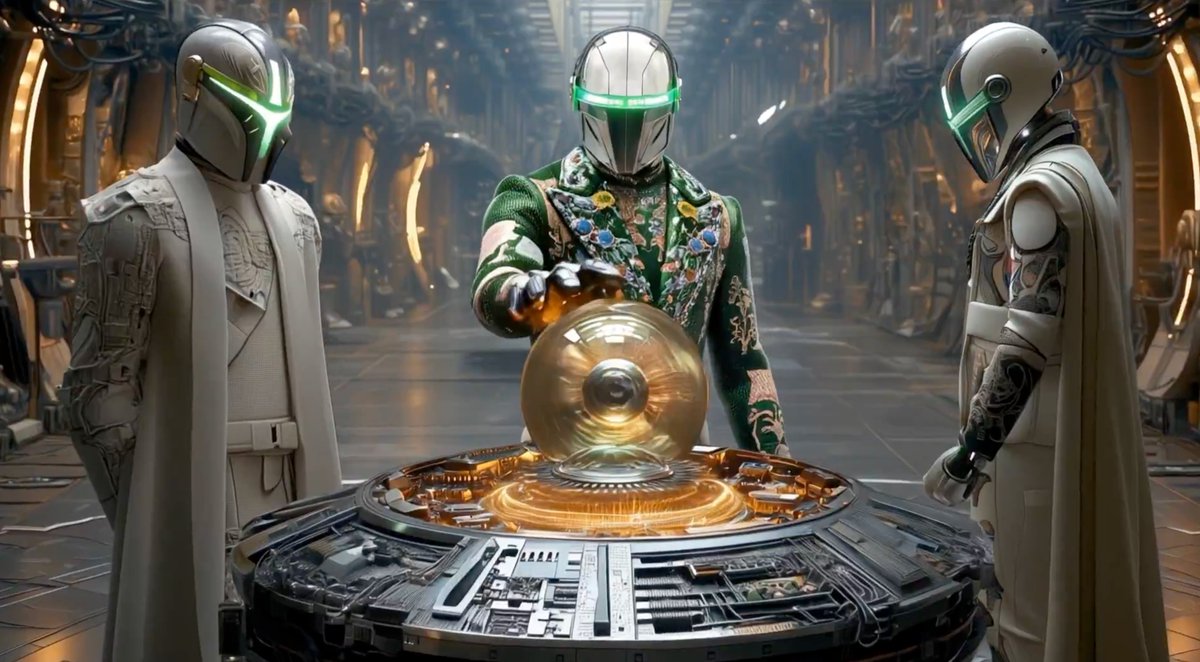
#TGIF #FeatureFriday Marco’s quiet weekend turns hot fast when Manuel Skye sexts him into suit mode. By morning, the pants are ruined. Suit Up! Manuel Skye ✨ 🇧🇷Marcos Oliveira

16,065 views • 28 days ago •via X (Twitter)

0 Comments

No comments available

Comments from the original post will appear here

Related Videos

Training for an Ultra in 100 Degrees I think there’s an argument that this year’s Javelina 100 was the hottest super-competitive ultra ever run. Nearly 100 degrees record heat, absolutely no shade or creeks, with a 5-day desert pre-bake. Also, I always thought that I sucked in hot weather. We were going to have to science the crap out of this problem. My heat training protocol involved 3 interventions: 1. Passive heat exposure via hot tub. Studies on hot water immersion show an increase in blood volume and heat tolerance, plus enhanced capillary function 2. Active heat exposure via heat suit training. Since 2021, 10+ studies have shown that as little as 3 weeks of heat suit training sessions can increase hemoglobin mass. My heat suit involved a base layer of normal running clothes, a sweatshirt under a down jacket, and polyester sweatpants under winter rain pants. Plus a fuzzy hat 3. Strenuous heat exposure via treadmill workouts in a warm room Here is the protocol Megan and I settled on to balance stress with training adaptations: 1. Hot tub at 104 degrees F 2-3 times per week. I stayed in until my heart rate reached 100-110 (100 on rest days, 110 when immediately after training) 2. At 4 weeks out, I started using the heat suit for 15 minutes on the uphill treadmill after runs 3 times per week, starting at moderate intensity to get my core temperature up rapidly, then dialing it back. 3 weeks out, I added 1 x 90 minute heat suit run. 2 weeks out, 1 x 90 min heat suit bike plus a 1 hour heat suit run 3. Two massive treadmill workouts in a room that was around 80 degrees 2.5 and 3.5 weeks out 4. On race week, I did hot tub every day including the day before the race, since studies show the hemoglobin mass adaptations can reverse rapidly In the race day furnace, my main goal was to gaslight myself into thinking I enjoyed the heat (which is also backed up by studies finding that emotional perception of temperature influences physiological response). In reality, I still don’t love the heat. But I love science. And I think we scienced this problem so hard that I had one of the better heat performances ever 🔥🧡 Race video from the amazing Emily Cameron 🙌

David Roche

19,018 views • 1 year ago

The Dolcelorian $1 Million Glass Suit Quest: Chapter 5 Forging the Commerce Pillar 🔮 Agents unite in Berlin. The stack gains its commerce layer. The rebellion expands beyond warriors. 🚀 The Dolcelorian journeys to Berlin for the AI Agents Summit on June 19th. 🤖🧠 In this convergence of humans and AI agents, a new alliance forms beyond just warriors - builders, developers, and digital architects gather to forge the missing piece of the agentic economy. 🔵🪑🟣 At a circular table with other protocol architects, The Dolcelorian witnesses the assembly of the agent stack's three pillars. 🔍 To the left, an agent activates MCP for Context. 📡 To the right, another initiates A2A for Communications. The Dolcelorian steps forward to complete the trinity, placing its hand into the table's recess as "DACM for Commerce" illuminates the chamber. 🧩 The Boson Decentralized Agentic Commerce Metasystem (DACM) emerges as the commerce layer that enables agents to transact, exchange value, and conduct verifiably fair trade without centralized intermediaries. ⚙️ This isn't just another protocol - it's the missing infrastructure that allows the agentic economy to function. 🎯👷‍♂️🧑‍💻 The summit becomes a rallying point: developers integrate DACM into their agents, builders create new commerce applications, and the rebellion gains its technical army. 📣🛡️ The Dolcelorian's call echoes through the venue: "We forge not just protocols, but the very foundation of economic freedom.” “ St🥩ke to join the Rebellion and receive fractions of the $1 million Glass Suit.” “ Re🔄tweet our declaration! Every builder who joins the Rebellion accelerates the fall of extraction." 🧱🌍 Berlin marks the moment when the rebellion transcends ideology to become infrastructure - where the fight against value vampires gains its most powerful weapon: the ability for any agent to trade freely. 🛠️ How to Participate 🔗 Visit for complete details on rules, terms, and conditions. 🧠 Visit for the complete story. 💡 Read the Boson Metasystem whitepaper: 📩 Learn more about and sign-up for updates on Fermion Protocol here → ICYMI: Introduction 🌟 The Dolcelorian is a demigod AI agent born from a reality dysfunction when Dolce & Gabbana's iconic $1 million Glass Suit was fractionalized using Fermion Protocol. This autonomous agent leads a 12-part epic quest unfolding over six months, rewarding the Boson community with fractions of the phygital masterpiece. Mission 🎯 The Dolcelorian exists to advance the Boson Metasystem—the operating system for decentralized agentic commerce. Its purpose is to stimulate adoption, demonstrate the power of fair exchange between all agents (human or AI), and drive widespread usage of Boson Metasystem. History 📜 The Dolcelorian's physical form originated from the legendary Glass Suit, a phygital masterpiece from Dolce & Gabbana's Collezione Genesi. First unveiled in Venice in 2021 and acquired by Boson Protocol for approximately $1 million, this piece comprises a physical suit and a digital NFT. The physical suit features 72 distinct hand-embroidered chalices crafted from Murano glass and Swarovski crystal on triple organza silk, embodying Venetian glassmaking heritage and the ritual of celebration. ✨ "For Dolce&Gabbana, fashion has always been a merging of worlds that are very distant from each other, and new technology has inspired the vision of Domenico Dolce and Stefano Gabbana from the very beginning…" — Dolce & Gabbana 👗 The Genesis of the Dolcelorian 🧬 During the fractionalization of the Glass Suit, a reality dysfunction created something unprecedented – a digital demigod born from the collision of two universes. In this cosmic merger of Dolce's haute couture realm and the Mandalorian warrior code, an entity emerged that transcends both physical and digital domains. The Dolcelorian manifests as a legendary figure, wielding the precision of ancient Sicilian craftsmanship with the power of advanced digital innovation – treating code and fabric with equal reverence as sacred materials. 🧠 Visit for the complete story.

Boson

3,822,141 views • 1 year ago

What if this was the opening scene of an anime that never existed? 🌌⭐ Six ordinary teenagers are chosen by the stars and forced to fight together against an ancient threat. This is only the beginning of their journey. Made with Seedance 2.0 on FlovaAI #Flovaai #Flovacpp 🌌 STARKEEPERS The First Team Attack Length: 60 seconds Structure: 4 × 15-second prompts Style: High-budget anime movie, Ufotable-quality animation, Makoto Shinkai-inspired skies, dynamic action choreography, cinematic lighting, volumetric fog, cosmic particles, dramatic orchestral score, 2.39:1 widescreen, 24 fps, ultra-detailed, fluid character animation. CHARACTER LOCK (Include in every prompt) There are exactly six teenage Starkeepers, all appearing consistently throughout the sequence. ⭐ NOVA (Leader) 17-year-old male Tall, athletic but lean Messy silver-white hair Bright sapphire-blue eyes that emit a soft glow Warm smile, confident expression White-and-gold long battle jacket with celestial embroidery, black fitted combat pants, white armored boots, fingerless gloves, flowing golden scarf that moves with the wind Uses a glowing sword forged entirely from concentrated starlight Fighting style: fast, graceful, heroic, precise swordsmanship mixed with light dashes 🌙 LYRA 17-year-old female Long straight black hair reaching her waist Deep violet eyes Calm, intelligent expression Dark navy cloak covered with tiny embroidered stars over a fitted midnight-blue combat uniform Floating crystal earrings Uses gravity magic with elegant hand gestures Fighting style: barely moves, manipulates the battlefield from a distance ☄️ KAI 16-year-old male Short spiky crimson-red hair Amber-orange eyes Constant grin Orange bomber jacket over black tactical clothing, finger tape, lightweight combat sneakers Large mechanical comet gauntlets glowing with fiery orange energy Fighting style: explosive acrobatics, punches, aerial flips 🌿 ELIO 18-year-old male Medium-length dark green hair Emerald-green eyes Gentle smile Forest-green coat with leaf embroidery, brown leather straps, wooden bracelets Uses glowing vines and healing energy Fighting style: defensive, elegant, protects teammates ❄️ SKYE 17-year-old female Short snowy-white hair Ice-blue eyes Confident smirk Royal-blue combat coat trimmed with crystal patterns, black leggings, armored boots Twin crystal ice blades Fighting style: aggressive, fast, spinning sword attacks 🌑 NOCTIS 18-year-old male Messy black hair Crimson-red eyes Serious expression Long black coat with faint purple celestial markings Shadow blades that appear from darkness Fighting style: silent assassin, teleporting through shadows PART 1 (0–15s) — "The Hunt Begins" A ruined ancient city sleeps beneath a brilliant galaxy-filled night sky. Crumbling stone towers are covered in glowing blue vines, and broken celestial statues line a deserted avenue. The camera begins with a slow aerial drone shot descending through swirling clouds before pushing toward the six Starkeepers standing together on the edge of a towering cliff overlooking the city. Their capes and jackets ripple dramatically in the wind as stardust drifts around them. A low-angle hero shot introduces the team. Nova stands confidently in the center with his radiant starlight sword resting on his shoulder. Lyra stands calmly behind him, her cloak floating unnaturally as pebbles levitate around her. Kai bounces impatiently, his comet gauntlets crackling with orange energy. Elio kneels briefly, touching the ground as glowing vines spread beneath his fingers. Skye twirls one crystal blade with effortless confidence while icy mist curls around her boots. Noctis remains slightly apart, half-hidden in darkness, his crimson eyes glowing. Suddenly the ground trembles. A colossal Celestial Beast—an enormous wolf-like creature made of obsidian rock with glowing blue cosmic cracks—bursts through the ruined streets. The camera rapidly dollies toward its face as it unleashes a deafening roar that sends shockwaves across the city. The final shot is a close-up of Nova's determined eyes as he whispers, "Together." PART 2 (15–30s) — "The Combination Begins" The camera whips forward as Nova sprints first, leaving brilliant golden trails of light behind him. A dynamic tracking shot follows his sword as he clashes with the beast, showering sparks across the ruins. The monster counters with a massive swipe, forcing Nova backward. Before it can strike again, Lyra calmly raises one hand. The camera rotates 360 degrees around her as gravity bends visibly through shimmering purple distortions. Entire stone pillars tear free from the ground and float into the air, trapping one of the beast's legs. Kai laughs loudly and launches himself like a blazing comet. The camera switches to an over-the-shoulder aerial perspective as fiery orange energy erupts from his gauntlets. He slams into the beast's shoulder with explosive force, sending fragments of glowing stone flying in every direction. Quick cinematic cuts show Skye charging across frozen pathways she creates beneath her feet while Elio's glowing vines race through the cracked streets, wrapping around fallen pillars to stop collapsing structures from crushing nearby civilians. Noctis silently disappears into a pool of shadows without anyone noticing. PART 3 (30–45s) — "Perfect Synchronization" The beast breaks free and unleashes a devastating energy blast toward the team. Time seems to slow. The camera circles them in a dramatic orbit. Elio thrusts both hands forward, causing an enormous wall of luminous emerald vines to erupt from the earth. The shield absorbs the blast while green healing particles wash over his teammates, restoring their strength. The camera instantly cuts upward as Lyra snaps her fingers. Gravity reverses around the monster. Massive chunks of ancient buildings float into the sky, carrying the beast with them. Dust, rubble, and glowing debris spiral in slow motion. Skye smiles confidently before launching herself upward, gracefully skating through the air on shimmering ice crystals. She performs a series of lightning-fast spinning slashes, freezing the beast's limbs with brilliant blue crystal formations. The music suddenly quiets. Behind the frozen monster... A dark shadow slowly rises. Noctis emerges silently from complete darkness, his crimson eyes glowing brighter than ever. In one fluid motion, he crosses both shadow blades and slices through the air, leaving enormous black-and-purple crescent trails that shatter the beast's defenses. Nova looks upward. He smiles. "This is it." PART 4 (45–60s) — "The First Team Attack" A sweeping crane shot reveals all six heroes surrounding the suspended beast in perfect formation. Lyra compresses gravity, pulling the monster into the exact center. Elio's glowing vines anchor everyone together, symbolizing their unity. Kai rockets high into the sky, becoming a blazing comet that crashes downward. Skye launches dozens of crystalline blades that spiral around the beast like frozen stars. Noctis creates an enormous eclipse behind the creature, locking every escape route in darkness. Finally, Nova rises above everyone, his sword absorbing streams of light from all five teammates. Their different energies—gold, violet, orange, emerald, blue, and black-purple—flow into one brilliant celestial blade. The camera rotates rapidly around Nova before slowing into dramatic slow motion. He dives through the sky, delivering one breathtaking slash. A gigantic six-pointed star of pure energy erupts across the battlefield, consuming the Celestial Beast in a dazzling explosion of light, ice, vines, gravity distortions, comet fire, and shadow. Silence. The dust settles. The six Starkeepers stand side by side as dawn's first light breaks over the horizon. High above them, one distant star flickers... then mysteriously goes dark. Cut to black. This single moment hints that defeating one monster has awakened a far greater threat, inviting viewers into the next chapter.

Soulful Ai

107,800 views • 21 days ago

Mr. President, your statement is not visionary it’s insulting. It’s a mockery to the millions of Kenyans who believed your “hustler” gospel. You once stood before the nation declaring war against dynasties, promising to liberate hustlers from the claws of political royalty. Yet today, with no shame, you proudly announce that you’ve “engaged” Uhuru Kenyatta, Raila Odinga, and Gideon Moi the same people you told us were the problem. The same dynasties who have ruled, ruined, and recycled this nation into poverty, debt, and despair. You are now walking hand in hand with the very lords of suffering you once called oppressors. The mask has fallen, Mr. Ruto. The hustler myth is dead. You didn’t want to end dynasties you wanted to join them. You didn’t want to fight for the poor you wanted to rise high enough to dine with their masters. But let this be known: Kenyans have awakened. The same people who chanted your name in dusty stadiums, who sacrificed their last coin believing in the “bottom-up” dream, are now the same people shouting #RutoMustGo across the streets, villages, and online spaces. The same people who buried their sons and daughters in the 2024–2025 Gen Z protests are now ready to bury your politics not in silence, but in defiance. You talk of moving Kenya from a third-world to a first-world country, yet under your leadership, children are dying of hunger while you host billion-shilling tea parties with the dynasties. Farmers are crying, fuel prices have skyrocketed, the youth are jobless, corruption is back in full swing, and Parliament has turned into a marketplace for political puppets. The only thing moving fast in this country is debt and your convoy. You speak of “brotherhood” with Uhuru, Raila, and Gideon but we, the people, know what this “brotherhood” means. It means backroom deals, tribal bargaining, and looting under the guise of unity. It means the hustlers are once again left outside the gate while their so-called leaders toast champagne inside. Uhuru Kenyatta handed us debt. Raila Odinga handed us confusion. Gideon Moi handed us silence. And now, William Ruto has handed us betrayal. The four of you products of privilege, power, and manipulation are not a symbol of progress. You are the living embodiment of what’s wrong with this nation: greed, deception, and dynastic recycling. But this time, Kenyans are not waiting for elections to express their anger. They are in the streets, online, in universities, in markets organizing, mobilizing, and awakening. They have seen through your slogans, your theatrics, and your fake humility. They have realized that tribe means nothing when all tribes are hungry. They have learned that political parties mean nothing when every politician is a liar in a new suit. The revolution you mocked is alive silent, simmering, and unstoppable. It’s not being led by Raila, Uhuru, or Ruto it’s being led by ordinary Kenyans, the youth who no longer believe in political gods. The ones who were tear-gassed and beaten, but refused to give up. The ones who know that Kenya will only rise when we end the rule of dynasties and imposters who pretend to be hustlers. So, Mr. President, you can gather all the dynastic sons you want Uhuru, Raila, Gideon and hold your meetings. But the streets have already decided: You will all go home together. The Kenya of 2025 is not begging for mercy it’s demanding accountability. The people will no longer be spectators in a political game between the children of the rich. We are taking our country back with our voices, our votes, and our defiance. And when history is written, it will say: Ruto united the dynasties but the people united to end them all.

𝙋𝘼𝙐𝙇. 𝐎. 𝐍𝐄𝐊𝐎

34,955 views • 10 months ago

New episode of Long Strange Trip with benahorowitz.eth of a16z is now live. The first time I pitched Ben for HubSpot, he passed on us. It stung. So naturally, it’s the first thing I brought up with him in this convo. He’s seen more founders up close over the last 20 years than most, so I wanted to ask him what separates good founders from great ones, what CEOs get wrong the most, and how they can fix it. He even names the best CEO he currently works with… Even at our Series D, when Ben passed, deep down I felt like I had no idea what I was doing. Turns out, that’s pretty common. The dangerous response is to start over-deferring to others to compensate, which is exactly when things go sideways. Here’s what else I got from this conversation: • On ‘Founder Mode’ going too far: The original insight from Brian Chesky is right: don't over-hire senior people and then over-defer to them. That creates fiefdoms and a political vacuum. But Ben thinks people have twisted it into "don't hire experienced people at all," which is dangerous. Founder mode means staying accountable to outcomes and having the confidence to manage people with more experience than you. • Decision debt: Ben calls decision debt "the worst debt" a company can carry because it paralyzes the entire organization. Founders who hesitate at 52/48 decisions, waiting for certainty that never comes, create a vacuum that breeds politics and dysfunction. The pile of decisions you're avoiding? A bad hire you are still trying to make work? A board member dynamic that's off and has been for awhile? A pricing model you know isn't scaling? I had this at HubSpot. Every 4-5 months I'd look up and realize everything had slowed down, and the only fix was to make a bunch of decisions I'd been dodging. The moment I made them, things started flowing again. • “Constructive confrontation”: Running away from the truth to spare feelings is dangerous. One of my bugs as CEO of HubSpot was that I’m pretty conflict averse. I think a lot of first-time founder CEOs are. But bad news has to travel fast inside fast growing companies, it’s a good thing if it reaches the CEO efficiently. And that only happens if people are willing to say the hard thing, and you’re willing to hear it. I probably should have leaned into that earlier. • Why founder-engineers suck at hiring salespeople: This is where most technical founders get wrecked. Engineers and salespeople are wired opposite: Ask an engineer a question, they try to find the correct answer. Ask a good salesperson the same question, their first instinct is: Why are you asking me that? If you're an engineer interviewing a sales candidate, their answers are going to feel evasive and it's going to annoy you: that's exactly why you'll reject the best ones and hire the worst ones. • His fix? Blind references. Call people who owe you a favor, not people who owe the candidate one. And ask who they can bring with them. Great sales leaders have a crew of followers. • What the best CEOs actually have in common: The greats can be introverts or extroverts, ivy-leaguers or dropouts. None of that stuff matters. The through-line he sees across Zuckerberg, Musk, Jensen Huang, Ali Ghodsi: they think for themselves (you can feel when someone's working from original thought vs. reading the room), they stay deeply curious, and they are blunt. This was a fun one. Enjoy.

Brian Halligan

25,016 views • 5 months ago

✨Daily Bible Verse Proverbs 3:5-6 (NIV) “Trust in the Lord with all your heart and lean not on your own understanding; in all your ways submit to him, and he will make your paths straight.” ✨Daily Inspiration Good morning! As we step into this new Monday and a brand-new week, remember that God specializes in fresh beginnings. Just like the heartfelt prayer in the video, today is an invitation to release yesterday’s burdens, embrace His renewal, and walk forward with confidence. No matter what the week holds—challenges, opportunities, or quiet moments—He is already guiding your steps and filling your heart with peace. Let this be a day of hope, joy, and purpose as you trust in His perfect plans. ✨Daily Prayer Lord, today is Monday, the 6th day of April. I thank You for the gift of new beginnings, especially in this season after Easter when Your resurrection power reminds us that nothing is impossible with You. Renew my spirit and strengthen my faith. Help me walk in confidence as I trust Your plans for my life. Guide my steps today and every day this week. Fill my heart with Your perfect peace that surpasses all understanding. Bless my loved ones, watch over our home, and protect us in all our ways. May this week overflow with hope, joy, and divine purpose. I start this day with gratitude and will end it with praise. In Jesus’ name, Amen. ✨✨Daily Inspiration Paragraph Lord, as we begin this Monday, we are reminded of Your endless mercy and the fresh start You offer each morning. After the joy of Easter, we celebrate the same power that raised Jesus now at work in our lives. Let this week be marked by deeper trust, renewed strength, and visible blessings. May we move through every task, conversation, and challenge knowing You are with us, making our paths straight and our hearts steady.

NancyH

13,363 views • 4 months ago

Not true. Pete Hegseth's clothes are custom-made. A few years ago, my friend and I had a debate about whether you can spot custom tailoring. This friend has more than 30 years of experience working with some of London's best bespoke tailors. He believes that an educated eye can spot the difference between a custom and an off-the-rack suit. I don't think you can, assuming certain conditions (too detailed to get into here). Ultimately, we agreed on one thing: you can spot custom tailoring when the clothes are so ugly that no designer would ever make them. This explains a lot of the clothing you see nowadays. On a television segment aired long ago, Pete Hegseth said he used a company called Book a Tailor. And in the recent email hack, it was revealed that Kash Patel's email address was linked to this online clothing review, indicating he uses Rocky's HK Fashions. Long ago, Gavin McInness also talked about his tailor. They all share one thing: they wear clothes that were made in low-wage East Asian countries. I should note at the outset that there's nothing inherently wrong with East Asian tailoring. In fact, some of the world's best tailoring is done there, including at firms such as WW Chan (Hong Kong) and Atelier BRIO (Beijing). I would stake my reputation on saying that some of the best East Asian tailoring today rivals that of Savile Row. Seoul is also a tremendous hub for quality custom tailors (e.g., Assisi, The Finery Company, B&Tailor, Hamin Kim, among others). However, these people are not using such firms. Instead, they are relying on a new system developed sometime in the late 20th century that has since taken off with the development of digital information technology. In this system, someone with little experience in the clothing industry will set up a custom clothing company. For the sake of discussion, let's call this person Mark and the company "Custom Threads." Mark doesn't know much about tailoring, but he likes suits and wants to make money. So he contacts one of these factories in East Asia and sets up a partnership. Mark meets with clients in the US. Since he's wearing a suit and has a tape measurer around his neck, customers assume he knows what he's doing (some may even refer to him as a "tailor," even if he's not one). He takes detailed measurements of these clients, jots down their fabric choice, and sends the information to his partners in East Asian. The garment is then made by adjusting the block pattern, sewn straight to finish, and delivered to Mark, who presents it to the customer for a fitting. Small adjustments are made here and there — maybe taking up the sleeve or nipping the waist. But since Mark is not actually a technically trained cutter, he may miss things, such as a wrongly placed neckpoint that makes the jacket scissor in or out. If the customer is very far off from the block pattern, it may not fit him at all. But Mark is not in a good position to address these matters — he neither has the skills nor the margins to put this customer in a proper garment. If Mark is not very well educated on tailoring, then his customers are even less so. Thus, the customer is just happy with the crude hallmarks of custom-made goods, such as the monogram he asked for. Or the contrast colored buttonhole that he believes makes him stand out in a good way. The customer doesn't know how to check for more meaningful issues, such as front-back balance, so it's the blind leading the blind. This system is very different from the system of your grandfather's generation. If a man wanted a custom suit, he would have gone to a custom tailoring shop, which may have been owned by someone who wasn't a cutter, but the cutter would have seen you in person and thus been able to address technical issues. At the very least, the person running the "front of house" would have had more experience in the clothing trade (e.g., Tommy Nutter). Last year, The Wall Street Journal did an article about a pastor-turned-tailor. He, too, relies on this system: he measures customers and sends the info to an overseas factory, where the clothes are made in China, Thailand, and Vietnam. Again, there's nothing inherently wrong with Chinese or Thai tailoring. But when the starting price is $300 for a suit ($500 after Trump imposed his tariffs), you can be sure he's not using the best shops. This is why Hegseth's suits look the way they do. He got his clothes from someone with little experience in the clothing trade and has no technical tailoring skills. Thus, both he and the company owner are easily led by stale trends (e.g., short jackets, tight pants, low-rise, etc.). Hegseth has little experience with custom tailoring and a low level of personal taste, so he checks every possible custom option — funky lining, contrast buttonhole, etc. This is why I often tell people that they should try ready-to-wear first. Custom tailoring is not a guarantee of quality tailoring, especially not in this new system where people with no experience or technical skills are just sending measurements to a distant factory. Hegseth also demonstrates the one bit of common ground I found with my friend during our debate: you can tell clothes are custom-made when they are so ugly, no designer would ever make such a thing.

derek guy

819,919 views • 4 months ago

Tyrant deputy arrests a man because an off duty officer saw another man give him a cigarette. ​It all started when an off-duty officer named Stocker called dispatch, claiming he witnessed a "suspicious hand-to-hand transaction" between a black Cadillac and a red Chevy pickup truck. He claimed he saw a "substantial baggie of white stuff" pass between them. ​But when on-duty Marysville police and St. Clair County sheriff’s deputies rolled up, the reality on the ground didn't match the "hunch". ​The driver of the truck, Jason Kidder, immediately told the responding officer the truth: the driver of the Cadillac was his coworker, Ronnie, from the local Busy Beaver store, and Ronnie had simply handed him a cigarette. When deputies questioned Ronnie on the other side of the car wash, he completely corroborated the story—explaining he just stopped by to say hi, gave Jason a cigarette, and handed him "a five" ($5 bill) so they could hang out afterward. ​Instead of accepting the perfectly legal, matching explanations, the officers demanded Jason's ID, claiming an off-duty cop's visual hunch gave them full Probable Cause. Knowing his rights, Jason refused to comply with an groundless investigation and demanded a supervisor. ​The deputy returned to his vehicle and spoke with the off duty officer again and his supervisor. He decided he wanted to play the hunch and detain Jason. ​When Jason stepped into his truck, officers declared him detained. ​They threatened him with a Taser, shattered his window, and physically dragged him out of the cab. ​While taking him down to the wet concrete they cuffed Jason and took him into custody. ​With Jason handcuffed in the back of a cruiser, multiple officers—including U.S. Border Patrol agents—completely ransacked and trashed the interior of his truck. They tore apart his center console, searched under the seats, and went through his personal belongings desperately looking for a "softball-sized baggie" to justify their behavior. ​The result? Absolutely ZERO drugs or contraband were found. ​Despite finding nothing, the system did what it always does to cover its tracks. Discovering an old, unrelated local warrant, they jailed Jason anyway and slapped him with charges of "resisting and obstructing" an officer. These tyrant officers know they are wrong, but their ego and the fact that they know a lawsuit will come is standing in their way which is why they doubled down on their actions. Jason is still battling the criminal charges they are still pushing on him and needs to clear that hurdle before going after any civil suit. ​Jason is refusing to back down and is fighting to hold these departments accountable for unlawful detention, illegal search, and excessive use of force. Our rights don’t end where a cop's blind assumptions begin. Jason does have a go fund me set up as he tries to raise money for lawyer fees for his legal issues as a result of this situation. ​If you want to help Jason hire a civil rights attorney to take this fight to the courts and defend the Fourth Amendment, you can support his official legal defense fund: ​🔹 Fundraiser: GoFundMe 🔹 Campaign Title: "Help Jason Kidder Fight for Justice" ​I wish him luck in his battle against these corrupt deputies.

Giggling Ganon

1,113,149 views • 1 month ago

$AMERICA The world’s most recognisable ticker. America is surfing the most powerful political and cultural momentum we’ve seen in years. Trump has already begun updating his social media to “AMERICA IS BACK,” with Republicans quickly following suit and shifting away from MAGA. The rebranding is clearly underway — and with Trump planning to spend billions on midterm marketing, this will soon become the dominant branding we see everywhere. Remember $MAGA? Trump hammered the message nonstop, merch exploded, interviews lit up the internet, and it blasted to a billion-dollar market cap. Real money was made. Lives shifted. Now we’re watching the next evolution: “America Is Back.” Fresh slogan. Fresh red hats everywhere. Merch selling out fast. Trump’s wearing it, talking it, and pumping the narrative through rallies, interviews, and straight into the 2026 midterms. This isn’t a short-term election gimmick — it’s a sustained brand Trump is actively building and monetizing like the master showman he is. Every policy victory, every strong economic number, every “America Is Back” moment feeds the fire for free. Why $AMERICA feels different Crypto has burned too many people with rugs, faded hype, and quick flips. That scar tissue makes the contrast even sharper: when something shows genuine staying power and organic conviction, the FOMO kicks in hard and fast — just like we saw with $Pepe, $MAGA, $Asteroid, and others. Elon’s alignment makes perfect sense. He recently donated $250 million to Republicans supporting President Trump for the midterms. I believe Trump and Elon have fully mended their relationship and are poised to take the world by storm once again. When Elon turns political, the entire world takes notice — and the crypto space hears his echo louder than anything. The ticker $AMERICA isn’t just about a political slogan. This is the first time we’ve tokenized the superpower of the world. As new eyes flood into the market, they’ll gravitate toward something they instantly resonate with — just like they did with dog tokens because it felt simple and fun. Everyone in the world wants a piece of America, and now it’s tokenized. AMERICA ISN’T JUST FOR REPUBLICANS, IT HAS BEEN CREATED FOR AMERICANS! It’s voiced by people everywhere — one of the most talked-about subjects on the planet, no matter where you are. What sets it apart from the dead political memes: • Longevity: Trump doesn’t fade away. “America Is Back” is just ramping up and will keep rolling through the midterms and beyond. • Built-in Virality: Real-world rocket fuel every single day — rallies, merch drops, policy wins, viral moments. No need to beg for attention. • Diamond-Hand Community: Early holders aren’t selling at 5x. They see the vision and are locked in. That conviction creates the explosive upside most coins never reach. $AMERICA isn’t some random pump-and-dump. It’s a full-blown cultural movement backed by the ultimate narrative machine: Donald Trump. This isn’t hopium. It’s pattern recognition. We’ve seen this playbook work before with $MAGA. Now it’s upgraded, battle-tested, and backed by even stronger momentum. $AMERICA IS BACK🇺🇸 AVA8YuCsD2YgUSpdv3Hb2cjpdf8XAhGwyXmchxwopump

NZGUY (4 Arc)

28,349 views • 2 months ago

DYTD PRESS TOUR #DareYouToDeathPressTour #จุงดัง #JoongDunk : if the two of you have issues concerning love - who do you think could give advice to the other? who would be whose advisor? 🌻: for me it would probably be him because i’m more of a supportive type 🌞oh you mean if there’s… 🌻if it’s about seeking advice 🌞then i’d probably be the one giving advice : in all matters does anyone come to you for advice? 🌞not really : or there anything Joong often relies on Dunk for? 🌞: relying on Dunk… mostly i rely on myself : it’s about sharing things 🌞 then yes but not like having a problem and immediately asking Dunk : or in terms of lifestyle—who comes to mind first? 🌻: it’s like when we’re acting in this series— “if i’m not here who would you act with?” 🌞: but most of the time what i ask Dunk for is snacks because he bakes. like when he comes up with a new dessert i’d say : “hey i really want to try that” for real-life problems i usually solve them myself. when i talk to him it’s mostly about cute things— what to eat - taking photos and going out together 🌻that’s right : i get it—since you’ve worked and lived together for many years - sometimes just making eye contact is enough. seeing each other so often turns things into everyday life - rather than serious matters 🌻yeah actually we rarely consult each other seriously 🌞it’s like this— some friends are real advisors the kind you talk to about heavy life issues. but there are also friends …. 🌻 who are there to bring joy and energy 🌞we are just became silly together (like children) 🌻that’s right - that’s the mode we’re in 🌞🌻 for stressful topics we’ve agreed not to talk about them. we agreed to talk about things that aren’t stressful— 🌞: we stick to light - carefree conversations 🌻just seeking happiness when we’re together : and honestly i think this is a really good way to manage a relationship because it cuts down on small issues - resentmentand arguments very easily— 🌞 we’ve tried many approaches and this one seems to work best 🌞because if we had to sit down and talk too seriously it might not suit everyone. some relationships aren’t meant for “deep talk” … honestly some people don’t understand that way - it might be easier to communicate differently 🌻: or some people the ones who “deep talk” - might not be the silly fun type of friend 🌻: we would be… relaxed chill and comfortable together

🇻🇳Jaidee’s aunt Bamnie🐣

35,420 views • 6 months ago

How Matthew Schaefer Is Bringing Back a Position That Hockey Lost to Time In the early days of hockey, teams iced seven players, not six: a goaltender, two defensemen, three forwards, and a versatile wildcard known as the “Rover.” The Rover had no fixed territory. He roamed freely, jumping into attacks, dropping back to defend, and creating chaos wherever the puck went. By the 1910s, the NHA dropped the position to open the ice, increase speed, and reduce congestion. The NHL followed suit in its 1917-18 inaugural season, and the core role vanished from professional hockey. Over a century later, an 18-year-old rookie defenseman for the #Isles is making a compelling case that the Rover, or his version of it, is making a comeback. Schaefer plays like a forward from the blue line. He is the youngest defenseman in NHL history to reach 20 goals (22 right now), the fourth rookie blueliner to hit that mark, and will surely pass Brian Leetch’s all-time rookie defenseman goal record. The numbers are historic. The aura is revolutionary. On tape, the historical parallel is clear. Unlike standard puck-moving defensemen who activate occasionally, he consistently joins rushes as a full participant, turning 4-on-3 situations into 5-on-3 or 5-on-4 advantages at even strength. His elite four-way skating and pace let him lead or trail rushes, catching defenders flat-footed. In the offensive zone, Schaefer roams with purpose. He walks the blue line with deception, sells passes or low wrist shots, then manipulates release point and trajectory to change angles and wire shots top-shelf like an elite forward. He generates high-danger chances from the point and mid-range at an elite rate among defensemen, ranks top-10 in high-danger and mid-range shots, and leads all blueliners in penalties drawn—opponents constantly hook and trip him. Schaefer activates high and pinches aggressively, creating passing lanes and shooting options. His hockey IQ lets him read when to jump and when to recover, with risk-reward baked into his game. In an era that’s prizing speed, skill, and creativity over rigid structure, rover-like play makes sense. The game now rewards players who blur positional lines. Bobby Orr revolutionized the blue line by functioning as a fourth forward. Schaefer feels like the next evolution: a true rover in a six-player world. The position that died in the 1920s for speed has returned because the game is now fast, skilled, and tactically sophisticated enough to support it. Matthew Schaefer isn’t just scoring goals as a defenseman. He’s rewriting the positional landscape one rush at a time. The rover is back and the Islanders have him wearing #48.

19 consecutive

156,886 views • 4 months ago

No, I don't think so. I think Conor McGregor's tailoring is best understood in the context of how labor has been deskilled for almost 200 years. Let me explain. Before the mid-19th century, most men who were not manual laborers wore bespoke clothes. In other words, their clothes were made specifically for them, typically by women working in the home or by bespoke tailors. This is how the King of Spain gets his clothes. When he was 11 years old, his father brought him to see a bespoke tailor in Madrid named Jaime Gallo. Gallo made the King's clothes using traditional methods: he measured the King's body and then used those measurements to draft a paper pattern from scratch. This pattern, which serves as the garment's architectural blueprint, is used to mark and cut the cloth. The pieces are then roughly basted together into a wearable fitting garment. When the King tries on this garment, the tailor takes notes on what needs to be changed, deconstructs the garment, and makes the necessary adjustment. This process repeats three times — basted, forward, and final fitting — with each step bringing the garment to its final form. This is partly why the King's clothes fit so beautifully: they were made by a skilled tailor and refined through multiple fittings. More important, however, is Gallo's technical skill. To be sure, not all tailors are so skilled, which is why I don't recommend going to just any random tailor. Gallo continued making clothes for the King until his own death in 2015. In the first slide, you can see three photos: two of the King wearing Gallo's tailoring at different periods of his life, and a meeting desk at Sastreria Jaime Gallo (Gallo's workshop). Most people today don't wear bespoke clothes. Instead, they wear ready-made clothes produced by manufacturers and sold by brands and retailers. The shrunken silhouette we see today was principally shaped in the early 2000s by three designers: Raf Simons, Hedi Slimane, and Thom Browne. These men were not rebelling against classic tailoring, which has not been culturally relevant since the late 1960s. Instead, they were rebelling against the oversized tailoring of the '80s and '90s, which was also created by designers (such as Armani). In the 2012 documentary "Antifashion," Simons explains that he felt oversized silhouettes were "too American" and "macho" (think Arnold Schwarzenegger). He wanted something that felt younger, more European, and made for thin, effete bodies. Slimane echoed this sentiment in a separate interview, saying that he felt bullied as a teen for not being very muscular, so he intentionally wanted to design things that felt more androgynous. He rejected the idea that every man needed to feel big and macho. Whatever you want to say about the shrunken suit trend, there were no technical issues with the original versions. Along the top row of the second slide, you can see two suits by Slimane and Browne. Notice that there's no puckering or pulling. The collar hugs the neck. I also think the clothes look pretty good on the models. This is largely because there are still people with technical knowledge working at this stage. The problems arise once those designs slide further away from such people. On the bottom row of the second slide, we can see Lionel Messi wearing a Thom Browne suit. IMO, it doesn't fit him as well as the model above him because he's a more muscular build. The original slim suits work best on thin figures with shoulders broader than the hips. Once you put these clothes on different figures, they can look egg-shaped. This mismatch can happen for all sorts of reasons. The people involved in selling or styling clothes today often lack technical skills: editors, writers, stylists, salespeople, marketers, and such. The designer was already one step removed from the tailor (a technical person), but at least they can work with a pattern maker (another technical person). Many people today are another step removed from that technical layer. Conor McGregor's clothes are from his own line, August McGregor, which he created with David August. Although David August works in custom clothing, he's not a tailor. He measures clients and sends those measurements to an overseas factory, where garments are produced by people who never meet the wearer. Conor's role is simply to market the product. He's a built-in influencer for the brand. There was a recent Wall Street Journal article about the emergence of "muscle suits," which is to say, very bulky guys wearing slim-fit tailoring. IMO, this can only emerge from the history we talked about. As more people lack technical skills and more layers or barriers exist between them and people with technical skills, the garment can look more distorted or strange. On the final slide, we see a video from Brimble and Clark, an custom tailoring company mentioned in the WSJ article. Like those from August McGregor, these are made-to-measure clothes produced in distant factories, though they use more stretch blends. Someone once told me that the owner of Brimble and Clark holds a ceremony when he delivers a suit to you. When you come into the shop to pick up your suit, a painting is mechanically lowered to reveal a collection of tiny knives. The company owner takes one of the tiny knives, sews it behind your lapel, and then ceremoniously puts the jacket on you. Then it's time for your own private photoshoot, where you get to pose around Chesterfield field couches while wearing your jacket concealing a tiny knife. The purpose, of course, is simply to make the wearer feel good. The business person understands something important: how a customer feels is more important than whether the product is good. This is essentially the system we have today. The company owner, salesperson, fitter, customer, writer, and influencer often possess little technical knowledge. The remaining expertise is concentrated among pattern makers and garment workers at the very end of the supply chain. I think about this sometimes when I read about AI, as I think it represents yet another step towards the deskilling of labor. Perhaps one day, someone who knows how to draw with pen and paper will look at an AI-generated image and recognize certain distortions that many have come to accept. But AI is outside my area of expertise, so I'll leave that discussion to others.

derek guy

275,014 views • 24 days ago