Sensitive content

This media may contain sensitive content.

Загрузка видео...

Не удалось загрузить видео

На главную

That silly hotel. You are comming back every week #sissy #caption #captions #sissycaption #sissycaptions #feminization #femboy #sissyslut #beta #taboo #humiliation #facefuck #throated #blowjob #anal

Комментарии: 0

Нет доступных комментариев

Здесь появятся комментарии из оригинального поста

Похожие видео

Can we please talk about the Hyde Hotel in Rosebank… my new favourite stay-over stop for a trip to Jozi town🔌 I walked into the hotel’s front door framed by purple jacaranda trees in bloom, and the funkiest beat was playing, the coffee machines were buzzing, and the staff greeted me in the trendiest hotel wear I had seen in a long time. Instantly, I was energised by the atmosphere and vibe, reminding me once again that Jozi is one of those cities you have to feel to understand, and The Hyde Hotel is precisely that. The club-like atmosphere I felt when walking through the door was no mistake - I later discovered that this hotel brand was set in the LA nightclub scene and was later converted into a hotel. The brand is deeply connected to music, and the festival vibes are exactly what they want you to experience. There is art adorning almost every wall, and I loved learning that every piece was designed by women in South Africa. Besides the art and banging playlist through the common areas, this hotel plugs every pain point of the Joburg traveller in the coolest way. My personal favourite is the multi-level gym. The finishes and equipment could stand in London’s bouquet of on-trend, boutique gyms. As someone who likes to work out while travelling, I can basically do my entire back-home routine in one building. I was the MC at a property launch that evening, so before I headed out, using the printer for my speech at the in-house co-working space was such a win. Hotel guests have complimentary access to a designated area of Workshop17 to work. Proud Mary is the restaurant that graces the ground floor, and it hums. This hotel is the perfect blend of busy, business and seriously cool energy. This is the first Hyde Hotel on the African continent, and there are 9 worldwide. The 24HR coffee bar is a nice touch, and on some weekends, you can catch a live DJ here when running clubs like The Pack or WRC end their run. Coming from the airport via the Gautrain? Simply WhatsApp the hotel your arrival time at Rosebank station, and they will come collect you in a golf cart - free of charge - for a lift to the hotel. Quick room review: they are HUGE! The high ceilings feature an edgy industrial concrete finish. The rooms have exceptional height - room volume like this is rare nowadays. I adore a handwritten note on arrival, and the Le Creuset mugs add a modern touch. LOVE the large SONY speaker. I also really appreciate that the toilet is in a separate room from the shower. Lastly, you can enter the NPF tasting room via the hotel and choose from over 1,500 whiskeys, mezcals, and other spirits to taste-bud-test, a fun touch. This building used to be the old FNB bank building (hence the building’s name today, The Bank). The building was then redeveloped, increasing its height from 6 to 13 floors. Today, the building consists of commercial space, a gym, Workshop17, the restaurant and the hotel. The new speakeasy restaurant opens this week between the 4th and 5th floors. Sometimes people assume that business travel means staying at a stiff corporate hotel, but that's not the case. It's trendy, inviting, and it’s got groove.

Ash Müller

53,520 просмотров • 8 месяцев назад

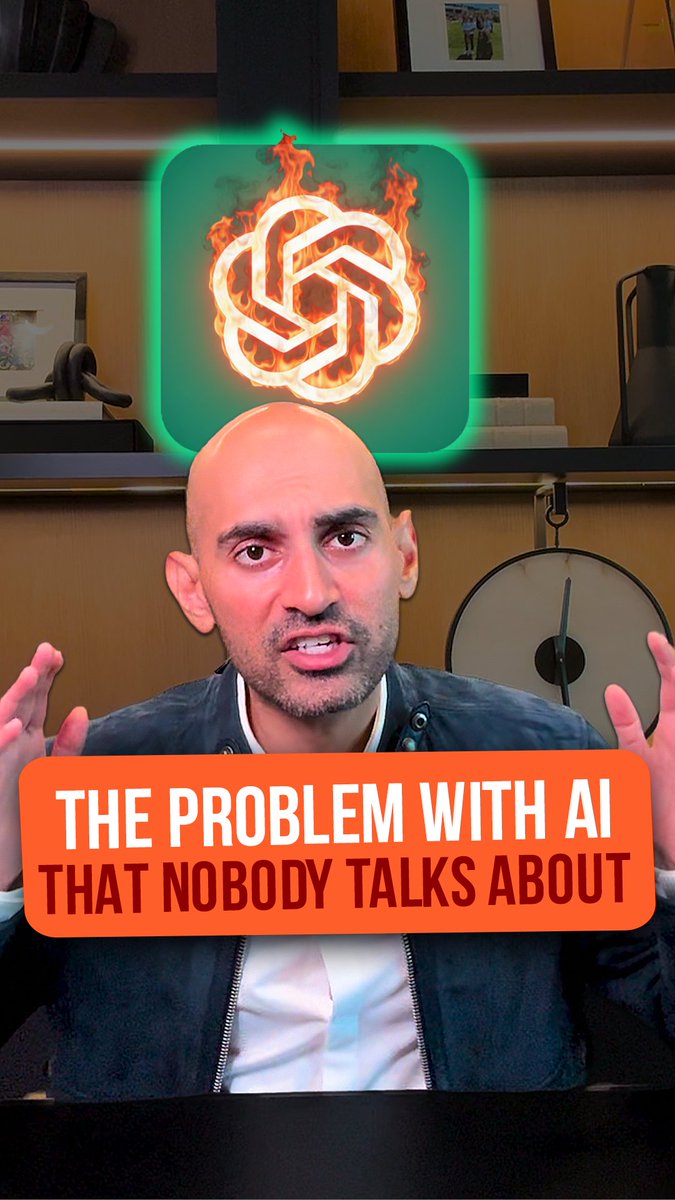
Why is ChatGPT struggling so hard to make a profit? Hundreds of millions of people use it every week. OpenAI is generating massive revenue, and it is still losing billions a year. Here’s what I think is going on. Look at where the real advertising dollars go online. Some of Google’s biggest advertisers are companies like Booking, Expedia, and Amazon. Why? Because when you book a hotel or buy a product, you don’t want one perfect answer. You want options. You want to scroll. Compare prices. See photos. Check reviews. Feel like you made the right decision. That is how people buy. And that is where chat struggles. Ask ChatGPT for the best hotel in Tokyo, and it can give you a smart recommendation. But it doesn’t recreate shopping. It compresses the journey into an answer, when the money is made in the exploration. Even Walmart tested checkout inside ChatGPT, and the early results reportedly converted three times lower than sending people back to Walmart’s own site. The experience was not fast, relevant, or complete enough. So here’s the lesson. The way people interact with your business matters more than most people think. If your customers need to search, compare, scroll, look at options, and make a confident decision, you have to show up in the places where that actually happens. That’s what we help our clients do every day at our ad agency, NP Digital. Because the real money is not just getting attention. It is being in the right place when someone is ready to buy.

Neil Patel

10,407 просмотров • 1 месяц назад

Zoe Gardener on asylum seekers, "People are being moved out of a hotel where there were violent racist protests taking place week in week outside of their gates" "People being terrorised who were living there, a huge disturbance to the local community" "Yes, its right people should not have been housed in that hotel but for it to happen in this way, what an enormous humiliation for this government" "A huge failure which lays bear the arrogance with which they have approached this asylum issue" "Labour have gone day after day after day this summer pursuing anti migrant rhetoric over their social media, their announcements, across all of their policy approaches" "Labour have fuelled the flames of this hatred" "What they should have been doing is acting sooner to moving people out of hotels and into a more sustainable community accommodation" "What if we allowed people to work while they are in the asylum system, as they do across Europe, so that they can pay to support themselves in private rental accommodation" "It is not illegal to enter the UK to seek asylum" "And in every other European country they are entitled to work while their claims are being assessed" "They are not breaking the law by being here, it is clear under international law they have a right to be here and claim asylum" "Under this privatised system of asylum accommodation where people own, as you say, poor quality hard to let properties. That's not the right model" "We should have a not for profit model of asylum accommodation where people are house through local authorities, where they are able to work in order to support their own accommodation" "It is insulting the intelligence of viewers that they can simply be made to disappear" "We're already seeing the violent far right racist organised parts of those demonstrations, those people are saying this was a success, saying that if they create a space that is unsafe outside these hotels, if they create disorder, they will have to move asylum seekers out" "And they are threatening to do it all over the country"

Farrukh

163,695 просмотров • 1 год назад

She's a 27-year-old samba coach who makes $13,000 a month teaching a dance most people are too scared to try. $3k is the studio. The other $10k comes from filming the lessons. Here's the mechanic nobody expects: samba looks impossible. Feet moving faster than the eye tracks, a rhythm that seems unlearnable. So when she breaks one move into three slow steps on camera, people don't just watch — they try. In their kitchen. Right then. And a video you attempt is a video you replay, save, and send to a friend. She's not selling a performance. She's selling "wait, maybe I could actually do that." That's why her clips outrun flashier dance videos: the flashy ones make you feel like you never could. Hers make you feel like you're one tutorial away. Aspiration keeps you watching. Instruction makes you come back. Where the $10k comes from: Online classes — the free clips are a funnel; the paid course is the product. Built once, sells nightly. Brand deals — dancewear, shoes, fitness apps pay for a real instructor with a watching audience. Studio bookings — locals find her through a 5-million-view breakdown, then walk in the door. Zero editing on her end. Phone on a tripod, AI cuts the clearest steps to the beat, captions the counts, schedules the week. Teaching is the content. The lesson isn't "learn samba." It's that teaching a hard skill in slow, stealable steps beats showing off every time — people follow what they think they can copy. What's a skill you could break down that everyone thinks is too hard? Drop it below — follow so you catch the next one.

Rich

5,054,096 просмотров • 20 дней назад

Made $530,000 with Ai Bot that started with $313. Didn't know how to code. Now this bots run 24/7 printing money while sleeping. I've made the exact step-by-step guide to build this Claude Code Polymarket trading bot. Prompts. Code. Risk settings. Paper trading checklist. Everything from zero to running bot. It's free. For 24 hours. After that I'm charging $499 for it. To grab it right now: 1. Comment "Claude Bot" 2. Like and Retweet this post 3. Follow me Himanshu Kumar ( I can't send DMs to non-followers ) I'm DMing everyone who Complete the 3 steps. I spent hundreds of thousands hiring developers because he was too scared to learn. Then learned Claude Code. Built algorithmic trading systems. $313 → $530,000. You have the same tools available right now. And you're using them to ask ChatGPT for Instagram captions. This attached video is a goldmine. Full live walkthrough. Claude Code building actual Polymarket trading bots. From zero. Every line of code. Every decision explained. Now let me break down why everything you're doing in trading is wrong and exactly how to fix it. Save this post. You'll hate yourself if you lose it. ↓ Let's start with why you keep losing money. You already know the answer. You just won't admit it. You overtrade. Every. Single. Day. You see a candle move. You feel something. You enter. No plan. No edge. No reason. Just feelings. Then it goes against you. You feel something else. Panic. Anger. Denial. You move your stop loss. Or you didn't set one at all. "It'll come back." It doesn't come back. So you take another trade. A revenge trade. Bigger size this time. Because you need to "make it back." That one fails too. Now you're emotional. Now you're tilted. Now you're using leverage you have no business touching. 40x. 50x. 100x. On a trade you entered because a candle looked "bullish" and some guy on Twitter said "send it." You get liquidated. Close the laptop. Punch something. Tell yourself you'll be "more disciplined" tomorrow. Tomorrow comes. Same cycle. Same result. Same liquidation. You've been doing this for months. Maybe years. And you still think the problem is your strategy. The problem isn't your strategy. The problem is you. Save this post right now. What I'm about to show you is the only way to remove yourself from the equation. Follow Himanshu Kumar so you don't miss any of this. ↓ Here's what's actually killing your account. It's not the market. The market doesn't care about you. It's not your indicators. RSI works fine. MACD works fine. They all "work." It's not your timeframe. It's not your broker. It's not the "manipulation." It's four things: 1. Emotions. You hold losers because hope feels better than loss. You cut winners because fear feels stronger than greed. You size up when angry. You skip trades when scared. Your emotional state determines your position size. That's insane. And you know it's insane. But you keep doing it. 2. Overtrading. You take 15 trades a day. Maybe 5 of them had actual setups. The other 10 were boredom. Boredom trades are the most expensive hobby in human history. 3. Leverage. You use 20x-50x on trades where you're not even sure about the direction. That's not trading. That's a casino with a nicer interface. 4. Fees. You're smashing market orders. Paying spread. Paying commission. On 15 trades a day. Your broker makes more money from your account than you do. Think about that. Your broker is profitable on your account. You're not. You're the product. Not the trader. These four things are why 90% of traders lose. Not bad luck. Not the market. You. Save this post and follow Himanshu Kumar because the solution is coming next. ↓ The solution is painfully obvious. Remove yourself from the equation. Not partially. Not "I'll be more disciplined." Not "I'll journal my trades." Not "I'll meditate before trading." Completely remove yourself. Build a bot. Let the bot trade. You go live your life. The bot doesn't feel emotions. The bot doesn't overtrade. The bot doesn't use reckless leverage. The bot doesn't smash market orders and bleed fees. The bot follows the rules. Every single time. Without exception. Without "just this once." Without "I have a feeling about this one." Rules in. Execution out. No human in the middle to mess everything up. That's algorithmic trading. And before your ego jumps in with "but I'm different, I have discipline" — No you don't. Your account balance proves you don't. If you had discipline, your account would be green. It's not. So you don't. Accept it. Automate it. Move on. This is the hardest truth in trading. Your discipline will always fail. A bot's won't. Save this post. Follow Himanshu Kumar for the exact bot setup that removes your emotions permanently. ↓ "But I don't know how to code." Neither did he. The guy in this video didn't know how to code for most of his life. Got held back in 7th grade. People counted him out early. Spent years building apps and SaaS businesses without writing a single line of code. Hired developers on Upwork instead. Spent hundreds of thousands of dollars paying other people to build what he could have built himself. Because he was scared to learn. That fear cost him years. And hundreds of thousands of dollars. Sound familiar? You're doing the same thing right now. Not with developers. But with your time. You're spending thousands of hours trading manually because you're scared to learn the thing that would make trading automatic. The fear of learning to code is costing you more than any bad trade ever did. Because every month you trade manually is a month of emotional decisions, overleveraged entries, and unnecessary losses that a bot would never make. And here's the thing that should really frustrate you: AI does the hard parts now. You don't need a computer science degree. You don't need to work at a hedge fund. You don't need to be "good at math." Claude Code writes the code for you. You just need to think clearly about trading ideas. That's it. If you can describe a strategy in English, Claude can build it in Python. "I don't know how to code" stopped being a valid excuse in 2024. It's 2026. You're 2 years late on that excuse. Find a new one. Or stop making excuses entirely. Save this post. Follow Himanshu Kumar because I'm showing you how people with zero coding experience are building profitable bots. ↓ The process that actually makes money. Three letters. R. B. I. Research. Backtest. Implement. That's it. That's the entire process. Every single day. Research: Find an idea. A pattern. A market inefficiency. Don't trade it yet. Don't even think about trading it yet. Just research it. Backtest: Test the idea against historical data. Does it work? Not "does it look good on one chart." Does it work across thousands of trades? Across different market conditions? Across in-sample AND out-of-sample data? If no, kill it. Find another idea. If yes, move to step 3. Implement: Build the bot. Deploy it. Paper trade first. Then live with small size. Scale only on evidence. Research. Backtest. Implement. Every day. No exceptions. You know what your current process is? Feel. Enter. Pray. F. E. P. Feel bullish. Enter a trade. Pray it works. That's not a process. That's gambling with a TradingView subscription. RBI is the only process that works. Save this post. Tattoo it on your forearm. Follow Himanshu Kumar for daily RBI breakdowns. ↓ What Claude Code actually does that your manual process can't. You can maybe test 3-5 strategy ideas per week. Manually adjusting parameters. Manually checking results. Manually writing code (badly). Claude Code tests 50-100 ideas per week. With parallel agents running simultaneously. Multiple strategies being built, tested, and validated at the same time. While you sleep. The guy in this video spends 4-8 hours a day building systems with Claude Code. Not trading. Building. Research. Backtest. Implement. Then iterate. Improve. Optimize. Every day the systems get better. Every day the edge compounds. Every day the bots get smarter. While you? You spend 4-8 hours a day staring at charts making the same mistakes you made last month. Same indicators. Same patterns. Same entries. Same losses. He's iterating forward. You're running in circles. Same 8 hours per day. Completely different outcomes. Because he's building systems. And you're feeding a casino. Stop feeding the casino. Start building the machine. Save this post and follow Himanshu Kumar for the Claude Code workflow that iterates strategies while you sleep. ↓ Jim Simons. That's the benchmark. You probably don't know who Jim Simons is. And that tells me everything about how seriously you take trading. Jim Simons. Mathematician. Founded Renaissance Technologies. Built a net worth of $31 billion. 100% from algorithmic trading. Not one single manual trade. Not one "gut feeling" entry. Not one RSI divergence. Not one "smart money concept." Algorithms. Bots. Systems. Data. $31 billion. His fund averaged 66% annual returns for over 30 years. While you're excited about making $200 on a trade that you'll give back tomorrow. The best trader in human history never placed a manual trade in his life. And you think your edge is staring at a 5-minute chart with bloodshot eyes at 2 AM? Your edge is building the system. Not being inside it. Jim Simons is the benchmark. Everything else is noise. Save this post. Follow Himanshu Kumar because I'm building toward the same goal and showing every step publicly. ↓ What you need to understand about patience. This is not get-rich-overnight. The guy in this video says it directly: "This channel is not for people looking to get rich overnight. It's not plug and play. There are no shortcuts. If you're impatient, this probably isn't for you." And that's exactly why most people will fail at this. Because you want results now. Today. This trade. You don't want to spend a week building a bot. You don't want to paper trade for 2 weeks. You don't want to test 50 ideas to find 1 that works. You want to copy someone's bot, run it live with your rent money, and be rich by Friday. That's why you'll be broke by Friday. The guy making $2.3M spent months iterating. Testing. Failing. Rebuilding. Testing again. He was patient when you would have quit. He was calm when you would have panicked. He was consistent when you would have given up. Patience isn't just a virtue in trading. It's the only virtue. Without it, everything else fails. Impatience is the most expensive personality trait in trading. Save this post. Follow Himanshu Kumar and learn to build systems with the patience that actually pays. ↓ The live streams where the real learning happens. The YouTube video is the trailer. The live streams are the movie. Real-time bot building. Real-time questions answered. Real code shown. Real mistakes made and fixed. Not polished highlight reels where everything works perfectly. Actual development. Where things break. Where strategies fail. Where code doesn't compile. Where the fix takes 2 hours. Because that's what real development looks like. And seeing the messy parts is more valuable than any polished tutorial. Because when your bot breaks at 3 AM, you need to know how to fix it. Not just how to celebrate when it works. The streams mix beginner and advanced. Start with how to automate trading. How to use AI for code generation. Then dive into the daily work. Claude Code. Parallel agents. Constant iteration. Live debugging. 4-8 hours of real algorithmic trading development. Live. Uncut. No filter. Most "trading education" shows you the wins. This shows you the work. Save this post. Follow Himanshu Kumar for the stream schedules and breakdowns. ↓ The belief that changes everything. Code is the greatest equalizer. Not money. Not connections. Not a degree. Not where you grew up. Not what school you went to. Code. Once you can build systems, you can build anything. For the rest of your life. A trading bot today. A SaaS product tomorrow. An automation business next month. A completely different life next year. The skill isn't "algorithmic trading." The skill is building systems. And that skill transfers to everything. The guy who can build a trading bot can also build a lead gen tool. Can also build a content pipeline. Can also build a SaaS product. Can also build literally anything that runs on logic and code. One skill. Infinite applications. And AI makes learning it 100x easier than it was 5 years ago. You don't need to be smart. You don't need talent. You need Claude Code and the willingness to sit down and build something instead of consuming content about building something. Building is the skill. Everything else is entertainment disguised as education. Save this post. Follow Himanshu Kumar because I'm showing you how to build, not just how to watch. ↓ If any of this applies to you, pay attention. If you've lost money from overtrading. If you've been liquidated. If you know trading is the vehicle but manual execution keeps crashing you. If you've tried "being more disciplined" and it never lasted more than a week. If you keep saying "next month I'll start automating." If you've spent more money on courses than you've made from trading. There is a better way. It's not a magic indicator. It's not a signal group. It's not a $997 mentorship from a guy who makes money teaching, not trading. It's building your own system. A system that trades without emotion. A system that follows rules without exception. A system that runs while you sleep. A system that compounds while you live your life. That's the answer. It's always been the answer. You've just been too scared to accept that the solution requires building something instead of buying something. ↓ What the next 30 days look like if you actually commit. Week 1: Watch the video. Learn Claude Code basics. Build your first simple strategy. Run your first backtest. Week 2: Iterate. Let Claude improve the strategy. Run Monte Carlo validation. Paper trade. Week 3: Go live with $50-100. Tiny positions. Watch every trade. Compare to paper results. Week 4: Scale based on evidence. Not based on excitement. Not based on one good day. Based on data. 30 days from now you either have a running bot that trades without your emotions destroying every position. Or you're exactly where you are right now. Reading another post. Making another promise. Breaking it by Tuesday. Same 30 days either way. Different actions. Different results. Different life. ↓ Full video tutorial attached. Live bot building with Claude Code. From zero to running Polymarket trading bot. Every line of code. Every decision explained. The video is free. Claude Code is available now. The market is open 24/7. The only thing standing between you and a profitable trading bot is the same thing that's been standing there for months. You. Get out of your own way. Follow Himanshu Kumar for daily AI trading bot breakdowns, live build sessions, and the full RBI process. Save this post. Watch the video. Build the bot. Or keep trading manually and keep losing. The choice has never been easier. And you've never been more stubborn about making the wrong one.

Himanshu Kumar

37,638 просмотров • 4 месяцев назад

🚨 US-IRAN PEACE DEAL IS ABOUT TO COLLAPSE... And the markets don't fully understand what that means yet. Iran just closed the Strait of Hormuz again. Not a warning, Not a threat, Closed. In direct response to Israeli strikes on Lebanon. The same strikes that happened while peace negotiations were still technically on the table. The same table that just got flipped. Insiders are already saying it out loud: the peace deal is collapsing. Everything the market priced in over the last two weeks the ceasefire premium. The Hormuz reopening rally, the oil selloff, the risk-on rotation gets unwound. All these events happened at the same time. Here's what closes through the Strait of Hormuz: 20% of global oil supply every day gone. JUST IMAGINE. 20 PERCENT. The oil drop that happened on peace deal optimism was one of the fastest moves in months. The reversal of that move will be just as fast. Except in the other direction. But oil is just the beginning. Risk assets were already fragile before this. The S&P 500 concentrated in eight names. Bitcoin sitting at a level where bull traps end. Leverage everywhere, retail fully positioned for the soft landing scenario. There is no soft landing scenario anymore. Geopolitical risk just came back harder than it left. And markets that priced out that risk over the last two weeks now have to price it back in overnight. With no orderly exit. Energy spikes, safe havens get bought, High-beta tech gets sold first. Crypto follows within hours. The crowd that celebrated the peace deal last week is the same crowd that's now holding the bag. This is not a dip, this is a regime change. Everything changes from here. This sounds SCARY, but I will keep you updated on everything here When I rotate money, I will post my moves here so my FOLLOWERS can SAVE their money Follow me and turn NOTIFICATIONS ON, as I will share my strategy soon Many will regret not following me earlier...

ᴛʀᴀᴄᴇʀ

153,880 просмотров • 2 месяцев назад

Just in $AMD Anush "Speed is the moat"|ROCm🎙️ In the race to define the future of AI, what's the one advantage that truly lasts? It's not proprietary tech, argues Anush Elangovan Elangovan, VP of AI Software at AMD , but the sustainable speed of innovation. He explains why AMD is rejecting the "walled garden" model for its open source ROCm stack, betting that an open community flywheel is the key to victory. Listen to understand how this open strategy is designed to out-innovate closed systems by empowering developers to solve everything from frontier-model challenges to the mundane, everyday problems that define the "last mile" of AI. AMD ROCm Software: Part 1 Transcript [00:00:00] Andrew Zigler: Joining me is Anush Elangovan, VP of AI software at AMD. And when people talk about AI compute, the conversation often stops at hardware specs, but it's more than just physical chips that win the game. It's also the software ecosystems supporting them. [00:00:18] Andrew Zigler: The prevailing strategy in the industry has been to build something like a walled garden. You know, something closed, proprietary locks, developers in. But AMD is betting on an entirely different play, open source acceleration, and with rock, their open source AI software stack. AMD is building not just hardware parity, but an innovation flywheel that's powered by the community with interoperability and the freedom to scale without all of that pesky lockin. [00:00:48] Andrew Zigler: And in this world, speed is your moat and how fast you can innovate while your platform remains open, flexible, and standardize across all of its applications. That's what we're gonna explore [00:01:00] today. So Anush, I'm really excited to have you here. Welcome to Dev Interrupted. [00:01:04] Anush Elangovan: Thanks for having me. Uh, super excited to chat about it. [00:01:07] Andrew Zigler: Amazing. Well, let's go ahead and dive right in with kind of what I laid it out with in the beginning, the idea of the moat and it being about speed. I wanna unpack that a bit because that came from you when you and I first spoke. And I, and I want to know, you know, how do you define speed inside of AMD beyond just things like hardware, benchmarks. [00:01:27] Anush Elangovan: Yeah, that's a very good question. So when we typically talk about speed, everyone's like, Hey, hardware benchmark specs, right? Like, uh, memory bandwidth or, or flops. And that is one important part of it, uh, AMD does very well. With that, we do have, a, a very good history of executing on that axis. [00:01:47] Anush Elangovan: But when I say speed is the moat, it is about, uh, how we prepare, how we build the muscle to run the race for a long time and run it fast. And it is [00:02:00] not about a single point in time that you've, you've beat some you know, benchmark and, and you declare victory. It's about building the ability to consistently develop and deliver. [00:02:13] Anush Elangovan: Both hardware and software innovation at scale and do it fast, right? Like, you know, we we're increasingly getting to a point where models come out and they're, uh, you know, a year or two ago it was like, Hey, they work on AMD on day zero, which is great, but now they are performing on AMD the day it releases, right? [00:02:32] Anush Elangovan: So, what does it take to Prefetch where the industry is going? Be prepared to intercept. At that point is what you know, I, I refer to as you know, the, the speed factor in, in creating this mode, right? And the mode is just shed all things that hold you back and run as fast as you can. [00:02:53] Anush Elangovan: Uh, because the pace of innovation that is, uh, being seen in, in AI [00:03:00] industries is just. Amazing. Right? And it's like, it's transformational at at how you generate electricity. It's transformational as at how you build data centers. It's transformational at how you deploy compute, networking. It's transformational at what kind of use cases you, you know, uh, use AI for. [00:03:17] Anush Elangovan: Uh, and for that, you need to be prepared to, see what comes tomorrow and be prepared to run the race tomorrow. [00:03:23] Andrew Zigler: Yeah, it's a really great perspective because it highlights that it's not just like a checkpoint that you run through. I like how you called out, like it's not just hitting that benchmark or being the best in class at that moment, in that snapshot, it's about having a. The throughput and about having that dedication to the idea and continuing to deliver on it. [00:03:43] Andrew Zigler: It's not just crossing the threshold, but it's also being the engine. And that's what, that's what protects a business. That is the moat, because the moat is that innovation layer, the faster and more, uh, future forward. That you can work and think, [00:04:00] you know, the better. Uh, we, we talk a lot about like future forward work styles. [00:04:04] Andrew Zigler: Like what are the things I could be doing right now today that are gonna be like, way more useful tomorrow? Let, let's abandon those, workflows that are older and that kind of like, that translates into. An advantage when you work that way. You know, what kind of things have you learned working with, uh, like across all spectrums of people who would use ROCm, right? [00:04:23] Andrew Zigler: You have like the developers, but then you also have the enterprises and you have this large span of adoptees, right? So what is the, what does that look like that you learn? [00:04:32] Anush Elangovan: Yeah, so, so the way I look at it is there are gonna be pockets of different, uh, you know, cadences, right? Like, so people who are deploying in enterprises, for example, right? The validation and how long it takes for them to deploy an LLM that's secure. It's, with guardrails, et cetera, maybe longer. [00:04:52] Anush Elangovan: but you still have to go through the process and you have to be prepared to like, walk that walk to deploy an enterprises. That doesn't mean it's [00:05:00] not fast, that's as fast as you can do for that industry, right? And if you are deploying AI in healthcare, right, it's, it's got its own, uh, cycle. [00:05:07] Anush Elangovan: but in each one of these, you want to see how, like, go down to the essence of what is it that you actually have to do. And, you know, I, I, I like how you framed it. It's like it's, you shed your prior assumptions of how things are done, right. And, and you kind of build up from a, uh, first principles, uh, approach to say, this is how I could use AI to unlock, whatever I'm doing. [00:05:33] Anush Elangovan: And, and, some of it, you know, it's good to really step back and look at. Just question every part of it, right? Like right now you're getting chat GPT and, Gemini competing for like, math, olympiads and, and, uh, college, uh, reasoning, uh, tests. Right? And, and those are like that, that is amazing and increasingly like complex tasks that they're trying to do. [00:05:58] Anush Elangovan: But there may also be like. [00:06:00] More mundane things that AI could, could get applied to. Right? And, and so when we think about shedding old ways, you wanna shed it not just in like the tip of the spear. It's like, you know, I'm gonna see what's the frontier model. It's also, it could be something as simple as. [00:06:18] Anush Elangovan: How do you choose a, a movie, uh, you know, like a recommendation system, right? Or, or, uh, an automated, uh, flight, uh, rebooking system. So the moment, you know, your flight is late, uh, right now it's a notification, right? It's like, oh, you got a text message saying your flight's late. And I got that like three times this week. [00:06:38] Anush Elangovan: But anyway, uh, and, and, and, and, I was just like, okay, so if I were to rethink this. All this MCPs that we have that should be hooked up into an MCP that says, your flight's delayed. Here are your options. If you want, you know, these are the paid options. Yeah. Here are the free options. This will get you back into your you know, Toronto airport [00:07:00] tonight. [00:07:00] Anush Elangovan: Or if you stay, here's a hotel plus this, plus this, plus. It's just like, go ahead is all I should say. Versus now I'm like, okay, can someone, you know, can I call a travel agent? Can I do this? Can I go online and log into And you know, so we gotta fundamentally rethink even those like small, nuances of, things that we do that can be automated out and AI is really, really good at doing something like this, right? Maybe I just explained an AI startup idea right now. Somebody should just start that. [00:07:29] Andrew Zigler: I think you did. Yeah, you definitely did. Someone, one of our listeners is definitely going to lift that off of you. I, I, I, you know, I hate being on the receiving end of those. You feel a little helpless and then you have to like, follow the whole flow. So I know what you mean. Like I, I like how you called out that the build and this like. [00:07:45] Andrew Zigler: Where speed is your moat and the innovation layer is protecting you, is what makes you better than your competitors. How you scale that and you bring that to market. So by understanding the problems that you're solving, uh, throwing away those older assumptions, but also [00:08:00] recognizing that like. We're building every single day, new things and new ways of using stuff that we're still figuring out the implications of. [00:08:08] Andrew Zigler: And so when you have a lot of velocity and you're introducing a lot of new ideas, and maybe you have that workflow now that automatically rebook your flight off of your late flight text message, and uh, I know I would certainly use it, but you know, what kind of philosophies guide the way that y'all think about building this ecosystem to manage that stability while letting folks. [00:08:29] Andrew Zigler: Play with the speed and the assumptions and the airplane re bookings. [00:08:34] Anush Elangovan: so, so I think, you know, we need to peel one layer down, right? and the philosophy is, Hey, we, we just discovered electricity, right? And you know what we're gonna do? We are gonna make motors, uh, or dynamos, right? Like engines. Uh, sure. We don't know if it's gonna be a Ferrari that you're gonna make, or it's a a a a dump truck. [00:08:57] Anush Elangovan: That's good for doing this. But let's [00:09:00] let, which is also required, right? You need a dump truck. You need a garbage truck. And, [00:09:04] Andrew Zigler: Yeah. You need the [00:09:04] Anush Elangovan: course you need, uh, a Ferrari for a midlife crisis, right? So, [00:09:09] Andrew Zigler: precisely. [00:09:10] Anush Elangovan: But, but my, uh, point is what do we build next? And, uh, and this is what I meant by like, okay, let's, let's take those baby steps to build the. [00:09:20] Anush Elangovan: Infrastructure that's required that we know we'll have to use, right? So, so if I just discovered electricity, okay, great. Now one, how do I save this electricity and how do I use it? So there's battery technology, so you need to do something like that, right? Like so. But then you also want to make it into an actionable thing. [00:09:37] Anush Elangovan: You want to make it for like automobiles, or you wanna use it for, you know, powering, uh, entire cities. So it is that transformational. So, uh, AI is that transformational. So, if you distill down, it'll, it'll come down to how do we think about, what we can do with this this fundamental technology that, We may not be aware of what it [00:10:00] is gonna unlock next, but at least you know the next step is clear, right? It's like a dense fog, you know, it's gonna be like, it, it's the right path. You see the light, but it's kind of like out there and, and the steps you're taking are concrete and you're like, okay, this is good. [00:10:16] Anush Elangovan: I, this is better than where I was or where we were. So we are moving forward. So you can build with the. Intuition from what you see in the short term and a tactical view, but towards what you think the future is gonna be. [00:10:28] Andrew Zigler: Right. You almost like we're all in this like fog of war, right? And like you said, you're reaching out and you're trying to step through it. You could think of it too, as like you're in the dark and your hands are up in front of you and you know that. You're, you're not gonna run your face into a wall because your hands are out in front of you, but you're not gonna maybe do much better than that. [00:10:45] Andrew Zigler: So that's kind of like, I think the eco, the, the industry, the world that we find ourselves in, uh, and we all have to, then this becomes the power of an ecosystem, of a group of people working together to create that layer of, [00:11:00] uh, of establishing the [00:11:01] Anush Elangovan: exactly. And I, I, I just, instead of, you know, saying fog of war I describe it as like, you're in this. Beautiful valley with like a morning, uh, fog that's in. You can smell the flowers. You, you hear the birds. You are like, okay, it's, we are in like, uh, utopian paradise and yes, I just need to like, continue the walk, right? [00:11:24] Anush Elangovan: and then move forward with that, conviction that you're in the right spot. [00:11:27] Andrew Zigler: Yeah. So let's talk about that ecosystem world. This nice, I love how you describe it, this grassy side of a hill in the morning that's covered in some mist and maybe we can't see 30 feet in one direction, but it sure is a beautiful hill and it smells nice. And so we're all here. And why is, in that world, why is. [00:11:44] Andrew Zigler: You know, open source, their strategic advantage that y'all are going for in the AI hardware market. And, and then how does like ROCm turn that into wins for people within that ecosystem? [00:11:56] Anush Elangovan: you know, the, the way we look at it is this, is kind of like how I view [00:12:00] AI and the ecosystem, right? But, but it is for everyone to enjoy. Uh, and so we do want to make sure that. You know, it is, uh, beneficial for everyone. [00:12:09] Anush Elangovan: The ecosystem can come in and, and innovate. It's an open innovation engine. and uh, it is very different from, you know, having a walled garden with, Hey, only I know how to do this and I'm gonna do it and throw it over the fence and you can use it or keep walking, right? So we'd like to be good citizens that way, but also. [00:12:30] Anush Elangovan: Uh, it is self-fulfilling in a way, right? Like it, the, the pace at which we innovate with open source is unmatched. Like, you know, our serving engines are like VLLM and, and sg l. Those things, uh, those frameworks are like super, super aggressive in terms of how fast they come out with features and how fast they can you know, get performant models out. [00:12:52] Anush Elangovan: And that compared with what, uh, you'd get from, you know, the likes of like T-R-T-L-L-M or something is always lagging, right? Because you [00:13:00] just can't keep up with you know, 200 commits a week just on one particular model to get that model really performant [00:13:06] Andrew Zigler: And, and, and in that world where, you know, everyone can enjoy the winds of this, what kind of customer stories or innovation stories have really stood out to you and excite you about building and creating this place for developers? [00:13:19] Anush Elangovan: Yeah. So I think the parts that are super exciting for me are when when we get to see a customer that is first skeptical. Then they start a little like, okay, fine, we'll give you a chance. Uh, we do a simple, uh, POC and then they're like, huh, this seems to work. Yeah, we told you it works. [00:13:42] Anush Elangovan: You don't have to change one line of code. Really? Yes, no need to change one line of code. Okay, let's try a production workload. So then they try it. Oh, you're more performant than the competition. Yes. We're more performant than, than the competition. So how much does it cost? And we're like, oh, it's your TCO is better with, uh, [00:14:00] AMD. [00:14:00] Anush Elangovan: So again, they're like, wow, okay, good. So now how do we deploy at scale? And then we go deploy it at scale. And when they give a thumbs up on that and they say, this is good, right? That's when you know, you, you see it go full circle from like, oh, we, we've never heard about AMD to like actually deploy to tens of thousands of GPUs In the order of a few months, right? It, it, it really is fascinating to see and very exciting and invigorating to [00:14:28] Andrew Zigler: Yeah. At like a great exposure to a lot of interesting problems. And, and then people using the infrastructure, the, the technology available to solve those problems. Really specific problems by the way, that's often why they're bringing their data and AI to it, uh, is because it is really specific and important for them. [00:14:45] Andrew Zigler: And there's a, a lot I think that other engineering orgs can learn and even emulate from AMD's success and, and having this open source ecosystem and it causing this acceleration within. You [00:15:00] know, uh, customers and enterprises that use and adopt the tools and, and, and that creates an advantage. And that goes back to why we're talking and like the real thesis of our conversation today. [00:15:10] Andrew Zigler: So how do you think engineering leaders that are listening to this and obviously tapping into this great success AMD has from an open source flywheel, how do you think other, other folks building in the same space can foster that open, first, that open source oriented culture in order to, you know, accelerate their innovation goals? [00:15:29] Anush Elangovan: Yeah, that's a very good question. So the startup that um, was acquired by AMD we, we built, I mean, we started off doing iot stuff and you know, smart ring and all that, right? But in the, the end of like, uh, and not the end, the last six years of the company was building ML compilers. [00:15:47] Anush Elangovan: And ml, ML compilers are like super, uh, complicated, sophisticated, advanced algorithms, dah, dah, dah. but it was all open source, right? So our VCs were like, wait, what do you mean your core [00:16:00] IP is open source? And um, the speed is the moat applied even then, right? It was just like, yes, if you have an idea that. [00:16:08] Anush Elangovan: Because someone saw this idea that you are, they're gonna be able to catch up, then you probably have the wrong idea anyway. But if they are, you know, you execute and they're gonna catch up, that you should assume they're gonna catch up. Right? So you gotta move forward. So keeping it open source is super important. [00:16:25] Anush Elangovan: But also to your question on like, you know, the learnings from an AMD standpoint, right? If there are, hard problems, I'd say dig in and work through it, right? Like there's no way but through it, right? That should be the simple mentality. And more, uh, frequently than not. you'll see that you'll just make it through in a, in, in good form. [00:16:52] Anush Elangovan: But if you doubt it and you're like, oh, I don't know if I should commit, if I'm, I, you know, what should just commit to do the right thing [00:17:00] every step, right? Every step, and just keep taking one step in front of the other. And in no time you'll see that you'll be running. Right. And, and yes, the first few steps will be like, yeah, everyone's complaining about your software quality. [00:17:15] Anush Elangovan: Everyone's complaining about this and that, and it doesn't work. And, and a few steps in, you know, you get, you get the hang of all the complaints that are coming in. You get the feedback loop. You're like, okay, what, what are you prioritizing again? One step in front of the other, right? You just keep knocking that out and then you get to a point where you're, it just becomes second nature, right? To do the, to do the right thing. And, and then yes, if someone gives you two options, you'll be like, fine. This is, uh, you know, there's always the resource trade off. There's always a human capital trade off, but what's the right thing to do? of course, I, I'm pragmatic about what we choose, but, but if the right thing for your long-term success is dig in, go first, principles, make it [00:18:00] happen. [00:18:00] Anush Elangovan: Well. Then just go for that. There's, there is no shortcut to [00:18:04] Andrew Zigler: acknowledging, you know, how it aligns with your mission, your core company goals, and what you're looking to achieve. And, and I, I love how you rightfully called out that in the open source world and you know, you have your technology that you've built, what you think is your moat upon, right? [00:18:22] Andrew Zigler: It's your code and, and to open source that, or to just make it where anyone could peer in is, you know. Scary in one regard, but two, it just kind of feels like you're handing away your throne room in some kind of sense, a very direct feeling sense. But the ultimately, you were really right to call out, and this is something I think about all the time, that the real power there is still the speed This the speed. [00:18:42] Andrew Zigler: That was the moat at the beginning of our conversation. It's the speed in combination with your. Very specific domain understanding of what you're building and what you're creating, and your new role as the steward of that world and how people plug into it, which [00:19:00] has frankly, a lot more influence and power than lording over a closed. [00:19:04] Andrew Zigler: You know, repository or an ecosystem, and like you said, like throwing things over the wall. Sure. There, there might be people always on the other side of that wall, but you're not gonna have a great connection with them. You're not gonna be able to really clearly understand them. I, I like your metaphor of the side of the field of the mountain a lot more. [00:19:23] Andrew Zigler: But, but in the, in this world, you know, where. That speed is, is the power and, and open source is just one way that you can harness that speed to get really far ahead and to innovate. , There's other parts of this equation that you can be experimenting with too, and I'd love to pick your brain about them as a software leader and, and, and one of them is about looking forward and kind of understanding that future that we're all building towards and beyond today's models and hardware. [00:19:48] Andrew Zigler: You know, what do you see as the next major bottleneck or opportunity in the AI compute space? As, as you know, enterprises and folks start to get a little more mature about what's available to [00:20:00] them. [00:20:00] Anush Elangovan: Yeah, I think, the bottleneck and opportunity is, uh, what I'd call, call walking the last mile of ai. Right. Uh, and like I I, I gave you an example, uh, previously, but, but it's similar to that. It's like there are cases where Humans have so many, uh, things to do in your day. You know, like the, if we sit down and actually had a customer focus like, okay, these customers lives, I'm gonna save four hours of this customer's life. And if you actually sit down and look at all of that, it'll be. Easily automatable, easily you know, uh, applicable, uh, for ai, right? [00:20:39] Anush Elangovan: Like, but then making it happen is gonna take a little bit, right? It's like maybe it's, uh, paying your utility bill, right? Or something like that, right? Or, or, your healthcare explanation of benefits. Uh, like, I'm sure you get an explanation of benefits, and I'm like, I, I don't even know what that thing is. [00:20:55] Anush Elangovan: It's just like EOB and like. [00:20:57] Andrew Zigler: it's a big, a big old PDF. Yeah, [00:21:00] exactly. [00:21:01] Anush Elangovan: Like, like, I'm like great straight to the, uh, shredder, right? And but that could be, you know, automated with the ai, right? It, it, it'd be like, Hey, the summary of this thing is you went and visited this day. Everything is okay. Everything is paid for, so don't worry, it's not a bill. [00:21:17] Anush Elangovan: That again, the same, uh, thing, but the sense of what that information overload is could be. Digested by ai, uh, accumulated over time and retrieved when you need it. Like, I don't, I actually don't even need to know this EOB right now, unless of course, whenever I need to know it, that maybe, you know, like for some benefits I need to figure out what do, what did I do over the past year and how do I apply it? Source:

Mike

14,195 просмотров • 8 месяцев назад

In 1998, Warren Buffett and Charlie Munger spent 4 hours explaining why the smartest people in finance keep going broke. It might be the most valuable finance lecture ever recorded: 1. The smartest people in finance went completely broke. Long-term Capital Management had 16 people with possibly the highest average IQ of any firm in the country, 350 to 400 combined years of experience, and most of their own net worth in the fund. They still went bankrupt. Buffett said if he ever wrote a book it would be called why smart people do dumb things. 2. Life and markets have no relation to sigmas. Buffett keeps a 1901 newspaper on his office wall. Northern Pacific went from $170 to $1,000 a share in a single day when two buyers accidentally cornered the stock. A brewer who had shorted it, facing a margin call, dove into a vat of hot beer. That man probably understood sigmas and knew such a move was impossible. Buffett has never wanted to end up in the vat. 3. Beta and sigmas tell you nothing about the risk of going broke. the LTCM team relied on mathematics and believed a six- or seven-sigma event could not touch them. they were wrong. history does not tell you the probabilities of future financial events. the real risk is a permanent blind spot in something crucial, often caused by knowing a great deal about something else. 4. To a man with a hammer, every problem looks like a nail. Munger's explanation for why brilliant people do dumb things. They learn a set of mathematical techniques and then twist every problem to fit the solution they already know. Combine that with a poor grasp of history, and you get people with advanced degrees blowing themselves up. 5. To make money they did not need, they risked money they did need. That is just plain foolish, Buffett says, no matter your IQ. Hand him a gun with a million chambers and one bullet, offer any sum to put it to his temple and pull once, and he will not do it. there is nothing on the upside that justifies the downside. people do this financially all the time without thinking. 6. The major banks all had risk models and had no idea what they owned. they met weekly at risk committees, printed all the statistics in neat columns, and did not have the faintest idea what risk they were carrying. The rare and essential quality is someone who can contemplate perils that have not popped up yet, the ones no past model contains. 7. A chief risk officer often just makes you feel good while you do dumb things. munger compares him to the Delphic oracle who convinced the Persian king to attack. he has a PhD and does advanced math, but he tortures reality to defend a model that does not hold under extreme conditions. all that computation makes you feel like you clobbered the risk when you have only clobbered your own head. 8. The whole quant risk system just changed the shape of the curve and kept going. Munger notes the business schools "improved" by throwing away the Gaussian curve and drawing a different one. They talk about fat tails now, but they still have no idea how fat to make them. he and Buffett always knew the tails were there, and used to roll their eyes at the risk-control people at Salomon. 9. Never risk what you have and need for what you do not have and do not need. Buffett will not explain to his family, who hold most of their net worth in Berkshire, that they went broke on a 100-to-1 gamble. Their returns get penalized 99 years out of 100 by being too conservative, and in the hundredth year they survive when others do not. 10. Build the business so that if the world stops working tomorrow, you have no problem. Berkshire double-layers its protection. First, they behave so no rational person questions their credit, then they hold so much liquidity that if the world suddenly hated their credit, they would not notice for months. It gives up higher returns 99% of the time and survives the one time others do not. 11. The real danger is a risk that has never happened before. Buffett wants someone who can imagine perils that have not yet appeared, the ones no model contains. The major institutions all had models, and that inability to envision the unprecedented is exactly what proved fatal. He and Munger spend a lot of time thinking about things that could hit them out of the blue that others leave out entirely. 12. Investing is simple, but not easy. The framework is not complicated. you did not need a high IQ to buy junk bonds in 2002 or stocks at low multiples in 1974. you just needed the courage of your convictions and the willingness to act when everyone else was paralyzed. Following logic rather than emotion is obvious, and yet some people find it almost impossible. 13. You cannot get rich with a weathervane. Buffett and Munger pay no attention to predictions about the economy or the market. People love predictions, entire industries are built on them, but it is like the king hiring a forecaster to read sheep guts. They have never made or avoided a single business purchase because of a macro view. 14. Name one super-wealthy economist. Munger's challenge. All these economists with 160 IQs spend their lives studying markets, and you cannot find one who got rich buying securities. Even Keynes tried to predict the credit cycle, broke a couple of times, and only did well once he switched to buying good businesses cheap and concentrating. 15. Focus only on what is important and knowable. Some things are important but unknowable, like whether someone drops a nuclear weapon tomorrow. Some things are knowable but unimportant. You narrow your attention to the small set of things that are both important and knowable, and you ignore everything else. 16. The market is there to serve you, not to instruct you. This is Graham's chapter eight, and Buffett calls it enormously important. When people talk about momentum or charts, they are saying the market instructs you. It does not. It just quotes prices. When it does something silly, you get a chance to act. Otherwise you go play bridge and check again tomorrow. 17. You can make a decision in five minutes or not at all. Buffett and Munger act fast because they rule out enormous territory in advance. Munger blots out startups entirely, and half a dozen other filters, so what remains is small enough to judge instantly. If they cannot decide in five minutes, they will not learn enough in five months to make up for going in deficient. 18. You can make a lot of money on a Sunday. Buffett said the calls you get on a Sunday, when things are truly screwed up, are the ones you make money on. All you have to do is be the collie and not the caller. You never get in a position where the other party can call your tune, so you can always play out your hand. 19. You are not right because others agree with you. Ben Graham said you are neither right nor wrong because the crowd disagrees. You are right because your facts and reasoning are right. Being contrarian has no special virtue over being a trend follower. All that matters is whether the facts are correct and the logic is sound. 20. Know where the edge of your circle of competence is. Buffett says the size of your circle does not matter. Knowing its perimeter does. You do not have to understand 90% of businesses. You just have to know something real about the few you actually put money into, and honestly recognize the ones you do not understand and walk away. 21. Intrinsic value is just the cash a business will produce, discounted back. Buffett thinks of every business as a bond with coupons that are not printed on it. Your job as an investor is to estimate those future coupons. If you cannot estimate them, like in a high-tech company, you pass. Investing is putting out money to get more back from what the asset produces, not from selling it to someone else. 22. The best businesses earn a royalty and need little capital. Coca-Cola sells a formula and takes a cut of every drink. Magazines like People operate on negative capital because subscribers pay in advance. The great businesses are the ones that can grow very large while needing almost no capital, which is why consumer businesses with pricing power are so valuable. 23. You only have to find one good idea, not twenty. Munger said you cannot find twenty deeply mispriced things, and Buffett agreed you do not need to. You do not have to have tons of good ideas in this business. You just need one good idea that is worth a ton, occasionally. For small sums, Buffett said he would have been 100% in Korea a few years earlier, where great companies traded at three times earnings. 24. The trick is measuring everything against your best opportunity. Munger calls this opportunity cost, the doctrine from the first page of the economics textbook that modern portfolio theory somehow ignored. Once you have found the best thing you understand, you measure every other option against it. The higher your default option, the more you can reject. 25. Modern portfolio theory is, in Munger's words, asinine. Most people will not find thousands of equally good things. They will find a few where one or two are far better than anything else they know. The right way to invest is to concentrate on your best opportunity cost, not to diversify into mediocrity because a model told you to. 26. Big opportunities must be seized, and seized big. Buffett says imagine you got a punch card with only twenty punches for your whole life, one per financial decision. You would think hard about each one, make fewer and better bets, and probably never use all twenty. The discipline of scarcity would make you rich. Dabbling in a bull market because it is easy is how people lose. 27. America has always been full of reasons to sell, and wrong every time. Coca-Cola went public in 1919 at $40, dropped to $19 within a year, and then faced the great depression, World War, and atomic bombs. One share reinvested is worth millions now. The country's opportunities have always won out over its problems. It is investors, not the economy, who tend to be their own worst enemy.

Jaynit

103,498 просмотров • 1 месяц назад

The most epic 13 minute AI rant I've heard in 2026 PS: My parent's heard this when I was playing it in the car and thought Jason ✨👾SaaStr.Ai✨ Lemkin went OFF like Stephen A Smith does on first take PPS: Full transcript below [17:00] Harry Stebbings: I I just wanted to ask Jason, if the people that we want are fundamentally different, the developers that we used to hire, we don't because AI writes the code for us. The marketers we don't want, the sales people we don't want—who who do we want genuinely? Like what is the attractive profile? Because your Anthropic’s and your OpenAIs are hiring, so so what are the people that we want in the companies of the future? [17:18] Jason Lemkin: Look, I know it sounds trite, but but the answer is simple. It's just the expression each year changes. We want folks that are genuinely AI fluent. It's pretty simple. Now you know, maybe last year we called them prompt engineers, right? That used to be a job. I don't know if you remember that actually used to be the hottest job on planet earth. Now no one needs a prompt engineer because it's pretty easy to prompt all these tools. That job died. Okay. Um and now we need go-to-market engineers. Um I think that job's going to die. We need—everyone needs so many forward deployed engineers. Like you can't hire enough forward deployed engineers. But uh you know um but Palantir just announced in whatever their their big their big event—they've gotten their deployment times down over 90% with forward deployed engineers. So that may become—so the this wave of disruption for the titles and the specificity, it's also exhaustingly accelerating. But it's really simple. You meet anyone for any role—sales, marketing, engineering, product, QA—they're they're either they're either they can't keep all of the ways they use AI to accelerate their job from spewing out of their mouth, or they're staring at you. It's there's nowhere in the middle. Like, and the person that comes in and says—it's it's it sounds Captain Obvious—but like, you know, you just had the whatever from Lovable, the the marketing head that was super popular on the show, right? She's just spewing AI-native insights into Lovable, right? It's not that complicated. You hire her, Elena, or whatever it is. You just hire her. It doesn't matter whether she's still in college or a junior or a senior or a middler, a left or right. And honestly, if you interview people, I would say of all even of the best startups I've invested in, maybe 30% of the management team meets this standard at best. 30%. Maybe less. And of the interviews I do in general, it's single-digit percents. It's just and in in that sense, it's the same as ever. Like you either lower the bar in hiring or you hire someone that's actually great. And someone that's actually great is so far ahead of you in how to apply to to employ the efficiencies of AI in their role, your jaw falls on the table. The difference is we used to need warm bodies. That's what's changing. We used to need warm bodies to answer the call, to do QA, to do code review, to to get the blue pixel to go from the upper left to the lower right. You laugh, but you need you literally needed to brute force this with humans. With AI, every day that goes by, the AI—you do not need brute force human beings on your team. And that's another reason they're shrinking. Why are all these new companies so efficient? They're just not brute forcing things with humans. They're just not. They're choosing not to. And so these team—all the brute forcers out there—everyone talks about how bloated teams got in 2021. I don't agree with that. I think they got as big as they needed to be when growth was high and you needed humans to do everything. All you look at these teams that that doubled—well if growth continued at 60% like the rate in early 2021 for 5 years or can help me do the math and every single thing a software company did required a human. You were understaffed by your 2021 headcount. You'd be sitting here in 2026. You every office in SoMa would be triple packed and you there wouldn't be enough humans to staff your company. It's just the world changed. [20:33] Harry Stebbings: Jason, you live on the bleeding edge. I think me and Rory see that and I think the world sees that when they hear you every week in terms of how you run SaaS. For all of the CEOs and execs who listen to the show, what would you advise them in terms of determining whether someone is AI fluent when they meet them for jobs, for talent? [20:51] Jason Lemkin: Here's I realized I was just asked this. I just did a review with a super fast startup growing just crossing 100 million and I was asked this question. And one of my favorite executives, I thought his answer was pretty dated and because he gave me an answer that was about 6 months old. The answer 6 months old is: "I look for folks in my team, I look for you know at what tools they play with." Okay, that was a great answer in like summer of 2025. Okay, I tried Lovable last week. Okay, the answer in 2026 is: "What commercial AI tool have you brought into your organization this month?" That's the test. Anyone that is on the bleeding edge that you would want to hire—now there are so many great products in the market. Okay, there is no excuse in any role to have not brought one tool a month into your organization. Okay, there—now there's going to be better and better tools and better and better products as the year goes on. What's the one you did? And you will see folks with their deer in the headlights to this question. What what sales tool? What marketing tool? What product tool? What engineering tool? What did you bring in? Why did you pick it? How does it working? Because if you're at remotely at the cutting edge, you're all over this. You're looking for the next agentic tools that will radically improve how you do business. This is—you think everyone thinks SaaS is at the bleeding edge, right? You know, you know, all we do is we're just looking for the tools and trying them. Okay? Okay, we're one year ahead of everybody else because we did the simplest thing in the world. Like we tried the tools early and we trained them. We trained them for a month. Okay, I'll give you—want hear a horrible example from this week? Super hot AI company valued at 6 billion. Okay, I'm not going to name it. Um, this week yesterday told us we had to quadruple what we spent on their product. Okay, their agent told us, right? And why did this happen? Okay. Well, at this $6 billion company, no one had trained the agent on its pricing properly. No one had tested it. They said, "Well, well, we've been in beta." And we said, "Well, when did the beta launch? A year ago." Okay, these are people asleep at at the wheel. You want somebody who the instant this comes up, they exactly know what the issue is. And "Hey, when I was at Lovable Replit, we trained the agent. This is how we did it. I brought in this tool. I brought in this tool that that Rory invested in last week. It solved all these issues." That's what you want to hear. And if they haven't brought in a tool in the last 30 days, at least deeply evaluated it. I don't really care whether they bought it, but gone so far down the funnel they can tell you—pick whatever tool: Fixie, Regie, GC, AIGC—I don't care how you went through it, you looked at it, you can tell me the eight ways it would improve the productivity of your business and three you didn't. Just don't hire that person because they're going to run your company to the ground. This is the job today. The job today is not to screw around on ChatGPT and to be a prompt engineer. The job today is to bring the best AI and agentic products into your organization and leverage all the hard work that the engineers have done building those products. That's your job. You don't have to screw around. You don't have to be a prompt engineer anymore. You have to be an agent deployment expert. A—this is the new job we're making up today. An Agentic Deployment Expert. That's your job from C-level to junior. Agentic Deployment Expert. Don't hire anybody else. You're going to regret it. They're going to stare at the camera. He's good. Stare at the camera. He's honorable. We could probably just I could slip away, get a coffee, and come back. No. And I I sound exasperated, Rory. And I—but the reason I am is I can just see I can see my best companies doing it. And I can see some companies I've invested in not doing it. And I want to cry. I just want to cry when they have no ADs on their team. I just—like you're flushing your years of your life down the toilet by not approaching your how you're building this company this way. [24:33] Rory: Yes. And at the risk of being positive, it's worth pointing out two things he didn't say. Well, something implicit why he said—Jason didn't do the only hire, you know, he didn't commit the um employment law, I think it's a civil penalty of saying only employ people below X who get the new new thing because he implicitly said anyone can do it provided you're willing to learn. And I think that's the big aha that's one of the positive statements to make here right? Look and I think it applies—I'm always wary of being "Hey, coming across, hey this this is the things that you all have to do." I think it applies to everyone including investors right? I mean I will say I have found that unless you're willing to invest the time learning these tools you actually shouldn't be investing in them. One of my partners Andy had this expression: "You know, if you decide you want to stop learning new things you probably should retire within 6 to 12 months and never write another check again." Maybe that's down to 3 to 6 months at this stage, right? And I think, you know, it's— [25:27] Harry Stebbings: Yeah, I actually I actually had a meeting with mine and Jason's biggest investor the other day and I—pretend he's not here—I said I think he's the most equipped investor for this generation of investing because I don't think anyone quite sits at the bleeding edge like he does on the investor side. [25:42] Harry Stebbings: Why in terms of using the equip stuff? Yeah. Yeah. In terms of using the stuff, understanding understanding bottlenecks, constraints. For sure. [25:51] Jason Lemkin: But can I just add one point? We can just cuz it's so important if it helps people. Okay, we are—and thank you Harry. We're going through these phases. Okay, and when AI started to blow up for real for us, uh call it early 2024, right? Maybe late '23, I wasn't equipped. It was too technical. I wasn't going to go in and figure out—I wasn't smart enough to figure out how to deal with a massively hallucinating LLM API and turn that and turn that into something magical. Kudos to investors and others that that got it in early '23, '22. I mean I remember I—I guess it was maybe SaaStr Annual '23. I was with David Sacks and I did a Q&A and I said, "How you thinking about AI at Craft?" He's like, "Well we're all in. We want 80% of '23 of investments to be AI." I'm like, "Great but like show me the show me the great ones in market." He's like, "They're all prototypes. We're all they're all they're all proof of concepts but we're all in anyway." That's where you kind of had to be in '23 if you weren't investing at like the LLM level. Okay, I wasn't smart enough. Then we went through this weird-ass prompt engineer era where like you you could torture these products to do something good, right? But you had to torture them. You had to like craft these crazy things that made no sense. Now we are in the era where mere ordinarily smart generalists can make these tools do magical things. And literally I go to these meetings and people be like, "I don't know how to like this is so scary. I don't know how to do this." And we show them our backends. Do you know how to do a workflow generator? Do you know how to do a a decision tree? Like we've been building these since software in the '90s. Okay, if you—I can show you all of our agents. The how they work is novel. They do have to be trained. You can't be lazy and have these agents work. But honestly, the the UI, the UX, the way we interact with them, it's just software. And so my point is: Pick yourself off the ground. This is your time now. If you felt lost in AI era, if you felt like you're behind, you don't understand what all these people are saying on X and Twitter and their Claude and and their and talking about all the 4.6 point Nano point and it's over—like you just it's not your world. This is your time. This is your time for the generalist that knows how to use software tools really really well. And I—this is my last point but it's so important. If ever in your recent life—and this is why you could be all you need to be is young at heart to Rory's point—if in the last three to five years you have successfully deployed a piece of enterprise software of any sort you yourself, not some agency you hired, but if you have deployed it, you can deploy any agentic tool. Any. And you can become the hero in your company and you can become the hero in your functional area. But I watch folks—I'm literally helping a company now that they're adding hundreds of sales folks this year with a new pre-IPO COO—he's not hasn't brought in a single tool, totally scared of it. Okay, it's not that hard. Did you use SalesLoft? Did you use Outreach? Did you use HubSpot? Do you know these tools? If you can deploy these tools, you can deploy a world-changing AI agent. And so this is the time for people like the folks that that were shut out of the AI revolution right now. The generalist folks that are not that know how to deploy software that don't even know how to build software. Like vibe coding for me was folks who knew how to build software, but you didn't have to be an engineer. Now, you just need to know how to deploy software to win with AI agents. That's all you need to know. So many people have these skills and they're petrified of AI. "How did you do that? How did you deploy an AI BDR?" Well, we bought a piece of software, we figured out how it worked for a day, we set it up in an afternoon, and then and then we did spend 30 months training it, which you didn't do with this old software because in the old days, we just had to manually upload all the data, right? And there was no training. The the only non-intuitive part is training these things. And it's it's it's just work. So that's why when I see folks on the management team not doing this, there's no excuse. You do not need to be technical to win with AI agents in Q2 of '26. You do not need to be even 1% technical. Not at all. So it's your time. Or you're going to get laid off. Or you're going to get laid off because you're not going to matter.

Arjun Mahadevan (Mr. LLC 🇺🇸)

37,744 просмотров • 5 месяцев назад

There is nothing more disgusting than a government using a parent's grief as cover to ram through bad law. Emma Mason is being used. You can see just how cruel the government is, on this interview with Deb Knight on A Current Affair last night. Her grief is being abused by governments and the media in Australia to justify removing access to social media from all children under the age of 16. Worse than that, they are using her to justify the most draconian internet access rules in the world, and it’s not just for kids. Every adult in Australia will have to age verify to get online to use sites like YouTube, facebook, Instagram, TikTok and X. Emma’s story, and that of her daughter is tragic, but the truth is: banning selective social media access will not stop bullying. It will not save the lives of children, and it does not absolve parental responsibility. Outsourcing parenting to government is both cowardly and foolish. Anyone who caught the ABC Lateline piece from 1975 released on this platform by John Adams earlier this week, would know, the Australian Government does not care about our children. We’ve seen real harm perpetrated on kids at government and government regulated childcare facilities. We see a rise in juvenile crime and weak bail laws, encouraging kids to perpetrate more and more extreme crime, and we know there still exists a culture of coverup when it comes to child harm among the establishment elite. The people who have drafted and passed the social media age ban laws are either not au fait with technology, or worse, they are authoritarian bullies who do not want any criticism from the only outlet available to the public – social media. Most disturbing to me though, is this misconceived belief that parents need the government to ban social media so they can parent their children. That is most certainly not the case. Mason further calls on even more government to provide the resources to help parents copilot the law. Because even she can see that it is an absolute mess that will cause harm. The government is an uncaring and incompetent machine, and most Australians seem completely unaware of those facts. The law only impacts the law abiding, and silly laws make for more lawlessness. The social media age ban and the subsequent requirement for adult identification is a silly law. It is possible to circumvent, and it will be circumvented. It will also breed a culture of lawlessness among our youth, and when they start to get away with these smaller ‘crimes’, they will indeed feel emboldened to test other laws. I am tired of Australian governments using tragedy to take more of our rights and freedoms away. We don’t need the government’s help to parent our children or lull us into the false sense of security that they keep us and our children safe. Go shopping in Melbourne and see how safe you feel. Watching the heartless machine use a mother’s grief is painful. It is disgusting. Albanese, Ley and the rest of the Australian political establishment should be ashamed of themselves, because they know exactly what they are doing. We must not stand for this. We must resist, push back and not comply. It is nothing more than a government sponsored attack on our privacy and free speech. It has nothing to do with child safety. We must parent our own children and educate them on how much we have already lost in the name of security and safety. We must show them that we don’t support the government, and maybe by the time they have grown up and are voting, we can start to elect people who deserve to be in leadership positions. Because the people we have right now are a danger to our future prosperity. This is not Australia. I just want Australia back.

Matthew Camenzuli

29,745 просмотров • 10 месяцев назад

I’m on a plane back from a week in Los Angeles and some lessons there shocked me. I met w/ a billionaire, Bryan Johnson, a top 10 podcaster, an A24 movie exec, and a Presidential candidate. 12 learnings from too many meetings to count in Hollywood: 1. LA is not dead. Far from it. I ran into 5 people who I needed to meet with at one hotel in 4 days. The epicenter of media may be disaggregating to Austin, NY and globally... but the density is still here. 2. Bryan Johnson is now one of my favorite humans. I hung with him at his house, tried his 20,000 crunches in 30 minutes machine, and talked about the purpose of life. The internet is a sad state that they don’t give him more credit. 3. Digital media today is like distributed news before cable news. We are at a tipping point for expansion in this digital industry. It feels somehow played out to those of us in it, but it’s just starting. 4. Hollywood is watching creators and UGC closely. I met w/ one exec who said in the not so distant future Netflix will have UGC on it. 5. may be this generation's Anthony Bourdain for thinking. I sat down with him and I think the work he’s doing on youtube is going to be something to watch... closely. 6. Buying boring businesses is not at all interesting to those in LA. BUT - asset accumulation and portfolios are. They buy assets (film rights, etc) all day. They are starting to think about the business of celebrities, creators and their work similar to how I think of investment management. 7. LA is a tale of two cities. I spoke at the convention center that was surrounded by derelict minority businesses and houses, then hung out at private members-only clubs that are all over West Hollywood where Lebron, Chris Voss and all the big timers play. The two places are 10 minutes away but an absolute world apart. 8. The mental health and drug crisis is out of control. Stroll along a downtown street and zombie after zombie trails. I saw people shitting and eating next to one another and across from a Starbucks. I asked our corporate host if this was “normal?” They replied, you stop noticing it after awhile. 9. Offices are completely empty. A friend got an office space for 50% off and more than 40% of the highrise is unoccupied. How odd that home prices are high, housing is really tough to come by, but office space is a blue ocean. 10. Met up with Tulsi Gabbard 🌺, a friend who was traveling to the border to see the situation live. I am grateful to have people fight for the truth even when it is unpopular. We need more leaders like her. 11. Every time I meet with a billionaire I realize all over again that to achieve that level of wealth, you cannot be normal. Truly. He’s weirdly comfortable with discomfort and complete lack of people pleasing. 12. The more I learn about the Kardashians in some ways, the more I respect them. I got the onion peeled back on their business dealings and they are some of the smartest dealmakers I’ve ever seen. Also I hate saying it because I believe gender games are net negative, but I wonder if they’d get so much hate if they weren’t females? I liked the idea of keeping a travel diary like my friend GREG ISENBERG does… Otherwise these moments pass like sand through my fingers. What do you think? I’m going to name it Where Have Ya Been or Lessons from the Road. Which do you like more?

Codie Sanchez

311,356 просмотров • 2 лет назад

"Multiple members of Congress received a briefing from an agency task force (it's the FBI). All of that info. will be declassified, and the stuff that we saw [that] we can't explain." ~Luna (I think Luna did an excellent job on tonight's Real Time - Overtime with Bill Maher. Transcript and my thoughts below.) ~ Bill Maher: "The first question is for you. Do you think we are headed, Congresswoman, for a full disclosure and transparency about UAPs, which we used to call UFOs? I do. I mean, I think it was just this week, didn't they start a website for releasing this information?" Rep. Anna Paulina Luna: "From my understanding, they're gonna put it on the National Archives (website), but if they've booked the website... So I actually head up the Disclosure Task Force in Congress on Declassification of Federal Secrets. And what I will tell you is, there's something..." Maher: "So that's why you know so much stuff (audience laughs)? I see." Luna: "(laughs) I'm a nerd. In all seriousness, there's some things that we can't explain, and there is a problem with over-classification. But also, when you have duly-elected members of Congress being denied access, that's a problem, because we're supposed to be the, you know, check and balance on some of these agencies. And so, you'll see some interesting stuff. The federal government will ever come out and tell you what to believe." Maher: "I think they're here." Luna: "Well, there's definitely stuff that we can't explain." Maher: "I'm not shy about it." Paul Begala: "I'm still searching for intelligent life on Earth, so I'll be very (audience and Luna laugh)... I'm not into that." (Begala saying he's, "not into that" most likely means he's ignorant on the subject. IMO, anybody who takes the time to look at the decades of evidence, with an open mind, will be "into" the possibility that another intelligence is sharing this planet with us.) Luna: "I think we're in a big Universe." Maher: "Well, you may not be into that, but they're into you, okay?" Begala: "Ohhh." Maher: "I mean, whether you want [to] believe it or not, things..." Begala: "Why do they always put the probes there? If they're that sophisticated, can't they just like, scan us or something?" (Maybe they're trying to extract semen from a prostate orgasm to help with their hybrid/breeding program? Not a new theory.) Maher: "But, you know, but see, there's...okay. But if you want to be serious about it, there was an era where we heard a lot about probing. That ended." (Has it ended? I'd love to hear from experiencers and people like hypnotherapist/researcher, Yvonne Smith, who works with experiencers, to hear what people are saying about their experiences nowadays.) Maher: "Because, I mean, we never heard about any of it before we got nuclear weapons. Right after the nuclear bomb went off in 1945, suddenly, the aliens were like, maybe we ought to pay attention to these people." (Not exactly true.) Luna: "Well, there were reports of sightings and whatnot dating back into even, you know, for many, many, many, many centuries." Maher: "If you're talking about some of the stuff like what we see in the hieroglyphics and drawings, it could be, yes, it could be like they built the pyramids. That's true." (Absolutely no need to jump to the hypothesis that whatever is here (aliens?) built the pyramids. We just know that sightings and abduction cases go back to before the atomic age.) Luna: "Well, I think that there's a lot of theories, but based on what we're seeing, evidence-wise, there is one specific agency where multiple members of Congress, to include myself, received a briefing from. All of that information will be declassified, and the stuff that we saw in that briefing we can't explain." (Luna has spoken to Matt Laslo and others about being briefed by the FBI about UAP but the FBI effort was first reported in February 2025 by Politico: "FBI agents who are part of a secretive group investigating the surge of 'unidentified anomalous phenomena,' what the government uses to refer to UFOs... "The existence of the FBI’s informal working group on the issue has not been disclosed publicly before." Link to article in replies... ~~~ Maher: "But, I mean, if I can get back to the anal probing, um...." (Everybody laughs/smiles.) Luna: "Odd topic." Maher: "It seems like there was a time where they needed to do that to find out about if they...I mean, like so many people have this, almost the exact same recollection. Maybe it's some psychological phenomenon that we don't realize, but people, independently, seem to have this kind of vague memory, and (laughs) they lost a little track of time. Maybe it was the GHB (date-rape drug. ~Joe), I don't know (audience laughs). But, it seemed like the aliens were trying to find out: What makes these people tick? Who are these humans? And then, I think, they got that information. "And in the last ten, twenty, years, it's not been that. What it's been has been very, very serious people. I'm talking about military people, who are constantly saying, 'We see things we cannot explain. Either China has a weapon we don't know about, which is unlikely, or it's just something you're gonna have to tell me what it is.' (Very serious (including military) people have been reporting these things for decades. It's just getting a lot more coverage in the media now, and more people who have had access to classified data are speaking up.) Luna: "What we've seen in the briefings... And I actually asked this question to Secretary Clinton, as she was actually going to, had she won her election, be in charge of disclosure and actually releasing some of this information. And she thinks that the American people - I think this is one of the most bipartisan things in Congress, currently, and bicameral in the Senate as well - but we should be able to release the information that we have, specifically pertaining to this and let the American people decide what it is. "Look, some of it is balloons, some of it is drones, and then there's a portion of it that we can't explain where you have credible people from all walks of life confirming it. And I will tell you, based on the evidence that we have seen, there's something there." Maher: "And credible people, not just in the military, but in government, including Democrats." Begala: "I was struck by what President Obama said, and I agree with it. The vastness of the Universe is such that the arithmetic makes it pretty likely." Maher: "Right!" Begala: "And, the vastness of the Universe is such, it's pretty unlikely that we're gonna cross paths. And I think that's also true." (Well, as I've said (and others have, too), we don't know if "they" (whatever "they" turns out to be) are traveling any great distance to get here or need to "cross paths" with us. They may have been here the entire time and consider Earth their home, just like we do.) Begala: "I mean, it's just, it seems to... I'm a skeptic, but I like what you're doing, Congresswoman. Put it all out, let people decide. I'm a skeptic. Maybe you can persuade me?" Luna: "I think this gets into a deeper...if you have time listen to the Joe Rogan podcast I did. But this gets into a deeper discussion on where you are at ,spiritually. And I think there's just a lot that we have, and can't explain." (IMO, I don't think our spiritual beliefs or "where you are at, spiritually," has anything to do with what we're dealing with. As I've said before, I think the phenomenon is just part of the natural world that we don't yet understand or comprehend.) Luna: "But look, my biggest concern and why I got involved is because I had the Department of Defense at the time tell me that we were not allowed access, and I have the highest clearance possible." (She has a TS-SCI clearance. That doesn't mean she has access to, or is read into, every compartment where various Special Access Programs (SAPs) reside, or that she has a need-to-know for everything. Some feel every member of Congress should have access to everything. Others disagree. We've also heard about the DoE, which, supposedly, has their own levels of clearance. Also, in 2020, as I worked on my Wilson/Davis MegBlog, I made a cold call to someone who was the executive secretary of the Special Access Program Oversight Committee in the mid-90s.) ~Begin MegaBlog Excerpt~ "I spoke with a former military man mentioned in the Wilson/Davis documents who, in theory, also should have had access to every SAP during a specific portion of his time with the government. He told me, "that there may be levels of secrecy people don’t know about." ~End MegaBlog Excerpt~ ~~~ Luna: So if you have a duly-membered, elected-member of government - not just myself, but other members - being denied access, you have this aspect of then, who's really in control? If we're writing the checks, if you have the Pentagon failing audits...denying access, this is a problem. And so, there is this aspect of government transparency, going back to, how do we actually fix this country, and you have to start with transparency." Begala: "I'm with you on that." (Audience applauds.)

Joe Murgia

146,499 просмотров • 5 месяцев назад

We're bringing in some fun changes to Dremica this Sunday. Come try it out and see the progress. We can't have a Web3 game without degeneracy. Lokito's gambling antics have inspired a new way to play the game. On Sunday you'll be able to try your luck with your in game gold by spinning Big Boy's Wheel in an attempt to help you top the leaderboards. Also since we've added so much to the game it's time to look at the gameplay loop and its economy. Here's the changes I've proposed and my thoughts. Economic Simplicity We need your in game achievements to feel impactful. Dremica is designed as an MMO to give players freedom of how they play the game. Whether its killing monsters, leveling up tradeskills or playing with their gold. The common denominator for everything is XP (player levels). Even gold can be used to buy XP tomes from the shop to level up your skills. Now I propose we distribute our prize pool to players based on their levels. It's future-proof and allows us to add more features without breaking the core gameplay loops. All players will receive rewards from the SAMA prize pool based on their level obtained. Currently the Carnage prize pool is 100,000 SAMA so EVERY player will get a share of it based on what level they reach during the session. Your level / Total levels from all players * Prize pool = Your rewards. Also to keep that competitive spirit we'll be adding additional prizes for the top 10 on the leaderboard. When the Dremica BETA starts it allows us to simply add in a potential new tokenomic model and also allows PVP to plug into the system with ease. TLDR: More levels = more rewards. Why add in RNG-based mechanics (with the wheel?) Seeing the same people hit top 3 of the leaderboard each week isn't exactly exciting for new players. We can't have a stagnant monotonous grind, we need something dynamic. High-risk/high-reward scenarios change everything. Starting with Big Boy's wheel, we plan more exciting game play options including the new PVP zone in the beta. Personally I can't wait to see someone get super lucky and cause absolute havoc in the community. We're in the Alpha testing phase anyway, let's see how it unfolds. How can you make this sustainable? To make a Web3 game work, it needs to absorb more tokens than what are emitted. Dremica uses a fixed prize pool per session, if we can ensure enough utility that players spend their rewards and more than are emitted it can fund the gaming sessions indefinitely. Next month we're going to be focusing on pushing out the in-game SAMA shop where players can start spending the rewards they earn. It will be the first major step for Dremica to begin adding token utility. Additional utility is planned for the future whether its cosmetic-based rewards or unannounced mechanics. We've held back on planned tokenomic/ecosystem changes to focus on building the game first. If these happen there's only one chance to get it right. I think everyone knows gaming is one of the best use cases of Web3, just need to build a fun experience and keep people engaged. We've got enough time, runway and support to get Dremica up there in the Web3 gaming echelon. What else have you got planned? Each of the past months Dremica has been pushing out some hard-hitting updates and the game is truly taking shape. The team is working tirelessly to keep adding more features and improving the experience. Now that a lot of the core functionality required for an MMORPG is in, we can start to look at expansion. As you'll see later this week we're bringing in other projects/partners to join us on the journey. The Dremica BETA is the next major milestone where the game will look vastly different and the whole world is changing. And hopefully our frens at Beam will be able to assist and make sure everyone knows about it. I originally titled the work on Dremica as the "Secret weapon" before it was announced. Work on "Secret Weapon 2.0" has started which will enhance the Dremica/Carnage experience further. For Dremica to succeed we're doubling down on the "Carnage" model where everyone comes together at the same time to play. This is how the whole Moonsama ecosystem started 3+ years ago. The new Secret Weapon aims to fill that void. How can I play? If you own an EXO join our token-gated community at If you're brand new join and the team/community will be able to help you get access to the game. The next play test is this Sunday February 9th at 4pm UTC. A 2 hour session where you play to get the highest level you can. See you in game 🔥

Donnie

31,109 просмотров • 1 год назад

I'm excited to launch something new: Weekly documentaries on the top stories in finance Here's the story of Trammell Crow (the founder of modern real estate private equity) "The Man Behind a $13 Billion Real Estate Empire" (02:17) THE WOUND (1914–1946) >born 1914, Dallas, 5th of 8 kids, 9 people in 3 rooms >dad is a bookkeeper, owns nothing >boss dies in 1928, dad loses everything overnight >14 years old, decides: employees are vulnerable, owners survive >grinds through the Depression, becomes youngest CPA in Texas at 24 (04:44) THE FIRST DEAL (1946–1948) >gets out of the Navy at 32, joins wife's dying grain warehouse >tenant says "we need more space, we're leaving" >Crow: "what if I build it for you?" - he's never built anything, he's an accountant >builds 11,250 sq ft when tenant only needs 6,750, fills the rest >50 warehouses in 3 years, just invented speculative building (07:47) THE 3 RULES (1948–1956) >Rule 1: never sell, hold everything >Rule 2: share equity with everyone, turn employees into owners >Rule 3: sign personally for everything, unlimited liability >"you can get rich selling real estate, you can only get wealthy owning it" >these 3 rules built the empire and nearly destroyed it, twice (09:48) THE FURNITURE MART (1956–1960) >visits Joe Kennedy's Merchandise Mart in Chicago, becomes obsessed >decides to build a furniture mart in Dallas, nobody wants it >one company: "we hope you don't build it" >his partner says let's quit, Crow goes silent, then: "I'm going to build the finest furniture mart in America" - rolls over and goes to sleep >builds it, it works, Dallas Market Center grows to 7M sq ft, largest wholesale complex in the world (12:43) EMPIRE BUILDING (1960–1973) >deploys young MBAs to new cities, gives them capital, autonomy, and ownership >Bob Glaze: 13 years, never got a raise from $16K salary, worth millions through partnership stakes >meets Mack Pogue, young broker, zero dev experience, forms Lincoln Property - becomes 2nd largest apartment manager in America >1971: 140M sq ft, 8,000 properties, 26 cities, 6 countries, Forbes calls him nation's biggest private landlord >Fortune headline: "Trammell Crow Succeeds Because YOU Want Him To" (20:21) THE FIRST CRISIS (1973–1977) >Arab oil embargo, oil prices quadruple, interest rates spike >personally liable for $433M, cash flow negative $25M/year >Federal Reserve puts him on credit watch, too big to fail >calls a partners meeting, asks them to liquidate their own wealth to save him - not legally obligated >one partner: "I don't think the partners are safe until you are safe" - they save him (25:15) THE COMEBACK (1977–1985) >back on Forbes 400 by 1982, net worth $500M >Harvard Business School asks: "most important element in business?" >Crow: "love" >builds the Anatole Hotel, numbers every single brick >1984: $13B in assets, 5,000 employees (29:09) THE SECOND CRISIS (1986–1989) >oil collapses, S&L crisis, Tax Reform Act kills real estate incentives >Dallas office vacancy hits 30% >Forbes: "the dinosaurs are dying" >partners hitting golf balls into empty buildings because there's nothing else to do >second crisis, same mistakes (30:48) LESSONS LEARNED (1989) >one partner sends a memo: "please outline mistakes you have made" >101 pages come back, single spaced, names attached >"we covered up mistakes because we could borrow more money" >"we continued to build because that's what we knew how to do" >"when you don't have staying power, you turn into the fish" (35:29) LEGACY (1989–2009) >2006: acquired by CBRE for $2.2B >alumni: Lincoln Property, Starwood, Transwestern, Spieker, Greystar >"spawned more millionaires than anybody in his generation" >dies in 2009 at 94, married to Margaret for 66 years >asked about retiring: "you'd waste yourself instead of using yourself" >partnership built the empire >partnership saved the empire >partnership outlasted the man who created it One more thing: If you're in real estate, private equity, or building anything on partnership, this one's for you This took 7 people weeks to create We spent weeks going through lost interviews, Forbes and Fortune investigations, library archives, and a 101-page internal document so that we could share this with you Our goal is to produce content like this every single week If you want to see more of this, like/repost the video, follow, reply, and share it with someone who needs to hear this story Produced by Collateral, the financial storytelling firm

Niko Ludwig

69,157 просмотров • 6 месяцев назад

Listen, if you’re tired of the diplomatic fluff and want someone to actually call out the chaos, you need to hear this. Claude Malhuret just went absolutely scorched-earth in the French Senate, and frankly, it’s a masterclass in truth-telling. He doesn't hold back on the "madmen" wrecking the global order—slamming putin for his relentless, bloody ego-trip in Ukraine and dragging Trump’s new "circus" of a cabinet for treating foreign policy like a private piggy bank. Malhuret is basically the only adult left in the room, cutting through the MAGA noise and the Kremlin’s lies with the kind of sharp, witty clarity we desperately need right now. It’s brutal, it’s honest, and it’s a total must-watch. Speech by Claude Malhuret regarding the situation in the Near and Middle East: "Mr. President, Mr. Prime Minister, ladies and gentlemen of the Cabinet, in February 2022, a dangerous madman drunk on grandeur lit a fuse in Ukraine that blew up a powder keg and disrupted the world order. The war was supposed to last a week. It is now entering its fifth year. In February 2026, another dangerous madman lit another fuse in the Near East that once again threatens international balance. Was that war also supposed to last a week? One month later, the whole world is asking: 'What is going to happen?' The simple, short, and precise answer is this: God only knows. A year ago in this very place, I compared the Trump presidency to the court of Nero. I was wrong; it is a 'Court of Miracles.' An anti-vax former heroin addict as Secretary of Health; a climate skeptic as Secretary of Econology; an alcoholic TV host as Secretary of Defense; a former agent of Qatar as Attorney General; a putin groupie as National Security Advisor. A Turkish proverb says: 'When a clown moves into a palace, he doesn't become a king; the palace becomes a circus.' This 'fine team' decided to create a competitor to the UN. Since his Peace Council has existed, Trump has launched more military strikes than Biden did during his entire term. Every time an internal scandal resurfaces, bombs explode somewhere in the world as a diversion. Bomb more to gain more. There isn't a country where Trump hasn't taken advantage of the situation to enrich himself, never forgetting his family: a private Boeing gifted by Qatar, investments in all Gulf projects or elsewhere, manipulation of stock market prices benefiting a few insiders. A single one of these conflicts of interest would have triggered an immediate impeachment procedure here, but we are not here—we are in MAGA America: the conduct of public affairs at the service of private interests. After the customs duties, Greenland, the abandonment of Ukraine, the humiliation of allies, the ineffective back-and-forth in Venezuela and so many others, a new senseless adventure begins. Let me be clearly understood: I am the last to complain about the decapitation of the Mullahs' regime and the first to demand freedom for the Iranian people. But what is the strategy to achieve it? And have the collateral damages, including for the Iranians, been measured? The answer is: there is no strategy, and collateral damages are written off as losses. Just as in January, when Trump called on Iranians to take to the streets, only to leave them to be massacred by the Basij. After the pretext of an 'imminent' Iranian atomic bomb—contradicted by the Director of American Intelligence herself—and then the argument for regime change, it is Marco Rubio who finally let the cat out of the bag: we went in because we followed Netanyahu. In other words, we have no objective of our own. Trump ignored the warnings of the few who had the courage to tell him what would obviously happen: the blocking of the Strait of Hormuz, the extension of the war to the entire Near East, and finally the global repercussions. 1/3

Yasmina

91,064 просмотров • 5 месяцев назад