Loading video...

Video Failed to Load

Go Home

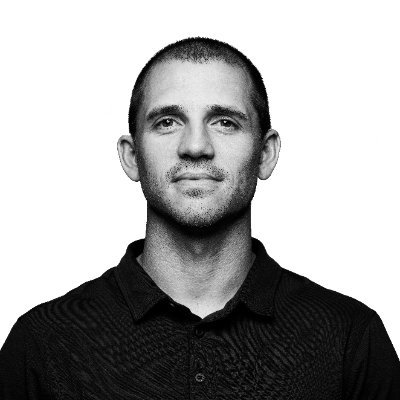
The 60 second tool high performers use to keep themselves in peak condition: Performance coach Dan Garner has taught this to Olympic medalists, pro athletes, and military operators. It takes 60 seconds and costs nothing: at the end of the day, before you fall asleep, review what happened. You...

77,596 views • 25 days ago •via X (Twitter)

4 Comments

Tides's profile picture
Tides25 days ago

That end-of-day review is underrated. Most athletes chase recovery gadgets and skip the 60 seconds that catch load mistakes early. Clinically, people who track how they felt after the session tend to adjust volume before soft tissue starts complaining. When your athletes do this, do they write one sentence or rate the day with a number?

Ismahan | Mibosma's profile picture
Ismahan | Mibosma25 days ago

Reflection becomes powerful when it moves beyond “What happened today?” to “What did today teach me about myself?” Sometimes one small pattern explains much more than we expect.

PepMariner | Performance Research's profile picture
PepMariner | Performance Research25 days ago

This is essentially a personal after-action review. In zero-error maritime work, the useful question isn’t only “How did I feel?” but “What actually happened, what nearly happened, and what conditions influenced it?” That distinction becomes especially important under fatigue.

Nate Gaddis, Hawaii Realtor's profile picture
Nate Gaddis, Hawaii Realtor25 days ago

Great idea, but not right before sleep, please! Can’t speak for others, but this would full-on give me insomnia. 😂

Related Videos

Steve Jobs on how he learned to run a company: Question: "You're 21. You're a big success. You know, you've just sort of done it by the seat of your pants. You don't have any particular training in this. How do you learn to run a company?" Steve Jobs: "You know, throughout the years in business, I found something, which was that I always ask why you do things. And the answers you invariably get are, oh, that's just the way it's done. Nobody knows why they do what they do. Nobody thinks about things very deeply in business. That's what I found. I'll give you an example. When we were building our Apple I's in the garage, we knew exactly what they cost. When we got into a factory in the Apple II days, the accounting had this notion of a standard cost, where you'd kind of set a standard cost and at the end of a quarter you'd adjust it with a variance. And I kept asking, well, why do we do this? And the answer was, well, that's just the way it's done. And after about six months of digging into this, what I realized was the reason you do it is because you don't really have good enough controls to know how much it costs. So you guess, and then you fix your guess at the end of the quarter. And the reason you don't know how much it costs is because your information systems aren't good enough. But nobody said it that way. And so later on, when we designed this automated factory for Macintosh, we were able to get rid of a lot of these antiquated concepts and know exactly what something cost to the second. So in business, a lot of things are, I call it folklore. They're done because they were done yesterday and the day before. And so what that means is if you're willing to sort of ask a lot of questions and think about things and work really hard, you can learn business pretty fast. It's not the hardest thing in the world. It's not rocket science. It's not rocket science."

Founder Mode

32,346 views • 7 months ago

I asked Garry Tan how to use meta prompting to get better at AI: "My partners at YC Jared Friedman and Pete Koomen showed me how to do this. You can take almost anything that you do all the time and just drop it into a context window. And then say, “Here’s a bunch of inputs and outputs." And maybe you also add a bunch of notes. And then you tell it, “Write me a prompt that can act as an agent that takes this input and makes this output over here.” You can do this for almost any type of knowledge work. And you can even introspect. "What are things you notice that I did to convert this from the input to the output?”. And then you can just start using the prompt. Initially, it’s going to suck. Because it’s just not that smart yet. But what’s funny is now, I also use it to Iterate my writing. You can be very direct, "I would never say that", "Don’t say it like this", or "Oh, you used the long word there, use the short word". Just speak to it conversationally. And then when you're happy with the output, you can use that new output to make a new prompt. "Based on this conversation, give me a better initial prompt that incorporates all the things we talked about." And you can do this with literally everything. And in theory, there’s so much it applies to that people do day-to-day. You could use it for tweets. You could use it for editing podcasts. You can use it for pretty much everything. I have a folder of prompts that I use all the time. My YouTube prompt is on v27 or something. I'll go through this process with all the different max models. I'll use GPT 5.2 Pro. I’ll use Grok. I'll use Claude. Then, I’ll take all the outputs from all the models and put them into Claude and say "Here’s my prompt, here’s the output from four LLMs, including yourself. Rate each response and tell me what the pros and cons of each approach are." And I usually say "give it to me in numbered form". And then you can agree with one, disagree with two, tell it three is this or that. And then after that, you say given all of this, synthesize it."

The Peel

51,632 views • 7 months ago

Jordan Peterson explains why some painful memories never leave you and how to let them go. if old memories still upset you, if they still grip you, if they come back involuntarily, it means there are holes in your map of the past. you went somewhere that wasn’t a good place and you don’t know how the hell you got there. you can’t forget anything you don’t understand. especially if it hurt you. the part of your mind that’s concerned with threat thinks it could happen again because you still don’t know what happened. break your life down into seven different periods. elementary school, high school, your first relationship however it makes sense to you. write down the most significant positive and negative things that happened during each period. ask yourself why the negative things happened and what you were doing right so the positive things happened. then ask yourself how you could do more of the things that worked and less of the things that got you into trouble. maybe you were 16 or 30, and you didn’t know what the hell was going on. now you’re older and wiser. you can go back, look at those moments again and think about how you should have conducted yourself. one of the ways your brain computes how stressed you should be is by counting how many terrible things have happened to you that you still don’t know how to fix. the more of those there are, the more dangerous the world appears. the more dangerous the world appears, the more stressed you become and stress makes you old. if you can clean up your past, you lower your stress, improve your immune function, decrease the rate at which you age, and move forward with more effectiveness. don’t worry about writing it perfectly. just get it down as stupidly as necessary. you can always edit it later. it’s your life and you want to have it.

gomi

32,196 views • 2 months ago

my new song “BREAKDOWN.” is out on the 21st of June!!! 🖤🖤🖤 I wrote this poem because it’s been the hardest year for my mental health. In my life I’ve always never felt good enough, it’s just the thing that’s eaten me up. For as long as I can remember i have felt constantly afraid of how quickly my head can turn dark. It’s always been so hard to fight the darkness that i inevitably have. A lot of people will say it’s a phase and it will go away. But it doesn’t and the reality of the situation is I have to find strategies to deal with it. To put it plainly the things I don’t like about myself will probably never change, people tell me one day I’ll come-to terms with them one day but I want that day to be FUCKING NOW. This song is a message to myself to try and exist alongside my insecurities and my darkness by grounding myself and remembering what is real in life and the world is so much bigger than me. Try and get out of your head and notice the world around you, notice the things and people around you. Connect with them, the chances are they probably feel the same. Don’t let the bullshit inside your head consume you. It just wastes precious time. Remember what is real. Help people, be kind, help the world, help yourself. If you think you can’t do it, you can. You can get through this, trust me. Use this poem in a mornin to get u out of bed, use it when youre about to back out of something last minute, use it when you’re at your darkest. It’s got a little bit of light in it. Don’t forget to put your feet in the grass … Mind

YUNGBLUD

66,786 views • 2 years ago

Knock off the negative self talk! Changing the words you say to yourself literally rebuild your brain in ways that help you or hurt you. Here's the science of one of the words you say to yourself matter: When you use criticizing language in your internal voice, your brain picks up on that and turns on the parts that are related to defending you from physical danger. Your brain hears your mind saying something harmful, and assumes that you're under attack. This affects your physiology, keeps you in a fight or flight response, and elevates your blood pressure and cortisol levels. In other words, when you attack yourself internally, your body gets the message and you literally feel like you're at war. On the other hand, research shows that when you use compassionate language to yourself, you don't magically make all your problems go away. What happens is that your brain area is related to problem-solving, calmness, and feeling hopeful, come alive. This set the filters in your reticular activating system to begin to look for possibility and not danger. The first commandment of self brain surgery is that I must relentlessly refuse to participate in my own demise. Using harmful words to yourself is literally committing malpractice against your own brain and your own life. So, and I say this with love, knock it off. Be kind to yourself. In a world full of difficulties, you deserve at least one ally. And your brain needs to hear encouraging language so I can do a better job of showing you a path forward instead of keeping you stuck. Jeremiah 29:11 says that God has a plan to give you hope and the future. Don't hinder his ability to do that by blocking your brain from being able to see what might already be there. Send this to a friend who needs an ally. Save this for the next time you find yourself feeling afraid. And follow me for connections between neuroscience and scripture every day that will help you flourish in your life. Click the link in my bio to learn more about my New York Times. Best seller, The Life-Changing Art of Self- Brain Surgery. #selfbrainsurgery #mentalhealth #anxiety

Dr. Lee Warren

34,338 views • 22 days ago

Jordan Peterson: "If you can't fix your room, you can't fix your life" "Why should you even bother improving yourself? The answer is something like: so you don't suffer anymore stupidly than you have to. And maybe so others don't have to either. It's not some casual self-help doctrine. If you don't organize yourself properly, you'll pay for it. In a big way. And so will the people around you." Peterson continues: "You can say, 'Well, I don't care about that.' But that's actually not true, you do care about it. Because if you're in pain, you will care about it. It's very rare that you can find someone in excruciating pain who would say, 'Well, it would be no better if I was out of this.' Pain brings the idea that it would be better if it didn't exist along with it. It's incontrovertible." On how to start: "Look around for something that bothers you and see if you can fix it. You can do this in a room. Sit in your bedroom and think: 'If I wanted to spend ten minutes making this room better, what would I have to do?' You have to ask yourself that, it's a genuine question. And things will pop out. There's a stack of papers bugging you. Some rubbish behind your computer monitor you haven't attended to for six months. Cables tangled up." He explains why this matters: "If you were coming to see me for psychotherapy, the easiest thing would be to get you to organize your room. You think, is that psychotherapy? It depends on how you conceive the limits of your being. Start where you can start. If something announces itself as in need of repair that you could repair, fix it. Fix a hundred things like that, your life will be a lot different." On fixing what you repeat every day: "People tend to think of their daily routines as trivial. You get up, brush your teeth, have breakfast. Those probably constitute 50% of your life. People think, they're mundane, I don't need to pay attention to them. No, that's exactly wrong. The things you do every day are the most important things you do. Hands down. Just do the arithmetic." On staying within your competence: "Sometimes you don't know how to fix something. Imagine you're walking down the street and there's a guy who's alcoholic and schizophrenic and has been homeless for ten years. That's a problem. It would be good if you could fix it, but you haven't got a clue. You walk around that and go find something you could fix. Just because something announces itself as in need of repair doesn't mean it's you, right then and there, who should repair it. You have to have some humility. You don't walk up to a helicopter that isn't working and just start tinkering away." Peterson shares the key insight: "As soon as you give your mind a genuine aim, it'll reconfigure the world in keeping with that aim. That's actually how you see to begin with. You've all seen the video where you watch basketballs being tossed back and forth, and while you're doing that, a gorilla walks into the middle of the video and you don't see it. If you thought about that experiment for five years, that would be about the right amount of time to spend thinking about it." He explains what it reveals: "What it shows you is that you see what you aim at. If you can get one thing through your head, that would be a good one. You see what you aim at. One inference you might draw from that is: be careful what you aim at. What you aim at determines the way the world manifests itself to you. So if the world is manifesting itself in a very negative way, one thing to ask is: are you aiming at the right thing?"

Jaynit

68,915 views • 5 months ago

Tom Brady says his career turned around when a sports psychologist told him to stop complaining about what he wasn’t getting and start stewarding what he had the right way “Greg said to me, ‘Why don’t you quit bitching about all the things you’re not getting, and how about you do the best with whatever opportunities you get?’, ‘Stop worrying about what the other quarterback’s getting. Stop worrying about what the coach is saying to you.’” “‘Every time you get in there, you bring the juice. You bring the energy. You bring the enthusiasm. You treat practice like a game.’ Because if you just decide to go out there and you’re blaming everybody else, where does that get you? So I started to change my attitude.” “I didn’t have a lot of confidence in myself. And when you don’t have a lot of confidence in yourself, you blame other people. When you gain confidence in yourself, you start pointing the finger at yourself.” “I would encourage every athlete to look in the mirror after every day of practice or a game and say, ‘What can I do better to help the team? What can I do better?’” “Not, ‘What does the coach need to do better?’ Not, ‘What do my teammates need to do better?’, ‘What do I need to do better?’ If every player does that, you’re going to have an incredible team.” “You can’t have a false confidence. You don’t only gain your confidence because of your physical ability. You gain your confidence because you’re prepared, because you’re competitive. I couldn’t just show up and be better than everybody.” “I had to show up prepared. I had to show up with energy. I had to show up with my body feeling right. I had to show up like I was on a mission.”

Josh Chambers

4,046,162 views • 22 days ago