Загрузка видео...

Не удалось загрузить видео

На главную

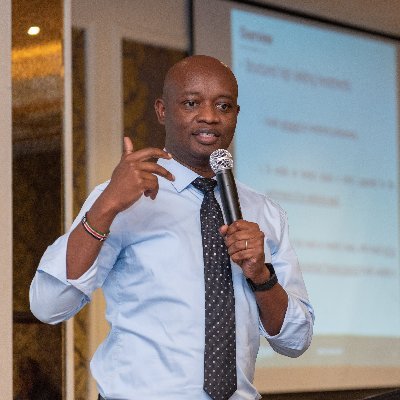
The argument that financial stagnation stems purely from a scarcity mindset completely breaks down when facing severe structural constraints. Even the most disciplined, economically conscious individuals remain fundamentally broke if they are severely underpaid and trapped in a hand to mouth cycle where survival costs consume their entire baseline...

16,852 просмотров • 14 дней назад •via X (Twitter)

Комментарии: 0

Нет доступных комментариев

Здесь появятся комментарии из оригинального поста

Похожие видео

Socialism undermines creativity and innovation by centralizing control in the hands of the state, which inevitably leads to bureaucratic stagnation and a one-size-fits-all approach to problem-solving. In a socialist system, where resources are allocated based on political decisions rather than market demands, individuals lack the personal incentives to take risks or pursue groundbreaking ideas. Without the promise of substantial rewards for success—such as profits or ownership—talented inventors, artists, and thinkers are discouraged from pushing boundaries, as their efforts are often redirected toward collective goals that prioritize equality over excellence. This results in a culture where conformity is rewarded and originality is sidelined, stifling the very human drive that has fueled historical advancements like the technological revolutions of the past century. Furthermore, socialism drives entrepreneurs out by imposing heavy regulations, high taxes, and restrictions on private enterprise, forcing ambitious individuals to seek opportunities in freer economies where their ventures can thrive. As these innovators flee, taking their ideas and capital with them, the system is left with a dwindling pool of talent and investment, leading to economic decline and widespread poverty. Without the dynamic competition and wealth generation that entrepreneurs provide, resources become scarce, productivity plummets, and the population is trapped in a cycle of dependency on inefficient government programs. Ultimately, what begins as a quest for fairness devolves into shared misery, where everyone is equally poor, deprived of the prosperity that only unfettered innovation can deliver.

🌋🌋 Deep₿lueCrypto 🌋🌋

29,465 просмотров • 8 месяцев назад

Joshua Maponga claims that African countries can fix their job crises by getting educated and then “going back to the village” and “starting up stuff”. What Maponga doesn’t seem to understand is that individuals fail because their country’s industrial policy is not geared towards sustaining such. No amount of individual effort is going to move the needle. The idea of a mass of individuals all doing their own thing is intuitive and motivational, but history does not support it. No country ever uplifted itself through individual enterprise without deliberate state policy. That’s where everything starts, no exceptions. Maponga’s message resonates because it speaks to agency and self-reliance. It’s basically a philosophy of individual and community upliftment in the absence of a functional state. But the thing is, individuals and communities don’t operate in a vacuum. Their success is shaped by the enabling environment, or lack thereof, created by the state. An educated person can start an agri-business, but if there are no reliable roads to get goods to market and no energy grid for cold storage, the venture is hamstrung. This kind of infrastructure is a public good that requires state planning and investment. Where does capital come from? Without a functioning national financial system, development banks, or policies that de-risk lending to SMEs, entrepreneurs rely on personal savings or predatory loans. This severely limits scale. You might as well get a job. When the local population is poor, and regional trade is hampered by poor logistics and tariffs, the market is too small, so who will you sell to? State-led industrial policy must nurture industries, protect developing ones and negotiate regional/international trade agreements to create larger markets for you. Maponga’s motivated individuals would be the engine of the economy, but without the state to lay the tracks, the train of national development goes nowhere. History shows that the tracks must come first. You’re not going to “start” and hope state policy finds you along the way. Even if 100 individuals start successful small ventures, how do they become a competitive industry? A lone tomato farmer, a lone processor, and a lone trucker all fail without coordinated investment in inputs, processing facilities, and supply chains. This is where state industrial policy comes in. Getting an engineering degree means nothing when your country has no industrial policy. As I keep saying, no successful developmental state has relied on individual enterprise. There are numerous examples of this. Sure, Maponga is offering an individual survival manual within a broken system, but for individual efforts to sum to national development, you need a functioning state that provides the structure. This is where the focus should be. But he is misdirecting public consciousness. At the exact moment when Africans should be demanding the developmental state capacity of infrastructure, industrial policy and coordinated investment, he’s telling them the solution lies in individual initiative and “going back to the village.” This is politically demobilising by shifting the blame and responsibility away from where it belongs, in state failure and elite capture, onto individuals and communities. Then when hen people internalise that their poverty is due to not being entrepreneurial enough, they stop making rightful claims on the state. Instead of selling the people false hope, entertainers like Maponga should be creating political demand for industrial policy. They should be building public understanding that South Korea, China, Taiwan, Japan, and every Western nation had active developmental states. They should be making it common knowledge that “free market” development is a myth, and that Africans deserve the same state-led development that worked everywhere else. In the end, when you strip away all the self-motivation, the fact remains: development is a state-mediated process and the Maponga message is just a relic of the neoliberal moment when we pretended the state didn’t matter and individuals could bootstrap their way to development.

Sizwe SikaMusi

29,473 просмотров • 7 месяцев назад

MINDSET CHANGE: THE FOUNDATION OF A CLEANER GHANA Sanitation is not just about sweeping streets or clearing drains,it begins with the way people think. A nation’s environment is a reflection of its mindset. When citizens believe that keeping their surroundings clean is everyone’s responsibility, cleaner communities become a natural outcome. In Ghana, many sanitation challenges such as indiscriminate dumping of waste, littering, open defecation, and choked drains are driven more by attitudes than by a lack of infrastructure. Changing this mindset means helping people understand that every piece of waste thrown into a drain, every wetland encroached upon, and every act of negligence has consequences for the entire community. A positive sanitation mindset encourages individuals to dispose of waste responsibly, participate in community clean-up exercises, protect public spaces, and hold themselves accountable rather than waiting for government intervention. It also inspires businesses, schools, and local leaders to become active partners in protecting the environment. When mindset changes, behavior changes. When behavior changes, communities become cleaner, flooding is reduced, public health improves, tourism grows, and national development accelerates. Ultimately, transforming sanitation in Ghana is not just about providing more bins or collecting more waste,it is about creating a culture where every citizen sees environmental cleanliness as a personal duty. A cleaner Ghana begins with a changed mindset.

Buzstopboys

31,580 просмотров • 10 дней назад

VIDEO | Delhi: Congress leader Manish Tewari on prominent citizens from India and Pakistan appealing PMs of both countries for 'restoring peace, normalcy, dialogue', says, "Well, that's not an appeal for a dialogue. It is an instrument of an unconditional surrender. We want peace with Pakistan, but it has to be peace without terror. It has to be peace with honour. Has Pakistan given any commitment that it will dismantle the entire military jihadi complex. That they have very assiduously nurtured since the late 1970s. Has Pakistan said that they would ensure that the soil of their country is not used for perpetrating terror against India. A commitment which was given by President Musharraf in 2002 in a televised address to the people of Pakistan, as well as reiterated when Prime Minister Atal Bihari Vajpayee visited Islamabad in December 2004 for the SAARC Summit. And then repeated ad nauseam in the conversations that took place with between Dr. Manmohan Singh and his Pakistani interlocutors, or even Prime Minister Modi later with his Pakistani interlocutors. So, therefore, the question is not peace. The question is, peace at what cost? Peace cannot come with a gun to your head, you know, with somebody holding the gun of terror to your head. And all these people who've written this letter are very eminent people in their professional and private capacities. They have dealt with the Pakistanis over the entire span of their professional careers. They exactly know as to how perfidious these people are as to how they say one thing and mean the other thing altogether. And therefore, if there has to be peace, or if there has to be a dialogue, terror and talks cannot go hand in hand. You need to ensure that Pakistan dismantles the entire infrastructure of terror that Pakistan have created. Who does not want peace? Everybody wants peace, but it has to be peace without terror and peace with honor." (Full video available on PTI Videos -

Press Trust of India

59,074 просмотров • 22 дней назад

This is perhaps the most important and powerful case against AUKUS that I've heard, especially because it comes from one of Australia's preeminent strategic thinkers: Hugh White, inaugural Director of the Australian Strategic Policy Institute (ASPI) and former Deputy Secretary for Strategy and Intelligence in the Australian Department of Defence. Here's what he says: - White argues that the era of Anglo-Saxon (British and American) dominance in the Western Pacific is ending. He states: "We are facing one of the, perhaps the biggest transformation in our shared international setting since European settlement." This transformation is driven by China's rise as an economic and military power comparable to the United States. - As a result he argues that there's no alternative to treating China as an equal partner: "Nobody really knows what America's aim in Asia is. But one thing's for sure, nobody in Washington thinks they should treat China as an equal partner. And my basic argument to my many friends in Washington is that if they don't treat China as an equal partner, then they're going to be taking on a rivalry with China that I don't think they can win." - He emphasizes this point repeatedly, arguing that given China's economic and military power, especially in the Western Pacific, the U.S. cannot maintain its previous position of uncontested primacy: "I don't see how, in an era where China's economy is as big as America's, in an era where its military power in the West Pacific is really quite comparable to America's, in an era where China is increasingly potent as a nuclear armed power, the US and China can find a way to get on in which the United States doesn't, at the very least, treat China as an equal partner." - White sees AUKUS as problematic because it aligns Australia (and potentially New Zealand) with a U.S. strategy that refuses to acknowledge this new reality. He argues that by supporting AUKUS, these countries are effectively endorsing a primacy approach that is "not a smart way to go" and risks destroying both their prosperity and their security, because they'll "only be prosperous and secure if the United States and China can find a way to get on." - On the economic benefits arguably brought by AUKUS: "The idea that you buy those economic benefits at the price of committing yourself to support an approach to this really fundamental question about the shape of our future order in Asia, which I don't think is going to work, that would be a very high price to pay for a very doubtful benefit."

Arnaud Bertrand

395,098 просмотров • 1 год назад

"I want to describe to you the life of a non-vaccinated person in Israel today. Our life has been destroyed, and we woke up to a nightmare in which we have have been kidnapped by our own government, who sold us to be guinea pigs to an experimental vaccine. They want us to give up our bodies and our souls with no questions. We have become the biggest clinical trial of a vaccine in history in the scale of an entire country" Listen to this testimony from an Israeli citizen on what life was like for an unvaccinated person in Israel at the beginning of the insane vaccination campaign and mass experiment on the Israeli people. What's the difference between Israel experimenting on millions of their own citizens and killing thousands of them with forceful coercion techniques, and them bombing a hospital in Gaza killing 500? or letting Hamas kill their people as justification for the war and perpetuation of more death. If we just go by the numbers, shouldn't we all be far more outraged about the vaccine? That death toll is easily over a million globally now, perhaps even tens of millions. Why should I trust the government that did this to their own people? Why should I listen to any government that did this to their people? It's willful murder no matter how you spin it, and we should all know by now that the denial of such evils by all the authorities that people are still clinging to for the truth, or the ignorance/negligence excuse that they didn't know, is a complete and utter BS lie. They had a clear purpose with the vaccines and knew exactly what they were doing, just as they have a clear purpose now with war and propaganda that comes with it. Depopulation.

Inversionism

642,228 просмотров • 2 лет назад

Auditioning is a completely different performance than how you’d perform it when you get the job. Most actors don’t realize that. What do I mean? In an audition, I only have 1 set up, 1 frame from the chest up. On set you’ll have multiple set ups and multiple camera lens sizes. So for example if I have to do a very explosive emotional scene for an audition I’m beholden to that one set up which is the chest up how casting likes it. BUT if I’m too big and too emotional for that frame size it might come off as melodramatic/Over-acting or I’m forcing it. So I have to do a little less. Now on set during the master I can be as big and as ferocious as I want and then dial it down as the camera moves in closer. The same goes if it has to be small and intimate scene, I might have to project a bit more to convey that emotion in an audition where if it was on set that close up sees everything and I can be as small an intimate as I want. So during these auditions you’re predominantly handcuffed to the size of the frame that casting wants. I like to be subtle in auditions and sometimes that can look like you’re doing absolutely nothing and its not as engaging for the audition process. (You’re trying to get a job) So I amp it up 10-20%. Again, where as on set I can be as small and subtle as I want and when they move in on your close up it sees the minutia of every detail that your face and eyes make. (Also in an audition you’re acting with a friend or a family member who might not be an actor. No professional makeup or hair, bad lighting, dog barking, cat meowing, fedex guy ringing your bell,etc etc) So to recap… AUDITIONING SUCKS!🤦🏻‍♂️ #kidvicious🔪

KID VICIOUS🔪

22,555 просмотров • 1 год назад

In 2018, Julius Malema warned that if things continue as they are, an unled revolution is likely to occur. However, as I’ve been saying for a while, the whole idea behind the 1994 project is precisely to keep things exactly as they are, to manage stagnation. In other words, for things to “go the way they are”. The State’s primary role since 1994 has been to act as a buffer by creating a small, visible Black middle class and elite, which Malema professes to be a member of, which creates the illusion of upward mobility while the majority of the population remains in structural poverty. Malema warns that his lifestyle will make him a target of the poor, but his supporters often see that same lifestyle as a prototype for their own liberation. This tension creates a complex relationship between the leader and the “unled revolution” he fears. He worries about the moment the marginalised poor realise that the revolutionary leader is wearing Breitling watches and drinking expensive champagne while they are still in the shack. In that moment, the leader is no longer a liberator but a buffer for the system. But I posit that Malema has nothing to worry about. The people look up to him, they admire him, and they gain inspiration from him. To that end, they want the system to remain as is, “stable”, so they too one day can join him. If the “unled revolution” he’s worried about actually happens, the very prize the people are chasing, the “township-to-town” dream, disappears. The masses are very much satisfied with their own performative revolution, one that talks about radical change but keeps the stores stocked so that they can eventually participate in the consumerist dream. This is the paradox of extreme inequality, where opulence is all around, yet always a bit too far to attain today. Therefore, the system stays stable because millions of people believe they are just one break away from reaping the rewards, like the Malemas and the middle class. Even if statistically, they will never be rewarded themselves. It’s crucial to clarify that the danger Malema is highlighting occurs when this hope turns into envy. However, here’s the thing: the Black masses are too shy to be jealous. Instead of being envious, they continue to believe they can join the middle class in the suburbs. This hope protects the system. This is not to say the people are timid or cowardly. On the contrary, they are galvanised to aspire for more within this system. They see Malema’s Breitling watch or Hyde Park mansion as a preview of their own future, instead of as betrayal, as he predicts they will. The only way the revolution Malema warns about occurs is if the stagnation becomes so permanent that the people see that the ladder is clearly broken. But this is where the country’s Establishment is doing a stellar job. The State uses a sophisticated combination of immediate relief to prevent hunger-driven riots, paired with symbolic future promises to maintain hope and political loyalty. The R370 SRD grant is the most explicit tool for preventing the “unled revolution.” By providing even a minimal amount of cash to able-bodied unemployed adults, the State provides a basic survival floor, keeping the most volatile demographic, unemployed youth, “waiting” rather than “acting.” This is a riot-prevention subsidy. Now, while the R370 grant manages the present, promises like the National Health Insurance, nationalising the Reserve Bank, and Expropriation Without Compensation manage the future. By keeping these radical ideas “in the pipeline,” the Establishment channels radical energy into parliamentary committees and court cases rather than street protests. Furthermore, these manoeuvres prevent Malema and the EFF from having a monopoly on the “radical” brand of politics. Because if the ANC is “threatening” to take the land, which it has been doing for years now, the masses are told they don’t need to join an anarchic revolution to get it; they just need to keep voting for the party that is “processing” the claim. This “management” creates a society that is always on the brink without boiling over, and the masses protect the very system that blocks their liberation because it keeps alive the fantasy that liberation will be individual, not collective. So what’s the solution? Ironically, the very thing Malema warned about in 2018, an unled revolution, is what would be needed to break the cycle of stagnation, precisely because it would have no leader invested in the current system’s symbols of success.

Sizwe SikaMusi

23,969 просмотров • 6 месяцев назад

Thailand: The Blueprint for Digital Control & Why It Failed Analyst Max Igan reveals Thailand has become a chilling, real-world case study for the dangers of a fully integrated digital ID and biometric control grid. The system, sold as a convenience, placed every citizen's financial life under one roof. The result? Totalitarian control at the touch of a button. • Over 3 MILLION bank accounts were frozen simultaneously, without warning, due to government overreach. • Every transaction is monitored; any perceived discrepancy is flagged as fraud and punished WITHOUT due process. • Victims are locked out instantly: unable to buy food, fill their gas tank, or access their own funds—completely removed from the financial system with no explanation. This has triggered a full-scale crisis. Panic has ensued. Retailers, fearing they'll be next, are now refusing cards and demanding cash. Public confidence in the government and banking system has evaporated. As Igan explains, this government overreach has backfired spectacularly. The people are now rationally fleeing the digital banking system, rediscovering the critical need for cash as a safeguard against tyrannical control. Thailand is not an anomaly; it is the test case. It is a live-fire demonstration of what a Central Bank Digital Currency (CBDC) and digital ID system will enable. It is the ultimate weapon of social and financial control. The lesson is clear: This is why we must reject it. The time to wake up and defend financial sovereignty is now.

Camus

451,112 просмотров • 9 месяцев назад

ELECTION INTEGRITY: It’s truly something that Senator Raphael Warnock is more concerned about the accuracy of a hand count than the results churned out by Dominion Voting Machines. His fear? That a hand count could show Trump won Georgia, while the Dominion machines show Kamala Harris as the victor, leading to the state refusing to certify Harris's win. This isn’t just a hypothetical concern—Warnock is suggesting that hand counts could reveal discrepancies, and apparently, that’s a problem. But shouldn’t the goal be to ensure the candidate who gets the most votes actually wins, regardless of the method? Let’s break this down. Each precinct in Georgia is responsible for hand-counting around 1,900 ballots within a five-hour window. That’s hardly an insurmountable task. It’s actually a highly manageable one that ensures the vote tallies reported by Dominion machines are accurate. If these machines are as flawless as their defenders claim, then what’s the harm in double-checking? A hand count would only serve to confirm the machines’ accuracy, wouldn’t it? Warnock seems to believe that a hand count showing a different outcome would cause chaos. But here’s the solution: if discrepancies are found that could alter the election outcome, those ballots can—and should—be hand-counted again, as many times as needed, to ensure the most accurate results. That's how you ensure that the true will of the voters is reflected, not through blind trust in machines but through verification when needed. So, why the resistance to hand counts? If the machines and hand counts match up, great—everyone wins. But if they don't, it’s democracy doing its job—catching errors and correcting course. The real question here is: why is Senator Warnock so worried about verifying the results? Could it be that some are afraid the hand count might not align with the narrative they’re pushing?

@amuse

9,022,239 просмотров • 1 год назад

I built an app in Softr for the HVAC industry to solve some crucial problems. The problem is that those in the HVAC industry and similar industries like construction, plumbing, and electrical do not have one source of truth where: 1. Their clients can request for thier services. 2. Clients can be onboarded after they make a payment. 3. They store the information and bio data of their technicians. 4. They assign tasks to their technicians. 5. Technicians can track onsite jobs with pictures in real time of when working. 6. Clients see the progress of their projects. 7. Invoices and quotations from paid clients can be tracked. 8. Technicians borrow assets from the company, and they can be tracked. 9. There is a database where every individual, from technicians to admin and clients, are all stored. 10. Login details from every individual are secured and they can only see things that are their business without seeing that of another person, be ita technician or a client. These and many more are what people in these industries face as a challenge. I came up with a solution that addresses all these problems. I built a workflow that also auto-populated the users table in the database with technicians and clients when the records are filled in the technician and client tables, respectively. There is also a workflow that sends an email to the admin when a client makes a request from the portal. Taking advantage of the database, workflow, and portal gave a full-blown application for the HVAC industry. If you are in the construction, plumbing, electrical, or HVAC industry and you need a similar build, reach out, and I will be more than happy to replicate this for you or something similar in Softr.

Ada || Airtable, Zapier & Make.com

26,372 просмотров • 8 месяцев назад

This is a stunning admission from ECB President Christine Lagarde, and a perfect window into the globalist mindset. She laments that "democratic process" is a "drag" and that "speed is of the essence." She is frustrated that her grand vision—a Digital Euro—is being slowed down by the tedious necessity of parliamentary debate and public scrutiny. Let's be clear about what she is saying: ➡️ Democracy is an obstacle. The very systems of checks and balances that protect our sovereignty are seen as inconvenient roadblocks to their centralized control. ➡️ They fear being "left in the dust." This isn't about serving European citizens. It's a technocratic race against other global powers (and their own citizens' awakening) to cement a new financial system before people can resist. ➡️ "We have to accelerate." This is the mantra of the unelected. When you hear this, know that due process, transparency, and individual rights are about to be trampled in the name of "progress." The Digital Euro, the Capital Markets Union, the Banking Union—these are not tools for your freedom. They are the architecture for a system of total financial surveillance and control. They will decide what you can buy, where you can spend, and will have the power to freeze you out with the click of a button. Lagarde is right about one thing: time is running out. But not for their project. It's running out for us to wake up, organize, and defend our national sovereignty and economic liberty from these unaccountable elites. The greatest threat to our freedom is not being "left in the dust," but being locked in a digital cage we never agreed to.

Camus

386,848 просмотров • 9 месяцев назад