Loading video...

Video Failed to Load

Go Home

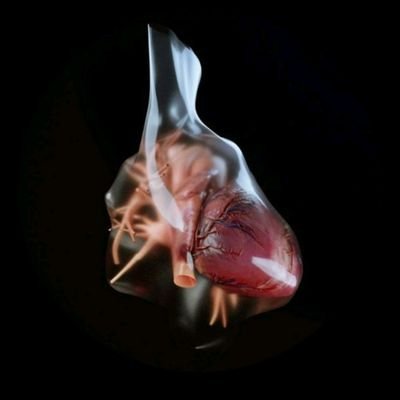
The Atherothrombotic Cascade: A Molecular Journey to Infarction This sequence visualizes the critical pathway from a stable but vulnerable coronary plaque to a full acute coronary syndrome. #Atherosclerosis #Cardiology #HeartAttack #Thrombosis #MedEd
10,650 views • 8 months ago •via X (Twitter)

0 Comments

No comments available

Comments from the original post will appear here

Related Videos

🫀 Seeing Truly Normal Coronary Arteries Dual Source PCCT + High Iodine = Confidence of Exclusion In coronary CTA, detecting plaque matters. But confidently proving absence of plaque is even more powerful. A truly normal coronary artery should not look “probably normal.” It should look sharp, smooth, motion-free, and perfectly opacified. That level of certainty comes from the combination of: - Photon-Counting CT (PCCT) - High spatial/temporal/contrast resolution - High iodine concentration contrast (400 mg I/mL) 🧠 Why this combination matters Subtle abnormalities can be masked by: - Motion blur - Noise - Partial volume effects - Insufficient intraluminal enhancement Sometimes what we call “normal” is simply underpowered imaging. ⚡ What changes with PCCT + 400 mg I/mL Ultra-high spatial resolution - Clear intima–lumen interface - Distal vessels sharply defined High temporal resolution - Minimal motion artifacts - True coronary borders, even at higher HR High iodine concentration (400 mg I/mL) - Stronger intraluminal signal - Higher contrast-to-noise ratio - Uniform, stable lumen opacification - Subtle wall irregularities no longer hide in low signal Spectral capability - Cleaner iodine–tissue separation - Greater confidence in excluding non-calcified plaque When arteries are truly normal, they appear: ✔️ Smooth ✔️ Thin-walled ✔️ Motion-free ✔️ Intensely and uniformly opacified Not “likely fine.” But objectively pristine. In coronary CTA, technology is not only about finding disease. It’s about confidently saying: There is none. From uncertainty to reassurance. From suspicion to precision. That’s the strength of PCCT with high-iodine coronary imaging. ⚡🫀 #PhotonCountingCT #PCCT #CoronaryCTA #HighIodine #400mgIodine #HighTemporalResolution #UltraHighResolution #CardiacCT #PreventiveCardiology #yesCCT

Dr. Filippo Cademartiri

11,661 views • 5 months ago

PHOTON COUNTING CT AND A NEW CONCEPT OF NORMAL CORONARY ARTERIES For more than 2 decades we have been performing Cardiac CT with constant improvements in all parameters (spatial, temporal and contrast resolution). The improvements were progressive in certain fields and steep in other (e.g.: the introduction of Dual Source CT that completely changed the range of temporal resolution achievable basically overnight and still is the most important source of flexibility in Cardiac CT scanning after almost 20 years). Spatial resolution instead was improved in a slow and progressive way until the test EID CT generations that achieved a spatial resolution of 250 microns. This allowed us to assess a coronary artery tree and define it as normal when no apprentice changes were visibile up to that value. But we know that the normal thickness of coronary artery walls is quite below that threshold. It is more in the range of 80-200 microns. Therefore, the very early changes in coronary artery wall thickness could not be picked up by EID CT technology. With the introduction of PCCT we can constantly achieve 100 microns spatial resolution which means that we work extol in range in which coronary artery disease starts. It also means that we don't see any thickening of the the coronary artery walls we have a much higher specificity and reliability. This concept is a transformative one because it allows us to shift earlier and earlier the beginning of atherosclerosis in our patients and think even more precisely in terms of cardiovascular prevention and monitoring. Movie: example of normal coronary artery tree with PCCT. A new era is coming into practice and it is the age of Photon Counting CT which pushes this boundaries further away. PCCT is a NEW Imaging Modality. PCCT is changing the game, the field, the language, the priorities and in the end it will change the entire infrastructure of diagnostic medicine. PS: note that PCCT images have to be reduced in resolution when uploaded in social media. #CardiacImaging #MedicalInnovation #StentAssessment #Radiology #PCCT #photoncounting #QuantumHD #CT #computedtomography #yesCCT #coronaryarterydisease #ischemia #naeotomalpha #Peak #Pro #Prime #speed #cardiac #highresolution #siemenshealthinners #CardiacCT #PhotonCountingCT #MedicalImaging #HeartHealth #CardiovascularInnovation #Radiology #AIInMedicine

Dr. Filippo Cademartiri

63,124 views • 1 year ago