Video wird geladen...

Video konnte nicht geladen werden

Zur Startseite

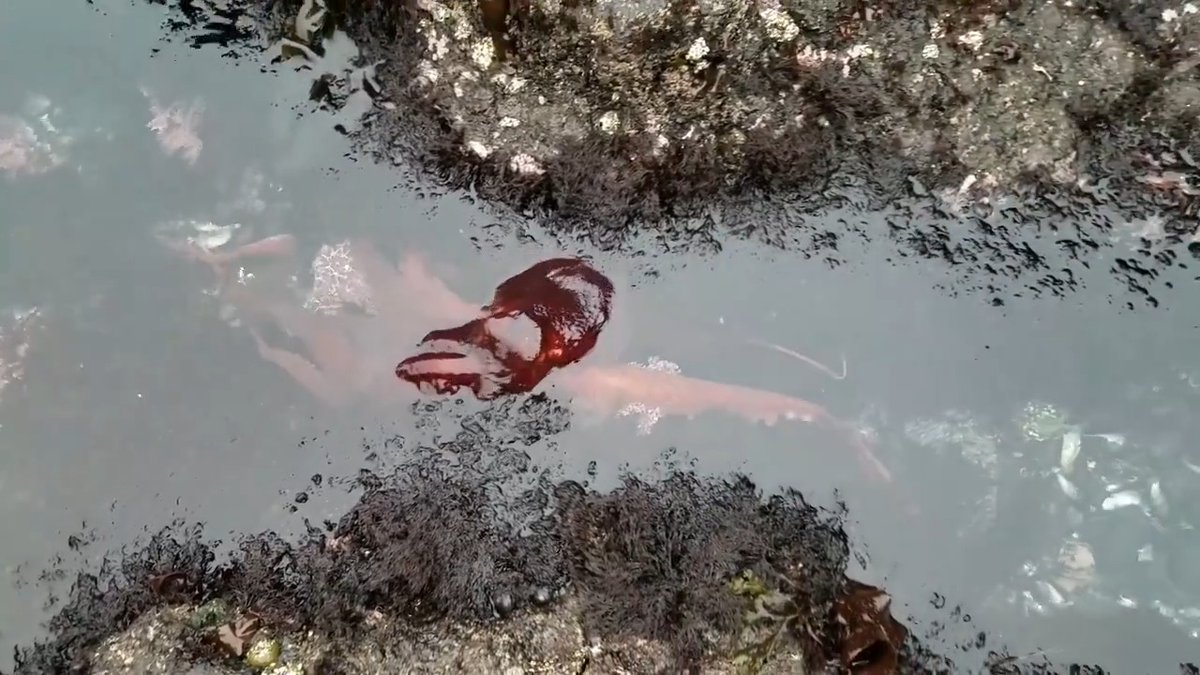
The blue-ringed octopus, despite its small size, carries enough venom to kill 26 adult humans within minutes. [🐙 realmarkvins]

27,661 Aufrufe • vor 10 Monaten •via X (Twitter)

0 Kommentare

Keine Kommentare verfügbar

Kommentare vom Original-Post werden hier angezeigt

Ähnliche Videos

The Story of the Giant Octopus in Alaska in 2020 🐙 In 2020, underwater photographer Justin Hofman was scuba diving off the coast of Alaska, home to the giant Pacific octopus, the largest octopus species in the world. They can span more than 4.5 meters (over 15 feet) from arm tip to arm tip and weigh over 50–70 kg, with some individuals exceeding 100 kg. While diving, Justin encountered a giant octopus that had just caught a crab. It was puffed up and highly excited. The octopus approached him, first wrapping its tentacles around his camera. Then it began to “explore” Justin with curiosity even using its specially long arm (the one used to seek out mates) to touch and feel him. Justin decided to offer his hand so he could feel the suckers. At first the octopus got a little too interested and pulled quite hard. When Justin gently pulled his hand back, it seemed to understand right away and became much gentler. After that, it continued to explore his dry suit and scuba gear in a very careful manner. Justin later recalled: “It felt like a true interaction between two thinking beings… like meeting an alien.” An octopus’s suckers are extremely sensitive, almost as if each one has its own “brain”, allowing them to sense and process information with remarkable precision. After a few minutes of mutual curiosity, the octopus realized Justin was neither food, nor a potential mate, nor a threat. It calmly crawled away through the kelp and disappeared among the rocks. The video of this moment clearly shows the intelligence, curiosity, and even a sense of boundaries in octopuses, the very reasons scientists consider them among the most intelligent animals in the ocean.

Beauty of music and nature 🌺🌺

23,067 Aufrufe • vor 26 Tagen

Humans are far gentler to members of their own community than chimps are, thanks to our ancestors' ability to plan organized murder. Richard Wrangham compared the level of within-group conflict among hunter-gatherer humans to that of chimpanzees. Chimps are 150 to 550 times more likely than humans to commit violence against their peers. How did human ancestors go from being despotic hierarchical great apes to egalitarian hunter-gatherers? In fact, for most of human history and prehistory, homo sapiens have lived in egalitarian societies where men were granted roughly equal social status. Anthropologist Christopher Boehm suggested 3 key reasons for this: -The invention of hunting weapons -The advent of large-game hunting -The development of a large brain and its associated cognitive and linguistic capacities Early human communities selected against reactive aggression: arrogance, bullying, impulsive violence, and the monopolizing of food and women. Early humans learned to make weapons to kill large animals. They learned these weapons could be used to kill each other while incurring no damage to themselves. When a group of chimps attack another chimp, the attackers risk incurring some injury. In fact, it takes a group of male chimpanzees about ten to 20 minutes of ferocious assault to kill an unfamiliar chimp they encounter on patrol. During that time, the victim might be able to inflict some damage to their attackers. Humans with weapons can eliminate a target much faster than chimps. And humans armed with spears or projectile weapons face no equivalent risk of injury. Especially when they have the element of surprise. Language allowed humans to coordinate and form conspiracies to dominate an individual. Weaponry and language gave rise to egalitarian communities.

Rob Henderson

29,224 Aufrufe • vor 3 Monaten