Загрузка видео...

Не удалось загрузить видео

На главную

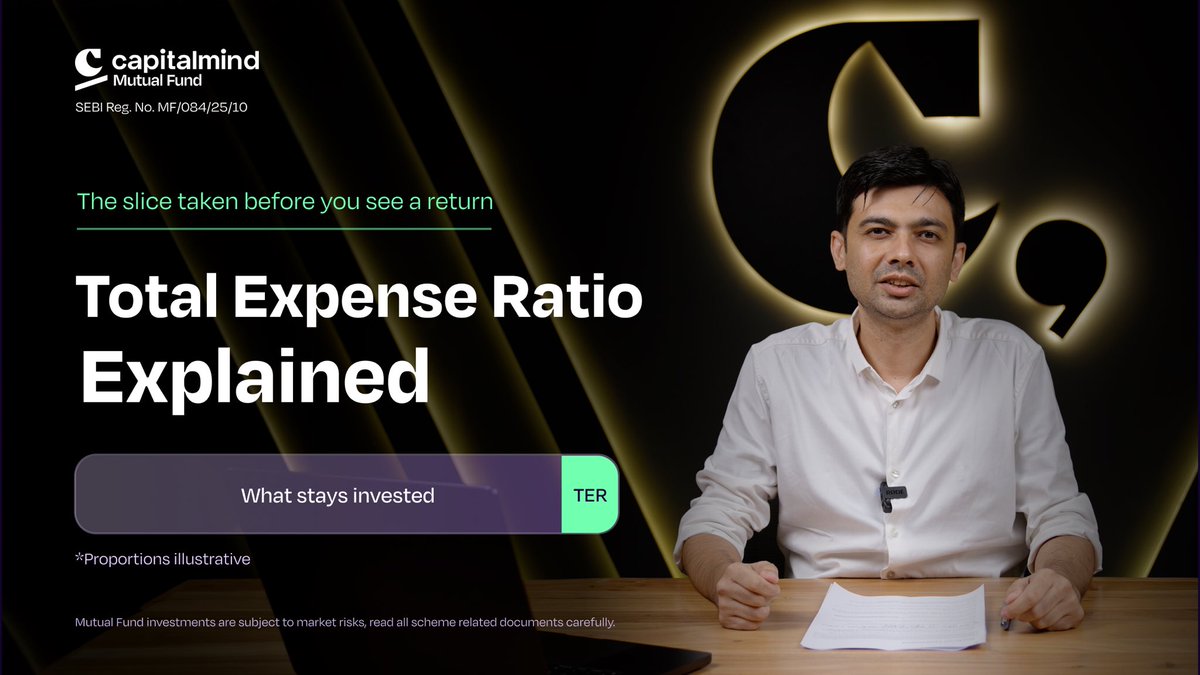
The countdown has entered its final stretch.⏳ Only 4 days remain before the Abakkus Small Cap Fund NFO closes! Abakkus Small Cap Fund. Discovering Hidden Gems. Unearthing Value. NFO Closes: 12th March, 2026 🔗 Learn more about the Abakkus Small Cap Fund at Mutual Fund investments are subject to...

39,292 просмотров • 5 месяцев назад •via X (Twitter)

Комментарии: 0

Нет доступных комментариев

Здесь появятся комментарии из оригинального поста

Похожие видео

Most $SUI holders know one thing about the token: total supply is capped at 10 billion. They have never read the mechanic that makes that cap matter. It is called the Storage Fund. And it is the most important thing in the $SUI tokenomics docs that nobody is talking about. Here is exactly how it works: Every time a transaction adds data to the Sui blockchain, the user pays a storage fee. That fee does not go to validators directly. It goes into the Storage Fund, a pool of SUI that never fully depletes. Here is where it gets interesting. The Storage Fund has its own stake in the network. It earns staking rewards the same way every other stakeholder does. Those rewards are then distributed to validators to compensate them for storing historical data. This solves a problem every other blockchain ignores: When a new validator joins Sui, they have to store all the historical data from transactions that happened before they existed. Why would a new validator pay to store someone else's old data? The Storage Fund pays them for it. Past users who created the storage requirements in the first place funded the pool. Future validators get compensated from that pool indefinitely. The fund pays out only the returns on its capital, never the principal. It cannot be drained. It is designed to survive forever. Now here is the part that directly connects to $SUI token value. The Sui docs state this explicitly: Deflation is a feature of Sui, not a bug. Here is why: Total supply is capped at 10 billion SUI. As network activity increases, more transactions are processed. More transactions mean more storage fees flowing into the Storage Fund. As the Storage Fund grows, it holds more SUI. More SUI held in the fund means less SUI in active circulation. Less circulating supply against the same or growing demand means the value of each SUI token increases. Network growth directly reduces circulating supply. That is not speculation. That is the economic model built into the protocol at the architecture level. One more detail worth knowing: If you delete data you stored on chain, you receive a partial refund of your original storage fees. The system charges for storage, rewards deletion, and compounds the fund's stake indefinitely. Most people holding $SUI today are pricing the speed narrative: The parallel transaction processing. The sub-second finality. The Move language safety. They have not started pricing the storage fund deflation mechanic. That gap between what the tokenomics actually does and what the market currently understands is where the long-term thesis lives. The people who read the docs always buy before the people who read the price.

2xnmore

47,562 просмотров • 2 месяцев назад

The NZ$2B BlackRock renewable energy fund: A failed promise for NZ’s green future? From 2023 to 2025, millions of taxpayer dollars have been lost & the promised jobs have failed to materialise. In Aug 2023, the Ardern's Labour party (led at the time by PM Hipkins) partnered with BlackRock to launch a $2 billion climate fund, aiming for 100% renewable electricity by 2030 via solar, wind, green hydrogen, & battery storage. Hailed as a world-first, it promised jobs and innovation. The fund drew on taxpayer money via NZ Green Investment Finance (NZGIF), a Crown entity funded by public resources incl: ACC, KiwiSaver, & the NZ Super Fund. By using NZGIF, the government exposed taxpayers to risks of financial loss if investments failed-& they did. The first investment was SolarZero- a high-risk company with potential. (With better due diligence, this investment would not have gone forward.) The company was first acquired by BlackRock in Nov 2022 for approximately $110M. However, BlackRock later injected a further $147.8M into the business, bringing total capital involved to roughly $257.8M. Of this, NZGIF provided a $145M debt facility, & BlackRock contributed $112.8M. SolarZero aimed to scale solar energy in NZ with a pay-over-time model. But on Nov 26, 2024, BlackRock placed it into liquidation after it missed sales targets. Of the $145M facility, only $115M had been drawn down by the time of collapse. The full $257.8M was not "lost" as a single sum; the total recovery outcome remains uncertain. The collapse left around 160 staff jobless, with $4-5M in unpaid obligations. The loss of at least $115M of taxpayer money — representing roughly 5.75% of the $2B fund ,this was a huge blow to its credibility, leaving taxpayers with little hope of full recovery. Despite SolarZero’s failure, BlackRock charges fees reported at 1.5% annually on invested capital. While the total $50.57M fee figure is (not verified in public records), it is confirmed that BlackRock charged $4.35M on NZGIF’s $145M commitment, taxpayer money for a failed project. The fund now “seems to have gone nowhere,” with no new major projects announced and roughly $1.69 billion idle. BlackRock’s Auckland office, opened in July 2023 with around 10 staff, has delivered nothing new, appearing only to manage the fallout while fees continue. MBIE, overseeing NZ’s energy strategy, has offered no public updates. The lack of transparency raises questions about the government’s choice to partner with BlackRock, potentially delaying NZ’s 100% renewable goal. The financial losses, fees charged on taxpayer money, & lack of outcomes have led to perceptions of a “renewable investment scam,” eroding trust in BlackRock and the government. January 2026: BlackRock abandoned the $2 billion NZ Climate Infrastructure Fund. The fund is now dead. With $1.69 billion left, there was potential to salvage the fund, but this remains a sad tale of risks with global asset managers & taxpayer funds. Claims have also emerged during this time-including allegations of government officials receiving kickbacks from the deal, with a Ardern being named. No evidence has been provided to support these claims. NZGIF has advanced $314,000 in taxpayer money to fund legal investigations into whether SolarZero hid money from creditors by shifting assets into separate trusts before collapsing. NZGIF's chance of recovery in drawn-down funds hinges entirely on whether the court agrees those payments were improper. If the liquidators win, some money may be clawed back. If not, money is likely gone for good.. 2026 BlackRock has abandoned NZ Climate Infrastructure Fund. The fund is now dead.

Neil Edwards

11,474 просмотров • 3 месяцев назад

The man who wrote the essay that started the entire AI boom just got DESTROYED by it. Goldman Sachs, JPMorgan, and Bank of America teamed up to liquidate their own client overnight. Leopold Aschenbrenner left OpenAI in 2024 and published an essay called "Situational Awareness" arguing that AGI was arriving before the decade was out, and that whoever owned the compute would own everything after it. Silicon Valley read it and started spending. Then he raised a fund named after the essay and bet on his own thesis with borrowed money. The numbers he put up were the best on Wall Street: He started with roughly $225 million in late 2024. Patrick and John Collison wrote checks. So did Nat Friedman, Daniel Gross, and Jane Street. Through June 30 of this year the fund was up 439% net of fees, according to the investor letter the Financial Times reviewed. The firm had a handful of employees, and he had no prior record managing anyone's money. It also ran leverage reported as high as 4x. For every dollar of his own capital he borrowed three or four more, then bought the physical guts of the AI buildout. He owned Micron, SanDisk, CoreWeave, Nebius, and SK Hynix. In July every one of those names fell somewhere between 27% and 54%. The Kospi, home to SK Hynix, lost about a third of its value. His collateral and his position were the same thing. The stocks fell, the loans against them came due, and selling to cover those loans pushed the stocks down again. The fund finished July down 67%. But the UGLY part happened in the six days before that... On July 24 he wrote to his investors and called the selloff some of the most attractive opportunities since early 2025. He invited them to commit fresh capital, with a deadline of August 1. That deadline is today. Six days after asking for more money, he was margin called by Goldman Sachs, JPMorgan Chase, and Bank of America. He spent Wednesday trying to sell anything that would move. Millennium looked at the positions and passed. Jane Street looked and passed, and Jane Street was an investor in his own fund. Late that night he agreed to sell $3.5 billion of his Anthropic shares to a group led by Greenoaks and Sequoia Capital. The Collison brothers sat in his offices while he negotiated past midnight. Then Ken Griffin called... Before Thursday's open, Citadel bought the bulk of the public portfolio at more than 10% below market value. The same prime brokers squeezing him for cash, Goldman, JPMorgan, Bank of America, and Citigroup, helped arrange the trade that bailed him out. He used Griffin's money to pay off his lenders. And Thursday morning he walked away from the Anthropic deal. So he sold every asset that had a public price, at a discount, and kept the one asset that gets valued by whatever the last funding round said it was worth. The fund survived with about $10 billion. The Anthropic stake inside it is carried at $5 billion, off a May round that valued the company at $965 billion. No open market has ever tested that number. Anthropic could list as soon as October, and Aschenbrenner is now running a fund whose value rests almost entirely on that one line. His letter to investors blamed short sellers. What happens next: The fund is still up roughly 80% for the year, which is why half of finance spent the weekend defending him. But the other half noticed that a manager with no prior fund record ran a 4x levered book into the most telegraphed drawdown of the cycle and had to hand the whole thing to Ken Griffin before sunrise. The public book got a real price on Thursday morning. The private mark is still waiting for October. What do you think?

Ricardo

40,001 просмотров • 10 дней назад

🚨SPACEX WILL CRASH JUST LIKE TESLA DID IN 2010 The exact same setup played out 16 years ago. Rewind to 2010. Tesla goes public at $1.13. Pumps to $2.03 in days. The timeline floods with the same takes: "Elon is building the future." "This is a generational entry." "You will regret missing this." Then reality showed up. Tesla bled almost 50% in one week. $2.03 → $1.00 Retail got flushed before the real run even started. Fast forward to now. 2026: – SpaceX just printed the biggest IPO in market history – +30% from the IPO price on day one – $1.75T valuation out the gate – Retail access unlocked at the very last second – Everyone is already calling it "the next Tesla" But the setup is nothing alike. Tesla 2010 launched into: - A beaten down market - Low expectations - Small cap valuation - Zero hype tax SpaceX 2026 is launching into: - The most overvalued market on record - Peak retail euphoria - A $1.75T price tag before a single earnings report - Every fund already positioned That is not the same trade. That is the exit liquidity version of it. People hear Tesla 2010 and only remember the pump. Tesla pumped first. Then it destroyed everyone who chased it. That part always gets removed from the screenshot. Now SpaceX has the same Elon premium and the same future narrative, but much worse timing. So you have two choices: Chase the most expensive IPO in history after a +30% launch candle. Or learn from what Tesla already did. Reminder: I called Bitcoin at $16K, the top at $126K, and gold before it ran. Eight years of calls, all public. When I exit this market, I post it here first. Every move goes here too. Turn notifications on. You will understand why later.

winkle.

191,834 просмотров • 1 месяц назад

Bertha & Bonds 1⃣To kick off the Bertha initiative, we are moving forward with the initial order of BTC miners later this month, committing $250K–$350K USD in capital. This investment will fill approximately 30–35% of the Bertha facility, pushing $TITAN’s APR to around 20% and that’s just the beginning. 2⃣We are also introducing T-Bonds, a first-of-its-kind initiative on Cardano designed to unlock capital efficiency and accelerate ecosystem growth.👀 What Are T-Bonds? T-Bonds are like a loan from the community to the project. In return, you get a guaranteed return at bond maturity. Why This Works for TITAN? 15% of the total $TITAN supply is held in our treasury, reserved specifically to be sold gradually over time to fund investments as the token’s price grows. By combining our capital with the T-Bond raise, we aim to push the APR above 20-40%+. At that level, demand for $TITAN increases, driving the price higher. If the token price doubles as a result, our $TITAN investment treasury’s value grows from $1M to $2M. From there, we can gradually sell treasury-held $TITAN over a 12-month period, using the proceeds to repay bonds, expand mining capacity, and fund, new investments — all of which drive APR even higher and continue growing the treasury. Higher APR → More demand → Higher price → Larger treasury → More investments → Even higher APR. This is how we trigger the flywheel. Bond Terms: - 12% Fixed APR (pegged to USD value on the day), - 2.5% Bonus $TITAN airdrop, - 12-month term Bertha gets filled. Rewards go up. The flywheel spins. Bond Mint Date: -Thursday, July 24th–26th — 48 hours only. -This is a limited pilot with a hard cap. -Full details dropping next week. The success of the bonds isn’t critical for us it’s not something we need to do. We see it as an innovative concept that makes sense given our treasury model and adds value, but there's no pressure. Whether we scale with bonds or without them, the trajectory remains the same. Bonds simply accelerate the process and introduce a fresh mechanism into the ecosystem that could be tied to our ATLAS DeFi platform in the future. This is how TITANS win.

House Of Titans

15,443 просмотров • 1 год назад

BREAKING: Bill Ackman just IPO'd his hedge fund. He targeted $25 billion two years ago. He raised $5 billion yesterday. And the retail investors he spent two years courting on X didn't show up. Here's what actually happened, and why it matters for every investor who thinks following a famous name is a strategy. Wednesday, April 29. Bill Ackman rang the opening bell at the New York Stock Exchange. Two listed entities hit the market. Pershing Square USA (PSUS), the closed-end fund. Pershing Square Inc. (PS), the asset manager. PSUS priced at $50 a share. It opened at $42. It closed at $40.90. Down 18% on debut. One of the most famous hedge fund managers on the planet went public, and his fund lost nearly a fifth of its value in a single trading session. Now look at how the money actually came in. Of the $5 billion raised, $2.8 billion came from a private placement. Family offices took 30% of that. Pension funds took 25%. Insurance companies took 22%. Ultra-high-net-worth investors took 12%. Institutional investors accounted for over 85% of total orders. The remaining $2.2 billion came from a public offering of 44 million PSUS shares. Some of that was retail. Most of it was not. Ackman has 2 million followers on X. He spent two years marketing this fund as a way for regular people to access hedge fund returns at $50 a share. He even said it on CNBC the morning of the IPO: "Hedge funds are sort of known for managing money for rich people. And now we have the opportunity for someone with $50, could be a long-term shareholder. Usually, the retail gets cut massively back, the institutions are favored. We did the opposite." The retail audience he was talking to didn't believe him. The institutions did. Two years ago, the original target was $25 billion. Yesterday, the final number was $5 billion. That's an 80% downsize. This is one of the most watched investors in the world. He gets booked on every major financial network. He posts daily to millions of followers. He has been pitching this exact deal since 2024. And the deal still came in 80% smaller than planned. Here's the part nobody is connecting: The retail audience for hedge fund products is fundamentally different from the retail audience for personality content. Ackman built a following by being loud on X. Loud on takeovers. Loud on politics. Loud on universities. Loud on ETFs. Loud on macro calls. Followers love that. They follow. They reply. They retweet. But following someone is free. Wiring money into their closed-end fund at NAV with no performance fees and a fee structure most retail investors can't even read is an entirely different decision. The market just made that distinction for him. Now zoom out, because this is the structural lesson. The $2.8 billion private placement was wrapped up before retail even saw the deal. Family offices. Pension funds. Insurance companies. Sovereign wealth. These are the buyers who get the call before the IPO is announced. They get the term sheet. They negotiate. They commit. By the time the public sees the listing on a Wednesday morning, the institutions have already locked in their allocation. The retail investor sees the same news, gets the same prospectus, and reads the same ticker. Different game. Same name on the door. And then PSUS opened down 16% and closed down 18%. Every retail buyer who put in $50 at the IPO price was sitting on a $9 paper loss before lunch. The institutions had locked in better terms in the private placement. Same fund. Same manager. Two completely different starting positions. This is how the structure of capital markets actually works. Every. Single. Time. The brochure says democratization. The cap table says the institutions got there first. This is the same lesson the Blue Owl and BlackRock private credit stories taught us last year. When a famous money manager opens a vehicle to retail, the fine print and the fee structure and the timing of the allocation all favor the people who already have access. You can have a manager with no performance fee, with bonus shares attached, with two million social followers, and a stage on CNBC. The math of who gets in first and at what price is still the math. So what does this mean for you? It means a famous name on the cover is not a strategy. It means following an investor on X is not the same as being invested with them. It means the retail audience for entertaining finance content is enormous, and the retail audience for actually deploying capital into a complex product is not. The wealthy don't pay famous investors for personality. They build systems that don't depend on a single human being having a good year, or a good fund debut, or a good narrative on social media. Ackman's reputation got him on the front page. It didn't get the stock above its IPO price. The math always catches up. The personality doesn't change the math. Boring? Yes. Effective when a $25 billion vision becomes a $5 billion raise that opens down 18%? Also yes. This is exactly why we built Surmount. Automated, rules-based investment strategies. Built for the retail investor who doesn't want to bet a portfolio on whether a famous fund manager has a good debut:
5:01

Sensitive content

BREAKING: Bill Ackman just IPO'd his hedge fund. He targeted $25 billion two years ago. He raised $5 billion yesterday. And the retail investors he spent two years courting on X didn't show up. Here's what actually happened, and why it matters for every investor who thinks following a famous name is a strategy. Wednesday, April 29. Bill Ackman rang the opening bell at the New York Stock Exchange. Two listed entities hit the market. Pershing Square USA (PSUS), the closed-end fund. Pershing Square Inc. (PS), the asset manager. PSUS priced at $50 a share. It opened at $42. It closed at $40.90. Down 18% on debut. One of the most famous hedge fund managers on the planet went public, and his fund lost nearly a fifth of its value in a single trading session. Now look at how the money actually came in. Of the $5 billion raised, $2.8 billion came from a private placement. Family offices took 30% of that. Pension funds took 25%. Insurance companies took 22%. Ultra-high-net-worth investors took 12%. Institutional investors accounted for over 85% of total orders. The remaining $2.2 billion came from a public offering of 44 million PSUS shares. Some of that was retail. Most of it was not. Ackman has 2 million followers on X. He spent two years marketing this fund as a way for regular people to access hedge fund returns at $50 a share. He even said it on CNBC the morning of the IPO: "Hedge funds are sort of known for managing money for rich people. And now we have the opportunity for someone with $50, could be a long-term shareholder. Usually, the retail gets cut massively back, the institutions are favored. We did the opposite." The retail audience he was talking to didn't believe him. The institutions did. Two years ago, the original target was $25 billion. Yesterday, the final number was $5 billion. That's an 80% downsize. This is one of the most watched investors in the world. He gets booked on every major financial network. He posts daily to millions of followers. He has been pitching this exact deal since 2024. And the deal still came in 80% smaller than planned. Here's the part nobody is connecting: The retail audience for hedge fund products is fundamentally different from the retail audience for personality content. Ackman built a following by being loud on X. Loud on takeovers. Loud on politics. Loud on universities. Loud on ETFs. Loud on macro calls. Followers love that. They follow. They reply. They retweet. But following someone is free. Wiring money into their closed-end fund at NAV with no performance fees and a fee structure most retail investors can't even read is an entirely different decision. The market just made that distinction for him. Now zoom out, because this is the structural lesson. The $2.8 billion private placement was wrapped up before retail even saw the deal. Family offices. Pension funds. Insurance companies. Sovereign wealth. These are the buyers who get the call before the IPO is announced. They get the term sheet. They negotiate. They commit. By the time the public sees the listing on a Wednesday morning, the institutions have already locked in their allocation. The retail investor sees the same news, gets the same prospectus, and reads the same ticker. Different game. Same name on the door. And then PSUS opened down 16% and closed down 18%. Every retail buyer who put in $50 at the IPO price was sitting on a $9 paper loss before lunch. The institutions had locked in better terms in the private placement. Same fund. Same manager. Two completely different starting positions. This is how the structure of capital markets actually works. Every. Single. Time. The brochure says democratization. The cap table says the institutions got there first. This is the same lesson the Blue Owl and BlackRock private credit stories taught us last year. When a famous money manager opens a vehicle to retail, the fine print and the fee structure and the timing of the allocation all favor the people who already have access. You can have a manager with no performance fee, with bonus shares attached, with two million social followers, and a stage on CNBC. The math of who gets in first and at what price is still the math. So what does this mean for you? It means a famous name on the cover is not a strategy. It means following an investor on X is not the same as being invested with them. It means the retail audience for entertaining finance content is enormous, and the retail audience for actually deploying capital into a complex product is not. The wealthy don't pay famous investors for personality. They build systems that don't depend on a single human being having a good year, or a good fund debut, or a good narrative on social media. Ackman's reputation got him on the front page. It didn't get the stock above its IPO price. The math always catches up. The personality doesn't change the math. Boring? Yes. Effective when a $25 billion vision becomes a $5 billion raise that opens down 18%? Also yes. This is exactly why we built Surmount. Automated, rules-based investment strategies. Built for the retail investor who doesn't want to bet a portfolio on whether a famous fund manager has a good debut:

Logan Weaver

220,867 просмотров • 3 месяцев назад