Video wird geladen...

Video konnte nicht geladen werden

Zur Startseite

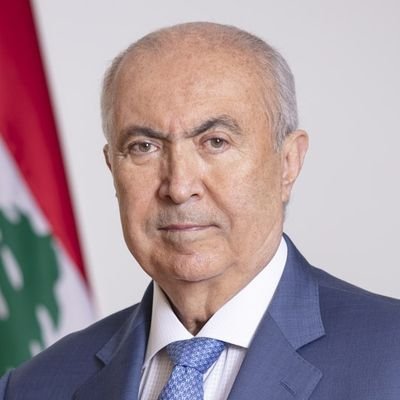
The government has taken historical decisions, however, the implementation does not meet our expectations. It has been slow. What we are suggesting is to start now from inside Dahiyeh, from the southern district of Beirut outward. If we can deploy an army division to control entry and exit points...

94,323 Aufrufe • vor 2 Monaten •via X (Twitter)

0 Kommentare

Keine Kommentare verfügbar

Kommentare vom Original-Post werden hier angezeigt

Ähnliche Videos

After November 27, 2024, Hezbollah was supposed to hand over all its weapons to the control of the state, which it did not do. Hezbollah had promised to cooperate with the Lebanese Army by surrendering its weapons first south of the Litani River, and then throughout the rest of the country, but it failed to fulfill these commitments. Instead, it decided to attack Israel on March 2, 2026, in retaliation for the assassination of Khamenei. Our President and government have taken very courageous decisions in response to what the majority of Lebanese people want: to live in peace and not be dragged into a devastating war every few years. بعد 27 تشرين الثاني 2024، كان من المفترض أن يقوم حزب الله بتسليم كامل سلاحه إلى الدولة، إلا أنه لم يفعل ذلك. كما كان الحزب قد تعهّد بالتعاون مع الجيش اللبناني من خلال تسليم سلاحه أولًا جنوب نهر الليطاني، ومن ثم في باقي الأراضي اللبنانية، لكنه لم يلتزم بهذه التعهدات. وبدلًا من ذلك، قرر مهاجمة إسرائيل في 2 آذار 2026، ردًا على اغتيال خامنئي. لقد اتخذ رئيس الجمهورية والحكومة قرارات شجاعة جدًا استجابةً لما يريده غالبية اللبنانيين، وهو العيش بسلام وعدم الانجرار إلى حرب مدمّرة كل بضع سنوات. Brian Katulis Middle East Institute

Fouad Makhzoumi

52,649 Aufrufe • vor 2 Monaten

Another masterful interview on Gaza of Dominique De Villepin, former Prime Minister of France, who IMHO is the best diplomat the West has produced in decades. Again I believe that his words are so important and so rare among Western leaders today, that I decided to translate it in full (the bold parts are emphasis Villepin himself made when speaking): "The Israeli government, Benjamin Netanyahu, failed on October 7th and failed doubly. Firstly, in its ability to ensure the protection of the Israeli people by allowing massacres that are an abomination to occur. He bears direct responsibility for what happened. And his second failure is having encouraged a policy of occupation and colonization, which continues at this moment in the West Bank and constitutes another threat to Israel if a second front in the West Bank were to open. Force does not ensure the security of a people! This is what all Israelis must understand today. And what is important is that since October 7th, the Israeli government's choice has been to escalate the use of force. You know, neither force nor vengeance ensures peace and security. What ensures peace and security is justice! And justice is not being served today. The rationale of the Israeli government for the bombings happening today is flawed, and the whole international community can see it. The principle is: "we target terrorists, and unfortunately, there are also civilian populations," what is euphemistically called in military language "collateral damage." It must be understood that this collateral damage is not accidental. That is to say, it is perfectly predictable and fully accepted. [Host: "But once again, the responsibility is not solely Israeli."] But once more, let's stop asking about responsibility; let's look at the reality of what's happening on the ground! Assigning fault, allow me to tell you, we will leave to historians. What we want is to stop this violence, to stop these massacres. Israel is putting itself in danger, even more today, with this type of warfare and these types of strikes. We are essentially dealing with a policy of vengeance from the Netanyahu government. Israel has the right to self-defense, but self-defense does not give an indiscriminate right to kill civilian populations. When you target an ambulance, you can always imagine that there was a terrorist in one of the ambulances, or not. But the result is that there are children, women who die. Every child, every woman killed, that's more terrorists. Therefore, Israel's objective, what Israel achieves, is exactly the opposite of what they wish. So, it is essential today to change this logic and return to a strategy that is sound. Hostages, everything must be done to secure their release. But let's not forget: the Palestinian people are also taken hostage, by Hamas and by Israel. And Hamas, we all know, cares little for the Palestinian people. So telling Hamas: "we will not lift the siege, we will not have a humanitarian truce until the hostages are released," is a dialogue of the deaf. Benjamin Netanyahu is waging a war to do everything so that the political solution does not come to the table. And this is where the international community, Europe, the United States, must tell Benjamin Netanyahu that this war is not acceptable. It is not acceptable because it leads us directly [to escalation] - because we can see it well, from Hamas we will move to Iran, from Iran we will move to other targets, and we then enter into the logic of a clash of civilizations. When Mr. Benjamin Netanyahu says that on one side there is the people of light and on the other the people of darkness, we can see the kind of spiral we are getting into. All the wars that have been going on for the past twenty years are wars that begin and do not end. These are frozen conflicts. We know how to start a war; we do not know how to end it. And Mr. Benjamin Netanyahu could control Gaza, it would change nothing. There will continue to be terrorist attacks, Israelis will continue to live in fear. We must get out of this. The second reason why this is yesterday's war is that the war against terrorism has never been won anywhere. Force is not the answer, once again. Vengeance is not the answer. The answer is justice, and that is what all the peoples of the world, all those who today watch what is happening, call for justice. Today the direction we must follow is to prevent Benjamin Netanyahu from continuing his suicidal logic that will make Israel a besieged state. They can besiege Gaza, but they will be besieged. And do not think that tomorrow we will again have a pacified discourse with Saudi Arabia, with the Arab states that will normalize the situation: no! The wounds of history are awakening. Israel's interest is to have a responsible state at its side. And this responsible state, let's stop splitting hairs, must clearly be the West Bank, all of the West Bank. It must be Gaza, with access between the two territories, and East Jerusalem. The problem, and this is the whole point of Benjamin Netanyahu's escalation, is that Benjamin Netanyahu does not want it. And the policy of separation must be dignified. That is, it must confer to the Palestinians a state where they can live, a viable state, a true state, which can build itself and which will be all the more at peace... [Host: "Does that mean that the settlements in the West Bank have to be removed?"] Well, when we left Algeria, there were a million French who left Algeria. Today there are 500,000 Israelis colonizing the West Bank, and there are 200,000 in East Jerusalem. [Host: "They must leave the West Bank?"] Yes. Yes, that is history, that is responsibility, that is the price! I tell you solemnly, it is the price of security for Israel! And all those who today consider that it will never be enough are pursuing the worst policy." Credit to Caisses de grève (Gauche Gaza / Antifasciste) who took these extracts from the original interview which can be found here:

Arnaud Bertrand

2,838,926 Aufrufe • vor 2 Jahren

I will sign a security pact between Lebanon and the United States, because the United States is the only real influence on Israel. I want to pursue peace. Today, the United States has an excellent relationship with Syria and President Sharaa, and it also maintains an excellent relationship with Israel. If I am positioned between these two countries, then, as far as I am concerned, it is in my interest for the United States to accept me as a member of its regional security coalition. In that case, the whole region could live more peacefully and securely. This would be my first request. Once we achieve that, the government must do its own work in terms of reforms—supporting legislation and implementing necessary changes. With a security pact in place, we can then attract investment and fully capitalize on our relationship with the United States. الولايات المتحدة الاميركية هي الجهة الوحيدة القادرة على التأثير الحقيقي على إسرائيل. أريد أن أسير نحو السلام. اليوم، تتمتع الولايات المتحدة بعلاقة ممتازة مع سوريا ومع الرئيس الشرع، كما أنها تحافظ على علاقة ممتازة مع إسرائيل. إذا كنتُ موجودًا بين هاتين الدولتين، فمن وجهة نظري، من مصلحتي أن تقبلني الولايات المتحدة كعضو في تحالفها الأمني الإقليمي. عندها يمكن للمنطقة بأكملها أن تعيش بسلام وأمن أكبر. هذا سيكون طلبي الأول. وبعد تحقيق ذلك، يجب على الحكومة أن تقوم بعملها من حيث الإصلاحات—عبر دعم التشريعات وتنفيذ التغييرات اللازمة. ومع وجود اتفاق أمني، يمكننا حينها جذب الاستثمارات والاستفادة الكاملة من علاقتنا مع الولايات المتحدة. Brian Katulis Middle East Institute

Fouad Makhzoumi

121,945 Aufrufe • vor 2 Monaten

Absolutely masterful interview on Gaza of Dominique De Villepin, former Prime Minister of France, who famously led France's opposition to the Iraq war and who, IMHO is the best diplomat the West has produced in decades. This is so important, so incredibly well argued, that I decided to translate it in full: "Hamas has set a trap for us, and this trap is one of maximum horror, of maximum cruelty. And so there's a risk of an escalation in militarism, of more military interventions, as if we could with armies solve a problem as serious as the Palestinian question. There's also a second major trap, which is that of Occidentalism. We find ourselves trapped, with Israel, in this western bloc which today is being challenged by most of the international community. [Presenter: What is Occidentalism?] Occidentalism is the idea that the West, which for 5 centuries managed the world's affairs, will be able to quietly continue to do so. And we can clearly see, even in the debates of the French political class, that there is the idea that, faced with what is currently happening in the Middle East, we must continue the fight even more, towards what might resemble a religious or a civilizational war. That is to say, to isolate ourselves even more on the international stage. This is not the way, especially since there's a third trap, which is that of moralism. And here we have in a way the proof, through what is happening in Ukraine and what is happening in the Middle East, of this double standard that is denounced everywhere in the world, including in recent weeks when I travel to Africa, the Middle East, or Latin America. The criticism is always the same: look at how civilian populations are treated in Gaza, you denounce what happened in Ukraine, and you are very timid in the face of the tragedy unfolding in Gaza. Consider international law, the second criticism that is made by the global south. We sanction Russia when it aggresses Ukraine, we sanction Russia when it doesn't respect the resolutions of the United Nations, and it's been 70 years that the resolutions of the United Nations have been voted in vain and that Israel doesn't respect them. [Presenter: Do you believe that the Westerners are currently guilty of hubris?] Westerners must open their eyes to the extent of the historical drama unfolding before us to find the right answers. [Presenter: What is the historical drama? I mean, we're talking about the tragedy of October 7th first and foremost, right?] Of course, there are these horrors happening, but the way to respond to them is crucial. Are we going to kill the future by finding the wrong answers... [Presenter: Kill the future?] Kill the future, yes! Why? [Presenter: But who is killing whom?] You are in a game of causes and effects. Faced with the tragedy of history, one cannot take this 'chain of causality' analytical grid, simply because if you do you can't escape from it. Once we understand that there is a trap, once we realize that behind this trap there has also been a change in the Middle East regarding the Palestinian issue... The situation today is profoundly different [from what it was in the past]. The Palestinian cause was a political and secular cause. Today we are faced with an Islamist cause, led by Hamas. Obviously, this kind of cause is absolute and allows no form of negotiation. On the Israeli side, there has also been a development. Zionism was secular and political, championed by Theodor Herzl in the late 19th century. It has largely become messianic, biblical today. This means that they too do not want to compromise, and everything that the far-right Israeli government does, continuing to encourage colonization, obviously makes things worse, including since October 7th. So in this context, understand that we are already in this region facing a problem that seems profoundly insoluble. Added to this is the hardening of states. Diplomatically, look at the statements of the King of Jordan, they are not the same as six months ago. Look at the statements of Erdogan in Turkey. [Presenter: Precisely, these are extremely harsh statements...] Extremely worrying. Why? Because if the Palestinian cause, the Palestinian issue, hasn't been brought to the forefront, hasn't been put on stage [for a while], and if most of the youth today in Europe have often never even heard of it, it remains for the Arab peoples the mother of all battles. All the progress made towards an attempt to stabilize the Middle East, where one could believe... [Presenter: Yes, but whose fault is it? I have a hard time following you, is it Hamas's fault?] But Ms. Malherbe, I am trained as a diplomat. The question of fault will be addressed by historians and philosophers. [Presenter: But you can't remain neutral, it's difficult, it's complicated, isn't it?] I am not neutral, I am in action. I am simply telling you that every day that passes, we can ensure that this horrific cycle stops... that's why I speak of a trap and that's why it's so important to know what response we are going to give. We stand alone before history today. And we do not treat this new world the way we currently do, knowing that today we are no longer in a position of strength, we are not able to manage on our own, as the world's policemen. [Presenter: So what do we do?] Exactly, what should we do? This is where it is essential not to cut off anyone on the international stage. [Presenter: Including the Russians?] Everyone. [Presenter: Everyone? Should we ask the Russians for help?] I'm not saying we should ask the Russians for help. I'm saying: if the Russians can contribute by calming some factions in this region, then it will be a step in the right direction. [Presenter: How can we proportionally respond to barbarism? It's no longer army against army.] But listen, Appolline de Malherbe, the civilian populations that are dying in Gaza, don't they exist? So because horror was committed on one side, horror must be committed on the other? [Presenter: Do we indeed need to equate the two?] No, it's you who are doing that. I'm not saying I equate the faults. I try to take into account what a large part of humanity thinks. There is certainly a realistic objective to pursue, which is to eradicate the Hamas leaders who committed this horror. And not to confuse the Palestinians with Hamas, that's a realistic goal. The second thing is a targeted response. Let's define realistic political objectives. And the third thing is a combined response. Because there is no effective use of force without a political strategy. We are not in 1973 or in 1967. There are things no army in the world knows how to do, which is to win in an asymmetrical battle against terrorists. The war on terror has never been won anywhere. And it instead triggers extremely dramatic misdeeds, cycles, and escalations. If America lost in Afghanistan, if America lost in Iraq, if we lost in the Sahel, it's because it's a battle that can't be won simply, it's not like you have a hammer that strikes a nail and the problem is solved. So we need to mobilize the international community, get out of this Western entrapment in which we are. [Presenter: But when Emmanuel Macron talks about an international coalition…] Yes, and what was the response? [Presenter: None.] Exactly. We need a political perspective, and this is challenging because the two-state solution has been removed from the Israeli political and diplomatic program. Israel needs to understand that for a country with a territory of 20,000 square kilometers, a population of 9 million inhabitants, facing 1.5 billion people... Peoples have never forgotten that the Palestinian cause and the injustice done to the Palestinians was a significant source of mobilization. We must consider this situation, and I believe it is essential to help Israel, to guide... some say impose, but I think it's better to convince, to move in this direction. The challenge is that there is no interlocutor today, neither on the Israeli side nor the Palestinian side. We need to bring out interlocutors. [Presenter: It's not for us to choose who will be the leaders of Palestine.] The Israeli policy over recent years did not necessarily want to cultivate a Palestinian leadership... Many are in prison, and Israel's interest - because I repeat: it was not in their program or in Israel's interest at the time, or so they thought - was instead to divide the Palestinians and ensure that the Palestinian question fades. This Palestinian question will not fade. And so we must address it and find an answer. This is where we need courage. The use of force is a dead end. The moral condemnation of what Hamas did - and there's no "but" in my words regarding the moral condemnation of this horror - must not prevent us from moving forward politically and diplomatically in an enlightened manner. The law of retaliation is a never-ending cycle. [Presenter: The "eye for an eye, tooth for tooth".] Yes. That's why the political response must be defended by us. Israel has a right to self-defense, but this right cannot be indiscriminate vengeance. And there cannot be collective responsibility of the Palestinian people for the actions of a terrorist minority from Hamas. When you get into this cycle of finding faults, one side's memories clash with the other's. Some will juxtapose Israel's memories with the memories of the Nakba, the 1948 catastrophe, which is a disaster that the Palestinians still experience every day. So you can't break these cycles. We must have the strength, of course, to understand and denounce what happened, and from this standpoint, there's no doubt about our position. But we must also have the courage, and that's what diplomacy is... diplomacy is about being able to believe that there is light at the end of the tunnel. And that's the cunning of history; when you're at the bottom, something can happen that gives hope. After the 1973 war, who would have thought that before the end of the decade, Egypt would sign a peace treaty with Israel? The debate shouldn't be about rhetoric or word choice. The debate today is about action; we must act. And when you think about action, there are two options. Either it's war, war, war. Or it's about trying to move towards peace, and I'll say it again, it's in Israel's interest. It's in Israel's interest!"

Arnaud Bertrand

10,935,866 Aufrufe • vor 2 Jahren

60 years ago, Ronald Reagan gave Americans a warning that has stood the test of time. This is from Reagan's "Time for Choosing" speech: "If we lose freedom here, there is no place to escape to. This is the last stand on Earth. And this idea that government is beholden to the people, that it has no other source of power except to sovereign people, is still the newest and most unique idea in all the long history of man's relation to man. This is the issue of this election. Whether we believe in our capacity for self-government or whether we abandon the American revolution and confess that a little intellectual elite in a far-distant capital can plan our lives for us better than we can plan them ourselves." "You and I are told increasingly that we have to choose between a left or right, but I would like to suggest that there is no such thing as a left or right. There is only an up or down--up to a man's age-old dream, the ultimate in individual freedom consistent with law and order--or down to the ant heap totalitarianism, and regardless of their sincerity, their humanitarian motives, those who would trade our freedom for security have embarked on this downward course." ... "Well, I for one resent it when a representative of the people refers to you and me--the free man and woman of this country--as 'the masses.' This is a term we haven't applied to ourselves in America. But beyond that, 'the full power of centralized government'--this was the very thing the Founding Fathers sought to minimize. They knew that governments don't control things. A government can't control the economy without controlling people. And they know when a government sets out to do that, it must use force and coercion to achieve its purpose. They also knew, those Founding Fathers, that outside of its legitimate functions, government does nothing as well or as economically as the private sector of the economy." ... "They say we are always 'against' things, never 'for' anything. Well, the trouble with our liberal friends is not that they are ignorant, but that they know so much that isn't so." ... "Mr. Democrat himself, Al Smith, the great American, came before the American people and charged that the leadership of his party was taking the part of Jefferson, Jackson, and Cleveland down the road under the banners of Marx, Lenin, and Stalin." ... "Our natural, inalienable rights are now considered to be a dispensation of government, and freedom has never been so fragile, so close to slipping from our grasp as it is at this moment." ... "You and I know and do not believe that life is so dear and peace so sweet as to be purchased at the price of chains and slavery. If nothing in life is worth dying for, when did this begin--just in the face of this enemy? Or should Moses have told the children of Israel to live in slavery under the pharaohs? Should Christ have refused the cross? Should the patriots at Concord Bridge have thrown down their guns and refused to fire the shot heard 'round the world? The martyrs of history were not fools, and our honored dead who gave their lives to stop the advance of the Nazis didn't die in vain. Where, then, is the road to peace? Well, it's a simple answer after all." "You and I have the courage to say to our enemies, 'There is a price we will not pay.' There is a point beyond which they must not advance." ... "You and I have a rendezvous with destiny. We will preserve for our children this, the last best hope of man on Earth, or we will sentence them to take the last step into a thousand years of darkness." Doesn't it feel like Reagan is speaking to us TODAY?

Kyle Becker

104,422 Aufrufe • vor 2 Jahren

Masterful takedown by Dominique de Villepin, former French Prime Minister, of Macron's utterly irresponsible rhetoric on sending NATO ground troops to Ukraine (Villepin himself calls it irresponsible). I translated it in full, because I think it's so important people are aware of the extreme danger behind Macron's (and some other NATO leaders) attempt to escalate the conflict: "For this debate [over sending ground troops] to have been useful, it would have first been necessary for us to be able to answer 5 questions. Five risks associated with this escalation, this step we would be taking if we were to send ground troops, send fighters. Five risks. The first is the expansion of the conflict. If we send ground troops, do we know if on the Russian side others will send, on the other side, ground troops? Will we face African fighters, will we face Asian fighters, will we face Middle Eastern fighters in this global south that also wants to take on the West? First risk. [Host comments: This does not seem to me a favored scenario...] If Westerners, Europeans, French send troops there, don't you think that solidarity will also play on the Russian side? I think we still need to ask ourselves that question. In any case, our diplomacy has not done what it should have to isolate Russia. If Russia were isolated, we would know it... I think, by the way, that we are more isolated, unfortunately, than Russia. Second major question: new front. Risk of a new front. I warned, I was among the few voices to say 'be careful, Ukraine is a dangerous situation but what happens if another front opens?'. The front in Gaza and the Middle East has opened. But there are other fronts that can open: in Korea, in Africa... And so, are we going to wage war like this on all 5 continents? This reality must be taken into account: the world is not limited to the drama and tragedy of Ukraine. It turns out that America is a global power and that we claim to be a global power too, so we are concerned by the major balances and the order of the world, and unfortunately our diplomacy does not sufficiently take into account these disorders which concern the Congolese, the Sudanese, etc. Third risk which is important: the terrorist risk. I am not thinking of terrorism that would come from our opponents in Ukraine, I am thinking of opportunistic terrorism. When there are situations of this type of disorder, terrorism strikes. And I remind you: we have planned here in France not a year of war, but a year of celebrations. In a few months, we will commemorate the 80th anniversary of the D-Day landings and delegations will come from all over the world. We are going to spend several months celebrating the Olympics. If we need to mobilize, let's mobilize, but maybe it should have been done a bit more: I don't see a war economy, the preparation of minds in terms of civil defense and hybrid warfare, I see nothing... You don't just pull the idea of going to war in Ukraine out of a hat without having prepared a little... Fourth risk: we are on the eve of an American election that will determine the new world order. It's a safe bet that we are heading for a new era of isolationism and protectionism like the world has never seen. We are seeing a split in this new world order between Trump and a China that has just celebrated the reunion of its parliament and is becoming more introverted, more focused on its security than ever. This is a general global context that must be taken into account. And then there's one last element that may be one of the most important, which is the nuclear risk. I know the good experts, the great experts who speak on this subject and I respect them immensely. But sending ground troops, fighters, places us in a situation in terms of deterrence that we have never known. Forty years of Cold War: the forces of the Warsaw Pact and NATO forces never clashed. And it's not by chance: it's because of a reality that relates to the grammar of nuclear. The rule of deterrence is based on the principle of mutual assured destruction. That is, if one uses the bomb and the other responds, we're all dead. [...] I think the nuclear grammar means that today the risk of NATO ground troops in Ukraine presents a risk and that this risk, for responsible powers, is unacceptable. I travel enough around the world to have observed something for 15 years: the use of nuclear weapons is based on political cultures, societal cultures, and civilizations. The world is changing and what seemed unthinkable 10 or 15 years ago appears today differently: the rhetoric of the enemy, the hatred of the other, has developed to a point where we live in an international community that may want to settle scores with the other. [...] Today, and I'm not just thinking of the Russians, let's not forget nuclear proliferation with countries like Pakistan and many others that now have nuclear weapons. And it is in this that the principle of responsibility is essential, and there is a rule that must be drawn from all this: the logic of force, when not controlled, leads to an escalation that can be deadly. This is what makes the situation in Ukraine a real danger and it's also what makes - because this principle of the logic of uncontrolled force I would gladly apply to the situation in Gaza - it's what makes the Israeli policy applied today to Gaza a real danger. Because there is no control over the use of force. And when you look [...] all fronts are linked, all crises are linked."

Arnaud Bertrand

846,373 Aufrufe • vor 2 Jahren

Vallée and the Closed System: Are We Prisoners? 🧠👽 Vallée: "Are We Being Taken Over by a Species from Somewhere in Space That's Vastly More Intelligent Than We Are?" 👽🧠 "..the simulation...was a new concept that I initially rejected." ~Vallée "Is it looking for us to try to interact with it as equals or with parity?" ~Scafish "Nobody says that to Congress, and I think Congress should hear it." ~Vallée If, "it's a closed system, we're like prisoners and something is going to happen to us, and there is very little we can do." ~Vallée Turn the thermostat dial. "If the temperature doesn't change, then I know I'm inside a control system. So, we can do the same thing with UFOs, but we have to react. We have to, number one, acknowledge that it exists, and number two, we have to react to it." ~Vallée ~~~ I've been wanting to share this one for a while... Vallée: "So, he said, the question you have to ask about UFOs is, number one, is it a natural system or an artificial system...control system. And if it is a control system, is it open or closed? In other words, are we being taken over by a species from somewhere in space that's vastly more intelligent than we are?" (I've never heard him even suggest that possibility.) Vallée: "You know, as Dr. Garry P. Nolan says, you know, people who have had ten, you know, scientific revolutions, or a hundred or a thousand, and come here with superior science to do something... And in which case, you know, it's a closed system, we're like prisoners and something is going to happen to us, and there is very little we can do. Or, is it an open system where we can, in fact, communicate with it. And if we can communicate with it, then the question for me as an information scientist is, what are the modalities of the interaction, you know? It's not just can we learn their language? And they say, you know, 'We come in peace to save mankind,' or something. Or 'We will give you the cure for cancer' or something. I don't think it's at that level." (Will we ever be able to get answers to these extremely important questions? If it's an open system, how do we communicate with it? How do we provoke it to react? We know it reacts to anything nuclear but we still don't know why. This is why we need the USG (and other governments) to present evidence that shows the masses this is real and extremely important for our species to investigate. If that evidence exists and is shown, we'll have an easier time getting the world's best minds to join the effort in figuring out the best way to answer these questions. We still may fail but we should at least try.) Vallée: "I think it's a meta-system. It's not a system. And that's my fear...if we can circle back to your earlier question about, you know, about NIDS and about BAASS, what we did for the government and what we did for the Defense Intelligence Agency. Half of the budget was spent developing, you know, a super database. And we don't know where it went. I mean, I'm not cleared to know where it went." (On the contractor (BAASS) side, Bigelow should have all copies of what AAWSAP produced. And on the DIA side, Lacatksi said he put all of the digital files in a specific place that he didn't name. As long as someone didn't delete it all, it should still be there. Vallée has said that the Capella database has about 250,000 cases from around the world.) Vallée: "But that would be a very interesting question, because the people who are getting [the database] are getting raw data, which we have very well organized, all in English. So they have the luxury of, you know, we had five translators from French, English, Portuguese, Russian, you know, everything was translated in a single structure across fourteen databases. "That's what we need to answer the question about the control system, and it's not being done. And we hired a whole team that we had trained to work on it. So to rebuild that will take the next ten or fifteen years. And nobody says that to Congress, and I think Congress should hear it, because it's our money." (As long as names and personal details are scrubbed from that database, there is no reason NOT to release it to the public. This way, we can take it and use AI to help decipher patterns and maybe answer some of these questions. Can Congress help us get access to that database?) Vallée: "When you ask, is it a control system? That's a big question." Peter Scafish Peter Skafish - "You asked, at one point, whether the system is open or closed, and you said, additionally, I believe, if it's open, that it would be possible to communicate back to it. And it sounds to me like that's the key question for you. Is, if you can understand what what the system of symbols is, or the modalities of communication, then you can understand enough to engage in some kind of communication, or at least give some kind of response to show that you understand." Vallée: "Yes." Scafish: "So then the question, and we have a member named Jacqueline, who has asked this. Could the system be stimulating us - provided there is such a system - to interact with it, more as subjects or agents than as something like animals or objects? Is it looking for us to try to interact with it as equals or with parity?" (When people report getting injured or sick from being in close proximity to UAP, it suggests to me that the phenomenon won't go out of its way to avoid affecting us in a negative manner if we get in their its/way (assuming it even knows that close encounters with UAP are not good for humans). Kind of like how we treat lower lifeforms. If we encounter a wild rabbit crossing the road, many of us will do our best to avoid it, but not if it means damaging our car or ourselves in an accident. It may ruin our day if we hit it, but it won't stop us from driving again in the future. Do NHI have bad days if their tech injures us or makes us sick? I have no clue.) Vallée: "Well, what I saw in the notes you gave me, is she was also asking: Is it a control system because we think it is? And that's a very interesting question. Because we react to the UFO phenomenon, or the UAP phenomenon. And, you know, at this point when I think about what I'm going to do next in this research, if I'm given the the opportunity to live a little longer, I'm not going to go back and write any more computer programs. There are better people to do that now, they have the data, and we're in a different phase now. We're in a whole different system. I have the luxury of doing some experiments I wanted to do for a long time." (Would have liked Scafish to ask him: What types of experiments?) Vallée: "So, if you think you are inside the control system, there are things that you can do. Or, if you think you're inside the simulation, you know, which was a new concept that I initially rejected, and then, you know, Ray's (Kurzweil?) work and others have brought it back to the forefront. And we have to ask that at the same time. Can we test it? How would you test it? Well, if, you know, I'm here in my apartment, and the temperature is constant in this apartment. But outside, I can see it's cold, or I can see the sun is out and it's warm, and how come it's constant here? So this would lead me to think that there is a control system, namely a thermostat, that is somewhere. "So I can start looking around the walls, and if I see dial, I can turn it, or I could start a fire and see what happens, see if the temperature changes. If the temperature doesn't change, then I know I'm inside a control system. So, we can do the same thing with UFOs, but we have to react. We have to, number one, acknowledge that it exists, and number two, we have to react to it."

Joe Murgia

27,613 Aufrufe • vor 8 Monaten

A shocking video clip (with English translation) ⬇️ out from the violently occupied #Irob district, Eastern Zone of #Tigray, confirms only what we already know: The #Eritrean regime is forcing a false Eritrean identity on the indigenous #Irob minority people with denial of aid & essential services & threatening them to comply with its compulsory 🇪🇷|n national military service (known as an indefinite slavery program) as they have forcibly been annexed to Eritrea. The video was filmed at a locality called #Alakalo, at Masi-Dage (junior high school) in Adgadi-Are/Edalgeda (northern subdistrict of Irob). #EritreaOutOfTigray Department of State Foreign Policy CAN Foreign, Commonwealth & Development Office European External Action Service - EEAS 🇪🇺 Mike Hammer Getachew K Reda Office of the Prime Minister - Ethiopia African Union Office of the 4th President of Kenya. UN Human Rights Human Rights Watch Amnesty International Here is the English translation of the video clip in Tigrinya: “As Eritreans, you too have to support the struggle of Eritreans and the Eritrean government. We are all Eritreans; there isn’t a distinction between you and us. • All Eritreans must know that the Eritrean government was forced into the struggle and the suffering that is being faced; it had no desire to take part in it. • Weyane (TPLF) is an agent; it doesn’t have the strength to challenge the Eritrean government. Both in the past (Ethio-Eritrean war) and presently, it is doing the bidding of other forces which are backing it. • The struggle of the people and government of Eritrea is also your struggle. You should be proud of it. You should understand that the Eritrean government is winning by enduring all the sanctions and challenges not against the TPLF but the world. You should be proud of it if you are Eritrean. • One elderly man has said, “We (the people of Irob) have gotten used to unlimited democracy under the TPLF leadership. Now you are telling us that we are under your administration. But you won’t be able to tolerate our ways.” This talk is what continues to be propagated. When we tread on this land of martyrs, we tread on it softly. But what has been coming from this side (TPLF) is very much despicable. You are people. But this is Eritrean territory. If you are Eritreans, you have to defend against what comes from the other side and collaborate with the Eritrean army. • What is being reported is that there is no one from Irob who is providing information or collaborating with the Eritrean army. We will investigate it. • The other thing is, it is being said that the Irob, although they consider themselves as Eritreans, have disagreements with the Eritrean government regarding humanitarian aid and the national service. But if you are Eritreans, whether you like it or not, you will have to go through the things that every Eritrean experiences. • During the armed struggle, fighters who joined the Eritrean struggle from Irob have done their national duty and been martyred. Although, during the war, the land (of Irob) may, at different times, have switched hands between Eritrea and the TPLF, you know that your children and brothers have paid sacrifices for Eritrea during the armed struggle. • If there is anyone who believes they are Ethiopian, the Eritrean government will not force anyone to remain here. But this territory belongs to Eritrea. And Eritreans reside on Eritrean territory. And Eritreans must abide by Eritrean rule like the other (Eritrean) people. If there is famine, you should starve like everyone else. If a few grains come, then you divide it with them and live like that. There will not be any preference. • Regarding security in particular, lawlessness has been prevailing. They come from Adigrat and spend the night here; they go from here and spend the night in Senafe. And you don’t report this to us. Unless you provide information, the social service that you have been asking will not be provided. If you defend your homeland and your area, adequate social service will be provided as it will be able to continue preserving its peace. If you don’t collaborate, however, your demands will not be addressed. So, who is going to suffer? It is you who will suffer.” 1/2👇

Irob Anina Civil Society (IACS)

421,864 Aufrufe • vor 2 Jahren

Today we have heard some outstanding speeches from NATO ally leaders. However, this one from the Danish Prime Minister Mette Frederiksen, was the one that spoke to me for sure. I think it’s time to stop pretending to ourselves that the U.S. is anything but an impediment to solving this existential threat, to the welfare and safety of all our citizens. Let me quote Sun Tzu's The Art of War. ‘All warfare is based on deception’ and for sure, Putin has waged a war of deception. He projected the historical power of the mighty Red army in a bid to quickly overrun Ukraine. He attempted to do it with untrained poorly equipped troops, on out of date rations. Putin rolled the dice thinking NATO would not commit troops to help defend Ukraine and he was right. What he didn’t plan for, was the lion spirit of the Ukrainian people and the ingenuity of their military engineers. Their work with drones and sea drones has redefined battlefield strategy. Once allies started providing javelin anti-tank missiles and supporting artillery, the game changed. They prevented the Russians from achieving air superiority? And the Russian Black Sea Fleet had to retreat from port. It is testament to the Ukrainian army and air force, Russia has been held back against all the odds. Let’s be clear, the military has achieved what it has, not because of us, but in-spite of us. We have only given them enough weapons to hold the bear back, not to evict it. There were constant delays, waiting on artillery shells, HIMARS and ATACMS, as well as tanks and F16s. WE HAVE LET THEM DOWN. Yet these brave men and women have innovated and made do, to defend not only their country, but our borders too. WE OWE THEM BIG TIME. Not with words and sympathy, but with the proper tools to get the job done. America has disgracefully walked away and aligned with our enemy. The U.S. president’s pet, Elon Musk along with JD Vance, have meanwhile actively supported far right political parties in Europe. Then Vance had the audacity to turn up and lecture us on our own doorstep. What was our answer? ‘Please don’t hurt us’. This week, we see a slow procession of European leaders making the pilgrimage to the court of Mad King Don for a humiliation session. Pardon my French but ‘f*ck that’, it’s time to stand tall and tell Trump to ‘f*ck right off’ and if it were me. I’d tell him to take his airbases with him too and cancel all military arms contracts. If he wants access to Ukrainian minerals that’s fine. Ukraine HAS NO DEBT with the U.S. They simply have the thanks of a grateful nation. There was no loan agreement. If he wants mineral rights, then provide an arms package as a down payment for future revenues. Leave the deal on the table for a week and if it’s not signed, pull the deal. Then they get nothing and in addition, no bids will be accepted from US companies for the reconstruction of Ukraine after the war. Now that’s the art of the deal. As for NATO allies, Trump is walking away regardless, so Europe needs to get its act together NOW. Seize Russian assets and use the funds to fire up the European military industrial base. This will create jobs and growth, while capacity is expanded in all countries with an arms manufacturing capability. In the meantime, we already have the ability, especially if Poland steps up, to defend against any increased Russian aggression. The British military has already said, if it were needed, we would meet that threat head on today. If this collective approach is taken, the Russian army in Ukraine could be crushed just as crushed the Iraqi army in Desert Storm. It’s time to show the Americans their services are no longer required. Then when the war is over, we can look to promote the Euro as the new global reserve currency. No harm in ambition I say. We need to believe in ourselves. It’s time to get the job done and show the world FAFO. There’s only one village idiot in this town and it’s not Zelenskyy. I rest my case.

𝔗𝔯𝔲𝔱𝔥 𝔐𝔞𝔱𝔱𝔢𝔯𝔰

891,600 Aufrufe • vor 1 Jahr

All of Irans biggest threats to the United States - including (undoubtedly) the Muslim Brotherhood - as well as the IRGC, top military leaders, and top nuclear scientists just got taken out. Not to mention one of Israel’s biggest nuke production facilities was taken out in return. How, exactly, is any of the above bad for the United States? But - POTUS didn’t know. Mmkay, sure… Remember that time the Israeli Government and Mossad used blackmail to control our government for decades, and by proxy - our military? And by doing so, used our military to police their enemies in that part of the globe? THINK MIRROR. Israel is now being “used” to take out a legit threat to the west. I mean COME ON. If, in fact, Iran was close to possessing nuclear weapons, there is a less than zero percent chance that we could have handled it ourselves because of the optics. Not to mention there is only about a 1% chance that Iran actually would have abided to any diplomatic agreement which was struck. POTUS literally said the night beforehand that Iran cannot be allowed to have a nuke. Period. And then when asked what was going to happen he said “you’ll have to wait and see”. Added to which we warned our allies and began evacuating our personnel 24 hours beforehand. And lest we forget POTUS told us that he knew when the attacks would happen while also saying he gave Iran 60 days, and today was “Day 61”. So yeah - save me the narrative that he “didn’t know”, or that Bibi “blindsided him”. Some folks in this movement really need to set aside their hatred for a certain sect of people and utilize logic. Israel. For. Last. The optics are absolutely terrible for the Israeli Government/IDF while at the same time striking a serious blow to an enemy of the United States. As truthers, we cannot ignore Occam’s Razor. Look back at the last few years and honestly ask yourself what simple answer makes the most sense in accordance with all the crazy shit we’ve seen which has served no purpose other than to publicly out and destroy the cabal. Beyond that - if the cabal possessed the control many still believe they do, then how did President Trump win the election? From where I sit, the simplest conclusion is that the good guys possess a LOT more control than most people’s cognitive dissonance is comfortable with admitting. That does not mean events aren’t real. It doesn’t mean real lives are not being dramatically altered and/or lost. It does mean that the enemy has been boxed into a position that they cannot escape from. How easy it is to forget we are involved in a very real war for the very heart and soul of this country, and the world - and we have been for some time. Moves and countermoves. If you know the playbook of your enemy, it means you can always be a step ahead and then use their own operations against them. I believe that is what we are witnessing here. I don’t know how this will shake out. All I know is an enemy to the United States just took a major attack that has severely weakened them - Meanwhile Israel are the ones bearing the blame and looking like the bad guys while also losing a major nuke facility. From a standpoint of optics and who benefitted the most - It is pretty clear who this favors in the longrun, and that would be us. The process is never pretty, nor is it easy. Just the opposite. Stay frosty, frens. Watch out for each other, and keep your heads on a swivel. The adversary (Satan) will be bringing out all the stops now. Stay prayed up, and keep your armor on. Protect your mind - guard your emotions. WWG1WGA

17AbsoluteRedux76

61,305 Aufrufe • vor 1 Jahr

🚨🚨 HEZBOLLAH FINAL SPEECH | THREATENS ESCALATION FINAL PART OF HEZBOLLAH LEADER SPEECH - THREATENS ESCALATION AND REGIONAL WAR! HEZBOLLAH LEADER SPEECH KEY QUOTES (PART 8 - FINAL): - The Islamic resistance in Iraq has begun to bear its responsibility and announced that it may enter a new phase We must not despair of demanding responsibility for what is happening in Gaza - We have entered the battle since October 8th Yemeni missiles and marches will reach Eilat and Israeli military bases - We took note of the “Al-Aqsa Flood” operation, as did the whole world, and we quickly moved from one stage to another. - If we look at what is happening on the border objectively, we will find it very important and significant - What is happening on our Lebanese front is unprecedented in the history of the Israeli entity - We will not be satisfied with what is happening on our front in any case - Our operations on the border target enemy vehicles, soldiers, and equipment - The Islamic resistance in Lebanon has been waging a real battle since October 8 that only those who are actually present at the border can feel. - The Islamic resistance is waging a different battle in terms of its titles, tools, and targets - Approximately 57 martyrs, including the Phalange Brigades, in addition to the martyrs of the Al-Qassam and Al-Quds Brigades. - On Saturday, October 7, the enemy, according to his forces, started from the border with Lebanon to take them to Gaza in light of the state of moral collapse. - The Lebanese Front has relieved a large portion of the forces that were to be used to attack Gaza. The operations that began and escalated forced the enemy to keep its forces at the border and mobilize more of them. - The resistance front in Lebanon was able to attract a third of the Israeli army to the border with Lebanon - 43 settlements in northern occupied Palestine were evacuated due to our operations - The settlers evacuated from the north and south are putting pressure on the moral and economic levels. If our position of solidarity had been political, the Israelis would have been comfortable on the northern border and its forces would have gone to Gaza. - The operations on the border have created a state of anxiety, anticipation, and fear among the enemy leadership and even in Washington - There is concern that this front will spiral into a comprehensive war, and the enemy is taking every account of that - The possibility of the Lebanese front sliding into a wide battle is a realistic possibility - Israel must be concerned about the expansion of war and escalation - Our operations make the enemy calculate its steps towards Lebanon and it adjusts its pace for fear of deteriorating matters - Our daily operations on the border make the enemy a deterrent - Our operations tell the enemy that it will commit the greatest foolishness in the history of its existence if it attacks Lebanon - Our operations and the sacrifices of our people are an expression of our solidarity with Gaza to relieve pressure on its people - We were told from the day of Operation Al-Aqsa Flood that the American fleets would bomb us and came for us - Our front is a front of solidarity with Gaza and it develops and moves according to developments there. - The enemy’s behavior towards Lebanon is a determinant of our movements, and this will return us to the rule of civilian versus civilian. - All possibilities on our Lebanese front are open - All options are on the table and we can go to them at any time - Threats and intimidation against us and the resistance fighters in our region are of no use - We must all be ready for all possibilities and options - We received messages that America will bomb Iran if we continue our operations in the south - Those who defeated you in the early 1980s are still alive, and with them today are their children and grandchildren - You can stop the aggression against Gaza because it is your aggression, and whoever wants to prevent a regional war must hasten to stop this aggression. - In the event of any regional war, your interests and soldiers will be the victim and the biggest loser. - We have made 'preparations' for the American ships, and we ask America to remember their defeats in Afghanistan, Iraq, Syria and Lebanon - America has sent us messages, that they will bomb Iran if we continue. How dare you threaten our resistance? Your ships in the Mediterranean don't scare us, and be sure that we made preparations for them - I assure the Americans, in case of a regional war, their ships and the air force will pay a heavy price - Our battle has not reached the stage of victory by knockout, but we are winning with points - On the horizon, we are all fighting a battle of steadfastness. Our battle has not reached the stage of victory by knockout, and we still need time, but we are winning. - We must work for Gaza to be victorious and for the resistance to be victorious in Gaza - We still need time, but we will win with points. This is how we won in 2006 in Gaza, and this is how the resistance in the West Bank achieved achievements - I say to our people in Gaza and the West Bank and to all oppressed peoples that patience will result in victory. - We bear responsibility, and our steadfastness and patience will result in certain victory, God willing. - We have a belief in God's promise, that he will make the believers victorious, and God always fulfills his promise

Mario Nawfal

2,194,010 Aufrufe • vor 2 Jahren

Josep Borrell accuses Israel of the largest ethnic cleansing operation since WWII for it's actions against the Palestinians "We all know what happens there and we all hear statements from Netanyahu's ministers that are clear statements of genocidal intent" "Rarely have I heard a responsible state official express so openly a plan that meets the legal definition of genocide" "You can die by being shot in the back of the head, you can die in a gas chamber, you can also die of starvation" "And in any case, it is about the will to exterminate a people" "We are facing the biggest operation of ethnic cleansing since the end of the Second World War" "To create a splendid holiday resort once the million tons of rubble have been removed from Gaza and the Palestinians have left or have died" "One horror does not justify another horror" "I have said it many times. The horror of ever does not justify the horror of Israel's response" "Europe has the capacity and the means to not only protest, but to influence behaviour, and it does not do so" "We supply half of the bombs that fall on Gaza" "And if we really believe that there are too many dead, the natural response would be to supply fewer weapons and to use the Lever of the Association Agreement to demand that international humanitarian law be respected and not just lament that it is not being done" "We all condemned this terrorist attack by Hamas and proclaimed Israel's right to defend itself" "But the right to defence, like all rights, has its limits" "It has the limits of international law and international humanitarian law" "And in its response, Israel has violated all these rules, systematically using the starvation of the civilian population as a weapon of war and by bombing more than 50,000 dead among the population of Gaza, among them mostly women and children" "An explosive power equivalent to three times the Hiroshima bomb has been dropped on Gaza" "And for months nothing has been entering Gaza" "Nothing" "No water, no food, no electricity, no fuel, no medical services" - "And the shocks we suffer have two names" "Their names are Putin and Trump" "Two characters who, each in their own way, represent the old imperialism of the 19th century, which we know well because we have been its protagonists" "As I said before, one is much more intelligent, cunning and crafty than the other, although the other does not know it" "And that has consequences for everyone" - "What is peace?" "First and foremost, it is the peaceful coexistence between different people the coexistence between humans who for a moment think that it is better to cooperate than to fight" "And that, for example, today in the Middle East, means the ability of Palestinians and Israelis to live each in dignity and freedom, each with their own state" "Peace is the ability to face together global challenges" - "Today, on the contrary, war has returned to our borders and Trump is back in the White House" "Our time is no longer defined by peace, democracy, open trade and liberalism but by conflict, populism, protectionism and war" - "And today, for Europeans, the big issue is no longer the war between us" "And we do not sufficiently appreciate this extraordinary result" "Against our background, to have achieved 70 or 80 years of peace was an historic result which alone would justify the European Union" "The European Union has been a peace project and must remain so" "And even if we now talk a lot about rearmament, must remain a peace project conceived not for the relationship between us, but for the relationship with the rest of the world" - "Europe is the place in the world where humanity has built the best combination of political freedom, economic prosperity and social cohesion" "And today more than ever we can say that Europe is the land of the free" "When in the US people start to be afraid to speak out, Europe is more than ever the land of the free" - "It is the land of relative economic prosperity, but greater than elsewhere, which is accompanied by an effort of social cohesion so that no one is left to their own devices, so that the health of your neighbour is also a problem for you" "But not a theoretical problem, but a problem that is solved with fiscal transfers that make things that are not provided by the market, but that are human rights" "But rights are not free" "Rights are paid for, and they are paid for with taxes, paid for with collective effort" "This is what characterises Europe" "We pay more taxes than in other parts of the world" "This is the price of cohesion" "Cohesion is the price of security, and security is the way to guarantee freedom"

Farrukh

41,525 Aufrufe • vor 1 Jahr

I would like to wish all my compatriots a happy Independence Day, happy Independence Zimbabwe. The independence of our country, unlike many other African countries, came through blood that was shed. There are so many Zimbabweans who lie in unmarked graves from Tanzania to Zambia to Botswana to Mozambique, and they put their lives on the line so that you and I could have the independence that we did not have under colonial rule. There is a distinct difference between those who fought for the independence of our country and died, never seeing an independent Zimbabwe, and those who took over from colonial rule and then destroyed our country through incompetence, corruption, and many other afflictions that should never have been there. I am in no doubt at all that had our country not become independent, I and many Black citizens would probably not be where we are today, thanks to the early gains of independence. Sadly, I now find myself as a journalist and a Zimbabwean with NO freedom to speak, to write, and to exist as a full citizen in my country post independence after the derailment of the independence dream. Many of our people did not have the opportunities that I personally got, and many others got, to advance our lives. It is unfortunate that we find ourselves where we are today, not because independence is bad, but because we ended up with selfish, corrupt, and incompetent individuals who abandoned the principles and aspirations that inspired many Zimbabweans to go out there and fight so that their country could be free. So on this day, when we celebrate 46 years of independence, the same zeal and drive that defined those who died fighting for our country must be carried forward by those who are alive today, to make sure that the country is restored to where it is supposed to be. Zimbabwe is one of the richest countries under the sun. It has almost every mineral that you can think of, and it has some of the best soils in the world. There is no reason for any Zimbabwean to be unemployed, to fail to earn an income, or to go to bed on an empty stomach. There is absolutely no reason for any Zimbabwean to struggle if the country is led by people who know what they are doing and who put the country first, the national interest first, ahead of their own selfish needs. Whilst colonialism was a terrible stain on the history of our country, there are lessons that can be drawn from that period. Rhodesia was run like a business, not like a fiefdom. The fact that most of the central hospitals that exist today were built during the colonial period, with the exception of Chitungwiza, tells us that infrastructure was prioritised, even if it was designed to serve a minority. That reality does not excuse colonial injustice, but it exposes the scale of failure after independence. Forty-six years later, the government has built only one central hospital. Around 2,500 women die every year during childbirth due to a lack of adequate maternity facilities. The largest hospital in Zimbabwe still relies on a maternity theatre built in 1977, and even then only one of its two theatres is functional, with the working one having been refurbished by a South African bank. That is a damning indictment on the current leadership. The fact that millions of Zimbabweans have been forced to leave the country to take up menial jobs in South Africa, as waiters or farm workers, is an indictment on the current leadership. The fact that people like myself and many others have had to leave home out of fear for our lives is an indictment on the current leadership. Whilst the leadership has failed, we as citizens of Zimbabwe also carry a responsibility towards our country, in whatever space we occupy. We must stop following personalities and start following ideas, whether in the ruling party or in the opposition. Our country has been destroyed because we follow personalities, many of whom are vacuous and empty, and when they fail, they drag the nation down with them as our leaders have done. We must not wait for a Messiah to come and save us from the afflictions we face today. We have a responsibility to do what is right for our country. During the liberation struggle, leaders were changed at different points because the struggle was never about personalities, it was about an idea, an independent Zimbabwe where every Zimbabwean, black, white, green, or yellow, has the same rights and opportunities to pursue a better life. So as we celebrate, and we should celebrate, we must also reflect on our responsibilities going forward. We celebrate because independence itself was a noble idea and remains a noble idea. When things are bad, you do not burn down the house, you fix what is broken. We must honour and remember those who lost their lives so that people like myself could go to college, become journalists, and be recognised internationally, as many Zimbabwean professionals have been, some even advising presidents across the continent and beyond. Zimbabwe has some of the most accomplished people anywhere in the world, and it should not be where it is today. It is therefore up to us, as Zimbabweans, to make sure that we do what is right for our country. Once again, happy Independence to my compatriots, and thank you to all the stalwarts who laid down their lives for us to be independent and to the countries that supported our struggle. We could not have achieved independence in 1980 without Mozambique, Zambia, Tanzania, Botswana, and many others who stood with us. They did well for us and we thank them. It is those who destroyed the country who should hang their heads in shame today. My heart bleeds when I see so many young Zimbabweans with university degrees, yet ending up as victims of drug abuse because there is no work to go to. There are no opportunities available that are aligned with what they went to university to study. It is a tragic indictment of the situation we find ourselves in today. Today we have become a nation where boreholes are being drilled in the middle of cities because the rulers have failed to do something as basic as delivering water into people’s homes. Today we have become a nation where the rest of the region laughs at us because our roads are riddled with potholes, yet the leadership drives Ferraris on those same roads. Today we have become a nation where even our O-level pass rate has not gone beyond 34% because of the failure of leadership to do what needs to be done. Today we cannot even feed ourselves. We have to rely on food aid, and yet we were once colloquially referred to as the breadbasket of the region. These are some of the realities we should reflect on. I could go on and on, but at this point, it is not necessary. To our leaders, I say, how does it feel when you hear the very people you lead saying Ian Smith was better, when they say colonialism was better? How do you feel? Or do you even feel anything at all when those words are spoken? Of course, colonialism was brutal. Of course, Ian Smith was a racist leader who upheld a minority regime built on exclusion and oppression. But it is a damning indictment of your failed leadership that some of our own people now feel pushed to the point of romanticising that dark past. Independence was meant to usher in dignity, opportunity, and shared prosperity for every Zimbabwean, regardless of colour or creed. It was meant to restore ownership of our future to the people. Yet today, you cannot deny that a small, privileged few are the primary beneficiaries of that independence, while the overwhelming majority are trapped in poverty, penury, and relentless suffering. That is not what liberation was fought for. However, nothing can justify a failure to be grateful to those who fought and died for the independence of our country. They did their part. It is now up to us to do our part and ensure that our country becomes what it is meant to be. Happy Independence Zimbabwe.

Hopewell Chin’ono

12,280 Aufrufe • vor 3 Monaten

EU gave €225 million to projects in #Gaza between 2021-2023, a place that was under the full control of #Hamas since 2006. How much of the EU money given to projects in Gaza ended up in the hands and pockets of this terrorist organisation? I asked Commissioner Olivér Várhelyi this and other questions in the Budgetary Control committee on October 26, 2023. Watch and share this video along with the transcript. MEP Cristian Terheș: "Thank you so much. Before I go into my questions I just want to make a note that this committee has on paper 55, 54 MEPs, and we are in this room, right now, only five [MEPs] and two over there. I think it is outrageous that, for an important topic like this, that is discussing about how the Commission is spending or wasting people's money, apparently the Left is not interested in see[ing] what exactly and how exactly people's money was spent. Going back to the questions, I have six specific questions. The first one is related to the books printed under the supervision or under the authority of the Palestinian Authority. And I saw, I carefully read the answer from the European Commission, which pretty much acknowledged that there was a problem, and I restate that, that there was, in the past, a problem with these books. And the answer says that "EU has stepped up its engagement with the Palestinian Authority to ensure that further curriculum reform addresses problematic issues identified in the shortest possible timeframe". So the "further curriculum" will address this issue. Well, here's an example of a book. This is a literature book for the fifth grade that is used in the UNRWA schools. In this book, this is what the Arab kids are learning. If you're not aware of who this person is, her name is Dalal Mughrabi. On March the 11th, 1978, along with other terrorists, [she] hijacked two busses. And when the Israeli authorities tried to free those people, they blew themselves up and killed 38 Israelis, including 13 children, and over 70 people were wounded. So how is it possible that now, in 2023, and I'm not talking about past books… This is 2023. These kids are still learning that this is a role model for them. And now, out of the blue, we are surprised that people are blowing themselves up and killing innocent people. I'm not interested what are you going to do in the future. I hope that you will do something and we will make sure that you will do something. But what have you done so far to make sure that these Arab kids, these Palestinian kids are not indoctrinated with this kind of evil figures? The second question is about the "Pay for Slay". #PayForSlay According to the Palestinian law if a Palestinian person is killing a Jew, his or her family is getting a pension. So we are rewarding terrorist activities. And this was done for years. A few years ago, when Trump was president, a U.S. military guy was killed in one of these terror attacks. And U.S. Congress passed a law called "Taylor Force Act", which is conditioning any U.S. money for the Palestinian Authority to make sure that these families of the terrorists are not getting reimbursed for life after these terror activities. Why aren’t we imposing exactly the same rules? Because, according to the answer from the Commission, we are paying pension and pensions to these people. Third question, the issue of Gaza. According to your official answer, you're stating, and I quote: "Between 2021 and [20]23, EU funded €681 million for the Palestinian Authority and UNRWA. A third of this money went to Gaza." A third means €225 million from 2021 to 2023. But we know for a fact that in 2005, when Israel withdrew from Gaza, after 2006 or [200]7, Gaza is under the control of Hamas. You said here that you will run a survey or whatever, an analysis to see how the money was spent. What have you done already? Hamas was called, and recognized and acknowledged as a terrorist organisation. How was it possible to pour €225 million in a place that is fully controlled by a terrorist organisation and nobody did anything or said anything? It is absolutely absurd! Forth question. Following reports about stealing of pipelines for rocket production and fuel for hospitals, to what extent can the European Commission or the Court of Auditors verify or assess the damage caused to EU and European funded projects in Gaza? Fifth question. Following news that Hamas is directing money for social allowances to members of this terrorist organisation, how do you verify that such money gets to those really in need? Nevertheless, following reports about control of Hamas of the teacher unions and UNRWA workers union, what are the steps you are taking to verify that EU money for UNRWA is not used to serve Hamas agenda? Thank you." Commissioner Olivér Várhelyi: "Madam Chair. I want to assure all the participating members of this committee that I very much appreciate their presence and their engagement with us. And I think that this is very important that we have this discussion, no matter how many members of the committee are here. Now, first of all, on the Gaza project. Let me make it very clear what has been done in Gaza since 2006 when the IDF and Israel has left the Gaza Strip. I fully agree with you. The control and the governance of that strip has been de facto exercised by the Hamas. Unfortunately! And it was for that reason that all institution financing activity has been stopped and it is for that reason that only projects of public interest have been continued in the Gaza Strip. Now, with the emergence of the horror that we have seen instigated by Hamas, the review also has a very clear message to those projects that we have tried for many, many years to create for the benefit of the people in Gaza, like the Gas for Gaza project or the desalination plant creating fresh water for the people in the Gaza Strip or building a new hospital in the Gaza Strip, that are on hold. And it is not possible even physically to continue on those projects. And we will have to wait until the end of this war to see what engagement would still be considered in the in the Gaza area, if feasible. Now, in relation to the broader question of the review, what is the timeline? The timeline is that we are already doing it. We have a methodology established and our review is carried out by the whole House, mainly the DG Near, but also other parts of the Commission, DG Budget and also the other external family members of the Commission. The result of the review is going to be presented to the College [of Commissioners]. So the College is going to take the conclusions of these findings and they will be, I very much hope, endorsed by the College. In terms of its cost, we do not foresee any additional cost for this, and we want to act rapidly because, as I said, given the very fragile security situation, we have to act immediately to filter out all those who have, even indirectly, participated or contributed to the violence that we have seen emerge. Now, when it comes to the textbooks, to be honest with you, it's very difficult to answer your question because this is the question I have been putting since the very beginning of my mandate. How is it possible to embed hatred and nurture hatred in textbooks? How is it possible to teach kids to hate? How is it possible? And we have been sitting down several times with the Palestinian Authority. We have run a study that came to the same conclusion as you have. And we have had difficult discussions also in this House. But now I see that there is a change in the position of this House, which is, I think, very important. And it is not only very important, but we took very, very careful note of a request from the Parliament, because there is also a request adopted by the plenary, to look into this issue. And this is what we are going to do and this issue will have to be addressed. The result that we have achieved was that we have raised the issue with the Palestinian Authority, and I don't think there's disagreement between us and them that this is an issue. Second, we are working very closely with our partners in UNRWA. I'm very sad to see that this is a training material or education material that you have shown today, which is used by UNRWA, because UNRWA was the one who not only was able to talk about this problem, but undertook commitments with us to eradicate any material, any views expressed, including on social media or in the territories of the schools of this kind, glorification of terrorists, glorification of hatred, anti-Semitism. And this is why we have concluded a three year financing contract with UNRWA. This was a very important element for us that UNRWA started to cooperate and we have seen results coming in. But, of course, I agree with you. We cannot rest until the very last of these materials disappear. And I'm fully committed to deliver on that, including in the discussions for next year. On the "Pay for Slay". We have a list to check that direct beneficiaries do not appear on any of the terrorist list. But, if there is one, I wouldn't like to draw any conclusions of the review, but, if there is one issue to look at is, of course, that we do not create the possibility of indirect benefit for those who are involved in terrorist activities or for those who have been even convicted for such acts. And this is what we are addressing also in our review. Now, on the on the damage to our projects in Gaza, I cannot tell you now. What we see is that there is clearly devastation in the northern part, serious level of damage in the south, but it will be only after that the war will stop that we can go back and take a look at that. Now, on the humanitarian aspect and how to guarantee that our humanitarian aid is not going to be misused. If you look back at the statement the European Council has adopted just last weekend, you see also a very clear call for them to make sure. And this is why our decision has been to channel our humanitarian aid through our own institutions; DG Echo is delivering on the ground and in-kind. So we are providing help, in-kind, not providing financing. We're not providing other items that could be used for other purposes. And we are coordinating our work with international organisations only, so to ensure that it doesn't get to the wrong hands. So there was one more question about the breakdown of the €103 million, and I think I can confirm what you said that we have composed the €103 million by €50 million that were allocated in support of payments of salaries and pensions. These are going directly as direct budget support into the budget of the Palestinian Authority. However, we want to check the final beneficiaries and we have a list. And now we're looking at indirect beneficiaries as well as part of the review. The 40 million… The other element is the €40 million support for the most vulnerable families. Again, this is this is paid in the form of direct budgetary contribution. And the third and lastly, the €13 million, this is the remaining part of 103 [million], is financing the East Jerusalem hospitals that we have paid already in April 2023 to keep the health care system running in East Jerusalem. I hope with this I have answered all the questions that have been raised. Thank you."

Cristian Terhes MEP

33,649 Aufrufe • vor 2 Jahren

⭕️ Breaking | Axios cites a senior Israeli official as saying the Israeli government “thinks Hamas is holding between seven to ten bodies of hostages that it can return at any minute. They choose not to do it and are creating a crisis.” The official offered no explanation for why the Palestinian resistance would seek to provoke a new crisis—one that would only invite more attacks and civilian deaths—or what possible benefit they would gain from withholding the remains. ▪️For its part, Hamas in an official statement yesterday, said: “The return of the bodies of the Israeli captives may take some time, as some were buried in tunnels destroyed by the occupation, while others remain under the rubble of buildings it bombed and demolished. The same Nazi occupation army that killed these captives is the one that caused them to be buried beneath the debris. The bodies of the Israeli captives that the Resistance was able to retrieve have already been handed over. Extracting the remaining bodies requires equipment and machinery to remove the rubble — which are currently unavailable because the occupation prevents their entry. Therefore, any delay in handing over the bodies is the sole responsibility of Netanyahu’s government, which obstructs and prevents the provision of the necessary means for recovery.” ▪️ Earlier in the week, PIJ deputy secretary-general Mohammed al-Hindi also rejected the Israeli accusations, saying: “Israel knows that locating the bodies will take time; it is not something solved under pressure or in a few days. It requires time and equipment. The mediators have been informed and are convinced of that, and even the enemy knows the delay is not intentional. As I said — what benefit would we gain from hiding the remains of the dead? None whatsoever.” ▪️U.S. officials have also disputed the claim. Washington denied that Hamas had violated the ceasefire deal, stressing that the process of recovering bodies from Gaza was expected to take time given the scale of destruction. “We’ve heard a lot of people saying, ‘Hamas violated the deal, because not all the bodies have been returned.’ The understanding we had with them was we get all the live hostages out, which they did honor that,” said a senior adviser to President Trump. “Right now, we have a mechanism in place where we’re working closely with mediators… to do our best to get as many bodies out as possible,” he added. “We continue to give [the mediators] the intelligence that the Israelis have [on where bodies may be located] and we keep working in good faith until we are able to exhaust that mechanism.” Another senior adviser to Trump said, “Hamas did the right thing when they gave all of the 20 live hostages up at the same time. That was a big moment.” He added that recovery efforts only began once the ceasefire took effect. “The amount of debris in Gaza dwarfs what was left after the World Trade Center was bombed on 9/11,” the adviser continued. “On top of all that debris is a lot of unexploded ordnance, and presumably, under that… there are many bodies.” “It would have been almost impossible for Hamas — even if they knew where all the 28 bodies were — to mobilize and get them all,” he said. “First we got three. Then we got four. Then we got another four.” “The sentiment in Israel is always [that Hamas] can do more,” the first adviser said. “What we basically say to the Israeli side… is, ‘Give us whatever intelligence you’re hearing or seeing… If you think that there’s something [the mediators or Hamas] could be doing or should be doing that you don’t think they’re doing, then pass it over and we’ll convey it,’” he told reporters. Still, Netanyahu and Israeli officials continue to insist the delay is deliberate. 🎥 Video from comra shows large-scale excavation project underway in Gaza to dig for bodies of Israeli prisoners and captives.

Drop Site

239,192 Aufrufe • vor 9 Monaten

The Firearms Control Amendment Bill cannot be steamrolled through Parliament. In the Portfolio Committee on Police, I raised a serious concern with the Civilian Secretariat for Police Service. On slide 9 of their presentation, the Secretariat referred to the review of the Firearms Control Amendment Bill and used the words “to ensure enactment.” That wording matters. It suggests that the outcome has already been decided: push the Bill through, and treat Parliament and public participation as process boxes to tick afterwards. I asked the Secretariat directly whether they intend to advance the Bill in its current form, or whether they are prepared to substantially reconsider it based on actual evidence and stakeholder input. Because right now, the approach does not line up with the serious concerns raised by stakeholders, the slow Nedlac process, and the failures we already see in the current firearm control system. My question was simple: Why is the Department prioritising further legislative restriction before demonstrating measurable improvements in: -the Central Firearms Registry; -SAPS’s own firearm losses; -illegal firearm recovery; -firearm tracing; -ballistic capacity; and -actual enforcement against criminal possession of firearms? I also made it clear: the Portfolio Committee on Police is not a rubber stamp. The Secretariat then made an important concession. They accepted that the word “enactment” may need to be revised. More importantly, they confirmed that they have commissioned research into whether the current firearm legislation is actually being fully implemented, and what the failures in implementation are. The most important line from the response was this: “We can’t rush to the amendment of legislation if, for instance, it’s the failures of the implementation of the current legislation.” That is exactly the point. Marco van Niekerk captured this well in his article. The concern is that government appears to be moving towards new restrictions before properly diagnosing the real problem. He also points out that the failures are not theoretical: CFR dysfunction, state firearm losses, weak tracing capability, and limited enforcement against criminal possession of illegal firearms are all part of the problem. (Here is Marco’s article on The Common Sense: And to add insult to injury, this past week the SANDF confirmed that military weapons were stolen from Tek Base in Lyttelton. Reports state that three R4 assault rifles and a grenade launcher were stolen after a break-in was discovered on 27 April. Access was suspected to have been gained by cutting a hole in the perimeter fence, and a burglar door was forced open. That raises obvious questions. Where were the controls? Was there functioning CCTV? Were there alarm systems? Were there access logs? Were there armed patrols? Were inventories being audited? How can military-grade weapons be stolen from a base while government wants to tell law-abiding citizens that the problem is that they are not regulated enough? This is the contradiction. The State loses firearms. The State fails to secure military weapons. The State struggles with tracing and ballistics. The CFR remains dysfunctional. Criminals continue to possess illegal firearms. But the policy answer is apparently more restriction on lawful firearm owners. That is not good enough. South Africa does not need symbolic legislation. We need enforcement. We need working systems. We need accountability. We need functioning ballistics. We need a competent CFR. We need state-owned firearms secured. We need illegal firearms recovered. We need criminals prosecuted. Any revised Firearms Control Amendment Bill must be evidence-based, transparent and properly consulted on. No steamrolling. No predetermined enactment. No rubber-stamping. Fix the State’s failures first.

Ian Cameron

15,352 Aufrufe • vor 3 Monaten

One of the claims I address in my new book, Israel on Trial, is the allegation that Israel has committed genocide. Genocide has a clear legal definition. It means that a country, not individual soldiers, a country has the specific intent to destroy an entire people in whole or in part as such, because they are that people, by killing their members or because of their racial, religious, or ethnic origins. The proponents of the genocide claim have to show that the Israeli government had the specific intent to wipe out the Palestinians of Gaza because they are Palestinians, not because there's Hamas fighters embedded within them, not because they're trying to release the hostages. That's why when you read, for example, the briefing book that the legal team from South Africa submitted at the International Court of Justice, there's no mention of Hamas really. There's barely a mention of October 7th. There's no hostages. It's a fictional world in which there are no hostages, there was no October 7th, there is no Hamas, and there's just Israeli war planes and an innocent civilian population. That starts to look a lot more like genocide if you remove all of the essential elements that are the reality on the ground. How do we begin to analyze this question? The first is historically. We know for example from the Nuremberg trials that this argument that Hamas and its supporters are advancing was already rejected by the original people who tried the original war crimes trial at Nuremberg. The German defense team wanted to advance the defense that you shouldn't be too angry with our people, and you shouldn't think that the prosecution has any moral right to be prosecuting and trying our defendants, because the pilots who were flying over Dresden and Berlin and Tokyo and Hiroshima are equally guilty of these war crimes. And the Nuremberg trials resoundingly rejected that theory and said, "You're not guilty of these war crimes when you're fighting a war of existential survival against a genocidal regime in a war that is defensive in origin, that you didn't start, and never wanted and frankly never expected." But it's much more than that. Israel has fought the most precise, and in some respects the most humane, urban warfare conflict the world has ever seen. And you don't have to take my word for it. Take the HLMG, the High Level Military Group. The HLMG is a collection of high-level officers and generals from almost every Western army in the world. Not Jews. Not Mossad agents. These are generals from America, from Canada, from New Zealand, who all went to Gaza, went to Israel, looked at the evidence, looked at Israel's strike packages, realized that Israel is fighting a war that is essentially run by lawyers. This doesn't appear in the newspapers, but as I can tell you when I lead these judges' trips to Israel, Israel is fighting an almost preposterously Jewish war, where all of the calls of strikes that are not emergent are made by lawyers in the field. This is a reality that must be understood. Israel has a corps of military advocate generals. They're called MAGs. Think about our JAGs, for example, and many of our judges were JAGs, and so the context and the contrast is stark. Military advocate generals are deployed in the field with the commanders all over Gaza and on the Gazan border, and one of the things that you should remember about the military advocate generals isn't just their deployment. It's also that their advice is not precatory. So in the United States, a JAG says to a commander, "You shouldn't strike. That's my advice." But the commander can always override the strike because the advice is precatory. In Israel, the MAG's advice is not precatory. It's mandatory. It's an order that must be followed. Of course, if the commander disagrees, there's a whole appellate mechanism that goes to senior commanders that ultimately could end up in front of an IDF judge. I mean, this is the ridiculously legalistic way in which these Jews fight these wars. And frankly, we have seen, as judges, dozens and dozens and dozens of videos where this plays out in real time. Videos, which somehow don't make it into The New York Times, where pilots are in their planes or flying their drones over clear Hamas targets— terrorists shooting out of a mosque or out of a hospital or out of a UN car. Yes, that happens in Gaza every single day. And the pilot says, "I'm ready to fire." And then something amazing happens, something our American JAG officers are like, "What is happening here?" A nerdy Jewish lawyer comes over the air, the airwave and says, "Hey, what's that 50 yards away on the top right of the screen? Scan over to the top right of the screen." And it's two children playing soccer or three women holding a loaf of bread having a conversation. And instantly it's "Strike canceled. Strike canceled. Strike canceled." Over and over again in Gaza and in Lebanon, legitimate strikes on legitimate military targets that almost any other Western army in the world would take are canceled by Israeli lawyers, international law scholars, because of a concern for the preservation of innocent Palestinian civilian life.

Roy K. Altman

125,400 Aufrufe • vor 2 Monaten

This question and answer from the Pentagon briefing this morning was so thorough and interesting. My friend Jerry Dunleavy IV 🇺🇸 asked a tough, but substantive question. You can ask those in power real questions without it being a "gotcha" or trap.... Dunleavy: “As part of the justification for the war against Iran, the White House has laid out in fairly comprehensive fashion that Iran — the Iranian regime is 47 years of terrorism aimed at the us, including pointing to the IRGC’s provision of weapons and efforts to help kill Americans in Iraq. The Pentagon in 2019 assessed Iran was responsible for the deaths of at least 603 service members in Iraq, but there hasn’t been a similar accounting — public accounting by Iran’s role helping the Taliban in Afghanistan. And that also hasn’t been part of the White House’s public argument. I was wondering if you could speak to Iran’s role in helping the Taliban during the war in Afghanistan. And, chairman, as — as you and the Secretary eloquently spoke, about, 13 U.S. service members have been killed so far during Operation Epic Fury. I was wondering what lessons have been learned from those deaths, both from Iranian strikes from an aircraft refueling accident? How are those lessons being applied to the current conflict, and how are those lessons going to be applied to a potential conflict in Indopacom?” Joint Chiefs Chairman Gen. Caine: “Thank you.” Secretary of War Pete Hegseth: “Well, thank you for the question and it’s — it’s true. In a town that can have a very short memory, President Trump does not. He remembers what this regime — Iranian regime was founded on, what their declaration has been from the beginning death to America, death to Israel. They’ve stated that. they’ve attended to in every way, try to accomplish that, killing Americans in any theater they can. Embassies for a long for quite a long time. In Iraq, that was the deadliest weapon was the EFP, the explosively formed penetrator. I was there when that tactic and technique started to emerge, and the realization was it wasn’t just jihadis putting together one, five, five rounds, daisy chained. It was an entire state, a country with its apparatus — apparatus able to mold steel in a way that was specifically designed to penetrate American armor and kill Americans. This was not, oh, maybe we send him a couple of thoughts about how to build a bomb. This was Iran’s specifically passing technology and wherewithal and personnel into Iraq to kill Americans specifically. I know the number is said to be 600. A lot of us think it’s higher than that, given the amount of capability they brought in. So they have been at war with us, whether we acknowledge it or not, for 47 years. The same goes in Afghanistan. Name the Islamist enemy, whether they are Sunni or Shia, because this is a Shia regime, Sunni or Shia, and Iran’s been willing to harbor them as long as that group is willing to try to kill Americans. So, the enemy of their enemy has been their friend as well. And the Islamist world. So, Iran, whether it’s Iraq, whether it’s Afghanistan, whether it’s around the world, has been targeting Americans and what they wanted in this context — and what President Trump would not tolerate — is a regime of that nature being closer and closer to nuclear capabilities, a capability they would have said they would want to use. And we all believe what our enemies say they would do if they got the most dangerous weapon in the world. So, it’s been across every theater that Iran’s been — been a threat to America. And sometimes we have to remind folks of that. But thank goodness we have a commander in chief who, on behalf of this country has internalized that and said, hey, we’re going to do something about it.” Caine; “Jerry, I do want to talk about the lessons learned question because it’s important to me. I won’t share particular tactical lessons. And the KC-135 incident is under investigation. But I do want to talk about how I think about this and how we think about it. And this is something that I’m pretty passionate about. I believe the Joint Force has to be a very fast learning organization early, often and always. And so, in each case, both at the strategic, operational, and tactical level, we’ve charged a joint force to look at themselves and say, what was our plan? Well, first, did we have a plan yes or no? The answer is always yes because we plan for literally everything. Did we execute our plan, yes or no? If we did, did it work? If not, why not? If we didn’t execute our plan but did something better, what’s the lesson learned associated with that? And then how do we quickly capture those lessons after every loss or every engagement, and quickly adopt those lessons, and then share them across the entirety of the joint force. And inside the joint staff, we’ve tasked our J7 Directorate, under the lead of General Lieutenant General Laszewski, a United States Marine, to be extremely entrepreneurial in harvesting and capturing those lessons in a proactive and not reactive way. In fact, we’ve got teammates from the J7 who are now spread out across the CENTCOM theater, both here in the States and forward, to ensure that in every opportunity, we do not miss a chance to grab that lesson and quickly accelerate it into the practice that we adopt inside the joint force so that if there’s a loss or if there’s something that we can learn from, that we learn it not only in the CENTCOM, aor, but we adapted across all of the combatant commands, not just Indopacom, and it’s across all of the warfighting functions. I’ve asked them to look rigorously, to check our egos at the door, to remember this is about what’s right, not who’s right, and to be clinical around the way we look at lessons learned, because we owe it to the force to do that. Thanks for that question.” Hegseth: “Absolutely.”

Curtis Houck

27,355 Aufrufe • vor 4 Monaten

If you look from 1958 onward, the Gulf countries have stood with Lebanon every time we needed help. We have 450,000 Lebanese living in the Gulf. Most of the billions of dollars transferred by the diaspora to Lebanon come from the Gulf. So this is an umbilical relationship between us and the Gulf, and we are grateful for it. Every time Lebanon went through a crisis, the Gulf opened their doors and allowed our people to obtain visas, go and work, and send money back to Lebanon. This is very important for us, and we appreciate everything they have done. Saudi Arabia in particular has been the longest-serving country standing by Lebanon, and it has consistently supported Lebanon. They were also among the countries that helped lead the Taif Agreement, which ended the civil war in Lebanon. Saudi Arabia remains very engaged in supporting stability in Lebanon. I believe Saudi Arabia and the United States are aligned on the future of Lebanon and the region. Our other friends—France, the UK, Egypt, Qatar, and Europe in general—have also stood by us and helped us over the years. We have many friends, but we need to align ourselves on how to move forward. The key now is for this government to disarm Hezbollah and to continue peace talks in Washington in order to sign a peace agreement. Simply focusing on a cessation of hostilities or a ceasefire means we are preparing for the next war, which would lead to renewed destruction after a few years. إذا نظرنا إلى الفترة من عام 1958 فصاعدًا، نجد أن دول الخليج وقفت إلى جانب لبنان في كل مرة احتجنا فيها إلى المساعدة. لدينا 450,000 لبناني يعيشون في دول الخليج. ومعظم مليارات الدولارات التي يحولها المغتربون إلى لبنان تأتي من الخليج. لذلك فإن هذه علاقة عميقة بيننا وبين دول الخليج، ونحن ممتنون لذلك. في كل مرة مرّ فيها لبنان بأزمة، فتحت دول الخليج أبوابها وسمحت لأبنائنا بالحصول على تأشيرات، والعمل، وإرسال الأموال إلى لبنان. هذا أمر بالغ الأهمية بالنسبة لنا، ونحن نقدّر كل ما قاموا به. وتُعد المملكة العربية السعودية على وجه الخصوص هي الدولة الأكثر دعماً للبنان، وقد وقفت باستمرار إلى جانبه. كما كانت من الدول التي ساهمت في قيادة اتفاق الطائف الذي أنهى الحرب الأهلية في لبنان. ولا تزال المملكة العربية السعودية منخرطة بشكل كبير في دعم الاستقرار في لبنان. وأعتقد أن المملكة العربية السعودية والولايات المتحدة متفقتان حول مستقبل لبنان والمنطقة. كما أن أصدقاءنا الآخرين—فرنسا، المملكة المتحدة، مصر، قطر، وأوروبا بشكل عام—قد وقفوا إلى جانبنا وساعدونا عبر السنوات. لدينا العديد من الأصدقاء، لكن علينا أن نوحّد رؤيتنا حول كيفية المضي قدمًا. إن المفتاح الآن هو أن تقوم هذه الحكومة بنزع سلاح حزب الله، ومواصلة محادثات السلام في واشنطن من أجل التوصل إلى اتفاق سلام. فالاكتفاء بوقف الأعمال العدائية أو وقف إطلاق النار يعني أننا نُحضّر لحرب قادمة، ستؤدي إلى دمار جديد بعد بضع سنوات. Brian Katulis Middle East Institute

Fouad Makhzoumi

98,058 Aufrufe • vor 2 Monaten