Loading video...

Video Failed to Load

Go Home

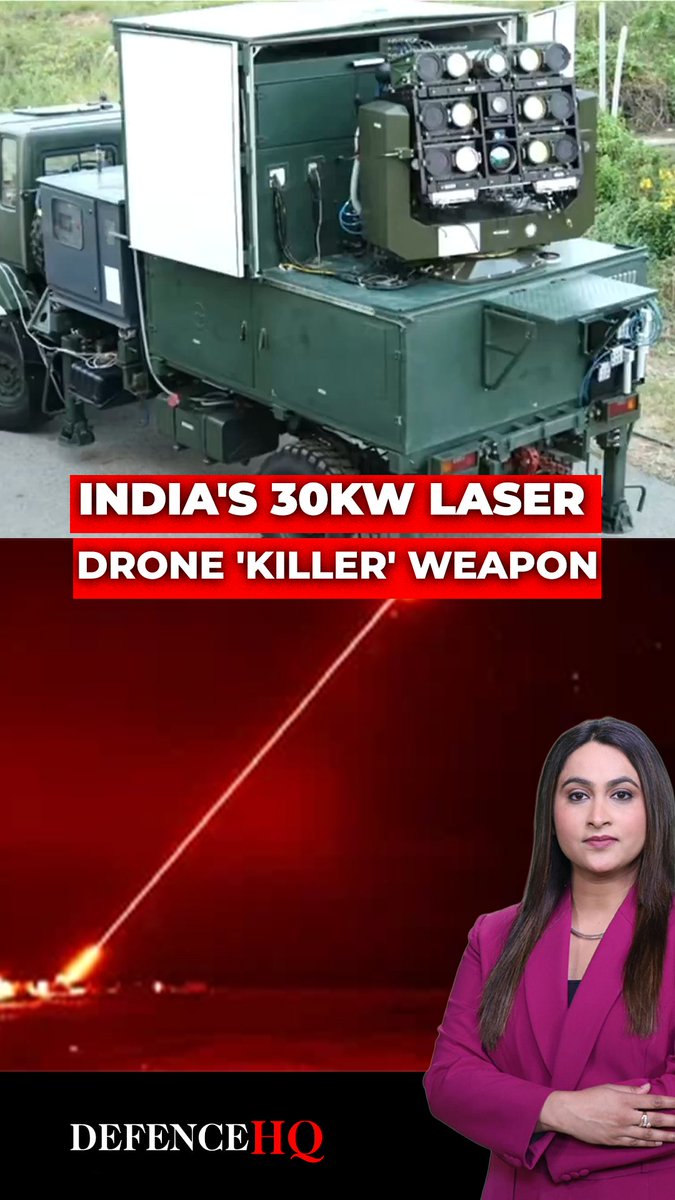
🇺🇸🇲🇽 The laser burning cartel drones over Texas right now is the same weapon America is counting on against Iran's Shaheds Joint Task Force Southern Border has taken down eleven cartel drones since late August with truck-mounted LOCUST systems from AeroVironment, and drone activity in those sectors has fallen...

39,767 views • 10 days ago •via X (Twitter)

4 Comments

Make Israel Christian Again ✝️'s profile picture
Make Israel Christian Again ✝️10 days ago

Trump will accuse the cartel groups in Mexico of being Iranian proxies on America’s doorstep and bomb Mexico! Otherwise he wouldn’t care 🤣

Melissa's profile picture
Melissa10 days ago

truck mounted lasers feels straight out of a video game

Pompliano's profile picture
Pompliano10 days ago

Lasers work in clear air on small drones. Weather, range, and bigger incoming swarms are the next test.

ImaPirateArrrr's profile picture
ImaPirateArrrr10 days ago

How do they know they are cartel drones? I have a feeling some kid is going home crying after his drone gets blasted.

Related Videos

🚨America Just Changed the Economics of War… With Light For years Iran built a strategy around one brutal equation. Launch thousands of cheap drones. Force the defender to burn through million-dollar interceptors. Bleed the defense dry. It was simple math. A Shahed drone costs roughly $30,000. Stopping it with traditional missile defenses can cost hundreds of thousands… sometimes over a million dollars per intercept. Repeat that attack a thousand times and suddenly the defender is spending billions just to stay alive. Iran understood this. They designed an entire doctrine around it. Flood the sky with cheap weapons. Overwhelm air defenses. Make defense more expensive than offense. But something just changed. The United States Navy has now deployed HELIOS, a directed-energy weapon mounted on an American destroyer operating near Iran. HELIOS is not a missile. It is a laser. And it runs on something every warship already produces… Electricity. No missile to reload. No magazine to empty. No resupply ship needed. As long as the ship’s generators are producing power, the weapon keeps firing. That means the cost of stopping a drone is no longer measured in missiles. It is measured in electricity. In practical terms… Destroying a $30,000 drone can now cost less than the power bill of a large apartment building. That single change breaks the entire economic foundation of drone saturation warfare. For years Iran invested in the strategy that made Shahed drones valuable. Cheap. Numerous. Disposable. But if directed-energy weapons like HELIOS can burn drones out of the sky at near-zero cost… The math flips. Suddenly the attacker is spending money… while the defender spends almost nothing. CENTCOM has already released footage showing HELIOS mounted on a U.S. Navy destroyer in waters near Iran. Earlier tests confirmed the system successfully destroyed multiple drones during live trials. Now the system is deployed where hundreds of Iranian drones and missiles have been passing through the same airspace. This is not a laboratory experiment anymore. This is a real battlefield. And the world is about to find out whether the future of missile defense is not another interceptor… But a beam of light. Because when America decides to change the physics of war… It usually succeeds. #SilentMajoritySpeaks #AStoneGroove

A Gene Robinson

790,537 views • 7 months ago

🚨BREAKING REALITY CHECK 🇺🇸 American MILITARY LASERS REIGNS A viral video is circulating claiming the United States just used a “space-based laser weapon” against Iran. Let’s separate fact from hype. Yes… the U.S. military is using laser technology in this conflict. But not the kind being claimed in that video. The system actually deployed is HELIOS… a ship-mounted high-energy laser on U.S. Navy destroyers. It is designed to shoot down drones like Iran’s Shahed UAVs using concentrated energy beams. Why does that matter? Because each laser shot costs only electricity… while intercepting drones with missiles can cost millions of dollars per shot. That makes HELIOS a powerful defensive tool against large drone swarms. But the viral clip claiming “space lasers turning the sky blue and blasting fireballs into space” is almost certainly misidentified footage of conventional weapons. What you’re likely seeing in those explosions are things like: Cruise missile strikes Fuel or ammunition detonations Drone intercept explosions Or missile defense intercepts The United States Space Force does play a role… but it’s through satellites detecting missile launches using infrared tracking, not orbital laser weapons. In short… Yes… America is deploying advanced directed-energy weapons. No… there is no confirmed evidence of space-based laser strikes in this conflict. The real takeaway is still impressive. Modern warfare is changing fast… and low-cost laser defense is already proving devastating against drone swarms. But the viral “space laser apocalypse” claims are hype, not verified military technology in use right now. Always verify before amplifying. #SilentMajoritySpeaks #AStoneGroove

A Gene Robinson

212,358 views • 6 months ago

The video is seductive. A fighter jet, twin engines blazing, taking fuel at 30,000 feet. It looks like power. It looks like the future. It is neither. The manned fighter jet is one of the most expensive objects a democracy can operate. Training a single combat-ready pilot costs between seven and eight million dollars and takes the better part of three years. The aircraft itself burns through roughly $27,000 every hour it is airborne, before anything goes wrong and something always goes wrong. Then consider what happens on a typical mission. The aircraft launches, flies for five to seven hours, burning through $135,000 to $190,000 in operating costs before a single weapon leaves the wing. It carries perhaps six to nine missiles, each costing anywhere from $300,000 to over a million dollars depending on type. That is the full arsenal. Six to nine shots. After that, the most expensive flying machine in history turns around and goes home. For decades, that cost was justified by what those missiles could do. Nothing in the sky could survive them. The logic was sound. Then someone in a warehouse glued an engine to a set of wings, added a cheap GPS chip, and sent ten thousand of them toward their enemies for less than the cost of a single intercept. In the first week of Operation Epic Fury, Iran fired over 500 ballistic missiles and nearly 2,000 drones at U.S. bases and Israeli cities, burning through over 800 Patriot interceptor missiles in three days.  Lockheed Martin produced roughly 600 Patriot interceptors in all of 2025. Iran consumed more than that in 72 hours. A Shahed drone costs around $30,000. A single Patriot interceptor costs millions.  The asymmetry is structural. Ukraine’s “Spider’s Web” operation used 117 drones hidden in cargo trucks to inflict an estimated $7 billion in damage on Russian strategic bombers at a total cost of roughly $234,000. For every dollar spent attacking, defenders lost $30,000 in assets.  A manned fighter carrying nine missiles cannot survive this arithmetic. It launches, burns $150,000 getting to the fight, expends its rack against a swarm of cheap drones, and returns empty while the next wave is already inbound. Ukraine built interceptor drones for between $1,000 and $2,500 each and moved them from prototype to mass production within months.  The Pentagon spent decades perfecting the opposite approach. The manned fighter is obsolete because the threat it was designed to defeat has been replaced by one it cannot economically engage. Capability without sustainability is just an expensive way to lose slowly. The video is beautiful. The paradigm it represents is finished. Gandalv / Gandalv

Gandalv

92,237 views • 6 months ago