Video yükleniyor...

Video Yüklenemedi

Ana Sayfaya Dön

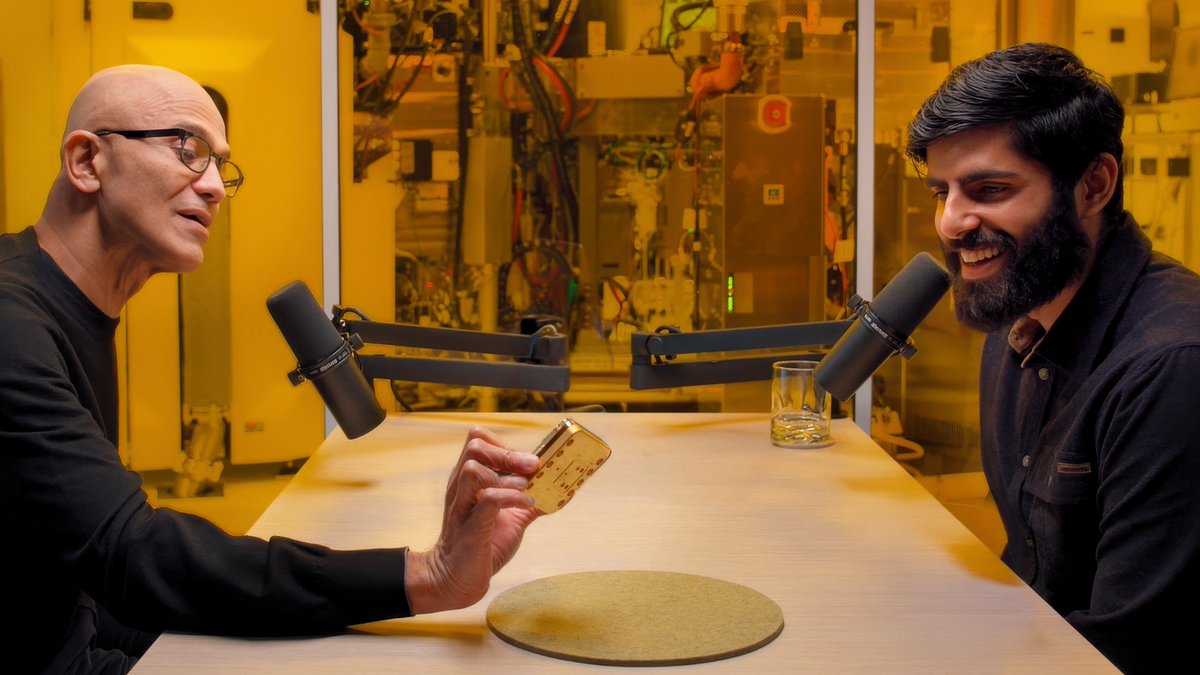
The last 5 years have been dominated by LLMs. amit makes a compelling case for visual intelligence dominating the next 5. We discussed the journey from South Park Commons, to Luma, to world models (what does this even mean!?). Enjoy! (00:00) Apple's LiDAR work seeded Luma's founding vision (05:05)...

24,544 görüntüleme • 1 ay önce •via X (Twitter)

0 Yorum

Yorum bulunmuyor

Orijinal gönderinin yorumları burada görünecek

Benzer Videolar

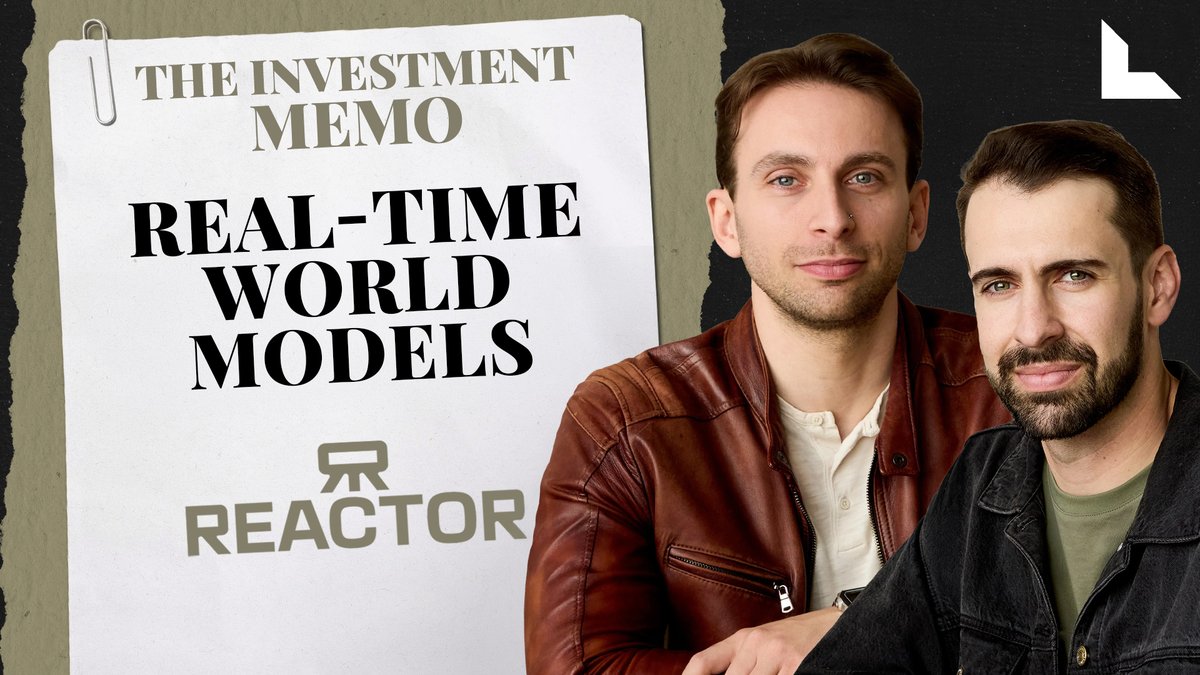
Real-time world models represent a fundamental shift in AI. reactor is building the platform for real-time generative video infrastructure, supporting developers who need the tech for use across entertainment, physical AI, and robotics. Co-founders Alberto and Bryce Schmidtchen joined us last week on The Investment Memo, hosted by Partners Bucky Moore and Amber Yang, to talk about the era of world models. The conversation centered around the infrastructure Reactor is building, why real-time models are the edge right now, and current use cases for the product. Alberto and Bryce agreed that world models are shaping the way simulations are created, and that developers need a streamlined platform that can support their ideas. We believe Reactor is positioned to be at the frontier of research into real-time generative models. We look forward to seeing how these models apply across industries. Chapters 00:00 Introduction & Overview of Reactor 01:08 Meet the Hosts & Founders 02:18 The Origin Story: From 3D Assets to World Models 05:07 Real-Time Video Applications Across Industries 06:55 The Open Source World Model Explosion 07:23 Why Infrastructure Is the Opportunity 08:42 Parallels to Past Technology Waves 09:51 Bridging the Research-to-Production Gap 13:13 What Developers Are Building with World Models 16:41 Lessons from Luma AI 18:23 What Apple Vision Pro Taught Bryce About Real-Time Systems 20:48 Company Values & Team Culture 22:40 Series A: What the Capital Unlocks 24:13 Reactor's Five-Year Vision 26:09 Closing Remarks

Lightspeed

144,561 görüntüleme • 1 ay önce

François Chollet (François Chollet) has spent years asking a different question than most of the AI world. Instead of scaling what already works, he’s trying to understand what intelligence actually is and how to build it from first principles. In this episode of the Lightcone Podcast, he traces that path from his early work on deep learning to the creation of the ARC Prize, and the launch of ARC V3, a new benchmark designed to measure something deeper than performance: the ability to learn, adapt, and reason efficiently in entirely new environments. He explains why today’s systems may be hitting limits, what recent breakthroughs really mean, and why reaching true general intelligence may require a fundamentally different approach. 00:00 - AGI by 2030? 00:31 - Introducing Ndea: A New Path Beyond Deep Learning 01:08 - A New ML Paradigm 01:30 - Replacing neural nets with compact symbolic programs 03:04 - Why Ndea Isn’t Competing With Coding Agents 05:20 - Why Everyone Might Be Wrong About Scaling LLMs 07:22 - Why Coding Agents Suddenly Work So Well 08:50 - The Limits of LLMs in Non-Verifiable Domains 10:48 - What AGI Actually Means (And Why Most Definitions Are Wrong) 13:30 - Why Deep Learning Hits a Wall 14:00 - ARC’s Origin Story 18:20 - ARC Benchmarks Explained: From V1 to V3 22:49 - The RL Loop Powering Coding Agents Today 27:03 - ARC-AGI V3: Measuring “Agentic Intelligence” 31:14 - Inside the ARC Game Studio 35:31 - Could AGI Fit in 10,000 Lines of Code? 44:01 - Building Ndea: From Idea to Compounding Research Stack 46:46 - The Future of ARC: Benchmarks That Evolve With AI 47:21 - Why There’s Still Huge Opportunity for New AI Paradigms 53:37 - How to Build a Breakout Open Source Project - Lessons From Keras 56:39 - Advice For How To Think About AI

Y Combinator

151,332 görüntüleme • 3 ay önce

We don't know what most microbial genes do. Can genomic language models help? there's only one way to find out! this is a 1 hour and 42 minute interview with an MIT professor (the famous Yunha Hwang) chatting about these questions, her work in solving them at Tatta Bio, and more. zoomer captions are back too Links in reply! Timestamps: 00:00:00 - Clips + sponsor roll from the wonderful LatchBio 00:02:07 – Introduction 00:02:23 – Why do microbial genomes matter 00:04:07 – Deep learning acceptance in metagenomics 00:05:25 – The case for genomic “context” over sequence matching 00:06:43 – OMG: the only ML-ready metagenomic dataset 00:09:27 – gLM2: A multimodal genomic language model 00:11:06 – What do you do with the output of genomic language models? 00:17:41 – How will OMG evolve? 00:20:26 – Why train on only microbial genomes, as opposed to all genomes? 00:22:58 – Do we need more sequences or more annotations? 00:23:54 – Is there a conserved microbial genome ‘language’? 00:28:11 – What non-obvious things can this genomic language model tell you? 00:33:08 – Semantic deduplication and evaluation 00:37:33 – How does benchmarking work for these types of models? 00:41:31 – Gaia: A genomic search engine 00:44:18 – Even ‘well-studied’ genomes are mostly unannotated 00:50:51 – Using agents on Gaia 00:54:53 – Will genomic language models reshape the tree of life? 00:59:18 – Current limitations of genomic language models 01:08:54 – Directed evolution as training data 01:12:35 – What is Tatta Bio? 01:19:02 – Building Google for genomic sequences (SeqHub) 01:25:46 – How to create communities around scientific OSS 01:29:06 – What’s the purpose in the centralization of the software? 01:35:37 – How will the way science is done change in 10 years?

owl

44,279 görüntüleme • 7 ay önce

Gemini 3, scaling laws and the 'finite data' era: my conversation with Sebastian Borgeaud, research engineer at Google DeepMind and a pre-training lead for Gemini 3 00:00 – Cold intro: “We’re ahead of schedule” + AI is now a system 00:58 – Oriol Vinyals's “secret recipe”: better pre- + post-training 02:09 – Why AI progress still isn’t slowing down 03:04 – Are models actually getting smarter? 04:36 – Two–three years out: what changes first? 06:34 – AI doing AI research: faster, not automated 07:45 – Frontier labs: same playbook or different bets? 10:19 – Post-transformers: will a disruption happen? 10:51 – DeepMind’s advantage: research × engineering × infra 12:26 – What a Gemini 3 pre-training lead actually does 13:59 – From Europe to Cambridge to DeepMind 18:06 – Why he left RL for real-world data 20:05 – From Gopher to Chinchilla to RETRO (and why it matters) 20:28 – “Research taste”: integrate or slow everyone down 23:00 – Fixes vs moonshots: how they balance the pipeline 24:37 – Research vs product pressure (and org structure) 26:24 – Gemini 3 under the hood: MoE in plain English 28:30 – Native multimodality: the hidden costs 30:03 – Scaling laws aren’t dead (but scale isn’t everything) 33:07 – Synthetic data: powerful, dangerous? 35:00 – Reasoning traces: what he can’t say (and why) 37:18 – Long context + attention: what’s next 38:40 – Retrieval vs RAG vs long context 41:49 – The real boss fight: evals (and contamination) 42:28 – Alignment: pre-training vs post-training 43:32 – Deep Think + agents + “vibe coding” 46:34 – Continual learning: updating models over time 49:35 – Advice for researchers + founders 53:35 – “No end in sight” for progress + closing

Matt Turck

51,317 görüntüleme • 7 ay önce

.Jerry Tworek is an AI legend. He came to OpenAI from the world of finance and spent years contributing to some of the company's most important projects. He played a major role in ushering in the era of reasoning and, well, he just left OpenAI. In this Core Memory pod, Kylie Robison and I bring you the exclusive not-so-formal exit interview with Jerry. He explains his dissatisfaction with the company's current research direction and his fears for the field overall. He goes into spots where OpenAI lost its way and Google and Anthropic thrived. And he talks about what he's chasing next. It's a banger. The Core Memory podcast is on all major platforms and on our YouTube channel. This podcast is sponsored by Brex , the intelligent finance platform built to help companies spend smarter and move faster. And it's brought to you by the VC gurus E1 Ventures 🇺🇸 Timestamps 00:00:00 Intro 00:03:37 Jerry Tworek Joins the Pod 00:05:34 Reflecting on Seven Years at OpenAI 00:09:08 Why Jerry Left: 00:12:28 Beyond Pre-Training 00:16:19 The "Sad" Homogeneity of Current AI Labs 00:23:35 The Mavericks: Carmack, Ilya, and LeCun 00:26:32 Training AI on Video Games 00:32:14 Two Big Bets 00:34:32 Updating AGI Timelines 00:37:16 Q-Star 00:41:10 The Coup 00:43:29 Is the Hype Justified? 00:49:23 The Polish Mafia 00:53:15 Google's Comeback and OpenAI's Fumble 00:59:27 Why Anthropic is Impressive 01:03:01 Jerry's Next Chapter 01:11:56 Is AI Research Star-Driven? 01:14:32 Meditation & Conclusion

Ashlee Vance

11,701 görüntüleme • 5 ay önce

Everyone is focused on tracking the ways LLMs are getting better. And they are. But we know there are still things that LLMs can’t do well—the tasks where you can feel the architecture fighting the problem. So I was excited to chat with Eve Bodnia (@eve_bodnia), who is developing an alternative AI model to LLMs, on Every 📧's AI & I. Eve's argument: energy-based models (EBMs), which map possible outcomes onto a mathematical landscape, will lead to the next AI phase shift. We get into: - How energy-based models work. Likely outcomes sit in valleys, and unlikely ones sit on peaks. Whereas LLMs process one token at a time, an EBM scans the full terrain to find the lowest point, or the most probable answer. - Language-based versus data-native models. LLMs are language-dependent even when the problem has nothing to do with language. "If your data is numbers, relationships, and functions, and you try to map those rules into words and then search for the next word, you're losing a lot of information," Bodnia says. EBMs work directly with the underlying data structure, including numbers and spatial coordinates. - Sequential versus panoramic reasoning. An LLM is like driving through San Francisco without a map. Each turn constrains the next, and if you go down the wrong street, you can't reverse course. An EBM has the bird's-eye view—it can evaluate multiple routes at once and course-correct before hitting a dead end. - The LLM plateau no one wants to talk about. LLMs are getting incrementally better, step-change improvements aren’t coming, Eve argues. To achieve that, we need new solutions that compensate for what LLMs are inherently bad at, like non-language reasoning, verification, and real-time data analysis. This is a must-watch for anyone who's curious what might come after the LLM. Watch below! Timestamps: Introduction: 00:00:51 Why correctness and verifiability matter in AI: 00:02:09 What an energy-based model is: 00:09:33 How EBMs construct energy landscapes to understand data: 00:14:21 Why modeling intelligence through language alone is a flawed approach: 00:19:00 What it means for a model to "understand" data: 00:26:54 How EBMs solve the vibe coding problem and enable formally verified code: 00:37:21 Why LLM progress is plateauing: 00:43:21 Mission-critical industries haven't adopted LLMs, and why EBMs can fill that gap: 00:49:54

Dan Shipper 📧

26,900 görüntüleme • 3 ay önce

Jensen Huang is a titan and a teacher. He recently sat down with me to explain his vision of the future of technology and humanity. He’s calm, clear, and very funny. We touched on many topics, ranging from the $20T or more AI economy in five layers to changes in labor for the AI age. Here are some of my main takeaways: 1) The world is moving from retrieval to generation 2) Generation offers intelligence customized to the individual 3) Nvidia is making the "generators" of intelligence 4) We've seen this kind of revolution at least three times before with energy (Generators), Telecommunications (vacuum tubes / transistors?), and now intelligence (GPUs) 5) There is a five-layer cake of participation in this many-many trillion dollar revolution: Energy, Chips, Infra, Models, and Applications. 6) There are many ways to participate in this revolution, and everyone has a role 7) We'll be pushed to dream up new problems to solve with this unprecedented intelligence 8) In this new future, it's not just having the answer, it's having the right questions 8) The right questions will drive us toward our individual and collective human purpose 9) We move from the carpenters to the architects I believe this is the realistic future. Thanks to Jensen and the entire NVIDIA team for the conversation and for letting us share! 00:00 Introduction 00:42 From Chatbots to Generative AI 03:35 Agentic AI That Does Work 05:26 Downstream Industry Impact 06:25 Computing Shifts From Retrieval to Generation 11:26 A Planet Cocooned by Intelligence 14:27 Inside the NVIDIA AI Factory 20:48 AI Five Layer Cake 21:58 Beyond Chatbots to Biology 23:54 Tokens and World Models 24:53 Trillions in Applications 27:13 Ditch the AI Doom 31:32 Jobs Tasks vs Purpose 38:40 Closing the Tech Divide

Konstantine Buhler

183,773 görüntüleme • 1 ay önce