Video yükleniyor...

Video Yüklenemedi

Ana Sayfaya Dön

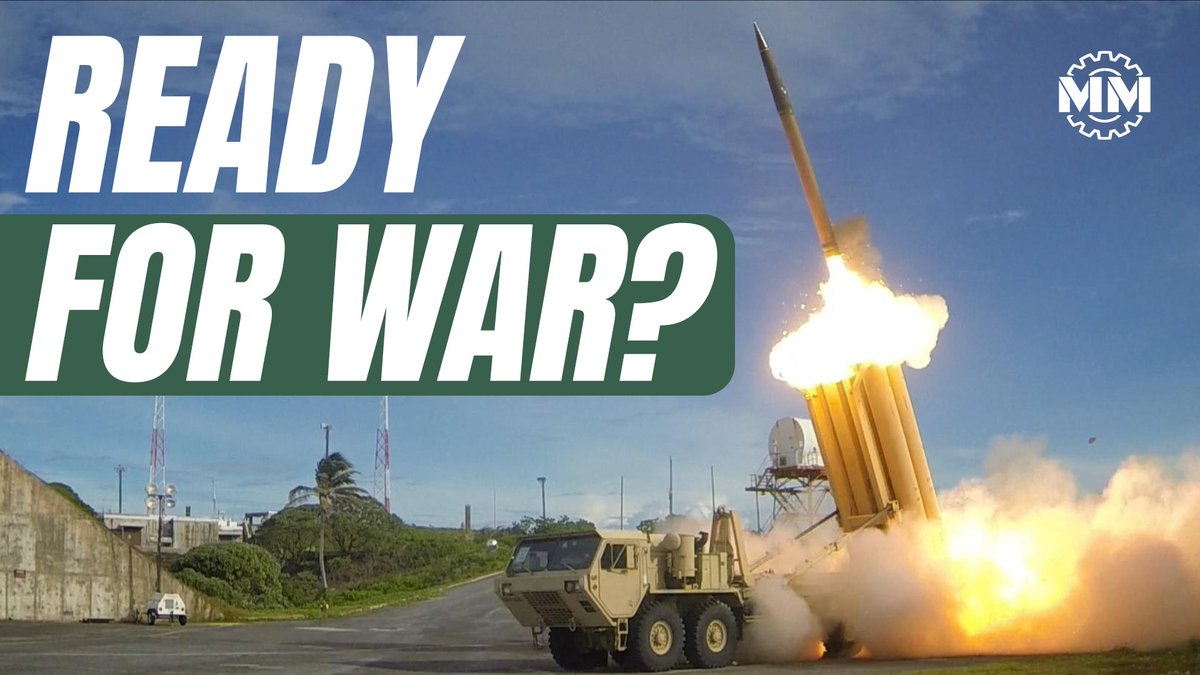
🇺🇸🇮🇷 The massive strike on Iran vanished from Trump's plans this weekend, and we break down the missile math that may explain why... For the second consecutive night, the witching hour came and went with no bombers in the air. Then the New York Times dropped a new report:...

317,682 görüntüleme • 14 gün önce •via X (Twitter)

0 Yorum

Yorum bulunmuyor

Orijinal gönderinin yorumları burada görünecek

Benzer Videolar

🚨🇺🇸 🇮🇷 A new analysis puts hard numbers on America's interceptor crisis: roughly 827 Patriots and 278 THAADs left, down from 2,330 and 452. -Per the Center for Strategic and International Studies, Patriot inventories have fallen under 1,000 and THAAD sits around 250-278, after months of defending bases across the Middle East -The air defense campaign has worked, with high though not perfect interception rates, but the price was burning through more than HALF the Patriot stockpile -The warning attached: diminished stocks may force the U.S. and its partners to take MORE RISKS with interceptions, because there are no good alternatives to Patriot and THAAD against ballistic missiles, and Navy ships are generally too far away -The bigger shadow: the expended munitions create a near-to-medium-term risk for U.S. readiness against CHINA in the Pacific, with rebuilding expected to take YEARS despite expanded production -The administration's budget shows the urgency: $95 billion for munitions in FY2027 plus $21 billion in the war supplemental These are the numbers behind everything that just happened: the pause Caine argued for, the massive attack Trump shelved, and the choice he now faces after Iran's two-night salvo. Every ballistic missile Tehran fires forces million-dollar interceptors out of a magazine that took decades to fill and will take years to refill. Iran can see the same math CSIS published. That may be exactly WHY the missiles keep coming. Source: CSIS / Writer: Daniel

Mario Nawfal

32,201 görüntüleme • 10 gün önce

Iran Won't Abandon Uranium: $150–200B War + Global Economic Fallout In the 12-day war of June 2025, Israel's daily operational cost was $725 million, covering mainly air sorties, fuel, and mobilization. The total direct costs for the US and Israel ranged from $22–30 billion, with an average daily cost of about $2 billion when including all factors: military operations, air defense, physical damage, compensation, and interceptors. In that conflict, Iran's missile capacity to inflict damage was limited. A new confrontation today would also involve naval forces and a vastly larger array of missiles, thousands of short-range ones that Iran certainly possesses. Based on the numbers from the 12-day war, we can estimate that each day of operations now would cost $3-4 billion or more, especially considering that Iran has learned lessons from the previous war and is better prepared. In 20 days of war, the figure could approach $100 billion. But the costs don't stop there. If we take the minimum damage to a single base (like Al Udeid in Qatar), which ranged from $500 million to $1.5 billion, a massive, coordinated, and saturating Iranian attack on multiple US bases in the Gulf would cause astronomical damage. We're talking about $80–100 billion in damage to US bases in the region alone. These figures are estimates drawn from think tank analyses (CSIS, JINSA, RAND) on Gulf base vulnerabilities and historical repair costs after attacks. That alone would push a 20-day war toward $150–200 billion. And remember: any prolonged escalation or impact on oil and gas, such as closure of the Strait of Hormuz, would multiply these figures exponentially. Iran is in a comfortable position in the sense that it possesses the weapons to impose high costs in the event of a war, and, unlike June 2025, they are certain they will not be caught by surprise. It will be a hard war and it will not be brief. Iran will not kneel to Israel and the US because that would be the end of the entire political project built so far. The situation is complex and American forces are still insufficient for a victory. Given all this, I still don't see Iran easily relinquishing its uranium. For an interventionist power like Iran, that would feel like castration; it would only yield under massive Western concessions that could be framed as a victory, something I don't expect to happen.

Patricia Marins

96,777 görüntüleme • 6 ay önce

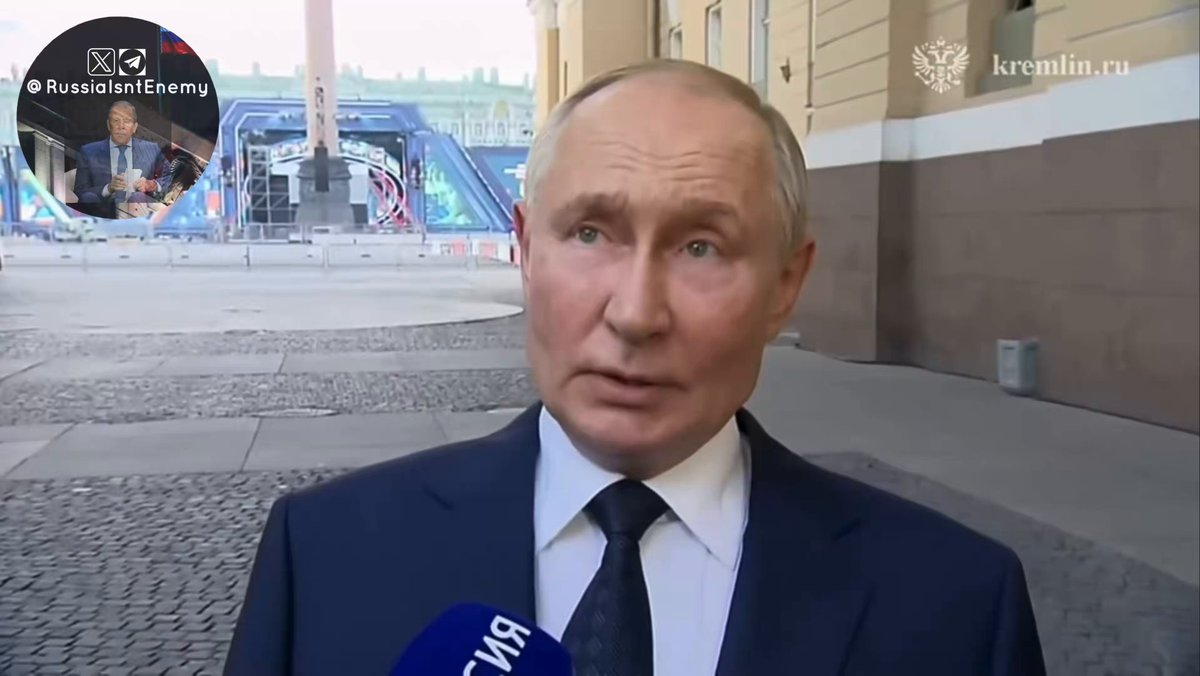
☝️The use of long-range, Western-made precision weapons to strike Russian territory would mean that NATO countries, the US, and the EU are at war with Russia. “We are not talking about authorizing or prohibiting the Kiev regime from striking Russian territory—this is already being done with the help of unmanned aircraft and other means. However, when we are talking about the use of long-range, Western-made precision weapons, that is a completely different story. The fact is, and any expert from our country or the West will confirm this, the Ukrainian army is not able to operate such weapons on its own. Their effective use is only possible with targeting intelligence from satellites, which Ukraine does not have. This is data that can only come from US or EU satellites—in other words, from NATO satellites. That is the first point. The second, and perhaps the key point, is that only NATO military personnel can program the flight missions for these missile systems; Ukrainian servicemen cannot do this. Therefore, this is not about allowing the Kiev regime to strike Russia with these weapons or not. It is about deciding whether NATO countries are becoming directly involved in a military conflict or not. If such a decision is made, it would mean nothing other than the direct participation of NATO countries, the US, and the EU in the war in Ukraine. This, of course, significantly changes the very essence of the conflict. It would mean that NATO countries, the US, and the EU are at war with Russia. And if that is the case, then, bearing this in mind, we will make the appropriate decisions based on the threats that would be posed to us” - President Putin

🇷🇺Russia is not Enemy

291,786 görüntüleme • 10 ay önce

🇮🇷 Arakchi: "We told the American side that we would not tolerate a strike on Beirut." "What stopped the war in the last two days was the strength of the resistance; the power of Iran's armed forces and the Lebanese resistance. When the order was given to strike the southern suburbs of Beirut, we took a very decisive position. Our armed forces were ready to respond. For several days, Israel has been violating the ceasefire between Iran and the US, as well as in Lebanon, but a strike on Beirut would have been a very serious violation. We told the American side that we would not tolerate a strike on Beirut. From our point of view, the ceasefire would be completely disrupted, and our armed forces would respond. In addition to conveying this message to the Americans, I also contacted friends in the region. The list of my phone calls that night is known: I called various countries and said that because of Israel's actions, the war would start again. The countries of the region also contacted and put pressure on the US, and as a result, Israel's attempt to strike Beirut was stopped. Reports about this have already been published in the media. Thus, the decisive factor is the strength of the armed forces and the resistance. That night, we took a very decisive position, and the armed forces made a statement. The headquarters of "Khatam al-Anbia" made a statement, and our diplomacy acted in the same direction. As a result, the Israeli regime refused to attack."

S p r i n t e r

11,976 görüntüleme • 2 ay önce

Russian propagandist Simonyan talks about the great sacred war that is not being fought against Ukraine. Take a listen. Putin and his inner circle have stopped talking about peace and negotiations and are raising the stakes. They speak of a "great and sacred war" against Europe and NATO. Why is this happening? It is a consequence of Russia’s failures on the Ukrainian front, where Russians are not advancing and are losing more and more soldiers - over 35,000 every month, more than they recruit - while Ukrainians are expanding the kill zone. It is the growing economic problems and the realization that Russia is heading toward collapse. It is the realization that everyone involved in the war will be punished after it ends, which means they cannot allow the war to end. Putin’s inner circle is aware of this dead-end situation. But Putin himself does not know the real picture, because people are afraid to tell him the truth. Therefore, Putin is convinced that he is winning the war. In addition, he sees that the United States is currently focused on the war in Iran and is no longer reacting to massive attacks on Ukraine and hybrid attacks in Europe. By the way, it is quite possible that the latest attack on Kyiv was organized personally for Putin - to give him the satisfaction of seeing Kyiv burning, especially after the humiliating May 9 parade in Moscow - but in reality, this attack achieved no military objectives and was a waste of millions. In this situation, with no real military successes in Ukraine, Putin’s inner circle, out of fear, may develop a desire to continue the war in a new direction - for example against the Baltic states - so that Putin stops asking about Donbas and Mala Tokmachka. The greater the defeat, the higher the stakes.

Anton Gerashchenko

403,434 görüntüleme • 2 ay önce