Video yükleniyor...

Video Yüklenemedi

Ana Sayfaya Dön

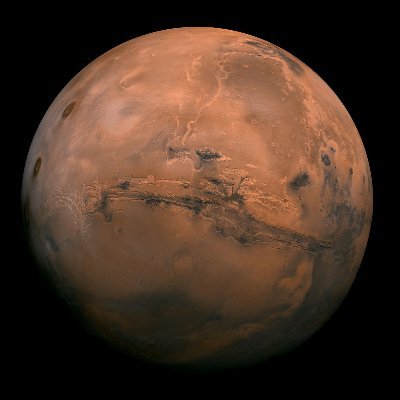
The Perseverance team discovered the rock formation in an ancient, now-dry riverbed in Jezero Crater, and instruments revealed that it's composed of clay and silt. On Earth, these are excellent preservers of past microbial life.
244,235 görüntüleme • 1 yıl önce •via X (Twitter)

16 Yorum

NASA Mars profil fotoğrafı
NASA Mars1 yıl önce

After a year of scientific scrutiny, a rock sample collected by the Perseverance rover has been confirmed to contain a potential biosignature. The sample is the best candidate so far to provide evidence of ancient microbial life on Mars.

NASA Mars profil fotoğrafı
NASA Mars1 yıl önce

NASA is making this data available to the wider science community for further study to confirm or refute its biological potential. It's another step in the agency's multi-decade effort to understand life on our planet and beyond, and prepare for new journeys to the Red Planet.

Hang Pham | Jessica | NCC0024 profil fotoğrafı
Hang Pham | Jessica | NCC00241 yıl önce

so beautiful video, wish I could be there once in my life

Cosmology Fact Check profil fotoğrafı
Cosmology Fact Check1 yıl önce

It wasn't a river bed, it was an electricity/plasma event that formed Jazero and the apparent rivers. NASA has been leading us down the wrong path for years, intentionally.

Aurora⭐️👼 profil fotoğrafı
Aurora⭐️👼1 yıl önce

😎👍

Jay Yadav Geologist profil fotoğrafı
Jay Yadav Geologist1 yıl önce

As I always say life finds a way. In earth microbial life started first and then complex life forms like Trilobites evolved. Perhaps in Mars life only remained in the microbial stage or who knows in future we will find fossils too.

Al Soofi Eva profil fotoğrafı
Al Soofi Eva1 yıl önce

Wow 👍 bravo 👏

fabricio-carrazco profil fotoğrafı
fabricio-carrazco1 yıl önce

🚀🛸🪐

Ana Forest 8 profil fotoğrafı
Ana Forest 81 yıl önce

Good.! 🌻

Braxton Williamson profil fotoğrafı
Braxton Williamson1 yıl önce

May I be the first to propose a 99 year term lease, which renews with each mineral brought to surface, at $1/30,000acs, with a 6.25% royalty? Please respond to my secretary @FracSlap with any questions.

Eric Lee Castillo profil fotoğrafı
Eric Lee Castillo1 yıl önce

@WesMcQ how will we message this if people start panic buying, for instance? Hm? We come and help craft messaging to ease the tension, baby!

Mark LeDuc profil fotoğrafı
Mark LeDuc1 yıl önce

You rock!!

Hasan Çelikörs profil fotoğrafı
Hasan Çelikörs1 yıl önce

If I were on Mars, I would make pottery with the clay the Perseverance team discovered.

Nolan et mimie🏒👣👣 profil fotoğrafı
Nolan et mimie🏒👣👣1 yıl önce

wow👏👏👏👏🎈🎈🎈🌈

Dark Matter profil fotoğrafı
Dark Matter1 yıl önce

Good news

O C C U P Y M A R S profil fotoğrafı
O C C U P Y M A R S1 yıl önce

🔴🫡

Benzer Videolar

The intriguing patterns sometimes spotted in Mars rover images—rocks resembling bones, shells, or other fossil-like structures—are a classic example of pareidolia, our tendency to see familiar shapes in random or natural formations. These features capture the imagination, but scientists attribute most of them to purely geological processes: wind erosion sculpting layered sediments, mineral precipitation creating unusual textures, or ancient water-deposited rocks fracturing in distinctive definitive fossils—such as preserved microbial mats, stromatolites, or multicellular remains—have been confirmed on Mars to date. Claims of "fossil-like" patterns in older rover images (from Curiosity or earlier missions) have consistently been explained by non-biological causes upon closer scrutiny.That said, recent discoveries have dramatically advanced the search for signs of ancient life. In July 2024, NASA's Perseverance rover examined a striking reddish mudstone nicknamed Cheyava Falls (with a key sample dubbed Sapphire Canyon) in Jezero Crater—an ancient lakebed. The rock displays tiny pale "leopard spots" fringed by dark rings, scattered "poppy seed"-like dots, organic molecules, and minerals like vivianite and greigite.After rigorous peer review, a September 2025 Nature paper concluded these features represent a potential biosignature—the strongest evidence yet for past microbial activity. On Earth, similar patterns often form through chemical reactions involving microbes that reduce iron and sulfur compounds, leaving behind distinctive mineral halos and organic traces. While non-biological explanations (like abiotic redox reactions) can't be fully ruled out based on rover data alone, the combination of organics, specific minerals, and textures makes a biological origin more plausible here than in prior finds. Scientists describe it as "the closest we've come" to detecting ancient life on Mars, though definitive proof awaits detailed lab analysis of returned samples.Perseverance and Curiosity continue scanning for biosignatures—chemical imbalances, isotopic ratios, or structures hinting at biology—while Mars' wetter past (with rivers, lakes, and possible oceans ~3-4 billion years ago) keeps it a top target in the hunt for extraterrestrial illustrate some of these intriguing rock features: Image Credits: NASA/JPL-Caltech/MSSS (Perseverance rover close-ups of Cheyava Falls and similar intriguing Martian rocks).

Black Hole

15,997 görüntüleme • 6 ay önce