Загрузка видео...

Не удалось загрузить видео

На главную

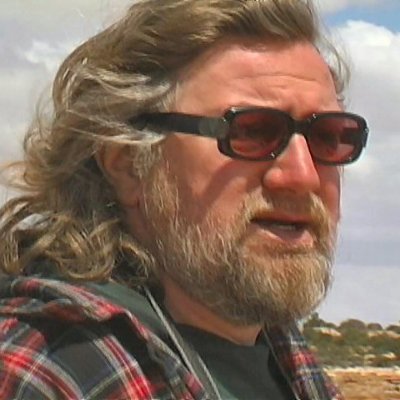
The question Randall keeps returning to is deceptively simple. Why? What is the motive for quarrying and assembling 20 ton stones into monumental structures? In a world where virtually all of humanity was either farming or nomadically hunting and gathering, megalithic construction is not a natural cultural priority. Survival...

116,656 просмотров • 5 месяцев назад •via X (Twitter)

Комментарии: 0

Нет доступных комментариев

Здесь появятся комментарии из оригинального поста

Похожие видео

Modern construction uses stones that one strong person can manipulate. Not because larger stones are unavailable - but because working with ten or fifty ton stones is economically irrational. The cost in time, labor, and logistics makes it impractical for any society operating within normal resource constraints. That economic reality is precisely what makes the global pattern of megalithic construction so difficult to explain within the conventional framework of prehistoric hunter gatherer societies. The argument that one exceptional group of people devoted their spare time - between foraging, following game, and moving their encampments - to quarrying and transporting fifty ton stones is already a stretch. People operating at the margin of subsistence do not divert resources toward economically irrational construction projects. But that argument at least has the theoretical possibility of applying to a single isolated case. What it cannot explain is the repetition. The same pattern of working with impossibly large stones appears over and over and over again across the world - in cultures with no documented contact, on different continents, across vastly different time periods. At that point the explanation of an exceptional local anomaly collapses entirely. Something else was going on - and Randall argues the honest response to that pattern is to admit that the current framework simply does not account for it.

Randall Carlson

19,839 просмотров • 3 месяцев назад

ALL THIS CONSTRUCTION OF THE VISIBLE WORLD IS AT ITS ROOTS DESIGNED IN THE INVISIBLE WORLD Before language, before numbers, before thought, there was form. Not arbitrary, but precise. Not invented, but revealed. Sacred Geometry is the blueprint beneath all becoming—the hidden grammar of light, sound, and matter. It is the spiral of galaxies and the whorl of a shell. It is the vesica that births light, The triangle that gives rise to stability, The square that anchors space, And the pentagram that mirrors life’s golden proportion. Sacred Geometry does not merely decorate creation, it structures it. It governs the growth of leaves, the pulse of waves, the rhythm of your breath. It reveals that harmony is not a concept, it is a code. A flower blooms not by chance, But by a silent obedience to phi. A crystal aligns not at random, But by listening to the quiet song of symmetry. This is not mysticism, it is order. This is not dogma, it is design. Sacred Geometry is where the visible and the invisible meet: Where math becomes art, Where number becomes movement, Where space becomes spirit. To study it is not only to learn, it is to remember. That beauty is not a luxury. It is the signature of coherence. And when we align with it, We don’t just build structures. We become them. Everything that has form in this dimension is made up in its essence of sacred geometry. All this construction of the visible world is at its root designed in the invisible world.

🧬Maxpein🧬

13,405 просмотров • 8 дней назад

Iris Murdoch on what philosophy actually is: Philosophy is notoriously difficult to define even for those who practise it. Speaking with Bryan Magee in 1977, Murdoch doesn't sidestep the question. She leans into it. "It's notoriously difficult to find philosophy… it's very difficult to say what it is." Her first move is to locate philosophy in the territory of structure and depth. It is "to do with conceptual structures," she says with "very deep structures of belief and knowledge," with meaning, with significance, with the question of how language relates to the world. But definition by content isn't enough. So she defines it by exclusion. Philosophy is not science. That much feels familiar. Yet Murdoch adds a subtler distinction: even when philosophy adopts a scientific style, "the actual what you're doing is certainly not science." The manner may borrow from the lab, but the activity is something else entirely. And philosophy is not art either. Her sharpest line is reserved for this boundary: "It's very important it's not sounds… as soon as you start doing sounds you're falling right out of philosophy." Sound aesthetic sensation, the seductive surface of language pulls the mind away from what philosophy actually is. The moment writing becomes music, it stops being thought. So if it is not science and not art, what is philosophy? Murdoch's answer is quiet but precise: "a kind of reflection on concepts." Not experiment. Not expression. Reflection. A sustained, disciplined turning of attention onto the structures we use to think — and asking whether they hold.

Big Brain Philosophy

18,908 просмотров • 4 месяцев назад

At a Q&A, John MacArthur is asked about Christian nationalism. The kingdom of God is not of this world. Jesus said that. He said, “My kingdom is not of this world. If My kingdom were of this world, My servants would [fight].” His kingdom is not of this world. The kingdom of this world is a separate world; they’re not linked together. Let me say it another way: Nothing that happens in any nation, whether it’s a Communist nation, a Muslim nation, or a “quasi-Christian” nation, or an atheistic nation—nothing in that nation politically, socially has anything to do with the advancement of the kingdom of God, because the kingdom of God is separate from that system. God, in His sovereignty, is building His church, “and the gates of Hades will not prevail against it,” Jesus said. So the idea that you should link up some political effort, some political process, some social process, some gain of power or influence in a culture as part of the advance of Christianity is alien to Christianity. You never have our Lord approaching anything like that, nor the apostles, and particularly the apostle Paul. He sought to gain no favor with the Roman Empire whatsoever, or for that matter, with any other of the rulers that he ran into during his life. Now, that is not to say that we are indifferent to what happens in the nation. We’ve been talking about that the last couple of Sunday mornings. We have to be the people who uphold righteousness. When we come to vote, we want to vote for that which is the most righteous option. Obviously, we can’t vote in righteousness, but we have to vote in a way that reflects our commitment to the righteousness of God. So we couldn’t possibly elect somebody who was an abortionist, somebody who was LGBTQ or LGBTQ-affirming, or any other deviation from God’s righteous moral standard. So it gets harder, doesn’t it, nowadays, because even sometimes when politicians are more conservative and anti-abortion, they may be sinful and wicked in some other categories, and it’s very hard to find out who is really honest and who is simply dishonest and seeking power. But in the end, we do what we can with the understanding that the responsibility of the church is not to advance the kingdom of this world. That’s a faulty viewpoint. Christian nationalism is usually tied to what is called post-millennialism, and that is the view that the church, somehow, by influencing the culture, can bring in the kingdom of Christ. In other words, it’s the idea not that Christ returns and sets up His kingdom, but that the church establishes His kingdom and then hands it to Him. That is not what Scripture teaches. What Scripture teaches is what we’re learning from the book of Revelation. Things are going to get worse and worse and worse. And the end of human history is not the church triumphant, reigning in the world and taking over the structures of human kingdoms; that’s not what happens. At the end of human history, the believers are persecuted and murdered, and that’s the very opposite of what Christian nationalism would anticipate. So we believe the Bible teaches that things get worse and worse, headed toward the wrath of God, which we’re seeing in Revelation, and then our Lord returns, Himself, to establish His kingdom is clearly what we read in the book of Revelation. OK?

Terri Green

13,029 просмотров • 1 месяц назад

Chamath: "Nvidia is not doing what's in the best interest of the United States." 🇺🇸🇨🇳 "I think we can all do the math. About 47% of all of NVIDIA's revenue goes to China and Chinese-related countries." "And I think when you peel back this onion, what you will find is a whole raft of companies that were stood up to buy these Nvidia GPUs to essentially act as a waystation for China." "And I think that is the big problem." "Let's have a thought starter: if 47% of all of the AI capability and horsepower is being shipped to three Asian countries, where do you think the apps that require that amount of horsepower live?" "Is there a Cursor of Bhutan that we did not know? Is there a great shopping app in Cambodia that's come out of nowhere, that's AI powered?" "I think the answer is no." "Every single time we have an advance in the United States, how is it that Alibaba shows up with something incredible? DeepSeek shows up with something better?" "At every turn and at every step of AI, they are at the same rate or one step ahead." "To be honest with you, I think the real problem that we have is that Nvidia is not doing what is in the best interest of the United States." "You have a American company that has been working around the guidelines at every turn to try to land silicon into the hands of China." "Late last year, they introduced this thing called the H20 that was explicitly designed for China and to be compliant with US rules at the time." "Which again, gives these guys substantial performance." "This is a case where (Nvidia) has plausible deniability. I sell something to a Singaporean registered company? Plausible deniability." "What am I supposed to do? You can't expect me to audit it. I think that's what NVIDIA's answer will be to this question." "But what is the real expectation? At a minimum, the United States should have a mechanism to understand it." "It is implausible that if you did one or two layers of work, you would not find that most of this traffic is being used by Chinese organizations."

The All-In Podcast

910,450 просмотров • 1 год назад