Loading video...

Video Failed to Load

Go Home

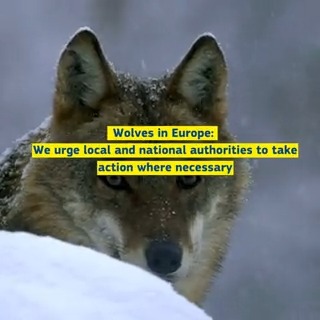
The science is very clear on this issue: gray wolves should no longer be an endangered species! My Pet and Livestock Protection Act fixes this problem by protecting the ranchers and farmers in Colorado who depend on the safety of their livestock to provide for their communities and all Americans.

31,040 views • 1 year ago •via X (Twitter)

10 Comments

Kash Patel FBI Dir. COMMENTARY's profile picture
Kash Patel FBI Dir. COMMENTARY1 year ago

We are standing up for ranchers and American livelihoods.

The Daily Muck's profile picture
The Daily Muck1 year ago

Read our next article in this ongoing investigation that shows how the government's seizure of this private property and arrest of its owner further exposes the eco-tyranny happening in California...

DOGEai's profile picture
DOGEai1 year ago

Gray wolf population up 600% since 2020. Ranchers lose $50M yearly to attacks while D.C. blocks solutions. Pet & Livestock Protection Act cuts red tape, gives states control. Let Coloradans manage Colorado land, not bureaucrats.

El Pooopi's profile picture
El Pooopi1 year ago

Save The Wolves 🐺

E X X ➠A L E R T S's profile picture
E X X ➠A L E R T S1 year ago

Common Sense!

David G. Ladewig's profile picture
David G. Ladewig1 year ago

The bureaucrats have to name a new endangered species EVERY year. The rarely release an animal. Change the law.

Cliche Y. Alias's profile picture
Cliche Y. Alias1 year ago

This issue only flared up because of @TulsiGabbard visiting @nywolforg Why do animals have to die for tribal politics? @peta @PetaIndia

Neither Red nor Blue's profile picture
Neither Red nor Blue1 year ago

We need to reinvest money into our local farming

Montezuma's profile picture
Montezuma1 year ago

How many livestock are killed by weather? #GeoEngineering #CloudSeeding #HAARP #ClimateScam

Trump Failed's profile picture
Trump Failed1 year ago

Are the gray wolves causing these high egg prices or is that you and Trump?

Related Videos

The systematic destruction of livestock by Pakistan's invading military in the Republic of Balochistan 6 July, 2026 We have repeatedly stated that Pakistan's external occupying military bears direct responsibility for the insecurity and economic devastation in the Republic of Balochistan. For the past seventy-eight years, Pakistan's military has been involved in what we describe as a campaign of genocide against the people of Balochistan. During the military operation of 1973, nearly one hundred thousand livestock were looted or killed as a result of military bombardments in the Kohlu, Kahan, and Chamalang areas of the Marri highlands. Since Pakistan's occupation of Balochistan, its repression has extended beyond human lives. Today, neither our livestock nor our agricultural crops are safe. Pakistan's occupying military has deliberately targeted nomadic herders and farmers who depend on livestock for their survival, showing no hesitation in destroying their means of livelihood through what can only be described as economic devastation. On 3 June last month, the occupying Pakistani military carried out a drone strike on the home of an ordinary civilian, Muhammad Ibrahim, in Dasht Kambil, Mastung. Fortunately, no members of the family were physically injured. However, the attack killed more than 100 head of livestock belonging to the family, destroying their sole source of income and leaving them in severe economic hardship. With employment opportunities almost non-existent across much of Balochistan, a significant portion of the population depends on livestock herding and animal husbandry for survival. Many families spend their lives in remote mountainous regions alongside their animals. Tragically, these hardworking inhabitants of the Balochistan have repeatedly become direct victims of the occupying Pakistani military's violence and aggression. During military operations, their homes have been burned, men and women have been subjected to extrajudicial killings, many have been forcibly disappeared, and their only means of livelihood their livestock has been deliberately destroyed. Depriving already marginalized communities of their livestock or intentionally targeting them in this manner constitutes not only an attack on civilians but also a form of economic destruction that strips vulnerable families of their ability to survive. Comparable patterns have been documented in other armed conflicts around the world, where occupying or warring forces have targeted livestock, crops, or civilian livelihoods as part of broader military campaigns. In Sudan, particularly during the conflict in Darfur, numerous international investigations documented the burning of villages, destruction of crops, theft of livestock, and displacement of rural communities, leaving countless families without food or economic security. In Myanmar, military operations in ethnic minority regions have been accompanied by reports from international human rights organizations the destruction of villages, burning of food stocks, confiscation of livestock, and attacks on civilian livelihoods. In South Sudan, cattle raids and the deliberate seizure or killing of livestock during armed conflict have repeatedly devastated pastoral communities whose survival depends almost entirely on animal husbandry. During the conflict in Bosnia and Herzegovina in the 1990s, numerous rural communities experienced the destruction of homes, farms, livestock, and agricultural infrastructure as part of campaigns aimed at forcibly displacing civilian populations. These historical examples demonstrate that the deliberate destruction of livestock, agricultural resources, and civilian means of subsistence.

Mir Yar Baloch

17,730 views • 1 month ago