正在加载视频...

视频加载失败

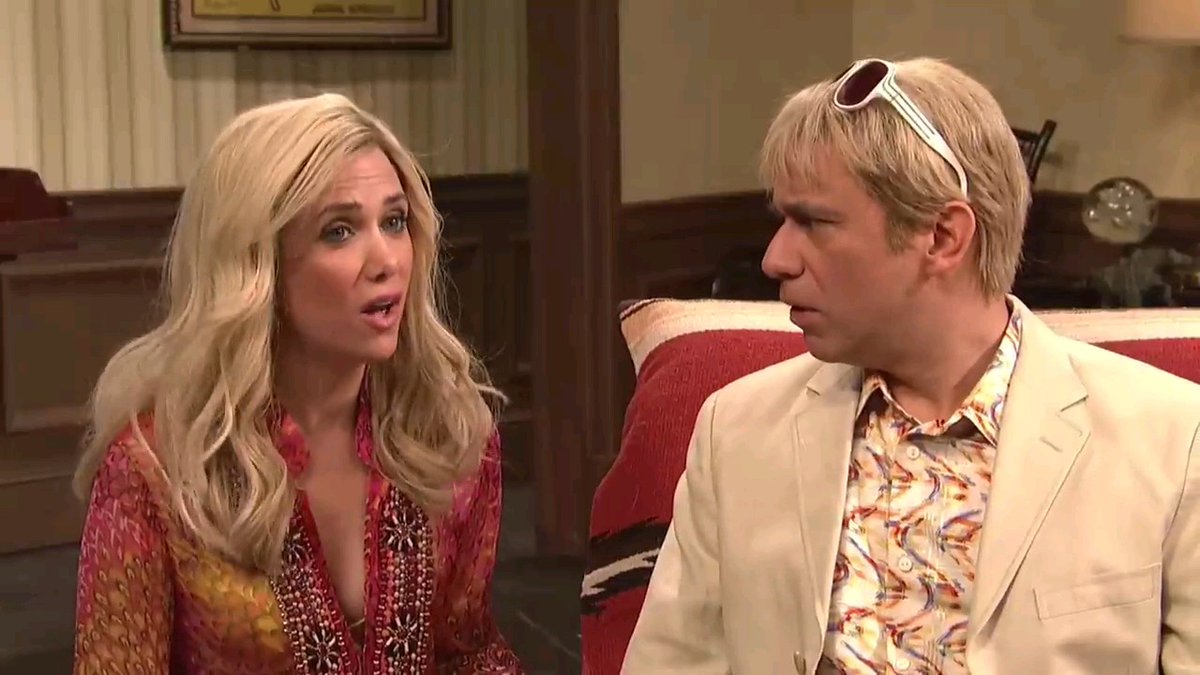
THE SNL SKETCH THAT MADE A COMPLETELY NORMAL WORD IMPOSSIBLE TO HEAR When Alec Baldwin walked onto SNL's “Delicious Dish” as Pete Schweddy, the joke wasn't supposed to be complicated. He was simply a man talking about his holiday food. That's it. The hosts were Margaret Jo McCullen and...

20,400 次观看 • 5 天前 •via X (Twitter)

14 条评论

𝓥𝓲𝓫𝓮𝓼𝓞𝓷𝓣𝓪𝓹 的头像
𝓥𝓲𝓫𝓮𝓼𝓞𝓷𝓣𝓪𝓹5 天前

The funniest thing about “Schweddy Balls” is how little the sketch actually moves. That's deliberate. The “Delicious Dish” was a parody of public-radio food programs. Ana Gasteyer later identified programs such as The Splendid Table and Good Food as influences. Those shows were known for taking their time. They could spend several minutes discussing an extremely specific ingredient or cooking technique. SNL took that rhythm and pushed it into absurd territory. Instead of rushing toward a punchline, the hosts simply kept talking. Pete Schweddy described another batch. The hosts asked another question. Pete provided another detail. And the audience waited for someone to acknowledge what was happening. Nobody did. That's what made the sketch increasingly uncomfortable and increasingly funny. Alec Baldwin played Pete with complete seriousness. Ana Gasteyer and Molly Shannon played the hosts as though they were conducting the most ordinary food interview imaginable. The comedy came from the gap between what they were saying and what everyone watching knew they were saying. It was almost like a test of audience patience. How long could three performers discuss “Schweddy Balls” without breaking? Apparently, quite a long time. And that restraint is precisely why the sketch remains memorable. SNL wasn't always at its funniest when someone was shouting. Sometimes the strongest joke was simply three people refusing to acknowledge the obvious.

𝓥𝓲𝓫𝓮𝓼𝓞𝓷𝓣𝓪𝓹 的头像
𝓥𝓲𝓫𝓮𝓼𝓞𝓷𝓣𝓪𝓹5 天前

The sketch became much bigger than the episode itself. Years later, the joke escaped SNL and entered the real world. In 2011, Ben & Jerry's released an ice cream flavor called “Schweddy Balls,” directly inspired by the SNL sketch. The flavor wasn't simply a reference buried in an old television archive. It became a real product that people could actually buy. That tells you something about the cultural reach of the sketch. Alec Baldwin's fictional bakery had become recognizable enough that a major consumer brand could build an entire limited-edition product around the joke. And the original sketch had done something particularly difficult. It created a phrase that was simultaneously innocent and impossible to hear innocently. “Balls” is a completely ordinary word. But after nearly five minutes of Alec Baldwin, Ana Gasteyer and Molly Shannon treating the word like the most sophisticated culinary subject imaginable, the word suddenly carried an entirely different comic meaning. That's the power of repetition. The first mention gets a laugh. The fifth mention becomes the joke. The tenth mention becomes absurd. And the performers never have to explain why. The audience already knows. That is a very specific kind of SNL comedy. Not loud. Not complicated. Just three performers maintaining an increasingly impossible level of seriousness while the audience falls apart.

𝓥𝓲𝓫𝓮𝓼𝓞𝓷𝓣𝓪𝓹 的头像
𝓥𝓲𝓫𝓮𝓼𝓞𝓷𝓣𝓪𝓹5 天前

“Schweddy Balls” is a good reminder that a comedy sketch doesn't always need a complicated premise. The entire engine was: Take a respectable radio-food format. Make the hosts extremely serious. Give the guest an unfortunate name. Then refuse to acknowledge the obvious joke. That's it. But execution matters. Alec Baldwin never broke character. Ana Gasteyer and Molly Shannon never treated the double meaning as a joke. They treated Pete Schweddy's food exactly as they would treat any other holiday recipe. That commitment gave the audience permission to do the laughing for them. And perhaps that's why the sketch has lasted. The audience isn't laughing because someone tells them when to laugh. They're laughing because they're waiting for the performers to acknowledge what everyone already knows. But the acknowledgment never comes. That tension becomes the punchline. More than two decades later, the sketch remains one of the most recognizable examples of SNL's ability to take something extremely ordinary and stretch it into something unforgettable. Sometimes the funniest thing a performer can do is not react to the joke at all.

Maroon Squatch 的头像
Maroon Squatch5 天前

I loathe these posts. This feigned/pseudo intellectual explanation of a simple thing that needs zero explanation. It’s obnoxious as hell.

Lisa Barbieri D 的头像
Lisa Barbieri D5 天前

@keshvibezTV Sweddys balls.

Joseph Hazelwood 的头像
Joseph Hazelwood5 天前

Betty whites version of this was hysterical as well.

Scott Davidson 🎸🎙️📝🚙 的头像
Scott Davidson 🎸🎙️📝🚙5 天前

Fond memories of me, my mom, and my sister crying laughing when this first came on TV. Dad walked in, shook his head, and walked back out of the room

William Traynor 的头像
William Traynor5 天前

Only thing I liked it about him!

Joost bakker 的头像
Joost bakker5 天前

Chocolate salty balls?

DANfromDAN 的头像
DANfromDAN5 天前

@grok what date did this air?

John Szabo 的头像
John Szabo5 天前

If you’d like to nibble on some Schweddy Balls, well here’s the recipe. Go crazy with your own Schweddy Balls.

Akbar 的头像
Akbar5 天前

They didn't get banned for this😂😂

Joseph Dudley 的头像
Joseph Dudley4 天前

Yum.

Mo 的头像
Mo5 天前

Colonel Lingus Would Be Proud.

相关视频

Beethoven could not hear the music he wrote. At the age of 28, he realized he was no longer able to listen to a flute being played in the distance, and he spent the rest of his life composing the most enduring music in Western history in almost complete silence... He had been a working musician since childhood. His ears were everything. In 1798, in the middle of a heated argument with a singer, he noticed for the first time that something was wrong. The sound was thinning at the edges. He could hear voices, but high frequencies were beginning to disappear. He told no one for years. By 1802, the truth was no longer deniable. On his doctor's advice he moved to Heiligenstadt, a quiet village outside Vienna, hoping the country air would help. It did not. There, alone and surrounded by farmland, he wrote a letter to his two brothers that he never sent. It was found among his papers after his death. We now call it the Heiligenstadt Testament, and it is one of the most devastating documents ever written by an artist about himself: "You men who think or say that I am malevolent, stubborn or misanthropic, how greatly do you wrong me. You do not know the cause of my seeming so... what a humiliation, when one stood beside me and heard a flute in the distance and I heard nothing, or someone heard the shepherd singing, and again I heard nothing." He wrote, in the same letter, that he had thought of ending his life. And then he wrote the line that explains everything that followed: "Only my art held me back. It seemed impossible to me to leave the world before I had produced everything I felt called upon to produce." He went back to Vienna. He went on composing. Over the next two decades his hearing continued to fade. Friends began writing their words down in small notebooks instead of speaking them aloud, and waiting while he read. Modern scholars call these the conversation books. Around four hundred of them survive. To compose, he developed his own methods. He bit one end of a wooden rod and pressed the other against the soundboard of his piano, letting the vibrations travel through his jaw to his inner ear. He had stumbled, through trial and error, onto the principle that modern science calls bone conduction. The cause of his deafness has never been settled. What we do know is this: he realized he was losing his hearing at twenty-eight, and he could have stopped. He wrote the letter, he held the thought of dying in his hand, and then he put down the pen and went back to work. Most of what he is remembered for was composed after that moment: The Fifth Symphony. The Seventh. The Ninth. The Missa Solemnis. The late quartets. All of it was made by a man who could no longer hear most of what he was writing. There are people who give the world what they receive, and there are people who give the world what they were never able to receive. The most enduring beauty in human history has almost always come from the second kind... -- -- -- If you enjoyed this, I write a weekly newsletter read by over 50,000 people who love rediscovering the beauty of the past. You can join us here: I write about beauty in all its forms. If you'd like to support my work, a paid subscription is what makes it possible.

James Lucas

155,191 次观看 • 4 个月前

The moment Michael Jackson debuted his first anti-gravity lean and changed live performance forever. The first time Michael Jackson leaned forward in “Smooth Criminal,” it looked less like a dance move and more like something had happened to gravity. He stood perfectly straight, then his entire body tilted forward while his feet seemed to stay planted. No obvious jump, no visible support. For a second, you almost stop thinking about dance and start wondering, “How is he doing that?” That reaction was part of Michael’s genius. He understood that a great performer doesn’t always need to show you how difficult something is. Sometimes the most impressive thing is making something incredibly difficult look completely natural. The famous lean wasn’t simply a matter of balance. In the later live versions, specially designed shoes and floor fittings helped Jackson and his dancers lean much farther forward than the human body normally could. But knowing how it worked doesn’t make the moment less impressive. If anything, it makes you appreciate how carefully the illusion was built. Because the technology was only one part of it. Michael had to make you forget the technology was there. He didn’t stop and prepare for the trick. It appeared naturally in the choreography. One moment he was dancing normally, and the next his body seemed to follow a completely different set of rules. That is the difference between a technical trick and a memorable performance. Plenty of performers have used clever stage technology, and plenty of dancers have mastered difficult movements. Michael Jackson had something else: the ability to turn technique into an image that stayed in your head. You weren’t thinking about the shoes. You were thinking about gravity. And that is why the lean became bigger than the move itself. Like the moonwalk, the glove, and his signature poses, it became part of a visual language that people could recognize almost instantly. Michael didn’t just perform choreography. He created moments that people remembered. Years later, you can explain exactly how the lean worked. You can show someone the shoes and describe the mechanism. But none of that changes the first reaction when you see it for the first time. For a brief moment, Michael Jackson made millions of people feel as if they had just watched someone break the laws of physics. Maybe that is what great live performance is really about. Not making the audience understand how you did it, but making them forget to ask.

Emotion & Music

38,746 次观看 • 1 个月前

After their bill had passed and millions of Epstein files were released, Massie and Khanna spent some time reviewing the files and then went straight to a press conference. They were in a massive hurry to declare that they "caught" the DOJ. They spent the majority of the press conference boasting about the "coverup" that they had discovered. Massie and Khanna said they found six men who were being protected in the files. They didn't take a couple days to sort it out and make sure that they were correct. Instead, they immediately held a press conference. Khanna praised Massie for using his "MIT logic" to find the "coverups." Massie was asked at the press conference how he knew that the men were guilty of crimes. Listen to his answer. It's gibberish. He said he found a list of 20 names and photos (including Epstein), saw some foreign names and figured out by the corresponding photos that they were men and therefore concluded they had to be guilty. The very next day Ro Khanna read these names on the House floor and then they both went on TV to talk about these six people. He and Massie ended up defaming innocent people. A politician found some redactions and photos, immediately held a press conference without knowing anything else about the what he had found, and then falsely accused innocent men. That's the least "libertarian" thing ever. It's exactly the type of thing that most libertarians would be outraged about but because it was Massie, they don't care.

MAZE

532,591 次观看 • 4 个月前

In 1997, a developer publicly humiliated Steve Jobs in front of a packed room. Jobs had just returned to Apple after 11 years away. Instead of fighting back, he admitted the guy was partly right — then explained the principle he believed could turn Apple into an $8–10 billion-a-year business. And his answer had almost nothing to do with technology. Most companies, Jobs explained, work backwards. They build something technically impressive, fall in love with what they created, and only then ask how they are going to sell it. He had made that mistake himself so many times that he said he had the “scar tissue” to prove it. His rule was the opposite: start with the customer experience and work backwards to the technology. Jobs used the LaserWriter as an example. Inside the printer were a Canon laser engine, an Apple-designed controller, Adobe PostScript and AppleTalk. It was an extraordinary piece of engineering, but none of that was the reason he believed people would buy it. When the first page came out, Jobs looked at it and realized they didn't need to explain what was inside the machine. They could simply hold up the result and ask one question: Do you want this? That was the entire point. Customers don't pay you for how difficult your product was to build. They pay for what it does for them. A developer tried to expose what Steve Jobs didn't know about technology. Jobs responded by explaining something far more valuable about business.

Mr Green

225,369 次观看 • 1 个月前