正在加载视频...

视频加载失败

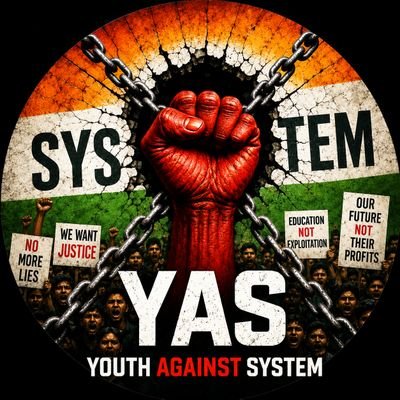
The so-called “skill development revolution” turned into another system where certificates were distributed, photos were clicked, crores were spent, but thousands of youth still remained unemployed. Under the , many training centres focused more on targets and funding than actual quality education. In several places, students complained about poor...

33,814 次观看 • 2 个月前 •via X (Twitter)

0 条评论

暂无评论

原始帖子的评论将显示在这里

相关视频

This week, I testified before the Select Committee on Effective Postsecondary Career Technical Education (CTE) and Workforce Development Programs and why it matters for young people furthest from opportunity. For the last several years, Alliance for Boys and Men of Color has been helping lead the fight to build real, paid pathways into good careers for opportunity youth. Alongside Youth Will and California Opportunity Youth Network, we worked with Senator María Elena Durazo to establish the California Opportunity Youth Apprenticeship (COYA) Grant Program — because too many young people were locked out of the apprenticeship system, even as California faces major workforce shortages. COYA is about more than training. It’s about building relationships between community-based organizations, labor, education, and employers so young people who’ve been disconnected from school or work can earn while they learn and move into high-paying, stable careers. Over the last two years, California has made a historic investment in opportunity youth through the California Opportunity Youth Apprenticeship (COYA) that we established. Across two rounds, COYA has awarded more than $46 million to 80 programs to build and expand registered pre-apprenticeship and apprenticeship pathways. These investments are supporting thousands of young people who face barriers to employment—connecting them to paid, high-quality career pathways in high-demand industries through partnerships with community-based organizations, labor, education, and employers. Proud of the role ABMoC continues to play in shaping youth apprenticeship policy in California — and committed to keeping the focus on real pathways, real wages, and real opportunity. Thank you Assemblymember Mike Fong for the invite and we’re looking forward to collaborating this year on AB 805.

E

11,207 次观看 • 8 个月前

Last year, the Chief Minister Sarfraz Bugti decided to conduct an experiment. All Deputy Commissioners were directed to hold monthly open katcheries. At the same time, a small unit was created in the Chief Secretary’s Office under Additional Secretary Services to study complaints that kept repeating specially from the youth. The objective was to identify what truly troubled the youth of Balochistan, rather than what the state assumed their concerns might be. After eight months of careful analysis, the conclusion was unexpected. The most frequent complaint was not law and order or terrorism. It was recruitment without merit. This finding reshaped internal discussions. It became clear that the issue could not be solved through instructions or oversight alone. The problem lay in discretion, opacity, and human intervention. The Finance Department was therefore asked to prepare a structural solution. A series of focused conferences followed. The consensus was clear. Recruitment had to be taken out of individual hands and placed into a system where interference was structurally impossible. This led to the decision to introduce a technology-based recruitment process. Under the new system, tests were conducted online and results were generated immediately. There was no back end manipulation. No room for sifarish. No space for bribery. BUITEMS was engaged, a dedicated IT team was raised, and the system was developed and tested under real conditions. Today, the system was executed. The response from candidates was remarkable. Many were visibly surprised as results appeared instantly. For a large number of them, this was their first experience of a recruitment process where merit was demonstrated, not merely claimed. The presence of the Chief Minister Chief Minister's Office Balochistan and the Chief Secretary reinforced the seriousness of the reform. Minor hiccups were observed, as expected in any first rollout, but the process remained stable and transparent throughout. In practical terms, this marks the end of a long and corrosive era of illegal recruitments. More than 5,900 candidates applied for BS-14 posts. Only 111 were selected. Every selection was made purely on merit. Today is historic, not because of a single test, but because a long-standing grievance of the youth of Balochistan has finally been addressed. This is how trust begins to return. The video is genuinely wholesome .

Muhammad Hamza Shafqaat

74,609 次观看 • 6 个月前

I recently came across this clip of Bantu Holomisa saying that, despite the Apartheid regime being “cruel politically”, “but at least” he credits it “for having provided jobs”, “for making sure there was discipline in schools” and building “quality” four-room houses. Needless to say, Holomisa is recycling Apartheid propaganda. First, what “jobs” is he talking about when the regime passed laws that reserved all skilled and supervisory positions for White workers while restricting Black Africans to manual labour, where natives earned up to 11 times less, and still paid taxes that White people had never even heard of? Holomisa himself was a “General” in the Bantustans, which housed 52% of the population on just 13% of the least productive land, with unemployment often running at up to 80%. The Bantustans were created as rural, ethnically defined “homelands” with minimal industrial infrastructure and few formal employment opportunities. They relied heavily on subsistence agriculture, remittances from migrant labour, and low-paid local jobs. Job creation efforts were so minimal that by 1974, only about 13 000 workers (out of millions of residents) were employed in homeland industries, most in low-wage roles. For those who may not be aware, Bantustans were created by selecting areas that White farmers and mining companies had previously declared poor and unproductive. So, by describing this system as “job provision”, Holomisa is confusing exploitation with opportunity. On education. For 30 years before Apartheid, Africans were already paying an “Education Tax” that did not apply to White people. Yet, by 1976, the regime spent 15 times more on education for each White child than for each Black child. Then Holomisa says during Apartheid, “teachers were teaching”. How, when only 2.3% of Black teachers had a university degree, while 82% had no matric? Who were the teachers teaching when Black children would only attend school for a few years, often just 2 years? What good was the “teaching” when Black children were taught in their 2nd (or 3rd) language, which meant they were much more likely to fail, and it was not uncommon for a pupil to repeat a grade several times? When Holomisa praises Apartheid-era four-room houses, he is referring to the NE 51/6 matchbox house, structures built with asbestos cement roofing, unlined walls, no internal doors, no ceilings, and no insulation. The “quality” of the matchbox house, was never about human dignity. The primary concern was labour efficiency and social control. The “four rooms”, typically two bedrooms, a kitchen, and a living area, were unlined, with no internal doors and toxic asbestos roofing. The design assumed the inhabitants were merely units of labour. The lack of ceilings or proper insulation meant these houses were freezing in winter and boiling in summer. In the eyes of a frustrated citizen, a 1950s matchbox house that is still standing looks like “quality”. However, this aesthetic comparison ignores the political soul of the matchbox house as a brick-and-cement manifestation of the belief that Black people were “temporary visitors” in their own country. Yes, many of these houses are still standing. But durability is not the same as quality. The real danger of Holomisa’s claim is that in a country desperate for functional governance, a crumbling 1950s structure can look like “order.” But aesthetic comparison without political memory is a form of historical vandalism and moral amnesia.

Sizwe SikaMusi

22,126 次观看 • 6 个月前

Building a Skilled Maharashtra for a Stronger Future! Inaugurated the Nagpur Skill Centre today along with Hon Union Minister Nitin Gadkari ji. Established through the collaboration of AID and Tata, the centre will equip youth with industry-oriented skills and create a future-ready workforce. Under the visionary leadership of PM Narendra Modi Ji, skill development has become a national priority. Maharashtra is further strengthening this vision through a dedicated Skill Development Department, ensuring closer collaboration between the government, industry and educational institutions to enhance employability. The state's expanding healthcare, solar energy, EV and alternate fuel sectors are creating significant demand for skilled professionals. Maharashtra has become the first state to supply agricultural power through a 16,000 MW Agri Solar network, with 2000 solar feeders expected to generate demand for at least 50,000 trained solar technicians. To prepare youth for emerging industries, the state is partnering with the Tata Group and Ratan Tata Maharashtra State Skills University to provide training ranging from basic skills to advanced technologies such as Artificial Intelligence and Quantum. More skill centres will be established across Maharashtra to support continuous upskilling. Approval has also been granted to establish a state-of-the-art Skill University in Nagpur. The university will feature specialised schools in collaboration with leading corporates and expert institutions, ensuring students graduate with industry-ready skills and placement opportunities. With Nagpur and Vidarbha emerging as hubs for solar modules, EVs, coal gasification, carbon capture and steel manufacturing, the focus remains on creating a skilled local workforce. Maharashtra currently operates around 2500 Skill Development Centres, training nearly 4 lakh youth. According to the Skill India report, 75% of trainees have secured employment, with the target of increasing this to 90%. To further strengthen skill development initiatives, presided over the signing and exchange of an MoU between the Association of Industrial Development (AID) and the National Academy of Defence Production (NADP), Nagpur. This partnership will foster stronger industry-academia collaboration, promote innovation and experiential learning, support the MSME and vendor ecosystem, and develop a future-ready talent pool for the defence manufacturing sector. Minister Chandrashekhar Bawankule, MLA Krishna Khopde ji, Nagpur Mayor Neetatai Thakre, Deputy Mayor Leelatai Hathibed, Standing Committee Chairman Shivani Dani-Wakhare and other dignitaries were present. Nitin Gadkari Chandrashekhar Bawankule Dr. Rajeev Potdar Krishna Khopde Nita Thakre Ashish Kale 🇮🇳 Association For Industrial Development Nagpur Tata STRIVE Nagpur Municipal Corporation #Maharashtra #Nagpur

Devendra Fadnavis

25,897 次观看 • 15 天前

SARTHI: Empowering Youth, Transforming Futures Felicitated the successful students and parents for their achievements in the Union Public Service Commission (UPSC), Maharashtra Public Service Commission (MPSC) and other programmes, organised by Chhatrapati Shahu Maharaj Research, Training and Human Development Institute (SARTHI), Pune, today. Guided by the ideals of our greatest King Chhatrapati Shivaji Maharaj, we are dedicated to providing equal opportunities to all communities. The government of Maharashtra stands strong in support of the economically and educationally disadvantaged sections of the Maratha community. The profound vision of our great king, Rajarshi Chhatrapati Shahu Maharaj, continues to illuminate the path of social justice. Walking on this path, 'SARTHI' continues to play a transformative role in the upliftment of the Maratha community through education, training and employment opportunities. Established in 2018 with the vision of increasing the participation of the Maratha community in competitive examinations and skill development, SARTHI has emerged as a transformative platform for youth empowerment. Through its various programmes, over 2,00,000 students have been trained for UPSC, MPSC, banking and other competitive examinations. Ensuring equal opportunities for all, these initiatives are empowering communities through skill development and accelerating inclusive progress. To further accelerate employment generation, the revival of Annasaheb Patil Arthik Magas Vikas Mahamandal and the implementation of interest-free loan schemes have helped nurture lakhs of entrepreneurs, strengthening the foundation of inclusive growth and economic empowerment. The remarkable success of UPSC and MPSC aspirants through SARTHI stands as a testament to this impactful initiative, alongside many students securing meaningful employment through skill development. The Government of Maharashtra remains firmly committed to strengthening such efforts. Heartiest congratulations to all the students and their parents, with best wishes for continued success in their future endeavours. DCM Sunetratai Pawar, Minister Chandrakant Dada Patil, MP Dr. Medhatai Kulkarni, Pune Mayor Manjushatai Nagpure, Chairman of SARTHI Ajit Nimbalkar ji, Chairman of Annasaheb Patil Arthik Magas Vikas Mahamandal Narendra Patil and other dignitaries were present. Sunetra Ajit Pawar Chandrakant Patil Dr. Medha Kulkarni Manjusha Deepak Nagpure Narendra Patil #Maharashtra #Pune #Sarthi

Devendra Fadnavis

31,450 次观看 • 1 个月前

Infanticide was a disturbingly common act in the ancient world, but in Sparta this practice was organized and managed by the state. All Spartan infants were brought before a council of inspectors and examined for physical defects, and those who weren’t up to standards were left to die. The ancient historian Plutarch claimed these “ill-born” Spartan babies were tossed into a chasm at the foot of Mount Taygetus, but most historians now dismiss this as a myth. If a Spartan baby was judged to be unfit for its future duty as a soldier, it was most likely abandoned on a nearby hillside. Left alone, the child would either die of exposure or be rescued and adopted by strangers. Babies who passed inspection still didn’t have it easy. To test their constitutions, Spartan infants were often bathed in wine instead of water. They were also frequently ignored when they cried and commanded never to fear darkness or solitude. According to Plutarch, these “tough love” parenting techniques were so admired by foreigners that Spartan women were widely sought after for their skill as nurses and nannies. At the age of 7, Spartan boys were removed from their parents’ homes and began the “agoge,” a state-sponsored training regimen designed to mold them into skilled warriors and moral citizens. Separated from their families and housed in communal barracks, the young soldiers-in-waiting were instructed in scholastics, warfare, stealth, hunting and athletics. At age 12, initiates were deprived of all clothing save for a red cloak and forced to sleep outside and make their own beds from reeds. To ready them for a life in the field, the boy soldiers were also encouraged to scavenge and even steal their food, though if detected they were punished with floggings. Just as all Spartan men were expected to be fighters, all women were expected to bear children. Spartan girls were allowed to remain with their parents, but they were also subjected to a rigorous education and training program. While boys were readied for a life on campaign, girls practiced dance, gymnastics and javelin and discus throwing, which were thought to make them physically strong for motherhood. Much of the Spartan agoge involved typical school subjects like reading, writing, rhetoric and poetry, but the training regimen also had a vicious side. To toughen the young warriors and encourage their development as soldiers, instructors and older men would often instigate fights and arguments between trainees. The agoge was partially designed to help make the youths resistant to hardships like cold, hunger and pain, and boys who showed signs of cowardice or timidity were subject to teasing and violence by peers and superiors alike. Even Spartan girls were known to participate in this ritualized hazing. During certain religious and state ceremonies, girls would stand before Spartan dignitaries and sing choral songs about the young men of the agoge, often singling out specific trainees for ridicule in order to shame them into stepping up their performance. 🎥© historyinminutesstudios #archaeohistories

Archaeo - Histories

149,529 次观看 • 7 天前

Unemployed youth and Group I aspirants in Telangana are being betrayed by an insane government under Shri Revanth Reddy, suppressed through brutal police force and illegal cases. Instead of providing jobs, Telangana CMO is filing criminal cases against them. What a paradox! Telangana Chief Minister Telangana CMO must shed his egoistic tendencies and stop the cruel crushing of #TSPSCGroup1 aspirants’ genuine demand for postponing the exams. These exams are for the unemployed youth, not for the CM or his cabinet to dictatorially impose a schedule as an act of mindless false prestige. Enforcing the exam timeline without empathy betrays the trust of aspirants who were exploited during the 2023 elections, only to be silenced now with police repression and false cases. Group I aspirants are entangled in 14 legal cases, including flawed reservations (GO 29), wrongful disowning of Telugu Academy books, and challenges to 7 questions. Telangana CMO Shri Revanth has failed to ensure a smooth, transparent exam process, instead creating complexities and irregularities. After writing 3 prelims, aspirants are left in confusion, fearing cancellation. Why rush when the courts are still addressing key issues? The responsible step is to reschedule the mains until all cases are resolved. This isn’t just an exam, it’s the future of lakhs of youth! #JusticeForAspirants #TSPSC TGPSC Aspirants Rahul Gandhi Alankar Sawai | अलंकार सवाई Kaushal K. Vidyarthee Congress Bhatti Vikramarka Mallu Uttam Kumar Reddy Damodar Raja Narasimha Komatireddy Venkat Reddy Sridhar Babu Duddilla Ponnam Prabhakar @mpponguleti Bomma Maheshkumar goud Madhu Goud Yaskhi Konda Surekha Danasari Seethakka Jupally Krishna Rao M Kodanda Reddy Governor of Telangana

Prof Dasoju Sravan Kumar

17,804 次观看 • 1 年前

MBBS Has Become the New in India The government keeps opening medical colleges one after another, but creates no new jobs. On paper the number of doctors is increasing, but on the ground the system is collapsing. 🔴 1. Seats increased, but the system wasn’t strengthened MBBS seats were expanded massively, but hospital posts and new positions were not created. 2. More focus on advertisements, not infrastructure New colleges are announced, but hospitals lack wards, beds, machines, manpower, and proper facilities. 3. Young doctors are unemployed , the government stays silent For the first time, even freshly graduated MBBS doctors are struggling to get a job. This is a direct failure of healthcare planning. 4. Population rising, doctor-patient ratio collapsing India’s population is exploding while the number of practicing doctors remains limited. Both citizens and doctors are suffering. 5. Workload increasing, safety and support missing Shortage of staff in government hospitals is putting unbearable pressure on doctors, with no security, no support, and no resources. 6. Opening colleges does NOT improve healthcare Building medical colleges is easy; providing quality training and post-MBBS employment is the real challenge the government has failed to address. 7. One Nation, One Exam ; but no ‘One Nation, One Job Policy’ Doctors face endless exams, inspections, and regulations, but when it comes to job creation, the government has no clear policy. #medtwitter

Indian Doctor🇮🇳

44,397 次观看 • 8 个月前