Sensitive content

This media may contain sensitive content.

Video yükleniyor...

Video Yüklenemedi

Ana Sayfaya Dön

The weekend isn’t complete without a busted butthole with prolapse sticking out of his gut 🤜 💦: X Lube Powder 🍑: Your FFriend Ives #GayFisting #FistFuck #FFuck #gaycunt #fisting #sloppyhole #wreckedhole #loosehole #rosebud FFister.com

0 Yorum

Yorum bulunmuyor

Orijinal gönderinin yorumları burada görünecek

Benzer Videolar

Nutrition doctor Federica Amati warns going on Ozempic carries a risk of “early onset of DEMENTIA” and “severe brain health issues.” Specifically, the risk comes from nutritional deficiency. When people go on GLP-1s, the diet that led to the weight gain doesn’t improve, they just eat less of it. And when that smaller amount of food is still junk food (the case with most people), the brain doesn’t get enough nutrients to thrive. HOST: “You’ve also seen people lose the weight, come off it, get really hungry, and then find that inevitably they’re therefore going to put the weight on.” AMATI: “They do. And often it’s quite a big proportion of the weight loss comes back on within the space of six to 12 months.” HOST: “What about people who are just going to stay on the drug? They’re like, this is magic.” AMATI: “I’d say it’s quite hard to take these drugs long term and not eat in a way that supports your gut and your body because you will get the side effects. “If you have any intervention that restricts your food for very long periods of time, you always run into the risks of decreasing your resilience, your immune system really struggling, your brain health struggling, your lean mass or your muscles and your bones struggling. “There was a patient in the UK who had scurvy, so bleeding gums, people couldn’t understand what was going on. He’d been taking these drugs without any support and just hadn’t been eating fruits and vegetables basically. “There was a case study of a patient who had started to have really severe brain health issues. “And the case report described this patient as possibly having early onset of dementia. And then they found out he was just like massively micronutrient deficient for his brain. “If your dietary quality doesn’t improve on these drugs, then you are definitely going to run into an issue of complete undernourishment. “So when you take these medications, every single meal counts more than if you weren’t taking them.”

The Vigilant Fox 🦊

83,804 görüntüleme • 20 gün önce

A revolutionary approach to defeating cancer: Dr. Patrick Soon-Shiong unveils a game-changing strategy In a riveting discussion, Dr. Patrick Soon-Shiong, a pioneering surgeon and biotech innovator, laid out a bold, chess-like strategy to outsmart cancer—an enemy he describes as diabolically clever, hiding from the body’s immune defenses with sinister precision. Forget checkers; this is a war requiring the sophistication of Go, where every move counts. Here’s how Dr. Soon-Shiong’s cutting-edge approach is rewriting the rules of cancer treatment: Step 1: Smoke Out the Enemy Cancer isn’t just a clump of cells—it’s a cunning adversary with genomic tricks that let it cloak itself from killer T-cells. Dr. Soon-Shiong’s protocol starts by exposing the cancer’s hidden receptors. Instead of blasting the tumor with high-dose chemotherapy, he uses a low metronomic dose—a tiny amount that stresses the cancer, forcing it to reveal itself. “It’s like smoking it out,” he explains. The cancer, sensing danger, exposes its surface molecules, making it a target for the immune system. Step 2: Unleash the Body’s Elite Forces With the tumor exposed, Dr. Soon-Shiong deploys the body’s natural killer (NK) cells and T-cells, supercharged by a breakthrough molecule called BioShield. This activates NK cells, stimulates killer T-cells, and—crucially—creates memory T-cells that remember the cancer’s signature. “For the first time, we’re seeing bladder cancer patients in complete remission for nine years, still alive, without losing their bladders,” he revealed. This isn’t just treatment; it’s a long-term defense system. Step 3: Orchestrate a Multi-Front Assault Cancer thrives by suppressing the immune system, but Dr. Soon-Shiong’s approach is a battlefield symphony. He educates T-cells with a tailored vaccine, activates killer macrophages, and suppresses the suppressors—all simultaneously. Radiation? Only in tiny, precise doses (SBRT) to expose, not destroy. “High-dose radiation kills your NK and T-cells,” he warns. This is precision warfare, not carpet bombing. A Future Without Suffering Unlike traditional cancer treatments that leave patients nauseous, bald, and broken, Dr. Soon-Shiong’s protocol is outpatient-based, minimizing suffering. “We’ve treated hundreds of patients this way,” he shared. Even more revolutionary? He envisions treating patients before surgery, using the tumor itself as a vaccine to train the immune system. Imagine a world where cancer is stopped in its tracks without invasive procedures. The American Red Cross of Cancer Dr. Soon-Shiong’s vision goes beyond individual patients. By extracting and cryopreserving NK and T-cells from a single pint of blood, his team can grow billions of these immune warriors, ready to be deployed for anyone. “We could become the American Red Cross of cancer,” he declared, hinting at a future where these innovations could even shape global health policy. Why This Matters Cancer isn’t just a disease; it’s a biological mastermind that demands respect and strategy. Dr. Soon-Shiong’s approach—expose, activate, educate, and suppress—offers hope to millions facing a life-threatening diagnosis. His work proves that with the right tools, we can turn the body into its own greatest weapon. The Call to Action The FDA must recognize this multi-pronged war requires battlefield awareness, not outdated single-drug approvals. Patients deserve access to these life-saving protocols now.

Camus

94,391 görüntüleme • 1 yıl önce

🚨THE KRIEL CADAVER: DISGUSTING WHITE TRAITOR EXPOSED‼️ Once the name Kriel stood for blood, sacrifice and real loyalty to the Boer people. Dominee Abraham Kriel pulled war orphans from the ashes of the Anglo-Boer concentration camps and gave them a home. Then the 21st century spat out Pieter Kriel, the soft, fluffy-haired end of that bloodline. A 21-year-old TikTok-to-X activist whose whole purpose seems to be screaming that he’s nothing like “those” Kriels, especially Kallie from AfriForum. He hates his own skin more than anyone else and loves lecturing South Africans on how “racist” we are for noticing farm murders, collapsing cities and the ANC’s total mess‼️ His failures are plain embarrassingand has built nothing real. Zero followers who matter and zero results🔥 Even the hard-left crowd he worships treats him like a joke. When activist Gillian Schutte tore into him in an open letter, she called him out as a rich kid with nothing but quick ChatGPT lines about “white privilege” and Black pain. He sells out his own people for views and gets laughed at in return. A total flop who changes nothing. His so-called political knowledge is laughable. This boy who has never faced real South African hardship lectures the whole country on “reality."‼️He denies the farm murder stats, calls white genocide talk a myth, pretends the flood of illegal immigrants isn’t happening, and tells Afrikaners they’re the problem for wanting safety‼️ While load-shedding blacks out the country, cities rot and graves keep filling, he sits safe behind a ring light pushing university Marxist nonsense that has zero connection to daily life here and he irritates the hell out of every South African. On X his feed is pure poison, endless smug rants that trigger everyone. Whites see a self-hating traitor selling his volk for cheap clout‼️ Blacks and leftists see a pampered white kid playing pretend revolutionary. Normal people just want him to shut up while the country falls apart around us. In real life he’s the same unwanted voice nobody asked for, the soft TikTok warrior who would crumble the moment real pressure hits. Pieter Kriel is not an activist. He is a pathetic white traitor and a living warning of what happens when you raise children without roots or reality. We expose him and laugh at his weakness. And we tell every parent, never let your child turn into this embarrassment‼️ PS - He was a bully in school apparently he targeted poor girls who’s parents wasn’t rich in school making fun of them of the area they stayed in‼️

RaiZel

21,367 görüntüleme • 4 ay önce

Seen a lot of peoples responses say that Dana White’s stance on freedom of speech has always been consistent… But that’s far from true. 🗓️ 2013 Dana suspends Matt Mitrione indefinitely: 🗣️“I know there was a lot of talk about ‘free Mitrione’ and freedom of speech. That’s absolutely ridiculous. Go work at any company anywhere in America and go out and say ignorant, stupid stuff publicly and see what happens to you.” “There’s a way to voice your opinion without sounding like a bigot. He came off sounding like a complete jackass and a bigot. That kind of stuff isn’t going to be tolerable.” 🗓️ Dana in 2025 on Sean Strickland: 🗣️“Sean Strickland said a lot of things. I don’t agree with 95% of what this guy says, but it’s his right to say it. And if you don’t like it, tune in on Saturday night. He’s going to be getting punched in the face.” Same promoter. Two very different framings of freedom of speech. And don’t worry, it’s not AI; this is just one example. There are a handful of others, as well. None of that is opinion. I’m simply pointing out the contrast in Dana’s framing over the years. My takeaway is that perhaps we don’t actually know Dana White’s true stance on freedom of speech, but maybe just Dana White the businessman’s stance. 💰 And for what it’s worth, I’m all for free speech. I also fully believe views can change. Although I do question what changed Dana’s view this drastically. (🎤: Ariel Helwani UFC on FOX 7 - 2013)

AFeldmanMMA

58,289 görüntüleme • 7 ay önce

Israeli Art: The 9/11 World Ending Ritual /🧵 The 9/11 event that struck the amazing city of Manhattan, NYC, changed the world in a very negative way, and is such a deep rooted inception that it has affected your life more than even the COVID-19 event. Yet, so many people are not familiar with the architecture of this terroristic art piece. You see, 9/11 was part terror, part specials and part intrigue, but all these parts came together to form one piece of art for those privy to what was really going on. In the memories of the majority of people witnessing the horror of 9/11, besides the alleged hijackings and crashes, were two distinct moments: (A) The people jumping out of the two towers, ending up splattered on the floor. (B) The moment the two tower inexplicably collapsed and disappeared into dust. Back in 2001, These moments were surreal. Like a magic trick where someone is sawed in half but gut wrenchingly horrifying because people died in the process. Much has been argued about these events' physics, such as the real temperature on the floors (and people peering out of the tower seemingly unharmed), or the mechanism of the collapse of the towers. Yet no one considered that these moments, intended to be planted in your mind, were chosen with great artistic deliberation which reveals the true ritualistic intent behind the entire event. Every single detail was taken into account, even the date of the terrorist attack. Israel Art Students By now the Israeli involvement in 9/11 is largely accepted by the world. Yet what isn't appreciated by most is the true depth of that involvement. Between 2000 and 2002, according to Fox News reporter Carl Cameron, the US was inundated with "Israeli art students", often posing as other nationalities*. Most famously, they were given residency in both of the world trade centre towers. One group called E-Team, the other Gelatin, both of which allude to explosives of some sort. One famous group was attached to a company called Urban Moving Systems, who had a mural of the 9/11 event on their van while it was taking place. After their arrest one of the employees involved in this cut out told the FBI that the Israelis were extremely anti-American and bragged: "Give us twenty (20) years and we’ll take over your media and destroy your country" Indeed, in ~20 years time the COVID-19 PSYOP began. Yet, the Urban Moving Systems group are a distraction compared to the other two, lesser known groups. E-Team was largely secretive but we will see very shortly that their involvement in orchestration of the event was undeniable. Gelatin, however, were so proud of their involvement that they even published a book about it. We will study this book in this thread as it revealed the methods, the intent and even the artistic techniques used to bring a ritual to change the world for the worse. It came in the form of two Tarot cards revealed on 9/11: The Tower and The Hanging Man These cards were not random choices. In demonic divination, the tower tarot card represents a sudden unexpected and dramatic change that destroys shaky foundations. The hanging man usually represents surrendering to the flow of the world, and gaining a new perspective in it -- an allusion to Odin. Yet when combined with the tower, the individual card represents something else: sacrificing yourself entirely to make a larger later. The combination of the two cards is the most dramatic and power "one-way" combination in Tarot divination, representing a profound, sudden shattering of old structures followed by an essential period of surrender, and a complete shift in perspective. Which is precisely what happened on and after 9/11. But there is also a hint, in the meaning of the hanging man -- the hanging man is never truly in danger. Odin allowed himself to be hung upside down in order to gain a new perspective (literally, upside down), only up to the point where he was about to die, but no more. He came out of it unharmed, much as Jesus came out of his crucifixion resurrected from death. Let's make four important observations, before moving on to the book by Gelatin. 1. The rapidly falling man on 9/11, somehow caught with perfect focus (😂) without his clothes flying everywhere, for some reason, decided to fold his leg in precisely the manner of the Hanging Man Tarot card. Pause for a minute to appreciate how difficult it would be to capture this short with smoke everywhere. 2. The South Tower collapsed just like the Tower Tarot card, which even depicted people falling out, the smoke and so on. It even tilted at the top, like the crown, before disappearing. 3. The two world trade centres were not identical. The north tower had a very large antenna. The south tower did not. After both were brought down, a blue light fixture and a pool replaced them, and then instead of building both back, a single tower which combined the two was constructed. Eventually the two are intertwined by the "One World Trade Centre". Why? 4. The day 9/11 has a special meaning, linked to the construction of the towers themselves. The number 9-1-1 was chosen as the police emergency number on January 1968. And on August 6th the same year, the construction of the WTC1 tower began. Why 9/11? There are two reasons, one historical, another artistic. We'll get into them at the end of the thread. We will start by deconstructing the first two with the help of Gelatin's book celebrating the "art pieces". The next two observations, will bring it and everything that happened after 9/11, all together. /1 * In the case of "Gelatin", Austrian.

Korobochka (コロボ) 🇦🇺✝️🇷🇺

325,501 görüntüleme • 11 gün önce

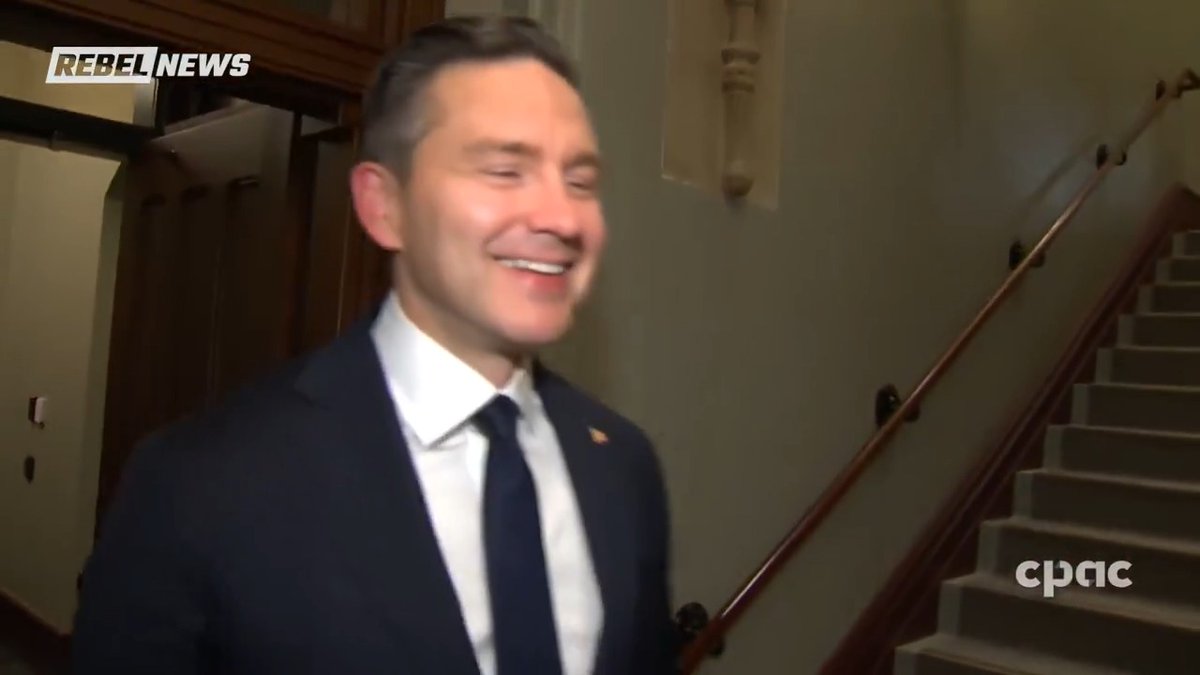
FIRE CHRIS! Conservative MP betrays voters, crosses floor to Liberals You know what’s worse than a bad MP? A bad MP who uses your votes, your time, and your money to get elected — then sells you out to save his own job. That’s exactly what Chris d’Entremont just did. Five months after squeaking through a tight race — on the backs of Conservative volunteers and donors — Chris d’Entremont crossed the floor to join Mark Carney’s Liberals. And he did it on budget day, as the government dropped a record-breaking $78 billion deficit on Canadians. One that is worse than the budget that Chrystia Freeland refused to deliver, and caused Justin Trudeau to resign and Carney to take over because he was going to a better fiscal caretaker. You can’t make this up. Go to to help us send him a message and empower the people he betrayed, through a multifaceted campaign to get him to resign in shame. Remember what we did to MP Ya'ara Saks after she cuddled up to terror tyrant Mahmood Abbas? Now, 40 days ago — 40 days — Chris d’Entremont was warning in Parliament that Canadians were hurting under Mark Carney’s government and that another massive Liberal deficit would make things worse. Forty days ago, he sounded like a fiscal conservative. Today, he’s cheering on the very people he said were bankrupting the country. And just a few months back, he was online praising Pierre Poilievre — telling voters that Poilievre was the one to fix what the Liberals broke. Now he’s sitting beside them. So, what changed? Not the Liberals. Not the deficit. Not the suffering in his riding. What changed was Chris d’Entremont’s job prospects. He lost his bid to become Deputy Speaker to Conservative MP Tom Kmiec, and apparently that bruised his ego so badly he started shopping for a softer landing. And if you think that’s speculation, listen to this: Former Conservative MP Rick Perkins said that just last weekend, d’Entremont told him: “If an election is held now, I will lose my seat. I might as well not run.” Perkins added, “Make no mistake. There is nothing in his floor crossing about principles. It was about keeping his job.” There it is. Straight from a colleague. Let’s put the pieces together: - He lost the Deputy Speaker race. - He thought he couldn’t win re-election. - And he crossed the floor on budget day, joining the Liberals to protect himself and his pension. Then, for good measure, he handed in a resignation letter dated November 4, 2005, misspelled the whip’s name, and locked his X account to hide months of posts supporting the Conservatives. This isn’t about representation. It’s about self-preservation. He saw the writing on the wall and switched jerseys before the voters could send him packing. That’s not leadership — that’s cowardice. And here’s the problem: If we don’t hammer this kind of betrayal now, it becomes normal. If floor-crossers can waltz across the aisle, lock their accounts, and cash a pension — every MP with hurt feelings or wounded ambition will start looking for their own escape hatch. That’s why we built It’s a message to every politician in Ottawa: if you betray your voters, there will be consequences. We’re funding mailers, robocalls, billboards, and a petition demanding a byelection — not just to fire Chris d’Entremont, but to make sure the next one thinking about doing it knows exactly what happens when you sell out your supporters. If you switch sides after an election, you should face the voters again. No free pass. No safe landing. No pension without permission. To the volunteers who stood in the cold, to the donors who believed in him, to the voters who feel duped — you deserve better than this. And to Chris d’Entremont — you can lock your account, but you can’t hide from the people you betrayed. Go to right now. Sign the petition. Donate what you can. Share it everywhere. Because if we let one MP get away with selling out his voters to save his job, we won’t have a democracy left — just a job fair for politicians. No free passes. No safe landings. Face the voters — REPORT by Sheila Gunn Reid:

Rebel News

23,728 görüntüleme • 10 ay önce

Katie Telford’s Katie Telford career is a cesspool of scandals and allegations that scream corruption, privilege, and a sickening disregard for anything resembling integrity, her every move dripping with the stench of power abused and accountability dodged. Start with the 2016 moving expense scandal, where she and Gerald Butts gorged on $207,000 of taxpayer money to relocate to Ottawa after the Liberals took power, Telford herself pocketing a grotesque chunk before public outrage forced her to repay $23,373, while Butts had to cough up $20,299 plus another $25,141 for land transfer taxes, the two of them whining they followed the rules while Canadians barely scrape by, the whole affair a disgusting display of elitism that spits in the face of hardworking people. Then there’s the SNC-Lavalin debacle in 2019, a rancid pit of interference where the PMO, with Telford as Trudeau’s puppet master, allegedly pressured Jody Wilson-Raybould to let the corrupt Quebec firm off on bribery charges, Butts taking the fall and resigning while Telford sat pretty, her hands maybe not on the smoking gun but surely close enough to smell the powder, the Ethics Commissioner later slamming Trudeau for improper influence while Telford somehow skated free, her silence as damning as any confession. The 2019 lawsuit from Vivian Bercovici piles on more filth, the former ambassador accusing Telford of inflicting mental suffering by stonewalling her pension requests, a cruel little power trip that shows Telford’s alleged knack for crushing anyone who doesn’t kiss the Liberal ring, the claims unproven but fitting a pattern of petty vindictiveness that clings to her name like a bad odor. Her 2023 testimony on Chinese election interference is another masterclass in evasion, as she squirmed before a parliamentary committee, dodging questions about Beijing’s meddling in the 2019 and 2021 elections, refusing to address allegations of $250,000 in covert funding tied to 11 candidates, her vague deflections so infuriating that MPs called her out for stonewalling, leaving everyone convinced she’s hiding a mountain of dirt about the Liberals’ ties to foreign cash. Her cozy history with Butts, now a fat cat at the Eurasia Group, only deepens the rot, with his firm reportedly raking in over $1.5 million in government contracts since 2017, the kind of insider cronyism that makes your skin crawl, and Telford’s past with him in the PMO screaming of backroom deals and influence peddling, even if hard proof stays slippery. The Liberal-NDP pact in 2022, which she helped broker, gets slammed as a shameless power grab, a deal to prop up Trudeau’s sinking ship by selling out any shred of principle for votes, critics calling it a betrayal of democracy while Telford likely smirked, tightening her grip on power no matter who got screwed in the process. Then there’s the 2021 sexual misconduct cover-up allegations tied to her name, where posts on X claim she failed to inform Trudeau about serious accusations against General Jonathan Vance, Canada’s top soldier, and then orchestrated a cover-up to bury the truth, allegedly leaving victims to rot while she protected her own ass, a betrayal so vile it’s hard to stomach. Every scandal, every whisper of corruption sticks to her like tar, from SNC-Lavalin to foreign interference to cronyism with Butts, painting a picture of a woman who thrives on manipulation, control, and dodging the consequences, leaving a trail of broken trust and public disgust in her wake as Canadians are left to wonder how much more she’s buried in her climb to the top, her career a monument to everything wrong with politics, built on the backs of those she’s stepped over without a second thought.

Vote Canada

46,507 görüntüleme • 1 yıl önce

War is a Battle of INTELLIGENCE! Listener Questions Philosopher Stefan Molyneux unpacks Iran's real average IQ near 84 via Richard Lynn's data, shattering online test myths, political censorship and ideological fury to reveal intelligence's raw grip on civilizations. Questions: "Would you say your love for the music of Freddy Mercury is the primary factor that has unconsciously influenced you to repeatedly make false claims on X that the average IQ of Iran is 104-106. Firstly Stef, I’m a man who is deeply fascinated by the topic of IQ. And having said that I know that the IQ of Iran is roughly 84. I of course am not an IQ scientist/researcher myself but I have several sources from the top IQ experts some of which you probably have heard of (or maybe even interviewed on your show!). Now data from the most prominent IQ scientist Richard Lynn confirms the average IQ of Iran to be 84 (Citation 'The Wealth of Nations (2002), pg.133'. Which conversely is not only 20 points lower than your outrageous 104 IQ claim but is also even lower than Iraq which is 87. Now of course in a country of 90 million people you might have a million people with an IQ of 104 and let’s say 90,000 people with an IQ of >129 (See Normal Distribution charts attached below). So you will have some very smart people in Iran, but these people are an extreme minority generated by the bell curve of genetics being thrown 90 million times!, so as a whole on average most of the 90 million Iranians are borderline intellectually disabled. Now Stef back to your claim. Your claim is OUTRAGEOUS! You claim the IQ of Iran is 104-106, which is complete nonsense. I mean Stef think about what you’re saying Stef. Your saying the IQ of Iran a dysfunctional country majority populated with brainwashed borderline mentally dysfunctional people is the same as a highly industrious, innovative and merit based futuristic tech megalopolis like Japan. I mean spend one day in Japan and spend one day in Iran and I imagine the experience would be like worlds apart, yet you Stef claim that the IQ of Iran is the same as Japan??? WHATTT???? Does randomly firing missiles every so often like a child having a tantrum prove anything but the government of Iran is full of low IQ dysfunctional people. Now I know the IQ of the government is not necessarily the same as the general population. BUT, if the IQ of the general population was really that much higher than the governing leaders, then those moronic leaders would have been deposed of by the people a long time ago. Yet they weren't, so we should infer the general population isn’t in fact that much more intelligent than the government’s. Stef, in the West you might encounter Iranians who are very smart, but it goes without saying this sample is a very biased sample. What is particularly strange about all this, is you Stef are a man with a very high knowledge about IQ’s effect on national wealth and civil decorum and functionality, yet despite Iran being a highly dysfunctional nation at practically any level you can look at, you Stef echo a claim that the IQ of Iran is the same as Japan and even higher than Western Europe! How ABSURD! Which brings me back to my initial question. (Continued...) "freedomain (Continuing on ->) So Stef, when otherwise rational people act out of character and push fake news based on data that is from a biased sample (or is possibly even data that has been manipulated and propagated as a psy-op by the Iranian government) when they otherwise wouldn't ordinarily do so, one naturally has to ask WHY??? In my opinion, I think I know the answer. Stef, the only thing that explains this BIZARRE behaviour of yours (tweeting unverified claims about IQ), is you Stef have a bias in favour of Iran which I think stems from your love of Freddy Mercury music. Would you agree Stef? "(*** Stef you did tweet out a Youtube video of a Freddy Mercury song at about the same time you made your Iran IQ tweets, so I think the evidence is clear Stef, Freddy Mercury was on your mind, when you made those fake news Iran 104 IQ tweets.) "Now, lastly Stef you might be asking, why putting out a FALSE tweet falsely claiming the IQ of Iran is 104 even matter's that much? To that I would say it matters a whole lot because IQ of course matters a whole lot, including in regards to military objectives and war. Like ask why would invading Iran be any different from Iraq? Did Trump invade Iran because he thought it would lead to a different outcome because Trump views the population of Iran to be quote 'high IQ people'? (as Trump even said so as much in the last 24 hours.) "BUT … Mr. Trump, what if Iran isn't populated by high IQ people, what if Mr. Trump you were misled by fake news that Mr. Molyneux negligently tweeted rather than read the actual source material. (Lynn, 'The Wealth of Nations' (2002) IQ of Iran = 84). Well, Mr. Trump if you believed the average IQ of the population of Iran was 104 then you Mr. Trump might have assumed that all you had to do was take out the authoritarian government and then the high IQ population will swiftly bring about peace and democracy. But Mr. Trump, what if the average IQ of Iran is not 104? What if the top IQ scientists such as Lynn were right and the average IQ of Iran is in fact 84? Well then Mr. Trump, then your dealing with a very low IQ population, who will be frankly impossible to deal with, they will inevitably vote for another dictator and you Mr. Trump will find yourself in another forever war. That is why national IQ matters and that is why putting out false unverified and unsubstantiated tweets about IQ is a great error of judgment. Lastly to conclude, I believe in the great predictive power of IQ like you Stef, which is why I think it would be incumbent upon you to put out a correction unless you have verified sources from other top IQ researchers that support your OUTRAGEOUS Iran 104 National IQ claim." "Hi Stef! when communicating philosophy or philosophical ideas to the average person, and they respond with confusion or indifference, how do we know whether we have failed to adequately relay the ideas or if it is just too complex a language for them to grasp? I know everyone is capable of understanding philosophy on some level even if they’re lower IQ, so could the disconnect come from the disparity of time spent in the subject?" "Your Sunday (3/15) show was incredible. As a Catholic, that opening monologue challenging today's Christians to answer with clarity what Jesus commands via the Good Samaritan parable, especially when it comes to the specific child abuse scenario you laid out, it left me with a deep sense of sorrow for what you endured, and my own sense of frustration with the leadership of the Church. "The reality that not one, no church leaders, Anglican or not, lay or religious influencers; no one has tried to dialogue with you to address these essential issues, when you have been pointing them out for decades is more than disappointing to hear. "(Not as disappointing as some of the immediate live caller responses yesterday... the second woman was out of line, and the gentleman who landed on the idea that if you had not been abused, we wouldn't have received your philosophy gifts was hard to stomach.) "Nonetheless, if one (myself) was going to try to reach out, share your 3/15 show and try to coordinate a dialogue just to deal with the Good Samaritan and cold abuse topic, is that something you would be comfortable with? "second question "a few days ago, someone asked about how you feel about the Shroud of Turin, maybe you missed it but there has been renewed interest in the Shroud the last few years when a new photo 'negative' that appeared in 2024 along with new studies that for many was very compelling ... from a reason and evidence standpoint... to the image being impossible to reproduce. "I could be wrong but I felt like your answer lumped it so quickly with other things ... I believe u mentioned people of faith like Aquinas have searched for 'proof' for centuries. And you found that people of faith who are seeking proof to be an interesting paradox. "are you able to revisit this topic and assess what authenticating (if we are to believe the new reporting) that specific historical artifact could mean for at least establishing how the image came to be on the cloth? "again appreciate all u do to improve the world via philosophy and advocating for objective morality." "America in WW2 has burned down some and bombed all the major cities in Japan, even using the atomic bomb to create a glimpse of hell never before seen on earth. Yet today, the alliance between US and Japan couldnt be friendlier. In the middle east, we’ve also bombed them to next week and back for 30 or so years. And they still, understandably, hate the US. What do you think causes this difference in point of view between the countries? Is it religion/culture? Could it be IQ? Forgive me if this is too politcal or naive a question. Thank you!" "My martial arts club have a Hazing ritual that I believe is immoral and useless. I trying to get it banned. "Whats your opinions on hazing? Is it for example always immoral?" 0:00:00 The IQ Controversy 0:12:15 Discussing Iranian IQ Studies 0:29:34 Philosophy and Resistance to Truth 0:34:59 Philosophers and Child Abuse 0:38:16 The Shroud of Turin and Faith 0:45:21 Moral Dilemmas and Divine Intervention 0:48:37 Bumper Stickers and Performative Virtue 0:51:10 Closing Thoughts and Support GET FREEDOMAIN MERCH! SUBSCRIBE TO ME ON X! Follow me on Youtube! GET MY NEW BOOK 'PEACEFUL PARENTING', THE INTERACTIVE PEACEFUL PARENTING AI, AND THE FULL AUDIOBOOK! Join the PREMIUM philosophy community on the web for free! Subscribers get 12 HOURS on the "Truth About the French Revolution," multiple interactive multi-lingual philosophy AIs trained on thousands of hours of my material - as well as AIs for Real-Time Relationships, Bitcoin, Peaceful Parenting, and Call-In Shows! You also receive private livestreams, HUNDREDS of exclusive premium shows, early release podcasts, the 22 Part History of Philosophers series and much more! See you soon!

Freedomain - with Stefan Molyneux, MA

11,040 görüntüleme • 6 ay önce

Trending 130k Gist: Intentional man, Basit sent a lingerie vendor money to chill with him in an apartment, she spent it on bluetick, nails, clothe, hair, blocked and labelled him gullible. Apparently, he invited her for an apartment weekend chilling, but businesswoman Ene, subtly turned it down saying she just restocked and couldn’t afford to look presentable, since it’s the first time they’d be meeting. But Basit argued that her looks weren’t really a problem. It wasn’t a party, after all; they’d be indoors, and no one would be looking. Ene disagreed. “I can’t just come out looking tattered. I’d need clothes, makeup, and all that,” she replied. By then, a hint of irritation had crept into her voice. As the intentional man still wasn’t getting the hint. Turned out Bad boy Basit really really wanted to see her. So he asked how much she needed. She made a list, did the math, and arrived at ₦85k “Send your account,” Basit replied ₦100k was wired. Then the game began: textbook stalling, unanswered calls, whatnot and, eventually, blocking. But before the blocking, she capitalized on Basit’s perceived desperation. She demanded another ₦30k to complete her hair, claiming the price had gone up. Puzzled but already skin-deep in the situation, Basit sent the additional money. His total exposure: ₦130,000, roughly the equivalent of 247 Dangote Refinery shares. Several exchanges later, from I’m making my hair to I’m inside uber to I want to buy perfume to total blocking and then, twitter dragging. Her last text to Basit was “My uber is here.” — Blocked. Without reason. Speaking on a Space, Ene said he was bombarding her with texts and calls, so she withdrew. Ene swore she fixed her hair, bought clothes, did her nails and even already ordered uber. Twitter NG asked her to provide just one video or screenshot of payment she made to any of the cases. After hours of stalling, virality, and some threats of police and Magistrate Court escalation ear and dear, last night Ene refunded the ₦130k to intentional man Basit Usman with deep apologies. Basit has now taken his L, peacefully! But the hot takes are still coming in. Some are saying Ene did nothing wrong. Others blame Basit. Scroll through the screenshots in frame 3 & 4 and have fun! Follow Trending Explained for daily explanations!

Trending Explained

57,177 görüntüleme • 4 gün önce

Todd Standing: Real Experiencer or Hoaxer? My Honest Take (and Why I Can’t Fully Trust Him) Todd Standing. Super controversial, and my gut screams “narcissist”—he comes across way too needy for people to believe him, almost giddy for validation as the one who’ll finally prove Sasquatch. I’ll admit right up front that I don’t like Todd’s demeanor—it’s full-scale cringe. That can taint my opinion, and I own it. I’m 100% convinced Bigfoot is real (my account shows I chase real evidence: tracks, audio, sightings). But belief doesn’t mean buying every claim. His most well-known stuff—the crisp “Jake” and “Jane” faces—still feels off, and this Gaia clip only heightens the suspicion. In this Gaia footage Todd treats the creatures like personal buddies and mentors, zooming in on eye spacing and head size while framing himself as uniquely trusted. Dramatic, spiritual, heavy on the “I’m the chosen connector” vibe. Pair that with the recent Cabin in the Woods defense by Robert Maxwell (needle scaling arguing massive heads, rebuttals to image manipulation and props, eye sizing). They make some strong technical points. I’ll link Robert’s full video in the replies. Dr. Jeff Meldrum is consistently objective and measured in his language. He calls the portraits some of the most astounding in history, notes they give the feeling of looking into a real creature’s eyes, and finds them worthy of serious study with “potential authenticity.” He’s diplomatic, intrigued by anatomy/gait/variations, and had his own sighting with Todd—but he doesn’t go full “100% proven, unmanipulated Sasquatch.” As Meldrum leaned toward authentic, I actually lean toward hoax. Here’s my specific suspicion as someone pretty handy with Photoshop: If I really worked at it with the right tools and time, I could take a human face (Todd’s or similar), enlarge the upper head proportionally (20-30%), preserve the core features, add fur texture, composite it into the forest with foreground needles, and create something that looks exactly like the Jake stills/video frames. And as the Cabin defense itself demonstrates when they morph/scale the upper portion of Todd’s head to Jake’s, the proportions line up eerily well once adjusted for size. Todd even does the head-size demo—glasses, ruler—looking genuinely excited that his own head couldn’t possibly match. This is just a hypothesis I want to rule out before making any firmer judgments. Without raw, unedited video files (full metadata, longer takes, multiple angles), we can’t verify whether simple post-production enlargement or compositing happened. Todd releases edited clips, cites protection/editing choices, and teases “more coming,” but that selective pattern—plus his production background and history of selling “ultimate proof” DVDs—keeps the red flags flying. VFX/forensic analysts (Poling & Falconer’s detailed NAWAC document is taken as gospel by a lot of the Bigfoot community) still flag unnatural lighting, movement, and lack of dynamic biology. In the spirit of fairness, I must add that “Kabota,” with the dark face and wrinkles, is much more intriguing to me. With Meldrum, I’m saying that looks far more authentic than the others. I’d love to do a more focused analysis of that video if Todd ever releases more details about it. The bottom line: I truly think Todd had real experiences. But I strongly suspect he is also a hoaxer and therefore should not be trusted. I feel exactly the same way about Dr. Steven Greer in the UFO world—I think he had genuine alien contact but also faked flares for his paying followers. Once someone does that, they must be called out and not trusted. I do not see this as “Todd is full of crap and Bigfoot isn’t real.” I see Todd as a dedicated experiencer *and* hoaxer. This is a family squabble as opposed to a tribal war. I would be cautious about trusting his presented evidence as authentic Bigfoot footage. But don’t dismiss the whole Sasquatch phenomenon either—real ones are elusive masters of the forest, not known to pose for crisp portraits. In fact, everything I’ve seen points to the exact opposite. They’ll connect with trusted people and decline recordings. I could be wrong—happy to be proven so. What do you think after seeing the Gaia clip? Did you watch the full Cabin in the Woods defense? Did Meldrum’s measured take or the head-size demo change your mind on “Jake,” or does the digital-alteration possibility (and raw-footage gap) raise the same flags for you? Civil discussion please—what’s your take on Todd’s claims? 👇🐞👣 #Sasquatch #ToddStanding

Bugs Finds Bigfoot 👣🪶

100,488 görüntüleme • 4 ay önce

In 2018, Jeff Bezos sat down for a 70-minute interview with David Rubenstein in front of Washington's most powerful crowd and explained exactly how he thinks, decides and lives. He didn't lecture on algorithms or logistics once. He talked about knee pads, regret and going to bed early: 1. Three good decisions a day is enough Most executives think leadership means firing off calls nonstop. Bezos rejects that entirely. He explained that "As a senior executive, you get paid to make a small number of high quality decisions." Then he made the number explicit: "If I make, like, three good decisions a day, that's enough. And they should be as high quality as I can make them." 2. Protect the hours when your brain actually works He doesn't schedule his day randomly. He books his hardest thinking early and is honest about when he runs out of gas. "I like to do my high IQ meetings before lunch," he says. "Because by 5 p.m., I'm like, 'I can't think about that today. Let's try this again tomorrow.'" 3. Sleep is a strategic decision, not a luxury Bezos ran the maths on cutting his sleep to squeeze in more decisions and rejected it outright, asking "Is that really worth it if the quality of these decisions might be lower because you're tired, or grouchy or any number of things?" For him the answer was simple: "I think better, I have more energy, my mood is better." 4. Puttering in the morning isn't wasted time He doesn't rush into his inbox the second he wakes up. "I like to putter in the mornings. I like to read the newspaper. I like to drink coffee." That slow start is what makes the sharp decisions later in the day possible. 5. Trust your gut on the decisions that matter most Most founders assume the biggest calls need the most data. Bezos found the opposite. "All of my best decisions in business and in life have been made with heart, intuition, guts, ... not analysis." He was careful to add the nuance though: "If you can make a decision with analysis, you should do so. But it turns out in life that your most important decisions are always made with instinct and intuition." 6. Everything you're impressed by started small People meet Bezos now and see a trillion-dollar company. He remembers something else. "Everything I've ever done has started small. It's hard to remember for you guys, but for me it's like yesterday I was driving the packages to the post office myself and hoping one day we could afford a forklift." 7. The best idea in the room usually isn't yours Early on, Bezos was packing boxes on a concrete floor at 1am and pitched a fix for his aching knees. He admits "I didn't have packing tables. I said to one of the software engineers who was packing alongside me, 'You know what we should do? We should get knee pads.'" The engineer wasn't impressed. "And he looked at me like I was the dumbest guy he had ever seen in his life, and he said 'Jeff, we should get packing tables.'" Bezos didn't defend his own idea. He bought the tables the next day. 8. Don't feel smarter when the stock goes up Amazon's share price has swung wildly for two decades, and Bezos has trained his whole company not to read into the swings. He repeats a version of this line at every all-hands: "When the stock is up 30 percent in a month, don't feel 30 percent smarter, because when the stock is down 30 percent in a month, it's not going to feel so good to feel 30 percent dumber." He leans on the Buffett line he can't stop quoting, that "in the short run the stock market is a voting machine, in the long run it's a weighing machine." 9. Regret is about the things you didn't try Weighing whether to leave a stable Wall Street job to sell books on the internet, Bezos didn't build a spreadsheet. He thought about which choice he'd regret more at 80. His conclusion: "Our regrets are acts of omission, they're things we didn't try, it's the path untraveled." That single idea, more than any business plan, is what got Amazon started. 10. Being scrutinised is the price of being big, not something personal Asked about regulators and critics circling the tech industry, Bezos didn't get defensive. "All big institutions of any kind are going to be and should be examined, scrutinized, inspected," he said. Then he added the line that reframes the whole thing: "It's not personal, it's kind of what we as a society want to have happen." Here's the thing though.... Bezos didn't need to give this interview. He was already the richest man alive before he sat down with Rubenstein that night. But by then he'd already made himself public, buying a newspaper, showing up on stages, letting cameras into rooms most billionaires avoid. T hat single 70-minute conversation about knee pads and regret has been quoted by CNBC, Fortune, Yahoo and Bloomberg for seven years and counting. The companies made him powerful. Choosing to be visible is what made every one of his sentences travel far beyond that room in Washington, and kept compounding long after the microphones switched off. Speaking of compounding: We build massive distribution and grow personal brands on X and beyond without our clients lifting a finger. If you're a founder or VC looking for that kind of exposure, book a call below. Over a billion views and $4m attributable revenue for 17 clients to date.

Lewis 🏴󠁧󠁢󠁷󠁬󠁳󠁿

16,055 görüntüleme • 2 ay önce

Made $530,000 with Ai Bot that started with $313. Didn't know how to code. Now this bots run 24/7 printing money while sleeping. I've made the exact step-by-step guide to build this Claude Code Polymarket trading bot. Prompts. Code. Risk settings. Paper trading checklist. Everything from zero to running bot. It's free. For 24 hours. After that I'm charging $499 for it. To grab it right now: 1. Comment "Claude Bot" 2. Like and Retweet this post 3. Follow me Himanshu Kumar ( I can't send DMs to non-followers ) I'm DMing everyone who Complete the 3 steps. I spent hundreds of thousands hiring developers because he was too scared to learn. Then learned Claude Code. Built algorithmic trading systems. $313 → $530,000. You have the same tools available right now. And you're using them to ask ChatGPT for Instagram captions. This attached video is a goldmine. Full live walkthrough. Claude Code building actual Polymarket trading bots. From zero. Every line of code. Every decision explained. Now let me break down why everything you're doing in trading is wrong and exactly how to fix it. Save this post. You'll hate yourself if you lose it. ↓ Let's start with why you keep losing money. You already know the answer. You just won't admit it. You overtrade. Every. Single. Day. You see a candle move. You feel something. You enter. No plan. No edge. No reason. Just feelings. Then it goes against you. You feel something else. Panic. Anger. Denial. You move your stop loss. Or you didn't set one at all. "It'll come back." It doesn't come back. So you take another trade. A revenge trade. Bigger size this time. Because you need to "make it back." That one fails too. Now you're emotional. Now you're tilted. Now you're using leverage you have no business touching. 40x. 50x. 100x. On a trade you entered because a candle looked "bullish" and some guy on Twitter said "send it." You get liquidated. Close the laptop. Punch something. Tell yourself you'll be "more disciplined" tomorrow. Tomorrow comes. Same cycle. Same result. Same liquidation. You've been doing this for months. Maybe years. And you still think the problem is your strategy. The problem isn't your strategy. The problem is you. Save this post right now. What I'm about to show you is the only way to remove yourself from the equation. Follow Himanshu Kumar so you don't miss any of this. ↓ Here's what's actually killing your account. It's not the market. The market doesn't care about you. It's not your indicators. RSI works fine. MACD works fine. They all "work." It's not your timeframe. It's not your broker. It's not the "manipulation." It's four things: 1. Emotions. You hold losers because hope feels better than loss. You cut winners because fear feels stronger than greed. You size up when angry. You skip trades when scared. Your emotional state determines your position size. That's insane. And you know it's insane. But you keep doing it. 2. Overtrading. You take 15 trades a day. Maybe 5 of them had actual setups. The other 10 were boredom. Boredom trades are the most expensive hobby in human history. 3. Leverage. You use 20x-50x on trades where you're not even sure about the direction. That's not trading. That's a casino with a nicer interface. 4. Fees. You're smashing market orders. Paying spread. Paying commission. On 15 trades a day. Your broker makes more money from your account than you do. Think about that. Your broker is profitable on your account. You're not. You're the product. Not the trader. These four things are why 90% of traders lose. Not bad luck. Not the market. You. Save this post and follow Himanshu Kumar because the solution is coming next. ↓ The solution is painfully obvious. Remove yourself from the equation. Not partially. Not "I'll be more disciplined." Not "I'll journal my trades." Not "I'll meditate before trading." Completely remove yourself. Build a bot. Let the bot trade. You go live your life. The bot doesn't feel emotions. The bot doesn't overtrade. The bot doesn't use reckless leverage. The bot doesn't smash market orders and bleed fees. The bot follows the rules. Every single time. Without exception. Without "just this once." Without "I have a feeling about this one." Rules in. Execution out. No human in the middle to mess everything up. That's algorithmic trading. And before your ego jumps in with "but I'm different, I have discipline" — No you don't. Your account balance proves you don't. If you had discipline, your account would be green. It's not. So you don't. Accept it. Automate it. Move on. This is the hardest truth in trading. Your discipline will always fail. A bot's won't. Save this post. Follow Himanshu Kumar for the exact bot setup that removes your emotions permanently. ↓ "But I don't know how to code." Neither did he. The guy in this video didn't know how to code for most of his life. Got held back in 7th grade. People counted him out early. Spent years building apps and SaaS businesses without writing a single line of code. Hired developers on Upwork instead. Spent hundreds of thousands of dollars paying other people to build what he could have built himself. Because he was scared to learn. That fear cost him years. And hundreds of thousands of dollars. Sound familiar? You're doing the same thing right now. Not with developers. But with your time. You're spending thousands of hours trading manually because you're scared to learn the thing that would make trading automatic. The fear of learning to code is costing you more than any bad trade ever did. Because every month you trade manually is a month of emotional decisions, overleveraged entries, and unnecessary losses that a bot would never make. And here's the thing that should really frustrate you: AI does the hard parts now. You don't need a computer science degree. You don't need to work at a hedge fund. You don't need to be "good at math." Claude Code writes the code for you. You just need to think clearly about trading ideas. That's it. If you can describe a strategy in English, Claude can build it in Python. "I don't know how to code" stopped being a valid excuse in 2024. It's 2026. You're 2 years late on that excuse. Find a new one. Or stop making excuses entirely. Save this post. Follow Himanshu Kumar because I'm showing you how people with zero coding experience are building profitable bots. ↓ The process that actually makes money. Three letters. R. B. I. Research. Backtest. Implement. That's it. That's the entire process. Every single day. Research: Find an idea. A pattern. A market inefficiency. Don't trade it yet. Don't even think about trading it yet. Just research it. Backtest: Test the idea against historical data. Does it work? Not "does it look good on one chart." Does it work across thousands of trades? Across different market conditions? Across in-sample AND out-of-sample data? If no, kill it. Find another idea. If yes, move to step 3. Implement: Build the bot. Deploy it. Paper trade first. Then live with small size. Scale only on evidence. Research. Backtest. Implement. Every day. No exceptions. You know what your current process is? Feel. Enter. Pray. F. E. P. Feel bullish. Enter a trade. Pray it works. That's not a process. That's gambling with a TradingView subscription. RBI is the only process that works. Save this post. Tattoo it on your forearm. Follow Himanshu Kumar for daily RBI breakdowns. ↓ What Claude Code actually does that your manual process can't. You can maybe test 3-5 strategy ideas per week. Manually adjusting parameters. Manually checking results. Manually writing code (badly). Claude Code tests 50-100 ideas per week. With parallel agents running simultaneously. Multiple strategies being built, tested, and validated at the same time. While you sleep. The guy in this video spends 4-8 hours a day building systems with Claude Code. Not trading. Building. Research. Backtest. Implement. Then iterate. Improve. Optimize. Every day the systems get better. Every day the edge compounds. Every day the bots get smarter. While you? You spend 4-8 hours a day staring at charts making the same mistakes you made last month. Same indicators. Same patterns. Same entries. Same losses. He's iterating forward. You're running in circles. Same 8 hours per day. Completely different outcomes. Because he's building systems. And you're feeding a casino. Stop feeding the casino. Start building the machine. Save this post and follow Himanshu Kumar for the Claude Code workflow that iterates strategies while you sleep. ↓ Jim Simons. That's the benchmark. You probably don't know who Jim Simons is. And that tells me everything about how seriously you take trading. Jim Simons. Mathematician. Founded Renaissance Technologies. Built a net worth of $31 billion. 100% from algorithmic trading. Not one single manual trade. Not one "gut feeling" entry. Not one RSI divergence. Not one "smart money concept." Algorithms. Bots. Systems. Data. $31 billion. His fund averaged 66% annual returns for over 30 years. While you're excited about making $200 on a trade that you'll give back tomorrow. The best trader in human history never placed a manual trade in his life. And you think your edge is staring at a 5-minute chart with bloodshot eyes at 2 AM? Your edge is building the system. Not being inside it. Jim Simons is the benchmark. Everything else is noise. Save this post. Follow Himanshu Kumar because I'm building toward the same goal and showing every step publicly. ↓ What you need to understand about patience. This is not get-rich-overnight. The guy in this video says it directly: "This channel is not for people looking to get rich overnight. It's not plug and play. There are no shortcuts. If you're impatient, this probably isn't for you." And that's exactly why most people will fail at this. Because you want results now. Today. This trade. You don't want to spend a week building a bot. You don't want to paper trade for 2 weeks. You don't want to test 50 ideas to find 1 that works. You want to copy someone's bot, run it live with your rent money, and be rich by Friday. That's why you'll be broke by Friday. The guy making $2.3M spent months iterating. Testing. Failing. Rebuilding. Testing again. He was patient when you would have quit. He was calm when you would have panicked. He was consistent when you would have given up. Patience isn't just a virtue in trading. It's the only virtue. Without it, everything else fails. Impatience is the most expensive personality trait in trading. Save this post. Follow Himanshu Kumar and learn to build systems with the patience that actually pays. ↓ The live streams where the real learning happens. The YouTube video is the trailer. The live streams are the movie. Real-time bot building. Real-time questions answered. Real code shown. Real mistakes made and fixed. Not polished highlight reels where everything works perfectly. Actual development. Where things break. Where strategies fail. Where code doesn't compile. Where the fix takes 2 hours. Because that's what real development looks like. And seeing the messy parts is more valuable than any polished tutorial. Because when your bot breaks at 3 AM, you need to know how to fix it. Not just how to celebrate when it works. The streams mix beginner and advanced. Start with how to automate trading. How to use AI for code generation. Then dive into the daily work. Claude Code. Parallel agents. Constant iteration. Live debugging. 4-8 hours of real algorithmic trading development. Live. Uncut. No filter. Most "trading education" shows you the wins. This shows you the work. Save this post. Follow Himanshu Kumar for the stream schedules and breakdowns. ↓ The belief that changes everything. Code is the greatest equalizer. Not money. Not connections. Not a degree. Not where you grew up. Not what school you went to. Code. Once you can build systems, you can build anything. For the rest of your life. A trading bot today. A SaaS product tomorrow. An automation business next month. A completely different life next year. The skill isn't "algorithmic trading." The skill is building systems. And that skill transfers to everything. The guy who can build a trading bot can also build a lead gen tool. Can also build a content pipeline. Can also build a SaaS product. Can also build literally anything that runs on logic and code. One skill. Infinite applications. And AI makes learning it 100x easier than it was 5 years ago. You don't need to be smart. You don't need talent. You need Claude Code and the willingness to sit down and build something instead of consuming content about building something. Building is the skill. Everything else is entertainment disguised as education. Save this post. Follow Himanshu Kumar because I'm showing you how to build, not just how to watch. ↓ If any of this applies to you, pay attention. If you've lost money from overtrading. If you've been liquidated. If you know trading is the vehicle but manual execution keeps crashing you. If you've tried "being more disciplined" and it never lasted more than a week. If you keep saying "next month I'll start automating." If you've spent more money on courses than you've made from trading. There is a better way. It's not a magic indicator. It's not a signal group. It's not a $997 mentorship from a guy who makes money teaching, not trading. It's building your own system. A system that trades without emotion. A system that follows rules without exception. A system that runs while you sleep. A system that compounds while you live your life. That's the answer. It's always been the answer. You've just been too scared to accept that the solution requires building something instead of buying something. ↓ What the next 30 days look like if you actually commit. Week 1: Watch the video. Learn Claude Code basics. Build your first simple strategy. Run your first backtest. Week 2: Iterate. Let Claude improve the strategy. Run Monte Carlo validation. Paper trade. Week 3: Go live with $50-100. Tiny positions. Watch every trade. Compare to paper results. Week 4: Scale based on evidence. Not based on excitement. Not based on one good day. Based on data. 30 days from now you either have a running bot that trades without your emotions destroying every position. Or you're exactly where you are right now. Reading another post. Making another promise. Breaking it by Tuesday. Same 30 days either way. Different actions. Different results. Different life. ↓ Full video tutorial attached. Live bot building with Claude Code. From zero to running Polymarket trading bot. Every line of code. Every decision explained. The video is free. Claude Code is available now. The market is open 24/7. The only thing standing between you and a profitable trading bot is the same thing that's been standing there for months. You. Get out of your own way. Follow Himanshu Kumar for daily AI trading bot breakdowns, live build sessions, and the full RBI process. Save this post. Watch the video. Build the bot. Or keep trading manually and keep losing. The choice has never been easier. And you've never been more stubborn about making the wrong one.

Himanshu Kumar

38,153 görüntüleme • 5 ay önce

GM Mayor Andy Burnham’s so-called ‘limited’ Assurance Review into the gang rape of young White girls in Oldham, better described as an attempted cover-up of the cover-up, was published on 20th June 2022. Refusing to accept their whitewash, I took to YouTube the day after (June 21, 2022), to deliver the first of my debriefs, exposing the glaring inconsistencies in their narrative. I'd spent 24 hours examining the 200+ page document. The Fight for a Public Inquiry During the live transmission, I systematically dismantled the review’s contradictions, making it clear that the fight for a full Public Inquiry had to continue. At that point, nearly everyone else had either resigned themselves to never uncovering the truth or accused me of lying. Yet, I persisted. It took until January 2025 - over two and a half years later - for Andy Burnham to finally admit his so-called Assurance Review had failed to reveal the truth. The Smear Campaign Realising what I was doing, and all previous attempts to silence me had failed, The Labour Party campaigners orchestrated a new smear operation. They recruited a survivor to work against me, aiming to assemble a group of young women to falsely accuse me of grooming and rape. The survivor’s role was to lend credibility to these fabricated allegations. A so-called ‘journalist,’ Neil Wilby, aligned with Jim McMahon OBE MP, was enlisted to amplify the false narrative, ensuring it gained traction. Both Wilby and McMahon (now a government minister) openly discussed their plans to silence me. By now you know I'm not in the business of lying. This is how desperate they got. This actually happened. They recruited a grooming gang survivor to coach a group of girls to make malicious allegations against me of child rape. Censorship and the Mayor’s Office Despite knowing the consequences of challenging the official story - while also awaiting trial due to a series of malicious prosecutions orchestrated by Greater Manchester Police to silence me - I refused to back down. I shared my analysis and a summary report. Almost immediately, it was taken down by YouTube following a ‘defamation’ complaint. A national inquiry would confirm whether the Mayor’s office played a role in this censorship, or indeed, in any of the attempts to maliciously prosecute me. It is already confirmed that both senior Labour politicians including Oldham Council leader Arooj Shah and her Council repeatedly fabricated evidence to try and have me prosecuted and imprisoned. The Evidence They Tried to Erase Here is the link to the original broadcast. You’ll see for yourself - it has been removed in the UK. Their attempts to silence me failed to stop me. I’ve re-uploaded the video here on X for those who want to hear what they tried to bury. You'll see a younger, less grey and wrinkled version of me, setting out the evidence. In the end, as with all such cases where our government has attempted to cover-up serious injustices, it is only ever the actions of ordinary people that force a reckoning. Sadly, my mother died before I was able to clear my name. I also know that I will never work again in the field I am an expert in because I spoke out against the gang rape of little White girls by groups of Pakistani men. Please Help Me Finish This. If you are coming to me new, my name is Raja Miah MBE. I am responsible for leading a six year campaign that blew the lid off how Labour Party politicians were involved in protecting Pakistani Rape Gangs. You won’t find me on any news channel in the UK nor featured in the legacy press. My work is free for all. No paywalls. No restrictions. No exclusions of any kind. Unfortunately, our numbers aren’t where they need to be. We are up against a powerful machine: legacy media, politicians, police and public officials working together to bury the scale of this cover-up. To fight back, we need to grow. My goal is simple - just 10 new newsletter subscribers a day. Through my newsletter, I document everything in detail - the evidence, the investigations, and the fight for justice. 100% free, though if you can afford to subscribe and financially support me, it costs as little as 75p a week or £30 for the year. 👉 If a monthly subscription isn’t possible, a one-off contribution makes a difference. Every penny goes towards keeping this work alive. 👉 👉 We will not secure a National Inquiry without numbers, without strength, without your support. Please stand with me. 👉 Raja 🙏

Raja Miah

158,721 görüntüleme • 1 yıl önce

He didn't run. That's the detail nobody expects. Every instinct in a wild, broken animal screams "run" the second a human gets close. Flight is the oldest survival code there is. And yet — he didn't run. Watch the video and you'll understand why that single fact should terrify you more than comfort you. Because an animal that doesn't run from you anymore has already given up on the idea that running matters. He has already decided, somewhere in that starving, exhausted brain, that whatever comes next can't possibly be worse than what came before. Sit with that for a second. What does it take to break that instinct? What does it take to make a living creature so depleted, so past the point of hope, that self-preservation itself shuts off? We're not talking about a dog that was "a little scared." We're talking about a dog who had already made peace with dying alone in the grass, hidden from a world that had already decided he didn't matter. And then someone showed up anyway. This is the part of the internet nobody warns you about. Not the cute part. Not the "aww" part. The part where you realize how close "almost too late" actually is — and how many of these moments are happening right now, in ditches and fields and abandoned lots, with nobody filming, nobody coming, nobody ever finding out. This one was found. I'm not going to walk you through what happens in the footage. I'm not going to spoil the moment his body language shifts, or the second you can physically see the exact heartbeat where "prey" turns into "please." Words can't carry that anyway. You have to watch it happen in real time, frame by frame, to feel what it actually is: the most fragile, most honest negotiation on earth — a terrified animal deciding, right in front of a camera, whether trust is worth the risk one more time. Here's what almost nobody talks about when it comes to strays like this. Dogs abandoned long enough don't behave like pets. They behave like wild animals, because that's exactly what they've had to become. The friendliness gets stripped away first — that's a luxury, and luxuries are the first thing survival deletes. What's left underneath is raw calculation: threat or not a threat, food or not food, safe or not safe. Every second spent deciding wrong could be the last second they get. So when you see an animal in that state hold still — when you see it let a stranger's hand get closer than four legs and thirty years of abandonment should ever allow — you're not looking at "cute." You're looking at the single bravest decision an animal without language, without hope, without any promise of a good outcome, is capable of making. That's what's buried in this video. That's the part that will actually get you. And here's the twist that makes this whole thing so much heavier once you know it: this isn't rare. This is happening at a scale most people never let themselves think about. Estimates on free-roaming and abandoned dogs worldwide run into the hundreds of millions. Hundreds of millions of versions of this exact moment — animals lying in grass, behind dumpsters, under bridges, past the point of hoping anyone comes — and only a fraction of them ever get a camera pointed at them, let alone a hand extended. Every viral rescue video you've ever scrolled past is a survivor's story. For every one of these, there are dozens that never get told, because nobody showed up in time to tell them. That's not meant to guilt you. It's meant to explain why this specific video hits different the second you actually watch it instead of skimming past it. You're not watching content. You're watching one of the rare good outcomes in a numbers game that is brutally stacked against good outcomes. Now — about the moment itself. There's a very specific window in every rescue like this. Rescuers call it different things, but it comes down to the same handful of seconds: the animal has to choose, right then, whether the human in front of it is a predator or a possibility. There's no in-between. No negotiation period. No "let me think about it." It happens in the space of a breath, and everything after depends on which way it breaks. You can see it happen in this footage. You can actually watch the exact moment where the decision gets made — where you'd swear the animal's whole nervous system recalibrates in real time. If you've never seen that moment up close, you don't actually know what "trust" looks like at its most primal. Most of us only ever encounter trust after it's already established, already comfortable, already taken for granted. This is trust being built from absolute zero, live, on camera, with everything on the line. I've watched hundreds of these rescue videos over the years — the genuinely real ones, not the staged reels that flood every feed now with fake "before" shots and suspiciously perfect lighting. The real ones all share this same fingerprint: a pause. A held breath. A moment where absolutely nothing happens except two creatures deciding, silently, whether the next few seconds are going to be safe. This video has that pause. And it's the reason you need to actually watch it instead of just reading about it. Because here's the thing text can never replicate: body language. The tension in a spine before it releases. The exact angle of an ear that tells you, before anything else does, whether fear is winning or losing. None of that survives translation into words. You either watch it happen, or you miss it completely. Let's talk about what "broken" actually costs an animal, physically, because most people underestimate it wildly. Extended abandonment doesn't just mean hunger. It means the body starts making impossible trade-offs. Muscle gets sacrificed for basic organ function. Coat and skin — usually the first thing to show damage — become secondary priorities compared to keeping a heart beating and lungs working. By the time visible damage shows up on the outside, the inside has usually already been compromising for weeks, sometimes months. Vets who specialize in stray and feral rescue will tell you the same thing over and over: what you see on the surface is never the full story. The surface is the last thing the body protects. If the outside already looks that rough, you almost don't want to know what's happening underneath. That's the stakes this video is actually operating at, even if the softness of the moment makes it easy to forget. This isn't a feel-good clip about a slightly dirty dog getting a bath. This is triage. This is the line between "made it" and "didn't," captured completely by accident, because someone happened to have a phone out at exactly the right moment. And that's maybe the most unsettling part of all of this, if you actually think about it for more than five seconds: how much of survival — for an animal with zero ability to ask for help — comes down to pure, dumb chance. Right place. Right time. Right person, willing to stop instead of walk past. How many times has "walking past" been the actual ending to a story like this one? We'll never know, because those endings don't get filmed. They don't get posted. They don't get millions of views and thousands of comments. They just... end, quietly, in a field somewhere, with nobody ever finding out there was a story there at all. This time, someone stopped. I want to be straight with you about something else, because it's the part that actually separates a real rescue from a manufactured one, and it matters more than people think. You can tell — almost instantly — when a rescue video is authentic versus when it's been engineered for engagement. Authentic ones are messy. Uncomfortable. Slow in places where a scripted video would cut. The animal doesn't hit its emotional beats on cue. There's confusion, hesitation, sometimes a step backward before the step forward. Real fear doesn't resolve on a content creator's timeline. It resolves on the animal's timeline, whenever that ends up being — thirty seconds, three minutes, sometimes far longer than anyone filming has patience for. This one has that texture. That's what makes it worth your two minutes instead of just another manufactured "rescue" clip built for a fake reaction. There's a reason rescue footage — the real kind — keeps outperforming almost everything else on this platform, and it's not because people are shallow or looking for cheap emotion. It's because this content taps into something most of us don't get nearly enough exposure to anymore: raw, unscripted stakes. Something is genuinely at risk. Something genuinely uncertain is happening. In a feed built almost entirely out of performance, irony, and content calculated down to the frame, a moment like this lands like a gut punch precisely because nobody could have staged the way it actually plays out. You can't fake that pause. You can't script that flinch, or the moment right after it, when the flinch stops. That's why you need to watch this instead of scrolling past the description of it. Because I can tell you it happened. I can't make you feel it happening. That gap — between knowing about something and actually witnessing it — is the entire reason video exists as a medium in the first place. Let's talk for a second about what happens after a moment like this, because most people watch these videos and never think past the ending card. Rescue is not resolution. It's the very first data point in a much longer, much harder process that almost nobody films because it isn't visually dramatic enough to go viral. Quarantine periods. Vet visits. Bloodwork. The slow, exhausting process of convincing a nervous system that's been running on high alert for months that it's actually allowed to relax now. Some animals take days to decompress. Some take literal years. Trust, once it's been broken at the level this video hints at, doesn't rebuild on anyone's convenient schedule. That's the part that never gets the same reach. The three-months-later update, the "he finally slept through the night" post, the "he let a stranger pet him for the first time" milestone that would look like nothing to anyone who didn't know the whole story. Those posts get a fraction of the views the rescue moment gets, even though they're arguably the more important part of the story. The internet loves a beginning. It's much worse at sticking around for the middle. So if this video moves you — and it will, if you actually watch it instead of skimming past — do something with that feeling beyond just scrolling to the next post. Rescues like this don't happen because of luck alone. They happen because someone, somewhere, decided that stopping mattered more than being on time to wherever they were headed. They happen because someone funded a vet bill, fostered an animal mid-recovery, drove two hours to pick up a dog that wasn't even theirs yet. None of that is glamorous. None of it goes viral on its own. But all of it is the actual machinery behind every single one of these videos you've ever watched and felt something about. If there's one thing I'd want you to take from this before you hit play, it's this: pay attention to the exact moment things shift. Don't just watch for the "aww." Watch for the decision. Watch for the specific second an animal that has every biological reason to run instead chooses to stay. That's the whole story, compressed into a handful of frames. Everything else — the outcome, the relief, the ending — is just what happens after that decision gets made. Most people will watch this video for the ending. Watch it for the middle instead. That's where the real thing is happening. And once you've seen it — once you've actually watched that shift happen in real time instead of reading about it secondhand — you'll understand why videos like this stop people mid-scroll every single time, no matter how many of them they've already seen. Because no matter how many of these you watch, that exact moment never gets less powerful. It just reminds you, over and over, of how much is riding on someone simply choosing to stop. Let's go back to the beginning for a second, because there's a question almost nobody asks about videos like this, and it's the one that actually matters most. How long was he out there before anyone found him? Nobody in the video knows the answer. Nobody watching it will ever know the answer. That's the part that sits with you long after the clip ends — not the moment of rescue itself, but the enormous, silent, unfilmed stretch of time that came before it. Days? Weeks? However long it was, it was long enough to erase every part of him except the will to keep breathing. Long enough that hiding in overgrown grass, invisible to a world that had stopped looking for him, had become the only strategy left. That's the actual horror hiding underneath a video that, on the surface, looks gentle. Everything soft about the footage is only possible because of everything brutal that happened just outside the frame, in the hours and days the camera never captured. This is why I keep telling you not to treat this as passive scrolling material. There is an entire invisible story sitting behind every second of visible footage, and your brain fills in almost none of it unless you slow down and actually let the video play out in full, without skipping ahead, without half-watching while doing five other things. Now, let's talk about why content like this spreads the way it does — because understanding the mechanics actually makes the moment hit harder, not softer. Platforms reward exactly one thing above everything else: retention. Not likes. Not shares. Not comments. Time spent actually watching, second by second, without looking away. And there is almost nothing on this entire platform that earns retention like genuine, unscripted animal footage where the outcome isn't obvious from frame one. Think about why that is. A cooking video, you already know the dish is going to come out fine. A prank video, you already know it's a joke. A dance video, a fashion video, a "get ready with me" video — the outcome was never in question to begin with. But a video like this one? The outcome is not guaranteed. For the first several seconds, you genuinely do not know which way it's going to go. That uncertainty is exactly what makes your eyes stay locked on the screen instead of your thumb flicking to the next post. That's not manipulation. That's not a trick. That's just what happens when something real, with real stakes, ends up on a feed built almost entirely out of things that were never actually uncertain in the first place. Here's something worth sitting with: most people, if you stopped them and asked directly, would say they care about animal welfare. Genuinely, sincerely, most people mean it when they say that. And yet the actual scale of the stray and abandoned animal crisis worldwide remains something most of the same people have almost no real information about. Not because they don't care — because nobody ever hands them the numbers in a way that actually lands. So here they are, stated plainly, without softening them: hundreds of millions of dogs live as strays globally, a significant share of them in conditions of chronic hunger, untreated injury, and disease. Shelters in country after country report the same pattern every single year — intake numbers that outpace adoption numbers, resources that fall short of need, and volunteers stretched thin trying to hold together a system that was never built to handle the actual scale of the problem. None of that is abstract when you're watching one specific dog in one specific patch of grass. It becomes very real, very fast, once you understand that what you're looking at isn't an isolated incident. It's one visible thread pulled out of an enormous, mostly invisible pattern. That's part of why this particular video deserves more than a passive scroll-past. It's not just "a nice moment." It's a small, rare, filmed exception to something that is happening constantly, relentlessly, without cameras, without rescuers, without any kind of happy resolution at all. Let's talk about the rescuer for a second, because they never get enough credit in videos like this, and it's worth correcting that. Whoever is behind that camera — whoever made the decision to stop, to approach slowly, to read an animal's body language carefully enough to know when to move closer and when to hold back — did something that looks simple on video and is genuinely difficult in real life. Approaching a frightened, possibly injured, possibly defensive stray animal correctly is a skill. Get it wrong, and you can panic the animal into fleeing somewhere far worse, or hurting itself trying to escape, or in rare cases, defending itself the only way it knows how. The people who do this well, over and over, in situation after situation, are operating on a mix of instinct and hard-earned experience that most of us will never develop, because most of us will never need to. That instinct is exactly why this rescue plays out the way it does instead of ending in a chase, a panic, or worse. Give that person their due before you close this tab. What you're watching is competence dressed up as tenderness. It looks soft. It is not easy. Now — a quick myth-versus-reality breakdown, because misconceptions about rescue moments like this one are everywhere, and they change how people watch this kind of footage. Myth: a starving, frightened stray will always be aggressive toward humans. Reality: fear responses vary enormously animal to animal. Some go defensive. Many, especially those who were once someone's pet before being abandoned, retain a flicker of learned trust toward people, buried under the fear, waiting for a reason to resurface. Myth: rescue is basically instant — approach, comfort, done. Reality: what you see in a two-minute clip is often the result of a much slower, more careful approach happening just before the camera starts rolling, sometimes minutes, sometimes far longer. Myth: once rescued, an animal is "fine." Reality: rescue is step one of dozens. Medical evaluation, parasite treatment, nutritional rehabilitation, and behavioral decompression all come after, often over a period of weeks or months, invisible to anyone who only ever saw the viral clip. Keep those in mind while you watch. They completely change what you're actually looking at. One more thing before you go press play, because it's the detail that changes how the whole video reads. Location matters more than people think. An animal hidden deep in overgrown grass, off any visible path, away from foot traffic, isn't there by accident. Animals in that condition instinctively seek concealment — it's one of the last functioning defense mechanisms left once running is no longer a realistic option. Being found at all, in a spot chosen specifically to not be found, is already a low-probability event before a single second of footage even starts. That's the invisible math sitting underneath this entire video. The odds of this exact outcome happening were never good. And yet here we are. If you've read this far without watching the video yet, that's honestly a little bit funny, because everything above was building toward one single, simple, unavoidable conclusion: None of this — the psychology, the statistics, the survival instinct, the odds stacked against him — means anything close to what it means once you actually see it unfold in real time, on his face, in his body, in the exact second everything changes. Reading about a moment like this is the trailer. Watching it is the movie. Let me leave you with one last thing, because it's the part people usually forget by the time they close the app and move on with their day. Every single one of us has scrolled past a moment like this before. Not this exact video — but this exact shape of moment. The thumbnail that looked heavy. The caption that hinted at something hard. The three seconds of hesitation before deciding whether today was a day you had the emotional bandwidth to watch an animal suffer before things got better. Most days, most people, scroll past. That's not a character flaw. That's just what an endless feed trains you to do — protect your attention, protect your mood, keep moving. But here's the thing about this specific kind of video that makes stopping worth it, every single time: the discomfort at the start is never the point. It's the toll you pay to get to the part that actually matters — the shift, the decision, the moment fear loses. Skip the discomfort, and you skip the entire reason the video exists in the first place. You end up with secondhand information about a moment that was never designed to be understood secondhand. Think about the last time a video actually changed your mood for the rest of the day. Not entertained you — changed something. Made you call someone. Made you donate somewhere you'd never donated before. Made you look at your own dog curled up on the couch and feel something different for a second. Those moments are rare precisely because most content isn't built to carry that kind of weight. Most content is built to be forgotten by the next scroll. This isn't most content. There's a reason rescue footage keeps circulating years after it's first posted, resurfacing on different accounts, different platforms, different captions, over and over, long after the original context is gone. It's because moments like this don't expire. A joke gets old. A trend dies in a week. But the exact second an abandoned, broken animal decides to trust a stranger anyway — that doesn't age. It hits the same way in five years that it hits today, because the thing it's tapping into isn't a trend. It's something much older than any platform, any algorithm, any feed. It's the oldest story there is, really, just told without words: something was broken, someone showed up anyway, and against every reasonable expectation, that was enough. We don't get many unscripted, unforced examples of that anymore. Almost everything in front of us now is curated, edited, angled for a reaction. This isn't. This is just what actually happened, captured because a phone happened to be there, no different than it would have looked if no camera existed at all. That's rare. That's worth two minutes of your undivided attention instead of a half-watched scroll-by. So here's the actual ask, plain and simple: don't just watch this one and move on like it's any other post in your feed today. Watch it properly. Let it play all the way through without skipping ahead to see how it ends. Notice the exact second his body changes. Notice what happens right after that. And then, if it moves you even a fraction as much as it should, do one small thing with that feeling before it fades — share it with someone, support a rescue near you, or just remember, the next time you see a stray on the side of a road, that stopping is always an option. It's always been an option. Somebody just has to choose to take it. That choice is the entire video. Everything else is just what happens after it gets made. One last thought, and then I'll let you go watch it instead of reading about it any longer. Somewhere out there, right now, there's another version of this exact scene playing out with no camera anywhere near it. No rescuer. No hand reaching out slowly through tall grass. No moment where fear loses. Just an animal, alone, running out of time in silence. We can't fix that with a video. Nobody's pretending we can. But we can make sure the ones that do get found, the ones that do get a camera and a rescuer and a happy ending, actually get seen — properly seen, not scrolled past in half a second on the way to something louder and easier. This is one of the good ones. One of the rare stories where showing up actually happened in time. Don't waste that by treating it like background noise. He didn't run. Now go find out why.

Earth Unveiled

189,242 görüntüleme • 9 gün önce

The Search For The Holy Grail of Rejuvenation Why Observing Nature's Chaos Makes Us Younger Modern life tends to zap us in a subtle process that takes four or five decades before it manifests as a host of prescriptions. Incremental decrepitude is commonly attributed to aging and considered entirely normal—although it isn't. Lately, the decline has been accelerating, with symptoms appearing in the early 20s or 30s, yet it is still considered normal—although it isn't. Both biochemistry and psychology feed each other in the abnormal loss of life juice. The ensuing rise of chronic issues provides a boon for the pharmaceutical industry and the anti-aging enterprises of "natural" creams, protocols, gadgets, supplements, high-tech chambers (with blinking lights), and even entheogens. The search for lost youth may trigger seekers to chase one pill and one gimmick after another, spending fortunes on looks and oomphs to hypochondriac proportions—leading to the opposite of anti-aging. We've all met the anxious type who comes across as a bit pale, eats and exercises in mathematically correct ways, yaps constantly about the latest "healing modalities," carries enough supplements to fill a Gucci bag, yet is continually battling some novel, increasingly disturbing hiccup in the body and mind. Other seekers on the same protocol may undergo a positive change, prompting the most fundamental question in the healing business. What Is The Holy Grail of Rejuvenation? After a significant health crash two decades ago, about a decade of experimentation with "natural" modalities, hundreds of sessions with "natural healers" from every corner of the world, and another decade of nutritional and lifestyle counseling with clients from every aspect of life, I was still seeking the Grail. The Grail is like that one thing you may get closer to, but you can never quite get your hands on. And as you get closer, you start getting weirder, at least to whoever's watching you. I've found myself staring at patterns in nature, convinced the answer is hidden somewhere in the bush of fractal forms, an algorithm that can change everything once we grasp it. For example, I used to study the flight paths and behavior of gnats without understanding why while my friends stared at me in bewilderment. I shot hundreds of hours of footage of the critters circling each other seemingly randomly. What were they doing? I became convinced that if you observe gnats long enough, you will discover a field principle that ties all of them together. Gnats are separate, yet also one. A hand clap would instantly synchronize the chaotic paths into one cohesive cloud, shifting a hair's breadth away from the source of the distraction in a perfectly synchronized fashion. "Uh-huh! Just like people!" I deduced, with the deeply furrowed eyebrows of Captain Haddock. This was during the height of the pandemic lockdowns in Vienna, Austria, when crowds of masked people seemed to move in perfect, equidistant unison and jump—at the exact same time—when someone appeared too close. Again, as if strung together with invisible cords. In addition to the behavioral insights, I gained an uncharacteristic sense of peace while observing gnats—a surprise that warranted further introspection. I have always had a subtle inability to settle and center—a trait that would have probably gotten me on amphetamine prescriptions had I ever visited a psychiatrist—craving constant novel distractions, whether it's work projects, drama, entertainment, or relationships—the four often melting into one. Suddenly, I was calm and present just by observing an insect species—an entirely abnormal sentiment. The excessive observation of gnats could have led to my institutionalization had it not evolved into the finer art of observing broader natural patterns—including clouds, trees, and mountains—and, thereby, a critical realization in the search for the Grail. Observing nature's chaos switched my autonomic nervous system, making me more centered and energized. I had found a way to exit a permanent fight-or-flight dominance, the underlying charge that contributes to most chronic issues. Long-term fight-or-flight moves the energy balance from the center to the exteriors, compromising the gut, which is responsible for our endocrine, immune, and neurotransmitter balance. Mess with your gut long enough, and you initiate a cascade of side effects, including oxidative stress, also known as accelerated aging. But there was also something deeper going on. Something inside the chaos was all but chaotic, an intuition that led me to study the electromagnetic nature of the universe, where everything was connected, shortcutting time and space, cause and effect. Legacy science ignores that 99 percent of the observable universe is plasma, often called the fourth state of matter—a hot, ionized gas with roughly equal numbers of positively and negatively charged electrons predominant in stars and the interstellar and intergalactic medium. Plasma exhibits intelligent, conscious behavior, connecting planets and galaxies by a unifying field principle unhinged from causal time and space—like gnats. A closer, deeper introspection of nature’s chaos reveals similar behavior. The patterns in nature and life are organized rather than disorganized, syntropic rather than entropic, instant rather than cause-and-effect. What's the significance of this? Since primary school, we learned that everything tends to fall apart eventually. The 2nd Law Of Thermodynamics states that in any natural thermodynamic process, the total entropy of a closed system and its surroundings will either increase or remain constant; it never decreases. Yet, the plasma-driven universe is open rather than closed, which made me wonder. Isn't it because of the misguided belief in entropy that we run after order, stability, safety, and security—to buy us a little more time from the inevitable Big Crunch, including our death? Isn't the fear of ultimate disintegration the reason we fence our property, accumulate things, buy insurance, pay for healthcare policies, and take medications and anti-aging balms? Isn't the chase for security a significant reason for our fight-or-flight dominance, as it prevents us from adequately centering and regenerating? Isaac Newton's Grand, Self-Destructing Realization Place yourself in the 17th century, when Isaac Newton was redefining the universe. It was a time when society was moving away from organized religion. The religious god of Western civilization was a vengeful male chauvinist who would fry you in hell unless you exhibited complete obedience. What kind of creator behaves like that? Yet people have waged wars and genocides over his name for millennia. No wonder folks gathered that it was time to get rational. The Renaissance had already nudged us towards humanism, and the Enlightenment was about to push us even further. People began to rely on predictability and logic to make sense of the world. Newton's laws of motion and gravity painted a picture of a clockwork universe where everything was orderly and predictable if you knew all the variables. The rise of scientific inquiry challenged religious dogma and the geocentric model of the universe. These shifts showed a growing preference for a universe that could be understood through observation and reason rather than one governed by mysterious divine will. We could finally engage our prefrontal cortex and expedite the Industrial Revolution with a sense of "rational hope." Nice, right? Not really. While Newton's deterministic universe made us feel in control, it also nudged us into seeing the world as a place where everything would eventually fall apart. The pendulum from theology to rationality swung too far. "Just be rational. It's a cold and dark universe out there. It will all come crashing down one day. Get insurance. Get a safe job. Buy a house, and settle down." And so forth. With Newton came the necessity of material security—an illusion. The newly discovered entropic world required predictability to find our footing. The suddenly overly rational world turned out to be just like the religious world, producing a sense of underlying fear and lack of meaning. Something was out there to get us unless we behaved in a particular way. Fear primes us to fight, flee, or freeze, even in its most subtle forms. It shifts our blood to our exteriors, away from the gut. It clouds our judgment and prevents us from living in the moment—wondering about tomorrow and yesterday rather than what's right in front of us. Fast-forward to the 20th century when another theory flips the script again. We discover the secret embedded in chaos theory, which breaks Newton apart. Deterministic unpredictability is a cornerstone of chaos theory, under which systems behave according to strict rules, yet their futures remain a mystery. It's like using the same ingredients but ending up with a wildly different cake each time. A prime example is the weather, which follows physical laws, but minor changes—like a butterfly's wings flapping—can lead to wildly different forecasts. Or the pendulum swing, one of the easiest trajectories to predict in Newton's world, is never the same since minor initial variations explode into vastly different outcomes. In mathematics, the Lorenz attractor shows how straightforward equations can spawn complex, seemingly random patterns—the mathematical version of the butterfly effect. Computer science jumps in with pseudo-random number generators (PRNGs), crafting sequences that seem random yet are rooted in determinism—perfect for cryptography. In biology, ecosystems evolve through a complex ballet of species interactions and environmental factors, making their future states as unpredictable as the weather. Deterministic unpredictability isn't just a concept; it's a universal truth that binds diverse fields in a chaotic yet intelligent embrace. Had Newton lived, he would have fallen into a deep depression. A doctor would have prescribed him SSRIs, which may have put him in a final tailspin. The bottom line is that the chaos we observe in nature isn't random; it's profoundly syntropic, leading to higher levels of order and complexity. Take a look at the clouds. Zoom in and forget everything else—especially time and place. Stay there and eliminate all rational thought as best you can. You may notice that the chaotic patterns reflect your thoughts and consciousness. There's a strange comfort in this realization. Our heart rate slows, and our autonomic nervous system chills out. Answers to life's big questions emerge in that silence. Nature's chaos, far from being a nuisance, can help us find our unique path and purpose. Contrast this with the modern obsession with career, appearances, and impressing others—a constant sympathetic dominance that ages us faster and leaves us unfulfilled—a meticulously planned future running on a hamster wheel, one dopamine hit after another. Modern life coaches tell us to visualize the future we want, break it down into small steps, and grind our teeth working through the predetermined ladder—which is repeatedly destroyed by predetermined unpredictability—increasing our likelihood of incremental decrepitude. Someone connected to nature's secret algorithm can let go of planning and follow a natural, magnetic path that calls their prime frequency. They would read the invisible messages in the clouds, the waves, and the trees, morning and evening, every day and find themselves by forgetting themselves. Jamming with the universe's natural order may be why some cells regenerate faster than others. Try it with a 7-minute collage of clouds shot in Costa Rica. First, kill distractions.

Jan Wellmann

120,306 görüntüleme • 2 yıl önce