Loading video...

Video Failed to Load

Go Home

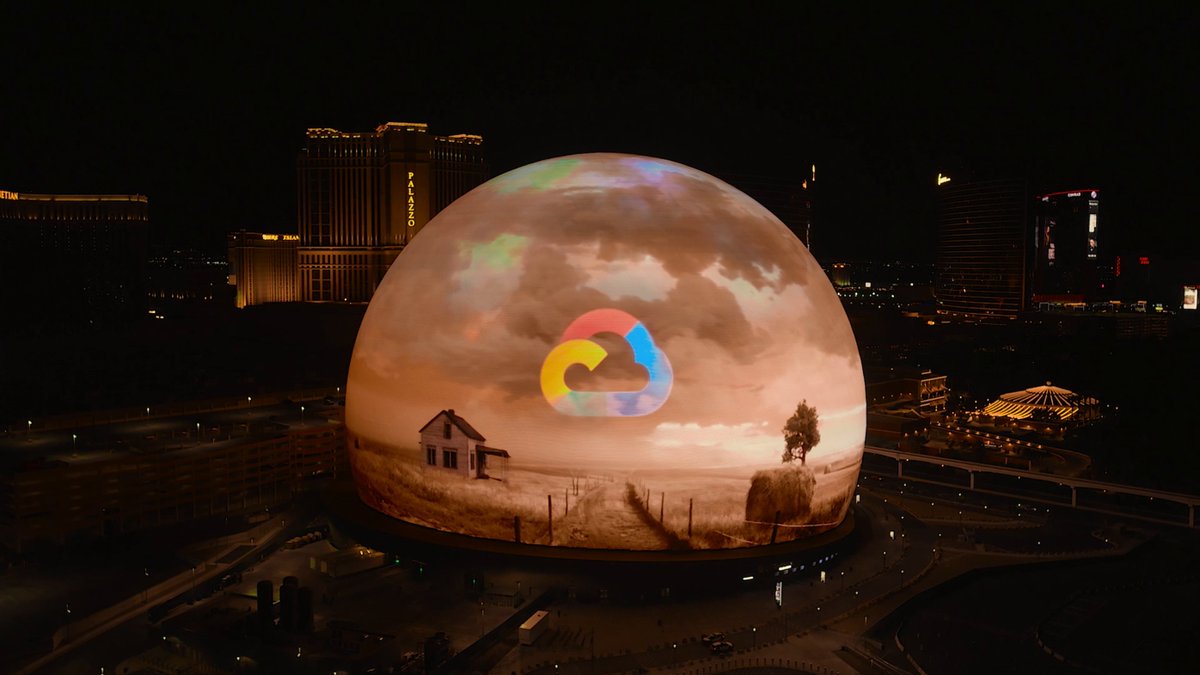
"The Wizard of Oz” gets a high-tech transformation at Sphere Las Vegas, using cutting-edge AI to enhance the original film in stunning 16K detail. Grainy close-ups become crystal-clear and characters like Uncle Henry are digitally extended to fit the massive screen. It's the classic movie you know—reimagined with state-of-the-art...

3,092,745 views • 1 year ago •via X (Twitter)

0 Comments

No comments available

Comments from the original post will appear here

Related Videos

James Dolan licensed “The Wizard of Oz” and spent $100m put it on the Sphere’s 160,000 sq foot LED screen. Since its release in August, the adapted 1939 classic film has made ~$300m (and sells $2m tickets a day). Sphere stock up 2x (to $4B) over the span and the playbook for global expansion is clear. Right now, ~5k people are paying $150-200 each per show and there are 2-3x shows a day. At the Sphere, films are much more lucrative than live acts because the venue can play them more often and the margins (70%) are higher than paying out pop stars (musicians get to keep most of the ticket sales while Sphere gets the F&B). Here is a breakdown of the Sphere’s $782m revenue in 2025: ▫️Films: 48% of total revenue ▫️Live Events: 24% ▫️F&B and Merchandise: 14% ▫️Sponsorship and Exosphere Ads: 14% Editing of “The Wizard of Oz” included using AI to update scenes and cutting off ~30 minutes of run time (the viewing length is 70 minutes). The $2.3B venue also has 4D effects with the film (wind during tornado, falling apples, lots of fog, flames). Dolan wants “Wizard of Oz” to hit $1B and its own pace by early 2027. For comparison, Darren Aronofsky’s “Postcard From Earth” has sold 4m+ tickets at ~$100 a pop (so, over $400m) since launching in October 2023. Find other IP. License building plans for mini-Spheres (5k seats, with planned locations in Maryland and Abu Dhabi). I’m very intrigued at what other old films could get The Sphere treatment and nominate “The Big Lebowski”.

Trung Phan

751,636 views • 5 months ago

MIND-BLOWING FACT: Old movies actually have HIGHER resolution than your iPhone photos. Wait... what? How do we get flawless 4K versions of movies like The Wizard of Oz (1939) or Back to the Future (1985) when 4K digital cameras didn't even exist until the 2000s? The secret lies in the physics of old school movie film. Unlike digital cameras, which capture images using a fixed grid of square pixels, classic movies were shot on physical plastic film coated in billions of microscopic, light-sensitive silver halide crystals. Because film is made of an organic, continuous layer of molecules rather than restricted grid boxes, it doesn't have a "fixed resolution" or pixel count. It has a natural, beautiful analog detail that can be zoomed into infinitely. To create a 4K remaster, technicians take the original physical film negatives and run them through high-tech laser scanning machines. The better our laser technology gets, the more hidden details we can pull right off that 90-year-old plastic! Here is the crazy part: Our smartphones are locked to whatever sensor they came with (like a fixed 12-megapixel grid). Fifty years from now, no one can "remaster" your current iPhone photos to look sharper because the pixels are set in stone. But old physical film? It holds an almost unlimited amount of data just waiting to be scanned at even higher resolutions in the future. So next time you're watching a crystal-clear 4K retro masterpiece, you're not looking at digital enhancement—you’re looking at technology that was fundamentally invented back in the 1870s! Do you prefer the pristine, ultra-sharp look of modern digital movies, or do you love the authentic texture and grain of classic physical film?

PeachProof

102,839 views • 2 months ago