Загрузка видео...

Не удалось загрузить видео

На главную

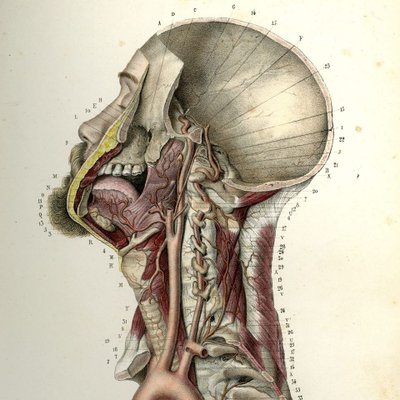
The posterior cerebral artery (PCA) has five segments: P1, pre-communicating segment, originates at the end of the basilar artery & terminates at the posterior communicating artery (green) P2, post-communicating segment, begins after the posterior communicating artery (PCOM) and loops around the midbrain & terminates at the origin of the...

16,172 просмотров • 1 год назад •via X (Twitter)

Комментарии: 0

Нет доступных комментариев

Здесь появятся комментарии из оригинального поста

Похожие видео

At the age of thirteen, in the late 1940s, Thomas Fogarty, newly bereft of his father, found himself employed at Cincinnati’s Good Samaritan Hospital, sorting supplies and learning the rhythms of the place from the ground up. With time and a certain doggedness, he moved from the stockroom to the operating room, working his way up to the role of scrub technician, where he stood at the surgeon’s elbow, handing over instruments. Back then, the approach to removing blood clots from an artery was crude and perilous. It was a bit like a ritual sacrifice—that involved slicing the artery wide open in a procedure that could easily stretch over nine hours and leave the patient with incisions from the abdomen down both legs. The outcome, more often than not, was dismal. Many didn’t survive, many others ended up with amputations. It was during those hours at the operating table, observing the struggle of clot removal, that Fogarty began to wonder if there might be a way to make the process a bit less medieval. He retreated to his garage with little more than a length of tubing, a surgical glove, and an idea. There, he crafted a tool so simple that it verged on the audacious. He started with a urethral catheter, flexible yet sturdy enough to navigate through a clot. To the end of the catheter, he attached a tiny balloon made from the finger of a latex glove. Once past the clot, the balloon could be inflated with saline from the other end of the tube, expanding it to the width of the artery and then pulled back—bringing the clot along with it. The device was so simple, so staggeringly clever, that when he demonstrated its use, the surgeons were equal parts gobsmacked and irritated. With it, clot removal (embolectomy) was no longer a barbaric ritual but a neat, almost gentlemanly procedure. Like removing a cork from a bottle. Thomas Fogarty went on to become a cardiovascular surgeon. That little embolectomy catheter he dreamt up became the very first minimally invasive surgical device. Here’s a video showing how it’s done: through a small incision in the groin, under local anesthesia.

Ambarish Satwik

49,730 просмотров • 1 год назад

Having some mild cognitive impairment trying to remember dementia patterns on imaging? Is looking at dementia PET scans one of your PET peeves? Have short-term memory loss when you read about dementia imaging? Here’s a way to remember dementia patterns so you will never forget! Major dementia imaging patterns: Alzheimer’s disease (AD) —AD has a Nike swoosh pattern—with decreased metabolism in parietal & temporal regions —Remember when you see the Nike swoosh patter, just call it! Dementia w/Lewy Bodies (DLB) —Temporoparietal hypometabolism like AD but also involves occipital cortex, specific for DLB. —DLB also extends farther to the ant. temporal cortex. —Remember, regions of hypometabolism look more like an L. And Lewy starts w/an L Frontotemporal Dementia (FTD) —Frontal & temporal hypometabolism as expected, but extends along the anterior cingulate gyrus —Anterior cingulate involvement makes the hypometabolism looks like a lowercase letter f—and frontotemporal starts with f Posterior cortical atrophy —Can be from AD or DLB & has hypometabolism in the occipital & post. temporal lobe, sparing the anterior temporal lobe —Sparing the anterior temporal lobe makes the involvement look like a C instead of an L like DLB. —So remember pCa Vascular dementia —Vascular dementia has a variable distribution, depending on the regions infarcted (V is both for Vascular & Variable) —Wedged shaped regions of hypometabolism corresponding to cortical infarcts—looks like an inverted V This list isn’t all inclusive & there can be variations or even mixed dementias But hopefully this gives you a starting point you won’t soon forget!

Lea Alhilali, MD

25,026 просмотров • 1 год назад

Madain Saleh, also known as Al-Hijr, is a pre-Islamic archaeological site located in the northwest of Saudi Arabia. It is one of the most important archaeological sites in the Middle East and was designated as a UNESCO World Heritage site in 2008. Madain Saleh is a place of great historical and cultural significance, and it is a must-visit destination for anyone interested in the history and culture of the Arabian Peninsula. Madain Saleh was the second city of the Nabataean kingdom, which was established in 2nd Century BC. The Nabataeans were an Arab tribe who were known for their expertise in carving tombs and buildings out of rock. They were also skilled in agriculture, trade, and commerce. The Nabataean kingdom was centered in Petra, which is located in modern-day Jordan. Madain Saleh served as a strategic outpost for Nabataeans, and it was an important stop on the trade routes that connected the Arabian Peninsula with the Mediterranean world. Archaeological site of Madain Saleh covers an area of 13 square kilometers. It is located in a remote desert region, and it is surrounded by rocky mountains and valleys. The site contains around 130 tombs, which were carved out of the sandstone cliffs. The tombs are adorned with intricate carvings and inscriptions, which provide insights into the culture and religion of the Nabataeans. The most famous tomb at Madain Saleh is the Qasr Al-Farid, which means "the lonely castle." This tomb is located on a hilltop and is surrounded by a large courtyard. It is the largest tomb at the site, and it is considered to be one of the finest examples of Nabataean architecture. The tomb was never completed, and it is believed that it was abandoned after the death of the Nabataean king who commissioned it. Another important tomb at Madain Saleh is the Tomb of Lihyan son of Kuza. This tomb is located in the southern part of the site and is carved into a rock cliff. It features a large entrance hall, a central chamber, and a series of smaller rooms. The tomb is decorated with intricate carvings and inscriptions, which provide insights into the religious beliefs of Nabataeans. Madain Saleh is not just a site of tombs; it also contains a number of other important structures. These include the Al-Khuraymat and Al-Sabika temples, which were used for religious ceremonies and rituals. The site also contains a number of houses, wells, and cisterns, which provide insights into the daily lives of the Nabataeans. Madain Saleh was abandoned in the 3rd Century AD, after decline of the Nabataean kingdom. The site was rediscovered in the 19th Century by the Swiss traveler Johann Ludwig Burckhardt. Since then, it has been studied by archaeologists from all over the world. The site is now managed by the Saudi Commission for Tourism and National Heritage, which has carried out extensive restoration and preservation work. Madain Saleh is not just a site of historical and cultural significance; it is also a place of great natural beauty. The site is surrounded by rugged mountains and valleys, and it is home to a diverse range of flora and fauna. Visitors to the site can enjoy hiking and camping, as well as exploring the ancient ruins. Madain Saleh is a site of great historical and cultural significance, and it is a must-visit destination for anyone interested in the history and culture of the Arabian Peninsula. Ancient ruins at Madain Saleh provide a glimpse into the engineering and architectural skills of the Nabataeans, as well as their religious beliefs and cultural practices. However, as the site becomes an increasingly popular tourist destination, there are concerns about its preservation and the impact of tourism on the local environment. It is important that the Saudi government and local communities work together to ensure that the site is protected and that tourism is managed in a sustainable way. 🎥© Paris Verra #archaeohistories

Archaeo - Histories

196,549 просмотров • 2 лет назад

Your brain has a circuit that doesn't know you live in a city. Its only job is to monitor whether birds are still singing. Right now, in this room, it is on. The circuit predates primates. Mammals have been using ambient soundscape continuity as a predator-detection system for roughly 200 million years. Birds stop singing when something larger moves through their territory. For most of mammalian history, a forest full of song meant no large predator was nearby, and the cessation of sound was the warning. Your nervous system never updated this software. The Max Planck Institute tested the inverse in 2022 with 295 participants. Six minutes of birdsong dropped anxiety with a medium effect size. Six minutes of traffic noise raised depression with the same. The effect worked on subjects who lived in dense urban environments and had no regular contact with nature. The brain still ran the check. Birdsong sits in the 1,000 to 8,000 Hz range. Your brainstem reads continuous patterns in that band as a signal that nothing dangerous is currently moving through the environment. EEG data shows birdsong at 45 to 50 decibels boosts alpha wave activity by 14.1% relative to silence. Alpha is the brainwave signature of relaxed alertness. Push the same birdsong above 60 decibels and the response flips. Stress markers rise 29%. The circuit only trusts the signal at the volume of quiet conversation, which is exactly the volume birds sing at from a typical distance. Three things happen simultaneously when the brain registers ambient safety. The amygdala downregulates. The parasympathetic nervous system takes over from the sympathetic. Heart rate variability rises, cortisol drops. The posterior cingulate cortex, which sits at the center of the rumination circuit, quiets down. King's College London tracked this through a smartphone study with over 1,200 participants and found the mood lift lasted hours after the sound stopped. People diagnosed with depression got the same response as healthy controls. Most of what gets labeled mental fatigue is hypervigilance running in the background. Birdsong tells the circuit it can stand down, and the brain reallocates the freed compute everywhere else. A quiet park feels different from a quiet office because the parks have sentinels.

Aakash Gupta

3,332,043 просмотров • 4 месяцев назад

Listen closely to this segment of BTS's performance at the World Cup final show. When Kim Taehyung enters, his voice takes on a much greater spatial presence. It is as if his voice “takes over” the stadium. Although the vocalists share the melodic line, Taehyung's entry immediately alters the spatial perception of the performance. This week, alongside other vocal professionals, I was exploring the concept of “DOMINANT TIMBRE.” While not a formal technical term in vocal acoustics, it is frequently used to describe voices whose timbral identity naturally stands out within an ensemble. In terms of social perception — specifically in behavioral and communication studies — the term can also describe vocal tones that convey authority, power, or dominance. This perception can be explained by a combination of factors related to vocal projection, the harmonic spectrum, resonance, and acoustic presence. The result is a voice that seems to fill the stadium. V's voice possesses: • Greater vocal projection: the voice seems to “travel” effortlessly across the stadium. • More energy in the mid-high harmonics (singer's formant): this region of the spectrum allows a voice to stand out, even in a massive venue. • Highly efficient resonance: the vocal tract is configured so that the sound gains body and depth. • Greater “acoustic presence”: the voice seems to occupy more three-dimensional space, whereas other voices sound more localized. This explains why two people can sing the exact same pitch, at the same intensity (measured in dB), and the same melody, yet one of them seems “three times larger.” The brain interprets this voice as having more presence because it contains more acoustic information within the frequency ranges to which we are most sensitive. TAEHYUNG AT FIFA HALFTIME SHOW #Kimtaehyung #Taehyung #V #BTSV

Music Map ⓥ

19,977 просмотров • 1 месяц назад

I will never forget the first time I walked into St Peter's Basilica... None of it is painted. Everything overhead that appears to be a fresco is a mosaic: millions of small glass tiles, cut and set into place by hand. Michelangelo pierced the drum with sixteen windows, and beneath them runs a band of text, black on gold: TU ES PETRUS ET SUPER HANC PETRAM AEDIFICABO ECCLESIAM MEAM. "You are Peter, and upon this rock I will build my church." From the floor it reads like an ordinary inscription but each of those letters is two metres tall... Above the windows the dome divides into sixteen segments, and within them six tiers of figures rise in rings: the popes buried in the basilica, then Christ, the Virgin Mary, St John the Baptist and the Apostles, then angels carrying the instruments of the Passion, then the faces of cherubim and seraphim. Above all of them, a blue sky scattered with gold stars, and at the summit, in the lantern, God the Father. The man who designed it, Giuseppe Cesari, was a painter. Between 1603 and 1612 he produced sixty-five life-size cartoons setting out the whole scheme, and every one of them was then translated into glass by mosaicists. The reason is actually pretty unglamorous. The basilica was damp, and candle smoke and incense from centuries of liturgy were eating the pictures alive. So the Vatican began converting the building into glass, dome by dome, and from the end of the 1600s the painted altarpieces too, one at a time. By the basilica's own reckoning, around ten thousand square metres of mosaic. The workshop that did all of this is still open: twelve artists work in the Vatican Mosaic Studio today, cutting tesserae by hand in nearly 28,000 shades and fixing them with a linseed-oil stucco whose recipe has been in use for four centuries. Earlier this year its director, Paolo Di Buono, described the work: "We have the idea that we are working for something that is almost eternal."

James Lucas

72,710 просмотров • 1 месяц назад