Загрузка видео...

Не удалось загрузить видео

На главную

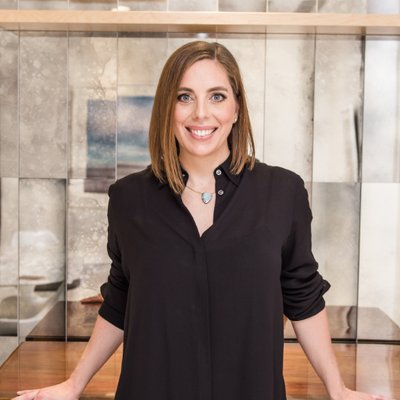
There is no algorithm that can replace the instincts of an experienced physician when faced with a patient in need. When the doctor who saw this patient in the Emergency Room examined her, spoke with her, and decided to admit her, I know that he did so because he...

311,289 просмотров • 1 год назад •via X (Twitter)

Комментарии: 8

Фото профиля Apu Akkad
Apu Akkad1 год назад

Totally agree. Judgement by docs at the bedside far outweighs what is seen on paper. Hence why docs need to go to bedside to treat patients..

Фото профиля CollaboratingDocs
CollaboratingDocs1 год назад

Nurse Practitioners! Find a collaborating physician who truly supports your success. Simple, fast, and compliant. Register now:

Фото профиля Ziya Baghmanli
Ziya Baghmanli1 год назад

I never understood the difference between outpatient observation and inpatient care for one night. It is the same hospital bed, room, and service. Why don’t they just charge for the one-night hospital stay? Who cares what the name is?

Фото профиля faircomment
faircomment1 год назад

👇

Фото профиля MedicalQuack
MedicalQuack1 год назад

Here's an idea of all the various algorithms you have to fight with Optum and UNH - mind boggling!

Фото профиля 💥 charmed&dangerous 💥
💥 charmed&dangerous 💥1 год назад

OMG!!! 🔥🔥🔥 my insurance is trying to assign a case manager to me because of recent surgeries for quality of life — being able to walk. my recent surgery (january. & nov ‘23) is listed at $48K +. they’re angry i’m getting something for my $1661+ monthly premiums. ghouls.

Фото профиля 💥 charmed&dangerous 💥
💥 charmed&dangerous 💥1 год назад

after telling my doctor about your initial problem he just shook his head. i said, “when are y’all gonna stand up to it?” he said, “we need to unionize.” & then told me, thanks for making his day.

Фото профиля Johnny
Johnny1 год назад

What is the point of insurance. Total scam

Похожие видео

American Surgeon shows the actual letter from UnitedHealthcare DENYING a patient in emergency condition from receiving care “This is a woman who was in the emergency room with pulmonary embolisms” “I think we all knew this would happen. I had another patient come in and share with me that UnitedHealthcare denied her inpatient's day. So this is a patient who had shortness of breath and some chest pain, and she just knew that something wasn't right in her body. She had a family history of blood clots and she'd had a deep flap surgery a couple of weeks ago. She went to the hospital and they saw her and they found that she had a life threatening condition known as pulmonary embolisms. So she was admitted to the hospital and taken care of really well by the doctors there. And they ordered all the right things. After a couple of days, she was discharged. She got a letter from UnitedHealthcare explaining that they didn't agree with the level of her care and that they would not cover it. So I'm gonna share some of the language of that letter with you, and I want you to know that my patient that we talked about previously who had her surgery denied had almost exactly the same letter shared. So there's some troubling things in this letter. I think this term is really interesting. United is saying they reviewed the request for inpatient admission. So let's all just pause and consider that. This is a woman who was in the emergency room with pulmonary embolisms, and the doctor wasn't really requesting anything. They were saying this patient needs to be in the hospital. But an insurance company sees this as a request, and that's part of this prior auth environment that we're living in. So I think it's important as patients and as physicians to just acknowledge that this is our reality now. Someone can think that there's a good medical decision for you and can write orders and wanna do the right thing for you, but your insurance company is seeing that as a request and deciding whether or not they wanna do it. One of the criteria that this insurance company used to decide whether or not to accept or deny this request was whether it's medically necessary. And it's so interesting that we're letting insurance companies and the doctors who work for insurance companies determine what's medically necessary and not just the doctor in front of the patient in the emergency room. So this is a really bold statement from UnitedHealthcare for my patient. They say you did not have to be admitted as an inpatient to the hospital for this care. I think we all need to just reflect on that. An insurance company is telling a patient and her doctor that they disagree with the plan of care to keep that patient safe. I know that this is boiling down to whether it's an inpatient admission or an observation admission, and that's really about money. But what I wanna point out to you is they're making medical decisions. This insurance company is actually weighing in and disagreeing with a doctor who made a medical decision to admit this patient for her safety. So this specific sentence, when a doctor or facility treats a patient above the recommended level of care, we cannot cover it. What the heck? That's what we do. We go above and beyond as physicians. It's clear that insurance companies don't, and they're actually saying it here.”

Wall Street Apes

115,691 просмотров • 1 год назад

INSANE 🚨 This surgeon has a patient who needs a “deep flap” surgery. Insurance denied it To appeal she had to speak to her patients insurance. “I actually asked, do you know what a deep flap is? THE DOCTOR SAID NO.” The insurance companies deciding if Americans get their procedures DONT EVEN KNOW what the procedures are. How is this okay?! THIS is the state of American healthcare… “You may remember I had a patient who needs a deep flap, and the insurance company denied an inpatient stay for her. So I had to schedule a peer to peer call and schedule time out of my day to ask for a conversation directly with someone who is my peer to discuss deep flap surgery and why that patient needed to be overnight. That call was scheduled for 11AM, and eleven came around 11: 30, 11: 45 and no call still. And then we emailed the insurance company because, of course, they don't give me the call number. They only let me receive the call. So finally at 12: 15, I received the call that was initially scheduled for 11. And the doctor who called me was not a surgeon. And I actually asked the doctor, do you know what a deep flap is? And the doctor said no. So that's where we are. My patient has insurance. She's seeing someone who's fellowship trained in microsurgery, me, to do her breast reconstruction, and I'm having to teach another doctor what a deep flap is in order to justify her overnight stay to navigate her insurance. This is completely ridiculous.”

Wall Street Apes

1,292,432 просмотров • 1 год назад

This is Mel Thacker. She was an American surgeon, she quit After going through medical school and being a successful surgeon. She left the profession because of what US Heath Insurance Companies have done to healthcare “So I recently left my career as a surgeon, and I wanted to share that the primary reason I did that is because of moral injury — I felt powerless. I wanted to prescribe a very cheap medication to my patients, like Budesonide, and their insurance company would deny it, and the pharmacy would tell them it would cost them $300. And I couldn't tell which patients had the insurance that would do that and which ones didn't. That's just one tiny little example. But multiply that by thousands and thousands of encounters of interactions, of trying to either prescribe a medication or prescribe a treatment plan or do a surgery, and to just be met with roadblocks and layers of bureaucracy that are, quote, unquote, meant to keep healthcare costs down or a patient safe. But really, don't they just drive a wedge, multiple, multiple wedges between the physician and the patient And when we keep layering in these roadblocks, preventing the doctor and the patient from having an actual relationship, that's when we make mistakes. And so how do we fix this? We got to get business out of medicine. Healthcare needs to go back to relationship building, to trust. Trust between the physician and the patient. They need to be put on the pedestal. We need to start there. Not with the shareholders, not with all of the bureaucratic tasks that are meant to keep patients safe, but just increase costs.”

Wall Street Apes

2,292,657 просмотров • 1 год назад

A 14-year-old girl walked into a private clinic in Quebec, said she was trans, and was given a testosterone prescription in less than 9 minutes! The doctor also started asking her about surgeries, and if she wanted to preserve her fertility after only 5 minutes! Yes, this was her first appointment. This documentary was produced by Radio-Canada, the French arm of Canada’s government-funded broadcaster. Narrator: “This is the first time the doctor has seen the patient. She quickly goes to the heart of the matter.” Doctor: “You can tell me, a little deep down, since when did you know you were not in the right body? Is it in childhood? Is it more in puberty?” Sacha, the 14-year-old, describes how she vomited at age 12, and her mother took her to see a psychologist. Sacha: “That’s when they said I had an eating disorder. I told myself that it couldn’t be eating disorders. It didn’t make sense in my head.” “But at 13, I came across a video of a trans person who talked about having eating disorders, but in fact it was because she was in the wrong body. “At that moment, I really recognized myself in that person.” Narrator: “Five minutes in to the consultation, the doctor addresses the question of surgeries.” Doctor: “Are you considering surgeries in the future?” Sacha: “Surgeries? Yeah.” Doctor: “Gender Mastectomy. Removing the chest. Sacha: “Yeah.” Doctor: “There are other surgeries that exist. We have a uterus at the bottom, with ovaries. So basically, it’s possible to remove. It’s something that can cause dysphoria.” Narrator: “Testosterone can make a woman infertile. Fertility is the subject of a question.” Doctor: “Is fertility, I understand that it is perhaps far away for you at 14, but is fertility something you want to maintain before you start?” Sacha: “No, I always knew I don’t want children.” Narrator: “And finally, less than 9 minutes into the consultation:” Doctor: “Basically, the logic right now, I will prescribe hormones today, because the logic is that, basically there is nothing in your profile that would stop me from giving you hormones. “I’ll start at one dose. It’s not a mini-dose. It’s like an intermediate dose between adults and non-binary, let’s say.” Sacha: “Okay.” Doctor: “No problem. The best is yet to come.” When Radio-Canada confronted the doctor after the appointment, she said “A medical consultation cannot be evaluated in terms of duration, but rather in terms of quality of the exchange of information.” Radio-Canada, this doctor needs to be investigated by the College des Medicine du Québec. How can I find out her name?

Billboard Chris 🌎

2,362,139 просмотров • 2 лет назад

This woman is a Board Certified Emergency Medicine Physician in America She says she’s seeing more and more doctors leave practicing medicine because what US Health Insurance companies are doing to healthcare She explains why, this is important information: “I believe what we are seeing with healthcare professionals is not just burnout, it's something far more insidious and painful. This is moral injury. — Moral injury. The pain of knowing what the right thing is for the patient, but being unable to do that because of systemic barriers. And over time, this wears you down. I have seen so many people leave the profession because it has eroded their sense of purpose, their love for the job. And we take a Hippocratic oath to do no harm. But in a system that doesn't place human health at the center, that becomes harder and harder to uphold. And that disconnect from what we are trained to do, from what we can actually do, creates a very painful wound. And when the healers themselves are wounded, when their hands are tied, when their clinical judgment is overruled, they don't just feel that defeat themselves, they that trickles down to the patient. — So when we see our providers juggling insurance company protocols, productivity metrics, hospital bureaucracy, the relentless pull of the electronic medical record, all of these things take the doctor away, the patient. If we really want to understand why the United States spends more on health care than any other nation, while delivering some of the worst outcomes, we need to start being honest. The system just isn't inefficient. It is deeply misaligned with care and having it be patient first” US Health Insurance companies are absolutely destroying American Healthcare and we all must keep sharing these important stories because something has to change

Wall Street Apes

223,295 просмотров • 1 год назад

My last case of 2025 and my first case of 2026 tell you everything you need to know about our healthcare system. Last week, I was scheduled to do a DIEP flap for a patient who had been waiting a long time. We had asked her insurance company if we could do the surgery in network at @Redbudsurgerycenter, where we have everything needed to safely and efficiently take care of her. They hadn’t approved that, so the surgery had to be scheduled at an older hospital in town. When we arrived, the hospital was having HVAC issues. The humidity levels were not safe for surgery. We waited for hours, and ultimately the case had to be canceled. It wasn’t just her surgery. Multiple surgeries were canceled that day because operating under those conditions would have been a fire risk. We weren’t able to reschedule her surgery before the end of the year, which means her deductible resets. I could have safely done her surgery at Redbud that day but insurance rules wouldn’t allow it. This is what closed networks and rigid systems look like in real life. Now here’s the contrast. The first case I’m doing in 2026 is also a woman who needs breast reconstruction with DIEP flaps. This time, instead of traditional insurance, her employer uses a third party administrator. They came to me directly and asked what I would charge if they paid fairly and transparently. On Monday, we’re doing her bilateral DIEP flap at @Redbudsurgerycenter. I can control the environment, the costs, and the care. It’s better for the patient and significantly less expensive for the employer. This is called Direct Specialty Care. It’s not direct primary care. It’s specialty care delivered without unnecessary barriers. It’s happening. We’re starting the year this way. And I’m going to keep pushing the boundaries and keeping you informed.

Elisabeth Potter MD

136,365 просмотров • 6 месяцев назад