正在加载视频...

视频加载失败

These clips are deeply unsettling. His behavior doesn’t come across as playful or charismatic it feels invasive, entitled, and frankly unhinged. What stands out even more is the visible discomfort of his female co-stars. You can see it in their body language, the forced laughter, the awkward deflections, the...

36,306 次观看 • 5 个月前 •via X (Twitter)

0 条评论

暂无评论

原始帖子的评论将显示在这里

相关视频

The truth is that many men are naturally timid and fearful. And some are quietly relieved that approaching women has become stigmatized, because it furnishes them with a morally righteous excuse for what is, at bottom, their own cowardice. In many major U.S. metropolitan areas—New York, Boston, Los Angeles, Miami—women under 30 are now rivaling or exceeding men in earnings. Among this cohort, young women are often doing at least as well as their male peers, if not better. That shift matters, because across cultures women tend to prefer partners who are economically on par with them, and ideally somewhat ahead. When the economic gradient flattens—or reverses—it complicates traditional mating dynamics. Two broader cultural forces intensify this pattern. The first is the rise of dating apps. Many young men misunderstand what women are attracted to because the apps distort the signal. What can you optimize for on an app? Primarily photos, plus a few one-liners, jokes, and brief biographical details. By design, the medium privileges visual presentation and compresses personality into a handful of curated signals. Traits that matter in real-world interaction—confidence, humor in conversation, social fluency, status cues conveyed through behavior—are harder to display. The result is a romantic marketplace that is more stratified and appearance-driven than offline life. The second force is the cultural aftershock of the Me Too movement. Many average men worry that a cold approach could be misread as harassment, intimidation, or coercion. That fear is not entirely imaginary, but it is often overstated in everyday social contexts. In truth, male hesitation long predates Me Too. Men have always been more likely to fear rejection and social embarrassment when initiating romantic contact. What has changed is that some now frame this anxiety in moral language. Me Too, in many cases, functions less as the root cause of male reticence than as a post-hoc rationalization—an external justification for an internal inhibition that was already present.

Rob Henderson

48,021 次观看 • 7 个月前

I observed many videos where Keng touches Namping’s belly and lately we all see how it is happening more and more often. I want to tell you about psychological perspective of these touches. In this case the stomach stops being just a “stomach” and becomes a reason for contact. It is a safe but intimate entry point into physical closeness. Intense attraction often show up as a real constant desire to touch. To check, to feel, to tease. It is almost an instinctive impulse: I like your body, I want to feel it. When he keeps returning to the same area again and again, it usually means that this specific detail genuinely draws him in. The stomach represents softness and vulnerability. When a man reaches for it, especially in a playful way, it can be a mixture of desire and tenderness. A strange but powerful combination of wanting someone and at the same time being charmed by them. When a man actively touches the stomach of someone he is attracted to, it is rarely accidental. Especially if he does it playfully to tease. From a psychological view, there are several layers to this behavior, let me tell you. The stomach is an intimate area. It is not as obviously sexualized as other parts of the body, but it is physically central and emotionally exposed. Touching it suggests comfort, closeness, and permission. A man usually does not repeatedly touch that area if he feels nothing. Many men are deeply attracted to softness and not to a perfectly flat or sculpted image. It has to be real, warm, living body. A slight roundness under the palm can create a sense of warmth and authenticity. It feels unguarded and natural, and that can be intensely attractive. There is also an element of playful dominance. When he touches just to tease, he is testing reactions. Embarrassment, laughter, mock protest. This creates tension in a light, flirtatious way. That kind of behavior often appears when there is already strong chemistry between two people. The stomach is also connected to trust. It is a part of the body people instinctively protect. If someone allows repeated touch there without tension, it signals that boundaries are open specifically for that person. Another important detail is that Keng openly loves Namping’s softer features, including his chubby cheeks. He has even said that “phi doesn’t want Nu to lose weight.” That line reinforces the idea that the attraction is not despite the softness but because of it. He is deeply cherishing it. When a man highlights and repeatedly touches the very traits that could be seen as insecurities, it often means those traits are genuinely desirable to him. Namping once said “Keng is possessive over my cheeks”. Oh I am sure that this possessiveness includes and his belly too. When this behavior is consistent over time, it also suggests a pattern of desire. Men often show stable attraction patterns toward specific physical traits. If he repeatedly gravitates toward softness, toward the stomach, toward the cheeks, it indicates that this is part of what genuinely excites and emotionally engages him. It is not random teasing. It reflects what his body and mind are naturally drawn to. If the touches look relaxed and natural, and Namping does not seem tense, then this behavior strongly suggests closeness, attraction, and a recurring desire pattern. And I made a video for you to see the pattern that I described🤍 #KengNamping

🍃Irina🍃

23,642 次观看 • 7 个月前

Why are so many young people single these days? Pooja Arora (Pooja Arora): So my last question: I wanted to talk about why people are single nowadays. I would have asked about human nature, but that’s for another day. I sent you an article—how do you think common knowledge fits into that area? Why do you think so many youngsters are single? Me: Yes, it’s a good question. I’m not sure that common knowledge is an important part of the answer, but some of it is that women no longer depend on the economic contributions of men for their livelihood, as was true, say, in my mother’s era, when women were not professionally trained. To pay the rent, they had to be married. Now, not only are women better educated, but the economy has shifted to favor the kinds of skills that women, as opposed to men, have. And just as women have been rising, men have been sinking because of the decline in blue-collar work. There have also been cultural trends that favor women’s temperaments. Men have been distracted by internet gaming, gambling, and pornography and are less desirable as marriage partners. Women with more economic power are more likely to raise their standards for what they want in a man. In my parents’ generation, it was not uncommon for a woman to marry a man with much less education and, sometimes, less intelligence. This was not unusual among my parents’ friends. The men often had a high school degree and then went immediately into a small business—sometimes a family business, sometimes one he started himself. The criterion was: does he make a living? No one cared about education. That has changed, with the result that there are fewer men who satisfy the criteria women now have. This was mentioned in the article you shared with me. Also, with more sexual freedom, people don’t have to get married simply to have sex, which was again true in my parents’ generation. There’s a process that has been in place since the baby boomers and has accelerated among millennials and Generation Z. For other reasons, I think a generation of men may also be incapable of socially skilled interaction, partly because they’ve grown up with screens instead of face-to-face contact. There is some fear that a sexual encounter could result in an accusation of rape or sexual harassment. There is so much pornography that, for an increasing number of men, it serves as an outlet for what in the past would have required actual human contact. There are many factors. The article from The Economist lists them, I think, quite skillfully. It’s not clear how to reverse the trend. Increasing the economic prospects of men and creating an educational system that is less feminized and more encouraging of male achievement might help. Another could be changing norms—and here common knowledge comes in. Among women, is it a sign of low status to be with a man who has less education than you? Men, from time immemorial, have been happy to marry women with less education than themselves. Women don't. That immediately reduces the marriage pool. Maybe that’s a norm that could change. Go back to the norm in my parents’ generation? Pooja Arora: No, let’s not do that. Me: Okay, let's not do that. Pooja Arora: We’re happy to marry men who are not as educated as us. It’s fine. They just have to be nice and kind at this point in time. Me: Well, yes—exactly. Nice and kind.

Steven Pinker

89,160 次观看 • 7 个月前

The Church is not free to change what Christ Himself established. Pope Paul VI stated it with clarity: “The Church holds that it is not admissible to ordain women to the priesthood, for very fundamental reasons. These reasons include: the example recorded in the Sacred Scriptures of Christ choosing his Apostles only from among men; the constant practice of the Church, which has imitated Christ in choosing only men; and her living teaching authority which has consistently held that the exclusion of women from the priesthood is in accordance with God’s plan for his Church.” This is not a matter of cultural preference or temporary discipline. It is a question of the sacramental configuration of the priesthood to Christ the Bridegroom. The priest acts in persona Christi Capitis — in the person of Christ the Head. Christ was a man. He chose only men as Apostles. The Church has never claimed the authority to alter that choice. This does not mean women are of lesser dignity. The greatest human person after Christ is a woman: the Blessed Virgin Mary. She is the highest creature, the Mother of God, the Queen of Heaven, and the perfect model of the Church. No priest, bishop, or pope surpasses her in holiness or importance. The Church has always honored the unique and irreplaceable dignity of women — as mothers, as consecrated virgins, as teachers, as mystics, as the heart of the domestic church, and as the ones who so often carry the faith forward when men fail. Male and female are not interchangeable roles in the order of grace. They are complementary. The priesthood is a fatherly office. The Church herself is maternal. To confuse these is not progress; it is a loss of the very nuptial mystery that runs through all of Scripture — Christ the Bridegroom and the Church His Bride. What the Anglican Communion has done in ordaining women as bishops (and now installing a woman as Archbishop of Canterbury) is a departure from the apostolic tradition that the Catholic Church is bound to safeguard. Pope Francis’s simple “No” in the interview is not harshness. It is fidelity. The Church does not invent her structure. She receives it. And in receiving it, she protects both the fatherhood of the priesthood and the irreplaceable feminine genius that belongs uniquely to women.

Holy Sea

26,171 次观看 • 1 个月前

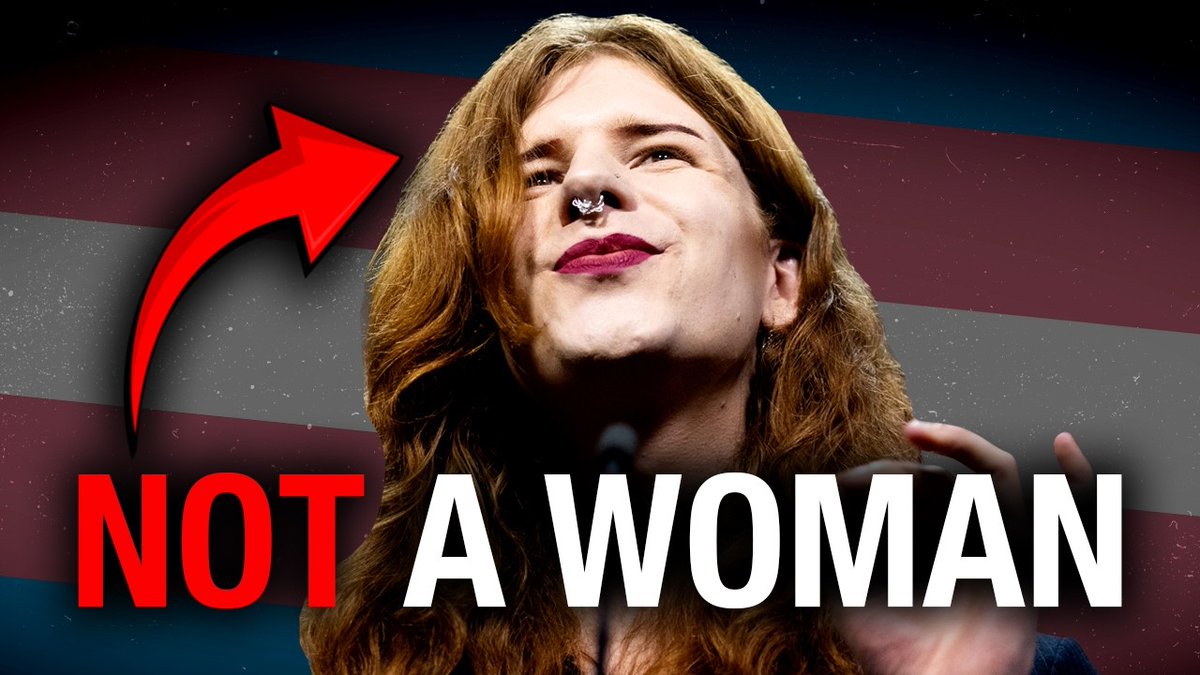
FAKE FEMINISTS: Women's org celebrates man for International Women's Day You know, Canada used to produce real feminists. Women who actually fought for women. Women who risked their reputations, their safety, and sometimes even their freedom to win basic rights that seem obvious today. One of the most prominent examples of that fight happened right here in Canada with a group known as the “Famous Five.” In the 1920s, Emily Murphy, Nellie McClung, Henrietta Edwards, Louise McKinney and Irene Parlby took on the Canadian government over a simple but outrageous question: Were women legally considered “persons”? Yes. That was the actual legal question. At the time, women could not sit in the Senate because the law only allowed “qualified persons.” And according to the courts, that word did not include women. So, the Famous Five challenged the system. They fought their case all the way to the Judicial Committee of the Privy Council in Britain and in 1929 they won the historic Persons Case, which affirmed that women were indeed persons under the law. It was a foundational victory for women’s political rights in Canada. Their legacy is supposed to be about defending women as a distinct class with their own rights and interests. Which makes what just happened in Ottawa so astonishing. Because the Famous Five Foundation — the organization that claims to carry on the legacy of those women — has decided to honour a biological man. Not just any man. A man who has openly advocated for silencing women who defend women-only spaces. His name is Fae Johnstone, a prominent activist in Canada’s trans lobby. Through organizations like Queer Momentum and Wisdom2Action, groups that together receive hundreds of thousands of dollars in public and institutional funding, he has built a professional advocacy career pushing gender ideology into Canadian institutions and fighting against parents' rights. That advocacy often comes with a very clear message to women: fall in line or be shut up — or worse. Women who question whether female-only spaces, sports, shelters or prisons should remain female-only are routinely labelled hateful, bigoted or dangerous by activists in this movement and by Johnstone more specifically. In other words, women who try to defend the very rights that the Famous Five fought to establish are treated like enemies. And yet, somehow, the Famous Five Foundation in Ottawa decided this was the person worthy of recognition as part of International Women's Day. Think about the absurdity of that for a moment. The women who fought to have women recognized as persons are now being invoked to celebrate a man who believes womanhood is simply a matter of personal identification. A movement that once fought to define women as a legal and biological reality is now apparently comfortable honouring someone who insists those boundaries don’t exist at all. And this isn’t the first time institutions have tried to sell Canadians this idea. Johnstone was previously the keynote speaker at the YWCA Regina’s Women of Distinction Awards, another event meant to celebrate women’s achievements — but apparently now open to men who identify as women. At some point, we have to ask the obvious question: If awards for women keep going to men, what exactly is left that belongs to women? It’s institutional cowardice dressed up as progress. Real feminism used to mean defending women, even when it was unpopular. Even when powerful people didn’t like it. The Famous Five challenged the establishment because women were being erased from the definition of “persons.” Today, their legacy is being used to applaud the erasure of women from their own spaces. If Emily Murphy and Nellie McClung could see what their foundation is doing now, they would probably ask a very simple question: After everything we fought for… how did it come to this? Because the truth is, the people running these institutions today are not continuing the legacy of the Famous Five. They’re dismantling it. REPORT by Sheila Gunn Reid:

Rebel News

63,895 次观看 • 6 个月前

At the end of the day, as I discussed with Jordan Peterson, there are just two games to be played, one real, one Woke. The real game is called civilization. The false game is called power. A long post/🧵: The real divide between Woke and not Woke is in power. The Woke game is the power game, and it is a parasite on the real game, which is civilization. Here's roughly how Jordan described the foundation of this idea. There are various rules, norms, etc., in the game society ultimately plays, and these create a hierarchy that is based upon competence, mostly organically, obviously imperfectly. If the rules of the game are good enough, the imperfections (natural corruptions) are minor and society thrives. If they are not, you'll have problems. This is the real game of building society, and it ultimately has to favor competence. This game must be called "civilization" because that's not just its goal but it is also what it does. It civilizes us beyond our base instincts and impulses so we can work together productively in a healthy manner that generates prosperity. As Jordan put it, this game is also a reservoir of value, and reservoirs of value create parasites. What are these civilizational parasites? They’re parallel games organized by and around malignant psychopathological modes like Dark Tetrad traits, psychopathy, and Cluster-B disorders: histrionic, borderline, antisocial, and narcissistic. These malignant pathologies render people incompetent except at manipulation, so they cannot rise far in a healthy civilizational hierarchy. What do they do, then, to gain power and status in life in a game they cannot actually play? They define a parasitic parallel game and rope people into playing it. It is parasitic in that it draws off the real game (civilization) and mimics its form so that the hosts (people in society) are less likely to realize it’s there, but it doesn’t build or create of its own. It siphons and tears down. What drives this game is failing to see what makes the civilizational game and the hierarchy it produces legitimate in the first place. This is characteristic of the psychopathologies at its heart. The narcissist imagines the world should be serving himself at the top, but it isn’t. The problem can’t be himself, so it must be that the game is illegitimate. Otherwise, he’d be at the top, but he isn’t. Therefore, the game is corrupt. His histrionic nature makes him a victim of the real game, preying upon emotions like empathy and righteous indignation to recruit followers. Because of his Dark Tetrad alignment, his game is not only illegitimate but toxic. It’s inherently sadistic, cruel to its recruits in the way typical of all cults—alternating punishment and leniency or even love-bombing. It’s dishonest. It’s psychologically broken from reality. It’s also a Machiavellian game, which means it has no interest in moral or ethical behavior but only in power. Thus, this rival game to the game of civilization is the game of power. The parasitic game—that is, the power game—is based on a fundamental failure to understand the legitimacy of the civilizational game or the approximately legitimate hierarchy it produces. This is a result of its narcissism, mostly. The game cannot be legitimate because the psychopath isn’t on top of it, where he sees himself constantly as a projection from his frail ego. It sees power in the real hierarchy, though, which it can perceive and understand, and for which it blames most of its troubles. What this means is that the (Woke) power game develops a critical theory of the existing legitimate civilization game. That’s why Woke means “using critical theory (and activism).” A critical theory exists not to articulate a vision—at least not beyond a Utopia after the cult power game holds power to enforce its power game long enough—but to “criticize those aspects of the existing society we wish to change,” as Max Horkheimer, creator of the Critical Theory, put it. The critical theory of the power game exists to recruit by delegitimizing the civilization game in the minds of some of its players, usually ones who aren’t succeeding as well. It picks at “contradictions,” failures, and imperfections while casting the whole civilization game as corrupt and unjust. It offers itself as the only alternative to civilization game while pulling at the threads of the civilization game that allow people to believe in it. It all proceeds from the Woke failure to understand the legitimacy of the hierarchy of the civilization game as it proceeds from its set of rules. Misunderstanding legitimacy leads it to conclude that all hierarchies are actually based in power, and all power is fundamentally arbitrary. That is, they do not believe all power is illegitimate. They believe power is the only legitimate thing in any hierarchy, but they also believe that power is located in persons like themselves through their narcissism and projection. Think of Voldemort as an icon of this mode of thinking: “there is no good or evil, only power and those too weak to seek it.” Of course, that quintessential Dark Tetrad perspective is what ensures the psychopathological power game will be rigged to make sure the psychopaths are attracted to it and rise to its top. This belief is what we call Woke. The Woke game is the power game, and it is a parasitic competitor to the civilization game. There is no overlap between these two games. To adopt the power game is to abandon the civilization game entirely and, in fact, to become its enemy. But James, you might ask, isn’t there power in civilization? Yes, there is, and necessarily, but it isn’t what defines the civilization game. It’s a byproduct of the game, not the game itself. The civilization game is fundamentally the building out of an organic and dynamic hierarchy based on a set of rules, or what some people call “muh principles,” that will succeed or fail for that civilization in direct proportion to three things. 1) How aligned with the truth are the rules of the civilization game? 2) How aligned with justice are the rules of the civilization game? 3) How willing are the participants of the civilization game to defend their principles and their game, including against socio-parasitical perversion? The more aligned with truth and justice a civilization game is, the more successful it will be, and the more legitimate its hierarchy. The power that results as a byproduct is extremely legitimate in a highly aligned civilization where people haven’t forgotten their charge to defend the game itself, which is what we call responsibility. A civilization game strongly aligned with truth and justice filled with a preponderance of responsible people will produce a thriving, prosperous society. It only works this way every time. Not everyone is responsible, though. Some are also incompetent because of various pathologies (not talking about for other reasons). Those pathological players may, under certain circumstances, create a parasitic side game with themselves on top through a variety of strategies that mimic the values and principles of the real game while distorting them into power plays because their game is power, as discussed above. They will recruit into that game primarily from those who are resentful of the real game for any variety of reasons, and getting recruited into the power game from the civilization game is called “going Woke.”

James Lindsay, anti-Communist

154,373 次观看 • 1 年前