Sensitive content

This media may contain sensitive content.

正在加载视频...

视频加载失败

These Three Fuck So Good. ForgotToPullOut# #Alex Coal,Ass,Creampie,FFM,Jiggling,Natural Tits,Small,Step-Sister,Threesome

22,686 次观看 • 3 个月前 •via X (Twitter)

0 条评论

暂无评论

原始帖子的评论将显示在这里

相关视频

Small Language Models (SML) are the future of AI. "Small" (SML) instead of "Large" (LLM). These small models are highly specialized models with superhuman abilities on specific tasks. Here are two techniques to build these models: • Spectrum • Model Merging I give you a short introduction in the attached video, but here is a quick summary: Spectrum helps us identify the most relevant layers to solve one specific task. We can ignore everything else and focus on fine-tuning these layers. Using Spectrum, we can fine-tune models in a heartbeat. Model Merging combines multiple models into a unique, much better model than any of the individual input models. You can also combine models specialized in different tasks and get a model with multiple abilities. This is the state of the art of productizing models. It's what Arcee.ai's platform does behind the scenes. Arcee collaborated with me on this post and is sponsoring it. There are three main steps to produce a model for your particular use case: 1. You create a dataset by uploading your data. 2. You train a model. At this step, Arcee uses Spectrum and Model Merging to produce a highly specialized model for your task. 3. You can deploy that model to any environment you want. Three important notes: • Training process is 2x faster and 2x cheaper than regular fine-tuning. • Resultant models are smaller and have higher accuracy. • They create these specialized models from open-source models. Check this site so you can fully appreciate how this works: If you want to fine-tune an open-source model, consider Arcee's platform. This is the state of the art.

Santiago

164,162 次观看 • 2 年前

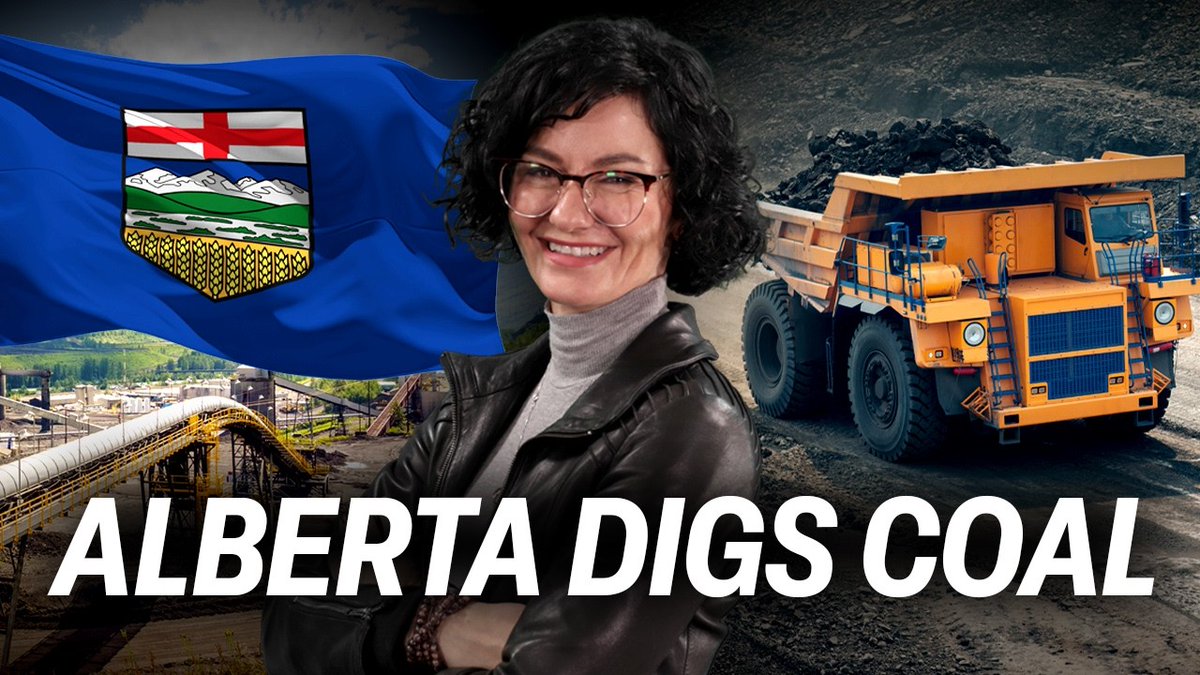
Steel builds the modern world — and Alberta digs the coal to create it! Steel builds the modern world: bridges, hospitals, railways, even wind turbines. But steel doesn’t just appear out of thin air. It starts with metallurgical coal, and Alberta happens to have some of the best deposits of it anywhere on Earth. So, when activists say Alberta shouldn’t develop it… I have to say something pretty simple. Alberta digs coal, and we’re proud of it If you grew up anywhere near the oil patch in this province, there's a song you know. It’s four in the morning outside some extended-stay hotel in Grande Prairie or Bonnyville. There’s frost on the windshield of a diesel pickup warming up before shift. And blasting out of the speakers? “The Roughest Neck Around.” That song is practically the anthem of the oil patch. A tribute to the people who built modern Alberta with their hands and their backs. People like my dad, and just about every single man in my family. People who sacrifice being at home to work in forbidding conditions to earn a living, to give us something we all need to live comfortably. The line that always stuck with me is the one where he says the rig hand “brings the power to the people.” And that’s exactly what Alberta’s resource workers do. Oil, gas, coal. All of it powers the modern world. So, imagine my surprise when the man who wrote that song — Corb Lund — launched a campaign opposing coal development in Alberta. Look, I want to be clear about something. I’ve seen Corb Lund in concert many times. I’m a huge fan. And honestly, if all of my musical tastes had to perfectly align with my political views, my playlist would get pretty small, pretty fast. Most of us don’t listen to music that way. We listen because the songs feel true. Because they tell the story of where we come from, and Corb Lund has always done that for Alberta. Which is why this whole thing actually makes me a little sad. Because the man who wrote the anthem of the oil patch — a song celebrating the grit and sacrifice of the people who power this province — is now repeating some of the same environmentalist talking points that were are used to try to shut down the oil patch itself and the jobs that go along with it. The roughnecks. The welders. The truck drivers, and now the miners. The folks waking up at four in the morning to keep the lights on. I just can’t square that, and I won't abide the lies. Because the truth about coal in Alberta is very different from what people are hearing right now. First, not all coal is the same. The coal being discussed in Alberta’s eastern slopes isn’t coal for power plants — it’s metallurgical coal, essential for producing steel. And steel, at any meaningful industrial scale, cannot be produced without metallurgical coal. Countries around the world understand this. The United States, the European Union, South Africa, and New Zealand have all recognized metallurgical coal as a strategic resource tied directly to infrastructure and national security. Because if you don’t control the materials needed to make steel, you don’t control your industrial future, and Alberta happens to have some of the best undeveloped metallurgical coal deposits in the world. That’s an opportunity. But the conversation around coal mining in Alberta has been flooded with misinformation about a lack of oversight and polluted water. A lot of what people picture when they hear “coal mining” comes from images of mines that operate under completely different environmental rules. But modern mining in Alberta operates under strict regulatory oversight. Projects are monitored by the Alberta Energy Regulator, which enforces environmental standards covering water, land, air quality, and reclamation. Companies are required to post financial security to guarantee that mines are reclaimed when operations end. Cleanup isn’t optional — it’s mandatory. And there’s another key detail that often gets lost in the debate: not all mining is the same. Some new proposed coal projects in Alberta are underground mines, not large open-pit surface operations. That means a much smaller surface footprint and dramatically less disturbance compared to the old mining methods people still picture. Technology evolves. Regulations evolve, and responsible resource development evolves, too. But beyond all the technical arguments, there’s something even more important that gets forgotten in this debate: the people. Coal miners, heavy equipment operators, tradespeople, truck drivers. These aren’t villains. They're the heroes. These are the same kinds of workers who built modern Alberta. They’re the people who built the schools, the roads, the hospitals, the communities we all live in today. The jobs created by responsible coal development are good, high-paying jobs. Jobs that support families in communities like Grande Cache, Hinton, and the Crowsnest Pass. Jobs that keep small towns alive. The product those workers produce isn’t something obsolete. Metallurgical coal is a resource the world still needs, because the world still needs steel. Let’s be clear about what this campaign is actually about. This isn’t about attacking musicians. I like Corb. And it isn’t about pretending there are no environmental standards in Alberta. We have some of the best in the world. This is about standing up for Alberta workers and Alberta resources. They're also the best in the world, and Albertans should not be ashamed of that. Because the people who love songs like “The Roughest Neck Around” understand something that sometimes gets forgotten in these debates. The men and women working in Alberta’s resource industries don’t just produce energy. They produce the materials that build civilization. The choice here isn’t between the environment and the economy. The real choice is between facts and fear. And around here, we choose facts. If the world still needs the resources we produce — and it does — then Alberta should be proud to provide them, because Alberta digs coal. REPORT by Sheila Gunn Reid:

Rebel News

39,166 次观看 • 5 个月前