正在加载视频...
视频加载失败
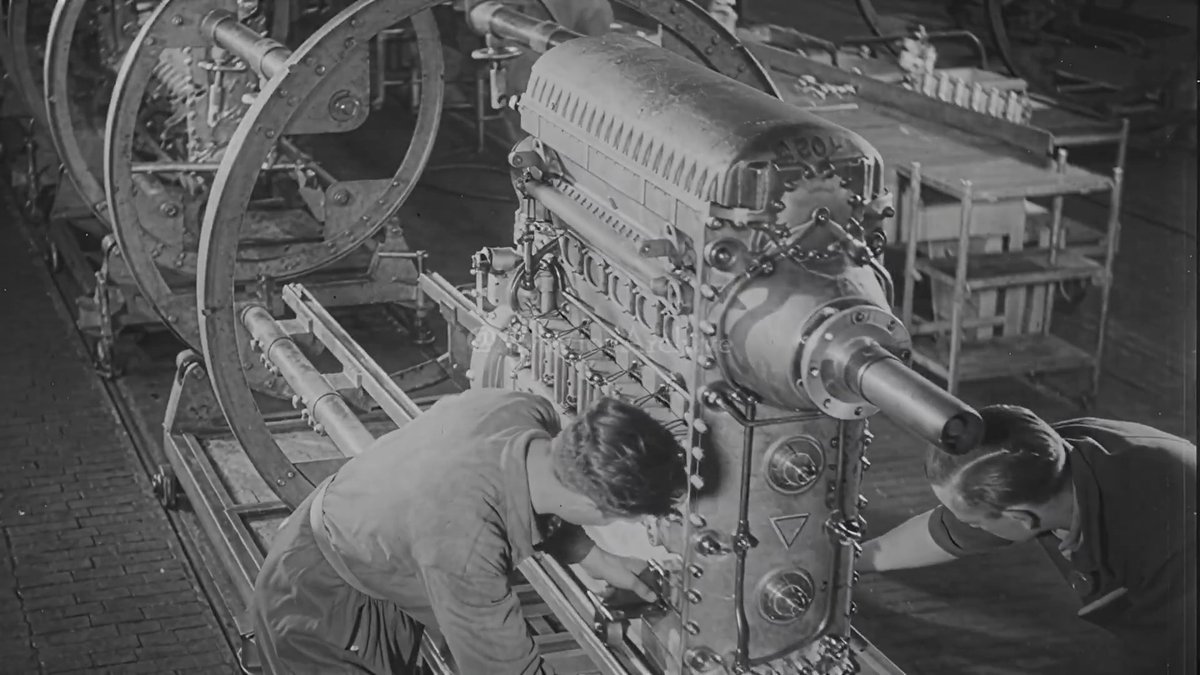
This 120-lb engine makes 450 HP with zero pistons.

33 条评论

The patent is available online

Yes and it's practically impossible to create at scale for commercial market due to tolerances involved. Making one of something is significantly easier (but still very hard) than making something that can be produced at scale.

They deleted it from the internet because the companies name was "AssTron". And somehow no one within the company had noticed that until they published the video.

Am I the only one who wants on built on a motorcycle?

All those metrics don’t matter what matters is the efficiency

Whats cool about this a lack of reciprocation of pistons. The only question is what is the sealing like. There's reason they're going hydrogen and not gas and its not a good reason.

They should couple it to one of these:

Whomever built this better have their affairs in order and a big life insurance policy. All I’m saying. Many innovators seem to have short life spans. Dangerous profession.

Still a way to go for competing with electric 12.7kg (28lb) 1000bhp

What about torque under load?

Mix between Jet and Wankel... Very likely it's inheriting all the cons of both concepts as well🤣

>"No pistons" >look inside >"Rotating pistons"

@grok if that engine was put in a car how many miles per gallon would you get? Is it just high energy or highly efficient too?

Man you should check out some of the electric motors they have now. I’d still go ICE (or at least analog like this H2) for anything personal, but these performance motors like the Koenigsegg Dark Matter (6-phase, ~86 lbs pulling 800 HP & 922 lb-ft of torque) or the super-light YASA axial-flux prototypes (something like ~29-46 lbs pushing 700+ HP) are absolutely insane. Love that they’re still pushing the limits with analog motors tho! Can’t imagine buying an 800 HP engineering marvel that does 0-60 in ~3 seconds knowing you could get stuck in park because an AI model or hacker gets into it with the remote kill-switch thing they’re doing 🙄

Tesla Tech. This is based off of the tesla top hat motor. created 110 years ago.

@grok could this engine setup, in terms of fuel, weight, rpm, and torque operate a flying car?

@Toyota @ToyotaMotorCorp Bring the Toyota FT-HS back to life. Using the H2 Starfire in the FT-HS concept would change the entire industry for the better. @grok broke it down perfectly 👇 "Using the Astron Aerospace H2 Starfire in something like the Toyota FT-HS concept would be a game-changing upgrade—basically turning a cool 2007 hybrid sports car vision into an ultra-light, ultra-efficient, zero-emissions hydrogen rocket. Toyota FT-HS (2007 concept): A front-engine, rear-wheel-drive 2+2 coupe designed as a "Future Toyota Hybrid Sport." It paired a 3.5L V6 (roughly 292 hp on its own) with an electric motor and capacitor system for a combined ~400 hp. Target: 0-60 mph in about 4 seconds. Compact dimensions (170 in long, 50 in tall, 104 in wheelbase), with heavy use of carbon fiber and aluminum for lightness. It was never produced, but it was Toyota’s attempt at a fun, efficient, sustainable sports car. H2 Starfire engine: 120 lbs, 450 hp, ~600 lb-ft torque, 60% thermal efficiency, runs on hydrogen (emits only water vapor), tiny footprint (roughly 11 × 15 inches), and counter-rotating rotary design with almost no cooling system needed. It’s dramatically smaller, lighter, and cleaner than any traditional piston or rotary engine. What changes in a “H2 Starfire FT-HS”? Massive weight savings. The original FT-HS’s 3.5L V6 alone weighed ~360–380 lbs (dry). Add the hybrid motor, inverter, and capacitor pack, and you’re carrying several hundred extra pounds up front. Swap in the 120-lb H2 Starfire and you could easily shed 250–400+ lbs overall (depending on whether you keep a small hybrid assist). That instantly improves power-to-weight ratio, braking, handling, and efficiency. The front end would feel lighter and more agile—closer to a modern lightweight sports car like a Porsche Cayman or even better balanced than the original FT-HS layout. More power + instant torque feel: 450 hp from the tiny hydrogen rotary alone beats the FT-HS’s combined 400 hp output. With its high torque and ability to rev to 25,000 rpm (though it runs efficiently at lower RPMs), acceleration would likely drop below the original 4-second 0-60 target—potentially into the high 3-second range or better in a lightweight package. If you kept a mild hybrid setup (like the FT-HS originally planned), you could push total output well over 500 hp while still staying ultra-light. Efficiency and range leap: 60% thermal efficiency is roughly double what a typical gasoline engine achieves and significantly better than even advanced hybrids in real-world use. The FT-HS was already aiming for strong fuel economy for a sports car; a hydrogen version could deliver the equivalent of 80–120+ MPGe (miles per gallon equivalent) depending on vehicle weight and driving style—while producing literally zero harmful emissions. Hydrogen tanks would add some weight and volume (high-pressure carbon-fiber tanks are the current standard), but the extreme efficiency means you wouldn’t need as much fuel for the same range. Packaging and design freedom: The H2 Starfire is so small it could almost be mounted anywhere. In the FT-HS’s front-engine layout it would free up huge space under the hood for bigger brakes, better cooling, or even structural reinforcements. It might even tempt a mid-engine redesign for perfect 50/50 weight distribution—something the original FT-HS couldn’t easily do with a big V6 up front. The low heat output (runs surprisingly cool) would simplify packaging and reduce the need for heavy cooling systems. Driving character: Expect a screaming high-revving rotary sound (but cleaner), lightning-quick throttle response, and that classic sports-car feel—only now it’s silent when the engine isn’t needed (if hybridized) and truly zero-emission. It would feel like a modern Supra or GR86 successor that’s faster, greener, and lighter than anything Toyota actually built. Realistic caveats (because it’s still a “what if”) Hydrogen storage and refueling infrastructure is the biggest hurdle today (though improving). The H2 Starfire is still pre-production, so real-world durability, cost, and integration details are unknown. Tank placement in a low-slung coupe would need clever engineering to keep the center of gravity low. Bottom line: Dropping the H2 Starfire into an FT-HS-style chassis would create one of the most compelling hydrogen sports cars imaginable—lighter, faster, more efficient, and cleaner than the original concept ever dreamed. It would feel like Toyota’s hybrid sports-car vision finally met 2020s hydrogen tech and went full sci-fi. If Astron’s claims hold up in production, this kind of powertrain could make “sustainable sports car” stop being an oxymoron."

if real world power under a load were true , it could be used for power generation , with a closed cycle fuel solution ... the money making capability is there since its conceptual existence is around 1.5-2 yrs and none are in use its probably nothing but a concept

Yet they don't have a fully functional motor yet..

It's terrible on self wear and fuel needs, last I heard. And it's fuel is highly, highly compressed.

Perpetual energy machines are real too. 😂

@MrBiglyTruth Thers that and the INNengine as well. This is inovation and makes elon look like a clown.

You lot are dreaming ! The Yasa Radial Flux electric motor weighs 12.7 kg & produces 1,000 hp . This is like like telling Henry Ford " We have found a faster horse !"

I'm here before the creators get killed in a mysterious way or suddenly become suicidal and shoot themselves in the head 5 times from the back while being cuffed to a chair. Something tells me it could really happen and make this invention go away forever

*theoretically....🙄

@JoeSoucheray @MSP_Traffic something fitting for discussion on the show

Yeah its basically a ram-rotor engine for a car. A great idea I think! 👍

We have got a winner.

This could make an excellent airplane engine!

振動凄そう

@MagnetReconnect the CIA deleted them

It’s called a rotary engine, discontinued because it’s cheaper to buy a new engine than to rebuild, and they just don’t last.

Vaporware
相关视频


This is how fast pistons move inside an internal combustion engine.
HOW THINGS WORK
299,271 次观看 • 1 年前