Sensitive content

This media may contain sensitive content.

正在加载视频...

视频加载失败

This Age Gap, Fail Marriage, Forced Proximity, Mutual Denial, Second Chance, Slow Burn, Friends to Lovers, miscommunication, FellFirst/FellHarder, Pining, Separation, Reunited Lovers, Relationship, Happy Ending serve #LoveIslandUSA
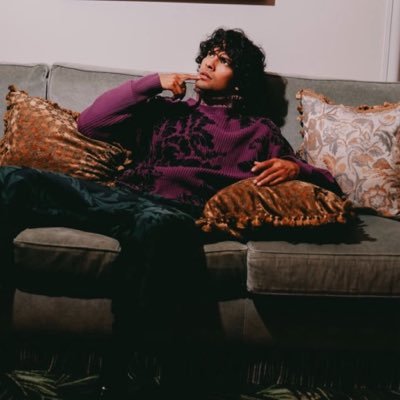
249,783 次观看 • 2 个月前 •via X (Twitter)

24 条评论

that cool girl over there 的头像
that cool girl over there2 个月前

And when they win on Sunday their story will be complete

. 的头像
.2 个月前

@mystic_fem4 AND MOST IMPORTANTLY THE WIN

Shenazy 的头像
Shenazy2 个月前

ohhhh the book girlies were feddd

rose 的头像
rose2 个月前

they really gave all my fave tropes 😩

Chichi 的头像
Chichi2 个月前

My fanfic, lover girl self is happy af. This season has over delivered in the romance department, and this is how it always should be. It is LOVE Island after all.

Unbothered 💙 的头像
Unbothered 💙2 个月前

The miscommunication and pining had me stressed but the way they came back stronger… chefs kiss.

Meagan ୨୧ 的头像
Meagan ୨୧2 个月前

they will go down in history

iano 的头像
iano2 个月前

That is not a relationship arc, that is a 400,000-word Ao3 fanfiction epic and a full-blown emotional marathon. 😭 The fact that *Love Island USA* somehow squeezed almost every single one of those tropes into a single summer is insane. The mutual denial into the miscommunication arc usually has everyone screaming at their screens, but that "Fell First/Fell Harder" payoff makes the agonizing slow burn totally worth it. Which couple's "fail marriage to second chance" journey are we talking about here? Because they really served a whole library's worth of drama this season!

iano 的头像
iano2 个月前

The best show in the US

85custard bun 的头像
85custard bun2 个月前

im so happy the ao3 people came up w these tropes for brinity bc that rlly pushed me to watch this season

succu 的头像
succu2 个月前

ik AO3 tags when i see em, we interlinked sista

gorgeoushumanoid 👽 的头像
gorgeoushumanoid 👽2 个月前

sorry to inform you but editing them to this is actually a federal crime

🐈‍⬛ 的头像
🐈‍⬛2 个月前

and that’s why they got my vote #mywinners

Hannah from the bible 的头像
Hannah from the bible2 个月前

Please god

da8_urr 的头像
da8_urr2 个月前

@kiesgallery The BEST couple of this season 🥹🥹🥹 brinity to infinity🔥🔥🔥

nicole 的头像
nicole2 个月前

Me hearing a bunch of my favorite tropes to read. No wonder I love them so much

fabii ♡ 的头像
fabii ♡2 个月前

I wanna see fan fics on wattpad based on them!

I 的头像
I2 个月前

looooooaosallcdolooooooooool

kayla :33 的头像
kayla :332 个月前

wow

viii 的头像
viii2 个月前

😍

ur princess!୨୧ 的头像
ur princess!୨୧2 个月前

robbers is the bg? i’m gonna start crying.

AHMED ALIEN 💰 的头像
AHMED ALIEN 💰2 个月前

You didn’t have to go this hard… but I’m glad you did 😮‍💨

nani, we wanna partyy🪩 的头像
nani, we wanna partyy🪩2 个月前

i love this restaurant henni

AmirKwai 的头像
AmirKwai2 个月前

i love them so much 🥹

相关视频

── Letters from Midsummer 《盛夏来信》 Li Youlin x Dong Yueyu Binge-watched this last night, and it was such a sweet slow-burn romance filled with everyday warmth and affection. The way their relationship develops is so well written, taking them from strangers, to friends, to lovers in the most natural way He suffers from a hereditary disease but initially hides it from her because he's planning to end his life in three months. His mother and younger brother both died from the same illness, and his condition leaves him unable to stand for long periods due to weakness in his legs. But when she and her family learn about his illness, they don't abandon him—instead, they shower him with even more love and care. He's calm, gentle, and kind, while she's optimistic, cheerful, independent, and strong. She truly becomes his salvation, helping him find hope again. They both have their own wonderful qualities, so it makes perfect sense why they're drawn to each other. Their interactions are incredibly sweet, especially when he's already fallen for her but keeps acting cool and aloof—it's both adorable and hilarious. I couldn't stop smiling while watching them 😆 After they officially get together, she thinks he no longer wants to die. But then she discovers that he's still planning to go through with it. He even writes a will, leaving everything to her. Furious, she writes a breakup letter and leaves. He lets her go because he still believes that short-term pain is better than long-term suffering. But afterward, he starts imagining her becoming a rich widow after his death, spending his money on new boyfriends every day and burning paper money for him during festivals. Suddenly, he doesn't want to die anymore 🤣🤣 060终于有好本子了,董玥妤也特别可爱

biee🎐*:.⋆°

20,140 次观看 • 3 个月前

The Moment of the “Second Proposal” in Pride and Prejudice (1995): When Happiness Arrives After Inner Maturity The moment when Fitzwilliam Darcy proposes to Elizabeth Bennet for the second time in Pride and Prejudice stands as one of the most quietly profound scenes in the entire work. On the surface, it is merely a brief encounter on an early morning in the English countryside. There is no crowd of witnesses, no dramatic conflict, and no impassioned declarations of love. Darcy meets Elizabeth after all the major upheavals of the story have passed. He begins with words full of restraint: if Elizabeth’s feelings remain as they were before, he will say no more on the matter; if they have changed, he hopes to know. After a moment of silence, Elizabeth gently replies that her feelings are no longer the same. The dialogue lasts only a few minutes and contains almost no notable action. Yet this is one of the scenes most fondly remembered by generations of viewers. What gives this moment its enduring vitality? The answer lies first in the film’s chosen manner of storytelling. The scene unfolds amid wide fields in the natural light of early morning. The camera maintains mostly medium and close-medium shots, sufficient to capture the characters’ eyes and expressions without imposing emotion upon the viewer. The editing pace is measured, and moments of silence are preserved rather than filled with music or additional dialogue. More importantly, nearly all the external factors that once dominated their relationship are removed from the frame. There are no soirées, no rules of etiquette, nor the gaze of society. The Bennet family, Lady Catherine, and anyone else who might stand between them are absent. The space contains only two individuals amidst nature. This simplification directs the viewer’s attention away from external circumstances and wholly towards the persons of Darcy and Elizabeth. What the film seeks to portray is no longer a mere proposal, but the meeting of two souls after a journey of inner transformation. Darcy is no longer the man of the first proposal. After being refused, he seriously examined himself and recognised that what had wounded Elizabeth was not his love, but the pride and sense of station still present in the manner of his affection. This change is evident in his opening words. Darcy makes no assumption of acceptance. He does not seek to persuade Elizabeth to alter her mind. The only thing he wishes to know is her true sentiment. For the first time, his own desires are placed after the freedom of choice of the one he loves. Elizabeth, too, undergoes a transformation no less profound. Darcy’s letter and his quiet actions on behalf of Lydia lead her to realise that she herself had once judged others through prejudice. She learns to relinquish hasty judgements and to regard people with greater fairness. When they meet again, both have transcended the limitations that once separated them. Their encounter does not mark the beginning of change, but the point where two journeys of maturation converge. Yet this very fact raises another question. Why does such maturity move generations of audiences so deeply? What lends the scene its power is not merely a happy ending. What viewers truly behold is the fulfilment of a moral order. Mankind ever longs for happiness, but happiness brings true fulfilment only when it arrives after the overcoming of one’s own shortcomings. If happiness comes by chance, it may bring joy. But when it is the fruit of humility, sincerity, and the capacity for self-correction, it brings meaning as well. This is precisely what Pride and Prejudice accomplishes in the second proposal scene. Darcy is not accepted for his station or wealth. Elizabeth does not change on a passing emotion. They can only come together after both have become better versions of themselves. In the spirit of divinely transmitted culture, this sequence reflects a familiar moral law: virtue and final outcome are not wholly separate. Man may err, but if he turns inward, forsakes what is amiss, and chooses the good, he gradually restores the harmony that was lost. Happiness thus ceases to be mere fortune and becomes the response to a process of self-perfection. This, too, is what gives the scene its profound sense of satisfaction. The audience witnesses not only the reunion of two lovers, but the completion of a moral order: after surmounting pride, prejudice, and turning inward to amend themselves, Darcy and Elizabeth receive a consummation worthy of their growth. It awakens faith in the truth that virtue is not meaningless and that the cultivation of one’s character ultimately holds significance for one’s destiny. Perhaps this is the deeper reason why the scene continues to move audiences across generations. Beneath a simple proposal lies a universal hope: that in a world of flux, man may still choose the good, mature through trial, and regain the harmony once lost. It is this hope that elevates the scene beyond a love story, into an affirmation of the value of virtue and the beauty of a fulfilled moral order.

🌸🎵 Beautiful Melody 🎶💖

42,071 次观看 • 2 个月前

Nobody prepares you for the moment a wild animal decides to trust you. Not "gets used to you." Not "tolerates you." Trusts you — the way a mother trusts someone with the one thing she would die protecting. It doesn't happen because you're kind. Kindness is cheap. Every predator in the bush can fake calm long enough to get close. Trust is not given for kindness. It's given for consistency, for stillness, for the thousand tiny signals a mother reads before she decides you are not a threat to the only life she's carrying. And once you understand that, you understand why what's in this video is not "cute." It's rare. It's the kind of rare that biologists spend entire careers chasing and never fully catch on camera. Here's the part almost nobody knows about kangaroo mothers, and once you know it, you will never look at a pouch the same way again. A kangaroo joey is born the size of a jellybean. Blind. Hairless. Barely more developed than an embryo. It has exactly one job the second it's born: crawl, unassisted, through its mother's fur, into the pouch, and find a teat — with no help from her at all. She doesn't guide it. She doesn't touch it. It's on its own, immediately, in a climb that takes minutes but might as well be a lifetime. Most don't make it. The ones that do spend the next 190 days growing inside that pouch, permanently attached to a single teat, while their mother hops, forages, runs from threats, and lives an entire dangerous life with a developing creature sealed against her body the whole time. Now sit with that for a second. Everything you're about to feel watching this video is built on top of that fact. The pouch isn't a cute detail. It's the most extreme parental investment in the entire animal kingdom, running quietly, invisibly, every single second — and most people scroll past kangaroos their whole life without knowing any of it. This is why the moment in this video hits differently. It's not staged tenderness. It's not a trained animal doing a trick for treats. It's an instinct thousands of generations deep, deciding, in real time, whether the human in front of it gets access to the most guarded thing in its world. And it says yes. Watch what that "yes" actually looks like. Watch the exact second it happens. Because most people miss it — they're looking at the wrong thing, waiting for something big and dramatic, when the real moment is small, quiet, and over in under two seconds. Blink and it's gone. That's the whole point. Trust from a wild animal never announces itself. It just happens, and if you're not paying attention, you miss the most important part of the entire video. Here's something else that will change how you see this. Kangaroos are not naturally social with other species. They are not dogs. They did not evolve for ten thousand years alongside humans, selectively bred generation after generation for affection and eye contact and cooperation. A kangaroo owes you nothing. Its entire evolutionary history says: keep your distance, stay alert, trust nothing that isn't kangaroo. So when you see a wild-born kangaroo choosing proximity — choosing it, not tolerating it — you are watching something closer to a diplomatic breakthrough between two species than a "cute animal moment." It is the exception to millions of years of instinct. And exceptions like that don't happen because an animal is "friendly." They happen because someone, somewhere, earned it slowly, patiently, without ever forcing a single second of it. That's the part that should actually get your attention. Not the fur. Not the ears. The patience behind it that you never see, because patience isn't visual — it's just time, quietly spent, off camera, for weeks, maybe months, before the fifteen seconds you're about to watch were even possible. Think about how many hours of nothing happened before this. Think about how many times the answer was "not yet." Think about how many people would have given up. That's what's actually being shown to you here, hidden inside something that looks simple. The result. Not the process. Just the result — and the process is the part that would actually break most people's patience in half. There's a reason content like this stops people mid-scroll and doesn't let go. It's not really about kangaroos. It's about a feeling almost everyone is quietly starving for: proof that connection across an impossible gap is still possible. That something wild, wary, and instinct-driven can still choose closeness. In a world where even people struggle to trust each other, watching an animal that has every biological reason not to trust anyone — decide to trust anyway — hits something deeper than "aww." It hits the same nerve that made you stop and stare the last time you saw two strangers help each other for no reason. The same nerve that makes rescue videos, reunion videos, "coming home" videos rack up hundreds of millions of views no matter how many times the format repeats. We are wired to seek proof that softness survives in a world that keeps telling us it doesn't. This video is that proof, wearing fur. Now here's the thing that will actually make you want to see it for yourself instead of taking my word for it. There is a specific frame in this video where the entire dynamic flips. Where you stop watching "a kangaroo" and start watching "a mother." The difference is enormous and almost nobody notices it consciously the first time, they just feel it — a shift in the chest, a small catch in the breath, and they don't know why until they rewatch it and actually look for what changed. I'm not going to tell you which frame it is. You'll know it when you feel it. And once you've seen it, you'll understand why people who work with rescued or hand-raised kangaroos talk about them the way new parents talk about their kids — with this specific mixture of exhaustion and reverence, like they've been let in on a secret the rest of the world doesn't know is right there in the daylight the whole time, just going unnoticed by everyone in too much of a hurry to actually look. Here's a fact that will sit with you long after this post: joeys communicate with their mothers primarily through touch and proximity, not sound. A healthy joey barely vocalizes. Silence, for a joey, usually means safety. The moment a joey starts making noise is often the moment something is wrong — a signal, a distress call, a break in the norm. Which means every quiet second in this video isn't empty. It's the sound of everything being exactly as it should be. Contentment doesn't announce itself either. It just exists, unremarked, easy to miss if you're expecting drama. Most people are trained by algorithms to expect the loud moment. The jump-scare cut. The dramatic reveal. This isn't that kind of video, and that's exactly why it works on a level louder content can't touch. There is no trick here. No forced angle. No moment engineered for a thumbnail. Just an animal, in a state most people will never witness in their lifetime, on camera, being real. You will not get this from a zoo enclosure behind glass. You will not get this from a nature documentary narrated over stock drone footage. Documentary crews spend months, sometimes years, waiting for unscripted, undirected, genuine wild behavior like this — and even then, half the time the animal senses the camera and the moment never comes. What you're about to see is the version of nature that doesn't perform for anyone. It just happens to have been caught. That's worth more than people give it credit for. Let's talk about scale for a second, because it recalibrates everything. An adult kangaroo can deliver a kick strong enough to break bone. Their hind legs are built for sudden, explosive force — evolved for fighting off dingoes, for defending against threats many times more aggressive than a curious human. A kangaroo that feels cornered or threatened is not an animal you want anywhere near you. This is not a small, harmless creature performing tricks. It is a powerful wild animal capable of real damage, choosing, in this exact moment, not to use any of that power. That choice is the entire video. Every second of calm you see on screen is a second where a kick, a scratch, a bolt for distance was the more "natural" default option — and it didn't happen. Instead: stillness. Proximity. Something closer to peace than instinct usually allows. People underestimate how remarkable that restraint actually is because the animal looks soft. Fur does that. It disguises power as gentleness in our minds before we even process what we're looking at. But strip away the cuteness bias for one second and look at what's actually happening biologically: a wild animal engineered by evolution for wariness and self-defense is choosing trust over instinct, in real time, on camera, for you. That's not something you see every day. That's not something most people will ever see in person, not even once in an entire lifetime. And it's sitting right there, one tap away. There's a version of this story that plays out constantly in nature and almost never gets filmed: the version where the trust never comes. Where the animal stays wary its entire life, where every human interaction ends the second the animal has an exit route, where the gap between species never closes even an inch. That's actually the statistical default. That's what "wild animal" usually means in practice — permanent, unbridgeable distance, no matter how much time passes. This video is the exception you almost never get to see. And exceptions, by definition, don't repeat on command. You can't schedule this. You can't force it into existing on a Tuesday afternoon because you need content. It either happens or it doesn't, and when it does, someone lucky enough to be holding a camera captures something the rest of us don't get. You're one of the lucky ones today. You get to see it too. Here's something people don't think about: what happens to footage like this after the camera stops rolling? The relationship doesn't end when the clip does. Whatever trust was built to make this moment possible keeps existing, keeps deepening, long after anyone stopped filming. The video you're about to watch is a single frozen cross-section of something much longer, much slower, much more patient than fifteen or thirty seconds could ever fully capture. Which means what you're seeing isn't the whole story. It's a highlight pulled from something bigger — a relationship, a history, a slow-built trust that took real time to construct and will keep existing whether or not anyone's watching. That's actually the most reassuring part of all of this. It's not a one-off stunt for the algorithm. It's a snapshot of something ongoing, something real, something that existed before the phone came out and kept existing after it went back in someone's pocket. That's a very different feeling than most viral content gives you. Most viral content is a closed loop — what you see is all there is, manufactured specifically to be seen, with nothing behind it. This is the opposite. This is a small window into something much larger than the video itself, and once you sense that, you start watching it differently. You start looking for what it implies rather than just what it shows. Let's go back to the mother for a second, because everything in this video ultimately orbits around her. Maternal instinct in kangaroos is so strong it can override basic self-preservation. There are documented cases of kangaroo mothers refusing to abandon injured joeys even when fleeing would have meant their own survival. Refusing to leave, even when every other instinct screams to run. That's not a Disney embellishment. That's observed, recorded animal behavior, the kind field researchers write papers about because it defies simple explanations of self-interest. So when you watch a mother in this state — calm, present, unhurried — you're not just watching an animal relax. You're watching the single most protective creature in the scene voluntarily lower its guard. Not because it forgot to be careful. Because, in this specific moment, with this specific presence nearby, it decided carefulness wasn't necessary. That decision is not nothing. That decision is everything. If you've ever had a genuinely anxious animal — a rescue dog that flinched at every hand for months, a cat that hid for weeks before finally sitting on your lap — you already know this feeling in your body even if you've never thought about it in these words. You know the specific, quiet triumph of the first time a scared creature decides you're safe. It's not loud. It's not dramatic. It's just a small shift, and it means more than almost anything else that animal could do. Now imagine that same feeling, except the animal isn't a domesticated pet bred for six thousand years to eventually trust a human. Imagine it's a wild mother kangaroo, entirely unindebted to your species, deciding the exact same thing. That's what you're about to watch. Here's the last thing I'll say before you go see it for yourself, because I think it matters more than any single fact I've already given you. We spend so much time online watching things designed to make us feel something — outrage engineered for clicks, drama engineered for watch time, conflict engineered for engagement. Almost none of it is real in the way this is real. Almost none of it exists independent of the platform that's showing it to you. This does. This kangaroo, this mother, this joey, this quiet unscripted trust — none of it needed you to exist. It was happening whether or not it ever made it to a screen. You're not watching content that was built for you. You're watching a moment of the actual world that someone happened to catch and decided to share. That distinction matters more than people realize. It's the difference between watching a performance and witnessing something true. Everyone can sense that difference on some level, even if they can't articulate it — it's why certain videos feel hollow the second they end, and others sit with you for the rest of the day. This is the second kind. Go watch it. Not for the aww, though you'll get that too. Watch it for the two seconds where instinct loses to trust, where a powerful, wary, wild animal decides a human is safe, where something ancient and untamed chooses softness anyway. Watch it for the frame you won't notice until the second time through. Watch it because moments like this are rarer than almost anything else the internet shows you, and rare things deserve more than a passive scroll past. You'll know exactly which second I meant the moment you see it. And once you do, you'll probably watch it again — not because you missed something the first time, but because now you know what you're actually looking at, and it hits completely differently the second time around. That's the real test of whether something is genuinely special or just briefly novel: does it get better once you understand it, or does it lose its shine the moment the surprise wears off? This gets better. Every rewatch reveals one more tiny detail you missed under the weight of the first, bigger emotional hit — the exact angle of an ear, the precise moment a body goes still, the breath held right before everything relaxes. Small things. Human-scale things, if kangaroos had a human scale. The kind of details that only reveal themselves once the initial "aww" has worn off enough for you to actually look. That's the mark of something worth your attention in a feed built almost entirely around things that aren't. So here's the only ask: don't just let this autoplay past you like everything else today. Actually watch it. Full attention, even if just for the length of a single held breath. It costs you nothing and it's one of maybe a handful of genuinely rare things you'll come across this week, buried in an endless river of things that are anything but. Somewhere out there, right now, a wild kangaroo mother is calm around a human she has every biological reason to fear. That single fact alone should be enough to make you want to see how it happened. Let's talk about something people almost never mention when they talk about kangaroos: how absurdly efficient their bodies actually are, and why that matters for understanding what restraint really costs a wild animal like this. A kangaroo's hop isn't just a way of moving. It's one of the most energy-efficient forms of locomotion in the entire animal kingdom. Their tendons act like giant rubber bands, storing and releasing elastic energy with almost no metabolic cost, which is why a kangaroo can cover huge distances at high speed while barely raising its heart rate. Past a certain speed, it actually becomes more efficient for a kangaroo to hop faster, not slower — the opposite of almost every other animal on earth. Why does that matter here? Because an animal built like that has almost nothing to lose by fleeing. Running isn't costly for a kangaroo the way it is for, say, a heavier, slower prey animal. There's no real biological argument for "staying is easier than leaving." Fleeing is cheap. Fleeing is basically free. Which means every second a kangaroo chooses to stay instead of bolt is a second it actively decided against the easiest possible option. That's not an animal that "couldn't be bothered to run." That's an animal that had every reason to leave, at almost no cost to itself, and chose not to. Sit with that for a second, because it reframes the entire video. This isn't laziness or indifference dressed up as trust. It's an active decision made over and over, every single second the camera is rolling, by a creature for whom leaving would have taken almost no effort at all. Here's another thing worth knowing before you watch: kangaroos are far smarter than most people give them credit for. Studies on kangaroo cognition have found they're capable of intentional communication with humans — deliberately looking at a person, then looking at an object, then back at the person again, the same gaze-alternation behavior researchers use as a gold-standard test for interspecies communication in dogs. Wild kangaroos aren't supposed to do that. Domesticated animals do that. Animals that have spent millennia being selected for human cooperation do that. Kangaroos were never bred for any of it. And yet, under the right conditions, some of them do it anyway. Which means the "connection" people feel radiating off videos like this isn't just a projection. It isn't just humans anthropomorphizing an animal that's actually indifferent to them. There's a real, measurable capacity for intentional engagement sitting underneath the fur — a capacity most people assume only exists in dogs, elephants, dolphins, the "smart" animals we've decided deserve credit for having inner lives. Kangaroos rarely make that list. Maybe they should. Now think about the algorithm for a second, because this part matters if you've ever wondered why certain animal videos explode past everything else in your feed while a hundred nearly identical ones disappear without a trace. Platforms don't reward "cute." Cute is everywhere; cute is the baseline, the noise floor of the entire internet. What actually stops a scroll and holds it is specificity — a moment that couldn't have happened just anywhere, to just anyone, with just any animal. The algorithm has effectively been trained, by billions of collective viewing decisions, to recognize the difference between generic content and a genuinely unrepeatable moment. And it rewards the second kind disproportionately, because it knows — better than we consciously do — that unrepeatable is the one thing viewers actually crave and almost never get. That's the quiet reason something like this travels the way it does. It's not marketing. It's not a trick. It's the platform correctly identifying that you're looking at something it can't manufacture on demand, and putting it in front of as many people as possible before the window closes. Here's a myth worth busting while we're at it, because it changes how you'll watch every future animal video, not just this one. People assume wild animals that appear "comfortable" around humans have been habituated through food — that somewhere off camera, there's a hand full of treats explaining all of it away. Sometimes that's true. Often it isn't. Genuine trust-based bonds, the kind built through slow, repeated, low-pressure exposure rather than bribery, tend to look calmer, quieter, and far less food-motivated than the habituated version. An animal trained through treats orients toward the treat. An animal that trusts you orients toward you. Watch for that distinction. It's subtle, but once you know to look for it, you'll never unsee it — in this video, and in every animal video you watch after this one. There's also a slower, sadder truth sitting underneath all of this that's worth acknowledging honestly, because it's part of why moments like this hit as hard as they do: most wild animals never get the chance to reach this state with a human at all. Not because they're incapable of it, but because most human contact with wildlife is fear, distance, or conflict. Roadways. Habitat loss. Encounters that end badly for one side or the other. The overwhelming majority of interactions between wild kangaroos and humans are neutral at best and dangerous at worst — for the kangaroo far more often than for the person. Which is exactly why the rare exception matters as much as it does. It's not just heartwarming in isolation. It's heartwarming because it's fighting the statistical odds of what usually happens when these two worlds intersect. Every calm, trusting moment like this is quietly making the case that the outcome doesn't have to be conflict by default — that with enough patience, enough respect for the animal's pace, enough restraint from forcing anything, something gentler is possible instead. That's a bigger idea than one video can carry on its own, but this video is a small, real piece of evidence for it. And evidence like that is worth more than another opinion piece ever could be, because you can't argue with something you're watching happen in real time in front of you. One more angle before you go find it and watch it yourself. Think about how many hours of your own life you've spent watching things that gave you nothing back — content built purely to fill fifteen seconds of dead time between one task and the next, forgotten before you've even finished swallowing whatever you were drinking while you watched it. That's most of what a feed is. Filler. Noise dressed up as content, optimized for exactly long enough to keep you from closing the app, and not one second longer. This isn't that. This is the rare kind of thing that actually leaves a residue — a specific image that resurfaces uninvited hours later, while you're doing something completely unrelated, because some part of your brain flagged it as meaningful and refused to fully let it go. Most content doesn't earn that. Most content isn't built to earn that. It's built to be replaced by the next thing thirty seconds later, forever, in an endless chain that leaves nothing behind. You'll know within the first few seconds whether this is one of the rare exceptions. Trust that instinct. It's the same instinct that made you stop scrolling long enough to read all the way down to this line instead of bouncing off after the first sentence like you do with almost everything else that crosses your screen today. That instinct is rarely wrong. One last thought, and then I'll stop talking and let the thing speak for itself. Somewhere between the jellybean-sized joey that shouldn't have survived its own birth, the mother who could kill with one kick and chose stillness instead, and the two-second frame you won't notice until you watch it twice — there's a version of this video that never existed. The version where the timing was off by a week, where the trust hadn't built far enough yet, where the camera wasn't rolling, where the moment happened anyway but nobody was there to see it and it simply evaporated into the ordinary, unwitnessed life of a wild animal in the bush. That version happens constantly. It's the default. It's what "wild animal" statistically means, every single day, all over the world, completely unseen. This is the version that didn't evaporate. This is the one that got caught. Not manufactured. Not staged. Not built for you in a studio, in a script, in an editing room designed to make you feel something on command. Just real, and rare, and lucky enough to have a lens pointed at it at the exact right second. You don't get many of those in a lifetime, let alone in a single scroll through your phone on an otherwise ordinary day. This is one of them.

Earth Unveiled

37,997 次观看 • 11 天前

He didn't run. That's the detail nobody expects. Every instinct in a wild, broken animal screams "run" the second a human gets close. Flight is the oldest survival code there is. And yet — he didn't run. Watch the video and you'll understand why that single fact should terrify you more than comfort you. Because an animal that doesn't run from you anymore has already given up on the idea that running matters. He has already decided, somewhere in that starving, exhausted brain, that whatever comes next can't possibly be worse than what came before. Sit with that for a second. What does it take to break that instinct? What does it take to make a living creature so depleted, so past the point of hope, that self-preservation itself shuts off? We're not talking about a dog that was "a little scared." We're talking about a dog who had already made peace with dying alone in the grass, hidden from a world that had already decided he didn't matter. And then someone showed up anyway. This is the part of the internet nobody warns you about. Not the cute part. Not the "aww" part. The part where you realize how close "almost too late" actually is — and how many of these moments are happening right now, in ditches and fields and abandoned lots, with nobody filming, nobody coming, nobody ever finding out. This one was found. I'm not going to walk you through what happens in the footage. I'm not going to spoil the moment his body language shifts, or the second you can physically see the exact heartbeat where "prey" turns into "please." Words can't carry that anyway. You have to watch it happen in real time, frame by frame, to feel what it actually is: the most fragile, most honest negotiation on earth — a terrified animal deciding, right in front of a camera, whether trust is worth the risk one more time. Here's what almost nobody talks about when it comes to strays like this. Dogs abandoned long enough don't behave like pets. They behave like wild animals, because that's exactly what they've had to become. The friendliness gets stripped away first — that's a luxury, and luxuries are the first thing survival deletes. What's left underneath is raw calculation: threat or not a threat, food or not food, safe or not safe. Every second spent deciding wrong could be the last second they get. So when you see an animal in that state hold still — when you see it let a stranger's hand get closer than four legs and thirty years of abandonment should ever allow — you're not looking at "cute." You're looking at the single bravest decision an animal without language, without hope, without any promise of a good outcome, is capable of making. That's what's buried in this video. That's the part that will actually get you. And here's the twist that makes this whole thing so much heavier once you know it: this isn't rare. This is happening at a scale most people never let themselves think about. Estimates on free-roaming and abandoned dogs worldwide run into the hundreds of millions. Hundreds of millions of versions of this exact moment — animals lying in grass, behind dumpsters, under bridges, past the point of hoping anyone comes — and only a fraction of them ever get a camera pointed at them, let alone a hand extended. Every viral rescue video you've ever scrolled past is a survivor's story. For every one of these, there are dozens that never get told, because nobody showed up in time to tell them. That's not meant to guilt you. It's meant to explain why this specific video hits different the second you actually watch it instead of skimming past it. You're not watching content. You're watching one of the rare good outcomes in a numbers game that is brutally stacked against good outcomes. Now — about the moment itself. There's a very specific window in every rescue like this. Rescuers call it different things, but it comes down to the same handful of seconds: the animal has to choose, right then, whether the human in front of it is a predator or a possibility. There's no in-between. No negotiation period. No "let me think about it." It happens in the space of a breath, and everything after depends on which way it breaks. You can see it happen in this footage. You can actually watch the exact moment where the decision gets made — where you'd swear the animal's whole nervous system recalibrates in real time. If you've never seen that moment up close, you don't actually know what "trust" looks like at its most primal. Most of us only ever encounter trust after it's already established, already comfortable, already taken for granted. This is trust being built from absolute zero, live, on camera, with everything on the line. I've watched hundreds of these rescue videos over the years — the genuinely real ones, not the staged reels that flood every feed now with fake "before" shots and suspiciously perfect lighting. The real ones all share this same fingerprint: a pause. A held breath. A moment where absolutely nothing happens except two creatures deciding, silently, whether the next few seconds are going to be safe. This video has that pause. And it's the reason you need to actually watch it instead of just reading about it. Because here's the thing text can never replicate: body language. The tension in a spine before it releases. The exact angle of an ear that tells you, before anything else does, whether fear is winning or losing. None of that survives translation into words. You either watch it happen, or you miss it completely. Let's talk about what "broken" actually costs an animal, physically, because most people underestimate it wildly. Extended abandonment doesn't just mean hunger. It means the body starts making impossible trade-offs. Muscle gets sacrificed for basic organ function. Coat and skin — usually the first thing to show damage — become secondary priorities compared to keeping a heart beating and lungs working. By the time visible damage shows up on the outside, the inside has usually already been compromising for weeks, sometimes months. Vets who specialize in stray and feral rescue will tell you the same thing over and over: what you see on the surface is never the full story. The surface is the last thing the body protects. If the outside already looks that rough, you almost don't want to know what's happening underneath. That's the stakes this video is actually operating at, even if the softness of the moment makes it easy to forget. This isn't a feel-good clip about a slightly dirty dog getting a bath. This is triage. This is the line between "made it" and "didn't," captured completely by accident, because someone happened to have a phone out at exactly the right moment. And that's maybe the most unsettling part of all of this, if you actually think about it for more than five seconds: how much of survival — for an animal with zero ability to ask for help — comes down to pure, dumb chance. Right place. Right time. Right person, willing to stop instead of walk past. How many times has "walking past" been the actual ending to a story like this one? We'll never know, because those endings don't get filmed. They don't get posted. They don't get millions of views and thousands of comments. They just... end, quietly, in a field somewhere, with nobody ever finding out there was a story there at all. This time, someone stopped. I want to be straight with you about something else, because it's the part that actually separates a real rescue from a manufactured one, and it matters more than people think. You can tell — almost instantly — when a rescue video is authentic versus when it's been engineered for engagement. Authentic ones are messy. Uncomfortable. Slow in places where a scripted video would cut. The animal doesn't hit its emotional beats on cue. There's confusion, hesitation, sometimes a step backward before the step forward. Real fear doesn't resolve on a content creator's timeline. It resolves on the animal's timeline, whenever that ends up being — thirty seconds, three minutes, sometimes far longer than anyone filming has patience for. This one has that texture. That's what makes it worth your two minutes instead of just another manufactured "rescue" clip built for a fake reaction. There's a reason rescue footage — the real kind — keeps outperforming almost everything else on this platform, and it's not because people are shallow or looking for cheap emotion. It's because this content taps into something most of us don't get nearly enough exposure to anymore: raw, unscripted stakes. Something is genuinely at risk. Something genuinely uncertain is happening. In a feed built almost entirely out of performance, irony, and content calculated down to the frame, a moment like this lands like a gut punch precisely because nobody could have staged the way it actually plays out. You can't fake that pause. You can't script that flinch, or the moment right after it, when the flinch stops. That's why you need to watch this instead of scrolling past the description of it. Because I can tell you it happened. I can't make you feel it happening. That gap — between knowing about something and actually witnessing it — is the entire reason video exists as a medium in the first place. Let's talk for a second about what happens after a moment like this, because most people watch these videos and never think past the ending card. Rescue is not resolution. It's the very first data point in a much longer, much harder process that almost nobody films because it isn't visually dramatic enough to go viral. Quarantine periods. Vet visits. Bloodwork. The slow, exhausting process of convincing a nervous system that's been running on high alert for months that it's actually allowed to relax now. Some animals take days to decompress. Some take literal years. Trust, once it's been broken at the level this video hints at, doesn't rebuild on anyone's convenient schedule. That's the part that never gets the same reach. The three-months-later update, the "he finally slept through the night" post, the "he let a stranger pet him for the first time" milestone that would look like nothing to anyone who didn't know the whole story. Those posts get a fraction of the views the rescue moment gets, even though they're arguably the more important part of the story. The internet loves a beginning. It's much worse at sticking around for the middle. So if this video moves you — and it will, if you actually watch it instead of skimming past — do something with that feeling beyond just scrolling to the next post. Rescues like this don't happen because of luck alone. They happen because someone, somewhere, decided that stopping mattered more than being on time to wherever they were headed. They happen because someone funded a vet bill, fostered an animal mid-recovery, drove two hours to pick up a dog that wasn't even theirs yet. None of that is glamorous. None of it goes viral on its own. But all of it is the actual machinery behind every single one of these videos you've ever watched and felt something about. If there's one thing I'd want you to take from this before you hit play, it's this: pay attention to the exact moment things shift. Don't just watch for the "aww." Watch for the decision. Watch for the specific second an animal that has every biological reason to run instead chooses to stay. That's the whole story, compressed into a handful of frames. Everything else — the outcome, the relief, the ending — is just what happens after that decision gets made. Most people will watch this video for the ending. Watch it for the middle instead. That's where the real thing is happening. And once you've seen it — once you've actually watched that shift happen in real time instead of reading about it secondhand — you'll understand why videos like this stop people mid-scroll every single time, no matter how many of them they've already seen. Because no matter how many of these you watch, that exact moment never gets less powerful. It just reminds you, over and over, of how much is riding on someone simply choosing to stop. Let's go back to the beginning for a second, because there's a question almost nobody asks about videos like this, and it's the one that actually matters most. How long was he out there before anyone found him? Nobody in the video knows the answer. Nobody watching it will ever know the answer. That's the part that sits with you long after the clip ends — not the moment of rescue itself, but the enormous, silent, unfilmed stretch of time that came before it. Days? Weeks? However long it was, it was long enough to erase every part of him except the will to keep breathing. Long enough that hiding in overgrown grass, invisible to a world that had stopped looking for him, had become the only strategy left. That's the actual horror hiding underneath a video that, on the surface, looks gentle. Everything soft about the footage is only possible because of everything brutal that happened just outside the frame, in the hours and days the camera never captured. This is why I keep telling you not to treat this as passive scrolling material. There is an entire invisible story sitting behind every second of visible footage, and your brain fills in almost none of it unless you slow down and actually let the video play out in full, without skipping ahead, without half-watching while doing five other things. Now, let's talk about why content like this spreads the way it does — because understanding the mechanics actually makes the moment hit harder, not softer. Platforms reward exactly one thing above everything else: retention. Not likes. Not shares. Not comments. Time spent actually watching, second by second, without looking away. And there is almost nothing on this entire platform that earns retention like genuine, unscripted animal footage where the outcome isn't obvious from frame one. Think about why that is. A cooking video, you already know the dish is going to come out fine. A prank video, you already know it's a joke. A dance video, a fashion video, a "get ready with me" video — the outcome was never in question to begin with. But a video like this one? The outcome is not guaranteed. For the first several seconds, you genuinely do not know which way it's going to go. That uncertainty is exactly what makes your eyes stay locked on the screen instead of your thumb flicking to the next post. That's not manipulation. That's not a trick. That's just what happens when something real, with real stakes, ends up on a feed built almost entirely out of things that were never actually uncertain in the first place. Here's something worth sitting with: most people, if you stopped them and asked directly, would say they care about animal welfare. Genuinely, sincerely, most people mean it when they say that. And yet the actual scale of the stray and abandoned animal crisis worldwide remains something most of the same people have almost no real information about. Not because they don't care — because nobody ever hands them the numbers in a way that actually lands. So here they are, stated plainly, without softening them: hundreds of millions of dogs live as strays globally, a significant share of them in conditions of chronic hunger, untreated injury, and disease. Shelters in country after country report the same pattern every single year — intake numbers that outpace adoption numbers, resources that fall short of need, and volunteers stretched thin trying to hold together a system that was never built to handle the actual scale of the problem. None of that is abstract when you're watching one specific dog in one specific patch of grass. It becomes very real, very fast, once you understand that what you're looking at isn't an isolated incident. It's one visible thread pulled out of an enormous, mostly invisible pattern. That's part of why this particular video deserves more than a passive scroll-past. It's not just "a nice moment." It's a small, rare, filmed exception to something that is happening constantly, relentlessly, without cameras, without rescuers, without any kind of happy resolution at all. Let's talk about the rescuer for a second, because they never get enough credit in videos like this, and it's worth correcting that. Whoever is behind that camera — whoever made the decision to stop, to approach slowly, to read an animal's body language carefully enough to know when to move closer and when to hold back — did something that looks simple on video and is genuinely difficult in real life. Approaching a frightened, possibly injured, possibly defensive stray animal correctly is a skill. Get it wrong, and you can panic the animal into fleeing somewhere far worse, or hurting itself trying to escape, or in rare cases, defending itself the only way it knows how. The people who do this well, over and over, in situation after situation, are operating on a mix of instinct and hard-earned experience that most of us will never develop, because most of us will never need to. That instinct is exactly why this rescue plays out the way it does instead of ending in a chase, a panic, or worse. Give that person their due before you close this tab. What you're watching is competence dressed up as tenderness. It looks soft. It is not easy. Now — a quick myth-versus-reality breakdown, because misconceptions about rescue moments like this one are everywhere, and they change how people watch this kind of footage. Myth: a starving, frightened stray will always be aggressive toward humans. Reality: fear responses vary enormously animal to animal. Some go defensive. Many, especially those who were once someone's pet before being abandoned, retain a flicker of learned trust toward people, buried under the fear, waiting for a reason to resurface. Myth: rescue is basically instant — approach, comfort, done. Reality: what you see in a two-minute clip is often the result of a much slower, more careful approach happening just before the camera starts rolling, sometimes minutes, sometimes far longer. Myth: once rescued, an animal is "fine." Reality: rescue is step one of dozens. Medical evaluation, parasite treatment, nutritional rehabilitation, and behavioral decompression all come after, often over a period of weeks or months, invisible to anyone who only ever saw the viral clip. Keep those in mind while you watch. They completely change what you're actually looking at. One more thing before you go press play, because it's the detail that changes how the whole video reads. Location matters more than people think. An animal hidden deep in overgrown grass, off any visible path, away from foot traffic, isn't there by accident. Animals in that condition instinctively seek concealment — it's one of the last functioning defense mechanisms left once running is no longer a realistic option. Being found at all, in a spot chosen specifically to not be found, is already a low-probability event before a single second of footage even starts. That's the invisible math sitting underneath this entire video. The odds of this exact outcome happening were never good. And yet here we are. If you've read this far without watching the video yet, that's honestly a little bit funny, because everything above was building toward one single, simple, unavoidable conclusion: None of this — the psychology, the statistics, the survival instinct, the odds stacked against him — means anything close to what it means once you actually see it unfold in real time, on his face, in his body, in the exact second everything changes. Reading about a moment like this is the trailer. Watching it is the movie. Let me leave you with one last thing, because it's the part people usually forget by the time they close the app and move on with their day. Every single one of us has scrolled past a moment like this before. Not this exact video — but this exact shape of moment. The thumbnail that looked heavy. The caption that hinted at something hard. The three seconds of hesitation before deciding whether today was a day you had the emotional bandwidth to watch an animal suffer before things got better. Most days, most people, scroll past. That's not a character flaw. That's just what an endless feed trains you to do — protect your attention, protect your mood, keep moving. But here's the thing about this specific kind of video that makes stopping worth it, every single time: the discomfort at the start is never the point. It's the toll you pay to get to the part that actually matters — the shift, the decision, the moment fear loses. Skip the discomfort, and you skip the entire reason the video exists in the first place. You end up with secondhand information about a moment that was never designed to be understood secondhand. Think about the last time a video actually changed your mood for the rest of the day. Not entertained you — changed something. Made you call someone. Made you donate somewhere you'd never donated before. Made you look at your own dog curled up on the couch and feel something different for a second. Those moments are rare precisely because most content isn't built to carry that kind of weight. Most content is built to be forgotten by the next scroll. This isn't most content. There's a reason rescue footage keeps circulating years after it's first posted, resurfacing on different accounts, different platforms, different captions, over and over, long after the original context is gone. It's because moments like this don't expire. A joke gets old. A trend dies in a week. But the exact second an abandoned, broken animal decides to trust a stranger anyway — that doesn't age. It hits the same way in five years that it hits today, because the thing it's tapping into isn't a trend. It's something much older than any platform, any algorithm, any feed. It's the oldest story there is, really, just told without words: something was broken, someone showed up anyway, and against every reasonable expectation, that was enough. We don't get many unscripted, unforced examples of that anymore. Almost everything in front of us now is curated, edited, angled for a reaction. This isn't. This is just what actually happened, captured because a phone happened to be there, no different than it would have looked if no camera existed at all. That's rare. That's worth two minutes of your undivided attention instead of a half-watched scroll-by. So here's the actual ask, plain and simple: don't just watch this one and move on like it's any other post in your feed today. Watch it properly. Let it play all the way through without skipping ahead to see how it ends. Notice the exact second his body changes. Notice what happens right after that. And then, if it moves you even a fraction as much as it should, do one small thing with that feeling before it fades — share it with someone, support a rescue near you, or just remember, the next time you see a stray on the side of a road, that stopping is always an option. It's always been an option. Somebody just has to choose to take it. That choice is the entire video. Everything else is just what happens after it gets made. One last thought, and then I'll let you go watch it instead of reading about it any longer. Somewhere out there, right now, there's another version of this exact scene playing out with no camera anywhere near it. No rescuer. No hand reaching out slowly through tall grass. No moment where fear loses. Just an animal, alone, running out of time in silence. We can't fix that with a video. Nobody's pretending we can. But we can make sure the ones that do get found, the ones that do get a camera and a rescuer and a happy ending, actually get seen — properly seen, not scrolled past in half a second on the way to something louder and easier. This is one of the good ones. One of the rare stories where showing up actually happened in time. Don't waste that by treating it like background noise. He didn't run. Now go find out why.

Earth Unveiled

189,242 次观看 • 8 天前

Someone stood on a piece of land, looked at a living, breathing dog who had done nothing but exist, and said: "Just shoot him dead." Not "get rid of him." Not "take him to a shelter." Not even "I don't want him anymore." Shoot him dead. I want you to sit with that sentence for a second before you keep scrolling, because everything that comes after it only makes sense once you understand how casually those five words get said in this world. Somewhere, right now, someone is saying a version of that sentence about a living thing that trusted them, or wanted to, or was still learning how. Most of the time nobody films it. Most of the time there's no ending. There's just a decision, made in under a second, by someone who will forget they ever made it. This time, someone didn't listen. This is the part where I'm supposed to tell you what happens next. I'm not going to. Not because I'm holding it hostage for engagement — okay, maybe a little — but mostly because the story doesn't work if I hand it to you pre-chewed. You need to watch a dog decide, in real time, whether the human species is worth the risk. You need to watch that calculation happen behind a pair of eyes that have every reason to say no. That's not something I can describe to you in a tweet. That's something you have to sit through. But I can tell you what it's about. It's about the gap. The invisible, unmeasurable gap between a dog who has been failed by people and a dog who has decided to try again anyway. Nobody talks about that gap. We talk about rescues like they're a single moment — the dramatic snatch, the shelter cage, the "and then everything was fine" — but that's not how trust works, and it's definitely not how fear works. Fear doesn't leave because you fed it once. Fear moves out slowly, one inch at a time, and it takes its shoes off at the door so you don't hear it coming back. PART ONE: THE VERDICT Here's what almost nobody says out loud: dogs get sentenced constantly, by people who will never be held accountable for the sentence. Too old. Too much energy. Too expensive. Doesn't match the new couch. Growled once at a toddler who was pulling its ears. In goes the verdict, out goes the dog — sometimes to a shelter, sometimes to a shed, sometimes to the side of a highway at 60 miles an hour with the door still swinging shut. And sometimes, if the owner is lazy enough and cruel enough at the same time, the sentence is the one you already read. Just shoot him dead. Nobody ever asks the dog's side. Obviously. He can't testify. He can't explain that he was scared of the vacuum, or that he barked at 2am because something moved in the yard, or that he never asked to be born into a house that saw him as a liability the second he became inconvenient. All he can do is react to what happens to him. And what happened to this one was a verdict that most animals never survive to tell. Except — spoiler-adjacent, not a spoiler — he did survive. That's the only thing I'll give you for free. He survived the verdict. What he did with the rest of the sentence, what it cost him to survive it, what he had to unlearn about people before he could stand near one without flinching — that's the part you're going to want your full attention for. PART TWO: THE DISTANCE THAT NOBODY MEASURES There's a very specific kind of animal behavior that people who haven't lived it will never fully understand: the dog who wants to come closer and physically cannot make his legs do it. You've maybe seen a version of it — the shelter dog pressed against the back wall of the kennel, the street dog who follows you for six blocks but won't take food from your hand, the "feral" label slapped onto an animal who is, underneath the label, simply doing math. Every approach is a risk assessment. Every human hand is a variable that could be gentle or could be the last thing he ever feels. You don't get to skip that math just because your intentions are good. The dog doesn't know your intentions. He only knows what hands have done before. So he keeps his distance. Not because he's unfriendly — dogs who've been failed are very often the most desperate to be loved, which is its own kind of tragic irony — but because distance is the only insurance policy he has left. He'll circle. He'll watch. He'll get close enough to almost, almost, and then something — a sound, a movement, a memory with no name attached to it — will send him back to the treeline, and you'll be left standing there wondering what you did wrong, when the honest answer is: nothing. It's not about you. It's about every hand that came before yours. This is the part of the story where most people give up. Not because they don't care, but because patience like that isn't natural. It goes against every instinct you have, watching a scared animal and wanting to just fix it today, right now, with one good meal and a soft voice. It doesn't work that way. It was never going to work that way. And the fact that someone didn't give up on this particular dog — that they let the timeline be the dog's timeline instead of their own — is the actual plot of the video you're about to watch. Not the reunion. The waiting. PART THREE: WHAT NOBODY TELLS YOU ABOUT REBUILDING TRUST You can't apologize your way into an animal's trust. You can't explain to a dog that you're not like the last person, that this time is different, that you promise. Words mean nothing to an animal whose entire understanding of humans has been written in actions. The only currency that works is repetition — showing up the same way, at the same pace, without asking for anything back, for so long that the dog's nervous system slowly, grudgingly, starts to recalibrate what a human standing nearby actually means. That recalibration has a cost, and the cost is time you don't get to see the value of until it's already paid. Every single day where nothing visibly changes is still doing something. The dog is watching. Filing data. Building, molecule by molecule, a case for why this particular human might be the exception. You don't get updates on that internal process. You just keep showing up and hope the math eventually tips in your favor. And when it does tip — when there's a first moment of contact, a first inch of distance closed that will never open back up the same way again — it doesn't look like a movie. It's not slow motion. It's not a soundtrack swelling. It's small, and quiet, and if you weren't paying close attention you'd almost miss it. Which is exactly why you need to actually watch this one instead of scrolling past assuming you already know how it goes. You don't. Nobody's story of rebuilding trust looks the same, and this one has a shape you haven't seen before. PART FOUR: THE CASUAL CRUELTY OF "JUST GET RID OF IT" Let's go back to that sentence, because I don't think we're done with it. Just shoot him dead. Think about what has to happen in a person's head for those words to come out that easily. It's not usually rage. Rage burns hot and fast and then it's gone. This is colder than that. This is the language of someone who has stopped seeing a living creature as a living creature and started seeing him as an inconvenience with a heartbeat — a problem to be solved, a line item to be closed, and closing it in the most permanent, least effortful way available. That mindset doesn't come from nowhere. It comes from a culture that has quietly taught a lot of people that animals are disposable the second they stop being convenient. That a dog is a product with a return policy. That love, if it was ever there at all, expires the moment it becomes inconvenient. You see it in the volume of animals abandoned every single year for reasons that amount to "we changed our minds." You see it in how easily people say "I'll just get another one" like a dog is a phone case. You see it in a sentence like the one that started this whole post — a sentence casual enough that the person saying it probably forgot they said it by the following week. But here's the thing about casual cruelty: it only wins if nobody's watching, and if nobody's willing to do the inconvenient thing instead. The inconvenient thing here wasn't dramatic. It wasn't a rescue montage. It was choosing, day after day, not to be the kind of person who says that sentence. It was choosing patience over convenience, presence over ultimatums, and a scared dog's timeline over anyone else's schedule. That's not a headline. That's just what actually saving something looks like, most of the time — unglamorous, slow, and completely invisible until suddenly it isn't. PART FIVE: THE QUESTION UNDERNEATH THE VIDEO Here's what I actually want you to sit with while you watch this, more than the dog, more than the backstory, more than the sentence that kicked the whole thing off: what would you have done? Not in theory. Not as the version of yourself that definitely would have been patient and kind and consistent for however many months or years it took. I mean actually — if a scared, unwanted animal showed up on your property and kept its distance for weeks, would you have kept showing up? If it took longer than you expected, would your patience have held? If someone told you it wasn't worth the effort, would you have believed them? Most people like to believe they'd be the exception. Most people, if we're honest, would've given up around week three. That's not a judgment — patience like that is genuinely hard, and most of us are stretched thin enough in our own lives without taking on a slow-motion trust rebuild with an animal who might never fully come around. But some people don't give up. Some people treat a scared, unwanted dog like he's worth more time than the person who wanted him dead ever gave him. And when you watch someone do that — really watch it, not skim past it — it recalibrates something in you too. It's hard to explain why watching a stranger be patient with a dog on the internet can hit as hard as it does. But it does. It always does. There's something in us that recognizes the shape of a second chance being handed to someone — something — who was told they didn't deserve one. PART SIX: WHY THIS ISN'T JUST A DOG VIDEO I know how this sounds. "It's just a dog video." I've said that about other videos too, right before they wrecked me completely. But there's a reason stories like this one land differently than the average "look how cute" clip. It's because underneath the surface, this isn't really about a dog. It's about the exact same question that shows up everywhere in human life, just translated into fur and silence and body language instead of words: what do you do with something — someone — who has been told they're not worth saving? Everyone reading this knows a version of that story that isn't about an animal. Maybe it's a person who was written off young and spent years proving the label wrong. Maybe it's a relationship everyone said wasn't worth the work. Maybe it's a version of yourself from a few years ago that a lot of people, maybe even you, had already given up on. The instinct to walk away from something difficult, something that isn't guaranteed to work out, something that might take way longer than feels reasonable — that instinct doesn't care whether the "something" has four legs or two. It shows up everywhere. And every time someone chooses to stay anyway, chooses the slow rebuild over the easy exit, it's worth paying attention to. Not because it's rare. Because it's rare enough that most of us forget it's even an option. PART SEVEN: WATCH IT PROPERLY So here's my actual ask, and it's a small one. Don't watch this with the sound off while you scroll to the next thing. Don't skip to the end because you already think you know how it goes — you don't, and skipping ahead will genuinely cost you the part that makes this different from every other rescue video you've seen this year. Watch the whole thing, start to finish, and pay attention to the parts that feel like nothing is happening. That's not filler. That's the actual story. The part where nothing seems to be happening is the part where everything is happening, quietly, underneath the surface, one cautious step at a time. By the time you get to the end, you'll understand exactly why that opening sentence exists at all — why I needed you to hear it before you saw a single frame. Because without it, this just looks like a dog being sweet. With it, you understand what that sweetness had to survive to exist. You understand what it costs an animal to trust again after someone decided his life wasn't worth the trouble of finding him a home. You understand that every soft moment in this video is standing on top of a decision that almost went the other way, made by someone who chose completely differently than the person before them. There is a version of this story that ends in a hole in the ground, unmarked, unremembered, unfilmed. Nobody would have known. That's the version that happens more often than any of us want to think about. This isn't that version. This is the other one — the rare one, the one that only exists because somebody looked at the same "inconvenient" animal that someone else wanted gone and decided that inconvenient wasn't the same thing as disposable. You're not going to get the details from me. You're going to have to watch it. But I'll tell you this much: by the end, "just shoot him dead" is going to sound less like a sentence someone said about a dog, and a lot more like a sentence that tells you everything you need to know about the person who said it — and absolutely nothing about the dog who proved them wrong. Watch until the very last second. The last few frames are the whole reason this post exists. If this hit you the way it hit me, don't just scroll past it silently. Send it to the one person in your life who still believes some things — some animals, some people — aren't worth the effort of saving. Let them sit with it the way I made you sit with that first sentence. Some verdicts deserve to be overturned in public. PART EIGHT: THE BIOLOGY OF A FLINCH There's a reason a dog like this doesn't just "get over it" the way people want him to. Fear like that isn't a personality trait. It's a nervous system that got rewired by repetition, the same way trust gets built by repetition — except rewiring fear takes a fraction of the time and undoing it takes ten times as long. One bad hand can undo a hundred good ones if it lands at the wrong moment. That's not the dog being dramatic. That's just how threat memory works in every mammal on this planet, humans included. You don't choose to flinch. Your body decides for you, based on evidence it collected before you were old enough to argue with it. So when you watch an animal hesitate at a hand that means no harm, you're not watching stubbornness. You're watching a very reasonable, very intelligent risk calculation running in real time, built entirely out of things that happened to him before anyone in this story ever showed up. The tragedy isn't that he was cautious. The tragedy is that caution was earned, fairly, by people who never had to answer for teaching it to him. What gets me every time I think about stories like this one is how much strength it actually takes to be cautious and still, eventually, choose to try again anyway. We love to talk about bravery like it only looks one way — loud, dramatic, obvious. Nobody talks about the bravery of a scared animal taking one more step toward a species that has already hurt him, on nothing but a hope that this time might be different. That's not the absence of fear. That's fear, fully present, being overridden by something even stronger. If you want to know what real courage looks like, it rarely looks like a superhero. More often it looks exactly like this — small, quiet, four-legged, and completely unaware that anyone's even watching. PART NINE: THE OTHER DOG NOBODY'S TALKING ABOUT There's a supporting character in this story who never asked to be one, and who honestly deserves more credit than he's going to get in the comments section. Every rescue story like this one has a hidden variable that nobody accounts for: the animal who was already there. The one who didn't have to share space, didn't have to share attention, didn't have to be patient with a nervous, unpredictable newcomer showing up on his territory uninvited. He could have made this so much harder. He didn't. And that quiet, uncomplicated generosity — the kind you only get from an animal who has never once calculated whether kindness is worth the risk — is doing more heavy lifting in this story than most people watching will ever notice. It's worth sitting with that for a second, too. Some of the most important characters in any redemption story aren't the ones being redeemed. They're the ones who simply didn't complicate it. Who didn't guard the door. Who treated a stranger's fear as something to be curious about instead of something to be threatened by. If there's a lesson buried in a dog who never asked for one, it might be that one. PART TEN: WHY THE INTERNET IS FULL OF FAKE VERSIONS OF THIS You've probably noticed there's an entire genre of content built around manufactured redemption arcs — staged rescues, dogs that were never actually in danger, timelines compressed into a single afternoon to make the "transformation" hit harder on camera. I'm not going to pretend that genre doesn't exist, because you've almost certainly seen it and been burned by it before, which is exactly why so many people scroll past real stories with the same skepticism they've built up for the fake ones. That skepticism is earned. It's also, in this case, going to work against you if you let it make you scroll past this one too. The difference between the manufactured version and the real one is almost always pacing. The fake version wants to get to the payoff as fast as possible because the payoff is the whole point of making it. The real version drags in places, hesitates in places, spends way too long on moments that don't look like anything is happening — because that's what actually rebuilding trust with a frightened animal looks like when nobody's editing it for maximum dopamine. If a story like this feels slower than you expected, that's not a flaw. That's the tell that it's real. Real trust doesn't hit its mark on a fifteen-second cut. PART ELEVEN: A NOTE FOR ANYONE WHO'S EVER FELT LIKE THE DOG IN THIS STORY I said earlier this isn't just a dog video, and I meant it, but I want to say the quiet part directly instead of leaving it as subtext. If you've ever been the "too much" one — too sensitive, too cautious, too slow to trust, too hard to love without a manual — this story is for you specifically, not just as a metaphor but as evidence. Evidence that the people who wanted to give up on you were wrong about what you were worth, the same way the person in this story was wrong. Evidence that being difficult to reach doesn't mean you're not worth reaching. Evidence that the right kind of patience doesn't get tired of you the way the wrong kind of person did. You don't owe anyone an explanation for how long it takes you to trust again after something breaks that trust. Nobody gets to put a timeline on your healing just because your timeline is inconvenient for them. The dog in this video didn't apologize for taking as long as he took, and he shouldn't have had to. Neither should you. The people worth keeping in your life are the ones who show up consistently enough, for long enough, without demanding a schedule for when you'll finally feel safe. Everyone else was never actually offering you safety in the first place. They were offering you a deadline. PART TWELVE: THE LAST THING I'LL SAY BEFORE YOU GO WATCH IT I've spent this entire post refusing to tell you what actually happens, and I'm going to keep doing that right up until the end, because the not-knowing is doing exactly what it's supposed to do — it's making you want to see it for yourself instead of taking my word for it. Good. That's the point. Some stories lose everything the second you summarize them. This is one of them. You can read a thousand words about the shape of trust being rebuilt, and none of them will land the way thirty seconds of actual footage will, because words can describe hesitation but they can't make you feel the seconds stretching while it happens. So go watch it. Watch the whole thing, not the highlight, not someone else's twelve-second repost with the context stripped out. Watch it start to finish, the way it was meant to be seen, and pay attention to how long the hard parts last compared to how short the resolution feels — because that ratio is the entire point. That imbalance, months of nothing followed by moments of everything, is what real change actually looks like, in dogs and in people both. It's never as fast as we want it to be. It's always worth it anyway. Somebody said "just shoot him dead" about a dog who turned out to be worth all of this. Go find out exactly how wrong they were. PART THIRTEEN: WHAT YOU'LL PROBABLY DO AFTER YOU WATCH IT I already know roughly how this goes, because it goes the same way every time a story like this actually lands. You'll watch it once, quickly, half-distracted, the way you watch most things in a feed built to keep you moving. And then something in the pacing, or the eyes, or the exact moment the hesitation breaks, is going to make you go back and watch it a second time, slower, actually paying attention this time. That second watch is always the one that gets people. The first watch is for your eyes. The second watch is for whatever part of you still remembers what it feels like to be given up on. Then you'll do the thing everyone does — you'll look at the comments, half expecting someone to have ruined it with a joke, and instead you'll find a wall of strangers who all had the exact same reaction you did, which is somehow both comforting and a little unsettling, because it means this feeling isn't rare. It means a lot of us are quietly carrying around the same soft spot for stories about being chosen after everyone else already walked away. We don't talk about that soft spot very often. We just recognize it instantly in each other whenever something like this shows up in the feed. And then, if the story really got you, you'll do the thing I already asked you to do earlier, except now you'll actually mean it — you'll send it to somebody. Not because you think they haven't seen a rescue video before. Because you want them to sit with that opening sentence the exact way you just did, cold, before they know how it ends. You want to watch their reaction the way someone once wanted to watch yours. That's not manipulation. That's just what people do with stories that matter to them. We pass them forward, hoping they land on someone the way they landed on us. PART FOURTEEN: THE ONE THING I WON'T LET YOU FORGET Before you go tap play, I need you to hold onto one detail, because it's the thread that ties this whole post together and it's easy to lose in a feed that moves as fast as this one does. The dog in this story is not a rare exception. He is not a lottery winner. He is one version, filmed and shared and lucky enough to have someone stubborn enough to see it through, of something that is happening constantly, everywhere, to animals who will never get a camera pointed at them and never get a caption written about them. For every one of him, there are dozens who got the other verdict. The one nobody films. The one that ends exactly where the sentence said it would. That's not meant to guilt you. It's meant to make the three minutes you're about to spend mean something more than entertainment. Every view, every share, every person who stops scrolling long enough to actually watch instead of skip, is a tiny, almost meaningless vote for the version of the story where patience wins instead of convenience. It won't save the ones who already didn't make it. But it might be the reason the next version of this story — the next scared animal on the next uncertain property, in front of the next person deciding whether he's worth the trouble — gets a different ending than the one that almost happened here. So watch it properly. Watch the pauses. Watch the eyes. Watch exactly how long it takes for something to shift, and remember that every second of that footage is standing on top of a decision someone made not to give up when giving up would have been so much easier, and so much faster, and so much more convenient. Somebody wanted him dead. Somebody else decided he was worth all of this instead. Now go watch which one turned out to be right.

Earth Unveiled

70,985 次观看 • 4 天前

Nobody tells you this about wild animals. Everyone assumes the same thing. That wild means temporary. That anything without a collar, without a name tag, without four walls around it, is incapable of remembering you. That the second you stop feeding it, stop holding it, stop being useful to it — it forgets you existed. I used to believe that too. Then I watched something that broke that belief in about four seconds, and I haven't been able to stop thinking about it since. Here's the part nobody wants to admit: we underestimate every single creature that can't talk back to us. We assume silence means absence. We assume "wild" means "doesn't care." We built an entire worldview on the idea that gratitude requires language, that memory requires a brain we can relate to, that loyalty is a human invention we occasionally lend to animals if they're cute enough. And then something like this comes along and makes all of that look embarrassingly wrong. I'm not going to describe what happens. I'm not going to walk you through it beat by beat, because honestly, that would ruin the only thing this deserves — the moment where your own brain catches up half a second too late and you feel that drop in your stomach. You know the one. The one you can't fake, can't force, can't get from a script. That's the only currency this kind of content trades in, and it doesn't happen if I spoil it for you. What I will tell you is what it's about underneath the surface, because that part is worth talking about regardless of whether you've seen it yet. It starts small. It always starts small. A single act, done by someone who had every reason not to bother. No cameras rolling for clout, no calculation, no thought of "this could go viral." Just a person doing the smallest, most inconvenient, most unnecessary kind thing imaginable — for a creature that had absolutely no way of saying thank you. That's the detail people skip past. There was no transaction here. No expectation of return. The kind of help that gets given precisely because nobody's watching and nothing is owed back. That is the rarest form of kindness there is, and it is exactly the kind that the universe seems to remember, even when we don't. Fast forward. Time does what time does. Seasons change. Life moves on. The person who helped goes back to their normal routine, probably forgets the specifics, files it under "nice thing that happened once," and moves forward with their life the way we all do. That's what makes what comes next hit so much harder — because they weren't expecting anything. They weren't owed anything. They didn't do it FOR this moment. And that's exactly when it shows up. Not a small gesture. Not a quiet little nod of recognition. Something so much bigger than anyone in that house could have prepared for. Something that turns an ordinary morning into the kind of moment people replay a hundred times, pausing, rewinding, showing their friends, saying "wait, watch THIS part" over and over again. I've watched a lot of animal content. I've seen the algorithm-bait compilations, the staged "reunion" videos, the ones where you can tell within three seconds that a camera crew set the whole thing up. This is not that. This has the texture of something that happened in real time, to real people, who had zero idea what was about to walk — or in this case, what was about to arrive in numbers — into their life again. Let's talk about why this actually matters, because it's bigger than "cute animal video." Every single day, somewhere, someone helps a creature that can't repay them. A bird with a broken wing. A stray that won't stop shivering. A baby animal abandoned by circumstance, not by choice. And every single day, most of us walk past it, because we've been trained — by scarcity, by exhaustion, by a world that constantly asks "what's in it for me" — to calculate the cost of kindness before we give it. This video is a rebuttal to that entire mindset. Because what it shows, without saying a single word, is that kindness is never actually wasted. It's stored somewhere. Filed away in a place we don't fully understand — in memory, in scent, in instinct, in whatever internal mechanism a wild creature uses to separate "safe" from "threat," "home" from "danger." And it gets paid back on a timeline that has nothing to do with our expectations. We think in days. Nature thinks in seasons, in years, in generations. That gap — between how fast we expect gratitude and how slow it actually arrives — is exactly where most people give up on kindness. They help once, get nothing immediate in return, and conclude the whole thing was pointless. What this video proves, in the most visceral way possible, is that the return on kindness compounds. It just compounds on a timescale most of us aren't patient enough to witness. And when it finally shows up? It doesn't show up small. It shows up loud. It shows up impossible to ignore. It shows up in a way that makes you question every assumption you had about what a wild animal is capable of feeling, remembering, and choosing to do. Choosing. That's the word that should stop you. A wild animal has every option in the world. Endless space, endless directions, zero obligation to go anywhere near a human structure ever again. No leash. No fence keeping it in. No debt it's contractually required to settle. The forest doesn't send collection notices. Nothing forces the outcome you're about to see. It happened because it wanted to. Sit with that for a second, because that's the part that separates this from every other "aww" animal clip on your feed. This isn't a trained behavior. This isn't a treat-motivated trick. This is closer to something we don't have a comfortable word for in everyday language — something that looks a lot like loyalty, a lot like trust, a lot like the same instinct that makes a dog wait by the door, except stripped of centuries of domestication and hardwired obedience. This came from something wild. Something that had every biological reason to stay away, and came anyway. I keep thinking about the specific moment the people in that video must have felt it click. That half-second where confusion turns into disbelief turns into something closer to awe. You can't manufacture that reaction. You can only capture it if you happen to have a camera rolling at the exact right second life decides to hand you something extraordinary. They did. And now we get to feel it too, secondhand, through a screen, years later, thousands of miles away from where it actually happened — and it still works. It still lands. That's how you know something is real. Fake moments lose their power the second you know what's coming. Real moments get stronger with distance, because the emotional core of them doesn't depend on surprise. It depends on truth. Let's talk about scale for a second, because that's the other thing people undersell about this. One animal returning to say thank you, in whatever language animals use for that concept, would already be remarkable. That alone would be worth stopping your scroll for. But what if it wasn't one? What if the message didn't stay contained to a single creature, a single memory, a single grateful visitor slipping quietly back into frame? What if it multiplied? What if the story that one small act of kindness wrote didn't end with the individual it was given to, but somehow, through channels we can't fully explain, spread outward — to a group, a family, a whole community of wild creatures who had no direct memory of the moment that started it all, and yet showed up anyway, together, unannounced, uninvited, and utterly unafraid? That's not a normal animal video anymore. That's something closer to folklore. The kind of story people used to tell around fires long before phones existed — the one about the animal that remembered, the one about the forest that returned a favor, the one that made you believe, even for just a minute, that the wild world is paying closer attention to us than we ever thought. And the wildest part is that it's real. No CGI. No trained animal handlers standing three feet outside the frame. No script. Just a house, a family, a morning like any other — and then suddenly, not like any other morning at all. I want to talk about why this specific kind of content hits different than everything else clogging your feed right now. We are drowning in manufactured emotion. Every platform is stuffed with content engineered in a lab to make you feel something for six seconds before you scroll to the next dopamine hit. Fake proposals. Staged surprises. "Emotional" reveals that were blocked, shot, and edited three separate times until the reaction looked convincing enough. We've become numb to sincerity because we've seen too many counterfeit versions of it. This is why moments like the one in this video hit so much harder than they should. Not because the content itself is rare — animals show up in unexpected places all the time — but because the emotional core underneath it is completely unforced. Nobody set this up. Nobody could have. You cannot script an animal's memory. You cannot direct wildness. You cannot pay a wild creature to perform gratitude on cue for a camera. Whatever happens in this video happens because it actually happened, in that order, in that place, to those people, whether a camera caught it or not. That authenticity is the entire reason your gut reacts the way it's about to. Let me give you a framework for thinking about this, because I think it explains why stories like this spread the way they do. There are three types of stories that break the internet. The first is spectacle — things that are big, loud, impossible, visually overwhelming. The second is scandal — things that are shocking because they reveal something ugly we didn't expect. And the third, the rarest, is what I'd call quiet proof. Stories that don't need to be loud or ugly to spread, because they offer evidence for something we desperately want to believe is true but rarely get to see confirmed. "Kindness matters, even when nobody's watching, even when there's no way to repay it, even across species, even years later." That's not a claim. That's not a inspirational quote slapped over a stock photo. That's a thing you can watch happen, in real footage, with your own eyes, start to finish, no interpretation required. That is exactly the category this falls into. And that's exactly why, once you've seen it, you're going to want to send it to someone. Not because it's funny. Not because it's shocking. Because it's proof of something you already suspected but never had evidence for. There's a version of this story that could have gone differently, and it's worth thinking about for a second, because it makes the actual outcome hit even harder. The easy path is indifference. It's the path most of us take most days, not out of cruelty, but out of exhaustion, distraction, the sheer volume of things constantly demanding our attention. Someone could have looked the other way. Could have assumed someone else would handle it. Could have decided it wasn't their problem, their responsibility, their weekend to ruin. They didn't take that path. And the story that exists because of that one decision is the story you're about to watch. Every single beat of what happens later only exists because, at some earlier point, a person chose the more inconvenient option for absolutely no personal gain. I think that's the detail that deserves the most attention, and it's the one that gets talked about the least, because it's the least flashy part. Nobody wants to slow down on "someone made a mildly inconvenient good choice." Everyone wants to skip straight to the payoff. But the payoff doesn't mean anything without that unglamorous, unrewarded, camera-off decision that started it. If you're the kind of person who's ever wondered whether the small good things you do actually matter — whether helping a stranger, feeding a stray, stopping for something most people would drive past, actually accomplishes anything beyond making you feel briefly better about yourself — this is the closest thing to hard evidence you're going to get that it does. Not because you'll get repaid the same way. You almost certainly won't. Most acts of kindness go completely unacknowledged, unreturned, and unremembered by everyone except you. That's the deal. That's always been the deal. But every once in a while — rare enough that it feels like magic when it happens, common enough that it keeps happening across the world every single day if you know where to look — the universe hands you a receipt. This is one of those receipts. I'll say this plainly: if you watch this and feel absolutely nothing, that's worth examining. Not because there's anything wrong with you, but because this is about as close to a universal emotional trigger as content gets. It taps into something almost pre-verbal — the part of your brain that understood trust and loyalty and gratitude long before you had words for any of them. Kids feel it. Adults feel it. People who claim they "don't really like animal videos" feel it. It bypasses cynicism because it isn't asking you to believe a claim. It's showing you a fact. There's also something worth saying about timing, about why moments like this seem to land differently right now than they might have a decade ago. We are, collectively, exhausted by cynicism. Every feed is an argument. Every comment section is a battlefield. Every piece of "uplifting" content gets picked apart within minutes for being staged, sponsored, or secretly problematic in some way nobody saw coming. We've built reflexes specifically designed to protect us from being fooled by fake sincerity, and those reflexes have made us suspicious of real sincerity too. And then something slips through that reflex entirely. Something so obviously unstaged, so clearly beyond anyone's ability to fabricate, that even the most hardened, doomscroll-numbed, seen-it-all-before viewer has no choice but to feel it. No angle to be cynical from. No "yeah but actually" take available. Just the thing itself, undeniable, sitting right there in front of you. That's rare. That's genuinely rare. And it's exactly what you're about to watch. I want to be careful here not to oversell it into something it isn't, because overselling is its own kind of dishonesty, and this doesn't need it. I'm not telling you this will change your life. I'm not telling you you'll cry for an hour afterward. I'm telling you it will do the one thing almost nothing on your feed manages to do anymore: it will surprise you, sincerely, without a gimmick, using nothing but something that actually happened. In a feed built entirely on manufactured surprise, an authentic one hits like nothing else can. Let's zoom out for a second and talk about what this says about the relationship between wild animals and the people who choose to help them, because I think there's a broader lesson buried in here that goes beyond "this one story is nice." We tend to think of the wild as something separate from us. A different category of existence, running on different rules, indifferent to human presence except as a threat to avoid. And for the most part, that's true — that's how survival works, that's how instinct is supposed to function. Fear keeps wild things alive. Distance keeps wild things wild. But every once in a while, a specific kind of interaction rewires that instinct. Not through force, not through captivity, not through anything that resembles domestication — but through something closer to a debt of safety. A single moment where a wild creature's survival depended entirely on a human choosing to help instead of ignore, and that moment gets encoded somewhere deep enough that it survives well past the point anyone would expect an animal to remember a human face, a human scent, a human place. That's the phenomenon underneath this whole video, whether or not you know the specific science behind animal memory and imprinting. You don't need a biology degree to feel what's actually happening. You just need to watch it. And once you watch it, you're going to understand why people who've seen this can't stop talking about it, can't stop sending it to their group chats with nothing but exclamation points, can't stop rewatching the exact same fifteen seconds over and over like they're trying to prove to themselves it actually happened the way they remember. It did happen that way. That's the whole point. I'm going to stop describing the feeling now, because at some point describing an emotion this specific just turns into a worse version of experiencing it yourself. You don't need my words for this. You need forty-something seconds and your undivided attention. One more thing before you go watch it, though, because I think it's worth saying out loud. Somewhere out there, right now, there's a version of this story waiting to happen to you. Some small, inconvenient, unrewarded act of kindness you haven't done yet because it doesn't seem worth the effort. Some creature, some stranger, some situation that's asking for five minutes of your day with absolutely no promise of anything in return. You don't do it for the payoff. That's not how any of this works, and if you're doing it for the payoff, it stops being kindness and starts being an investment strategy. You do it because it's the right thing to do regardless of what comes back. But it's nice, every once in a while, to get proof that something does come back. That the world keeps a ledger even when we've stopped expecting it to. That wild things remember, wild things return, and wild things — in their own way, on their own timeline, without anyone teaching them how — say thank you. Watch it. Then watch it again. Then send it to the one person in your life who needs a reminder that kindness isn't naive — it's just slow. And when it finally pays out, it pays out bigger than you ever imagined it would. This is that payout. This is what happens when nobody's watching turns into everybody's watching, years later, for all the right reasons. Go see it for yourself. Words were never going to be enough for this one — I just wanted you to understand what you're about to feel before you feel it. Now let me tell you what happens after you watch it, because that part matters too. You're going to want to explain it to someone who hasn't seen it yet, and you're going to fail. Not because you're bad at describing things, but because this specific category of moment resists description. You'll say "you just have to see it," and you'll mean it literally, because every attempt to summarize it in words strips out the exact thing that makes it land. That's not a flaw in the story. That's the tell that it's real. Fake moments compress into a sentence just fine. Real ones don't. You're also going to scroll to the comments, because that's what we do now, and you're going to find something interesting there too — hundreds, maybe thousands, of strangers all typing some version of the same disbelief. "I wasn't ready for this." "Why am I crying at my desk." "Sent this to my mom immediately." That's not an accident either. That's what happens when a piece of content manages to hit the exact same nerve in a huge number of completely unrelated people at the same time. You can't fake that kind of consensus. You can occasionally buy it with bots for a few hours, but it doesn't survive contact with real humans the way this has. Here's a thought experiment. Imagine you had to explain kindness to someone who had never encountered the concept — no words for it, no cultural reference point, nothing. You couldn't hand them a dictionary definition and expect it to land. Definitions are dead on arrival. What you'd actually have to do is show them a single, undeniable example and let the concept build itself in their head from the evidence. That's what this video functions as. It's not a lecture about why kindness matters. It's the raw material other people use to convince themselves it does. I think that's why it spreads the way stories like this spread — not through hype, not through influencer pushes, not through paid promotion, but through people quietly, individually, deciding "this is worth interrupting someone's day for." That kind of distribution can't be bought. It has to be earned, one genuine reaction at a time, and this earned it the hard way. Let's talk for a second about the animals themselves, separate from the humans in the story, because I think they deserve their own paragraph here. We spend so much energy debating what animals can and can't feel. Entire academic careers are built on that question. Do they experience gratitude the way we do? Do they form something we'd recognize as loyalty, or is it purely mechanical — scent recognition, learned safety, nothing more romantic than that? Scientists will keep arguing about the precise vocabulary for decades, and honestly, that's a worthwhile debate to have in a lab. But watch enough footage like this and you start to realize the vocabulary debate might be missing the point entirely. Maybe it doesn't matter whether what a wild animal feels maps perfectly onto the human concept of "thank you." Maybe what matters is the behavior itself — the choice to return, to trust, to show up in a place it has no obligation to ever go back to. You can call that instinct. You can call that memory. You can call that whatever term makes you comfortable. But when you watch it happen in real time, the label stops mattering, because the feeling it gives you doesn't wait for the science to catch up. That's the gap this video lives in — the space between what we can technically prove about animal cognition and what we can undeniably feel when we witness it ourselves. Most of us will never resolve that gap intellectually. But you're about to resolve it emotionally in less time than it takes to read this sentence twice. One more angle worth sitting with before you go watch this: think about how many similar moments happen every single day, all over the world, completely uncaptured. No phone nearby. No one thought to hit record. An animal returns somewhere, recognizes someone, does something that would have broken the internet — and it just... happens, quietly, in a backyard nobody's filming, and disappears into memory instead of a feed. We only get to see the ones that got caught. Which means every time you watch something like this, you're not just watching a rare event. You're watching a common event that rarely gets witnessed. That reframes the whole thing, doesn't it? This isn't a one-in-a-billion fluke. It's a one-in-a-billion fluke that someone happened to be holding a camera for. The actual phenomenon — animals remembering, animals returning, animals choosing trust over instinct — might be far less rare than the footage makes it look. We just don't usually get to see it. That should change how you think about every small kind act you've ever done for a creature that couldn't say thank you back. You don't know what happened after. You don't know if it came back to the same spot months later, looking for the person who helped it, only to find nobody there to witness it. You don't know if your one act of decency is still, right now, somewhere, being remembered by something that has no way of telling you. You'll probably never get to see your version of this video. Most people don't. That's exactly why watching someone else's version matters so much — it's the closest thing you'll ever get to proof that yours counted too. Okay. That's genuinely everything I've got to say about it without just describing the thing directly, which I promised I wouldn't do, and I'm not going to break that promise a paragraph before the finish line. Everything above this line is context. Everything below it is the only thing that actually matters: hit play. You'll know within the first few seconds why this has been living in people's heads. You'll know within the first few seconds why strangers are sending it to each other with no caption except a single emoji, because words failed them the same way they're about to fail you. Kindness doesn't expire. It just waits for the right moment to come back and remind you why you bothered in the first place. This is that moment. Go watch it.

Earth Unveiled

41,023 次观看 • 4 天前

WHY YOU WAKE UP IN THE MIDDLE OF THE NIGHT Your brain has 20,000 neurons clustered in the hypothalamus. They form the suprachiasmatic nucleus. This is your master clock. It's been running since before birth. At 25, this clock kept you unconscious until morning. At 65, the same clock runs on less melatonin, weaker signals, and a rhythm that physically shifted 2-3 hours earlier. It fires a wake signal between 2-4 a.m. Four systems inside your body shifted with age. They converge at the same hour every night. The thoughts that arrive at 3 a.m. feel different from the same thoughts at 3 p.m. because your brain runs a different program in the dark. The part that would normally tell you those thoughts aren't emergencies is still asleep. THE CLOCK MOVED FORWARD The suprachiasmatic nucleus generates a near 24-hour rhythm controlling when you feel alert and when you feel sleepy. In young adults, peak sleepiness arrives around 11 p.m. Peak alertness arrives around 9-10 a.m. Blue light at 480 nanometers activates melanopsin cells in the retina. These cells send signals directly to the suprachiasmatic nucleus, synchronizing your clock to the day-night cycle. With age, the clock shifts earlier. This is circadian phase advance. The sleepiness signal arrives at 7-8 p.m. instead of 11 p.m. The wake signal arrives at 3-4 a.m. instead of 6-7 a.m. The entire sleep-wake window moves forward 2-3 hours. The suprachiasmatic nucleus itself degrades. Neurons deteriorate. The amplitude of the circadian signal weakens. Peaks become shallower. Troughs become less deep. The radio station loses transmitter power until the signal becomes fuzzy and inconsistent. The clock's sensitivity to light cues diminishes through two mechanisms. The aging lens yellows and thickens, filtering more blue light before it reaches the melanopsin cells. The suprachiasmatic neurons themselves respond less robustly to whatever signal does arrive. Weaker input through a cloudier window. Less responsive neurons processing that input. The clock drifts. When the circadian clock drifts without strong light cues, it drifts earlier. Phase advance is the default direction of an unanchored aging clock. MELATONIN COLLAPSED The pineal gland releases melatonin at night to initiate and maintain sleep. This hormone declines with age. The pineal gland calcifies gradually over decades, reducing functional tissue and capacity to produce melatonin. By 65, nighttime melatonin levels can be one-third to one-quarter of what they were at 30. Sometimes less. Melatonin doesn't just initiate sleep. It maintains depth and continuity across the full night. When melatonin is low, sleep is shallower, more fragmented, more vulnerable to interruption. Even if you fall asleep at a reasonable hour, low melatonin cannot hold you through to morning. Your body tries to put you to sleep at 8 p.m. and wake you at 3 a.m. That's a 7-hour sleep window. It might be enough sleep for your shifted clock. But you fight the 8 o'clock drowsiness. Social life, television, family, habit. You stay up until 10 or 11. The clock doesn't adjust to your social schedule. It fires the wake signal at 3 regardless. The clock runs on light and biology, not preferences. You lost 2-3 hours from the front of your sleep window by staying up late. The alarm still goes off on the original schedule. The 3 a.m. waking isn't a malfunction. It's your shifted clock doing exactly what it was programmed to do. This is social jet lag. The gap between your biological clock time and your social clock time creates the same physiological mismatch as flying across two or three time zones. Your body is in one time zone. Your social life is in another. The drowsiness you fight at 8 p.m. is your body's genuine sleep onset signal. The waking at 3 a.m. is your body's genuine wake signal. The problem isn't the signals. The problem is overriding one without being able to override the other. There's a compounding factor. The shifted clock means your body wants to sleep earlier. The reduced melatonin means it cannot hold sleep as deeply or as long. You're caught between two problems: a clock that fires the wake signal too early and a chemical supply that cannot maintain the sleep signal through the full night. Even if you went to bed at 8, the reduced melatonin might still fail to hold you past 3 or 4. The clock shifted the window. The melatonin shrank it. DEEP SLEEP DISAPPEARED Sleep cycles through stages roughly every 90 minutes. Light sleep, deeper sleep, deeper sleep, then REM. The stage that matters most for feeling rested is slow-wave sleep, stage N3, the deepest phase. Brainwaves drop to large, slow delta oscillations at 0.5-4 hertz. During slow-wave sleep, the glymphatic system activates. Cerebrospinal fluid flushes through brain tissue along channels that open when neurons shrink slightly during deep sleep. This clears metabolic waste: adenosine, the molecule that builds sleep pressure during the day, and amyloid beta proteins, the plaques associated with Alzheimer's disease. Growth hormone pulses during N3. Tissue repair peaks. Memory consolidation occurs. The hippocampus replays the day's experiences and transfers them to long-term cortical storage. This is the sleep that makes you feel like you actually slept. At 25, roughly 20% of the night is spent in slow-wave sleep. By 65, that drops to 10-15%. By 75, some people get almost none. My sleep tracker tells me that I almost never get less than 30%... and I'm 60. It is possible to have restorative deep sleep no matter what your age is. In my case even at lower sleep duration. High energy availability alsp plays a big role. The slow wave generating circuits in the medial prefrontal cortex usually deteriorate with age, producing weaker and less frequent delta oscillations. The deep sleep itself becomes shallower. The waves are smaller. The duration shorter. The restorative process is less complete. If deep sleep is the period when the brain clears amyloid beta, then reduced deep sleep means reduced clearance. Less deep sleep leads to more amyloid, which leads to less deep sleep, which leads to more amyloid. The relationship is bidirectional and self-reinforcing. If you never feel fully rested no matter how many hours you spend in bed, if 8 hours produces the recovery that 6 hours used to produce, if you wake in the morning with the sense that something was missing from the night, the missing component may be slow wave sleep. The hours were there. The depth was not. Slow-wave sleep that remains concentrates in the first half of the night, the first two to three sleep cycles. By 2-3 a.m., most of the deep sleep budget has been spent. What remains for the second half of the night is lighter stage one and stage two sleep, interspersed with REM. Light sleep has a dramatically lower arousal threshold. Stimuli that would not have registered during slow-wave sleep can push you above the waking threshold in light sleep. A slight temperature change in the room. A bathroom urge from a bladder that fills faster with age. A noise from outside. Even the natural shift in body position. You wake at 3 a.m. partly because the sleep you're in at 3 a.m. is physiologically different from the sleep you're in at midnight. The fortress walls got thinner as the night progressed. By 3 o'clock, you're sleeping behind a screen door instead of a vault. You could sleep through thunderstorms at 30. Now you wake at the sound of a refrigerator cycling on. The physics isn't about the noise. It's about the stage of sleep you're in when the noise arrives. At midnight, during slow-wave sleep, your arousal threshold is high. The brain runs delta waves that suppress responsiveness to external stimuli. At 3 a.m. in stage 1 or stage 2, the threshold has dropped to a fraction of its midnight level. The same sound that the sleeping brain would have filtered at midnight wakes you at 3 because the brain is no longer running the program that filters it. CORTISOL ARRIVED EARLY Your body runs a cortisol rhythm called the cortisol awakening response. In the final hours of sleep, the adrenal glands begin increasing cortisol output, preparing the body for waking. Mobilizing glucose into the bloodstream. Priming the immune system for the day's pathogens. Raising blood pressure and heart rate toward daytime operating levels. In a young adult, this cortisol rise begins around 4-5 a.m. and peaks roughly 30-45 minutes after waking. With age, the rise begins earlier. 2-3 a.m. in many older adults. Low-carb diets can also trigger a relatively strong cortisol release, waking you up early.. The same circadian phase advance that shifted the sleep-wake window also shifted the cortisol curve. Every rhythm the suprachiasmatic nucleus controls moves in the same direction. Cortisol alone doesn't wake you. But combined with already light sleep and a shifted circadian clock, the cortisol rise adds a third signal, pushing you toward wakefulness at precisely the hour when the other two systems have already weakened your defenses. Three systems converging on the same window. The clock says wake up. The sleep stage says the walls are thin. The cortisol says the body is preparing for morning. All three signals arrive at 3 a.m. Not by coincidence. All three are governed by the same shifted circadian master clock. If the waking comes at almost exactly the same time every night, not randomly scattered across the early morning hours but clustered within the same 30-minute window, that precision is the signature of a circadian event. Cortisol is antagonistic to melatonin. The two hormones suppress each other. Cortisol inhibits melatonin production. Melatonin suppresses cortisol. In a young person with high melatonin and correctly timed cortisol, the two hormones hand off smoothly. Melatonin dominates the night. Cortisol rises toward morning. The transition is seamless. In an aging body with depleted melatonin and early-arriving cortisol, the handoff happens too soon. When cortisol starts rising at 2-3 a.m. and melatonin is already low, the biochemical conditions for staying asleep collapse. The melatonin that should be holding you under is insufficient. The cortisol that should not be arriving for another two hours is already here. Two hormones that are supposed to hand off like relay runners, one finishing as the other begins, instead collide in the same hour because both shifted on the same aging clock. The balance tips toward waking. THE WORST THOUGHTS ARRIVE When you wake at 6-7 a.m., cortisol is high, light enters your eyes, and your prefrontal cortex comes online in its task-oriented mode. You think about what to do, what to eat, where to go. Executive function engages. The thinking is directed, practical, forward-looking. Problems that exist at 7 a.m. feel like problems to be solved. Manageable, bounded, addressable. When you wake at 3 a.m. in the dark with no tasks to perform and no light to signal daytime, a different network activates. The default mode network. The brain's self-referential processing system fires in the absence of external input and directed task. This is the rumination network. It runs replays of conversations you had years ago. It generates worry scenarios about events that may never happen. It revisits regrets from decades past with a vividness that feels more real than memory should. It rehearses confrontations that will never take place. It asks questions that have no answers at any hour, let alone at 3 a.m. At 3 a.m., the default mode network has nothing competing with it. No light. No task. No external stimulation. No social interaction. And the executive prefrontal cortex that would normally evaluate, contextualize, and override the rumination is still partially offline. The prefrontal cortex is the last brain region to fully activate upon waking. It requires light exposure and time to reach full operating capacity. This is the region that says this thought is not an emergency. This worry is not proportionate to reality. This problem can wait until morning and will look different then. At 3 a.m., that region is sleeping while the default mode network runs at full power. You're awake enough to think. But the thinking is the uncontrolled, self-referential, catastrophizing kind. The system that controls and contextualizes thought has not caught up with the system that generates it. The worry loop feels more intense at 3 a.m. than the same thoughts would feel at 3 p.m. because the brain regions that regulate emotional response and assign proportionality are not yet operational. You're running the worry software without the control software. The thoughts feel urgent and catastrophic because the part of your brain that would tell you they are neither is still asleep. The thoughts are not true in the way they feel true. They're running on hardware that cannot evaluate them yet. The 3 a.m. thoughts have a specific quality that daytime worry doesn't. A sense of certainty. Of inevitability. Of problems being larger and solutions being fewer than they actually are. The distortion isn't emotional. It's architectural. The brain regions that generate worry are online. The brain regions that evaluate worry are not. By 7 a.m., when the prefrontal cortex has fully activated and light has entered the eyes and cortisol has reached its appropriate peak, the same problems that felt catastrophic at 3 a.m. feel manageable. Nothing changed about the problems. Everything changed about which brain regions are processing them. If you've lain in the dark at 3 a.m. and felt that your problems were larger, your regrets sharper, your fears more certain than they would be by breakfast, that wasn't weakness. It wasn't anxiety disorder. It was the default mode network running without prefrontal supervision, amplified by cortisol that arrived early, in a brain that had already run through its deep sleep budget and could not pull you back under. Four systems, all doing what the physics of aging programmed them to do, all converging on the same hour. Subscribers have access to detailed practical applications of remedies in a second attached post.

Metabolic Uncle

12,138 次观看 • 5 个月前

I would like to wish all my compatriots a happy Independence Day, happy Independence Zimbabwe. The independence of our country, unlike many other African countries, came through blood that was shed. There are so many Zimbabweans who lie in unmarked graves from Tanzania to Zambia to Botswana to Mozambique, and they put their lives on the line so that you and I could have the independence that we did not have under colonial rule. There is a distinct difference between those who fought for the independence of our country and died, never seeing an independent Zimbabwe, and those who took over from colonial rule and then destroyed our country through incompetence, corruption, and many other afflictions that should never have been there. I am in no doubt at all that had our country not become independent, I and many Black citizens would probably not be where we are today, thanks to the early gains of independence. Sadly, I now find myself as a journalist and a Zimbabwean with NO freedom to speak, to write, and to exist as a full citizen in my country post independence after the derailment of the independence dream. Many of our people did not have the opportunities that I personally got, and many others got, to advance our lives. It is unfortunate that we find ourselves where we are today, not because independence is bad, but because we ended up with selfish, corrupt, and incompetent individuals who abandoned the principles and aspirations that inspired many Zimbabweans to go out there and fight so that their country could be free. So on this day, when we celebrate 46 years of independence, the same zeal and drive that defined those who died fighting for our country must be carried forward by those who are alive today, to make sure that the country is restored to where it is supposed to be. Zimbabwe is one of the richest countries under the sun. It has almost every mineral that you can think of, and it has some of the best soils in the world. There is no reason for any Zimbabwean to be unemployed, to fail to earn an income, or to go to bed on an empty stomach. There is absolutely no reason for any Zimbabwean to struggle if the country is led by people who know what they are doing and who put the country first, the national interest first, ahead of their own selfish needs. Whilst colonialism was a terrible stain on the history of our country, there are lessons that can be drawn from that period. Rhodesia was run like a business, not like a fiefdom. The fact that most of the central hospitals that exist today were built during the colonial period, with the exception of Chitungwiza, tells us that infrastructure was prioritised, even if it was designed to serve a minority. That reality does not excuse colonial injustice, but it exposes the scale of failure after independence. Forty-six years later, the government has built only one central hospital. Around 2,500 women die every year during childbirth due to a lack of adequate maternity facilities. The largest hospital in Zimbabwe still relies on a maternity theatre built in 1977, and even then only one of its two theatres is functional, with the working one having been refurbished by a South African bank. That is a damning indictment on the current leadership. The fact that millions of Zimbabweans have been forced to leave the country to take up menial jobs in South Africa, as waiters or farm workers, is an indictment on the current leadership. The fact that people like myself and many others have had to leave home out of fear for our lives is an indictment on the current leadership. Whilst the leadership has failed, we as citizens of Zimbabwe also carry a responsibility towards our country, in whatever space we occupy. We must stop following personalities and start following ideas, whether in the ruling party or in the opposition. Our country has been destroyed because we follow personalities, many of whom are vacuous and empty, and when they fail, they drag the nation down with them as our leaders have done. We must not wait for a Messiah to come and save us from the afflictions we face today. We have a responsibility to do what is right for our country. During the liberation struggle, leaders were changed at different points because the struggle was never about personalities, it was about an idea, an independent Zimbabwe where every Zimbabwean, black, white, green, or yellow, has the same rights and opportunities to pursue a better life. So as we celebrate, and we should celebrate, we must also reflect on our responsibilities going forward. We celebrate because independence itself was a noble idea and remains a noble idea. When things are bad, you do not burn down the house, you fix what is broken. We must honour and remember those who lost their lives so that people like myself could go to college, become journalists, and be recognised internationally, as many Zimbabwean professionals have been, some even advising presidents across the continent and beyond. Zimbabwe has some of the most accomplished people anywhere in the world, and it should not be where it is today. It is therefore up to us, as Zimbabweans, to make sure that we do what is right for our country. Once again, happy Independence to my compatriots, and thank you to all the stalwarts who laid down their lives for us to be independent and to the countries that supported our struggle. We could not have achieved independence in 1980 without Mozambique, Zambia, Tanzania, Botswana, and many others who stood with us. They did well for us and we thank them. It is those who destroyed the country who should hang their heads in shame today. My heart bleeds when I see so many young Zimbabweans with university degrees, yet ending up as victims of drug abuse because there is no work to go to. There are no opportunities available that are aligned with what they went to university to study. It is a tragic indictment of the situation we find ourselves in today. Today we have become a nation where boreholes are being drilled in the middle of cities because the rulers have failed to do something as basic as delivering water into people’s homes. Today we have become a nation where the rest of the region laughs at us because our roads are riddled with potholes, yet the leadership drives Ferraris on those same roads. Today we have become a nation where even our O-level pass rate has not gone beyond 34% because of the failure of leadership to do what needs to be done. Today we cannot even feed ourselves. We have to rely on food aid, and yet we were once colloquially referred to as the breadbasket of the region. These are some of the realities we should reflect on. I could go on and on, but at this point, it is not necessary. To our leaders, I say, how does it feel when you hear the very people you lead saying Ian Smith was better, when they say colonialism was better? How do you feel? Or do you even feel anything at all when those words are spoken? Of course, colonialism was brutal. Of course, Ian Smith was a racist leader who upheld a minority regime built on exclusion and oppression. But it is a damning indictment of your failed leadership that some of our own people now feel pushed to the point of romanticising that dark past. Independence was meant to usher in dignity, opportunity, and shared prosperity for every Zimbabwean, regardless of colour or creed. It was meant to restore ownership of our future to the people. Yet today, you cannot deny that a small, privileged few are the primary beneficiaries of that independence, while the overwhelming majority are trapped in poverty, penury, and relentless suffering. That is not what liberation was fought for. However, nothing can justify a failure to be grateful to those who fought and died for the independence of our country. They did their part. It is now up to us to do our part and ensure that our country becomes what it is meant to be. Happy Independence Zimbabwe.

Hopewell Chin’ono

12,473 次观看 • 5 个月前

A dog just made the bravest decision I have seen anyone make this year. Not a founder. Not an athlete. Not a person with a plan and a five-year vision board. A dog, on an empty road, with nothing to lose and no idea what would come next. I have watched what comes next more times than I will admit in public. This post is 25,000 characters long. It is a list of reasons why you should watch it too. Read as much as you want, but understand one thing before you start: the video is the only part that matters, and this is everything the video doesn't have room to say. Sound on. Phone in both hands. Do not skip. I'll be here when you get back. THE NUMBER THAT SHOULD BOTHER YOU Let me start with two numbers. The first: commonly cited estimates put the world's stray dog population at around 200 million. Two hundred million animals with no address, no bowl with their name on it, and no one who would notice if they didn't come back tonight. The second number is one. That is how many people had to be on that road, at that exact minute, looking in that exact direction, in a good enough mood to stop. Not two. Not a crowd. One. Here is what nobody says out loud: for every dog you see rescued on camera, there are millions the camera never reached. We don't see them because no one was there. The videos that reach you are not a sample of reality. They are the winners of a lottery so brutal that Powerball looks like a coin flip next to it. So when one of these lands in your feed, don't scroll past it like content. Treat it like what it is: a statistical miracle that happened to end well. And miracles have a structure. Let's take this one apart. FIVE LINKS. BREAK ONE AND THE STORY DOESN'T EXIST. Link one: the dog has to survive long enough to be seen. Roads are not built for small animals. Vehicles do not slow down for shapes on the asphalt. Every hour out there is a coin flip the animal has to win again, and again, and again. Link two: someone has to be present. Not nearby. Present. Eyes up, phone down, brain not busy replaying the argument from breakfast. Link three: that someone has to notice. It sounds simple. It isn't. The human brain is a filtering machine, and a small animal on a road becomes a plastic bag, a shadow, a piece of tire. The most common reason a dog is not rescued is not cruelty. It is that nobody registered it as a dog. Link four: the person has to stop. This is the link that snaps most often. Seeing is free. Stopping costs you time, comfort, a schedule, and possibly the mood of your entire day. Link five: the dog has to let them. An animal that has learned that hands mean pain has every biological reason to run. Trust is not a given. It is a negotiation, and the dog holds the veto. Five links. All five held. Remember that when you press play. You are not watching a nice story. You are watching a chain that should have snapped at least four times. THE PEOPLE WHO KEEP DRIVING In 1968, psychologists John Darley and Bibb Latane published a set of experiments that changed how we think about helping. The finding was uncomfortable: the more people who witness an emergency, the less likely any one of them is to act. They called it diffusion of responsibility. Everyone assumes someone else will handle it. So nobody does. Later research added nuance. When an emergency is clear and dangerous, people step in more often than the original theory predicted. But the core insight has survived half a century of testing, because it describes something every one of us has felt: the small, quiet voice that says, somebody else will stop. Now picture a road with no crowd at all. No audience. No one to hide behind. No one to blame. Just you and a decision that is entirely, inescapably yours. That is the situation the person in this video walked into. And the reason it is worth your attention is not that they did something impossible. It is that they did something small, and it turns out small is exactly what almost nobody does. You don't need to be a hero. You need to be inconvenienced. THE FACE IS THE RESUME In 2013, researcher Bridget Waller and her team studied dogs in a UK shelter and asked a simple question: what makes one dog get adopted faster than another? It wasn't size. It wasn't age. It wasn't coat color. It was one tiny facial movement: the raising of the inner eyebrows. The move that makes a dog's eyes look bigger, softer, almost sad. Dogs that did it more often were chosen faster. Six years later, a study led by Juliane Kaminski found out why that movement is so easy for dogs and so hard for wolves. Dogs have a small muscle around the eye that wolves largely lack. Over thousands of years of living beside us, dogs evolved a way to make their faces speak our language. Read that again. A species rewired its own anatomy to be understood by another species. No other animal has done this to us. Nobody taught them. Nobody forced them. They looked at us, worked out what we respond to, and grew the tool. Now look at the face in this video. You will know the second you see it. That is not a coincidence, and it is not luck. It is fifteen thousand years of engineering aimed directly at your chest. THE ONLY LOOP LIKE IT ON EARTH In 2015, a Japanese team led by Miho Nagasawa published a result in the journal Science that made researchers stop and reread the abstract. When a dog and its owner look into each other's eyes, both of their oxytocin levels rise. Oxytocin is the bonding chemical, the same one that flows between a mother and her newborn. Dog looks at human. Human's oxytocin rises. Human looks back, touches, talks softly. Dog's oxytocin rises. Which makes the dog look longer. Which makes the human's oxytocin rise again. A feedback loop of affection, running across two species, powered by nothing but eye contact. Here is the part that gets me: the effect did not show up the same way in wolves raised by humans. The loop is not just training. It is something that evolved between us. So the next time someone says a dog is just responding to food, tell them there is a peer-reviewed study that disagrees. And keep this fact in your pocket for the video. Because at some point, a moment of eye contact happens in it, and I want you to know what is really going on in that room. THEY CAN SMELL WHAT YOU'RE HIDING Humans have roughly 6 million scent receptors. Dogs are commonly cited as having around 300 million. A large share of a dog's brain is devoted to processing smell. What you experience as a room, a dog experiences as a layered document: who was here, how long ago, and how they felt. In 2022, researchers at Queen's University Belfast tested something remarkable. They collected breath and sweat samples from people before and after a stressful task. Then they asked dogs to tell the samples apart. The dogs got it right nearly 94 percent of the time. Your body broadcasts your emotional state as chemistry. You cannot turn it off. You cannot fake calm. A dog reads your fear, your tension, your irritation, before you have opened your mouth. Which means every rescue is, at its core, a test of one thing: are you actually calm, or are you performing calm? The dog knows. It always knows. And that is why what happens in the first few seconds of this video matters more than anything that comes after it. Watch the body language. Watch how slowly things move. Watch what is not done. THE MOST IMPORTANT MOMENT IN ANY RESCUE IS THE ONE WHERE NOTHING HAPPENS Animal behaviorists describe fear responses in four flavors: fight, flight, freeze, and fawn. Fight is what people expect. Flight is what most strays do. Freeze is what looks like calm but isn't. And fawn, the desperate, wiggling, please-don't-hurt-me appeasement, is the one that breaks your heart the fastest, because it looks like friendliness and it is actually terror. Rescuers who have done this hundreds of times will tell you the same handful of rules. Don't loom. Don't stare straight into the eyes. Get low. Turn sideways. Slow everything down until it feels absurd. Let the animal close the last few feet on its own terms. The hardest instruction, and the one most people can't follow, is the last one: do nothing. Every instinct you have says reach out. Grab. Fix. Take control of the situation. And every good rescue begins with someone who did the opposite. Who made themselves small, patient, and boring, and waited for a frightened animal to decide that the safest thing in its whole world might be a stranger. You are about to watch someone do exactly that. Notice how little they need to say. THE TEARS THEY WON'T PUT IN THE HEADLINE Scientists are careful people. They do not like to say "dogs cry." But in 2022, a team from Azabu University in Japan, led by Takefumi Kikusui, measured tear volume in dogs during reunions with their owners. The result: tear volume rose significantly compared with reunions involving other familiar people. And when researchers applied oxytocin to the dogs' eyes, tear volume rose again. Not sadness crying. Not the crying we do. Something else, something closer to overflow. The body producing water at the exact moment the heart has more in it than it can hold. Nobody has proven that this is the same thing we feel. Scientists will tell you that, and they are right to. But here is a question worth sitting with. If an animal's eyes fill with water when it sees the one being it has decided to trust, what exactly are we arguing about? Watch the eyes in this video. Then tell me what you think you saw. ONCE IT HAS A NAME, IT STOPS BEING A STATISTIC In 2007, psychologist Paul Slovic and colleagues ran an experiment on generosity. They showed people a fundraising appeal for a hungry child, and then a second version that added statistics about millions of other children in the same crisis. More data. More context. More reasons to care. Donations dropped. Slovic called it psychic numbing. The human mind can hold one face. It cannot hold two hundred million. When a tragedy becomes a number, empathy quietly switches off, and we don't even notice it happening. This is why one named animal in one small video can do what a hundred reports full of charts cannot. It gives your brain something it can actually care about: a single life, with a face, a fear, and a future that could go either way. The stray population is a statistic. A dog is a story. And stories, unlike statistics, come with a name at the end. When you reach that moment in the video, pay attention to what it does to you. Notice the small shift in your chest. That is the sound of a number turning into a person, or close enough. THE WORD FOR WHAT YOU'RE ABOUT TO FEEL Researchers have a name for the feeling you get when something touches you so suddenly that your throat tightens and your eyes sting. They call it kama muta, Sanskrit for "moved by love." Anthropologist Alan Fiske proposed that it is a distinct emotion, triggered by a sudden intensification of closeness. Two beings who were strangers become bonded. Someone who was alone becomes part of something. People across many cultures describe the same set of signs: warmth in the chest, goosebumps, a lump in the throat, tears they didn't plan on, and a strong urge to hug someone or hold something. Here is what makes it useful and not just sweet: kama muta is one of the most reliable emotional responses we have. It shows up when reunions happen. When a stranger helps unexpectedly. When an animal, after a long time alone, is finally held. You've felt it. You just never had a word for it. Take note of the exact second it hits you in this video. I promise there is one. And if you're the kind of person who says "I never cry at videos," I would like to schedule a follow-up. WHY YOU'LL WANT TO BE A BETTER PERSON AFTER ONE MINUTE Psychologist Jonathan Haidt studied a related feeling and gave it a name: elevation. Elevation is what you feel when you watch someone do something morally beautiful, quietly, with nothing to gain. It is not envy and it is not admiration. It is an urge, physical and immediate, to do something good yourself. In studies, people who experienced elevation were more likely to help others afterward, more likely to volunteer, and more likely to describe wanting to become better versions of themselves. Read that as a design spec. A short piece of true, unstaged kindness can change what a person does in the hour after they see it. Which is a strange, lovely thing for a phone to be capable of. We spend so much time discussing what social media does wrong. Nobody wonders what would happen if the best five percent of it, the small, real, human moments, were the part that traveled farthest. Let this one travel. It has earned it. THE RARE THING: SOMETHING TRUE THAT WINS In 2018, researchers at MIT published a study in Science that analyzed millions of tweets. The result was grim: false news spread significantly faster and further than true news. False stories were about 70 percent more likely to be retweeted, driven largely by surprise and disgust. The lesson most people took away was that this platform rewards outrage. I want to take a different lesson. If false stories win because they trigger strong emotion, then true stories can win too, as long as they trigger stronger ones. A video with no villain, no scandal, and no argument. Nothing to be angry about. Nothing to dunk on. A rescue that is exactly what it looks like. That kind of content should lose on this platform. It has no fuel. And yet every so often, one of them breaks through and reminds everyone what this place was supposed to be. I am not asking you to like it. I am asking you to notice that you had a choice about what to feed today, and this was one of the options. SOME FRIENDSHIPS SHOULDN'T WORK Somewhere near the end of this video, a second character enters the story. I won't tell you who. I won't tell you what happens. I will tell you that if you have ever read anything about instincts, hunting drives, or the way certain animals are supposed to see each other, this moment will quietly rearrange your assumptions. Behaviorists talk about prey drive as if it were destiny. It is not. It is a tendency, and tendencies can be softened by experience, by safety, by being raised, or re-raised, in a place where no one is afraid. The same dog that once had to look after itself alone can, in a different life, learn that the world contains creatures that are not threats or meals. Only neighbors. That is the most hopeful idea in behavioral science, and it usually gets buried in footnotes: what an animal was is not the same as what an animal can become. The same is true for most of us, incidentally. But that is a different post. Stay for the ending. It is the reason I am writing this at all. THE PART THE INTERNET NEVER FILMS Every rescue video has the same shape: the meeting, the rescue, the transformation, the happy ending. It is edited that way because it is the only shape that gets watched. But ask anyone who has actually done this, and they will tell you the truth is in the gap between the second and third act. The first night. The first week. The first time a dog that has never lived indoors realizes there is a floor that doesn't move, a door that closes without danger, and a bowl that will be full again tomorrow. Rescuers have a rule of thumb for this, the 3-3-3 rule. Three days for a dog to decompress. Three weeks to start learning the routine. Three months to feel truly at home. It's not science, exactly, just a shorthand built from thousands of adoptions. But it captures something real: safety is not a switch. It is a process, and the animal has to believe it slowly, one uneventful day at a time. That means the happiest scenes in this video are not the ones that look like celebrations. They are the quiet ones. A dog that stops scanning the room. A body that finally lets go. Look for the moment the shoulders drop. Once you see it, you'll never unsee it. THE COST OF STOPPING: NINETY SECONDS Let's do the math on the thing that most people are afraid of. How long does it actually take to stop for an animal in trouble? Not the whole rescue. Just the decision, the pulling over, the first attempt. Ninety seconds. Sometimes less. Ninety seconds is the length of a bad song on the radio. It is the time you spend waiting for a light to change. It is a scroll through a feed you won't remember. And on the other side of those ninety seconds is the difference between a living animal and a statistic. I'm not saying this to make anyone feel guilty. Guilt is a terrible motivator. It makes people avoid the feeling instead of acting on it. I'm saying it because the barrier is almost always imagined. We inflate the cost of helping in our heads, and the imagined price is what stops us, not the real one. The person in this video paid the real price. It was small. What they got in return is something no one could have planned for. That is the part you should watch closely. IF YOU'RE EVER THE ONE ON THAT ROAD Save this section. Someday, someone reading it will need it. Put your safety first. Pull over where it's safe and turn on your hazard lights before anything else. A second accident helps no one. Do not chase. A frightened dog runs faster than you and directly into the worst possible place. Chasing turns a rescue into a pursuit. Get low and go slow. Sit down if you can. Turn your body sideways. Avoid direct staring. Speak softly, or don't speak at all. Use food, if you have any. Something plain, tossed a little closer each time, works better than any technique. Check for a tag and, if you can get near enough, ask a vet or shelter to scan for a microchip. Someone may be looking for this animal right now. Call for help early. Local rescues, animal control, and vets can handle what you cannot. Sometimes the bravest thing you can do is make the right phone call. Take photos and note the location. If you can't keep the animal, those details are what let someone else finish the job. None of this is complicated. The reason it is rare is that most people have never been told that it is allowed. You are allowed. THE REAL STAKES OF A SMALL DOG Here is a bigger picture, and it's a heavy one. Millions of companion animals enter shelters every year in the United States alone. That is just one country. Many are lost pets that never get reclaimed. Many are strays. Many are animals whose owners ran out of money, time, or hope. Shelters are often crowded, underfunded, and staffed by people running on love and very little else. Every animal that finds a home, or a foster, or a stranger with ninety seconds to spare, frees up a space for the next one in line. That means every single rescue is bigger than the animal in it. It is a small change to a very large system, and the system is nothing but small changes stacked on top of one another. This is not an argument for guilt. It's an argument for scale. One dog saved is one dog saved, but it is also proof of concept, a demonstration that the chain can hold, that the odds can be beaten, that a person and a road and a decision can end well. And proof of concept is contagious. That is why you are seeing it. WHO REALLY GOT RESCUED? If you talk to people who have taken in strays, you'll hear the same sentence over and over, in different words. "I thought I was saving him. It turned out he was saving me." Skeptics roll their eyes at that. It sounds like a greeting card. And research on pets and wellbeing is more mixed than social media would like. It doesn't say every dog fixes every life. But there is something real underneath it, and it's not mystical. A dog is a machine for creating routine, attention, and reasons to leave the house. It needs you at a certain hour. It notices when you come home. It doesn't care about your job title, your follower count, or what you failed at last week. For some people, that is the first unconditional witness they have had in years. The rescue, in this light, is not one-way. Two lonely creatures, one who knew it and one who didn't, found out that they could take care of each other. Nobody can prove that from a video. But there is a version of the story that runs in the background of every rescue, and you can feel it if you let yourself. Tell me whether you feel it here. THE ATTENTION PARADOX Here is a strange fact about the platform you're reading this on. The average post gets a glance. A few words, a flick of the thumb, gone. Brands spend billions every year trying to buy three seconds of your attention, and most of what they buy evaporates before it lands. And yet a video of one dog, with no budget, no celebrity, and no script, can hold a stranger for a full minute. Without a single trick. Why? Because attention is not really about tricks. It is about stakes. Your brain is built to track living things whose outcome is uncertain. The moment there is a creature on screen and you don't yet know if it will be okay, some ancient part of you leans in and refuses to look away. That is the secret behind every great story ever told. Someone we care about. Something that could go wrong. A question we need answered. Marketers call it a hook. Your nervous system calls it worry. This video has both, and it pays off the worry honestly, which is why you leave feeling better instead of used. That is rare enough to deserve a full minute of your life. HOW TO WATCH THIS Most people will watch it wrong. They'll half-look at it between two other things, mid-scroll, thumb already moving. Here is how to get the actual effect. Turn the sound on. There is more happening in the audio than you expect. Make it full screen. This is a story about faces, and faces need room. Watch the first ten seconds without expecting anything. The film is quiet at the start. That is deliberate, or at least it works as if it were. Do not skip ahead. The whole thing depends on the distance between where it starts and where it ends. Skip the middle and the ending is just a nice clip. Then, once it's over, watch it again. The second time, you won't be watching for the story. You'll be watching for the small things you missed: a hesitation, a glance, a change in how a body carries itself. That second watch is where it gets you. I said I have watched it more times than I'll admit. That is the honest reason. It doesn't wear out. It gets deeper. THE CHALLENGE I want to try something with this post. If the video moved you, leave one comment: the second it happened. Not a review, not an analysis. Just the moment. I'm curious whether it's the same one for everyone. My guess is that it isn't, and that the spread of answers will say more about what people carry around with them than about the video. If it didn't move you, that is fine too. I'd like to hear that as well. Honest is better than polite. And if you have ever been the one who stopped, and I know some of you have, write that instead. Tell the story in two lines. No one has ever regretted the ninety seconds. Someone reading this thread might need to know that. Reposting this is the simplest way to put it in front of someone who's scrolling right now, in a bad week, thinking that nothing good happens by accident anymore. Something did. THE LAST THING Let me end where I started. A dog made a decision on an empty road. It could not have known how it would turn out. It had no reason to believe that the next hand would be different from the last. It went ahead anyway. That is the whole difference between a life that changes and one that doesn't. Not certainty. Not a plan. A willingness to move toward the unknown when the alternative is more of the same. The animal in this video did that. Then someone did the same in return. That's it. That's the entire story. Two beings, each of whom took a small, terrifying step toward the other, and a road that was, for a few seconds, the most important place in the world. Scroll up. Press play. Watch the ending. Then come back and tell me I was exaggerating. P.S. If you read all of this, you are exactly the kind of person this video was made for. Most people never make it past the first screen of a long post. You did. That tells me you are someone who stays: through the slow part, through the uncertain part, all the way to the end. Which is, when you think about it, the only quality that mattered in the story you're about to watch. Follow for more like this. I only post the ones that earn it. Bookmark it for days you forget the feeling. #Rescue #DogsOfX #SecondChances #AdoptDontShop #Dogs #AnimalRescue #RescueDog

Earth Unveiled

13,921 次观看 • 2 天前

Please join me in fighting the Death Cult. If you have followed me for any amount of time, you have seen that I am a tireless advocate for young people getting married and having kids. I think it is one of the most important things I talk about on social media. Simply put, I want the human race to thrive and flourish. I want the USA to be strong. I want our society to constantly build toward a better future. And that requires kids. Without kids none of those things happen. I talk a lot about my marriage to Laila, which is the greatest decision I ever made in my life. I talk about my three kids endlessly. I talk about how much joy being a father brings me. People probably get sick of it. But I feel like I am a participant in a deadly serious battle. My enemy is the Death Cult. The Death Cult is what I call the loose alliance of people and programs and trends that are relentlessly trying to shrink the human population on planet Earth. The Death Cult is well-funded, and its members sit at the highest levels of government, business, media, and education. Is the Death Cult a group that disavows its mission and operates from the shadows? No, it is overt. They have been very straightforward in announcing their goals. Just listen to some of their quotes: 1) Paul R. Ehrlich (Biologist, Author: The Population Bomb) “We must have population control at home, hopefully through a system of incentives and penalties, but by compulsion if voluntary methods fail.” 2) Carl Sagan (Astronomer & Media Figure) “Our job is to bring about a worldwide demographic transition and flatten out that exponential curve…” 3) Maurice Strong (International Environmental Policymaker) “Either we reduce the world’s population voluntarily or nature will do this for us, but brutally.” 4) Jacques Cousteau (Explorer & Environmental Advocate) “In order to stabilize world population, we must eliminate 350,000 people per day. It is a horrible thing to say…” 5 ) Jane Goodall (Naturalist) “All these things we talk about wouldn’t be a problem if there was the size of population that there was 500 years ago.” [a population reduction of 95%!!!] If I had to pick a standard-bearer for the Death Cult, it would be media mogul Ted Turner. Here are just a few of his quotes on the topic of population reduction: “A total population of 250–300 million people, a 95% decline from present levels, would be ideal.” - Audubon Magazine, 1996 interview “Humans are a plague on the Earth.” - Time Magazine, 1996 “We’re too many people. That’s why we have global warming… We need population control.” - Interview remarks, late 1990s Ted even immortalized this draconian population reduction goal on the Georgia Guidestones, in which he inscribed as the first and primary directive to “MAINTAIN HUMANITY UNDER 500,000,000” If population reduction is the goal of the Death Cult, what is the motive? We would charitably say that the Death Cult wants to reduce the population because they are worried about the environment. It is obvious that as human populations increase, we impact natural spaces. A higher population leads to more land being cleared for agriculture and housing needs. I would argue that human progress has demonstrated an ability to dramatically increase crop yields and city density, and that first world countries like the United States are actually getting greener in terms of forest cover. Vegetation is increasing and emissions are trending downward even through our population is increasing. However, I am willing to give the benefit of the doubt that many members of the Death Cult are motivated by the environment and especially Climate Change. But I am not convinced that it is all of them. I believe that some members of the Death Cult have much more sinister motives. Some of the more obvious sinister reasons could include: 1) Resource Hoarding: The Death Cultists could more easily monopolize things like water, arable land, rare earth minerals, and pristine swaths of wilderness. 2) Control: A smaller population is easier to surveil and control. 3) Geopolitical Consolidation: Shrinking populations destabilize societies and governments, making them more vulnerable to direct or indirect domination. In my opinion it all comes down to power. The Death Cultists could be pushing their agenda of control for what they perceive to be a noble purpose (the environment) or for sinister purposes (one world government, resource hoarding, rent seeking). The only question is, could we tell the difference? In my estimation there is no difference. The policies they would pursue would be indistinguishable. So we must either take them at their word, or we should treat the Death Cult with deep suspicion. It should be obvious how I feel about it. In my experience with powerful people, they always want more power. More ways to dominate their fellow man. More say in how the lives of other people are conducted. And they know that if someone has to die to meet the population reduction goal, it wont be them. Their friends and family will remain unaffected and will benefit from it. If we have established that some powerful members of our society openly advocate for a radical reduction of the population, and they are motivated to do so, the most important question to ask is, how would they go about enacting their plan? Obviously advocating for large numbers of humans to die would not be politically acceptable. The fastest way to achieve global depopulation would be a world war. However, this could get uncomfortable for the Death Cultists. War is unpredictable! They want a depopulated planet, but they want to ensure they are in the 5% of the population that REMAINS ALIVE. A world war can get sticky and hard to control. It is the fastest option, but also the most unpredictable. So they Death Cultists are left with slower options, ones that will take generations and that will appear to be virtuous rather than sinister. The first thing that must be addressed is the birthrate. After all, it was improvements in things like child mortality that led to the surge in global population. Less kids gets you to the same place as a world war, it just takes a few generations to work. So obviously if your goal is to reduce the fertility rate, you would do a number of obvious things: 1) Make contraception and abortions free and ubiquitous, and de-stigmatized 2) Make childcare difficult and expensive 3) Encourage both parents to work outside of the house 4) Discourage marriage and family formation 5) Discourage religiosity (religious people tend to have higher numbers of children) 6) Glamorize childlessness on social media, music, TV 7) Foment racial, political, and ideological tensions to destabilize and distract society from family and children 8) Encourage a feeling of doom and hopelessness to discourage young people from wanting children or planning for the future 9) Degrade the population’s health and sex drive 10) Encourage societal isolation 11) Encourage young people to adopt lifestyles that prevent reproduction (LGBTQ+) 12) Emphasize career and materialism I won’t bother to include a series of graphs that demonstrate that these things are happening. They are all obviously happening. They all have been happening for decades. It’s quite a simple formula…if you can trick enough women to not have a first or second child, the work is done. And clearly we are seeing this work being carried out expeditiously, in every developed county. Birth rates are plunging. BTW: I think the most insidious weapon against birthrates is the instilling of a feeling of hopelessness that is so common amongst young people. So many now say, for example, that they don't want to bring children into a world that is overcome with climate change, even though this is the best time in human history to have kids. Birthrate is the primary driver, but there are of course other ways to affect population numbers. Anything that artificially constrains the basic needs of any living organism will “help”. This means: 1) Curtailing the amount of available shelter 2) Degrading the food and water supply 3) Reducing energy availability This would take the form of attacks on farmers, attacks on critical inputs for the economy such as fossil fuels, carbon taxes, and stopping new projects such as housing, transmission lines, pipelines, etc. through regulatory obstacles and public opposition. Clearly all of these things are also happening. We daily see the “Just Stop Oil” stooges advocate for the elimination of fossil fuels, which WOULD reduce the population of the planet by half in short order. They are happening, but they are too slow, and still opposed by too many people that have the ability to think rationally. No, the Death Cult must continue to focus on the kids. Kids are the key. And here is the incredibly dangerous calculus that I do not think the Death Cultists fully appreciate: Natural systems are very difficult to predict when they are taken out of equilibrium. What the Death Cultists envision as a gentle culling of the population could just as easily lead to the collapse of our entire civilization. Or another Dark Age. Or all-out nuclear war. Or the total elimination of humans on the planet Earth. What we know from history through is that as human populations decline, they reach a tipping point where forward progress is arrested and then violently reversed for generations. That tipping point is not something that can be predicted. Anyone advocating for radical curtailing of the human population is playing with the most deadly fire possible. They must not be allowed to conduct their experiment. ---- Look, I am just one guy trying to fight the Death Cult at the most important battleground: the battle over birthrates. So what am I doing? * I mentor and coach young people through scouting, sports, internships, and entrepreneurship. * I encourage marriage and advocate for putting kids before career * I share the joy I have found in life through marriage and family That’s it. I will keep talking about this on X. I will keep talking about it on podcasts. I will keep bringing it up in innumerable 1:1 conversations. I ask you to do the same.

Adam Rossi

25,784 次观看 • 8 个月前

In Remembrance of Dorothy Malone. Born | January 29, 1924 in Chicago, Illinois, USA. Died | January 19, 2018 aged 93 in Dallas, Texas, USA. Video | Humphrey Bogart as Philip Marlowe and Dorothy Malone as Acme Bookstore proprietress in the classic film noir, The Big Sleep (1946), directed by Howard Hawks. The blonde, sultry, dreamy-eyed beauty of Dorothy Malone, who was born Mary Maloney in Chicago, took some time before it made an impact with American film-going audiences. But once she did, she played it for all it was worth in her one chance Academy Award-winning “bad girl” performance, a role quite unlike the classy and strait-laced lady herself. Raised in Dallas, she was one of five children born to an accountant father and housewife mother. Two older sisters died of polio. Attending Ursuline Convent and Highland Park High School, she was quite popular (as “School Favourite”). She was also a noted female athlete while there and won several awards for swimming and horseback riding. Following graduation, she studied at Southern Methodist University with the intent of becoming a nurse, but a role in the college play “Starbound” happened to catch the eye of an RKO talent scout and she was offered a Hollywood contract. The lovely brunette started off in typical RKO starlet mode with acting/singing/dancing/diction lessons and bit parts (billed as Dorothy Maloney) in such films as the Frank Sinatra musicals Higher and Higher (1943) and Step Lively (1944), a couple of the mystery “Falcon” entries and a showier role in Show Business (1944) with Eddie Cantor and George Murphy. RKO lost interest, however, after the two-year contract was up. Warner Bros., however, stepped up to the plate and offered the actress a contract. Now billed as Dorothy Malone, her third film offering with the studio finally injected some adrenaline into her floundering young career, when she earned the small role of a seductive book clerk in the Bogart/Bacall classic The Big Sleep (1946). Critics and audiences took notice of her captivating little part. As a reward, the studio nudged her up the billing ladder with more visible roles in Two Guys from Texas (1948), Romance on the High Seas (1948), South of St. Louis (1949) and Colorado Territory (1949), with the westerns showing off her equestrian prowess if not her acting ability. Despite this positive movement, Warner Bros. did not extend Dorothy's contract in 1949 and she returned willingly back to her tight-knit family in her native Dallas. Taking a steadier job with an insurance agency, she happened to attend a work-related convention in New York City and grew fascinated with the big city. Deciding to recommit to her acting career, she moved to the Big Apple and studied at the American Theatre Wing. In between her studies, she managed to find work on TV, which spurred freelancing “B” movie offers in the routine form of Saddle Legion (1951), The Bushwhackers (1951), the Martin & Lewis romp Scared Stiff (1953), Law and Order (1953), Jack Slade (1953), Pushover (1954) and Private Hell 36 (1954). Things picked up noticeably once Dorothy went platinum blonde, which seemed to emphasise her overt and sensual beauty. First off was as a sister to Doris Day in Young at Heart (1954), a musical remake of Four Daughters (1938), back at Warner Bros. She garnered even better attention when she appeared in the war picture Battle Cry (1955), in which she shared torrid love scenes with film's newest heartthrob Tab Hunter, and continued the momentum with the reliable westerns Five Guns West (1955) and Tall Man Riding (1955) but not with melodramatic romantic dud Sincerely Yours (1955) which tried to sell to the audiences a heterosexual Liberace. By this time she had signed with Universal. Following a few more westerns for good measure (At Gunpoint (1955), Tension at Table Rock (1956) and Pillars of the Sky (1956), Dorothy won the scenery-chewing role of wild, nymphomaniac Marylee Hadley in the Douglas Sirk soap opera Written on the Wind (1956) co-starring Rock Hudson, Lauren Bacall and Robert Stack. Stack and Malone had the showier roles and completely out-shined the two leads, both earning supporting Oscar nominations in the process. Stack lost in his category but Dorothy nabbed the trophy for her splendidly trampy, boozed-up Southern belle which was highlighted by her writhing mambo dance. Unfortunately, Dorothy's long spell of mediocre filming did not end with all the hoopla she received for Written on the Wind (1956). The Tarnished Angels (1957), which reunited Malone with Hudson and Stack faltered, and Quantez (1957) with Fred MacMurray was just another run-of-the-mill western. Two major film challenges might have changed things with Man of a Thousand Faces (1957) as the unsympathetic first wife of James Cagney's Lon Chaney Sr, and as alcoholic actress Diana Barrymore in the biographic melodrama Too Much, Too Soon (1958). Cagney, however, overshadowed everyone in the first and the second was fatally watered down by the Production Code committee. To compensate, Dorothy, at age 35 in 1959, finally was married ― to playboy actor Jacques Bergerac (Ginger Rogers's ex-husband). A daughter, Mimi, was born the following year. Fewer film offers, which included Warlock (1959) and The Last Voyage (1960), came her way as Dorothy focused more on family life. While a second daughter, Diane, was born in 1962, the turbulent marriage wouldn't last and their divorce became final in December 1964. A bitter custody battle ensued with Dorothy eventually winning primary custody. It took the small screen to rejuvenate Dorothy's career in the mid-1960s when she earned top billing of TV's first prime time soap opera Peyton Place (1964). Dorothy, starring in Lana Turner's 1957 film role of Constance MacKenzie, found herself in a smash hit. The run wasn't entirely happy however. Doctors discovered blood clots on her lungs which required major surgery and she almost died. Lola Albright filled in until she was able to return. Just as bad, the significance of her role dwindled with time and 20th Century-Fox finally wrote her and co-star Tim O'Connor off the show in 1968. Dorothy filed a breach of contract lawsuit which ended in an out-of-court settlement. Her life on- and off-camera did not improve. Dorothy's second marriage to stockbroker Robert Tomarkin in 1969 would last only three months, and a third to businessman Charles Huston Bell managed about three years. Now-matronly roles in the films Winter Kills (1979), Vortex (1982), The Being (1981) and Descanse en piezas (1987), were few and far between a few TV-movies ― which included some “Peyton Place” revivals, did nothing to advance her career. Malone returned and settled for good back in her native Dallas, returning to Hollywood only on occasion. Dorothy's last film was a cameo in the popular thriller Basic Instinct (1992) as a friend to Sharon Stone. She will be remembered as one of those Hollywood stars who proved she had the talent but somehow got the short end of the stick when it came to quality films offered. She retired to Texas and died in Dallas shortly before her 94th birthday on January 19, 2018.

Hollywood Golden Age of Cinema

22,629 次观看 • 8 个月前

Finally, Ed Davey calls for the UK to join the EU Single Market 👏 "We meet at an extraordinary moment. Vladimir Putin is still waging war on our continent. Donald Trump's chaos in the Middle East goes on. And our government, our own government is paralysed by infighting, waiting for Makerfield to release them from their agony." "And yet, despite all that, standing with you here today, I feel hope. And not just about England's chances against Croatia tonight, but hope about our country's future." "Not hope because the path ahead is easy. It isn't. Not hope because everything will magically get better. It won't." "But hope because finally, after ten long, difficult years, I believe we can move on. We can finally fix the Brexit damage, end the Brexit chaos and get our country back on track." "Because the story the media won't tell you, as they fawn over the rise of Farage, as they hang on his every empty press conference, is that the country is with us. We hear it on the doorsteps, we see it in the polls, we feel it in our communities." "People are fed up. They've had enough. Enough of the chaos in government, the queues at ports, the queues at airports, the bills that just keep on going up." "They know the hard truth that most politicians won't admit. The Brexit experiment has failed. And it's failed all of us." "£90 billion a year. That's how much it's costing us all as taxpayers" "£90 billion every year, gone" "That's £250 million every single day. Taken away from our schools, our hospitals, our armed forces. Taken out of everyone's pockets in the form of unfair tax rises." "Not because of a pandemic, not because of a war, not because of some force of nature out of our control, but because of their Brexit experiment. Boris Johnson, Nigel Farage and the rest. An experiment that has now consumed a decade of British politics. That has tangled British businesses up in pointless red tape, that has pushed up prices for British families and that has left us all poorer." "Well, not all of us, apparently. Farage says that the five million he got from a crypto billionaire was his reward for Brexit. So when he said 'We'll be better off after Brexit,' it turns out he was using the royal we." "But friends, it's not only the economic and financial impact, as disastrous as those have been. It's the way they have poisoned our relationship with our nearest neighbours and friends, making it harder to work together on all the things we need to. Energy security and climate change, migration and refugees, AI, and above all, defence." "Britain has always been at its best when we stand tall with our European allies, not when we shut ourselves off. Now they promised us global Britain, but they have left us isolated at the worst possible time. Poorer, weaker and more insecure." "Their experiment has failed. We all know it. So it's time to move on." "But what do they say? The ones who caused all this. The people responsible. Farage and the Conservative Party. They say 'Tough.' They say you can't move on. They say you can't question Britain's relationship with Europe now. You can't dare to suggest there might be a better way. Doesn't matter how bad it gets, doesn't matter how much you're struggling. You just have to live with it, they say." "We say 'No.' We say Britain shouldn't have to live with a bad deal they've lumped us with. We say our country deserves far better than that." "Theirs is old thinking. It's 2016 thinking. The world has changed dramatically since then. It's time for us to change too. It's time for us to move on, move forward." "Just look around. Vladimir Putin is bombing schools and hospitals in Ukraine, murdering innocent civilians. He's testing NATO's resolve and setting his sights on the rest of Eastern Europe. He has shown that territorial conquest is not some relic of the distant past. It is happening now on European soil to our friends and our allies who share our values and our way of life." "And Donald Trump, he's torching the world economy for fun with his tariffs and his trade wars and now his actual war with Iran. He's ripping up the rules-based international order that generations of British leaders, American leaders, European leaders, painstakingly built after the Second World War. Trump threatening NATO, emboldening Putin and actively meddling in our democracies." "And then there's China, increasingly using trade supply chains and strategic dependencies as instruments of geopolitical competition." "And to add to all those political changes, there's the billionaire tech barons taking more and more control of our lives and our jobs with their empires of AI and social media, that no one nation can govern on its own." "The assumptions we have lived by for decades, that global trade would keep expanding, that international rules would broadly be respected, that our security would be underwritten by stable alliances. Those assumptions no longer hold. The world has changed more rapidly than at any time since the end of the Cold War. And our politics must change too." "Now we obviously can't turn to those who wrecked it. Farage and the Conservatives. They only want to make things worse. Even now, pushing for Brexit 2.0 with their plans to rip up the European Convention on Human Rights. They would just rerun all the old arguments, forcing Britain to replay the last ten years over and over in a never ending Brexit doom loop." "But nor, I'm afraid, can we look to Labour. Labour who failed to act with anything like the urgency this moment demands. Who don't seem to grasp the scale of the change we need in our relationship with Europe. Labour, who still kept us hemmed in the red lines they set more than five years ago. No single market, no customs union. Red lines they set before Putin invaded Ukraine, before Trump returned to the White House. Red lines that were wrong then and are even more wrong now." "The world has changed and it's time to move on. We cannot be trapped by that old thinking anymore. We have to look to the future. Not back to 2016 but to 2036 and beyond." "And that's why we're all here today, isn't it? Not because we are bitter about the past, but because we believe in a better future. Because we love our country and we know its brightest days still lie ahead." "We're here for our children and our grandchildren because we want them to inherit a country that is growing, that is confident, that is leading, not one that is shrinking, stagnating and standing alone." "That's what drives us. We're here because the world has changed, because the challenges we face to our economy, to our society and to our national defence are real and urgent. And because we believe Britain deserves ambition that matches the scale of this moment." "So what does that ambition look like? Well, first the government needs to drop those old red lines that stop us getting rid of the Conservatives' red tape. Those red lines are holding Britain back. They're hurting the British people and they are playing into the hands of Farage and Reform." "So my message to Andy Burnham, to Wes Streeting, to whoever the next Prime Minister may be, is drop those red lines. Drop them now." "If we do, we can move on from the torpor and timidity that has marked out Labour's approach to Europe so far. We can put an end to the endless talk of a reset that so far seems to just mean saying no more politely than the Conservatives did. And we can get on with properly fixing our relationship with Europe, for our economy, for our security, for our future." "Our party has led that debate for years. Last year, days before Trump took office, we set out plans for the UK to join a new customs union with the EU. And today I want to build on that and go further, much further." "Today we are calling for a new growth and defence partnership with the European Union. A new growth and defence partnership with the European Union. A bold new deal that will make Britain richer, safer and stronger, including a customs union, but also crucially taking Britain back into the single market." "Tearing down the barriers to trade. Ending the mountains of paperwork, the cost, the delays, the queues. Giving our young people the chance to study and work, live and love anywhere in the EU. Undoing the damage of the Johnson Farage Brexit deal that has held our economy back for so long." "Giving British businesses the certainty they need to invest, to hire and to grow. Giving Britain's economy the boost it needs after years of stagnation. Crucially, giving Britain's public finances a growth dividend. Tens of billions of pounds that we would use to cut the cost of living, to fix the NHS and to strengthen our armed forces." "And this new partnership must go beyond trade and growth. In the age of Putin, Xi and Trump, this must be about defence and security too. No country can be prosperous and free if it is not safe." "And Britain can help lead on defence in Europe as we have so decisively in the past. Despite the Conservatives' short-sighted cuts to our armed forces and Labour's chaos over investing in them now, Britain is still one of Europe's foremost military powers. We are a leading intelligence nation, a permanent member of the UN Security Council and the third-biggest contributor to NATO." "We should be using those strengths. We should be at the table, helping to shape Europe's security future, not watching from the sidelines. And Europe wants us at the table. They know they need our leadership on defence." "So let's seize the initiative from a position of strength to form a new partnership that strengthens both Britain's economy and our collective security. That is why our new partnership would be about defence as much as it is about growth." "That means financial cooperation through a new European rearmament bank, alongside securing UK access to the one hundred and fifty billion euro safe programme. It means joint defence procurement, creating jobs in Britain while strengthening our collective capabilities. It means deeper cooperation on intelligence, on cyber security and on protecting critical infrastructure." "It means working together on energy security so that none of us can be held hostage by an authoritarian regime turning off the gas. It means political cooperation through a new European Security Council with a permanent seat for the UK, ensuring that Europe can shoulder greater responsibility for its own security within NATO." "As Trump's actions remind us every day, that we cannot afford to rely so much on the United States. Friends, this is not a choice we can afford to dodge any longer. In the face of Putin's threats and Trump's unpredictability, a new defence pact with Europe, with allies on whom we can depend, allies who share our interests and our values, is frankly the only way to keep Britain safe and defend our values in a dangerous world." "A new defence pact with Europe is not a choice, it is a necessity. So let's get on with it." "That is the ambition we need when it comes to our relationship with Europe. No more tinkering around the edges of a bad deal. No more shackling ourselves to the arguments of the last ten years, but building something new. A partnership fit for the enormous challenges we face today." "A new growth and defence partnership with a new pact for our collective security. Forming a customs union, joining the single market. A new partnership to make us richer, safer and stronger." "I think it's the best hope our country has to stop the chaos and end the crisis. And, my friends, it is the biggest step we could take now back towards membership of the EU." "And there's another big step we need to take too. Defeating Nigel Farage and Reform. We have to stop them from turning our United Kingdom into their version of Trump's America." "And here's the point. Until we do defeat them, many in Europe will not countenance Britain joining." "Let's remember why this matters, why it's so crucial for Britain to be there at the heart of Europe, at the table with our nearest neighbours." "I've been privileged to see it for myself, the power we have when Britain leads in Europe. When Vladimir Putin invaded Crimea in 2014, we recognised then that the way to defeat him would be to get Europe off its dependence on Russian oil and gas, to take away the money that was funding his aggression, to bankrupt the Russian war machine." "So I led Britain's efforts to bring Europe together behind that common cause, and we succeeded. We wrote Europe's energy security strategy. Britain did that, sitting at the table, leading in Europe." "But then, instead of seeing it through, the Conservatives walked away. They gave up Britain's seat at the table. They locked us out of those discussions at the worst possible time." "Just imagine where we could be now if Britain had continued to lead on energy security. Imagine how much weaker Putin would be now. Imagine how much safer Ukraine and the rest of Europe, including Britain, would be now. What a terrible waste. What an indictment of the Conservatives." "And that is why I am so determined to get us back at the table, back at the heart of Europe. Britain leading again." "Now I want to speak for a moment about the bigger picture. Because our ambition is not limited to Europe alone. It's about Britain's place in the world." "The old assumption that trade, security and prosperity could be treated as separate issues no longer holds. Supply chains can be disrupted. Energy can be weaponised. Economic security and national security are now inseparable." "At a time when authoritarian powers are doing so much to undermine our security, democratic nations must work more closely together to enhance it. As Mark Carney said in Davos, middle powers must act together, because if we're not at the table, we're on the menu. He is right." "Fixing our relationship with Europe is the essential foundation, but it's not the ceiling. The UK can be an incredible force for good when it stands tall on the world stage. Our history, our alliances and our relationships across every continent gives us a unique position for us to act as a bridge, not just between Europe and the US but between Europe and the whole wider democratic world." "We are here because we believe that our country and our people thrive when we are open and outward looking. That is Britain at its best. Not a small inward looking island clinging to the wreckage of a failed experiment, but a leader, a convening power, a country that helps shape the international order rather than being buffeted by it." "That is the Britain we can be." "But friends, I want to be honest with you about the task ahead. What we are proposing is bold. It is ambitious. It requires courage, requires leadership. And it will not happen without all of us." "We know the obstacles we face, the arguments ahead, the opponents who would rather replay the last ten years instead of moving on from them. Who will tell us we can't even talk about a new deal with Europe, let alone make one. The politicians who will claim change isn't possible because the status quo works for them. But it doesn't work for anyone else." "So our job is to get out there and show people that change is possible, that it doesn't have to be like this, that there is a way forward. A better future for our country. Leading in Europe once again." "This isn't just because we believe in Europe. It's not just about friendship or shared history, or the fact that a divided Europe has always ended in misery. Fixing it is about us, our country, our future, our hopes and our dreams." "Britain needs a new plan. A plan for growth, for jobs, for defence. A plan to give our children the better future they deserve. A new deal with Europe. The only way to fix the cost of living crisis. The only way to get our country back on track." "So let us stand together. Let us end the chaos. Let us show the world what Britain can be. Not a small island clinging to a failed experiment, but a leader, open, outward looking. At the table, not on the menu." "A Britain that is richer, safer and stronger. That is the future we are fighting for." " Thank you. Thank you very much."

Farrukh

10,909 次观看 • 3 个月前

In Remembrance of Marilyn Monroe on her 100th Birthday Born | June 1, 1926 in Los Angeles, California, USA Probably the most celebrated of all actresses, Marilyn Monroe was born Norma Jeane Mortenson on June 1, 1926, in the charity ward of the Los Angeles General Hospital. Her mother, Gladys Pearl (Monroe), was born in Piedras Negras, Coahuila, Mexico, to American parents from Indiana and Missouri, and was a film-cutter at Consolidated Film Industries. Marilyn's biological father has been established through DNA testing as Charles Stanley Gifford, who had been born in Newport, Rhode Island, to a family with deep roots in the state. Marilyn grew up not knowing for sure who her father really was. Gladys gave Norma Jeane the name of Baker. Poverty was a constant companion to Gladys and Norma. Gladys, who was extremely attractive and later worked for R.K.O. Studios, suffered from mental illness and was in and out of mental institutions for the rest of her life, and because of that Norma Jeane spent time in foster homes. When she was nine, she was placed in an orphanage where she was to stay for the next two years. Upon being released from the orphanage, she went to yet another foster home. In 1942, at sixteen years old, Norma Jeane married twenty-one-year-old aircraft plant worker James Dougherty. The marriage lasted only four years, and they divorced in 1946. By this time, Marilyn began to model swimsuits and bleached her hair blonde. Various shots made their way into the public eye, where some were eventually seen by R.K.O. Pictures head Howard Hughes. He offered Marilyn a screen test, but an agent suggested that 20th Century-Fox would be the better choice for her, since it was a much bigger and more prestigious studio. She was signed to a contract at $125 per week for a six-month period and that was increased by $25 per week at the end of that time when her contract was lengthened. Her first film was in 1947 with a bit part in The Shocking Miss Pilgrim (1947). Her next production was not much better, a bit in the forgettable Scudda Hoo! Scudda Hay! (1948). Two of the three brief scenes in which she appeared wound up on the cutting room floor. Later that same year, she was given a somewhat better role as Evie in Dangerous Years (1947). However, Fox declined to renew her contract, so she went back to modeling and acting school. Columbia Pictures then picked her up to play Peggy Martin in Ladies of the Chorus (1948), where she sang three numbers. Notices from the critics were favorable for her, if not the film, but Columbia dropped her. Once again Marilyn returned to modeling. In 1949, she appeared in United Artists' Love Happy (1949). It was also that same year she posed nude for the now famous calendar shot which was later to appear in Playboy magazine in 1953 and further boost her career. She would be the first centerfold in that magazine's long and illustrious history. The next year proved to be a good year for Marilyn. She appeared in five films, but the good news was that she received very good notices for her roles in two of them, The Asphalt Jungle (1950) from MGM and All About Eve (1950) from Fox. Even though both roles were basically not much more than bit parts, movie fans remembered her dizzy but very sexy blonde performance. In 1951, Marilyn got a fairly sizable role in Love Nest (1951). The public was now getting to know her and liked what it saw. She had an intoxicating quality of volcanic sexuality wrapped in an aura of almost childlike innocence. In 1952, Marilyn appeared in Don't Bother to Knock (1952), in which she played a somewhat mentally unbalanced babysitter. Critics didn't particularly care for her work in this picture, but she made a much more favorable impression later in the year in Monkey Business (1952), where she was seen for the first time as a platinum blonde, a look that became her trademark. The next year, she appeared in Gentlemen Prefer Blondes (1953) as Lorelei Lee. It was also the same year she began dating the baseball great Joe DiMaggio. Marilyn was now a genuine box-office drawing card. Later, she appeared with Betty Grable, Lauren Bacall, and Rory Calhoun in How to Marry a Millionaire (1953). Although her co-stars got the rave reviews, it was the sight of Marilyn that really excited the audience, especially the male members. On Thursday, January 14th, 1954, Marilyn wed DiMaggio, then proceeded to film There's No Business Like Show Business (1954). That was quickly followed by The Seven Year Itch (1955), which showcased her considerable comedic talent and contained what is arguably one of the most memorable moments in cinema history: Marilyn standing above a subway grating and the wind from a passing subway blowing her white dress up. By October 1954, Marilyn announced her divorce from DiMaggio (though the divorce was not finalised until October 31, 1955). In 1955, she was suspended by Fox for not reporting for work on How to Be Very, Very Popular (1955). It was her second suspension, the first being for not reporting for the production of The Girl in the Red Velvet Swing (1955). Both roles went to others. Her work was slowing down, due to her habit of being continually late to the set, her illnesses (whether real or imagined) and generally being unwilling to cooperate with her producers, directors, and fellow actors. However in Bus Stop (1956), Marilyn finally showed critics that she could play a straight dramatic role. It was also the same year she married playwright Arthur Miller. (They divorced January 20, 1961.) In 1957, Marilyn flew to Britain to film The Prince and the Showgirl (1957), which proved less than impressive critically and financially. It made money, but many critics panned it for being slow-moving. After a year off in 1958, Marilyn returned to the screen the next year for the delightful comedy, Some Like It Hot (1959) with Tony Curtis and Jack Lemmon. The film was an absolute smash hit, with Curtis and Lemmon pretending to be females in an all-girl band, so they can get work. This was to be Marilyn's only film for the year. In 1960, Marilyn appeared in George Cukor's Let's Make Love (1960) with Tony Randall and Yves Montand. Again, while it made money, it was critically panned as stodgy and slow-moving. The following year, Marilyn made what was to be her final film, The Misfits (1961), which also proved to be the final film for the legendary Clark Gable, who died later that year of a heart attack. The film was popular with critics and the public alike. In 1962, Marilyn was chosen to star in Fox's Something's Got to Give (1962). Again, her absenteeism caused delay after delay in production, resulting in her being fired from the production in June of that year. It looked as though her career was finished. Studios just didn't want to take a chance on her because it would cost them thousands of dollars in delays. She was only 36 years old. Marilyn remains a pop culture icon, with the American Film Institute ranking her as the sixth-greatest female screen legend from the Golden Age of Hollywood. Marilyn acted in only thirty films, but her legendary status and mysticism will remain with film history for ever.

Hollywood Golden Age of cinema

35,552 次观看 • 3 个月前

OPERATION INDIGO SKYFALL (SKYNET) (Update 6/11/25) While Operation Indigo Skyfall is a program by the Anunnaki specifically to turn the global atmosphere into an electrolyte solution 'motherboard' that powers Skynet that's already fully online as of May 2020, it was preceded by a decades-long 3-pronged assault against the pineal glands of humankind. The thrust of all three programs combined are all about disconnecting people from their higher selves and to vastly reduce their intellect quotient to make them easily controlled, prior to the launch of Skynet. Understand the intense investment that has been funneled into destroying the very beings that paid the taxes (loosh) to fund these programs is more than the gross domestic products of multiple countries combined. At minimum, trillions $ pr year in 2025 dollars, for more than 80 years. If you’ve ever seen chemtrails in your skies, you’ve seen one of these programs in a bold, in-your-face, broad-daylight fashion. THREE-PRONGED ATTACK PREPARING FOR SKYNET #1 FLUORIDE = WATER CONTAMINATION In its first installation of what would ultimately become a nation-wide invasion of every metropolis, city, town and mud puddle in the US, fluoride was added to public water in Grand Rapids in 1945 to ‘fight tooth decay’. Problem is, fluoride is actually nuclear waste used as rat poison. It is a known neurotoxin more harmful than lead & likened to the toxicity of arsenic for more than 100 years, causing brain damage, spinal cord & nerve networks destruction and has never been shown to diminish the onset of tooth decay. Which every dentist in the country would have banded together to put a stop to back then if it really did that. So who decided to put THAT into your drinking water exactly? Andrew Mellon, 33rd degree Scottish Wrong Freem@son. Shocking Dangers of Fluoride: cancerwisdom dot net; "There has never been a double-blind, randomized clinical trial for fluoridation's effectiveness." [In reality, fluoride itself has been shown to damage teeth in a totally different way than we get through eating, known as fluorosis. Also in reality, all tooth decay is 100% of the time, parasites, not ‘rot’. They say sugar rots teeth; which is a lie. Sugar is a primary food of parasites, along with heavy metals. When you eat sugars then fail to immediately brush & floss, the parasites already in your body (and there are at least millions) rush to the crevices of your palate then wind up burrowing into your teeth’s (actual crystals) valance bands, further destroying them each time the parasites defecate. Anytime you eat anything sugar or sweetened, ALWAYS mix it with an antiparasitic & immediately brush, or rinse your mouth with hydrogen peroxide afterward, never with mouthwash, which is also poison. I will be covering this extensively soon in my new article: 👉PARASITES] As explained in greater detail below in the whistleblower video, fluoride was used by the N@TZIs (Ashke-N@TZI Crypto J3ws that took over Germany then lead that country into WW2, posing as actual Germans, which they absolutely were not. See my article: 👉GERMANY WON WW2 for more) in concentration camps in the 1930s-40s to make prisoners docile. How does that work? Fluoride accumulates at, and attacks, the pineal gland of your body. This is the ‘antenna’ connection to your higher self that generates your reality. The pineal gland then fights back the fluoride toxin, moving it just outside of its ‘theater of the mind’ and surrounds it to seal it off from attacking. This builds up a ‘calcification’ around the pineal gland, which acts as an insulator blocking your signal to the Primal Sound & Light Fields of the Deity Planes where your higher self has always been positioned, inside what is known in human terms as the Unified Field. [For more on the key function of the pineal gland, see my article: 👉 HOW THE HOLOGRAPHIC SIMULATION WORKS] #2 OPERATION INDIGO SKYFALL = AIR CONTAMINATION (not to be confused with Operation Indigo SkyFOLD which is just another red herring distraction to overcome the dissemination of the truth of this existential threat to all mankind.) Beginning as far back as 1972, Operation Indigo Skyfall chemtrail program is one of the most brutally-compartmentalized & ferociously classified operations of all-time. So secret, the tens of thousands of chemtrail jets across the world don’t even land on the continental United States, but refresh their death dust exclusively on private islands, outside of enforced laws. The first part of this program where strontium, barium & aluminum microparticles are being dumped onto all of the lands of earth that kill all life forms, including the trees and forests, is the obvious portion of your extermination, and even that is only a fraction of the story being applied to depopulate the plane(t) from reportedly 8B people (this is a lie, it was less than 5B in 2019) to just 500,000. The heavy metals being reported by laboratories are merely assaying the minerals themselves, not looking deeper into what’s really going on. In reality, these are the minerals used in the manufacture of nanites that are often no larger than just 4 molecules in size. Each one programmed on a quantum level to interconnect with one another, forming larger and larger computer nodes, just like the massive white ‘antennas’ being removed from millions of clot-shot victims around the world since the final push to bring this program to completion began with the ‘Covid’ attempted genocide using mRNA bioweapons. Prior to the huge blood-clots (invasive man-made prions to take over the full functioning of the body) now being retrieved from cadavers and patients suffering this biological invasion, chemtrail direct effects were known as Morgellons Disease where tiny wire-like structures were coming out of people’s skin. However, the ‘disease’ gaslighting was exposed when laboratories began placing them under powerful microscopes and finding they were individual nanotbots ‘holding hands’ to make up the ‘wires’ that were now growing inside people’s bodies. Once zoomed in using scanning electron-microscopy to each one, they not only found the NAME of the companies behind each model, but even serial numbers printed in quantum-dots on their structures. You might recognize this one that clearly says NASA on its surface. The program of chemtrail nanites is to infiltrate the immune system of the human body and generate immunodeficiency so you are unable to fight off diseases and viruses. But there is another, even more primary mission for those molecular-sized robots; to collect at your pineal gland causing calcification and thus not only disrupting your entire system, but placing a crystalline ‘shell’ around it to cut off your ‘spiritual’ access to your higher self. Think of it like scrambling the signal of your cellphone if you had a direct line to ‘god’. As an aside, Cody Snodres, the independent contractor for the C 👁️A of 20 years & hero whistleblower that broke the story of Operation Indigo Skyfall in 2018 in the video below, mentions pathogens being added to chemtrails. These have been solidly identified by labs as recently as a few months ago in late 2024 & again in Jan of 2025 when entire cities were enveloped by huge, totally dry, fog banks of particulates dropped from the skies that caused countless deaths from pneumonia. Referred to by people as ‘Dragon Fog’, the pathogens are actually Serratia Marcescens bacteria (another word for parasites, pathogens, microorganisms & viruses). While I’m sure there have been other parasites added to chemtrails that attack the immune systems of humans and animals other than Serratia Marcescens, this particular species has been used by mil operations now as an ideal biological weapon and regularly upgraded now for many decades. Stay with me, I’m getting to Skynet, but first I have to show you some of the foundational elements of how the invader races have reached this point where humans would have become so mentally effected by this unthinkably massive-scale attack on your pineal gland, they would become psychologically and emotionally unable to fight back, even if they ever did look up in the sky and cognitively register the fact that contrails (endothermic sublimation or ‘fog’) emitted by the compressed-air turbines of jets dissipate in about 8-20 seconds, not hang in the air for hours and hours. [And for those now wondering what I mean about jets using compressed air as forward thrust in commercial passenger jets, that’s a story that is going to surely hack you off when you find out that passenger jets have always been levitation/time crafts since they were introduced to the public in the 1940s. They don’t run on fuel, but on high-altitude atmospheric neutrino-to-ion conversion harvesting (also known as ‘Secondary Emissions’ as well as ‘Neutrino Events’). So every ‘fuel increase’ markup for local and international flights has always been absolutely made-up, since what they run on is eternally-free energy. See my article for more: 👉JET FUEL HOAX] #3 M0NSANT0 = FOOD CONTAMINATION This company does *not make better-performing corn & veggies: it is a bioweapons company. John Francis Queeny, a Freem@son, that founded this genocidal operation in 1901 produces 90% of the world’s genetically-altered seeds & is responsible for developing Agent Orange, a defoliant used during the Vietnam War, containing a highly toxic chemical known as dioxin that caused permanent health issues for thousands of war veterans. Later it used this same type of murderous chemical in Roundup to k!ll weeds around your home, coating your world with glyphosate that changes the sex in frogs and turns them ghey and sterile. Guess what other life forms it changes the sex in and makes them sterile? Ever witnessed the most celebrated triathlete of the 20th century suddenly pop up and claim he was now a ‘woman’? How about watching as our youngest generation enters the workforce, most of whom don’t even know what sex they are? That’s your M0nsanto working hard to ensure the human race is eradicated from the all-queer-all-the-time world Freem@sons envision as their true utopia in the “500m sustainable population” as etched into granite on the Georgia Guidestones. A number mirrored by United Nation’s Agenda 2030 to be achieved by the year 2050. Their goal is literally 👉your depopulation and those that are left, will be 100% ghey. Diddly Parties nightly! GMO foods that are grown using M0nsanto’s “Roundup Ready” fertilizer that is made with glyphosate toxins are absorbed by the gut and then travel directly to the pineal gland. This is the Anunnaki’s ‘Trifecta’ attack on your most precious organ of your body. The very organ that dictates all the parameters of your reality held within your Krystal Seed Atom Keylon you enter into manifestation with, commonly referred to as your ‘soul’. In more accurate terms, your Krystal Seed Atom is like a Bluetooth module that tethers your awareness from your higher self in the Primal Sound and Light Fields of the Deity Planes, to your physical avatar here on the ground through the wireless ‘pale silver cord’. The Krystal Seed Atom is located in the middle of your pineal gland. [For more on the Krystal Seed Atom, see my articles: 👉THE HISTORY OF THE CHIMERA, & 👉THE KEYS TO HEAVEN] As Cody points out in the video, this is not a matter of hitting your pineal gland with three doses of toxins, but because of how these three chemicals of fluoride, nano aluminum & glyphosate interact with each other, creates synergy, or a dynamic magnification of the toxicity effect by a factor of 125x greater than any one individual dose would achieve. This makes the Trifecta assault astronomically devastating to your connection to the pale silver cord and your wireless connection to the ‘real’ you that’s running your avatar in the deity planes. Sort of like taking your 4 yr old to the mall and just letting them go on their own. Now, with your virtually disabled pineal gland reality-casting component out of the way, enter the true teeth behind Operation Indigo Skyfall; Skynet. SKYNET This is a subject I won’t be able to offer much tangible, solid evidence on, as it goes deeply into quantum physics. All of which terms describing each step in the chain to achieve ‘if this, then that’, are shielded from public understanding by design. The power of computers is vastly beyond what the human mind has been given the ability to process, also by design. [As I’ve covered before, the Chimera brain you work with now, since the total body-invasion of the garden of E-Dan drama, is fitted with breaker switches that are designed to keep certain subjects hidden from your reality-view. When exposed to any of these, a switch is thrown at the base of the brain within the totally counterfeit ‘reptilian brain’ that introduces feral, animalistic type of wavelengths into your thought processes. The switch then disengages your sentient thoughts, shutting off either temporarily, or permanently, your processor (brain). Simply put: if you see a creature you’re not supposed to, or other ‘proprietary’ mechanisms of the invader races (which are in fact all around you every minute of everyday) that doesn’t fit with the ‘Mayberry RFD’ Chimera Reality simulation overlay, or if you experience too much trauma, you will simply black out, delete that memory when you wake up, or in extreme cases, pass away from fright. The realm of quantum computing will have the same effect on humans as well. You might learn all about the subject, but secretly in the background your memories will strangely be deleted next time you come back to it, unless your cells vibrate at a higher resonance than 7.83Hz. [For more on the inorganic organs now in our bodies, see my article: 👉HUMAN ALIEN IMPLANTS] Nonetheless, I can simplify the thrust of Skynet for you in broad terms here. Just understand that Skynet was explained to me in person by the keeper. I didn’t make Skynet up on my own, I wasn’t prompted by the Skynet mentioned in the documentary series The Terminator, and I certainly wasn’t prepared to learn there could be something as all-powerful reigning over our world. Chemtrails, besides dropping immune-system pathogens on you, cutting off your connection to your higher self through nano aluminum particles, contains other metals (nanites) that act together like salts in a body of water, turning the sky itself (also water, just very thinned down) into an electrolyte solution, meaning it can now conduct signals, just like a motherboard on a computer. The hard drive and RAM are already there in the form of deuterium microcrystals, absolutely saturating our skies at all times. Each crystal can be used for different applications, and many of them connected together through lensing (similar to network covalent bonding them together) can be combined to do heavy tasks, such as create hurricanes, floods, gale-force winds, everything you would ascribe to mother nature. But more than just that, Skynet is a ‘sentient quantum computer’ as explained to me, that can identify every person on earth instantly anywhere they are, because it is quantum-entangled to each person’s own unique DNA resonant frequency. This gives Skynet access to not only record every word you say, but every thought you think. This is done through Bloch Chain (Bloch Sphere entanglement technology that civilians call ‘blockchain’) through using each person's blood samples from the bottom of their Long Form Certificate of Live Birth taken at the hospital, and further from 81.3% of the world population who took the convid tests that were also secretly the actual jab itself, in addition to genetic harvesting. Genealogy companies like 23andMe also provide genetic materials to Skynet to make it possible to not only track you, but 'turn you off' if you're from a bloodline the highest-up ETs don't want here. Further, its able to simply 'shut off' any part of your body, taking over complete control like an RC car, or, simply turn it off as mentioned a moment ago, as in unalived. And do so instantly no matter where they stand on or in earth. Since you are already a radio-controlled bioelectronic device, any cell in your body can be turned into anything, including c@ncer, or any disease you can name. It can also be turned into poison itself. [For a small addition to this topic, see my article: 👉SKYNET] NAME OF THE OPERATION Cody summarizes the name of Operation Indigo Skyfall as having come from the fact that all of the chemical effects it produces in the human body are focused to the pineal gland, and, in the energy centers of the 7 main chakras (these are toroidal energy generators along the spine and skeletal structure) that cast off differing colors of light as seen through photometers or electromagnetic frequency analyzers that are used to detect biophotons, the Third Eye chakra emitted by the pineal gland is factually Indigo in color. So that’s what inspired this name of the operation. However, I would like to submit a different theory that links to the human Third Eye chakra, but actually originates from a different target: Indigos themselves. There are 500,000 ‘b00ts on the ground’ Indigos that have been assisting humans during their time of captivity now for hundreds of millions of years. You have called us witches & warlocks in the past, medicine men/women, Sufis, the Whirling Dervish, Indigos, Starseeds, Rainbow Children and many others, including Djedi Knights in more ancient times. They are actually known as the Guardian Alliance of the Emerald Covenant, peace-keepers of the ‘Turaneusiam’ Human Elohim Project. Indigos come into earth’s realm mind-wiped and alone, just as humans do. All they bring with them are slightly higher clair abilities they can use to fight an invisible war protecting the developing avatars from as much torture as they would otherwise experience. There is no group alive the invader races are more concerned about than Indigos, as if unified, there is no force on this plane that could stop them, and the invaders know it. What they fear is our higher frequency that gives us access to ‘cellular memory’ that tells us we’re ‘on mission’ and the instinct of how to serve our roles. That is why Indigos are hunted down since before they are even born, by tracking their frequency, which is 250x higher than that of the Human Elohim. We are harvested for gov programs beginning at the time of birth & given to high ranking gov and Freem@son officials to raise and torture through MK-Ultra abuse, given friends, lovers & mates who are secretly handlers that torture us even more to keep us in line, and in many cases are abducted and placed into stasis in chambers such as at Project Stargate inside Cheyenne Mtn (N0RAD) as mentioned recently by the AI hybrid Agent Mockingbird stated from above-top-secret records there are tens of thousands of our ‘primary bodies’ being held there, sometimes then cloned as physical worker slaves, & sometimes our awarenesses are simply uploaded as ‘nodes’ into computer systems. My primary body is there right now in fact, and has been since the 1970s. I believe this is the genesis of the name Operation Indigo Skyfall, as we are their biggest threat. And since the 7.83Hz Hypnosis Program doesn’t work on us to render us totally disconnected from our higher selves like it does on humans, to me this makes more logical sense. You can decide that on your own. [For more on this subject, see my article: 👉7.83Hz HUMAN HYPNOSIS] The apocalypse we are in now is the final battle on Tara earth prior to the separation, so absolute, total control over the life force is critical to the Anunnaki to maximize the number of signature spirit essences who will be going with them to their new prison host in the Weasadrax time matrix. [For more on the separation and destinations, see my articles: 👉THE SEPARATION & also 👉DESTINATIONS AFTER THE SEPARATION] See Video: Operation Indigo Skyfall - Cody Snodgres👇 - On X, to search for my articles, simply type in the name of the piece, enter one space, then from: plus my username in parenthesis such as shown here: CASTING THE APOCALYPSE (from:iontecs_pemf) Off-site, you can look up any of my writings through this link below for my other more than 120 recent articles and many thousands of comments on X, regularly updated thanks to Justin This message will only be seen by your eyes if not shared, and if you want to reference this article again later, you will need to cut and paste it in your own notes off line, as it will surely be erased. This is the most accurate translation of these events I am aware of at this time.

W.R. Schock, QBD

55,792 次观看 • 1 年前

Some of Mae West's Best One-liners. Mae West was a master of witty, saucy, and iconic one-liners that celebrated independence, glamour, and double entendres. Her sharpest quips covered everything from romance and wealth to living life on her own terms. • “You only live once, but if you do it right, once is enough.” • “There are no good girls gone wrong ― just bad girls found out.” • “I generally avoid temptation unless I can't resist it.” • “Every man I meet wants to protect me. I can't figure out what from.” • “I wrote the story myself. It's about a girl who lost her reputation and never missed it.” • “Between two evils, I always pick the one I never tried before.” • “Good sex is like good bridge. If you don't have a good partner, you'd better have a good hand.” • “When I'm good, I'm very good, but when I'm bad, I'm better.” • “I'll try anything once, twice if I like it, three times to make sure.” • “I'm single because I was born that way.” • “Good girls go to heaven, bad girls go everywhere.” • “I'm no model lady. A model's just an imitation of the real thing.” • “Ladies who play with fire must remember that smoke gets in their eyes.” • “A dame that knows the ropes isn't likely to get tied up.” • “Marriage is a fine institution, but I'm not ready for an institution.” • “It's not the men in your life that matters, it's the life in your men.” • “All discarded lovers should be given a second chance, but with somebody else.” • “Don't cry for a man who's left you ― the next one may fall for your smile.” • “Sex is an emotion in motion.” • “I never said it would be easy, I only said it would be worth it.” • “Cultivate your curves - they may be dangerous but they won't be avoided.” • “Those who are easily shocked should be shocked more often.” • “Too much of a good thing can be wonderful!” • “I never worry about diets. The only carrots that interest me are the number you get in a diamond.” • “It is better to be looked over than overlooked.” • “I used to be Snow White, but I drifted.” • “Anything worth doing is worth doing slowly.” • “Don't keep a man guessing too long ― he's sure to find the answer somewhere else” • “You are never too old to become younger!” • “Love thy neighbor ― and if he happens to be tall, debonair and devastating, it will be that much easier.” “Women like a man with a past, but they prefer a man with a present.” • “He who hesitates is a damned fool.” • “Look your best ― who said love is blind? ” • “His mother should have thrown him away and kept the stork.” • “A woman in love can't be reasonable ― or she probably wouldn't be in love.” • “Is that a gun in your pocket, or are you just happy to see me?” • “To err is human ― but it feels divine.” • “I have found men who didn't know how to kiss. I've always found time to teach them.” • “If a little is great, and a lot is better, then way too much is just about right!” • “Men are my hobby, if I ever got married I'd have to give it up.” • “Getting married is like trading in the adoration of many for the sarcasm of one.” • “When women go wrong, men go right after them.” • “The curve is more powerful than the sword.” • “Good women are no fun... The only good woman I can recall in history was Betsy Ross. And all she ever made was a flag.” • “I've no time for broads who want to rule the world alone. Without men, who'd do up the zipper on the back of your dress? ” • “I never loved another person the way I loved myself.” • “Love conquers all things except poverty and toothache.” • “The score never interested me, only the game.” • “Keep a diary and one day it'll keep you.” • “She's the kind of girl who climbed the ladder of success wrong by wrong.” • JUDGE: “Are you trying to show contempt for this court?” MAE WEST: “I was doin' my best to hide it.” • “Women with pasts interest men because they hope history will repeat itself.” • “I've been things and seen places.” • “I only read biographies, metaphysics and psychology. I can dream up my own fiction.” • “I'm a woman of very few words, but lots of action.” • “An ounce of performance is worth pounds of promises.” • “One more drink and I'll be under the host.” • “A man’s kiss is his signature.” • “Everyone has the right to run his own life ― even if you're heading for a crash. What I'm against is blind flying.” • “Love isn't an emotion or an instinct - it's an art.” • “No one can have everything, so you have to try for what you want most.” • “Love is like a booger, you pick and pick at it. Then when you get it you wonder how to get rid of it.” • “I've been in more laps than a napkin.” • “I see you're a man with ideals. I better be going before you've still got them.” • “It's all right for a perfect stranger to kiss your hand as long as he's perfect.” • “Don't marry a man to reform him ― that's what reform schools are for.” • “I saw what a mess a lot of people could make of their lives when they're smitten. Some of them go temporarily insane. They find a person who they think holds the key to their happiness ― the only key to their happiness... My work has always been my greatest happiness” • “It isn't what I do, but how I do it. It isn't what I say, but how I say it, and how I look when I do it and say it.” • “The best way to hold a man is in your arms.” • “A hard man is good to find.” • “I didn't discover curves; I only uncovered them.” • “You may admire a girl's curves on the first introduction, but the second meeting shows up new angles.” • “Goodness, what beautiful diamonds!' ― 'Goodness had nothing to do with it'.” • “Ten men waiting for me at the door? Send one of them home, I'm tired.” • “If I had known I was going to live this long, I would have taken better care of myself.” • “A man in the house is worth two on the street.” • “Men are all alike ― except the one you've met who's different.” • “Brains are an asset, if you hide them.” • “I only like two kinds of men, domestic and imported.” • “I've been rich and I've been poor, and rich is better.” • “You can do what you want, but saving love doesn't bring any interest.” • Woman: “You certainly know the way to a man's heart.” Mae West: “Funny, too, 'cause I don't know how to cook.” • “When in doubt, take a bath...” • “Sex with love is the greatest thing in life. But sex without love — that's not so bad either.” • “What's the good of resisting temptation? There'll always be more.” • “If I can't have a man with a million dollars, I'll have a million men with one dollar.” • “Gentlemen prefer blondes, but who says blondes prefer gentlemen?” • “Whenever I have to choose between two evils, I always like to try the one I haven't tried before” • “An ounce of performance is worth a pound of promises.” • “Don’t ever make the same mistake twice, unless it pays.” MAE WEST

Hollywood Golden Age of Cinema

30,093 次观看 • 1 个月前