Video wird geladen...
Video konnte nicht geladen werden
This blocking and camera movement breakdown is from Steven Spielberg's Minority Report. This one's a little different because it's a steadicam shot so the compositions flow very quickly at times. I don't like to call ALL of Spielberg's multi-composition shots oners because, typically, they are just old-school blocking, staging... show more
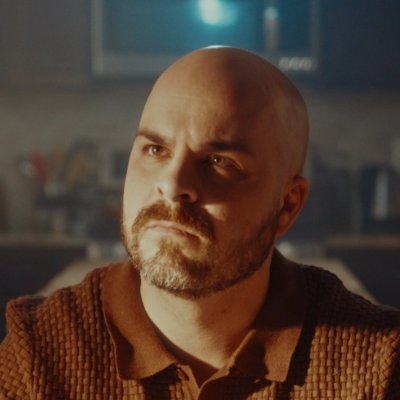
220,957 Aufrufe • vor 2 Jahren •via X (Twitter)
8 Kommentare

GLOSSARY of Abbreviations used: ECU - Extreme Close Up CU - Close Up MCU - Medium Close Up M (or MS) Medium Shot MLS - Medium Long Shot LS - Long Shot ELS - Extreme Long Shot
Yes! I'm working though some of the crazier ones but will eventually start doing his 3 in 1 shots, which are everywhere.

Interestingly, this was Spielberg's first film using the 2.35:1 aspect ratio since Hook in 1991. From Jurassic Park to A.I., everything was always 1.85:1
That is interesting. I always wondered how he chose his aspect ratios. Or rather why. His early films were anamorphic. Then 1.85:1, Then spherical super 35mm 2.35:1. Wish I know was hot in the early 2000s. I'm guessing Jurassic was 1.85:1 for height. I've always wanted to ask him what motivates his choices though. That's my number one question

I love these breakdowns. Minority Report is one of those films I can watch endlessly.
Thanks, Chris! Same. Annual rotation for me!

Loving this - just a quick word for two of the best actors in the business here too 👏
Thank you! And yes. Love these guys


![Wim Wenders on the "camera movement and blocking" in Wings of Desire (1987): Filmmaker Magazine: "What was your philosophy about camera movement and blocking in Wings of Desire?" Wenders: "As we very often had to “translate” the angels’ point of view, so to speak, we were extremely keen on moving the camera as much as possible. In the absence of Steadicam equipment we worked a lot on tracks, with dollies, cranes, jib-arms etc. But we also built ourselves devices so we could move through the air from one house to the next, for instance, and we shot the opening sequence on a helicopter, which was highly difficult in West Berlin at the time, as there were no private companies flying, just the Allies with their respective army pilots. We ended up shooting with a British pilot in an army helicopter without a proper camera mount. Today, you would do these things with gyroscopes and such. Blocking has always been my department. Henri [Alekan] kept out of it completely, and I did it with his operator, Agnès Godard. I have done shot lists for complicated sets, but usually I decide on location in the morning how we design the shots. I prefer to see the actors rehearse it, before I commit to any blocking. Camera moves weren’t the real challenge, though, for finding the angels’ points of view. It dawned on me early on that our camera had to do a more complex job. I told it to Henri. “Those angels have a very loving look at us humans. We have to find a way to teach our camera to look more lovingly.” Henri just stared at me as if I was out of my mind. “How do we do that?” Well, I didn’t know of course. But I figured we had to invest more care and love ourselves into every shot that represented what the angels saw. And that’s it, in the end. A camera can reflect on what you invest into its act of seeing. That sounds pretty lofty, I guess. But it does rub off, I tell you, if you try to imagine how angels would look at us. After all, they were some sort of metaphor for me for the better persons we carry inside ourselves, or for the children we somehow preserved in ourselves." — "“Imagine How Angels Would Look at Us”: Wim Wenders on Restoring Wings of Desire" by Jim Hemphill (Filmmaker Magazine, 2018)](https://image.24vids.com/tw-2021376328629444683/ext_tw_video_thumb/2021376143727689729/pu/img/NUOdIZHl00m9N4Wf.jpg)


![Ray Allen says his most clutch Finals shot had nothing to do with being clutch “Not just that [Game 6 Finals] shot, but all the preparation that went into it. To be so good at one shot in one moment, it’s like a thousand shots” “Not in one sitting, anybody who shoots a thousand shots in one sitting is lying to themselves, because you ain’t shooting a game shot” “It’s over time, the collection of shots I’ve taken, the work I put in. Knowing where you are on the floor, understanding the lines, where you feel around the basket, your footwork” “Over time it becomes innate every time you step on the court. That was one shot. But look at all the shots I took in practice, warming up” “I used to do drills where I’d lay on my back, jump up, have the coach throw me the ball and I’ve got to shoot. Get on my stomach, do the same thing.](https://image.24vids.com/tw-2074757893136458222/amplify_video_thumb/2074757533080711168/img/eZK1Y_wIj8S1r8d7.jpg)
![Filmmaker Öner S. Biberkökü shares his "screenshot strategy" for building a full narrative from a single starting point during this In the Flow interview. Thanks Oner for the partnership! "At the end of the shot, you can take a screenshot, give it again [to Flow], and you now have a new image of that character in a different situation... So I think, with one image, you can stay in the flow, and make a story." Watch his breakdown:](https://image.24vids.com/tw-2024620877472845908/amplify_video_thumb/2024611135681679364/img/JzNq1ohcjSQGqUd-.jpg)


