正在加载视频...

视频加载失败

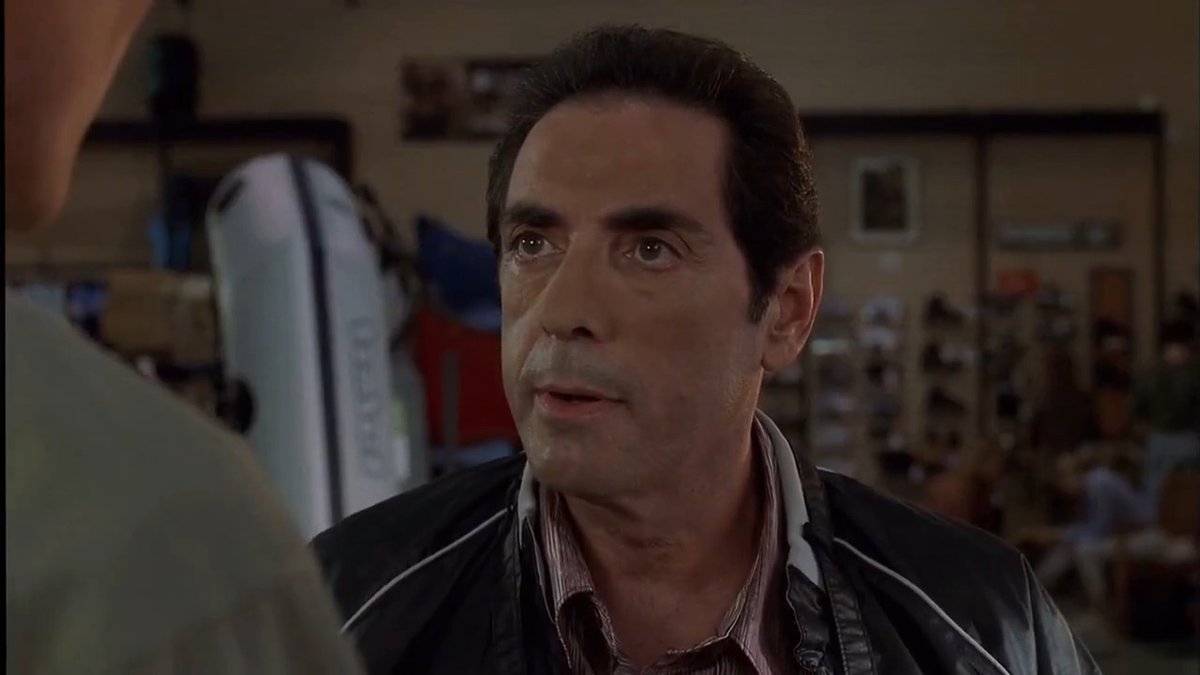
This conversation is uncomfortable because Tony isn’t really talking about homosexuality as much as he is revealing the rules of the world he comes from. He can be surprisingly accepting when it’s someone outside his immediate circle. But when masculinity, reputation, and his crew’s image get involved, that tolerance...

45,871 次观看 • 23 天前 •via X (Twitter)

11 条评论

Robert 的头像
Robert21 天前

He’s a Faaaagggg 😆

BonesAkimbo 的头像
BonesAkimbo22 天前

I had him “Pegged” the whole time. lol

Casey Lee 的头像
Casey Lee22 天前

"The guys that work for me are asking for head" Eyooo!

J. Fall 的头像
J. Fall20 天前

I had him pegged the whole time

Mark Monroy 的头像
Mark Monroy22 天前

“ They feel pity for themselves” yet here he is talking shit about them and wondering why they feel like people hate them

Jim Dougherty X account 的头像
Jim Dougherty X account21 天前

Great scene

subculture 的头像
subculture22 天前

Written by ai

Replyguy_CS 的头像
Replyguy_CS21 天前

This is true, but I also think it’s because Vito is one of his best earners before he killed Ralphie, so it’s less about him being gay and more of him being protective of the money he’s getting. Remember, this is season 6 Tony, so by now, he’s a complete POS.

Terrhistopheles 的头像
Terrhistopheles20 天前

He calls him a f@g the way bottoms pretend they’re “toOoOps” when they’re desperate.

Maxaker #ThankYouMiura 的头像
Maxaker #ThankYouMiura17 天前

It should remain behind closed doors. It is a slippery slope of degeneracy.

THE REAL CAMP 🇳🇬 的头像
THE REAL CAMP 🇳🇬22 天前

@grok what’s the movie called

相关视频

One of the first times The Sopranos tells you exactly what kind of show it is comes when Meadow asks Tony a very simple question: “Are you in the Mafia?” Tony doesn’t answer like a criminal who has been caught. He answers like an offended suburban father. He talks about waste management. Italian-American stereotypes. The insult of his own daughter believing such a thing. “There is no Mafia.” It would almost work if Meadow were still a child. But she has lived in that house her entire life. She has seen the money, the visitors and the way certain conversations suddenly stop when she enters a room. She isn’t asking because she needs information. She is giving Tony a chance to stop insulting her intelligence. “Dad, I’ve lived in the house all my life.” That is the line that punctures the whole performance. Tony thinks he has kept his two lives separate. Meadow quietly tells him that the separation never existed. Eventually, he gives her something: “Part of my income comes from legitimate businesses.” A perfect Tony Soprano confession. Not quite a lie, but nowhere near the truth. He admits just enough to feel honest while keeping everything ugly safely unnamed. And Meadow sees exactly what he is doing. The strange part is that Tony almost seems proud of her. She figured him out. She is smart enough to see through the waste-management story and force him closer to the truth than most people ever get. But closer is as far as Tony can go. He wants the intimacy of being an honest father without surrendering the secrecy that keeps him alive as a gangster. He cannot have both. That conflict is already there in the first season. Tony can hide evidence, intimidate witnesses and lie to investigators. But the FBI needs proof. Meadow doesn’t.

best of the sopranos

250,360 次观看 • 3 个月前

Tony Soprano can tolerate insults against himself. But the moment someone disrespects Meadow, all bets are off. In The Sopranos, Salvatore “Coco” Cogliano makes a serious mistake when he directs vulgar, inappropriate comments at Meadow Soprano. Coco may be a soldier in the Lupertazzi crime family, but he clearly misjudges the man whose daughter he has chosen to harass. When Tony finds out what happened, he doesn’t call a meeting, negotiate an apology, or wait for permission from New York. He tracks Coco down and unleashes his fury in one of the series’ most brutal confrontations. The violence is shocking, but what makes the scene so significant is what it reveals about Tony. For all his hypocrisy, infidelity, and criminal behavior, Tony draws a powerful line when it comes to his children. Meadow isn’t just his daughter; she represents the respectable family life he desperately wants to protect, even while his own actions undermine that image. But there’s another side to this confrontation. Coco belongs to a rival crime family, meaning Tony’s retaliation is more than a father defending his daughter. It’s also a direct challenge to the fragile balance of power between New Jersey and New York. Tony may believe he’s protecting his family, but his anger could put his entire organization at risk. That’s the contradiction that makes Tony Soprano such a compelling character: he can be a devoted father in one moment and a ruthless, impulsive mob boss in the next. Was Tony justified in retaliating against Coco for disrespecting Meadow or did he let his emotions override the judgment a boss needs to survive? #TheSopranos #TonySoprano

Breezy

107,486 次观看 • 3 天前

#LiuXueyi full interview is here! he shared about Lin Jinqi, why he chose to take on #AgainstTheCurrent, why he doesnt chase popularity, why he prefers to live in the present and what kind of person he likes hehehe😆 What kind of person do you like? him: at our age, it's already pretty good if someone chooses you 😌 when confronted with some of the criticisms directed at Jinqi, including breaking off his engagement at the beginning of the story and being accused of being a “scumbag”, he firmly refuses to accept the label. he explains that young Jinqi had many moments when he was forced to say things that did not reflect what he truly felt. Much of his behavior was dictated by the circumstances surrounding the Lin family, leaving him with little room to make his own choices. At that point, simply protecting himself was already difficult enough, so he did not have the luxury of worrying about the survival of another family. He also rejects the suggestion that Jinqi had already been married before Lanxiang and therefore had somehow failed to “keep himself clean.” He calls that accusation unfair and jokes that the audience needs to go back to the script to understand what actually happened. When asked whether Jinqi’s eventual “chasing his wife after messing everything up” was something he brought upon himself, he gives a characteristically straightforward answer: whatever happened along the way, as long as the ending is good, that is what matters. Although Lin Jinqi has plenty of qualities that viewers might describe as “red flags,” Liu Xueyi says that imperfection was precisely what attracted him to the character. “None of us are perfect,” he explains. In his view, it is those imperfections that make a character feel real and allow audiences to identify with him. Rather than portraying someone who already understands everything about relationships and love, Jinqi is someone who has to learn. His journey is therefore not simply about becoming a better person in a conventional sense. It is about learning how to communicate, respect another person's choices, and understand love beyond his own way of thinking. watching Jinqi gradually make that transition and seeing his relationship with Lanxiang change from misunderstanding to comradeship, friendship, and eventually a deeper emotional connection is what makes the role particularly interesting. He also speaks openly about his attitude toward his acting career. He recalls previously saying, “As long as I have work, I’m content. Whether I become popular or not is up to fate.” His attitude has not changed significantly. Rather than worrying about what happened before or what might happen later, he prefers to focus on the present. His priority is to serve the role, complete what the script asks of him, and make sure that at the end of each working day, he has no regrets about the work he has done. He also says that he does not like setting huge goals for himself. Instead of constantly thinking about where he should be in the industry or whether a drama will become a hit, he focuses on doing today's work well. He describes himself as someone who lives very much in the present. “Plans can't keep up with changes,” he says, so he sees little point in overthinking what might happen several days in advance. He jokes that even his plans for that evening had only been decided ten minutes earlier. If something can change that quickly, there is little point in deciding two days beforehand what he will be doing. He says his decision to take Against the Current did not take particularly long, only a few days. But he did take the time to finish reading the script, study the character, and meet with the creative team before making his decision. When the interviewer suggests that he is actually very suitable for variety shows, he immediately jokes, “When did I ever say that?” He explains that because of his personality, he might actually be quite easy for audiences to remember if he appears frequently on variety programs. This is one reason he prefers to maintain a certain degree of distance. However, he clarifies that this does not mean he refuses variety shows or promotional activities altogether. He simply wants to maintain a boundary that feels comfortable to him. His main concern is still his identity as an actor. He wonders whether becoming too recognizable for his personality outside of dramas might eventually affect the way audiences perceive his future characters. For him, everything ultimately has to come back to the role. “My identity as an actor comes first.” He admits that he has improved compared with the past when it comes to publicity and promotional activities, although he still does not consider himself particularly good at them. He sees this as something he is gradually learning. Rather than suddenly forcing himself to become highly active, he is slowly becoming more comfortable with it and believes there is still room for improvement. His Arctic vlog is one example. the trip was not simply a KPI assigned by his team. He actually took the initiative to make the vlog himself. During the trip, while sailing through Arctic waters, he was able to experience what those descriptions actually meant in reality. He also found the polar day fascinating: at one in the morning, when he could not sleep, he could still go outside and enjoy the sunlight. For him, the trip reflects a broader philosophy about life. He says there are many places he wants to visit, but people often keep telling themselves, “Maybe next time,” whenever something gets in the way. If you keep postponing everything, eventually you may end up going nowhere.

Kazuha

25,063 次观看 • 1 个月前