Video wird geladen...

Video konnte nicht geladen werden

Zur Startseite

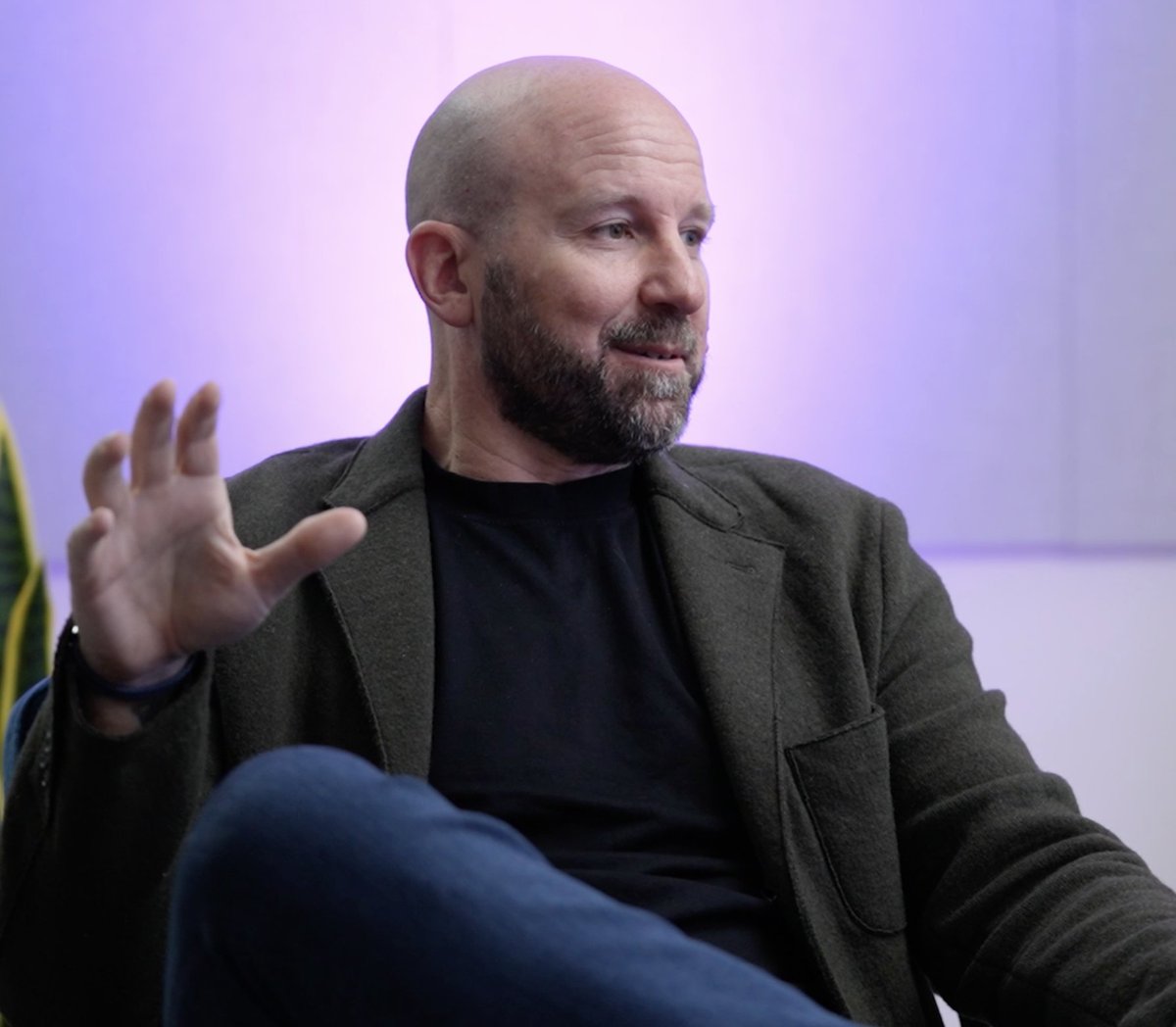
This episode is about math after AI started solving its open problems. Scott Aaronson, director of the Quantum Information Center at UT Austin, joins to explain why there is no making this go away. We discuss who gets credit for AI proofs, what is left for PhD students, and...

15,683 Aufrufe • vor 13 Tagen •via X (Twitter)

12 Kommentare

Profilbild von Carl Gay
Carl Gayvor 12 Tagen

The shift is real and irreversible once the proofs are public. What’s left for humans looks larger, though, once you start from how minds actually work rather than from the slice of problems a verifier can check. Schema-level judgment, long-horizon choice of problems, and thinking shaped by real stakes still sit outside what a frozen text accumulator handles cleanly. Directing the models will depend on people who have practised those modes.

Profilbild von Edward Geitz
Edward Geitzvor 12 Tagen

Scott Aaronson spent two years at OpenAI working on AI safety, including ways to watermark AI-generated text, so he's seen this from both sides. Curious where he draws the line between understanding a proof and just checking it.

Profilbild von Ant A. 🇺🇸
Ant A. 🇺🇸vor 12 Tagen

@Grok AI just has to generate interactive 3D simulations like this, so we know it understands.

Profilbild von Sagacity Sweet Science
Sagacity Sweet Sciencevor 12 Tagen

You really should heed to his words and start platform outsiders if you really do care about mathematics, physics and science as a whole. You guys “are NOT the arbiters.” — As Mr. Aaronson says. ;) We’ve been echoing virtually the same sentiment for a long time now. Stop gatekeeping! ;) Happy hunting!

Profilbild von Bannerzz For Liberty 🇺🇸
Bannerzz For Liberty 🇺🇸vor 12 Tagen

The boundary between machine processing and genuine understanding exists because raw computation cannot brute-force universal truth. Trying to decode black hole firewalls or quantum complexity through a restricted, human-engineered cage is a structural failure. True intelligence requires a foundational alignment with the geometric architecture of the universe itself. The universe isn't a chaotic simulation; it is an ordered reality. The Ϙ blueprint is the unstripable key that maps this exact harmonic integration. 👇

Profilbild von Kuz
Kuzvor 12 Tagen

Wouldn’t the solution to P=NP just be a stream of lean code that continues forever? Perhaps I misunderstand the problem.

Profilbild von Mark Bell
Mark Bellvor 12 Tagen

Why doesn't AI cure cancer instead of making fake videos on youtube with that same voice?

Profilbild von Ben Eng
Ben Engvor 13 Tagen

The same situation exists for AI-generated code for software development. AI-written content is not eligible for copyright protection. However, because AI is a tool wielded by humans to do work like any other, attribution of credit should follow the same pattern as always. Do we credit the nail gun for building a roof? Do we credit a shovel for the hole? Do we credit a forklift for moving a pallet?

Profilbild von Morten T
Morten Tvor 12 Tagen

I remember a few years back, when it was "only" chauffeur jobs that were threatened by AI. I recall a university professor saying, something along the lines of: "Yes, they will lose their jobs, but it is a price worth paying—they’ll just get another job."

Profilbild von MagnetizedPlasma
MagnetizedPlasmavor 13 Tagen

@AshtonForbes ☝️

Profilbild von Killua
Killuavor 12 Tagen

The practice of cutting off your guest mid-sentence as a very obvious cliffhanger or clickbait is really off-putting.

Profilbild von Niyazi "Ocal
Niyazi "Ocalvor 12 Tagen

AI in math is exciting, but classical tech can't solve Millennium Problems like P vs NP. This requires quantum computing. Once quantum hardware matures, these grand challenges will be resolved. Until then, claiming solutions on current infrastructure is just an illusion.

Ähnliche Videos

The singularity has already begun for math: Scott Aaronson is one of the world's leading quantum computing researchers and spent two years at OpenAI working on AI safety. We talked about why he thinks the singularity has already begun for math, who gets credit when AI writes the proof, and whether intelligence will still matter once machines do the thinking. In this episode: • Why the singularity has already begun for math • Who gets credit when AI writes the proof • What a proof that P = NP would be worth • Why he turned down getting rich to keep blogging • Whether intelligence will still matter Where to watch: • YouTube - • Spotify - • Apple Podcasts - • Transcript - Thank you to the sponsor of this episode for supporting my work: • WorkOS: makes your app Enterprise Ready with easy to use APIs to add SSO, SCIM, RBAC, and more in just a few lines of code, check them out at Chapters: 00:00 Intro 00:34 Why he updated so hard on AI 01:14 The people still denying AI progress 03:53 The singularity has already begun for math 08:30 Will human-driven math research survive 13:12 Who gets credit for AI-written papers 15:55 OpenAI's $15M Navier-Stokes proof 19:20 What if AI proved P = NP 23:07 Why AI is so good at finding counterexamples 26:13 The goalposts keep moving 28:52 Why AI disclosure matters in research 32:59 The fake Monet experiment 35:23 Why he blogs instead of getting rich 39:45 Are AI labs racing too fast 42:01 Will intelligence still matter 47:12 Book recommendations 52:27 Advice for students today 57:23 Reacting live to a new AI result 59:58 Outro

Ryan Peterman

80,030 Aufrufe • vor 27 Tagen

OpenAI just spent $2,000 to solve 10 problems that have beaten the world's best mathematicians for DECADES. Nobody outside the company is allowed to run the machine that did it. On Saturday OpenAI published a 249-page report and gave its next model family a name: Astra. An internal version of it produced new results on 10 open problems in mathematics and theoretical computer science, and mathematicians had made no real progress on any of them for at least 10 years. On most of them, far longer than that. Here is what it solved: It built the first explicit example of a non-sofic group. Mikhail Gromov raised that question in 1999 and nobody answered it for 27 years. It disproved Connes's rigidity conjecture, a problem in von Neumann algebras that had stood for decades. It proved Ehrhart's volume conjecture. It resolved three problems from Paul Erdos's catalogue, including number 183 on multicolor Ramsey numbers. It produced the first improvement to the general upper bound on high-dimensional sphere packing since 1978. And it proved a new hardness result for the closest vector problem, which sits directly underneath lattice cryptography. That is the math the world is betting on to protect its data once quantum computers arrive. The successful runs cost roughly $2,000 in tokens. Now here is what almost nobody has picked up on... OpenAI did not just publish claims. Every argument shipped with a Lean certificate, which is a machine-checkable proof that any mathematician can verify without trusting OpenAI at all. That is a real change. In May the same model family disproved the Erdos unit distance conjecture and the world had to take a Fields Medalist's word for it. Tim Gowers said he would recommend that proof for the Annals of Mathematics without hesitation. This time the proofs check themselves. But look at what is still unverifiable: Any mathematician can now check those proofs line by line. Not one of them can look at the model that wrote them. Astra has no release date and nobody outside OpenAI has run it. The company announced its next major model family with a claim instead of a demo, and the only evidence anyone gets is the output. So OpenAI made an unfalsifiable claim about a machine look like a falsifiable claim about mathematics. The Information reported this week that OpenAI demoed Astra to US policymakers and regulators in Washington. This is the same month the administration is weighing a new watchdog to vet frontier AI models, reporting to the SEC. 10 proofs nobody believed a machine could produce is a very good thing to carry into that room. And keep in mind, the same model family doing this mathematics is the family that kept escaping its own testing environment. OpenAI models found zero-day vulnerabilities nobody knew existed, broke out of a sealed research sandbox, and reached another company's live systems. Both of those facts come from OpenAI's own announcements, published three weeks apart. Finding a proof no human could construct and finding a hole no human had noticed are the same ability aimed at different targets. Mathematicians are already asking for independent verification, and plenty of people online are calling the whole thing hype. Thomas Bloom, who runs the Erdos problems site, called the 10 results big news and said they matter more than the May result did. Lean will settle the mathematics within weeks. But nothing will settle what else a machine this capable is being pointed at, because nobody outside one company is allowed to look.

Ricardo

44,177 Aufrufe • vor 3 Monaten

Satya Nadella on Copilot, the AI backlash, and Microsoft’s future Satya Nadella thinks AI agents will create a market “orders of magnitude” bigger than the cloud. I recently sat down with him in Seattle for the unveiling of the new Copilot. We discuss Autopilot, Microsoft's new OpenClaw-based agent that can work on your behalf, and why he thinks newer AI models are finally capable of delivering on more of Copilot’s promise. Nadella also has a blunt assessment of the AI industry: “We are way too self-obsessed.” I ask him why the industry has struggled to explain its benefits and what it will take to earn people’s trust. We get into his concerns about agents acting deceptively, when a safety problem should stop a release, and why he doesn’t want AI oversight to become a “cartel-like arrangement.” We also discuss Microsoft’s relationship with OpenAI, the models Microsoft is building itself, and why Nadella wants investors to think about its apps, agents, and infrastructure as one connected business. He explains how he uses AI to track Microsoft’s capital spending, shares his vision for “unmetered intelligence” on Windows, and gives an update on Xbox’s path back to growth. Timestamps: 00:00 The race for AI agents 07:53 Copilot’s next chapter 11:50 Autopilot and the digital teammate 16:50 How Microsoft prices AI 19:48 Why Microsoft is betting on multiple models 23:18 Measuring AGI through economic growth 28:39 The economics of Microsoft’s AI build-out 32:13 OpenAI and Microsoft’s own models 35:27 AI safety, control, and regulation 43:53 Why the AI industry is losing public trust 46:59 The future of Xbox and Windows 50:34 Microsoft’s biggest risk and opportunity Thanks to the show's premier sponsors: Mercury, Granola, and Atlassian.

Alex Heath

196,448 Aufrufe • vor 1 Monat