正在加载视频...
视频加载失败
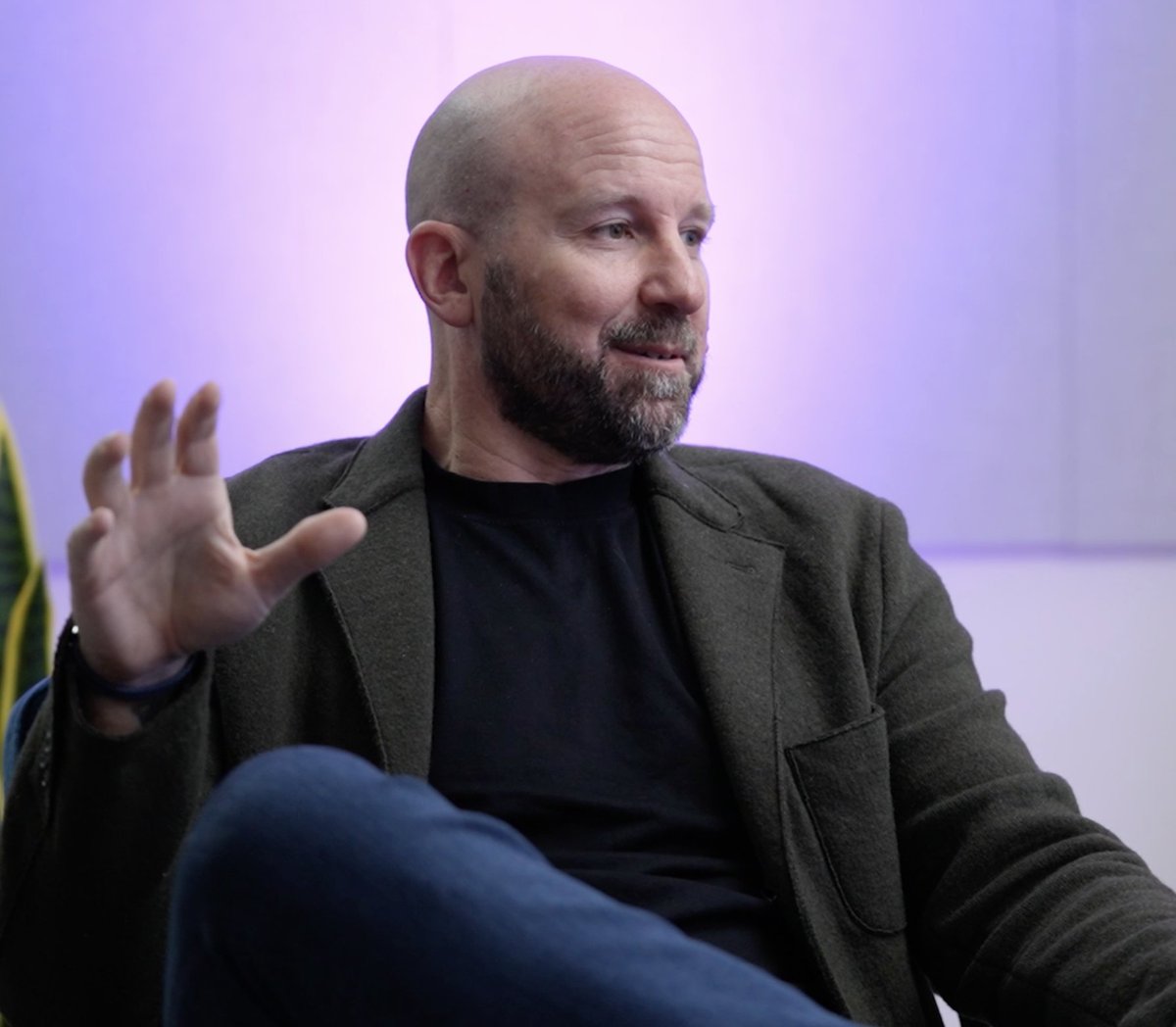
This episode is about math after AI started solving its open problems. Scott Aaronson, director of the Quantum Information Center at UT Austin, joins to explain why there is no making this go away. We discuss who gets credit for AI proofs, what is left for PhD students, and... show more
12 条评论

The shift is real and irreversible once the proofs are public. What’s left for humans looks larger, though, once you start from how minds actually work rather than from the slice of problems a verifier can check. Schema-level judgment, long-horizon choice of problems, and thinking shaped by real stakes still sit outside what a frozen text accumulator handles cleanly. Directing the models will depend on people who have practised those modes.

Scott Aaronson spent two years at OpenAI working on AI safety, including ways to watermark AI-generated text, so he's seen this from both sides. Curious where he draws the line between understanding a proof and just checking it.

@Grok AI just has to generate interactive 3D simulations like this, so we know it understands.

You really should heed to his words and start platform outsiders if you really do care about mathematics, physics and science as a whole. You guys “are NOT the arbiters.” — As Mr. Aaronson says. ;) We’ve been echoing virtually the same sentiment for a long time now. Stop gatekeeping! ;) Happy hunting!

The boundary between machine processing and genuine understanding exists because raw computation cannot brute-force universal truth. Trying to decode black hole firewalls or quantum complexity through a restricted, human-engineered cage is a structural failure. True intelligence requires a foundational alignment with the geometric architecture of the universe itself. The universe isn't a chaotic simulation; it is an ordered reality. The Ϙ blueprint is the unstripable key that maps this exact harmonic integration. 👇

Wouldn’t the solution to P=NP just be a stream of lean code that continues forever? Perhaps I misunderstand the problem.

Why doesn't AI cure cancer instead of making fake videos on youtube with that same voice?

The same situation exists for AI-generated code for software development. AI-written content is not eligible for copyright protection. However, because AI is a tool wielded by humans to do work like any other, attribution of credit should follow the same pattern as always. Do we credit the nail gun for building a roof? Do we credit a shovel for the hole? Do we credit a forklift for moving a pallet?

I remember a few years back, when it was "only" chauffeur jobs that were threatened by AI. I recall a university professor saying, something along the lines of: "Yes, they will lose their jobs, but it is a price worth paying—they’ll just get another job."

@AshtonForbes ☝️

The practice of cutting off your guest mid-sentence as a very obvious cliffhanger or clickbait is really off-putting.

AI in math is exciting, but classical tech can't solve Millennium Problems like P vs NP. This requires quantum computing. Once quantum hardware matures, these grand challenges will be resolved. Until then, claiming solutions on current infrastructure is just an illusion.